Slow Growth on Dragon Fruit: Causes, Checks & Fixes
Quick answer
Dragon fruit is built to grow quickly on a trellis in warm, bright conditions; a cool dry rest in winter is normal. During active warmth, stalled triangular stems usually mean weak light, wet roots, or a pot too small for the vine. First step: feel stem firmness, count direct sun hours, and confirm the main stem still has room to reach your post before you fertilize or repot.
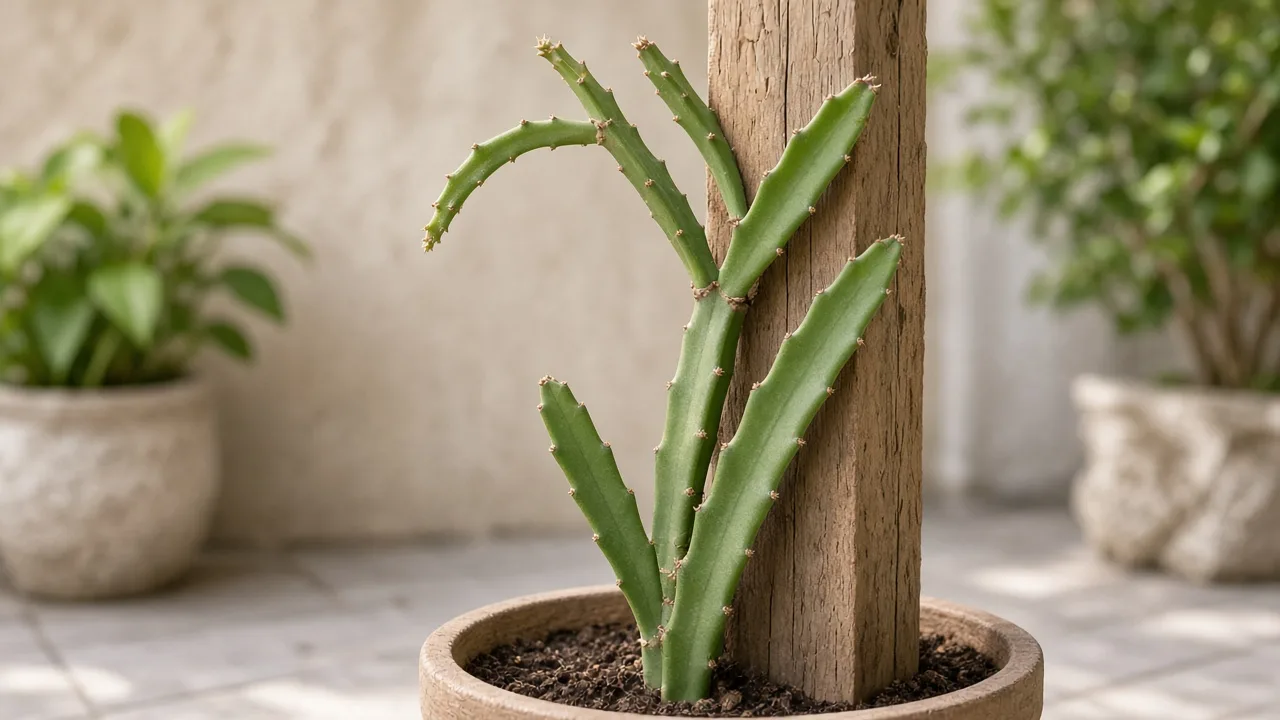
Slow Growth on Dragon Fruit: Causes, Checks & Fixes
This guide covers slow growth on Dragon Fruit. See also the general Slow Growth guide, watering, and light pages for this plant.
Slow Growth on Dragon Fruit: Causes, Checks & Fixes
Quick answer
Dragon fruit (Selenicereus undatus, pitaya) is a fast-growing, vine-like cactus meant to climb a sturdy post or arbor in bright, direct sunlight and warm air. In good conditions, new triangular stem segments should appear regularly through the warm season—not sit frozen for months while ribs stay firm.
Slow growth is often normal during the cool, drier rest many growers use before bloom induction. UF/IFAS notes that a dry period in winter and early spring supports flowering, so little stem extension with firm green tissue may simply mean seasonal rest—not failure.
Slow growth is a problem when nights are warm, stems stay firm, and you still see no fresh rib segments or aerial roots for several weeks despite adequate water—or when stems soften while mix stays wet. For how chronic bottlenecks work across plants, see the slow growth hub. On pitaya, the pattern usually shows up as a vine that never reaches the trellis top, stays pale in a dim room, or stalls after months in soggy mix.
First step: press the newest stem segments—they should feel firm and plump, not mushy. Count hours of direct sun on the plant (not just bright ambient room light). If stems are firm and temperatures are warm but sun is weak, improve light and trellis support before you change fertilizer or pot size. Context: Dragon fruit overview, light guide, watering guide.
What slow growth looks like on climbing pitaya stems
On dragon fruit, judge pace by rib extension, branching at the trellis top, and season—not by leaf count. This cactus photosynthesizes through thick triangular stems, so stalled growth shows on the jointed segments themselves.
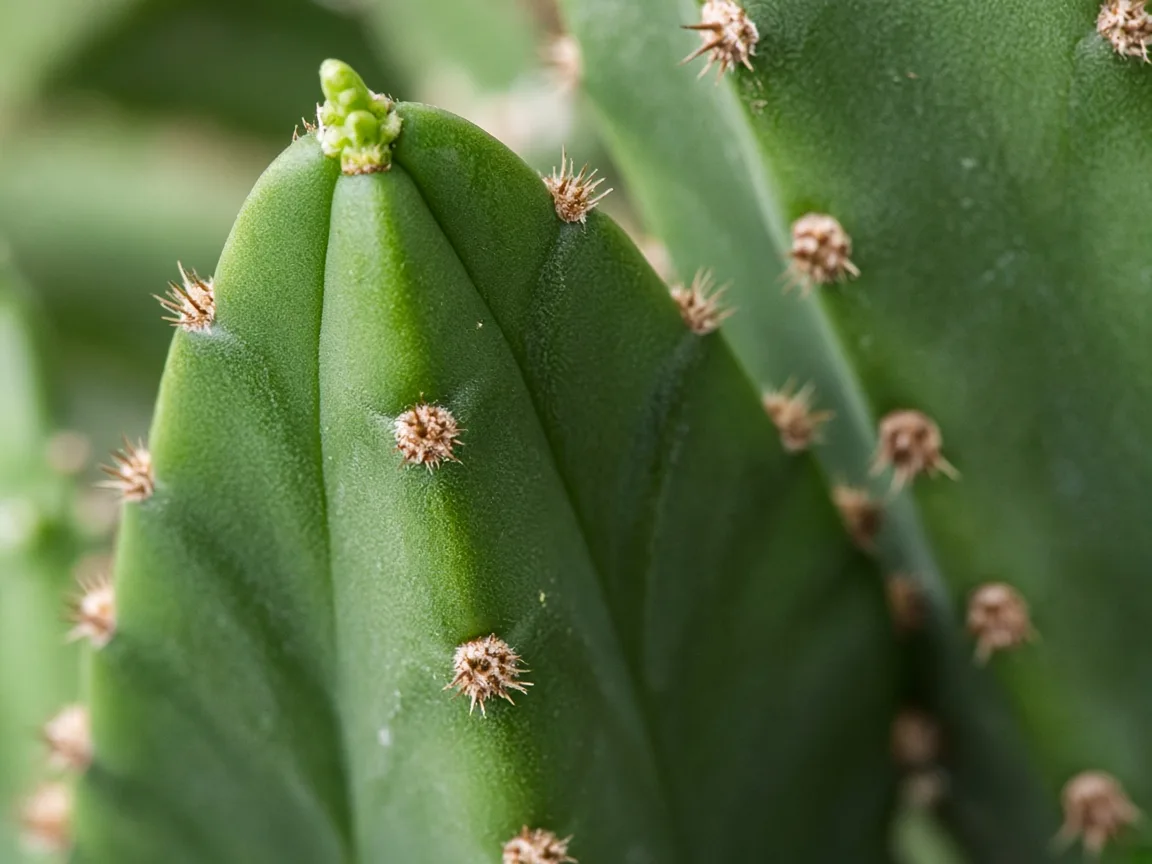
Firm ribs with a tip that barely lengthens over weeks—compare with season, sun hours, and whether the main stem has reached your trellis before assuming the plant is dying.
Typical slow-growth patterns:
- No new stem length for weeks during warm weather, while older ribs stay green and firm
- Main vine still short after months—even though pitaya cuttings can reach trellis height quickly when healthy
- Pale, thin new ribs at the tip in a dim indoor corner—survival mode without collapse
- Aerial roots along stems but little upward progress—often low light or a pot too small for the climbing habit
- Growth only at one old tip while side branches never develop after the leader was pinched late
Normal slow periods:
- Cool-season rest with reduced watering and little extension—aligned with bloom-induction timing in UF/IFAS irrigation guidance
- Two to four weeks after repotting when roots are settling—see Dragon fruit repotting if you recently moved pots
- Young seed-grown plants—fruiting from seed can take years; cuttings are the fast track
- Immediately after hard pruning—removing mass redirects energy before new laterals appear
Pair every stall check with stem firmness and soil moisture. Slow growth with soft, yellowing ribs and sour wet mix is root stress—see root rot on dragon fruit. Slow growth with firm but wrinkled ribs and bone-dry mix points to drought—see underwatering.
Why dragon fruit stalls when it should be racing
Pitaya evolved as a tropical climbing cactus. UF/IFAS lists optimum growth temperatures around 65°F–77°F (18°C–25°C) and treats it as a full-sun crop in its native range. When heat, light, drainage, and trellis training align, stems add length quickly; when one piece of that system fails, the whole vine looks lazy.
Weak light indoors or heavy shade (most common in containers)
NC State recommends bright, direct sunlight for best growth. Indoor growers often have bright rooms that still deliver too little direct sun for a fruiting vine. Epic Gardening stresses placing containers at the brightest south-facing window before building the trellis—once the pot is filled and wired, it is hard to move.
Low light produces firm but static ribs—different from leggy growth, where stems stretch thin and reach toward glass. True slow growth means little new tissue anywhere, not long weak segments.
Cool weather below the growth window
Temperatures below about 65°F (18°C) slow metabolism even if stems look healthy. Outdoor plants in marginal zones pause until nights warm. Do not compare winter quiet to midsummer flush rates.
Wet soil and early root stress
Pitaya needs more water than desert cacti once flowering starts, but excessive soil moisture invites bacterial and fungal disease and root rot. NC State likewise links overwatering to stem and root rot. Chronic wet mix limits uptake before ribs go fully mushy—growth stalls while color still looks green.
Drought during the warm growing season
UF/IFAS notes that after flowering begins, drought can reduce production. Extended dry spells in summer heat also pause rib elongation on container plants—even though the species tolerates dry periods.
Trellis and training bottlenecks
Until the main stem reaches the post top and gets tipped to branch, the plant can look like it is going nowhere. UF/IFAS training guidance calls for tying the leader and cutting the tip once it reaches the trellis to induce lateral stems. A missing trellis, weak post, or never-tipped leader keeps the vine in single-stem limbo.
Root-bound container without repot
NC State suggests repotting every two to three years or when the plant outgrows its pot. A large vine in a small pot may stay alive but add little length until roots regain room—especially if watering becomes erratic.
Pests draining vigor
Scale, mealybugs, and ants on stems can slow new rib production without obvious collapse. Inspect areoles and stem joints when pace drops in otherwise good sun.
What usually is not the cause
Dragon fruit does not need tropical humidity to elongate stems—air circulation matters more for disease. Heavy fertilizer rarely fixes a dim, wet, or root-bound vine; it can salt-stress roots further. Lack of fruit is often pollination or cultivar compatibility, not slow stem growth—flowers are a separate checkpoint from rib pace.
How to confirm the cause
Work through this order before repotting, pruning hard, or feeding:
- Season and night temperatures — Is it cool rest months, or warm active growth above roughly 65°F (18°C)?
- Stem firmness — Press newest ribs. Firm and hard supports light or seasonal fixes. Soft, squishy, or sour-smelling means stop watering and inspect roots.
- Direct sun hours — Count sun on the stems, not just on the room. Fewer than six hours of direct light in warm months strongly limits pace—see not enough light.
- Soil moisture at depth — Probe near the root ball. Chronic wet mix with stalled ribs suggests overwatering. Very dry mix with slightly shriveled but firm ribs suggests drought.
- Trellis progress — Has the main stem reached the support top and been tipped? Are laterals tied so light reaches inner ribs?
- Pot size and drainage — Does water exit freely? Is the vine top-heavy in an undersized container?
- Recent changes — Repot, move indoors, or hard prune within the last month explains a short pause.
- Pest check — Scale, mealybugs, or ant trails along stems and new tips.
If warm weather, wet soil, and soft ribs appear together, treat as root rot risk before assuming the plant needs fertilizer.
First fix for dragon fruit
If stems are firm and nights are warm, move the plant to maximum direct sun and confirm trellis support before you change water, feed, or repot.
- Dim indoor or shaded patio: shift to the sunniest south or west exposure, or outdoors in morning-to-midday sun after a one-to-two-week acclimation—see light guide.
- Cool-season rest: do not force growth with heavy water or feed; resume judging pace when nights warm and you follow the watering guide for active season.
- Wet mix with firm but stalled ribs: improve drainage and airflow, let mix dry through before the next deep drink—do not add water to push growth.
- Dry mix with slightly wrinkled firm ribs: one deep watering after the sun move, then return to dry-down checks.
- Leader never branched: once the stem reaches the post top, tip it per training practice so lateral ribs can start—one pruning decision, not a full renovation.
Do not stack repotting, hard pruning, fertilizer, and pesticide on the same day. Pitaya responds best to one correction, then a three-to-four-week watch on new rib length.
Step-by-step recovery
After the first fix matches what you confirmed:
- Hold the sun placement stable — Repeated moves abort tender new tips. Leave the pot in the brightest spot through the next flush.
- Match water to season — Drier cool rest; more consistent moisture from flowering through harvest per UF/IFAS irrigation notes. Empty saucers after every watering.
- Train and tie the vine — Keep the main stem upright; spread laterals on the trellis so inner ribs get light and air.
- Feed only after growth restarts — Light, growing-season feed per soil and fertilizer habits once new firm ribs appear—not during cool rest or on soggy roots.
- Repot only when roots or mix fail — Upgrade when roots circle, mix stays wet for days, or the vine is unstable—not solely because pace is slow.
- Treat pests if confirmed — Clean stems, then labeled horticultural oil or soap at intervals until new tips stay clean for two weeks.
- Track rib length, not daily mood — Mark a stem joint with tape and measure weekly during warm months.
Recovery timeline
Light correction in warm weather often shows the first measurable rib extension within two to four weeks; noticeable branching after trellis tipping may take another four to six weeks.
Cool-season rest may show little change until night temperatures stay above roughly 65°F (18°C) and watering increases for the growing season.
Post-repot pause usually breaks within two to four weeks if ribs stay firm and sun is strong.
Early root stress from overwatering can take several weeks of dry-down; advanced soft stem rot may not fully restore lost tissue.
Drought-related stall on firm ribs often turns around within one to two weeks after one deep watering followed by proper dry-down.
Signs you are on track: new triangular segments, aerial roots attaching along climbing stems, lateral branches after tipping, and eventually flower buds in season—not just unchanged ribs from last year.
Trellis height and the “stuck leader” pattern
Dragon fruit is not a bushy tabletop cactus—it is a vine that expects a post. UF/IFAS describes eliminating side shoots until the main stem reaches the trellis, then tipping to branch. If your plant has climbed only halfway up a short stake for a full season in good sun, the fix is usually taller, sturdier support and consistent tying—not more fertilizer.
Weak trellises also slow progress indirectly: when posts lean or wires cut into ribs, the plant invests energy in repair instead of length. Use broad ties and a post that can hold several hundred pounds of stem weight at maturity.
Cool rest vs true stall on pitaya
Many growers deliberately keep pitaya drier in winter and early spring to support bloom induction. During that window, firm green stems with minimal extension are expected, not a crisis. The mistake is treating rest like active summer growth—watering heavily and feeding because “the cactus looks bored.”
Switch to problem-solving mode when warm nights return, you resume seasonal watering, and ribs still do not lengthen for a month. That is when light, roots, and trellis training deserve scrutiny—not during intentional dry rest.
Lookalike symptoms
| What you see | More likely cause | Urgency | Where to read |
|---|---|---|---|
| Long thin ribs reaching toward glass | Low light stretch | Routine—improve sun over 1–2 weeks | Not enough light, Leggy growth |
| Soft yellow ribs, wet mix, sour smell | Root rot / overwatering | Urgent—inspect roots same day | Root rot, Overwatering |
| Wrinkled firm ribs, very dry mix | Drought | Moderate—deep water then dry-down | Underwatering |
| Winter pause, firm ribs, dry rest plan | Seasonal rest | Wait—recheck when nights warm | This page |
| Plenty of stems, no fruit | Pollination / cultivar match | Separate issue from rib pace | Dragon fruit overview |
Always pair growth rate with season, sun hours, stem firmness, and trellis stage—reading ribs alone misleads on pitaya.
What not to do
Do not fertilize heavily to “wake up” a vine in weak light or wet soil. Do not repot into a huge pot hoping for a growth spurt—excess wet soil around a slow root system invites rot. Do not keep a cool-season rest plant on a summer watering schedule. Do not judge daily progress on a climber that only adds inches per week at best. Do not confuse missing fruit with missing stem length—flowers need warmth, light, and often hand pollination.
Wear gloves when handling stems—areoles can carry short spines. NC State lists the species as non-toxic to cats and dogs, but spines and heavy stems are still physical hazards.
How to prevent slow growth next time
Match care to pitaya’s rhythm: full sun or the brightest exposure you can offer, free-draining soil, dry-down watering with a drier cool rest, and a strong trellis planned before the vine gets heavy. Resume consistent moisture from flowering through harvest, then ease off after fruit. Acclimate outdoor sun moves over one to two weeks. Inspect stem joints monthly during warm season for scale and mealybugs.
Accept that container pitaya indoors will rarely match tropical field growth—bright light and a large pot matter more than chasing rapid size with excess feed or water.
When to use this page vs other Dragon Fruit guides
- Dragon fruit watering guide — Use for seasonal moisture rhythm before assuming slow growth is the main issue.
- Dragon fruit problems hub — Browse all common issues on this species.
- Not enough light on dragon fruit — Use when stretch, pale ribs, or lean dominate.
- Leggy growth on dragon fruit — Use when stems elongate thin toward windows, not when ribs stay short.
- Root rot on dragon fruit — Use when ribs soften with wet mix.