Dragon Fruit Overwatering: Soft Stems on Wet Pitaya Soil
Quick answer
Overwatering on dragon fruit shows as soft or yellowing ribbed stems near the soil line while the mix stays damp, a heavy pot days after watering, limp segments on wet soil, or fungus gnats over a surface that never dries. First step: stop all irrigation and empty saucers until the root zone dries—do not water again because stems look limp on saturated mix.
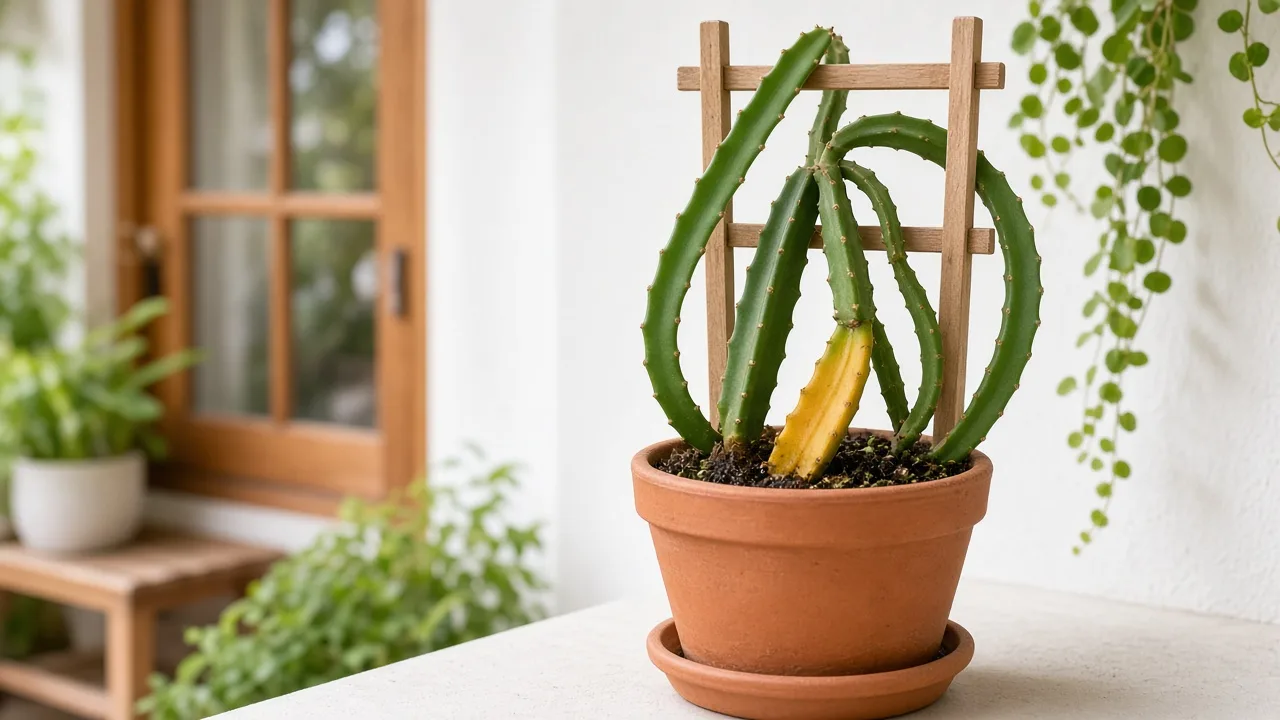
Overwatering on Dragon Fruit: Causes, Checks & Fixes
This guide covers overwatering on Dragon Fruit. See also the general Overwatering guide, watering, and light pages for this plant.
Overwatering on Dragon Fruit: Causes, Checks & Fixes
Quick answer
Dragon fruit (Selenicereus undatus, often sold as pitaya or Hylocereus undatus) is a climbing tropical cactus with succulent ribbed stems—not a desert barrel cactus that tolerates wet feet. NC State Extension notes that overwatering or too much rainfall can lead to stem and root rot on this species, even though it needs generous moisture during bloom and fruit.
First step: stop watering and empty every saucer, cachepot, or rain tray. Do not repot, fertilize, or take stem cuttings until you know whether lower ribs are firm and the mix is drying through the root ball. For how chronic wet soil damages roots in general, see our overwatering guide. On pitaya, the pattern usually shows up as soft yellow segments at the soil line on a heavy pot, limp ribs despite damp mix, or fungus gnats over a surface that never dries—not always as obvious wilt on day one.
When to use this page vs other Dragon Fruit guides
| Pattern | Read next |
|---|---|
| Heavy wet pot, soft lowers at soil line (this page) | Stay here; escalate to root rot if base is mush |
| Light pot, wrinkled ribs, dusty mix at depth | Underwatering |
| Whole plant limp on wet mix | Wilting |
| Yellow segments but firm ribs, mix barely damp | Yellow leaves — light, age, or seasonal shift |
| White fuzz on damp surface only | Mold on soil |
| Small flies when you water | Fungus gnats |
| Mix stays soggy after modest drinks | Soil and repotting |
| Long-term soak-and-dry rhythm | Watering — includes bloom and monsoon timing |
What overwatering looks like on Dragon Fruit
Pitaya stores water in its green ribbed stems, so it can look plump while roots are already failing underground. Watch for a cluster of signals together:
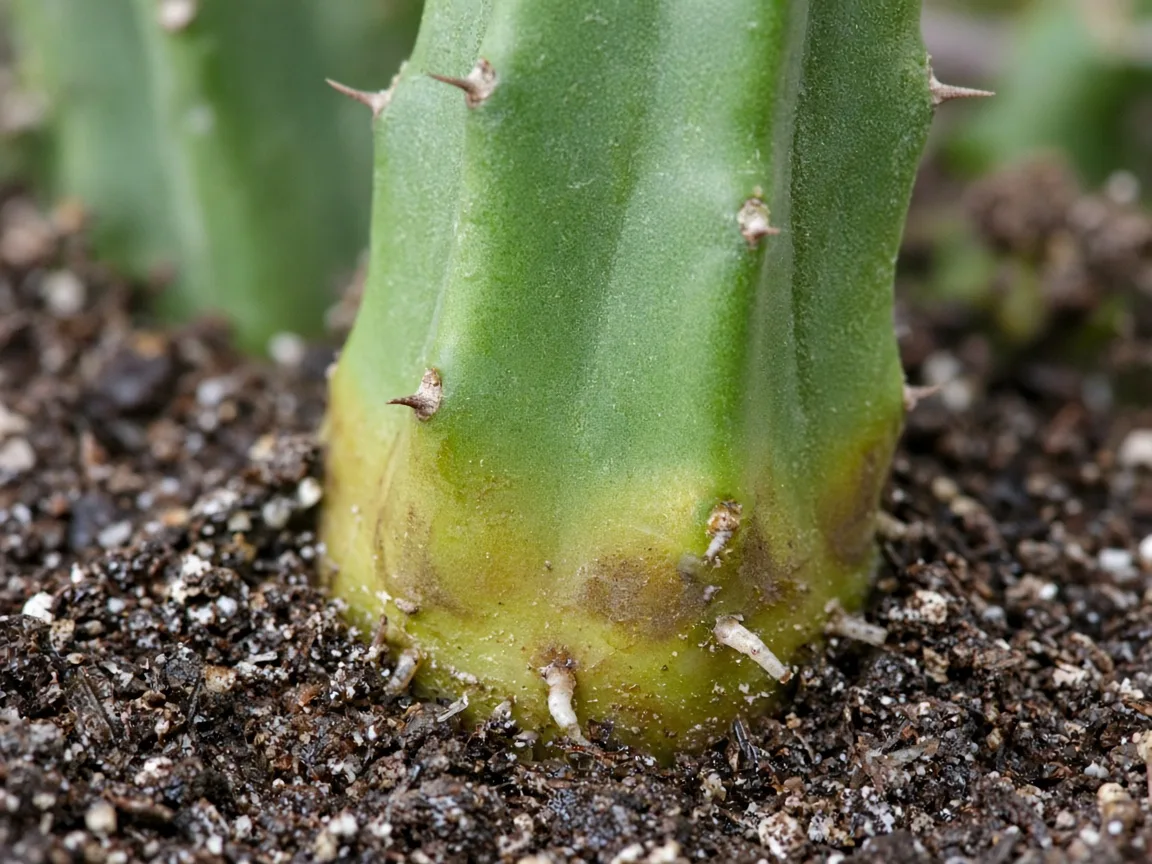
Soft yellow pitaya rib at the soil line on cool damp mix — compare with firm green segments higher on the same stem.
- Soft, yellowing, or translucent lower stem segments especially within a few inches of the soil while the mix is still wet
- Limp or drooping ribs on saturated mix—the plant looks thirsty but roots cannot absorb water (Missouri Botanical Garden overwatering guidance; UW Extension on root rots)
- Pot that stays heavy many days after the last soak, with soil dark and cool at a finger-depth probe
- Sour or rotten smell from drainage holes or when you gently lift the stem base
- Fungus gnats hovering over chronically damp organic mix (RHS fungus gnat notes)
- Aerial roots turning brown or mushy where they sit against wet media on a trellis post
- Black or water-soaked patches on stems that stay wet after monsoon rain or evening watering
Stems that only wrinkle slightly while the pot is light and mix is dusty at depth usually point to underwatering, not this page.
Why Dragon Fruit gets overwatering
Pitaya evolved as an epiphytic or scrambling cactus in warm, airy tropical forests. It wants soak-and-dry cycles in free-draining mix, with a drier cool-season rest that supports flowering—then steadier moisture from bloom through harvest. UF/IFAS states that pitaya has a fairly high water need for a cactus once flowering begins, but excessive soil moisture invites bacterial and fungal disease. Owners often drown the plant by applying one desert-cactus rule year-round.
Calendar watering without checking ribs or pot weight. Watering every Sunday while winter growth slows keeps the root zone wet through the cool rest UF/IFAS ties to bloom induction.
Monsoon and rain plus irrigation. Rain filling saucers while drip timers still run is the classic terrace pattern. NC State links excess rainfall with stem and root rot—the same failure mode as hand-watering too often.
Lawn sprinklers and shared drip lines. UF/IFAS warns that timer-driven lawn sprinklers can overwater pitaya and cause root rot because water is applied too often for a cactus root zone.
Dense soil or oversized pots. Cocopeat-heavy mix without grit, garden clay, or a huge pot around a small cutting holds unused wet volume. See soil before blaming the plant.
Low light indoors or under crowded trellis canopies. Slow transpiration in dim rooms or tangled hanging stems means the same watering volume stays wet longer. Cross-check light and pruning for airflow.
Propagating cuttings in wet mix. New cuttings need light moisture while callusing; soggy media is the fastest route to rot during propagation.
Monsoon, bloom timing, and the moisture trap
Dragon fruit breaks the simple “cactus = rarely water” rule in two directions at once.
During the cool dry stretch that helps induce flowers, UF/IFAS recommends not watering unless the plant is flowering, and otherwise letting a dry period pass (UF/IFAS HS303 cultural calendar). Continuing heavy winter drinks in a humid balcony fights that rhythm and keeps stems wet when growth is slow.
Once buds open and fruit swells, the same publication calls for periodic watering from flowering through harvest because drought then cuts yield. The trap is interpreting “more water in summer” as “keep soil constantly moist.” The correct pattern is still deep soak, full drain, then wait until the mix is almost dry—as NC State advises—not standing water or daily sips.
In India and similar climates, monsoon rain replaces the hose for weeks. Pause scheduled irrigation whenever probes show moisture, tip out filled trays the same day, and open the canopy so ribs dry after storms.
How to confirm the cause
Work through these checks before repotting or cutting stems:
- Stem rib squeeze — Pinch the lowest green segment at the soil line. Firm ribs on wet soil may mean early stress; spongy, translucent, or yellow tissue on wet mix strongly suggests overwatering.
- Pot weight — Lift the container. Heavy days after watering confirms saturation; light with wrinkled ribs suggests thirst instead.
- Depth moisture — Probe several inches down (skewer or finger). Cool, clinging soil throughout means pause irrigation regardless of calendar.
- Smell — Earthy is normal. Sour or rotten points toward anaerobic decay; escalate to root rot if the base is mush.
- Drainage audit — Holes open, no sealed cachepot, saucer empty. Water should exit freely after each soak per watering practice.
- Season context — Wet soil through a cool rest, or rain plus automatic irrigation, is a strong overwatering signal even when upper stems still look green.
Lookalike comparison
| What you see | Likely cause | How to tell apart |
|---|---|---|
| Soft yellow base on heavy wet pot | Overwatering / early rot | Spongy ribs, sour smell, gnats on damp surface |
| Wrinkled ribs, light pot, dry probe | Underwatering | One deep soak firms ribs within days |
| Limp whole plant on wet mix | Overwatering root failure | Wet soil + wilt paradox (MBG) |
| Limp plant on dry mix | Thirst or heat stress | Pot light; ribs plump after soak |
| Yellow segments only on oldest lowers, firm tips | Age or seasonal shed | Mix mid-dry; new growth green at trellis top |
| Thin stretched stems in dim room, wet soil | Not enough light plus slow dry-down | Weak growth; fix light and water less |
First fix for Dragon Fruit
Stop all watering immediately. Move the pot to the brightest, airiest spot you can provide without scorching midday sun on stressed tissue, and empty every drop of standing water from saucers and trays.
That single pause lets oxygen return to the root zone—the first requirement before any salvage. Do not add fertilizer, systemic drenches, or fresh cuttings while the mix is swampy. UF/IFAS disease control guidance for pitaya is blunt: do not overwater.
After 48–72 hours, re-check pot weight and stem firmness:
- If ribs are firming and the pot is lightening, wait until the mix is almost dry through most of the volume before one full soak with complete drainage—return to the rhythm in the watering guide.
- If the base is mush, soil smells rotten, or rot is climbing—unpot, trim to firm tissue, discard contaminated mix, and follow root rot and repotting steps. Do not water the repotted plant until you have gritty, fast-draining media in place.
Recovery timeline and what improves
Judge recovery by new firm rib growth at stem tips and a root zone that dries predictably between soaks—not by old yellow segments re-greening.
Mild cases (one heavy soak, firm base, no sour smell) often stabilize within two to four weeks once irrigation pauses and drainage improves.
Moderate cases (soft lowest segment, gnats, heavy pot) may need four to eight weeks and a top-layer refresh or repot into chunkier mix before normal flowering rhythm returns.
Severe base rot may require stem-cut salvage onto dry media per propagation while the parent stump is discarded.
Yellowed tissue on the lowest rib usually does not return to deep green; that is cosmetic once the plant is stable.
What not to do
Do not water because ribs look limp while the mix is still wet—that deepens root death. Do not fertilize a stressed pitaya to “push growth.” Do not repot into an even larger plastic pot on the same wet day you discovered rot. Do not run lawn sprinklers on a pitaya trellis because fruit needs moisture. Do not mist stems at night on already wet plants. Do not stack pruning, repotting, and heavy watering in the same week on a declining vine.
How to prevent overwatering next time
Water when the mix is almost completely dry, then soak until runoff exits and empty saucers. Use a free-draining cactus-style blend sized to the root ball (soil guide). Learn dry pot weight by lifting weekly.
Map seasons to pitaya biology: drier cool rest, more frequent checks from bloom through harvest, irrigation off when monsoon rain owns the root zone. Train stems on a trellis with airflow at the base so ribs dry after storms (pruning).
Keep bright light so the plant uses water at a rate that matches your soak schedule.
When to worry
Escalate same-day when the stem base feels hollow, black tissue spreads above the soil line, several segments collapse at once on wet mix, or smell is clearly rotten. Slower urgency—but still pause water—when you see gnats and a heavy pot after one mistaken soak on otherwise firm upper ribs.
Related Dragon Fruit guides
- Overview — habit, support, and how watering fits the full routine
- Watering — soak-and-dry, bloom, and monsoon timing
- Soil — gritty mixes that forgive occasional heavy soaks
- Root rot — mushy base and trim-and-repot protocol
- Repotting — when wet soil or root damage needs a fresh pot
- Problems hub — full symptom index
Conclusion
Overwatering on dragon fruit is a climbing-cactus drainage problem, not a mystery disease. Soft ribs at the soil line on a heavy wet pot mean stop watering first, improve airflow and light, and only then decide whether you need repot salvage. Match moisture to season—dry rest, then flowering-through-harvest drinks on an almost-dry trigger—and let monsoon rain replace the hose when the mix is already saturated.
Related tool
Use the Root Rot Risk Checker to narrow causes for overwatering on this plant before changing multiple variables at once.