Wilting on Dragon Fruit: Causes, Checks & Fixes
Quick answer
On dragon fruit, wilting usually means water is not moving through the three-winged stems—either because roots are failing in wet mix or because segments have dried out during active growth or fruiting. Before you water, squeeze a lower rib, lift the pot, and check whether the mix is almost dry or still damp deep down.
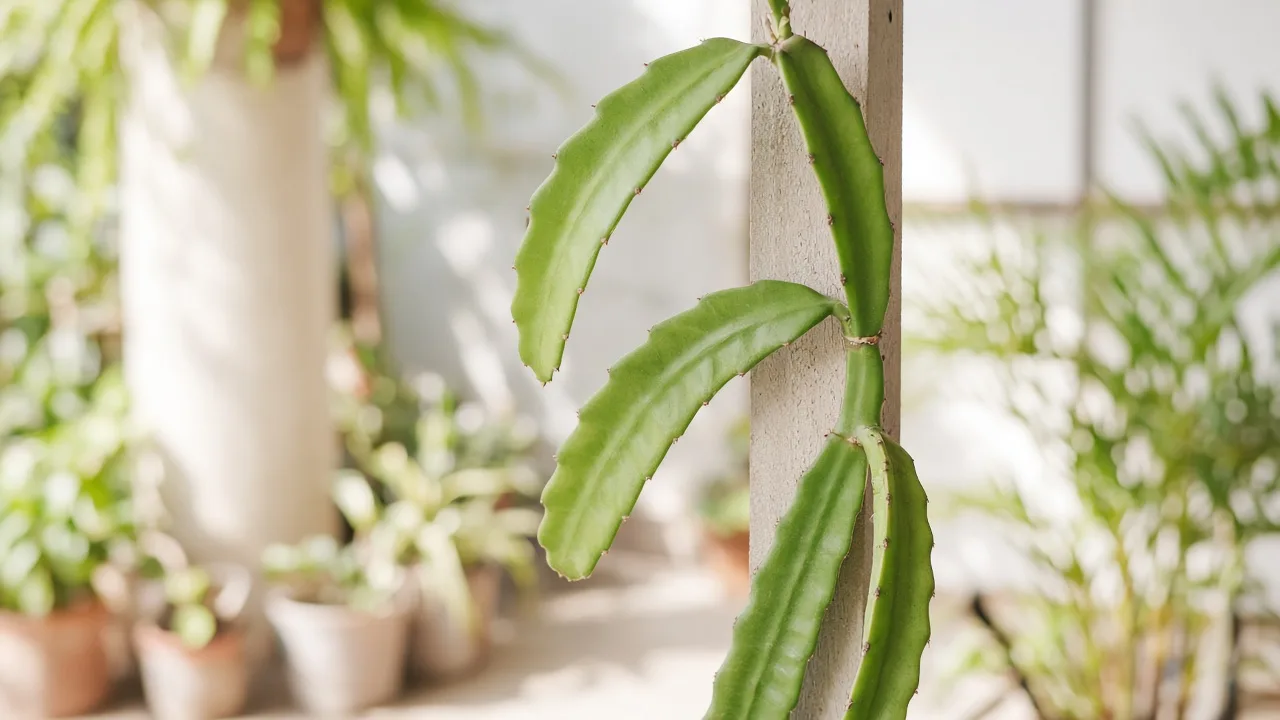
Wilting on Dragon Fruit: Causes, Checks & Fixes
This guide covers wilting on Dragon Fruit. See also the general Wilting guide, watering, and light pages for this plant.
Wilting on Dragon Fruit: Causes, Checks & Fixes
Quick answer
When dragon fruit (Selenicereus undatus, often still called Hylocereus undatus) wilts, the three-winged stem segments lose rigidity because water is not reaching them—not always because the plant needs another drink. This climbing cactus stores moisture in fleshy ribs, so the same limp look can mean rotting roots in saturated mix or firm ribs that have used up reserves during heat, bloom, or fruit load. For how wilt works in general, see our wilting guide—on pitaya, the decisive first step is the rib squeeze plus pot-weight test before you change anything else.
First action: gently squeeze a lower rib near the soil line and lift the pot. Firm rib with a light, dry pot means soak deeply once drainage is open. Soft rib with a heavy, cool pot means stop watering and inspect the base—do not repot or fertilize until you know which side of wet versus dry you are on.
When to use this page vs other Dragon Fruit guides
This page is the symptom-first entry when stems hang limp or ribs look sunken. Use it to separate drought, rot, light stress, trellis damage, and normal old wood.
- Drooping leaves — overlapping symptom; start here when an entire branch angle sags rather than one rib joint
- Overwatering — when soil stays wet, ribs yellow, or bases darken after heavy rain or daily sprinklers
- Underwatering — when mix is dusty deep down and ribs look slightly shrunken but still hard
- Root rot — when squeeze test finds mush and you need trim-and-repot steps
- Watering guide — long-term almost-dry-then-soak rhythm after wilt stabilizes
- Light guide — when wilt follows a move to shade while soil moisture looked fine
What wilting looks like on Dragon Fruit
Healthy dragon fruit is a vine-like cactus with green, scalloped three-rib segments that climb a post or trellis. Wilting is about loss of turgor in those ribs—a segment bends at a joint, the wing edges look slightly collapsed, or the newest growth dulls from bright green to gray-green. Spines stay stiff; it is the succulent wing tissue that gives way.
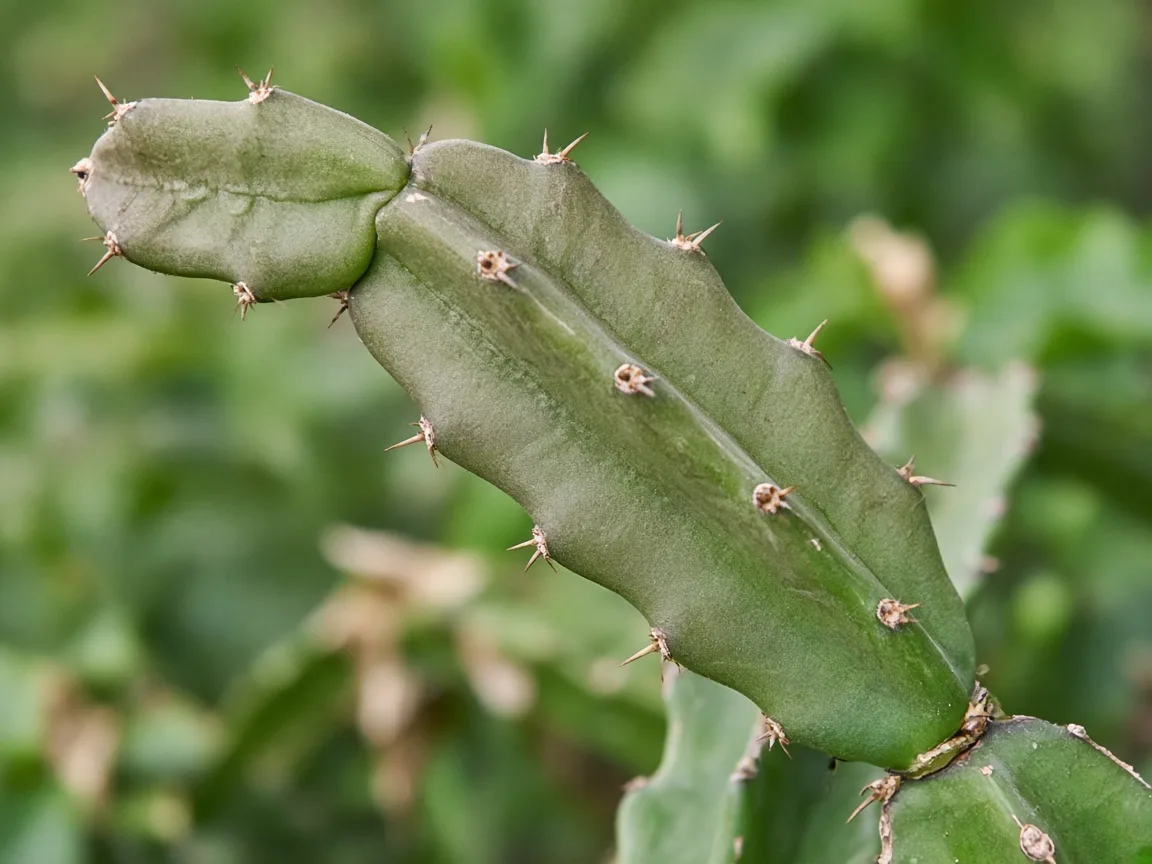
Wilting on dragon fruit usually shows on one rib joint or the active tip while older trellis wood below stays stiff—compare with a firm segment on the same plant.
Dry wilt pattern: pot feels light, mix is dry several centimeters down, ribs may look wrinkled or dull but still feel hard when squeezed (not mushy). Growth stalls in heat; flower buds or young fruit may abort if drought hits during the bloom window. UF/IFAS notes that once pitaya flowers, periods of drought can reduce production, so wilt during fruiting is both a stem symptom and a yield warning.
Wet wilt pattern: pot stays heavy days after watering or monsoon, mix feels cool and damp, ribs turn yellow or soft near the base while upper segments still hang. NC State Extension warns that overwatering or too much rainfall can lead to stem and root rot on this epiphytic cactus—roots that suffocate cannot supply ribs even when the surface looks moist. UW–Madison Extension describes the classic houseplant pattern: wilt on wet soil when roots have failed.
Trellis or segment failure: a long unsupported arm may droop from weight even when ribs are firm—support the segment before you blame water. That is mechanical droop, not true wilt.
Rib squeeze and wing-angle triage (dragon fruit only)
Dragon fruit has no leaves to read—the rib is the leaf. Pinch the thick wing between two fingers:
- Hard, like a firm cucumber — tissue still holds water; look at pot weight and deep dryness next.
- Spongy or denting — rot or advanced overwatering; hold water and inspect the soil line.
- Hard but visually wrinkled — drought stress on a living segment; one deep soak may refill turgor.
Then check wing angle: healthy segments hold a crisp triangular cross-section. Wilting segments flatten so the three wings look pinched inward. Compare the drooping joint with a segment two nodes lower on the same stem—if only the tip is flat and ribs below are crisp, you are often dealing with localized drought or a heavy fruit load, not whole-plant collapse.
Why Dragon Fruit wilts on the ribs
Dragon fruit is drought-tolerant yet not a desert pot cactus. Anything that breaks the root-to-rib pipeline shows on the youngest, most active segments first.
Overwatering and root rot (most common on balconies)
Owners often water because the plant is a “cactus” sitting in peat-heavy mix, or because lawn sprinklers run on a timer. UF/IFAS states that pitaya has a fairly high water need for a cactus, but excessive soil moisture invites bacterial and fungal disease, and timer sprinklers may overwater and cause root rot. Indoors or on terraces, the same risk appears whenever a heavy pot sits in dim air after monsoon weeks.
Underwatering during growth, bloom, or fruit
NC State advises watering when soil is almost completely dry, with more water through spring and summer flowering, then reduced winter drinks without letting the plant bone-dry for weeks. Skipping soaks in peak heat—or fearing overwatering right when night flowers and fruit need steady moisture—drains rib reserves. Wilt on firm ribs with a light pot fits this side.
Bloom-season moisture mismatch
UF/IFAS recommends a dry period in winter and early spring for bloom induction, then periodic watering from flowering through harvest. Wilting during bud swell or fruit sizing often means you are still on the cool-season dry schedule while the plant has shifted to a higher water demand—not that every wilted pitaya needs less water.
Not enough light and weak new ribs
Pitaya needs bright direct sun for vigorous ribs and reliable flowering. In shaded corners, new segments stay thin and may droop even when moisture is adequate. Stems stretch and color washes out before they wilt. Fixing light often matters as much as fixing water.
Heat, sunscorch, and rapid transpiration
Young plants or sudden moves to harsh afternoon sun can stress ribs. NC State notes too much sun can lead to sun-scorch and dehydration. Wilt after a heat spike with dry mix is thirst; wilt with wet mix after cool cloudy weeks is usually rot, not scorch.
Pests on tender growth
Ants, scale, and mealybugs can weaken new segments. NC State lists ants, scale, and mealybugs as problems to monitor. Sticky residue or cottony patches at the tip can mimic wilt—inspect ribs before soaking a plant that might already be wet.
How to confirm the cause
Work through these checks in order. Wear gloves; ribs carry short spines.
- Rib squeeze — Pinch a thick wing above the soil. Hard supports drought or light stress. Spongy supports rot.
- Pot weight and deep moisture — Lift the pot. Light plus dry mix several centimeters down supports underwatering. Heavy plus damp supports overwatering.
- Base color and smell — Darkening or mush at the soil line with sour odor confirms advanced rot.
- Which segments fail — Only the tip joint vs entire stems collapsing from the base.
- Season and phenology — Cool dry rest vs active flowering and fruit on the plant.
- Support and length — Heavy horizontal arms may need tying before you change watering.
- Pest scan — New growth, flower scars, and soil line.
| What you find | Likely cause | First direction |
|---|---|---|
| Firm rib + light pot + dry deep mix | Underwatering | Deep soak, drain saucer |
| Soft rib + heavy pot + yellow base | Root/stem rot | Stop water; inspect base |
| Firm rib + wilt after heat/dry spell | Drought on active growth | Soak; shade young plants briefly if scorched |
| Weak pale tips + dim location | Low light | Increase light gradually |
| Limp long arm + firm ribs | Mechanical droop | Tie to trellis |
| Sticky tips + insects visible | Pests | Treat pests; check moisture separately |
The first fix to try
Squeeze a lower rib and lift the pot before you water or repot. That single comparison prevents the classic dragon fruit mistake—adding water to ribs that are wilting from rot.
If the rib is firm and the pot is light, water thoroughly until excess runs from drainage holes, empty the saucer, and place the plant back in bright light. Recheck wing angle the next morning.
If the rib is soft or the pot is heavy, hold all water. Move to the brightest safe spot you have and let the mix dry. If the rib is still soft after seven to ten days of dry-down, unpot wearing gloves, trim only mushy roots or stem tissue, let cuts callus several days as you would a propagation cutting, and repot into gritty cactus-style mix.
Step-by-step recovery
Firm ribs, dry mix
Soak until the root ball is evenly moist, then let excess drain fully. NC State emphasizes almost-dry-then-water with good air circulation. Ribs often firm within a day. Resume soak-and-dry watering when the top several centimeters are dry again.
Soft ribs, wet mix
Stop watering immediately. UW–Madison Extension advises reducing soil moisture for root rot—do not keep the profile wet “to help” limp tissue. Remove the plant from the pot and brush away mix. Healthy roots are firm and pale; rotted tissue is brown, black, or slimy. Cut rot back to hard rib, air-dry in shade, then repot. Expect weeks before new tip growth trusts you again.
Bloom or fruit window drought
If ribs firmed after one soak but fruit is sizing, shift to the flowering-through-harvest moisture pattern in the watering guide—still with free drainage, as UF/IFAS stresses for pitaya.
Pest-related tip weakness
Isolate if needed, rinse pests from new growth with a gentle stream, and treat scale or mealybugs per your chosen method. Reassess wilt after sap loss stops; do not fertilize while ribs recover.
Recovery timeline and success signs
Mild drought wilt on firm ribs often improves within one to two days after a proper soak. Rot recovery takes several weeks to months depending on how much base tissue was lost. Mechanical droop fixes within hours once tied.
Signs you are winning: rib squeeze feels harder, new segments open with crisp wings, wilt does not creep down the stem, pot weight drops on a normal schedule between waterings.
Signs you are losing ground: softening spreads up the rib, dark band advances from soil line, yellow segments keep appearing on damp mix, or no new tips after a month of corrected care. Salvage firm upper cuttings if the base is gone—cure cuts in dry shade before rooting, as Gardening Know How describes for pitaya stem culture.
Lookalike symptoms
Old woody trellis segments without wilt — Lower stems naturally brown and bare; only worry when new ribs collapse.
Normal cool-season rest — During the dry bloom-induction window, growth slows; soil should stay drier. Slight dull color with firm ribs may mean less water, not rot.
Leggy weak growth — Long thin ribs in low light look sad but need more light, not emergency repotting.
Night flower wilt — Pitaya flowers open at night and wilt by morning; that is flower senescence, not stem wilt. Check ribs, not spent blooms.
Mistakes to avoid
Do not water every limp dragon fruit by reflex—wet-soil wilt worsens with more moisture. Missouri Botanical Garden notes chronic overwatering damages roots before stems show obvious decline. Do not repot on day one without checking rib firmness. Do not fertilize a wilted plant. Do not run daily sprinklers on a cactus root zone—UF/IFAS links timed irrigation to decline. Do not assume a sparse base is dead; firm ribs may still push new shoots after stress.
How to prevent wilting
Match water to season and phenology: almost-dry-then-soak in gritty mix, as described in the Dragon Fruit watering guide. Give six or more hours of direct sun where possible. Empty saucers and cachepots after every drink. During flowering through harvest, water through dry spells; during the cool rest, withhold routine irrigation unless blooms are present (UF/IFAS). Tie long arms to the trellis before fruit weight bends them. When you water, squeeze a rib at the same time—early softening catches rot before every segment collapses.
When to worry
Act quickly when ribs soften, bases darken, or soil smells sour while segments hang limp. That is rot territory, not a scheduling tweak. Firm ribs with dry mix after a hot week are usually fixable with one deep watering and stable bright light. If you are unsure, trust rib squeeze over appearance—this plant forgives brief dryness more often than repeated sogginess.
Related Dragon Fruit guides
- Dragon Fruit overview
- Problems hub
- Watering
- Soil
- Light
- Overwatering
- Underwatering
- Root rot
- Drooping leaves
- Yellow leaves
Related tool
Use the Plant Watering Calculator to compare your pot size, light, and season before you change watering on a wilting dragon fruit.