Drooping Leaves on Dragon Fruit: Stem Sag & First Fixes
Quick answer
On dragon fruit, drooping usually means sagging three-ribbed stems—not flat leaves. Lift the pot and press the lowest green rib: soft tissue with wet soil means stop watering; firm ribs with a feather-light pot mean one deep soak after the mix is almost dry.
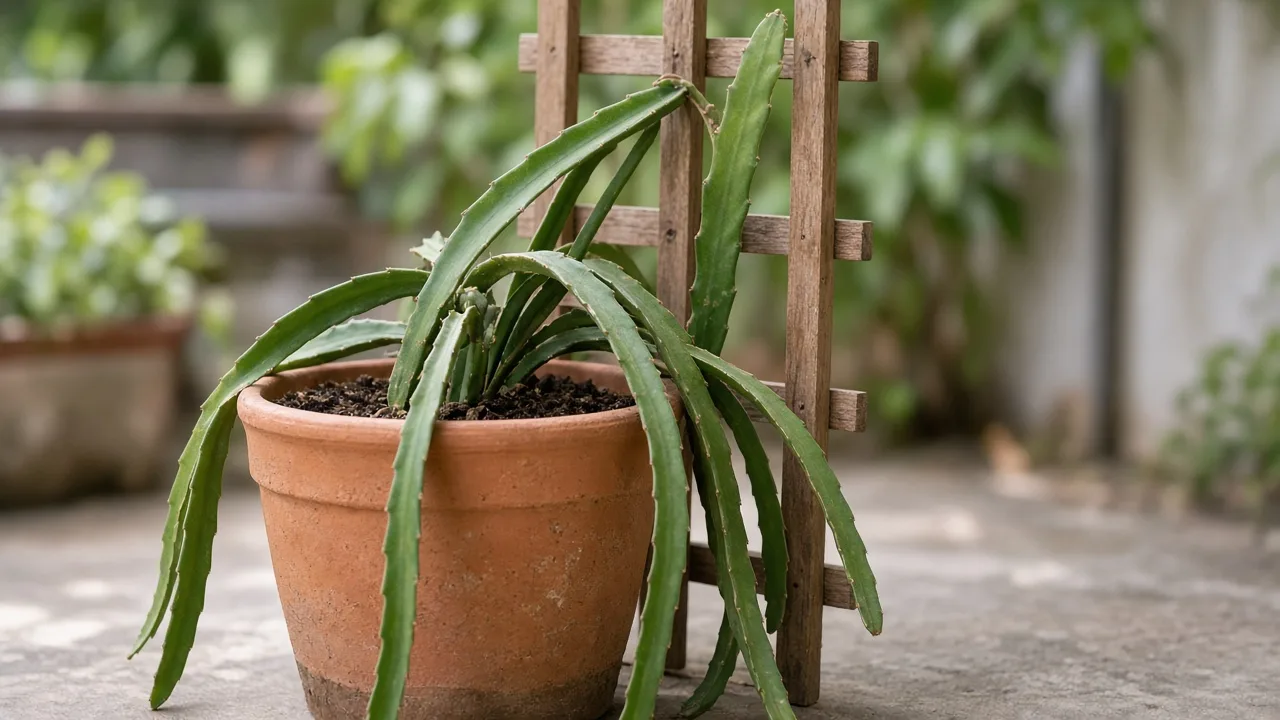
Drooping Leaves on Dragon Fruit: Causes, Checks & Fixes
This guide covers drooping leaves on Dragon Fruit. See also the general Drooping Leaves guide, watering, and light pages for this plant.
Drooping Leaves on Dragon Fruit: Causes, Checks & Fixes
Quick answer
On dragon fruit (Selenicereus undatus, pitaya), searchers say “drooping leaves,” but the plant shows stress on three-ribbed, leafless stem segments that climb a post or trellis. Healthy ribs hold a slight upward angle from the support; drooping means those fleshy wings hang downward, sometimes with subtle wrinkling along the ridges.
That posture almost always traces to water mismatch at the roots, physical weight without ties, or rot starting at the soil line—not a separate leaf disease. NC State Extension advises watering when soil is almost completely dry and notes that overwatering or heavy rain can lead to stem and root rot. UF/IFAS adds that pitaya needs periodic water from flowering through harvest, yet frequent irrigation causes root rot—the classic setup for limp ribs on wet mix.
For how turgor loss works on houseplants in general, see the drooping leaves hub. On pitaya, start with pot weight, deep moisture at the ribs’ base, and a gentle squeeze of the lowest green segment—not fertilizer, repotting, and pruning on the same day.
First step: lift the container off the saucer and press the lowest inch of green rib between gloved fingers. Soft, squishy, or yellowing tissue with heavy wet soil means stop watering and check drainage—see overwatering on dragon fruit. Firm ribs with a very light pot and dry mix deep in the pot mean one thorough soak after you confirm dryness—see underwatering and the watering guide.
When to use this page vs other Dragon Fruit guides
| What you notice | Read next |
|---|---|
| Sudden limp collapse after heat or repot | Wilting |
| Soft brown base, sour smell, black roots | Root rot |
| Yellow ribs on chronically wet mix | Overwatering |
| Wrinkled firm ribs, very light pot | Underwatering |
| Long bare reach toward a window | Leggy growth or not enough light |
| Outer stems hang only where fruit loads the tip | Stay here—support and harvest timing section below |
What drooping looks like on Dragon Fruit
Mature pitaya forms sprawling, multi-branched green stems with aerial roots along the ribs (NC State). “Leaves” in care articles usually mean these photosynthetic stem wings. Drooping shows up as:
- Ribs that used to run parallel to the trellis now angle downward along part or all of the segment
- Slight longitudinal wrinkling on the ridges while color stays green (common with drought)
- Soft, dull, or yellowing tissue at the lowest rib while upper growth still looks green (common with wet roots)
- Outer lateral branches sagging while the main leader tied to the post still looks upright (weight or weak ties)
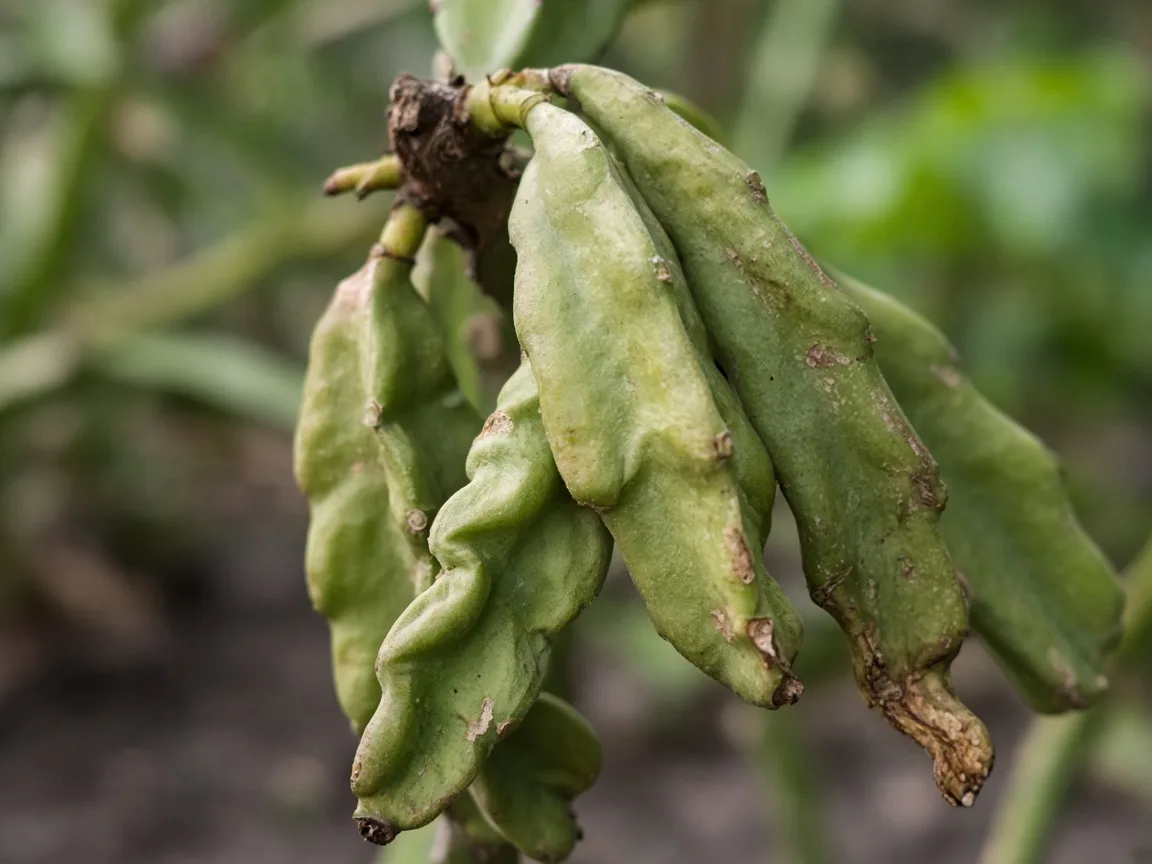
Drooping on pitaya is rib sag and ridge texture—compare limp segments with firmer growth higher on the same plant.
Patterns that separate causes quickly:
- Heavy pot, cool damp mix, firm ribs going soft at the base — overwatering or early rot (NC State overwatering note)
- Feather-light pot, dry skewer deep in mix, firm but wrinkled ribs — drought during active growth or fruit swell
- Firm roots, sag only on fruiting laterals — mechanical load; ties slipped or post too short
- Sag after cool nights despite normal watering — temporary stress; stabilize warmth before changing water (Gardening Know How on wilt vs environment)
Rib segments vs true leaves (why this page is pitaya-specific)
Most houseplant drooping guides assume broad leaves on petioles. Pitaya does not work that way. Each segment is a succulent stem that stores water, carries spines on the areoles, and bears flowers and fruit on the ribs. When roots cannot supply water—or when rot destroys uptake—the stem itself goes limp.
That is why the same global symptom hub can feel misleading until you translate it: you are not waiting for “new leaves” to unfurl; you watch new rib tips, flower buds, and fruit set. Recovery on a climbing cactus also depends on trellis integrity in a way that would be nonsense on a desktop pothos.
The pot-weight, skewer, and rib-squeeze test
Surface color on cactus mix lies. Dragon fruit pots are often large and top-heavy, so a dusty top can hide wet cores—or the opposite in fast-draining bark mixes.
Pot weight: Lift the container. A pot that stays heavy many days after watering fits saturation. A very light pot with sagging firm ribs fits drought.
Skewer depth: Push dry wood 5–7 cm (2–3 in) toward the root ball beside the main post. Clean, dry wood means you can water if ribs are firm. Dark, clinging soil means wait—even if ribs look thirsty.
Rib squeeze (wear gloves): Press the lowest green rib above the soil line. Firm and solid suggests roots may still work. Spongy, collapsing, or waterlogged feeling suggests rot—do not water (UW Extension on root rot and wilted shoots on wet soil).
This three-part check is the plant-specific version of “check roots before you treat.” Tall vining cacti mask root trouble longer than small succulents because stems hold reserves.
Why Dragon Fruit stems droop
Overwatering and failing roots (most serious indoor pattern)
Pitaya is not a desert barrel cactus. It still dies quickly when oxygen disappears from the root zone. UF/IFAS states that excessive soil moisture leads to bacterial and fungal disease, and that lawn sprinklers on a timer often overwater pitaya and cause root rot because water arrives too frequently.
Damaged roots cannot move water upward. Ribs then lose turgor while mix stays wet—the same “limp on wet soil” pattern Missouri Botanical Garden describes for overwatered plants. Escalate to root rot if the base turns mushy or smells sour.
Underwatering and fruit-stage thirst
NC State lists wrinkled or shriveled stems among drought stress signs. UF/IFAS recommends periodic watering from flowering through harvest; drought then can stall fruit and leave ribs limp despite the plant’s cactus label. This is the opposite fix from rot—one deep soak after confirmed dryness, not daily misting.
Trellis load and slipped ties
Dragon fruit becomes heavy on a post as lateral branches lengthen and fruit swells. Segments that are firm but hang at a sharp angle where a tie cut into the rib often need re-tying with soft material, not more water. Check the overview trellis guidance before you assume disease.
Crowded canopy and slow drying
UF/IFAS pruning notes warn that a dense mass of stems reduces light penetration and can increase insect and disease pressure. Crowded ribs stay damp after rain or overhead watering, which encourages stem rot. Thinning overlaps with pruning and mold on soil when the surface never dries.
Pests draining vigor
NC State lists ants, scale, and mealybugs on dragon fruit. Sap loss weakens ribs before soil moisture looks wrong. If skewer and weight readings are normal, inspect areoles and aerial roots—see mealybugs and aphids.
How to confirm the cause
Work in order:
- Weight and skewer — wet branch vs dry branch (see above).
- Rib firmness at soil line — soft = rot pathway; firm = water or support pathway.
- Pattern on the plant — whole vine vs only fruiting laterals vs one side toward a drafty window.
- Season — cool dry rest vs flowering/fruiting window (UF/IFAS seasonal watering table).
- Recent changes — new cachepot, moved post, repot, or heat wave.
You have a working diagnosis when moisture, weight, and rib texture all tell the same story.
Wet soil vs dry soil
| Soil + ribs | Likely cause | First action |
|---|---|---|
| Heavy pot, damp skewer, softening base | Overwatering / early rot | Stop water; verify drainage; see overwatering |
| Light pot, dry skewer, firm wrinkled ribs | Underwatering | One soak; drain; see watering |
| Normal moisture, sag at fruit tips only | Weight / ties | Re-tie; thin fruit load if needed |
| Normal moisture, one-sided sag after cold night | Temp stress | Shelter; wait 48 h before repotting |
The first fix to try
Pick one action based on the table—do not stack treatments.
If soil is wet and ribs are softening: stop all irrigation, empty saucers, and confirm drainage holes are open. Let the mix dry down completely before the next test drink. That single pause is the safest first move when rot is possible.
If soil is dry throughout and ribs are firm but limp: water until a little runs from the drainage holes, then discard runoff. Wait 24–48 hours for ribs to stiffen before you change pots, feed, or prune.
If ribs are firm, soil moisture is normal, and only heavy laterals droop: loosen old ties, add supports under the sagging segments, and redistribute weight on the trellis.
Recovery timeline and what improves first
- Drought droop on healthy roots: often visible stiffening in 1–3 days after one proper soak
- Overwatered ribs without mushy base: 1–3 weeks of dry-down before new tip growth looks plump
- Rot in the lowest segment: cut back to firm green tissue; recovery measured in weeks, not hours
- Fruit-weight sag: improves within days after support—stems rarely “unbend” fully; new growth holds better angles
Old ribs that have hung for months may keep a slight bend even after care stabilizes. Watch new tips, flower buds, and firmness at the growing point instead of forcing old segments upright.
Mistakes to avoid
- Watering because ribs look limp without checking whether mix is already wet
- Leaving the pot in a cachepot of standing water after a soak
- Running automatic sprinklers on the same schedule as lawn grass (UF/IFAS root rot warning)
- Fertilizing a sagging vine before moisture and roots are stable
- Repotting a soft-base plant into fresh wet mix on day one
- Ignoring tie damage and assuming disease
How to prevent drooping next season
- Follow almost-dry, then soak, then drain from the watering guide
- Use free-draining mix from the soil guide; avoid peat-heavy pots that stay cold and damp
- Tie new growth early on a sturdy post before fruit loads outer ribs
- Prune for airflow after harvest so ribs dry quickly (UF/IFAS pruning rationale)
- Shift to more consistent moisture only from flowering through harvest, not year-round saturation
- Inspect areoles and aerial roots monthly for scale and mealybugs
When to worry
Treat as urgent if:
- The lowest rib collapses or turns brown/translucent while soil is wet
- Yellowing spreads up multiple segments within a week
- Sour odor rises from the pot when you probe the surface
- New tip growth shrivels instead of expanding after you corrected drought
Lower urgency: outer fruiting branches sag with firm bases—support first. Brief limpness after one missed watering on a light pot usually responds to a single soak.
Related Dragon Fruit guides
- Dragon Fruit overview
- Dragon Fruit watering
- Dragon Fruit light
- Dragon Fruit soil
- Overwatering on Dragon Fruit
- Root rot on Dragon Fruit
- Dragon Fruit problems hub
Conclusion
Drooping on dragon fruit is rib sag on a climbing cactus, usually telling you roots are too wet, too dry, or that stems need better support—not that you should water on sight. Lift the pot, skewer the mix beside the post, and squeeze the lowest rib before you change anything else. Firm new tips and stable pot weight over two weeks mean you are winning; soft bases on wet soil mean escalate to rot care, not another soak.
Related tool
Use the Plant Problem Diagnosis Tool to narrow causes for drooping leaves on this plant before changing multiple variables at once.