Brown Tips on Dragon Fruit: Causes, Checks & Fixes
Quick answer
On dragon fruit, brown tips usually mean dry, corky damage at the end of a three-winged stem segment or along a sun-exposed rib—not classic leaf-tip burn. First step: feel whether the segment tip is crispy and firm (sun or drought) or soft and dark (wet rot), then match watering and shade to that pattern.
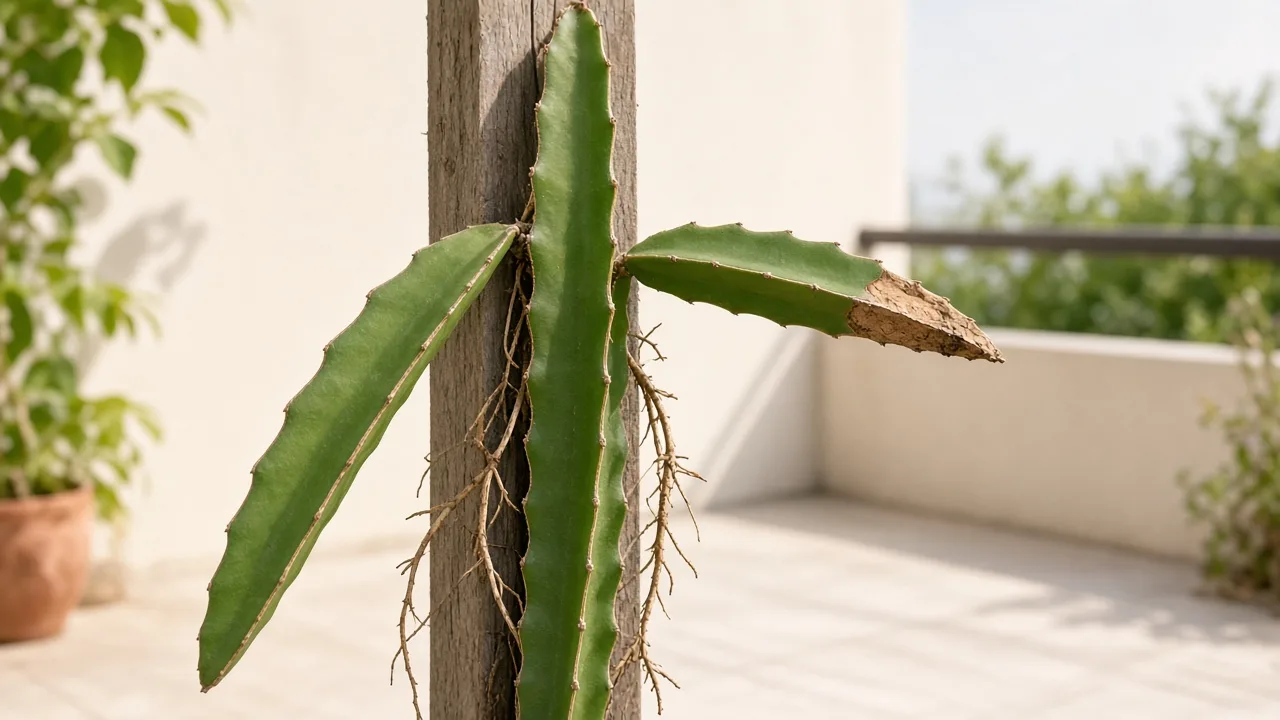
Brown Tips on Dragon Fruit: Causes, Checks & Fixes
This guide covers brown tips on Dragon Fruit. See also the general Brown Tips guide, watering, and light pages for this plant.
Brown Tips on Dragon Fruit: Causes, Checks & Fixes
Quick answer
Brown tips on dragon fruit (Selenicereus undatus, pitaya) almost always show on cladodes—the flat, three-ribbed stem segments that do the plant’s photosynthesis—not on separate leaves. The “tip” is the growing end of a segment or the outer edge of a rib that took too much sun, too little water, or too much moisture at the roots.
First step: pinch the browned area. If it is dry, firm, and papery, suspect sun scorch or drought stress and adjust shade or watering once the mix is almost dry. If it is soft, sunken, or spreading with wet soil, stop watering and read overwatering on Dragon Fruit before soaking again.
For how tip necrosis works on foliage plants in general, see our brown leaf tips guide. On this climbing cactus, the fix is tied to rib exposure, trellis placement, and soak-and-drain rhythm—not humidity trays for tropical leaves.
When to use this page vs other Dragon Fruit guides
- Dragon Fruit light guide — Use when ribs bleach or cork before tips brown, or when you just moved the plant into harsh afternoon sun.
- Dragon Fruit watering guide — Use when pot weight and dry-down timing are unclear, especially during flowering and fruiting.
- Underwatering on Dragon Fruit — Wrinkled, thin segments with crispy ends and very light pots.
- Root rot on Dragon Fruit — Soft stems, sour mix, and browning that travels down the segment, not just the point.
- Mealybugs on Dragon Fruit — White cotton at areoles near growing tips with sticky residue.
What brown tips look like on Dragon Fruit
Dragon fruit does not produce broad leaves. Damage reads on stem wings:
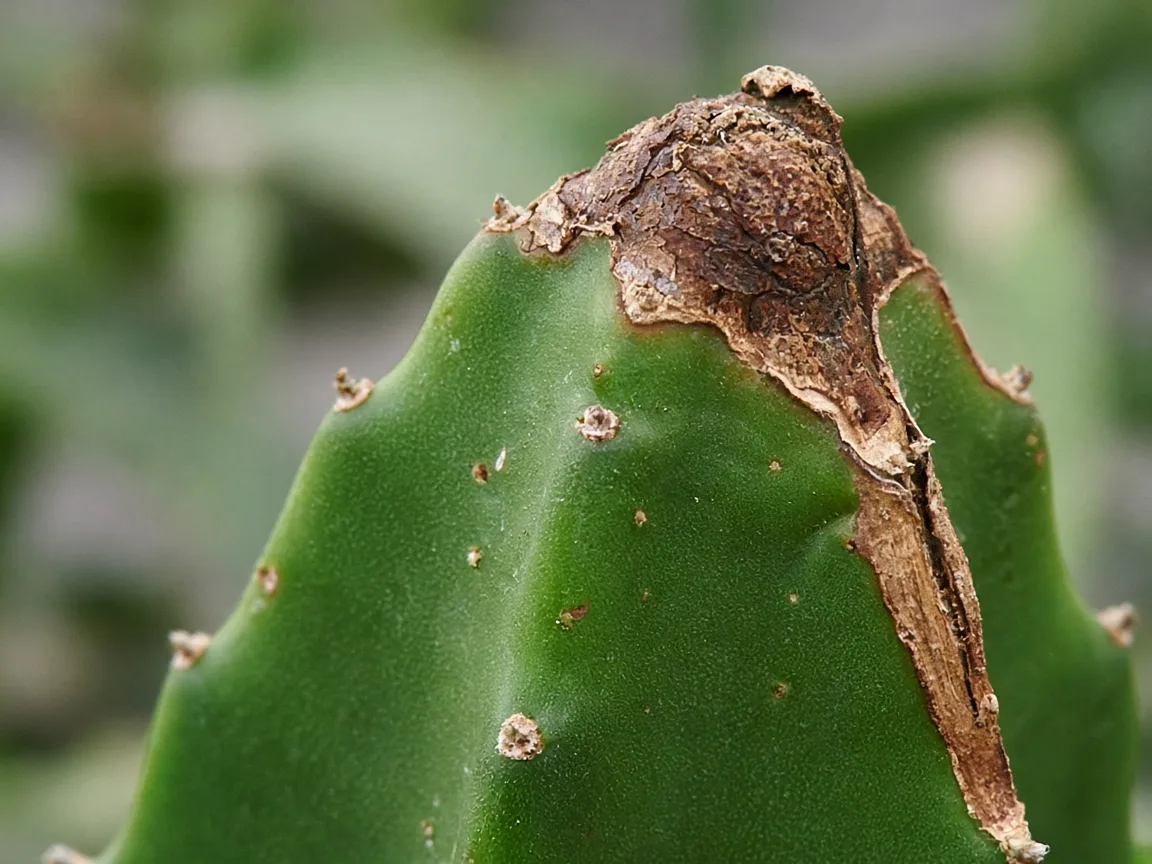
Brown tip symptoms on dragon fruit cladodes—compare corky rib edges with firm green tissue below.
- Dry tip necrosis: the last centimeter or two of a segment turns tan to chocolate brown, often with a sharp line between dead cork and plump green rib.
- Rib scorch: a patch along one sun-facing wing bleaches yellow-white first, then browns and feels leathery—common after moving a shade-grown cutting to a bare terrace.
- Segment shrinkage: the whole cladode looks thinner or slightly wrinkled near the tip while the pot is very light; ends may brown as tissue desiccates.
- Wet rot at the tip: brown-black, soft tissue that may ooze or spread inward; soil stays dark and cool for many days.
- Pruning callus: intentional tipping or heading cuts leave a dry brown cap until new side shoots break; that is expected, not a care failure.
- Aerial roots: thread-like roots along ribs may have dry brown tips when air is very dry; the main stem can still be healthy.
NC State Extension notes that too much sun can cause sun-scorch and dehydration, while excess water or rainfall contributes to stem and root rot—two opposite pathways that both change stem color at the edges.
Why Dragon Fruit gets brown tips
Sun scorch on exposed ribs
Pitaya is a full-sun crop for fruiting, but stems can burn when light intensity jumps before they harden. UF/IFAS Extension recommends about 30% shade for the first three to four months after planting or wherever insolation is extreme, then shifting toward full sun for yield. Moving a nursery plant straight to reflective west wall heat without acclimation is a classic trigger for corky brown rib tips.
Drought at segment ends
This species stores water in thick stems yet still needs periodic deep watering—especially once flowering and fruiting begin. NC State advises watering when soil is almost completely dry, with adequate spring and summer irrigation and a drier winter rest without letting the plant bone-dry for weeks. Prolonged drought in hot wind crisps the leading edge of fast-growing segments first.
Wet feet and tip rot
Overwatering, poor drainage, or monsoon saturation keeps roots anaerobic. Stems may brown from the tip inward or show brown spots from fungal or bacterial infection when circulation is poor. NC State links too much rainfall or overwatering directly to stem and root rot—quite different from firm scorch.
Salt or fertilizer stress
Heavy or frequent fertilizer on dry mix can injure fine roots and show as marginal browning on young growth. Dragon fruit is fed mainly in the growing season; stacking feed on drought-stressed or sunburned cladodes worsens tip damage. This is less common than scorch or drought on outdoor trellis plants but appears on overfed container specimens.
Pests at growing points
Mealybugs and scale hide in areoles near segment tips. Feeding weakens the meristem and can brown the newest tissue. Check for white wax, honeydew, or ants farming pests before assuming environmental burn.
Cold, wind, and physical knocks
Outdoor plants near frost may brown segment tips overnight. Wind rubbing stems on rough trellis wire can abrade ribs. Single-segment mechanical damage browns one tip without a pattern across the canopy.
How to confirm the cause
Work through checks in an order that matches pitaya biology:
- Light history — Did you remove shade cloth, relocate to a west terrace, or bring a greenhouse plant into open sky within the last two weeks?
- Pot weight and moisture — Is the mix almost dry and the container light (drought), or wet and heavy for days (rot risk)?
- Texture of brown tissue — Papery and firm (scorch/drought) vs soft and spreading (rot).
- Pattern on the plant — Sun-facing ribs only vs all tips vs one pruned end.
- Pests — Inspect areoles and aerial roots with a hand lens.
- New growth — Are the newest segment tips still green and plump after you adjust one variable?
If only one tipped stem is brown after Dragon Fruit pruning, wait two to three weeks for buds below the cut before changing water or light.
First fix for Dragon Fruit
Make one correction first:
- For firm, dry brown tips on a light, dry pot after heat or missed waterings: move the plant to filtered morning sun or add temporary 30% shade during peak hours, then deep-soak when the mix is almost dry through the root ball and let all runoff drain away.
- For soft brown tips with wet soil: stop watering, empty saucers, and improve airflow; probe roots only if softness spreads.
Do not fertilize, repot, and reposition to full sun on the same day—you need to see which change stopped the spread.
Step-by-step recovery
- Stabilize exposure — Young or recovering plants: partial shade or 30% cloth in extreme heat; mature fruiting plants: full sun once ribs stay green. See Dragon Fruit light for balcony placement.
- Reset watering — Follow almost-dry-then-soak per Dragon Fruit watering. Increase consistency only from flowering through harvest, never into saturated soil.
- Trim only dead tissue — Sterilize shears and remove mushy rot back to firm green rib. Leave dry corky scorch alone if the segment below is firm—it acts as a natural seal.
- Treat pests if found — Isolate affected stems and treat mealybugs before optimizing fertilizer.
- Improve drainage — If rot recurs, confirm Dragon Fruit soil is gritty and pots have open drainage; raised placement helps in monsoon.
Recovery timeline
Corky brown scar on a cladode will not turn green again. Judge success by new segments or side branches emerging with healthy tips within three to six weeks after light and water match the diagnosis. Sun scorch on a few ribs often stabilizes after one acclimation period. Rot may require cutting back to sound tissue and a full dry-down cycle before new growth appears.
If tips keep browning on fresh growth after shade and corrected watering, inspect for root rot on Dragon Fruit and mealybugs at the trellis crown.
Lookalike symptoms
| What you see | Likely cause | Where to go |
|---|---|---|
| Thin, stretched stems, few flowers | Low light | Not enough light |
| Whole segments limp, wet mix | Overwatering | Overwatering |
| Yellowing along ribs, wet soil | Root stress | Yellow leaves |
| Dry corky tips, very light pot | Drought | Underwatering |
| White cotton at areoles | Mealybugs | Mealybugs |
| Brown only on a fresh prune cut | Normal callus | Pruning guide |
What not to do
Do not increase watering because tips look “dry” when soil is already wet—pitaya rot kills faster than cosmetic scorch. Do not blast full afternoon sun onto shade-grown nursery stock to “harden it off” in one step. Do not apply high-nitrogen feed on sunburned or rotting stems.
Avoid stacking repotting, systemic pesticide, and hard tipping on the same stressed plant. Do not confuse edible fruit brown spots (harvest timing) with stem tip injury on the vine.
Dragon Fruit care cross-check
Align fixes with normal culture on the Dragon Fruit overview: sturdy trellis, six or more hours of direct sun on established plants, and free drainage. University of Guam Extension describes vigorous growth under full sunlight when temperature and moisture are adequate—meaning scorch is often an acclimation problem, not a sign the plant must live in permanent deep shade.
Indoor or greenhouse growers with softer growth should still aim for the brightest plant-facing exposure possible; RHS lists sheltered east- or west-facing aspects and bright conditions for Hylocereus undatus culture. Pair light changes with a watering check, not automatic daily drinks.
How to prevent brown tips next time
Acclimate new plants with 30% shade for several weeks, then lengthen sun exposure as ribs stay plump and green. Water on dryness, not calendar habit—probe deep in large containers. Empty cachepots after every soak. Fertilize only during active growth at modest rates per Dragon Fruit fertilizer.
Train stems so outer cladodes do not shade inner ones to death, and prune crowded growth so air reaches ribs after rain. Wear gloves around spines when inspecting tips weekly during heat waves.
Practical checks
Urgency check
Cosmetic cork on a few rib tips is low urgency on an otherwise firm vine. Escalate when stems soften, odor comes from the pot, brown moves down whole segments, or cold injury follows a frost forecast.
Best inspection order
For dragon fruit, inspect newest segment tips and sun-facing ribs, then pot weight and drainage, recent light moves, pests at areoles, and finally roots only if softness spreads.
Severity note
This issue is marked medium for dragon fruit—tip scorch alone rarely kills a mature trellis plant, but repeated wet rot at tips signals a failing root zone.
Related Dragon Fruit guides
- Dragon Fruit overview — Trellis, pollination, and seasonal rhythm.
- Dragon Fruit problems hub — All common issues on this species.
- Dragon Fruit watering — Bloom and fruit moisture shifts.
- Dragon Fruit light — Full sun, shade cloth, and scorch signs.
- Dragon Fruit soil — Drainage mixes for containers and mounds.
- Wilting on Dragon Fruit — When whole segments droop, not just tips.
Related tool
Use the Brown Tips Diagnosis Tool to compare tip patterns before you change watering, shade, and fertilizer at once.