Underwatered Dragon Fruit: Stem Wrinkle & Pot-Weight Checks
Quick answer
Underwatering on dragon fruit shows up as a light dry pot, wrinkled but still-firm three-winged stems, and dusty mix several centimeters down—not soft yellow tissue on wet soil. First step: push a finger or skewer 5–7 cm into the mix; if it is dry and the wings feel firm, give one deep soak until water runs free, then empty the saucer.
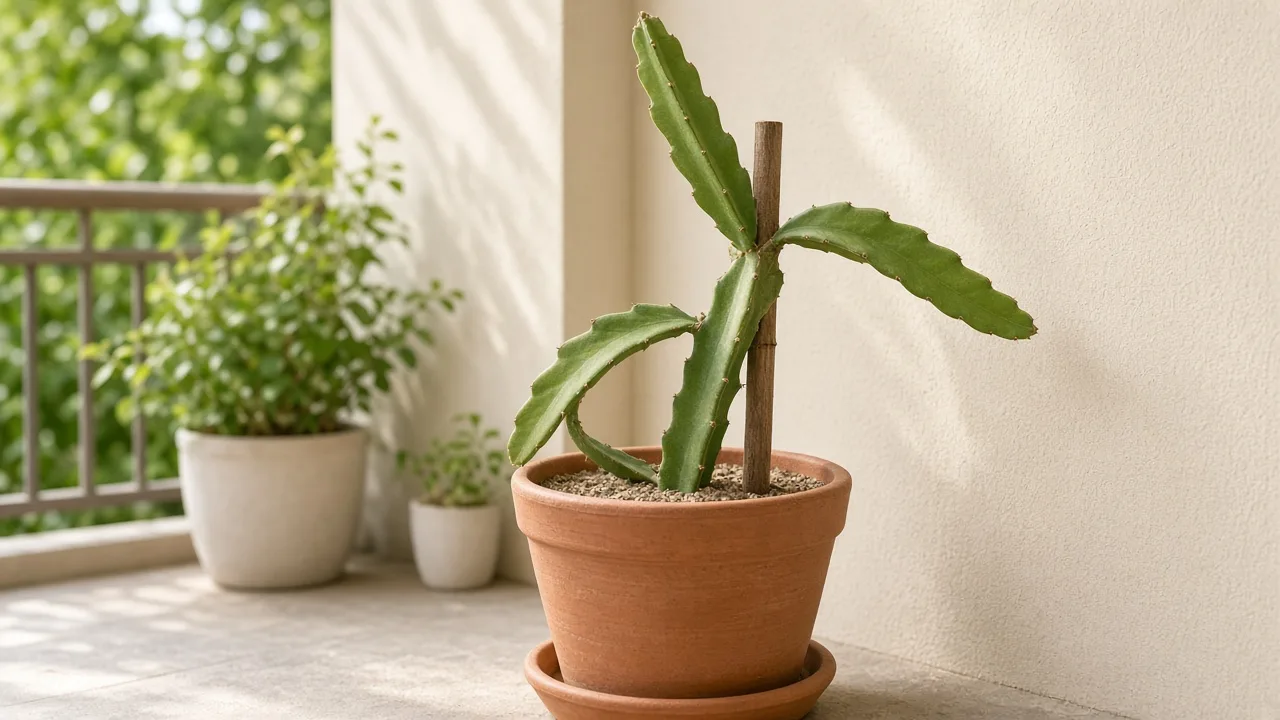
Underwatering on Dragon Fruit: Causes, Checks & Fixes
This guide covers underwatering on Dragon Fruit. See also the general Underwatering guide, watering, and light pages for this plant.
Underwatering on Dragon Fruit: Causes, Checks & Fixes
Quick answer
Underwatering on Selenicereus undatus (pitaya, often still sold as Hylocereus undatus) is the mirror mistake from rot fear: three-winged stems that still feel firm while the root zone has gone too long without a real soak. This climbing cactus stores water in fleshy stems and tolerates short dry spells, yet NC State Extension still advises watering when soil is almost completely dry and warns not to let the plant dry out completely in winter—while UF/IFAS notes pitaya has a fairly high water requirement for a cactus once flowering begins.
For how chronic dryness stresses container plants in general, see our underwatering guide. On dragon fruit, the pattern is a light dry pot, wrinkled firm wings, dusty mix at depth, and stalled warm-season growth—not soft translucent stems on heavy wet mix.
First step: probe 5–7 cm into the mix and lift the pot. If the skewer or finger reads dry and the lowest wing ribs feel firm, give one deep soak until water runs from drainage holes, then empty the saucer within 15 minutes. Do not feed, repot, or prune hard the same day.
When to use this page vs other Dragon Fruit guides
| Pattern | Read next |
|---|---|
| Light dry pot, wrinkled firm wings (this page) | Stay here |
| Heavy wet pot, soft yellow stems, sour smell | Overwatering or root rot |
| Limp segments on wet soil | Wilting — uptake failure, not thirst |
| Sagging wings with dry mix in peak heat | Drooping leaves — often drought on this leafless cactus |
| Tan patches on sun-facing wings only | Brown tips or sun stress — not always underwatering |
| Weak pale new growth in shade | Not enough light before you add more water |
What underwatering looks like on Dragon Fruit
Dragon fruit has no leaves to curl first. The diagnostic surface is the three-ribbed stem—a water tank and a signal panel at once. Underwatering shows up as geometry and pot weight, not yellow foliage.
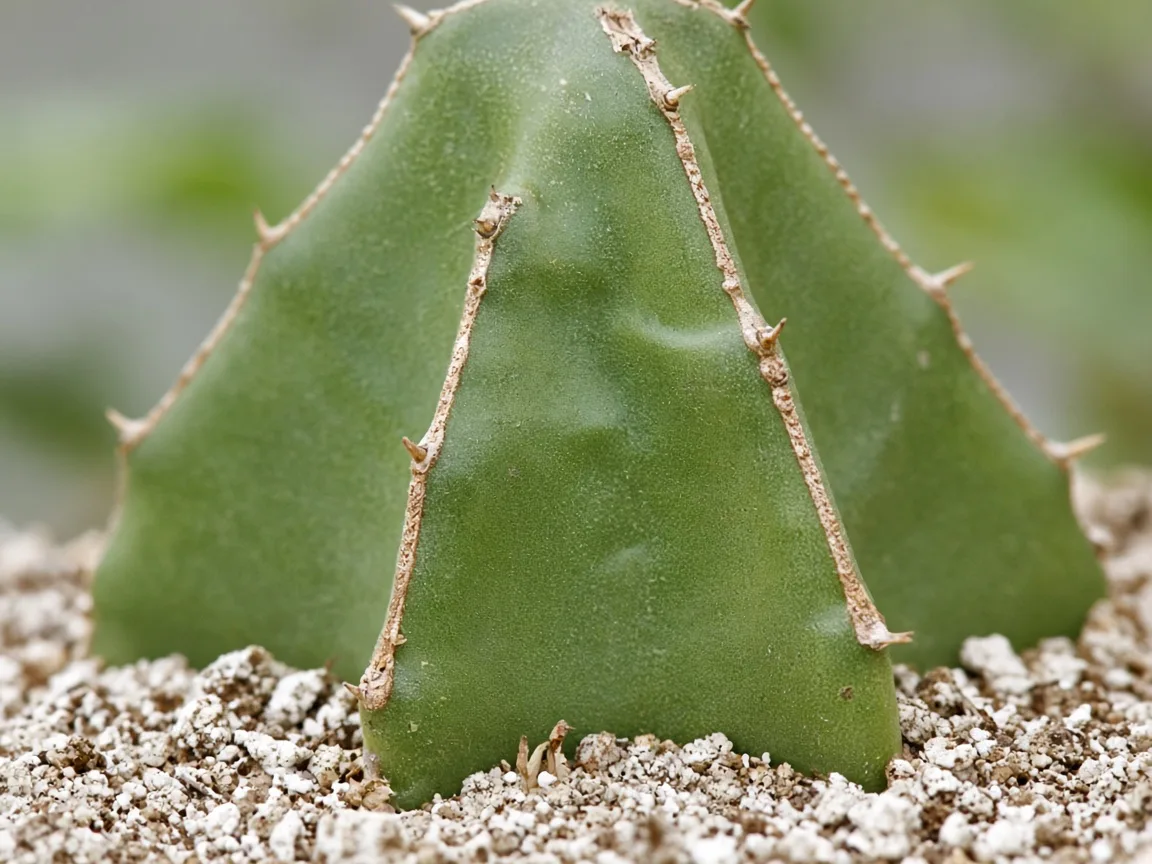
Mild underwatering—wing valleys look slightly sunken while tissue stays firm; mix is pale and dusty at the soil line, not damp.
Early signs
- Light pot when lifted—clearly lighter than right after a proper soak
- Slightly shrunken or dull wing ridges while the stem wall still feels firm, not mushy
- Dusty dry mix on a finger or skewer probe 5–7 cm down—not just a pale surface crust
- Mix pulled slightly away from the pot wall on long dry spells
- Slowed new tip growth during warm bright months when the plant should be pushing segments
- Night-bloom buds or small fruit on a chronically dry vine—production can stall when drought hits the flowering window (UF/IFAS)
Advanced signs
- Pronounced wing shrink along several segments while bases remain firm
- Persistent dull gray-green color across wings in summer despite adequate light
- No new areole activity at growing tips for many weeks in heat
- Hydrophobic dry-out—first water channels down the pot wall without rewetting the center
- Fruit that stops swelling after a long dry spell during harvest season
Firm wings + light dry pot is the classic thirst picture. Soft translucent tissue on wet heavy soil is not underwatering—see overwatering on Dragon Fruit before you pour again.
Wing firmness vs wing shrink: the squeeze test at the trellis base
This check would mislead you on a fern. On pitaya, the wing is the diagnostic surface:
- Firm wings + deeper valleys + light dry pot — Thirst path; confirm depth dryness, then one soak.
- Firm wings + slight shrink + cool winter + dry mix — Often the intentional dry rest UF/IFAS uses for bloom induction (UF/IFAS); read Dragon Fruit watering before you break dormancy with heavy water.
- Soft base + wet pot — Not thirst—overwatering or root rot.
- Firm wings + dull skin + wet skewer — Uptake failure on damp mix; inspect roots, not another soak.
- Plump new tips within two weeks of a soak — Recovery signal even if older wings stay slightly scarred.
Always trust firmness at the soil line over how dramatic upper segments look. A climbing stem can show deep valleys while the base is still firm and saveable with one drink.
Bloom-season thirst vs winter dry rest
Dragon fruit breaks the “cactus never needs water” myth in two timed windows—both plant-specific.
Flowering through harvest: UF/IFAS recommends periodic watering from flowering through harvest because drought then reduces production, even though pitaya is in the cactus family (UF/IFAS). If buds are open, fruit is swelling, or you are in the warm growth stretch NC State ties to adequate watering until flowering ends (NC State Extension), a light dry pot with wrinkling wings is urgent thirst, not normal rest.
Cool dry rest for blooms: The same UF/IFAS calendar tells growers not to water during winter and early spring unless the plant is flowering—a dry stretch that supports bloom induction. Slight wing dullness on dry mix in that cool window is often planned, not a call for daily watering. The line between rest and damage: NC State says reduce winter watering but do not allow the plant to dry out completely. Hard, deeply wrinkled wings for weeks in any season still deserve a cautious soak, then return to the seasonal rhythm in Dragon Fruit watering.
Why Dragon Fruit gets underwatered
Owners underwater pitaya for the same reason they overwater it—category confusion. It is a cactus, so people skip summer soaks; it is tropical, so people panic-soak in winter. Both habits miss the soak-and-dry middle this epiphyte expects (NC State Extension).
Common accelerators:
- Fear after rot — One overwatering episode pushes owners to wait until wings shrivel. Firm dry wings still need a drink; soft wet wings need less.
- Small terrace pots in full sun — Fast transpiration on a trellis with little soil volume dries the root zone in days, not weeks.
- Winter calendar watering — Reducing water is correct for bloom induction (UF/IFAS), but bone-dry for a month in a heated room still desiccates roots.
- Hydrophobic peat or cocopeat — Surface looks briefly damp while the center stays dry; water runs down the wall (Dragon Fruit soil).
- Lawn or drip timers — UF/IFAS warns timer irrigation can overwater pitaya; the opposite mistake is turning timers off all summer on a fruiting vine that still needs periodic drinks during dry spells (UF/IFAS).
- Misreading sun stress — NC State notes too much sun can scorch and dehydrate stems; tan patches on exposed wings with dry mix may need shade and water, not water alone.
How to confirm the cause
Work in this order so you do not soak a rotting plant:
- Pot weight — Compare with how it felt right after the last good soak. Very light strongly favors drought.
- Depth moisture — Finger or dry skewer 5–7 cm down in large pots. Cool clinging mix means wait. Clean dry wood or dusty fingers mean you can water.
- Wing squeeze at the base — Thick gloves if spines bother you. Firm tissue on dry mix = thirst. Mushy tissue on wet mix = root rot path.
- Smell — Sour wet odor means stop—not underwatering.
- Season and phenology — Warm growth, blooms, or fruit on dry mix = treat thirst seriously. Cool dry rest with only mild dullness may be normal—cross-check watering.
- Light check — Weak shade growth uses less water; blazing terrace sun uses more. Confirm light before you lock a calendar.
Missouri Botanical Garden’s overwatering guidance applies across houseplants: saturated mix kills roots, and the plant may look thirsty while soil stays wet. That paradox is common on pitaya—so moisture at depth matters more than wing appearance alone.
The first fix to try
When steps 1–3 point to firm wings on dry mix, give one thorough soak-and-drain:
- Water slowly across the surface until free drainage from all holes—confirm the whole root ball wets, not just the rim.
- Empty the saucer within 15 minutes. Never leave a cachepot full after “rescuing” drought.
- If water runs down the sides without soaking in, bottom-water 20–30 minutes, then top-water once; consider repotting into chunkier mix later—not on day one.
Wait 48–72 hours before the next decision. Wings should look slightly fuller; new tips should stay green. If stems stay limp on wet mix, you are not dealing with underwatering—stop watering and inspect roots.
Do not fertilize a stressed vine to “wake it up.” Do not hard-prune shriveled segments until turgor returns—see pruning after recovery.
Recovery timeline and what improves
Mild underwatering in warm weather often shows visible wing refill within two to seven days after one proper soak. New areole growth at the tips is the best success metric—not older corky segments.
| Timeframe | What you should see |
|---|---|
| 24–48 hours | Wings look slightly less sunken; pot weight increases |
| 3–7 days | New tip growth resumes in bright warm conditions |
| 2–4 weeks | Fruit swell resumes if drought hit during harvest season |
| Longer | Repeated drought cycles may drop older segments—focus on stable soak-and-dry |
Sun-scorched or mechanically damaged wing faces do not green up again. That is cosmetic; stop the spread by fixing water and shade.
Lookalike symptoms
| What you see | Likely cause | Next step |
|---|---|---|
| Firm wings, light pot, dry depth probe | Underwatering (this page) | One deep soak |
| Soft yellow wings, wet pot, sour smell | Overwatering / rot | Overwatering |
| Limp wings, wet mix, firm base gone | Root uptake failure | Wilting |
| Tan patches on sun side only | Sun scorch / dehydration combo | Shade + check moisture |
| Slow growth, pale stretched segments | Low light | Not enough light |
| Slight dull wings, cool season, dry mix | Winter rest / bloom induction | Watering seasonal rules |
Mistakes to avoid
Watering daily “because it is a tropical plant” on already-damp mix—invites rot faster than drought kills. Treating every wrinkle in winter as an emergency—fights bloom induction. Using only a surface sprinkle that never reaches roots. Soaking and leaving the pot in a full saucer. Stacking repot, prune, and fertilizer the same week on a stressed vine. Confusing timer overwatering with thirst and shutting off all irrigation while fruit is sizing (UF/IFAS). Assuming desert cactus rules in peak summer on a fruiting trellis.
How to prevent underwatering next time
Build a check habit, not a calendar:
- Probe at depth every few days in warm sun; stretch intervals in cool cloudy weather (wikiHow pitaya guidance on keeping moderate moisture in growth and easing off in dormancy).
- Weigh the pot after each soak to learn your dry weight.
- Use free-draining mix and open drainage—see soil.
- Increase attention from flower open through harvest when drought hurts yield (UF/IFAS).
- Respect the cool dry rest, but do not let wings go hard and deeply ribbed for weeks—NC State’s “don’t dry out completely” still applies (NC State Extension).
Related Dragon Fruit guides
- Dragon Fruit overview — habit, support, and how water fits the full routine
- Dragon Fruit watering — seasonal soak-and-dry, monsoon caution, bloom timing
- Dragon Fruit soil — mixes that make deep soaks safe
- Dragon Fruit light — sun that changes how fast pots dry
- Dragon Fruit fertilizer — feed only after moisture and roots stabilize
Related tool
Use the Plant Watering Calculator to estimate check intervals for your pot size and light before you change multiple variables at once.