Spider Mites on Dragon Fruit: Causes, Checks & Fixes
Quick answer
Spider mites on dragon fruit show pale stippling and fine webbing on three-angled stem ribs—often in hot, dry balcony corners or winter-heated rooms. First step: isolate the pot, wear gloves, and blast rib grooves and areoles with lukewarm water before any spray.
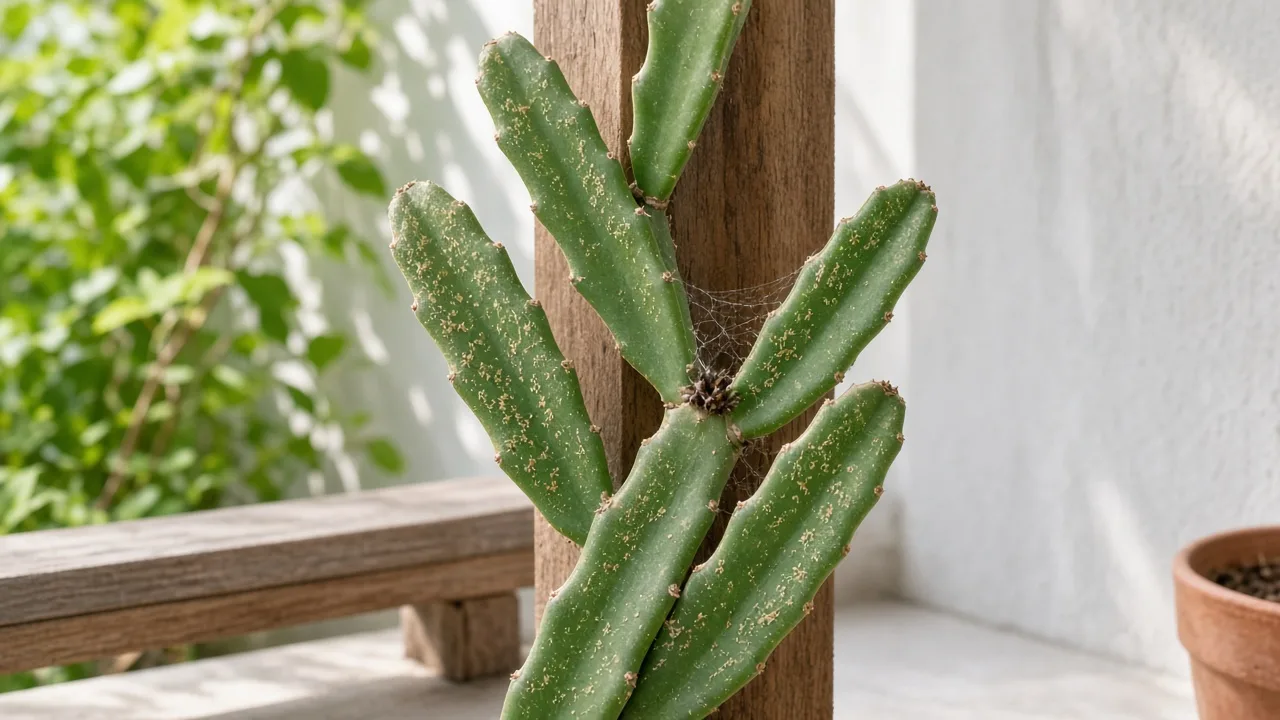
Spider Mites on Dragon Fruit: Causes, Checks & Fixes
This guide covers spider mites on Dragon Fruit. See also the general Spider Mites guide, watering, and light pages for this plant.
Spider Mites on Dragon Fruit: Causes, Checks & Fixes
Quick answer
Dragon fruit (Selenicereus undatus, pitaya) has no broad leaves—spider mites show on three-angled green cladodes as pale yellow or bronze pinpricks, dull rib color, and fine silk in grooves near areoles and trellis branch forks. They thrive in hot, dry air—common on heated balconies, greenhouse benches with poor airflow, and winter indoor corners beside radiators.
For mite life cycles, why broad-spectrum insecticides often fail, and when repeat sprays matter in general, see our spider mites pest guide. On pitaya, the decisive pattern is stippling plus webbing on rib faces—not cottony wax (mealybugs), uniform sun-facing bleaching (low humidity / sunburn), or shriveled segments on a light pot (underwatering).
First step: isolate the pot, wear gloves for spines, and rinse every rib groove and areole with lukewarm water—then let stems dry in bright airflow before choosing sprays. Review dragon fruit overview placement, trellis support, and seasonal watering before you change light and irrigation at once.
When to use this page vs other Dragon Fruit guides
This page is the pest-first entry for stippling and webbing on cladodes.
| Pattern | Read next |
|---|---|
| White cottony masses in areoles or stem forks | Mealybugs |
| Soft pear-shaped insects and sticky residue on new tips | Aphids |
| Pale corky patches on sun-facing ribs, no moving specks | Low humidity / sun stress |
| Longitudinal wrinkling, light dry pot, firm roots | Underwatering |
| Soft yellow stems, sour wet mix | Overwatering or root rot |
| Long bare stems reaching for light, no pest signs | Not enough light or leggy growth |
What spider mites look like on dragon fruit
Early damage is easy to miss because mites feed on protected stem surfaces while the plant still looks green from across the patio. Pitaya’s wavy three-ribbed cladodes show feeding as scattered pinhead dots along each rib face before heavy webbing appears at branch points.
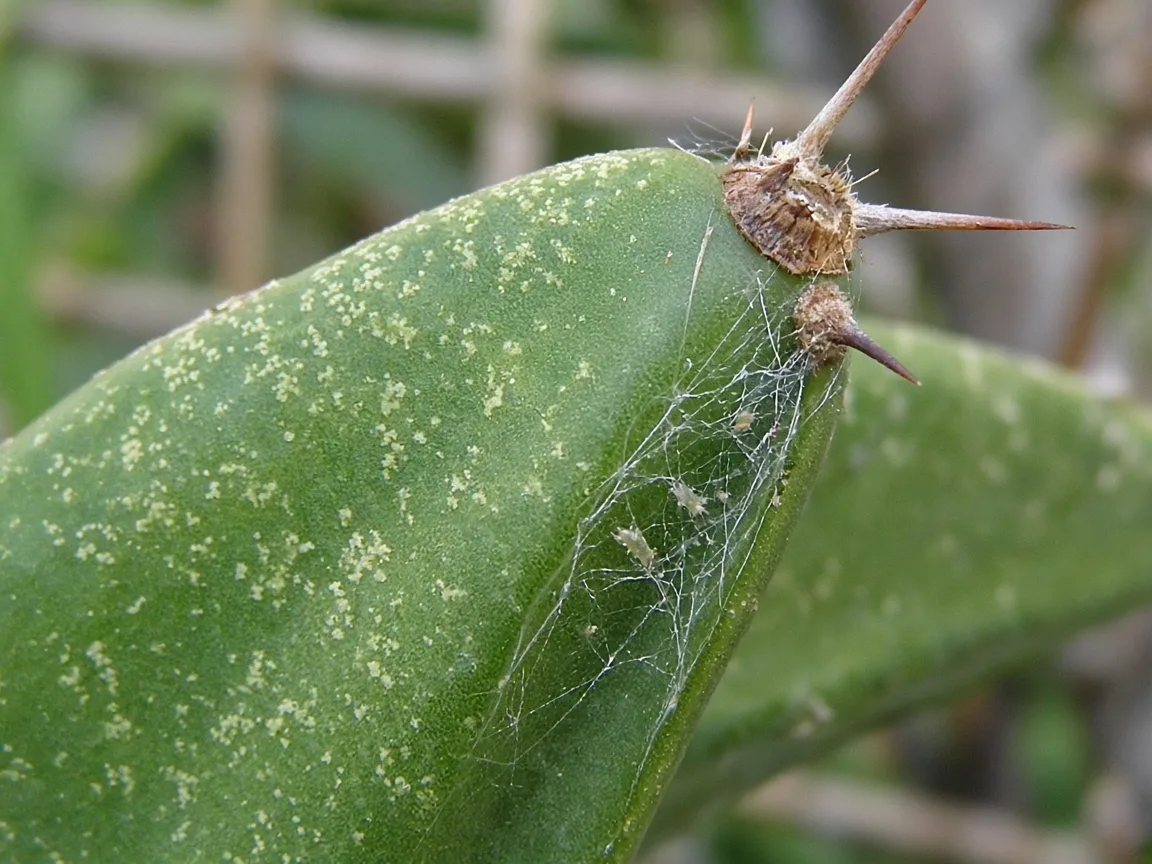
Pale stippling on a pitaya rib—compare dot clusters with clean green tissue on the same cladode.
Stippling on cladodes:
- Pinhead yellow, tan, or bronze dots on rib faces, breaking up the even green color
- Dull, slightly gray-green patches on segments that recently looked glossy
- Damage often worse on outer stems facing a sunny wall, metal railing, or heating vent
- Gritty or dusty feel when you wipe a rib groove with a gloved finger
Areole and trellis signs:
- Tiny moving specks—barely visible without magnification
- Fine silk threads where a cladode meets an areole or wraps the post
- Webbing in crowded branch forks at the trellis top where stems overlap
- Amber eggs and pale cast skins in rib grooves on moderate infestations
Plant-level clues:
- Newest tip segment shows dots while older lower stems still look partly clean
- Several ribs yellowing or bronzing within weeks despite normal watering rhythm
- Symptoms worsening in dry winter heat when furnace air runs and humidity drops indoors
Where mites hide on three-ribbed stems and trellis tops
Unlike leafy houseplants, pitaya concentrates pests on succulent stem architecture—not leaf undersides.
Spider mites colonize sheltered feeding sites and spin silk on the host. On dragon fruit, inspect in this order:
- Rib grooves on the youngest segments at the trellis crown—stippling often appears here first
- Areoles where spines emerge—mites tuck under spine bases and silk bridges to the next cladode
- Stem overlaps where two three-angled segments press together on the post or wire
- Aerial roots and rough bark on outdoor posts—dusty roots can hide early colonies
- Lower cascading stems brushing the pot rim—easy to skip on tall specimens
- Neighboring pots on the same shelf or fence line—mites spread on webbing and contact
Wear gloves: NC State notes spines along stems and recommends clean tools when pruning. Open cladodes gently; snapping thin segments worsens wounds that invite rot if you leave them wet.
Rib stippling vs sunburn and drought wrinkles
Dragon fruit growers often blame dry air or underwatering when ribs look off-color. Use pattern, not guesswork.
| What you see | Likely cause | Key difference on pitaya |
|---|---|---|
| Pinhead dots with fine silk in rib grooves | Spider mites | Moving specks on paper-tap test; webbing at areoles |
| Broad pale or corky patches on one sun-facing rib | Sunburn / dry intense light | No speckling; matches low humidity sun-exposure pattern |
| Even longitudinal wrinkling, light pot, dry mix depth | Underwatering | No grit or webbing; segments firm up after soak-and-drain |
| White cottony tufts in areoles | Mealybugs | Waxy masses smear when crushed; often with ants |
| Soft yellow stems, wet sour mix | Overwatering | Base-up collapse—no stipple pattern on firm upper ribs |
If ribs are uniformly bleached toward the sun with no dots or silk, fix shade and acclimation per light guide before you treat for mites.
Why dragon fruit gets spider mites
Spider mites are arachnids, not insects. The common species indoors, twospotted spider mite (Tetranychus urticae), pierces plant cells and drains chlorophyll, creating stippling. Warm, dry conditions shorten the life cycle—houseplant outbreaks often spike when heating dries the air.
Pitaya’s real-world setup often matches that environment:
Hot terrace and greenhouse corners. Outdoor pitaya wants full sun on a trellis, but enclosed balconies and plastic greenhouse ends trap heat with low humidity—ideal mite weather on stem tips.
Rib groove micro-climates. Each cladode has three longitudinal ribs with shallow grooves. Mites shelter where rinse water runs off too fast—especially on vertical trellis stems you inspect from the front only.
Indoor winter culture. Growers keeping pitaya in the brightest room during cool months often place pots beside heat vents. UMN Extension notes spider mites favor warm, dry indoor air on houseplants—pitaya in a container counts.
Crowded stem canopies. NC State recommends good air circulation to limit fungal and bacterial stem issues. Dense overlapping cladodes without pruning also give mites uninterrupted bridges between ribs.
Stress does not create spider mites, but a plant already drought-stressed or sun-scorched has less vigor to push clean new segments. Clear the mites first, then adjust watering and soil drainage once populations fall.
How to confirm the cause
Work through these checks before you spray:
- Isolate first — Move the pot away from other cacti and succulents. UMN Extension recommends isolating infested plants so mites do not travel on webbing, tools, or clothing.
- Paper tap test — Hold a stippled cladode over white paper and tap the rib face sharply. Moving specks confirm live mites; static dust does not crawl.
- Webbing search — Inspect areoles and branch forks at the trellis top with a hand lens. One silk thread usually means more colonies under overlapping segments.
- New tip check — Examine the youngest green segment. Stippling on active tip growth confirms feeding at pitaya’s fastest-growing point.
- Moisture cross-check — Probe the mix per watering guide. Wrinkling with a light pot fits drought; stippling with firm ribs and normal moisture fits pests.
- Neighbor scan — Inspect nearby dragon fruit pots, other cacti, and broad-leaf plants on the same wall. Shared stippling suggests contagious mites.
Confirmed webbing or moving specks means treat for mites—not sunburn alone.
First fix for dragon fruit
Isolate the pot, wear gloves, and rinse every cladode rib groove and areole with a steady stream of lukewarm water.
Move pitaya away from neighbors immediately. Use a sink, hose, or shower on low pressure so you do not snap segments. Angle water into grooves and areoles while supporting each cladode. Let stems dry completely in bright airflow the same day—do not leave cladodes dripping into a saucer overnight. UF/IFAS links excess moisture on pitaya to stem disease; mite control still requires knockdown, but wet succulent stems in stagnant air invite rot.
This rinse removes adults, breaks webs, and gives you a baseline before oils or soaps. Do not stack miticide on soaking-wet ribs.
Repeat rinse and spray schedule
Most contact sprays do not kill all eggs. UF/IFAS recommends two or more miticide applications at five-day intervals in warm weather or seven-day intervals in cooler conditions because hatchlings emerge continuously.
A practical pitaya schedule:
- Rinse rib grooves every three to five days in warm rooms, or about weekly in cool months
- After stems dry, apply insecticidal soap or horticultural oil labeled for spider mites on succulents—UMN Extension lists soaps and plant oils as effective on indoor mites
- Continue at least two to three weeks until two consecutive paper-tap tests show no moving specks
- Avoid broad-spectrum “insect” sprays aimed at chewing pests—few conventional insecticides control spider mites well and may flare populations
Outdoor terrace plants: rinse in morning sun so cladodes dry before cool evening dew. Greenhouse growers: improve fan airflow after treatment so humidity does not stall drying.
Recovery timeline and what improves
Stippled rib tissue on mature cladodes does not fully green up again—the collapsed cells stay pale or bronze. Judge success by new growth, not old scars:
- One to two weeks: Fewer moving specks on tap tests; webbing stops spreading to new areoles
- Three to six weeks: New tip segments open with clean green ribs (pitaya can grow quickly in heat)
- Months: Old stippled cladodes remain marked unless you prune them off after mites are gone
If tips stall, roots soften, or bronzing spreads while the mix stays wet, pivot to root rot triage—mites and rot can coexist on stressed pots.
Mistakes to avoid on pitaya
- Misting cladodes for “humidity” — Raises disease risk on a cactus; see low humidity for why sunburn and drought differ from mites.
- Leaving stems wet overnight after rinsing — Pair knockdown with airflow; disease risk rises when ribs stay damp in a closed room.
- One soap pass and done — Eggs hatch; repeat on a five- to seven-day rhythm.
- Repotting, heavy prune, and pesticide the same day — Open wounds plus chemicals on heat-stressed stems compound damage.
- Fertilizing through an active infestation — Hold feed until new segments look clean for two weeks; resume per normal pitaya rhythm through bloom if applicable.
How to prevent spider mites next time
- Airflow: Space trellised stems; prune crowded forks so light reaches inner ribs—aligns with NC State airflow guidance for disease prevention.
- Quarantine: Hold new cuttings two to three weeks away from fruiting plants.
- Monthly rib wipes: Dry cloth on grooves in winter; catches early dots before trellis tops web over.
- Heat placement: Keep pots off radiators and away from forced-air paths indoors.
- Neighbor vigilance: Check the full dragon fruit problems hub when one pest appears—mites and mealybugs often share stressed specimens.
Related Dragon Fruit guides
Use this page when you see speckled ribs, grit, or silk on cladodes. Use low humidity when uniform sun-facing bleaching dominates without specks. Use underwatering when wrinkled segments pair with a light, dry pot. For culture anchors, see overview, watering, light, and soil.