Fungus Gnats on Dragon Fruit: Causes, Checks & Fixes
Quick answer
Fungus gnats on dragon fruit signal moist organic soil at the trellis base—often from fruiting-season watering that never dries down, compost-heavy mix, or an oversized patio pot. First step: let the top 2–3 inches of mix dry while stems stay firm, set a yellow sticky trap at the rim, and confirm larvae with a potato slice before drenches or repotting.
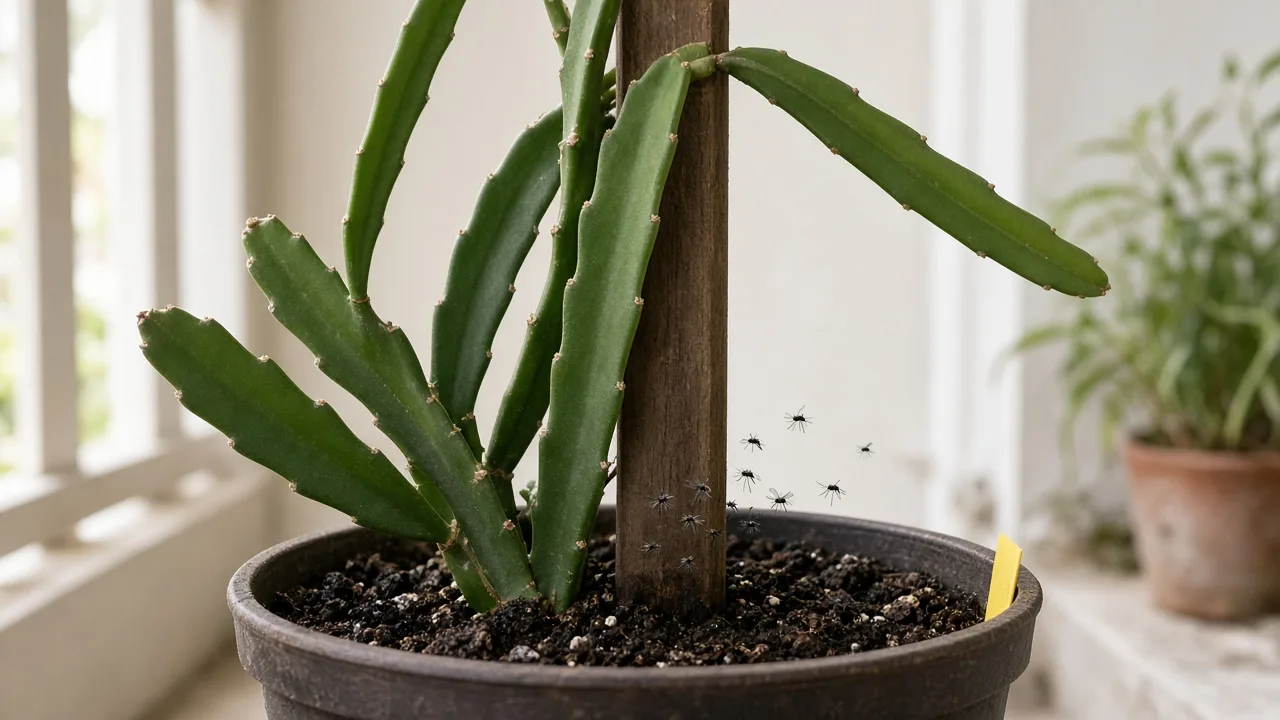
Fungus Gnats on Dragon Fruit: Causes, Checks & Fixes
This guide covers fungus gnats on Dragon Fruit. See also the general Fungus Gnats guide, watering, and light pages for this plant.
Fungus Gnats on Dragon Fruit: Causes, Checks & Fixes
Quick answer
Fungus gnats on dragon fruit (Selenicereus undatus, pitaya) are almost always a soil-moisture problem at the trellis base, not insects attacking the climbing three-winged stems. The vine stores water in fleshy segments; the mix beside the post should dry between waterings while still meeting this cactus’s seasonal needs. When the surface stays damp and organic, females lay eggs in moist debris and larvae feed on fungi, organic matter, and fine roots.
For how fungus gnats behave in moist potting media in general, see our fungus gnats hub. On dragon fruit, the useful clues are flies at the rim of a heavy patio pot, a dark damp layer that never lightens after you switch from harvest watering to a cool rest, compost-rich mix holding water at the post base, and calendar irrigation on a plant that NC State advises watering only when almost completely dry—not chewed stem wings.
First step: let the top 2–3 inches of mix dry while lowest stems stay firm, place a yellow sticky trap at the pot rim, and confirm larvae with a potato slice on the surface. Make that one correction before repotting, systemic sprays, or drenching the whole trellis.
Scope note: This page covers fungus gnat flies and larvae in wet mix at the post base—the early moisture signal before roots fail. If the lowest stem is already soft and yellow on saturated soil, pair this guide with overwatering on Dragon Fruit for wet-soil triage or root rot when tissue is mushy and mix smells sour.
Why Dragon Fruit gets fungus gnats
Fungus gnats need moist organic soil to reproduce. They thrive in moist conditions, especially with decaying vegetation and fungi, and larvae concentrate in the upper media where organic matter collects.
Dragon fruit invites gnats when pitaya culture gets misread:
Fruiting-season watering left on after harvest. UF/IFAS recommends more consistent moisture from flowering through harvest because pitaya has a fairly high water need for a cactus then—but the same schedule in winter keeps the surface wet and breeds gnats while you are trying to induce bloom with a drier rest.
Compost- and manure-heavy mix without enough grit. Dragon fruit benefits from organic matter in free-draining loam, yet excess moisture fuels bacterial and fungal disease on pitaya. Dense, damp surface layers are also gnat nurseries.
Oversized patio containers. A large pot beside a post holds a wet soil column the aerial roots never reach—classic fungus gnat habitat at the rim while upper stems look fine.
Treating pitaya like a desert cactus, then panic-soaking. Long dry spells followed by heavy drenches without full drainage can leave the top inch soggy for days—especially in humid monsoon weather.
Cachepots and saucers. Standing water under a heavy dragon fruit pot mimics the overwatering UF/IFAS warns against when lawn sprinklers keep pitaya too wet.
Gnats do not live on three-winged stem ridges. They mean the root-zone environment at the post is wrong—and on pitaya, chronic wetness leads to overwatering and root rot if ignored.
What fungus gnats look like at the trellis base
Adult flies:
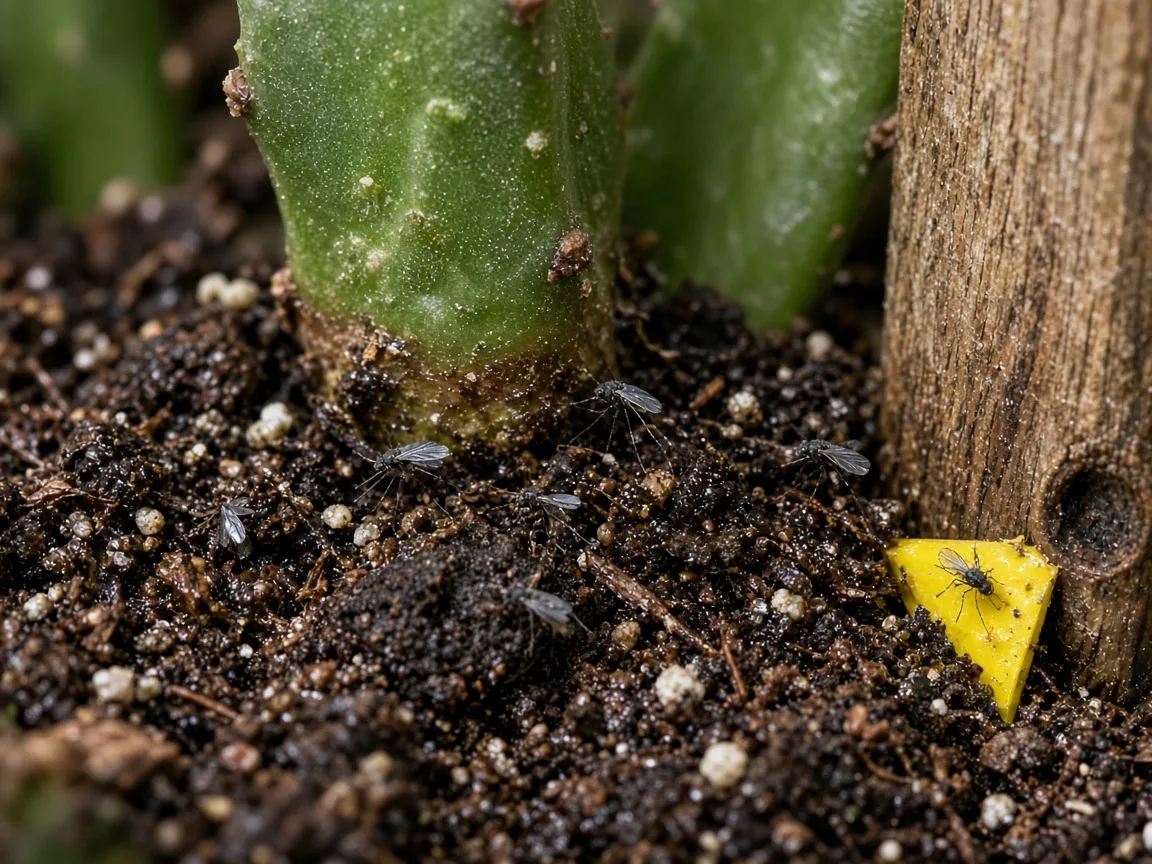
Fungus gnat adults at the dragon fruit soil line beside the post—compare with firm green stem tissue above.
- Tiny dark mosquito-like insects about 1/16 to 1/8 inch long with long segmented antennae at the pot rim and post base
- Rise when you water the container or bump the bench—not from stems tied six feet up the trellis
- Adults do not damage plants or bite people; their presence is primarily a nuisance and a moisture signal
- Often noticed near windows because adults are attracted to light
Larval stage:
- Translucent worms with shiny black heads in the top inch of wet mix
- Visible on a potato slice test or when scraping damp surface beside the post
- Algae film or slime trails on very wet media in greenhouse pots
Dragon fruit stress overlap:
- Lowest stem soft or yellow at soil line on heavy wet pot = overwatering, not gnat bites on aerial growth
- Wrinkled firm segments on light dry pot = drought—opposite problem; see underwatering
Post-base moisture and seasonal watering traps
Pitaya breaks the simple “cactus = never water” rule. NC State lists dragon fruit as drought-tolerant yet advises watering when soil is almost completely dry, with more water in spring and summer through flowering and less in winter.
That seasonal swing is where gnats appear:
| Season / goal | Common watering mistake | Gnat risk |
|---|---|---|
| Flowering through harvest | Needed deeper soaks | Lower if mix still drains and surface dries between drinks |
| Post-harvest cool rest | Still watering on fruiting calendar | High—surface stays damp in cool, slow-evaporating weather |
| Monsoon or humid balcony | Daily light sprinkles at post base | High—top inch never dries |
| Newly repotted cutting | Keeping mix “moist to root” like a tropical vine | High—larvae hit fine new roots |
Align corrections with the Dragon Fruit watering guide: almost dry, then soak, then drain—shift rhythm after harvest, do not copy tropical foliage schedules.
Potato-slice larval test beside the post
- Choose the container where adults rise when you water or where the surface beside the post stays cool and damp for many days.
- Cut a raw potato chunk about one inch thick. UC IPM recommends raw potato chunks placed cut-side down in pots to monitor larvae.
- Press the cut face lightly into the mix at the post base—not against the stem where moisture invites rot.
- Wait 48 hours in normal conditions.
- Lift carefully. Translucent worms with dark heads on the underside confirm fungus gnat larvae in that pot.
- Dispose of infested slices in sealed trash; do not compost indoor infested material.
Springtails bounce when disturbed and do not produce mosquito-like adults at the window. Shore flies have short antennae and tie to algae—common in saucers with standing water.
How to confirm fungus gnats
Work through these checks in order:
- Flight test - Flies rise from the pot beside the post when disturbed, not from stems on the trellis.
- Surface moisture - Top 2–3 inches stay damp many days; container feels heavy when almost-dry watering says it should be light.
- Potato slice test - Larvae on underside after 48 hours at the post base.
- Stem firmness - Firm lowest segment with few flies = early moisture drift. Soft yellow base on sour wet mix = escalate toward overwatering.
- Neighbor pots - Scout every pitaya and tropical on the same patio; gnats spread when multiple containers hold damp surface mix.
First fix for Dragon Fruit
Let the top 2–3 inches of mix dry while lowest stems stay firm. Set a yellow sticky trap at the pot rim.
Stop light sprinkles at the post base and pause fruiting-calendar watering once harvest ends. Allow the surface of container soil to dry between waterings—on pitaya that means matching the post-harvest dry-down in the watering guide before the next deep soak.
After dry-down begins:
- Yellow sticky traps at soil level catch egg-laying adults
- Improve airflow around the pot rim and post base
- If larvae persist after two weeks of dry surface: Bti drench to the top layer per label; repeat about every five days for two to three cycles because Bti does not kill eggs or adults
Do not mist stems for gnats. Do not use caterpillar Bt (kurstaki); fungus gnat control requires Bacillus thuringiensis israelensis (Bti).
Step-by-step recovery
- Week 1: Surface dry-down; sticky traps at rim; no shallow sprinkles at post base
- Week 2: Trap counts drop; fresh potato slice monitors larvae beside the post
- Week 3: Bti drench if adults still emerge on an otherwise drying surface; confirm no sour smell
- Week 4+: Resume seasonal pitaya rhythm—drier rest, then deeper soaks when flowering returns
- Ongoing: Quarantine new vines two weeks; gritty mix per soil guide
Recovery success: fewer flies, no larvae on a fresh potato slice, firm green lowest stem after the next proper soak.
Lookalike symptoms
| What you see | Likely cause | This page or sibling |
|---|---|---|
| Flies at soil beside post only | Fungus gnats | Start here |
| White fuzz on damp soil surface | Mold on soil | Mold on soil |
| Webbing or stippling on stems | Spider mites | Spider mites |
| Soft yellow lowest stem on heavy wet pot | Overwatering | Overwatering |
| Mushy roots on unpot | Root rot | Root rot |
| Wrinkled firm segments on light dry pot | Underwatering | Underwatering |
| Pale stretched growth | Low light | Not enough light |
Mistakes to avoid
- Keeping fruiting-season moisture on a post-harvest rest pot
- Repotting into more peat without perlite, pumice, or grit
- Spraying stems high on the trellis instead of fixing mix moisture at the base
- One trap without correcting seasonal watering
- Ignoring gnats because aerial growth still looks fine—larvae hit fine roots first
- Hydrogen peroxide drenches as a solo fix while mix stays soggy
- Pouring water around the post daily “because it is a tropical cactus”
Dragon Fruit care cross-check during treatment
While correcting gnats, align the rest of care with what climbing pitaya needs:
| Factor | Gnat-friendly mistake | Dragon fruit target |
|---|---|---|
| Water timing | Harvest calendar all year | Almost-dry soak-and-drain per watering guide |
| Saucers | Standing water under heavy pot | Empty within 30 minutes |
| Mix | Wet compost layer at rim | Free-draining blend per soil guide |
| Pot size | Huge patio tub holding unused wet soil | Sized to root mass and post stability |
| Light | Dim corner slowing evaporation | Full sun per light guide where possible |
| Post base | Mulch or grass clippings piled against stem | Clean soil line—organic debris breeds gnats |
How to prevent fungus gnats next time
- Match watering to season—drier rest after harvest, deeper soaks only when almost dry
- Gritty, fast-draining pitaya mix with controlled organic matter
- Pot sized to the vine—not an oversized decorative tub
- Bright light for predictable dry cycles per light guide
- Empty saucers and cachepots immediately
- Quarantine new vines two weeks with a trap at soil level
Healthy prevention is the same rhythm that keeps pitaya fruiting: soak-and-drain in mineral-heavy mix, not a constantly moist tropical schedule.
When to worry
Escalate when gnats persist after four weeks of corrected watering, soil smells sour, the lowest stem goes soft on wet mix, or roots feel slimy on inspection.
Scope differentiation:
- This page (gnats): Flies at soil line, damp surface, firm lowest stem, no sour smell—dry-down plus traps and optional Bti.
- Overwatering: Heavy wet pot, soft yellow base, calendar watering after harvest—stop shallow drinks and confirm dry-down before next soak.
- Root rot: Mushy stem base, sour saturated mix, brown slimy roots—same-week unpot and salvage per that guide.
If decline continues after dry-down, Bti drenches, and drainage correction, contact your local cooperative extension office before you water again.
Escalation summary: which path to take
- Dry-down only - Few adults when watering, firm lowest stem, surface damp but no sour smell. Stop shallow sprinkles; one sticky trap; recheck in 10–14 days.
- Dry-down plus Bti - Traps fill weekly, larvae confirmed on potato slice, stem still firm. Dry surface first, then two to three Bti drenches five to seven days apart.
- Escalate to overwatering triage - Soft yellow base on heavy wet pot without slimy roots yet. Follow overwatering this week.
- Escalate to root rot - Soft stem base, sour saturated mix, brown slimy roots on unpot. Follow root rot the same day.
- Collection protocol - Gnats on one pitaya beside other patio pots. Isolate, dry every neighbor container surface, trap each pot two to three weeks.
Permanent cosmetic note: Stem segments that yellowed from chronic wet soil at the base will not re-green. Judge success by falling trap counts, mix that dries at the surface between soaks, and firm new growth above the post—not by old damaged tissue.
Related Dragon Fruit problems
- Dragon Fruit overview - species care hub: trellis, light, water, fruiting
- Watering - seasonal soak-and-dry and bloom rest
- Overwatering - wet-soil signs when gnats are a moisture alarm
- Root rot - mushy stem base and same-week unpot escalation
- Mold on soil - surface fungi on persistently damp mix
- Underwatering - wrinkled firm segments on light dry pots
- Soil - free-draining pitaya mix ratios
- Problems hub - all common issues on this species
This URL is the fungus-gnat and wet-surface hub for the Dragon Fruit cluster. Sibling pages go deeper on one cause; start here when tiny flies rise from a damp pitaya pot beside a firm climbing stem.
When to use this page vs other Dragon Fruit guides
- Dragon Fruit watering guide - Use for routine seasonal moisture before assuming fungus gnats is the main issue.
- Dragon Fruit problems hub - Browse all common issues on this species.
- Overwatering on Dragon Fruit - Different entry point when the lowest stem is already soft on wet mix.
- Mold on soil on Dragon Fruit - Different entry point when white fuzz on the surface is the main symptom.
- Root rot on Dragon Fruit - Different entry point when roots are brown and slimy on unpot.