How to Grow and Care for Ming Aralia
Grow Ming aralia indoors with bright indirect light, warm stable air, and careful watering. Fix leaf drop, humidity, pests, and repotting with this complete Polyscias fruticosa guide.
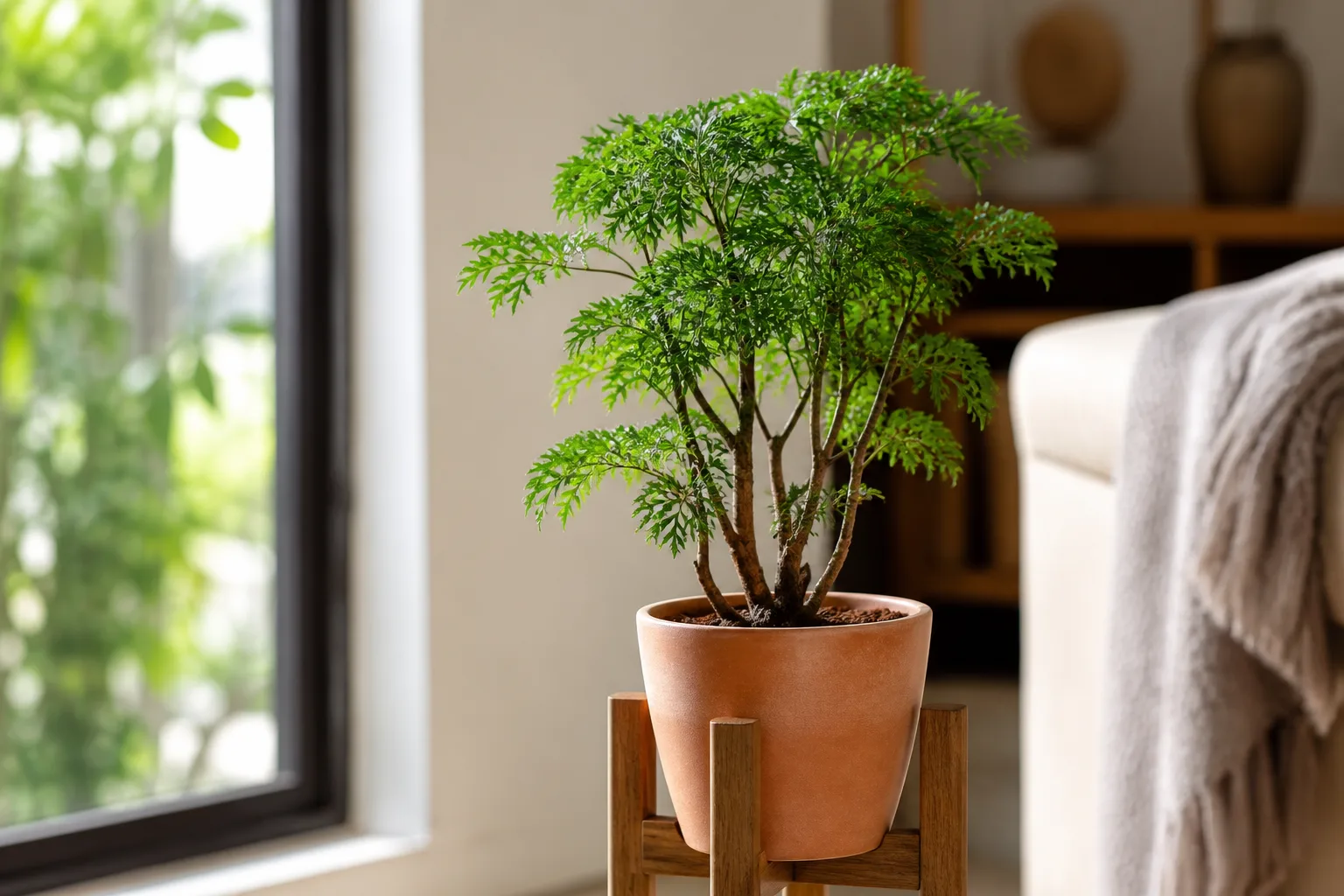
Ming aralia (Polyscias fruticosa) looks like a miniature tropical tree the moment you unbox it—finely divided, ferny leaves on reddish woody stems that already read “bonsai” even at 12 inches tall. That elegance comes with a reputation for fussiness, and some of it is earned. Ming aralia hates cold drafts, sulks when moved, and drops leaves when roots sit wet. But the plant is not magic. Give it bright indirect light, warm stable air, real humidity, and water only when the top soil dries, and a Ming aralia can stay with you for years, slowly reaching 6 feet indoors with a gnarled trunk you shaped yourself.
North Carolina Extension describes Polyscias fruticosa as a tropical evergreen shrub native to the Southwest Pacific that grows up to 25 feet in habitat but typically 6 to 8 feet tall and 2 to 3 feet wide as a houseplant, with tri-pinnate compound leaves that cluster near branch tips. (NC State Extension) The same profile notes it rarely flowers indoors—a detail worth knowing so you do not chase blooms that depend on outdoor conditions. What you are growing is foliage architecture, not a flowering display.
Ming Aralia Quick Reference
Use this table when something looks off. Match the symptom to the section below instead of changing three variables at once.
| Factor | Indoor target | Notes |
|---|---|---|
| Light | Bright indirect; 6–8 hours filtered | North or east windows often ideal; avoid hot afternoon sun |
| Water | When top 2 in (5 cm) of soil is dry | Fine roots rot easily; cut back in winter |
| Soil | Loamy, acidic, fast-draining mix | Perlite or sand improves drainage |
| Temperature | 65–85°F (18–29°C) | Below 60°F triggers leaf drop |
| Humidity | Above 50% relative humidity | Pebble tray, humidifier, or grouped plants |
| Fertilizer | Monthly spring–fall, half-strength liquid | Skip in winter; salt buildup is a real risk |
| Growth rate | Slow | Expect inches per year, not feet |
| Mature size indoors | 6–8 ft × 2–3 ft | Can stay smaller with pruning |
| Pets | Toxic to cats and dogs | Keep out of reach; call vet if ingested |
| Outdoor zones | USDA 11–12 | Specimen or hedge in frost-free climates |
What Ming Aralia Actually Needs Indoors
Ming aralia belongs to Araliaceae, the same family as true aralias and ivy relatives, but its care sits closer to a warm-climate interior tree than to a forgiving pothos. The plant has fine, fragile roots that suffocate in soggy mix yet still wants consistent moisture—not the feast-or-famine cycle succulents tolerate. NC State Extension recommends allowing the top 2 inches of soil to dry before watering and boosting humidity with a humidifier or pebble tray. (NC State Extension)
Slow growth is normal. Ming aralia builds woody structure over seasons, often shedding lower leaves as stems elongate and reveal a textured trunk—part of its tree-like character, not always a crisis. The mistake most new owners make is treating leaf drop as a single problem with a single fix. In practice, yellowing and fall usually trace to watering error, cold or dry air, a recent move, or root decline—sometimes more than one at once. The sections below separate those causes so you can act on the likeliest first.
If you want a comparable indoor tree with similar stature, our best indoor trees roundup places Ming aralia in the medium-difficulty tier alongside false aralia and other woody foliage plants that reward stability over constant rearranging.
Light Requirements for Ming Aralia
Ming aralia wants bright, indirect light for most of the day—roughly six to eight hours of filtered illumination. A north-facing window or an east exposure with gentle morning sun often works well. NC State lists partial shade (direct sun only part of the day) as the outdoor equivalent. (NC State Extension) Indoors, that translates to bright room light without scorching midday rays through south- or west-facing glass.
Too little light produces leggy stems, smaller leaflets, and sparse foliage near the tips only. Too much direct afternoon sun bleaches or crisps the delicate compound leaves. If you must place the pot near a harsh window, filter with a sheer curtain or pull it back a few feet. Rotate the container a quarter turn every few weeks so growth stays balanced, but expect a brief leaf shed after any major light change—the plant notices moves more than most houseplants.
Supplemental grow lights help in dim apartments. Aim for bright indirect intensity rather than blistering PAR directly on foliage; if new growth looks tight and dark green, you are probably in a good range.
Best Soil and Pot Choice
Drainage matters more than the exact peat-to-perlite ratio. Ming aralia accepts loam, sand, or peat-based mixes as long as water exits quickly and roots never sit in stagnant moisture. NC State notes good drainage and soil that is neither too wet nor too dry. (NC State Extension) A practical indoor blend: high-quality peat- or coir-based potting mix with 20–30% perlite or coarse sand, optionally with a handful of pine bark fines for structure.
Terra-cotta or unglazed clay pots wick excess moisture through porous walls—a useful safeguard against root rot, especially if you tend to water generously. Pair any pot with a drainage hole; cachepots without holes are risky for this species. Ming aralia also grows well with slightly confined roots; many experienced growers use the smallest pot that comfortably holds the root ball rather than oversized containers that stay wet too long.
Soil pH should stay acidic (below 6.0 per NC State). Avoid alkaline tap-water regions without occasional flushing, discussed later under salt buildup.
How to Water Ming Aralia Without Root Rot
Water deeply until excess runs from the drainage hole, then empty the saucer within 30 minutes. Do not water again until the top 2 inches of soil feel dry to your finger—Guide to Houseplants recommends the same threshold for Polyscias fruticosa. (Guide to Houseplants) In many homes that means roughly weekly in active growth, but calendar schedules fail when humidity, pot size, or season change. Lift the pot: a light container usually means it is time to water; a heavy one still holds moisture.
Overwatering is the fastest way to kill Ming aralia. Fine roots rot in anaerobic soil; the first above-ground sign is often yellow leaves that drop without crisping. Here is the paradox LSU AgCenter horticulturist Dan Gill documented on a six-year-old plant: the Ming aralia looked wilted and thirsty while the soil was moist, because sick roots could not absorb water—classic advanced root rot. (LSU AgCenter) If wilt persists after you watered appropriately, smell the drainage hole for sour soil and inspect roots if you can slide the plant out. Soft brown roots confirm rot; trim mushy tissue, repot into fresh mix, and reduce water—but severe cases may not recover.
In winter, when growth slows, stretch intervals and use less volume per watering. Cold wet soil combined with shorter days invites rot and leaf drop. When in doubt, wait an extra day; Ming aralia tolerates slight dryness better than constant wetness.
Temperature and Humidity
Keep daytime temperatures in the 65–85°F (18–29°C) range and avoid anything below 60°F (16°C) for extended periods. Guide to Houseplants warns that Ming aralia “does not like the cold at all,” and NC State emphasizes warm air with medium to high humidity. (Guide to Houseplants) Winter leaf drop often spikes when indoor heat runs dry and outdoor drafts slip through doors.
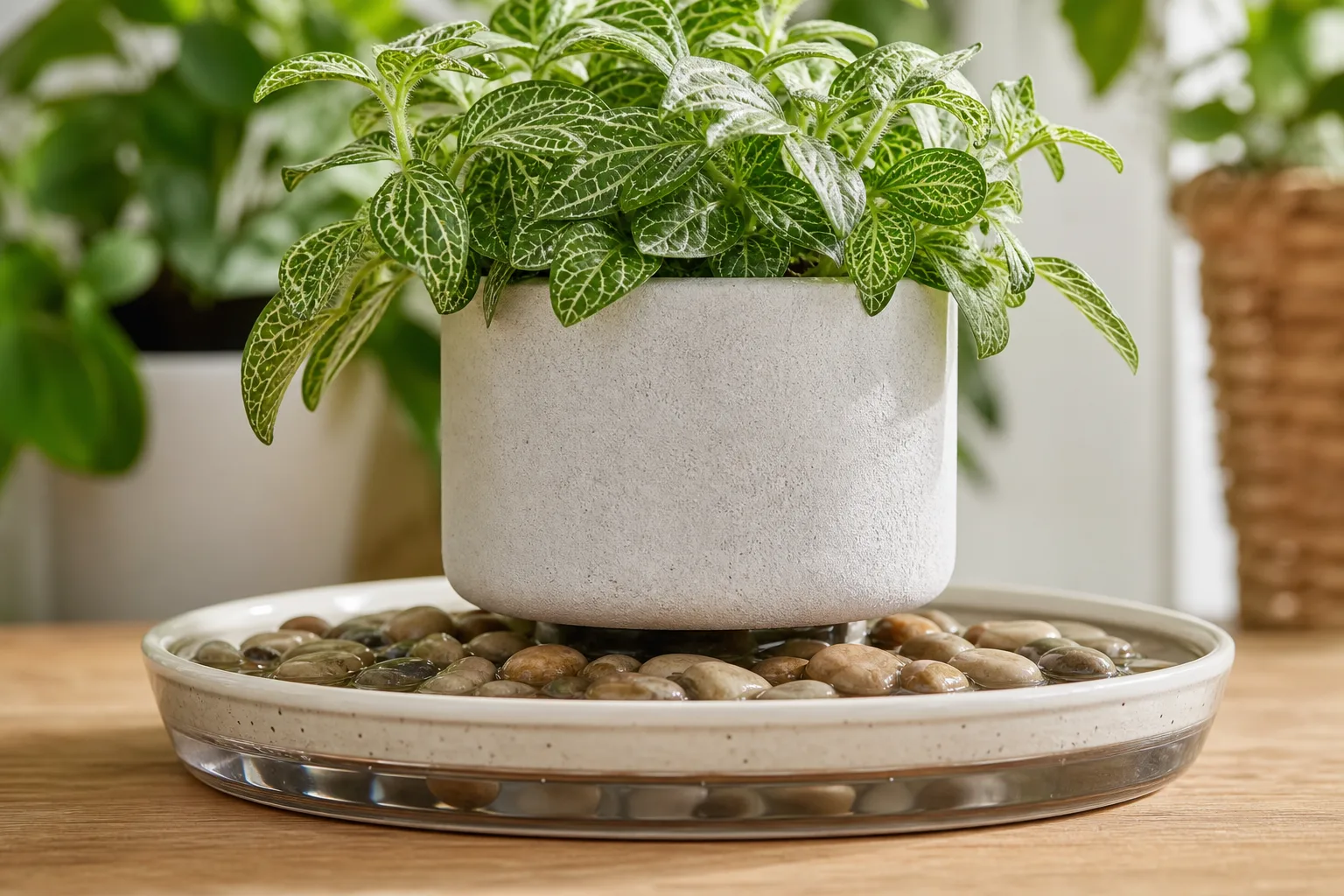
Target relative humidity above 50%. Measure with a small hygrometer near the plant rather than guessing. Effective boosts include:
- A cool-mist humidifier nearby (most reliable)
- A pebble tray: shallow saucer, stones, water below stone tops, pot sitting above the waterline
- Grouping plants to share transpired moisture
Mist foliage lightly if you enjoy the ritual, but mist alone rarely fixes dry winter air for a whole room. Avoid placing Ming aralia directly above radiators or beside blasting heat/AC vents.
Drafts, Vents, and Seasonal Moves
Ming aralia reacts badly to sudden environmental shifts. Moving it from a bright patio to a dim corner, or from a stable shelf to a drafty hallway, can trigger a leaf shed even when watering stays perfect. If you must relocate the pot—for seasonal outdoor time in warm zones, or furniture rearrangement—do it gradually over a week and keep humidity high during the transition.
Cold window glass in winter can chill leaves that touch it. Pull the pot back or insulate with a gap. Likewise, hot dry air from floor registers desiccates leaflet edges; redirect vents or elevate the plant on a stand.
Fertilizing During the Growing Season
Feed monthly from spring through fall with a balanced liquid fertilizer (such as 10-10-10) diluted to half the label strength. Guide to Houseplants links pale yellowish-green new leaves to nutrient shortage. (Guide to Houseplants) Skip fertilizer in winter when growth slows unless you grow under strong supplemental lights year-round.
Ming aralia is not a heavy feeder. Over-fertilizing causes salt accumulation on soil and pot rims, damaging the same fine roots that already struggle with moisture balance. If leaf tips brown and you see white crust on the soil surface, flush the pot with plain water until runoff runs clear, then pause feeding for a month. University of Maryland Extension notes that excess fertilizer and mineral salts from tap or softened water can injure indoor plant roots over time. (UMD Extension)
Ming Aralia Cultivars Worth Knowing
The species Polyscias fruticosa is the classic Ming aralia or Ming tree sold in most garden centers. NC State lists one widely grown cultivar:
‘Elegans’ (parsley aralia) — a dwarf form with tightly curled, parsley-like leaflets on a compact habit. Same care requirements, but slower and smaller—useful on desks or shelves where a full-size Ming would outgrow the space within a few years.
Other variegated selections (such as ‘Snowflake’) appear in specialty nurseries; treat them like the species regarding light and water, but expect slightly slower recovery from stress because variegated tissue photosynthesizes less efficiently.
Pruning, Shaping, and Bonsai Training
Ming aralia responds well to regular pinching. Snip growing tips with clean scissors to encourage branching and denser foliage; without pruning, stems stretch upright and shed lower leaves, exposing an attractive gnarled trunk that many growers deliberately showcase. You can keep a plant shrubby and waist-high or allow it to develop a single-trunk tree form 4 to 6 feet tall.
Bonsai-style training is popular because the plant already looks ancient while young. Unlike many bonsai subjects, Ming aralia is usually shaped by pruning alone, not wire—stems are brittle and wire scars persist. Trim to a balanced silhouette, remove crossing branches, and step back often; slow growth means each cut lasts a long time. Symbolic “peace and harmony” associations are cultural; horticulturally, the goal is an open structure that lets light reach inner foliage.
Always prune in spring or early summer when the plant can heal quickly. Sterilize blades between cuts if you recently trimmed diseased tissue.
How to Propagate Ming Aralia from Cuttings
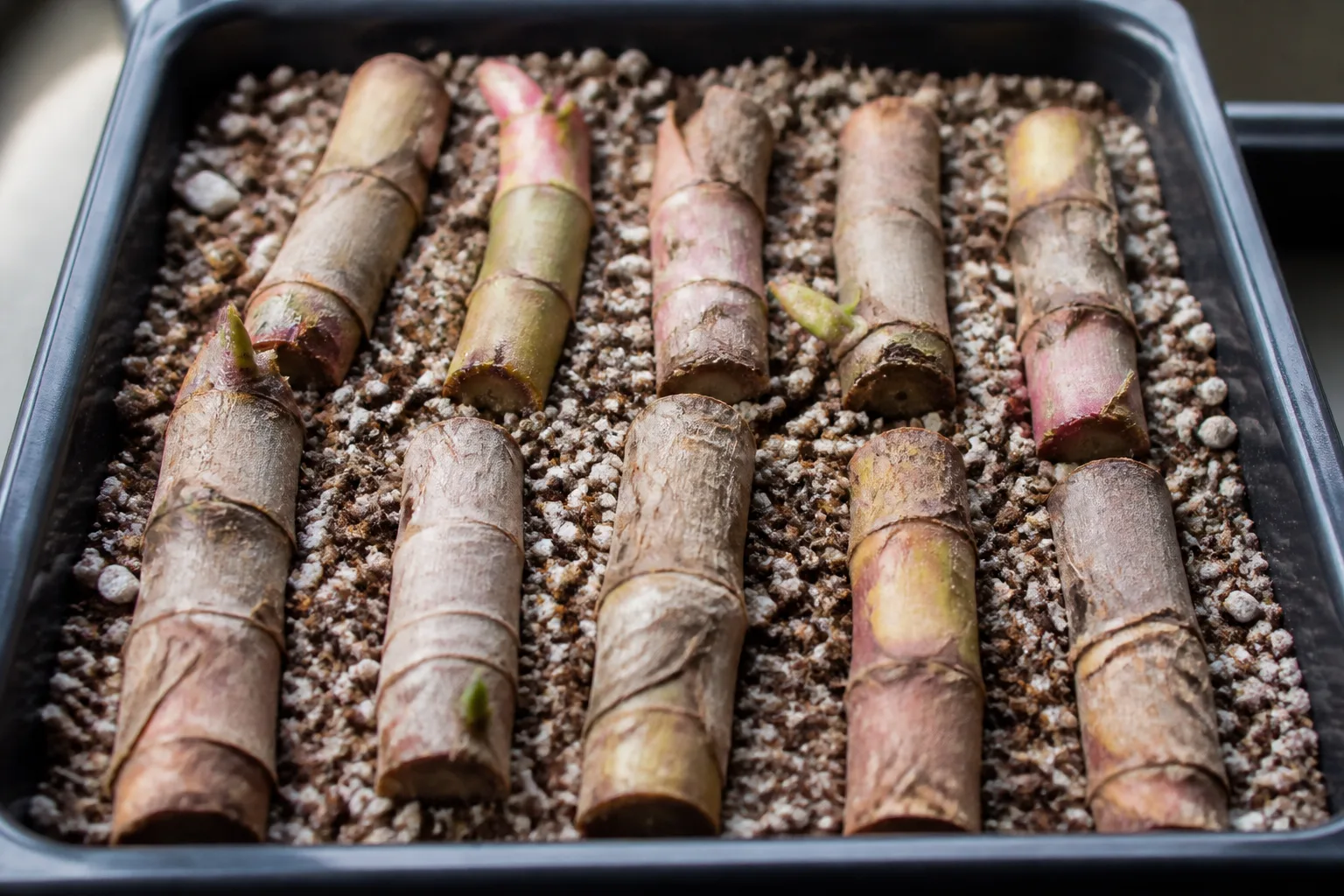
Propagation is straightforward if you supply warmth and humidity. In late spring or summer, take 4-inch (10 cm) stem tip cuttings from healthy green growth. Cut just below a leaf node, remove lower leaves, and optionally dip the cut end in rooting hormone. Insert into moist peat-perlite mix, cover with a clear plastic bag or dome to hold humidity, and keep temperatures around 70°F (21°C)—bottom heat from a seedling mat helps.
Place cuttings in bright indirect light, not direct sun. Roots typically form in two to six weeks; tug gently to feel resistance before potting up individually. NC State lists stem cuttings among recommended propagation strategies for the species. (NC State Extension) Keep new plants evenly moist but never soggy while roots establish.
When and How to Repot
Repot only when roots circle the pot heavily or growth stalls despite good care—often every two to three years for mature plants, sometimes less if you want to limit size. Spring is the safest window. Choose a container one size up at most; oversized pots stay wet too long.
Ming aralia tolerates slight root binding and may grow more compactly when roots are confined. Even if you skip repotting, top-dress annually: scrape the top inch of old mix and replace with fresh soil to refresh nutrients and reduce salt crust. Use a heavy base pot for tall specimens to prevent toppling.
After repotting, expect transitional leaf drop. Keep humidity high and avoid fertilizer for four to six weeks while roots settle.
Pet Safety and Edibility
NC State Extension flags Ming aralia as a problem for cats and dogs. (NC State Extension) ASPCA lists Ming aralia among plants with reported systemic or gastrointestinal effects on pets. (ASPCA) Keep pots off floor-level shelves pets climb, and call your veterinarian or ASPCA Animal Poison Control at (888) 426-4435 if you suspect ingestion.
Humans have a different story: NC State notes young leaves and shoots are edible, cooked or raw as a vegetable and flavoring in traditional use. (NC State Extension) That ethnobotanical fact does not extend to pets or to ornamental houseplants treated with fertilizers and pesticides—do not harvest from a treated indoor specimen.
Common Pests on Ming Aralia
Ming aralia is moderately pest-resistant but not immune. NC State advises monitoring for aphids, scale, mealybugs, whiteflies, and nematodes (the last mainly in outdoor soil). (NC State Extension) Dry indoor air favors spider mites, which stipple leaves and leave fine webbing.
Start with physical removal: wipe leaves with a damp cloth, blast lightly in the shower for heavy infestations, and isolate affected plants. Follow with insecticidal soap or neem oil (about 2 tablespoons per gallon of water), coating leaf undersides and repeating weekly until clear. Avoid oil sprays on heat-stressed plants in direct sun.
Quarantine new purchases for two weeks before placing them near your Ming aralia—pests hitchhike on nursery stock more often than they appear from nowhere.
Troubleshooting Yellow Leaves and Leaf Drop
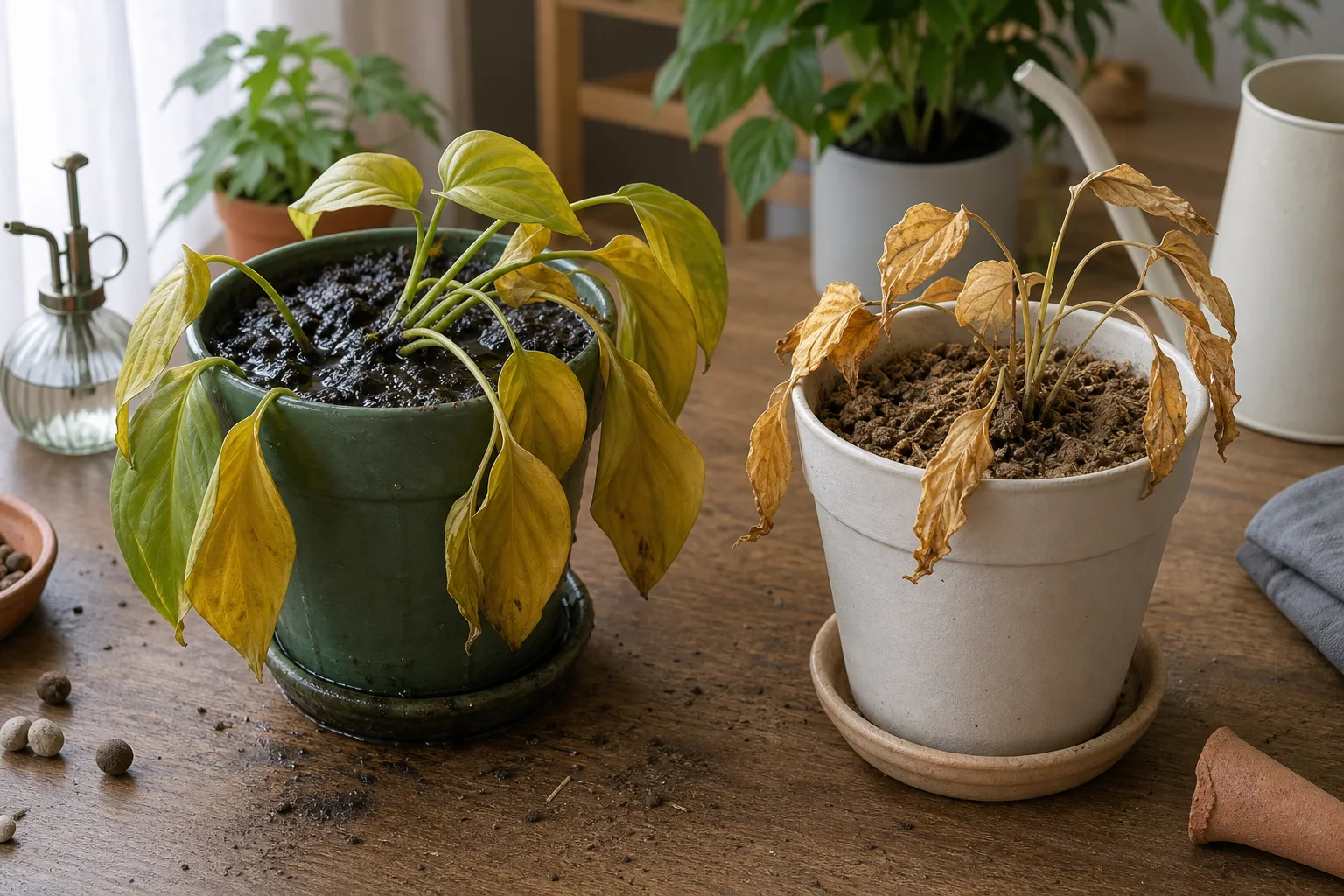
Leaf drop is the number-one Ming aralia complaint, and the cause is rarely mysterious once you work through a short checklist:
- Overwatering / root rot — yellow leaves, wilt despite wet soil, sour smell. Stop watering, inspect roots, repot if salvageable. Advanced rot may be fatal, as LSU AgCenter documented. (LSU AgCenter)
- Underwatering — wilt with dry top soil and lighter pot weight. Water thoroughly once, then resume the finger test.
- Cold or drafts — sudden shed after a cold snap or AC blast; move to stable warmth above 60°F.
- Low humidity — brown crisp leaflet edges progressing to drop; add humidifier or pebble tray.
- Recent move or light change — temporary shed while new growth continues at tips; hold steady and avoid further moves.
- Nutrient deficiency — pale new growth; feed lightly at half strength monthly.
Some lower leaf loss on older stems is normal as the plant exposes trunk tissue—confirm that fresh growth still emerges at branch tips before panicking.
Salt Buildup and Water Quality
White crust on soil or pot rims signals mineral salt accumulation from hard tap water, over-fertilizing, or water softened with sodium. Flush soil periodically with plain water until runoff is clear. Prefer rainwater, distilled, or filtered water if your tap is very hard. UMD Extension explains that salt deposits damage roots and stunt growth over time. (UMD Extension) If leaves brown at tips despite good humidity and watering, salts are a prime suspect—leach the pot and pause fertilizer.
Growing Ming Aralia Outdoors
In USDA hardiness zones 11a–12b, Ming aralia can grow outdoors as a specimen shrub, accent, or hedge in partial shade with moist, well-drained soil. (NC State Extension) Missouri Botanical Garden notes the species is winter hardy to zones 11–12 and prefers part shade to full shade in hot climates. (Missouri Botanical Garden)
In cooler regions, treat it as a patio plant only when nights stay above 60°F, then bring it inside before temperatures drop. Acclimate gradually in both directions to limit leaf shock. Outdoor plants may flower with small green-white umbels in panicles—rare indoors— but most growers value the foliage regardless.
Conclusion
Ming aralia rewards patience more than constant intervention. Lock in bright indirect light, warm humid air, and water only when the top soil dries, and the plant’s slow woody growth becomes a feature—you sculpt a living tree over years, not weeks. When leaves yellow, work the checklist: moisture at the roots, temperature stability, humidity, and salts before reaching for more fertilizer or another repot.
Under ideal conditions, Ming aralia can live well over a decade indoors, sometimes approaching 20 years as a mature specimen. It will never behave like a set-and-forget succulent, but owners who stop moving it, stop overwatering it, and measure humidity instead of guessing usually find the “fussy” reputation fades long before the plant does.