8 Oak Trees for Fall Foliage That Lasts Into Late Autumn
Compare eight oak trees for late fall color, including red, gold, and persistent leaves, with mature size, soil, light, and site-fit advice.
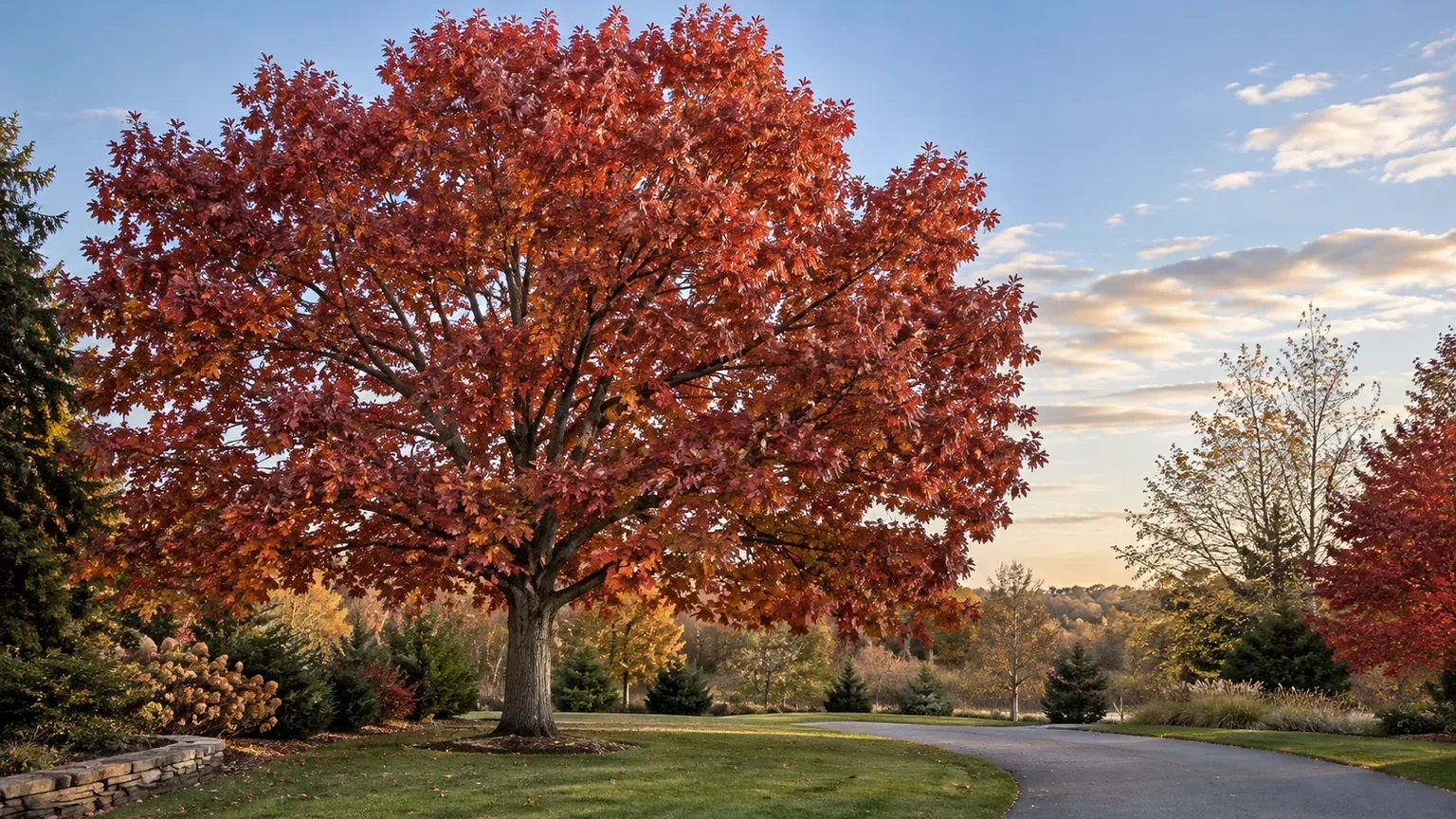
Maples usually get the loudest applause in October, but oaks have a different advantage: many hold their color after maples have dropped their leaves. The show is quieter—brick red, russet, copper, yellow, or deep brown rather than one guaranteed neon shade—but it can extend the season of interest when the rest of the canopy is already bare.
The best oak for fall foliage is not simply the reddest species in a catalog. It is the species whose mature size, soil tolerance, climate range, moisture needs, and branch habit fit your property. An oak that is spectacular in the right woodland soil can struggle in compacted fill, while a fast-growing oak planted too close to a driveway can become a long-term maintenance problem.
This guide compares eight useful choices. Treat the color descriptions as tendencies, not promises. Autumn color depends on species, genetics, summer moisture, sunlight, temperature, and the timing of the first hard freeze. A healthy tree in a suitable site gives you the best odds; no label can guarantee that every leaf will turn the same red each year.
Why oaks are late-season foliage trees
Oak leaves often change after many maples, birches, and ash trees have finished. Some species turn while the canopy is still full; others develop color gradually and then retain dry leaves into winter. That extended window is valuable beside evergreen shrubs, ornamental grasses, and paths that would otherwise look empty after early fall color fades.
Oaks also earn their place through structure. Their trunks and branching silhouettes provide winter interest, broad canopies give summer shade, and their acorns support wildlife. The trade-off is scale: many landscape oaks eventually become major trees, not decorative patio plants. Their roots can also heave paving or compete with lawn where the planting site is too constrained.
Choose an oak by site before choosing by color
Start with the property, then narrow the list by foliage. Check the species’ mature height and spread—not the size of the container or the height of a young tree—and leave room for the canopy to develop without constant pruning. Keep large oaks well away from buildings, overhead lines, septic components, narrow planting strips, and pavement. A tree that will eventually spread 60 feet needs a different location from one intended for a small courtyard.
Match hardiness, heat, and moisture
Hardiness zones are a useful first filter, but they do not describe every condition a tree experiences. A northern tree can still fail in reflected heat, drought, or alkaline fill, and a warm-climate oak may be damaged by a rare freeze. Note winter lows, summer heat, rainfall pattern, drainage, soil depth, and exposure to wind.
Drainage is especially important. “Tolerates wet soil” can mean a species survives periodic saturation; it does not mean the planting hole should remain a pond. Conversely, drought tolerance usually improves after roots are established and does not excuse regular watering during the first growing seasons.
Plan for the mature canopy
Measure from the trunk location to the nearest wall, sidewalk, driveway, fence, and wire. The canopy is not the only consideration: roots need oxygen, and repeated soil compaction from cars or construction can damage a tree long before the crown reaches its full width. Select a lawn or meadow position where fallen leaves can remain as mulch or be collected without blocking drainage.
Pin oak for red color and damp sites
Pin oak (Quercus palustris) is a classic choice when you want a strong late-season red and have a spacious sunny site with reasonably acidic soil. Mature trees commonly become large, with a tall crown and a broad spread. Lower branches may die and leave short branch stubs, which explains the common name and gives the tree a distinctive winter outline.
Its useful distinction is moisture tolerance. Pin oak handles heavier or periodically wet ground better than many upland oaks, but it still needs oxygen around the roots and should not be planted in permanently stagnant water. It is a poor match for alkaline soil unless a site assessment supports the choice. Give it full sun for the densest crown and strongest color.
Choose pin oak when you have open lawn, moist ground, and room for a substantial tree. Avoid it in a tiny verge, beneath wires, or where high-pH soil is likely to cause chronic nutrient problems. Expect acorns and a seasonal leaf cleanup routine once the tree is mature.
White oak for a long-lived native shade tree
White oak (Quercus alba) is a patient investment. It grows more slowly than some red-oak relatives, but it develops a broad, dignified canopy and can become an exceptional shade tree. Fall foliage ranges from muted red and burgundy to reddish brown, with the most pleasing color often appearing on younger trees or during a favorable autumn.
This is an upland tree, not a wet-site specialist. Give it full sun, deep soil, and reliable drainage. Once established, it is comparatively resilient during dry periods, but a new tree still needs deep watering while its root system expands. Avoid frequent shallow sprinkling; it encourages a surface-rooted pattern and does little during extended dry weather.
White oak is a strong choice for a large property where longevity and canopy quality matter more than rapid shade. It is less suitable when you need a small tree quickly or have a permanently damp planting bed. Its rounded lobes and pale-to-russet fall palette look especially good against dark evergreens.
Northern red oak for dependable structure and rich red leaves
Northern red oak (Quercus rubra) is one of the most versatile large oaks for cooler regions. Its pointed-lobed leaves can turn deep red, scarlet-tinged, or reddish brown, and the tree generally establishes faster than white oak when soil and moisture are suitable. The mature canopy is large, so the apparent convenience of faster growth should never be confused with small-yard suitability.
Give northern red oak full sun to light shade and well-drained soil. It dislikes a saturated root zone, yet a young tree should not be allowed to dry repeatedly during its establishment years. A thick layer of organic mulch over the root zone—kept a few inches away from the trunk—helps moderate moisture and temperature without burying the bark.
Choose it when you want a large shade tree with a credible chance of strong red fall color and have enough room for the final canopy. For a narrow lot, select a smaller tree rather than trying to control a naturally large oak through aggressive pruning.
Sawtooth oak for yellow-gold color and faster growth
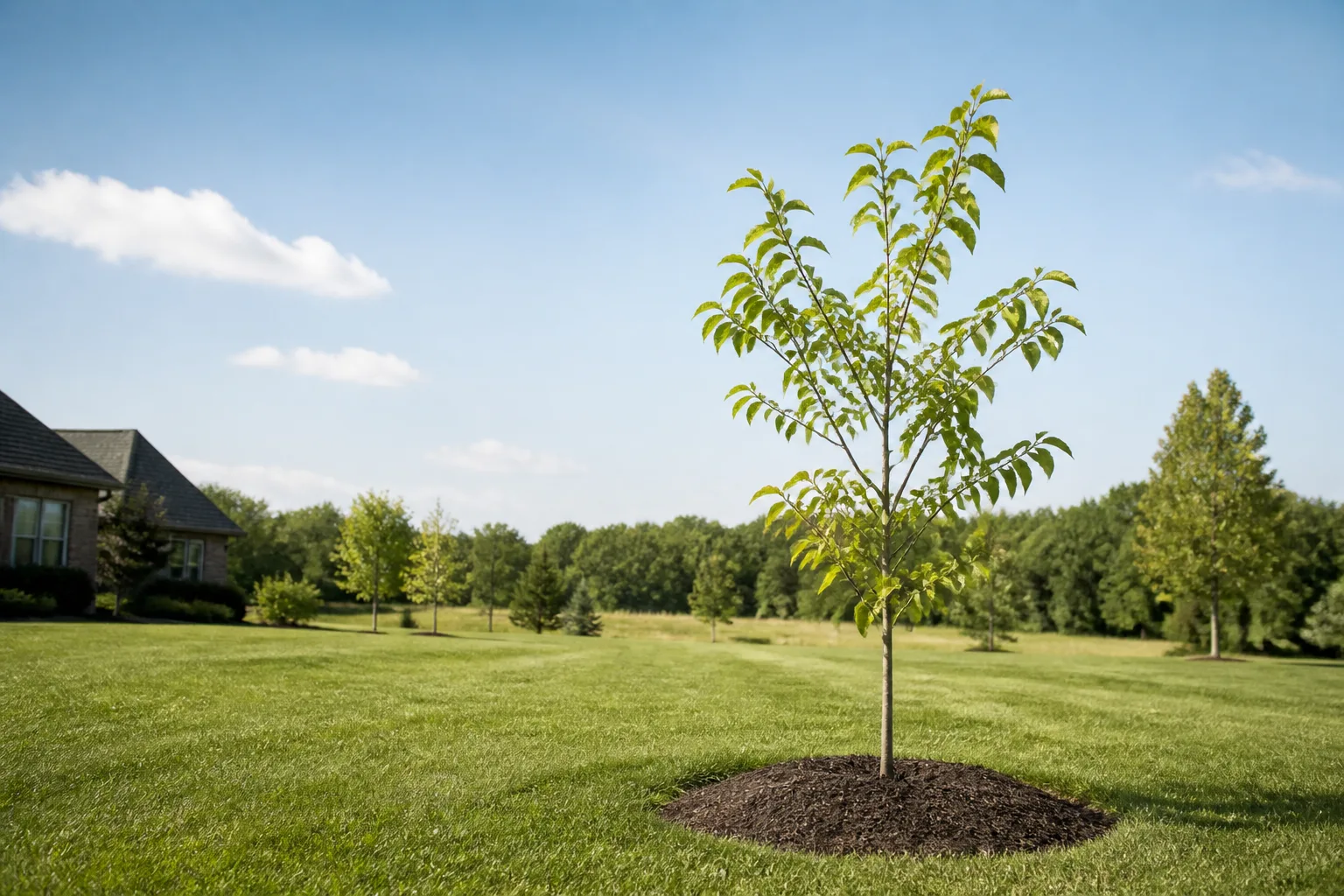
Sawtooth oak (Quercus acutissima) brings a different autumn palette. Its long, toothed leaves commonly turn yellow and then golden brown, and its relatively quick growth can produce useful shade sooner than slow-growing white oak. It tolerates heat, humidity, and some drought once established, making it appealing in a broad range of landscapes.
That speed comes with planning obligations. A tree that fills space quickly also demands early attention to branch structure, clearance, and planting distance. Do not wait until the trunk is large to correct a crossing branch or a low limb that conflicts with a walkway. Any structural pruning should respect the branch collar and avoid removing large portions of the crown at once.
Sawtooth oak fits a sunny, roomy site with rich, well-drained soil. It is a good option when gold is more important to you than scarlet red, but confirm that the species is appropriate for your local climate and landscape goals before planting. Like other oaks, it can produce substantial acorn and leaf litter.
Bur oak for tough sites and golden-brown fall color
Bur oak (Quercus macrocarpa) is built for presence. Its very large leaves, corky-textured twigs, and broad crown create a bold specimen, while fall color usually runs yellow, tan, or golden brown rather than clear scarlet. It is valued for toughness and can handle dry conditions, clay, and urban exposure better than many more delicate shade trees.
The mature scale is the decisive factor. Bur oak belongs on a large lawn, acreage, park-like border, or other site where its spread can be appreciated. Its heavy acorns and large leaves may be inconvenient over a roof, pool, or frequently used patio. If you can accept that cleanup, the tree rewards you with shade, wildlife value, and a strong silhouette in every season.
Use bur oak where soil is challenging but drainage is adequate. Improve compacted soil broadly rather than filling only a tiny planting hole with rich mix; a sharp soil boundary can discourage roots from moving outward. Water deeply during establishment and gradually reduce frequency as the tree becomes rooted.
Live oak for evergreen coastal structure
Live oak (Quercus virginiana) is the outlier in this list. In warm climates it is evergreen or semi-evergreen, replacing old leaves gradually rather than delivering a classic single-week display of red or gold. Its value is year-round structure: thick limbs, a wide-spreading crown, and a powerful coastal or Southern character.
This is a giant in width as much as height. A live oak may spread farther than an inexperienced gardener expects, and its branches can extend laterally for many yards. It needs a generous site, full sun to light shade, and soil that drains even if it receives regular moisture. Do not plant it beside a small foundation bed simply because the young tree looks manageable.
Choose live oak when winter foliage and architecture matter more than deciduous fall color. It is the wrong choice if your main goal is a bright red October canopy or if the property cannot accommodate a very broad crown.
Black oak for a solitary specimen tree
Black oak (Quercus velutina) is a strong candidate for a specimen position in much of the eastern and central United States. Its fall color can range from yellow and bronze to red-brown, and mature bark becomes notably dark. It performs best when it is not forced to compete with dense neighboring trees for light and root space.
Give black oak full sun and average soil with good drainage. It is not the first oak to choose for a low, wet depression or a narrow strip between pavement and a wall. A solitary planting lets the crown develop its natural outline and makes the dark trunk and autumn leaves easier to appreciate.
Because fall color is variable, buy from a nursery that can describe the plant’s provenance when a particular color matters. Even then, treat the color as a tendency. Weather and tree health will still influence the final display.
Scarlet oak for vivid red on dry, acidic soil
Scarlet oak (Quercus coccinea) is the specialist for gardeners who want to improve their odds of a brilliant red show. It prefers full sun and dry to medium-moisture, acidic, sandy or well-drained soil. In a compatible site, the pointed leaves can turn a striking scarlet that remains attractive late in the season.
It is not a universal red-oak substitute. Heavy, poorly drained soil and chronic root stress can erase the advantages of the species. Before planting, inspect the soil after rain, look for standing water, and consider a soil test rather than assuming the word “oak” means any ground will do. A raised planting position may improve drainage, but it cannot fix a site with no place for excess water to go.
Scarlet oak is best for a spacious, sunny landscape where vivid red is the priority and the soil already leans acidic. It is a poor match for a compact wet yard or a bed that receives only reflected afternoon light.
How to improve fall color after planting
Color begins with genetics, but care determines whether the tree can express that potential. Place the oak where it receives the light the species requires. Avoid repeated drought followed by heavy irrigation, fertilizer surges late in the season, and root damage from digging or lawn equipment.
During dry weather, check soil moisture several inches below the surface in the root zone. Water slowly enough to soak deeply, then let the surface begin to dry rather than keeping the trunk-side soil constantly wet. Maintain mulch in a wide, shallow layer, and keep it off the trunk. Grass competing directly beneath a young oak can consume water and make establishment slower.
Do not fertilize simply to force brighter leaves. If growth is weak or foliage is unusually pale, diagnose soil, drainage, light, pests, and root damage first. Excess nitrogen can encourage soft growth and does not guarantee better autumn color.
Planting and establishment checklist
Plant during a season that allows roots to settle before the harshest heat or cold in your area. Dig a broad hole no deeper than the root ball, loosen circling roots, and set the trunk flare at the correct level. Backfill with the excavated soil unless a professional soil assessment shows a specific amendment is needed.
Water the entire root ball and surrounding soil after planting. For the first growing seasons, inspect moisture during dry spells instead of relying on rainfall at the topsoil surface. Stake only when wind or a loose root ball requires it, and remove supports once the tree can stand on its own. Protect the trunk from mowers, string trimmers, and wildlife damage.
Before buying, ask three questions: Where will the canopy be in 20 years? Can I accept acorns and leaf litter? Does the soil suit this species without heroic intervention? If any answer is no, keep shopping.
Leaf retention, marcescence, and winter cleanup
Some oaks retain dead, dry leaves after color fades. This behavior, called marcescence, is more noticeable on young trees and lower branches and may continue until wind, weather, or spring growth dislodges the leaves. Persistent leaves do not automatically indicate disease or a watering problem.
Live oak behaves differently because it sheds and replaces leaves gradually in warm climates. Pin oak and other deciduous oaks can also hold leaves longer than neighboring species. Decide whether that is a benefit before planting: retained leaves provide winter texture and habitat, but they may look untidy beneath a formal window or require a spring cleanup.
Common oak problems and site conflicts
The most expensive oak mistakes happen before planting. A large tree beneath utility lines will eventually require disfiguring pruning or removal. Roots and pavement conflict when the planting strip is too narrow. Acorns can make a path slippery, clog gutters, or create seedlings in lawns and beds. None of those traits makes an oak bad; they make it wrong for a particular location.
Watch for trunk injury, compacted soil, prolonged drought, and abrupt changes in grade around the root zone. Avoid piling soil against the trunk or using heavy equipment beneath the canopy. If a mature branch is large, high, damaged, or close to a structure, hire a qualified arborist rather than attempting a ladder repair.
An oak is also a long-term wildlife decision. Acorns feed many animals, and the canopy supports more life than a purely ornamental tree. If you need a spotless patio tree, choose another species. If you want shade, habitat, and late-season character and can plan for scale, an oak can become one of the most valuable plants on the property.
Conclusion
For red late-fall color, compare scarlet oak, northern red oak, and pin oak—but match each to its soil and moisture requirements. Choose white oak for a durable, broad shade tree; sawtooth oak for yellow-gold color and quicker growth; bur oak for a tough, spacious site; black oak for a solitary specimen; and live oak for warm-climate evergreen structure rather than a classic fall display.
The winning choice is the oak that can grow naturally where you put it. Confirm mature dimensions, inspect drainage, allow the root zone room, and plan for leaves and acorns before planting. A well-sited oak may take time to reach its full autumn effect, but it can extend the foliage season and improve the landscape for generations.