How to Grow and Care for Rosemary Indoors
Grow healthy rosemary indoors with the right light, gritty soil, careful watering, pruning, feeding, and fixes for brown or dropping leaves.
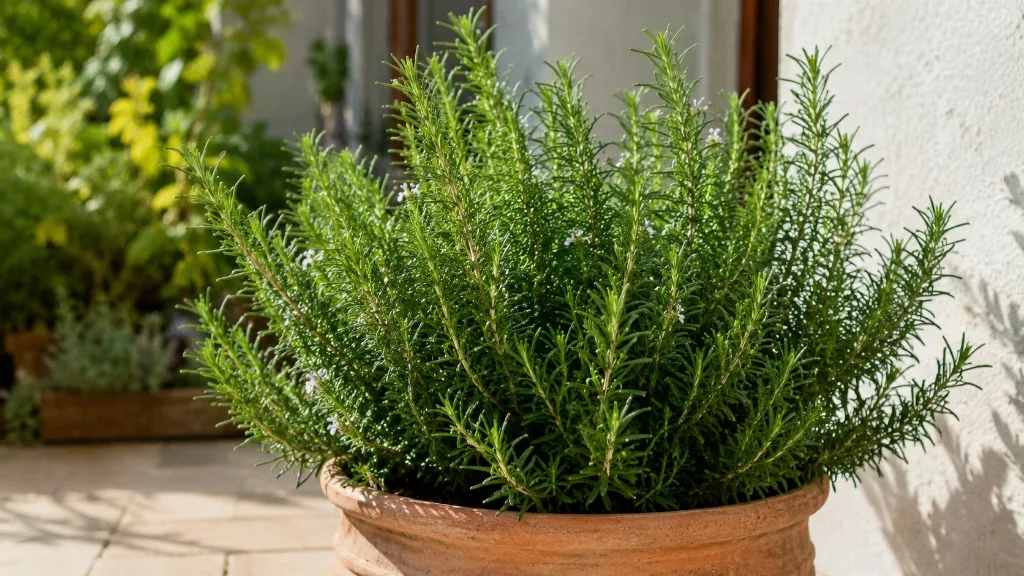
Rosemary (Salvia rosmarinus) can live indoors, but it does not behave like basil, parsley, or mint. It is a woody Mediterranean perennial that wants intense light, lean soil, good airflow, and a root zone that dries between thorough waterings. Most indoor failures come from one of two mismatches: the plant is placed in a bright-looking room that is not bright enough, or it is watered on a schedule that keeps the pot wet.
The goal is not to make rosemary permanently lush in every room. The goal is to match the plant to a workable location, then adjust the pot, soil, and routine around that location. A sunny south- or west-facing window may be enough. A shaded apartment usually needs a full-spectrum grow light. A cool, damp windowsill may require less water than a warm kitchen shelf. Those details matter more than a label promising that rosemary is “easy.”
Rosemary at a Glance
| Care factor | Practical indoor target |
|---|---|
| Botanical name | Salvia rosmarinus |
| Plant type | Woody evergreen herb and small shrub |
| Light | At least 6 hours of strong direct light; more is often better |
| Soil | Loose, gritty, and fast-draining |
| Water | Soak thoroughly, then wait for the upper soil to dry |
| Pot | Drainage hole; terracotta is useful in humid homes |
| Temperature | Comfortable room temperatures with no cold drafts |
| Humidity | Average household humidity with moving air |
| Feeding | Lightly during spring and summer growth |
| Harvest | Small, regular cuts from green stems |
Rosemary is evergreen, but indoor growth slows sharply when days are short. A plant can remain alive through winter without producing much new growth. That is normal. Do not compensate for winter slowness by watering more often or adding extra fertilizer.
Choose a Healthy Plant and the Right Variety
Start with a plant that already has firm, green growth and a clean, dry-looking base. Avoid rosemary with blackened stems, sour-smelling soil, a permanently wet root ball, or fine webbing between leaves. Inspect the undersides of leaves and the junctions where stems meet the main plant. A small pest problem is easier to isolate before the plant enters your home than after it is placed beside other herbs.
Most garden-center rosemary is suitable for a pot, but form matters. Upright plants are easier to place near a window and harvest from the center. Trailing types can work in a hanging or edge container but may become sparse if the light comes from only one direction. Compact varieties are useful for a narrow sill, although no cultivar can overcome a dim room.
If you are choosing between a small healthy plant and a large, root-bound one, choose the smaller plant. A young plant with intact green tips adapts more readily to indoor conditions. Grocery-store rosemary can grow, but it is often crowded into a small pot, stressed by shipping, or sold as a short-term culinary crop. Separate the stems only if the root ball is clearly made of multiple plants; otherwise give it recovery time before making major changes.
Give Rosemary the Brightest Practical Location
Place rosemary within a few inches of the brightest unobstructed window available. A south-facing window is usually the first choice in the Northern Hemisphere; a west-facing window can also work if afternoon light is strong. Sheer curtains, tinted glass, nearby buildings, and winter sun can reduce the usable light more than your eyes suggest.
Turn the pot a quarter turn every few days so one side does not become stretched toward the glass. Keep leaves from touching a cold window in winter, and leave a little space around the plant so air can move through the foliage.
If new stems are long, soft, pale, or widely spaced, treat that as a light warning rather than a watering problem. A grow light is the most dependable correction. Use a full-spectrum LED positioned according to the fixture instructions, keep it on a consistent daily schedule, and give the plant a dark period at night. A light that illuminates the room is not necessarily strong enough at the leaves; the canopy must be close enough to receive useful intensity without heat damage.
Use a Fast-Draining Pot and Soil
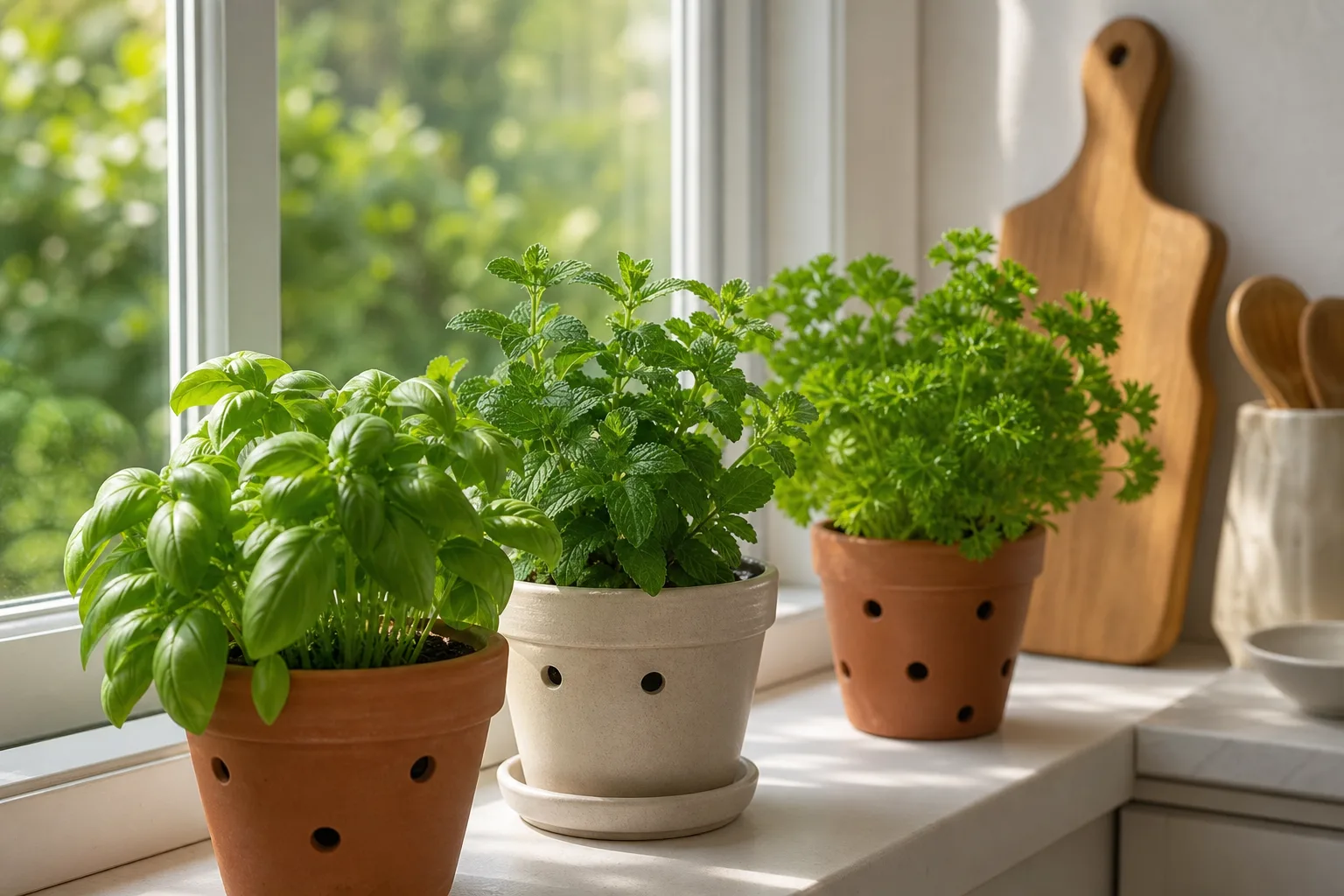
Rosemary needs oxygen around its roots. Use a commercial potting mix amended with perlite, pumice, coarse sand, or fine horticultural grit. The finished mix should feel springy and drain quickly rather than forming a dense, muddy plug. Do not use garden soil by itself in an indoor container; it compacts and drains poorly in a pot.
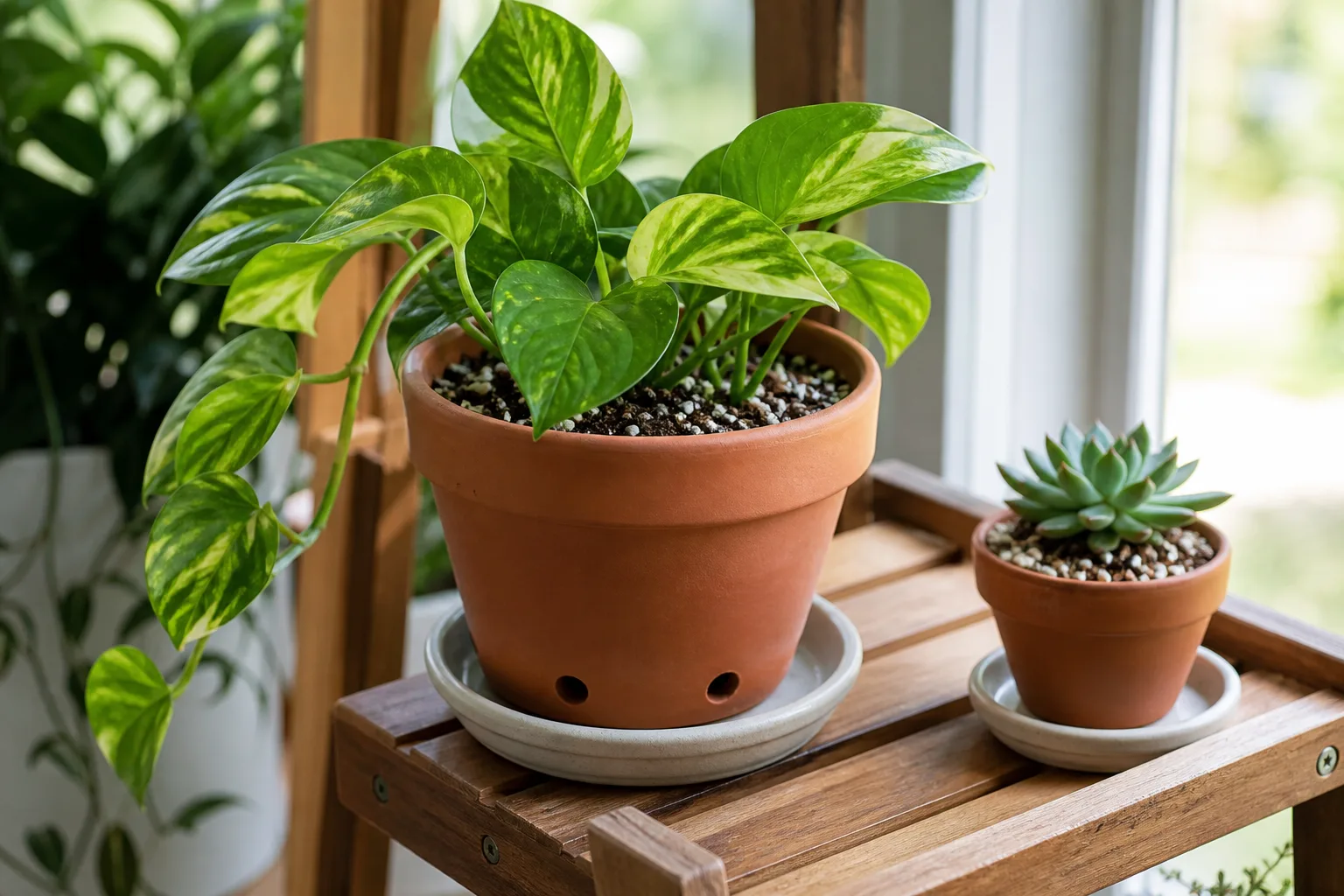
The container must have an open drainage hole. A decorative cachepot is fine as an outer cover, but remove the growing pot for watering and let it drain completely before returning it. A saucer should catch drips, not hold a permanent reservoir.
Terracotta can be helpful because its porous sides lose some moisture, particularly in a humid room. Plastic is not wrong, but it holds moisture longer, so you may need longer intervals between waterings. The best material is the one that matches how quickly the soil dries in your home.
Pot Rosemary Correctly
Choose a pot only one or two sizes wider than the current root ball. An oversized container is not a growth shortcut; it creates a larger volume of wet soil around a relatively small root system. Set the plant at the same depth it was growing before. Burying the woody crown or lower stems can keep them wet and invite decay.
After potting, water once until excess runs from the hole. This settles the mix around the roots. Do not keep adding water because the surface still looks uneven. Let the pot drain, then begin checking the soil rather than following a fixed interval.
Water by Soil Condition, Not a Calendar
Check the top inch or two of soil with a finger or wooden stick. If it still feels cool and damp, wait. If the upper layer is dry and the pot feels noticeably lighter, water slowly across the surface until a little drains below. Empty the saucer after several minutes.
The interval may be five days in a warm, bright, small terracotta pot or two weeks in a cool, dim winter room. Pot size, soil composition, plant size, season, and airflow all change the timing. A weekly reminder can prompt you to check, but it should not decide whether you water.
Do not rely on misting as a substitute for watering. Spraying the foliage may temporarily wet the surface but does not hydrate the root ball, and repeated wet leaves in stagnant air can increase disease risk. If the soil stays wet for many days, improve light and airflow, check that the drainage hole is open, and repot into a sharper mix if needed.
Brown, brittle tips with very dry soil can indicate drought stress or hot dry air. Yellow leaves with damp soil more often point to excessive moisture or failing roots. Look at the soil and roots before increasing water.
Manage Temperature, Humidity, and Airflow
Keep rosemary away from heating vents, radiators, air-conditioner blasts, and doors that open to freezing air. Normal indoor temperatures are suitable, but sudden shifts can cause leaf drop. In winter, a bright cool room may be better than a warm room with weak light.
Rosemary does not require greenhouse humidity. Average household humidity is usually adequate if the plant has airflow and the roots are not constantly wet. In a very dry home, move the plant away from a heat source and group it near other plants without crowding. A pebble tray can catch drips, but the pot should sit above the water rather than in it. Humidifiers should not turn the foliage into a continuously damp, stagnant pocket.
A small fan on a low setting can help in a closed, humid room, provided it does not blast the plant or dry the soil abruptly. Airflow is a supplement, not a replacement for bright light and drainage.
Feed Lightly During Active Growth
Rosemary is not a heavy feeder. In spring and summer, use a balanced liquid fertilizer diluted to half the label rate once a month, or top-dress with a modest amount of finished compost. Water the plant first if the soil is dry, then fertilize; feeding a severely dehydrated root system can cause injury.
Do not fertilize a newly repotted or visibly declining plant until it shows fresh growth. Skip routine feeding in the dark part of winter. Excess fertilizer can produce soft, weak growth, salt buildup, and a stronger need for water—the opposite of the lean conditions rosemary prefers.
Prune and Harvest Without Weakening the Plant
Harvesting is the main pruning routine. Use clean scissors to cut green stems just above a pair of leaves, taking only a small portion of the plant at one time. Frequent light cuts encourage branching and keep indoor rosemary from becoming a single lanky stem.
Do not cut deeply into old, leafless wood unless you can see green buds or foliage below the cut. Rosemary may not push new growth from completely bare woody sections. If a plant has become leggy, first improve its light, then shorten green tips gradually over several weeks.
For cooking, strip the leaves from the stem with your fingers or use the whole tender sprig. Wash harvested sprigs just before use. To dry a larger harvest, tie small bundles or spread sprigs in a single layer in a warm, dry, shaded place with air movement. Once crisp, remove the leaves and store them in an airtight container away from light.
Move Rosemary Outdoors for Summer
Outdoor summer light can restore density, but a plant moved directly from a room to full sun can scorch. Begin in bright shade for several days, then add morning sun and gradually increase exposure over roughly one to two weeks. Keep the pot watered according to its new, faster drying rate, and inspect for insects before bringing it back inside.
Bring rosemary indoors before frost or prolonged cold nights. Do not wait until the plant is chilled and wet. Before the move, rinse foliage, inspect stems, and isolate the plant from other houseplants for several days. A smaller, well-pruned plant is easier to overwinter than a sprawling one.
Propagate Rosemary From Cuttings
Cuttings are usually more dependable than seed for a home grower. In spring or early summer, take a 3- to 5-inch piece of healthy green stem. Remove the leaves from the lower half, place the cutting in a lightly moist perlite-based mix, and set it in bright indirect light. Keep the medium barely moist, never saturated.
After several weeks, gentle resistance often indicates roots. Pot the cutting into a small, sharply draining container and increase direct light gradually. Water-rooted cuttings can work, but roots formed in water may need a careful transition to soil. Seed is possible but slow and uneven, so it is rarely the quickest way to produce kitchen-sized rosemary.
Repot and Control Size
Repot in spring when roots circle the container, water runs straight through without wetting the mix, or the plant dries dramatically faster than before. Slide the root ball out and inspect it. Healthy roots are firm and light-colored; dark, mushy roots need to be removed with clean shears before the plant goes into fresh mix.
To keep an indoor plant compact, stay with a similar pot size, refresh the soil, and prune the top growth in stages. To grow a larger specimen, move up only one pot size. Root pruning can reduce size, but it is stressful; use it for a healthy plant in active growth, not one already suffering from poor light or root rot.
Recognize Pests and Disease
Spider mites can appear in hot, dry conditions and may leave stippled leaves or fine webbing. Aphids cluster on soft new growth. Scale insects look like small bumps on stems. Isolate an affected plant, rinse accessible pests away, and use a labeled insecticidal soap only as directed, testing a small area first.
Powdery mildew looks like a pale dusting on leaves and is more likely when humidity is high, air is still, and foliage stays damp. Remove heavily affected leaves, increase spacing and airflow, and correct the watering and light pattern. Root rot is more urgent: a sour smell, soft dark roots, and persistent leaf yellowing call for immediate drainage and root inspection.
Fix Common Indoor Rosemary Problems
The plant is turning brown. Check whether the soil is bone dry or constantly wet. Dryness calls for a thorough soak; wetness calls for better drainage, brighter light, and less frequent watering. Brown lower stems with soft roots indicate rot rather than thirst.
The plant is dropping leaves. Recent relocation, cold drafts, low light, and root stress can all contribute. Stabilize its location, remove dead material, and wait for the soil to dry appropriately before watering again.
The stems are long and sparse. Increase direct light or add a grow light. Pruning alone cannot make a light-starved plant compact; it only removes the growth the plant has already made.
The rosemary has little fragrance. Rub a healthy leaf gently. Weak aroma often accompanies low light, very soft new growth, or a stressed root system. Improve light and avoid heavy feeding. Fragrance can also vary by cultivar.
The plant wilts even though the soil is wet. Waterlogged roots can no longer supply the leaves. Check the drainage hole and roots, trim mushy sections, and repot into a small container with fresh gritty mix.
A Simple First-Month Care Routine
During the first week, keep the plant in its final bright location, check for pests, and water only when the soil begins to dry. Avoid pruning and fertilizer while it adjusts. During weeks two and three, rotate the pot, record how quickly the mix dries, and remove only clearly dead foliage. If the plant is stretching, install supplemental light before it becomes severely bare.
In week four, take a few light harvest cuts from green tips if the plant is producing new growth. Reassess the pot: if it remains wet for many days, change the drainage setup rather than watering on a schedule. This small record of light, soil moisture, and new growth is more useful than a universal “water every seven days” rule.
Conclusion
Indoor rosemary succeeds when you recreate the parts of its outdoor life that matter most: strong light, quick drainage, dry intervals between deep waterings, and moving air. Use a modest pot with a drainage hole, place it at the brightest window you have, supplement light when stems stretch, and harvest green growth lightly. Watch the soil instead of the calendar, keep winter care restrained, and treat brown leaves as clues to investigate rather than a reason to add more water. With that rhythm, a small rosemary plant can stay fragrant, useful, and compact through the seasons.