How to Reuse Garlic Skins in the Garden
Save garlic skins from the kitchen? Learn how to compost them, mulch seedlings, make a mild foliar spray, and avoid mistakes with worms and pets.
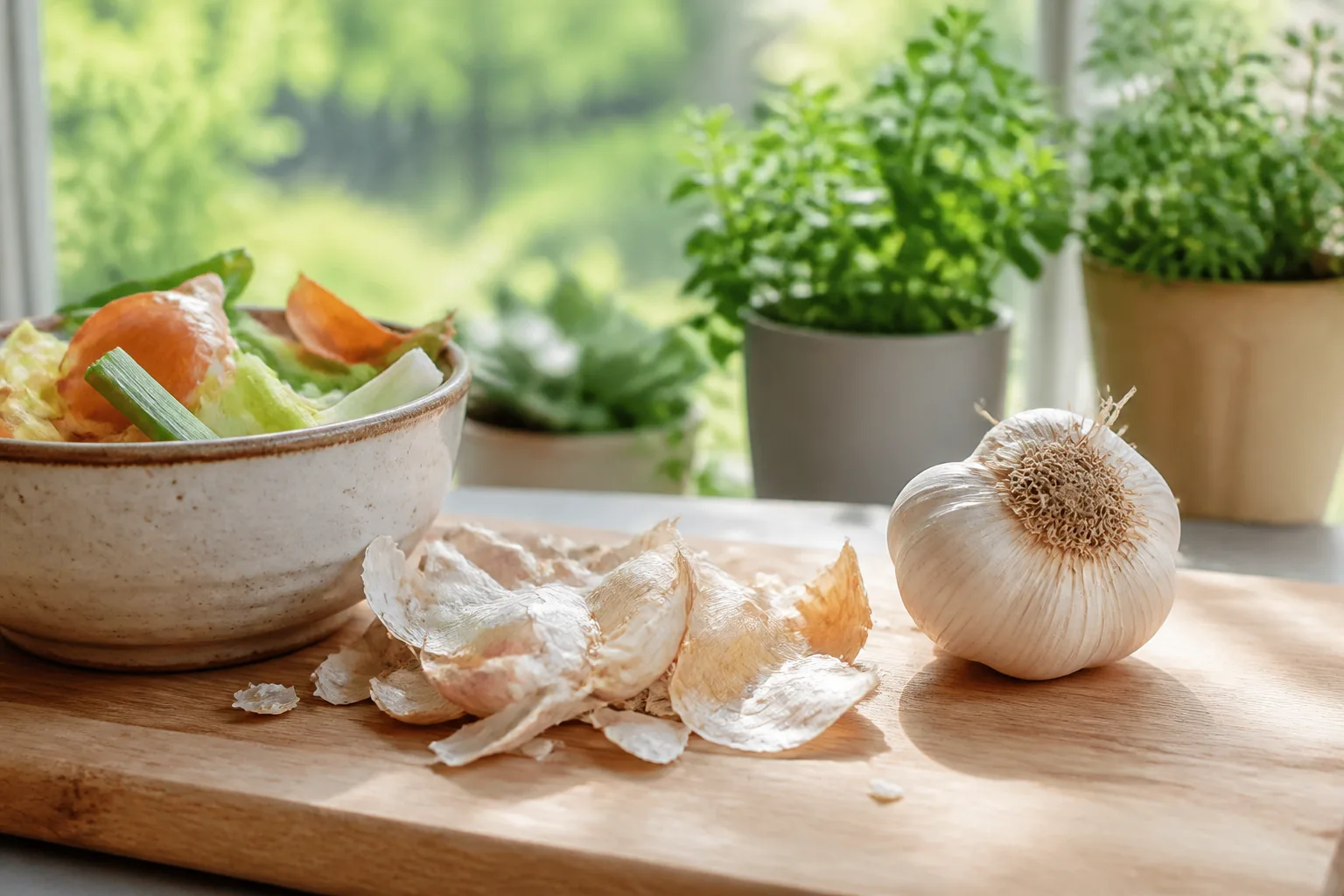
Peeling garlic for dinner leaves a pile of papery wrappers most people trash without thinking. Those garlic skins (Allium sativum hulls) are not nutrient bombs, but they are legitimate garden material: dry, carbon-rich compost fodder that breaks down fast, smells strongly enough to discourage a few soil pests, and keeps kitchen waste out of the landfill. The trick is routing them to the right job—compost by default, mulch or spray only when that job fits—instead of treating every wrapper like organic pesticide.
The Quick Answer: Save, Dry, and Route Skins by Goal
Collect dry garlic skins in a paper bag, then add them to your compost pile as brown material. Layer them with fruit and vegetable scraps (greens) and keep the pile moist and aerated like a wrung-out sponge. For everything else, match method to goal: light mulch on indoor seedling pots to reduce surface evaporation; trench burial in an empty bed row when you are not ready to compost yet; cold-steeped water as a mild foliar rinse when you already see soft-bodied pests; small pinches in a worm bin mixed with other scraps; finely crushed dust sparingly on seed-starting mix if damping-off has been a problem in past seasons. Skip skins entirely around dig-happy dogs and cats, on pea and bean plantings, and when skins are moldy or coated in roasting oil.
If you cook garlic once a week, one open paper bag on the counter is enough storage until you empty it into the bin every Sunday. If you peel a whole braid after harvest, spread skins on a sheet pan for an hour so they do not steam in a pile and mold before compost day.
What Garlic Skins Actually Contribute to Soil
Garlic skins are mostly cellulose and lignin—the same structural fibers that make onion husks and dry leaves compostable. They carry trace potassium and calcium and the sulfur-based volatiles that give garlic its smell. None of that replaces fertilizer or labeled pest control, but together it makes skins worth saving rather than sending to the trash.
Think of skins as bulk carbon with a scent bonus, not as a standalone amendment. A soil test still tells you whether your beds need lime, phosphorus, or complete fertilizer. Finished compost that includes garlic skins improves water retention and microbial habitat the same way other organic matter does—slowly, through humus formation, not through an instant mineral jolt from papery wrappers alone.
Brown Carbon vs. Trace Minerals
In compost vocabulary, garlic skins are browns: carbon-rich, dry material that balances nitrogen-heavy kitchen scraps. Good compost needs both—extension-aligned guidance and experienced compost educators alike recommend roughly three to four parts brown to one part green by volume, though precision matters less than avoiding a soggy, nitrogen-heavy pile (Gardening Know How). Papery skins fit the brown column alongside dry leaves, shredded cardboard, and straw.
Because skins are thin, they decompose faster than wood chips but slower than soft fruit pulp unless you shred them. Whole wrappers may mat lightly; tearing or crumbling speeds contact with microbes. The minerals they release during breakdown are supplements, not substitutes for a soil test and balanced fertility plan.
If your pile smells like ammonia or stays cold and slimy, the problem is almost never “too many garlic skins.” It is too few browns overall or too much water. Add shredded paper, straw, or autumn leaves before you blame the allium bowl on the counter.
Sulfur Compounds: Helpful Scent, Not Miracle Medicine
Fresh garlic chemistry centers on sulfur compounds (including precursors to allicin) that smell sharp to humans and many insects. In a compost pile, those volatiles fade as material breaks down—the same pattern documented for citrus peels, whose pesticidal oils evaporate long before finished compost reaches beds (Gardening Know How). That is good news for soil life: finished compost from skins does not “poison” earthworms the way internet myths once claimed about citrus.
As fresh, dry mulch, the scent may discourage fungus gnats from laying eggs on damp seed-starting mix—a narrow, situational win. As cold tea spray, sulfur odor may repel aphids, spider mites, or whiteflies briefly. These are adjuncts in an integrated pest management plan, not replacements for monitoring, beneficial insects, insecticidal soap, or neem oil when populations are established.
Lab-grade garlic extracts can knock down soft-bodied pests in trials because concentrations exceed anything a jar of skins produces. Kitchen-scale methods sit at the nuisance-pest end of the spectrum—worth trying on a patio cherry tomato with three aphids, not on a brassica row under heavy pressure.
When NOT to Use Garlic Skins Outdoors
Certain stop rules prevent more harm than hoarding skins ever helped. Do not compost or bury moldy, slimy skins—toss those in the trash so you are not importing Penicillium or rot organisms into beds. Avoid roasted-garlic or oil-brushed skins; fat slows compost and attracts rodents. Keep allium material out of areas pets dig—garlic is toxic to dogs, cats, and horses if eaten in enough quantity, causing vomiting and hemolytic anemia (ASPCA). Skip heavy applications next to peas, beans, and other legumes; alliums have a long folk reputation for inhibiting legume growth, and even if the effect is modest, there is no reason to gamble on your bean row. Do not rely on skins alone for root rot or blight—fix drainage, rotate crops, and use proven seedling sanitation instead.
Also skip fresh skins as permanent landscape mulch. They blow away in wind, look messy in formal beds, and break down unevenly on hot pavement. Reserve them for compost, short-term containers, or buried trenches instead of front-yard bark-chip zones.
Add Garlic Skins to Your Compost Pile
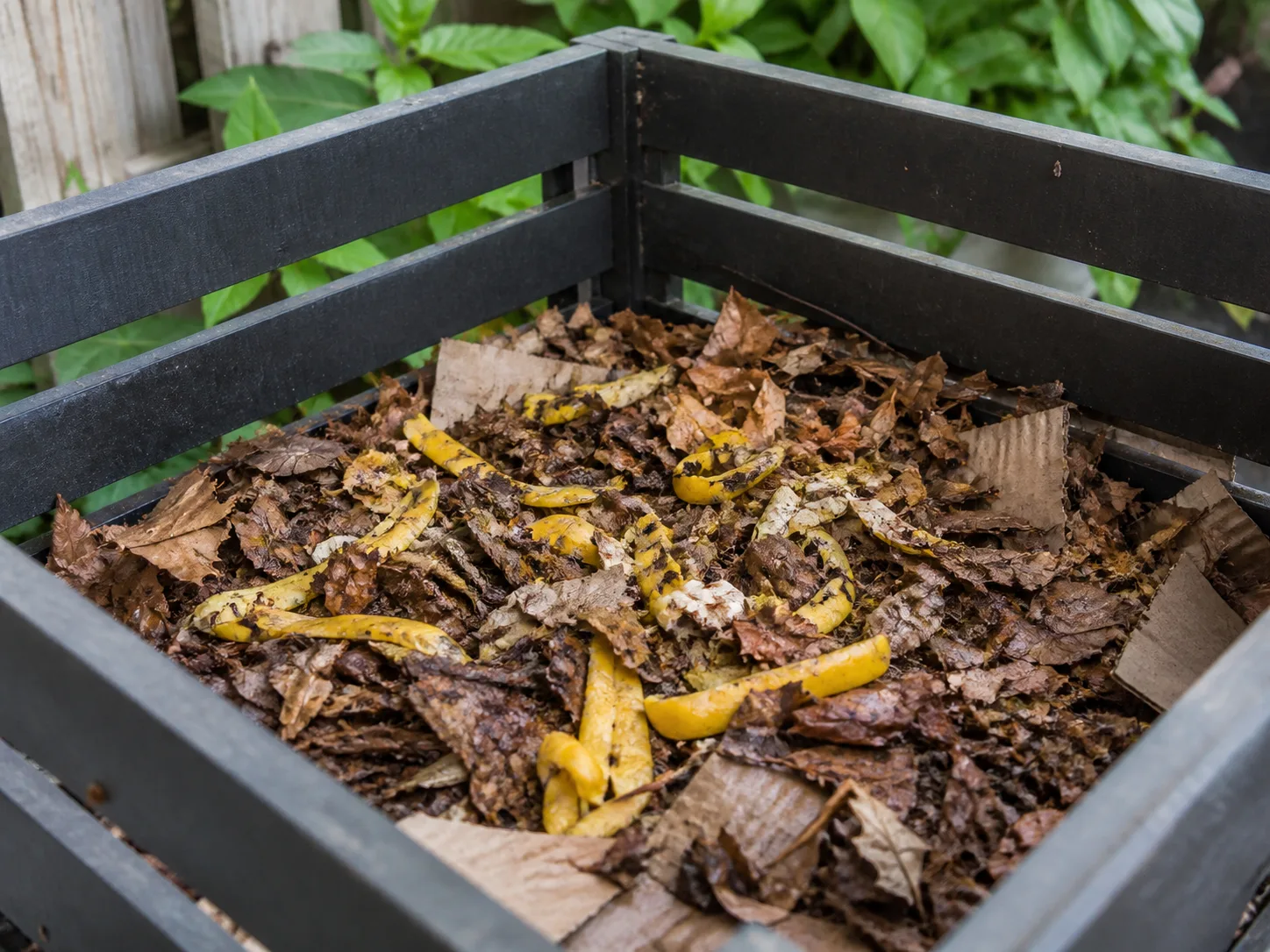
Composting is the highest-value default for garlic skins. They are lightweight browns that will not attract raccoons the way meat scraps do, and they integrate cleanly into a hot or cold pile.
Build or feed your pile in lasagna layers: coarse sticks or stems at the base for airflow, then alternating greens (coffee grounds, lettuce trimmings, fruit cores) and browns (skins, leaves, cardboard). Bury fresh kitchen greens under a brown cap—including torn garlic skins—to reduce flies and odors (Gardening Know How). Turn or aerate weekly in an active pile; finished compost should smell earthy, crumble in your hand, and show no recognizable papery pieces.
Hot composting (regular turning, balanced moisture) can finish a batch in one to three months in warm weather. Cold composting (add and forget) may take six to twelve months but still accepts skins without special handling. Either way, skins are easier than corn cobs or avocado pits—they rarely stall a pile unless they are the only brown you add all summer.
How Much to Add and What to Layer With
Volume is rarely a problem for home cooks—even avid garlic users generate cups, not wheelbarrows, of skins. A family saving every wrapper might produce one to three gallons per month. That fits easily if the pile also receives leaves or cardboard. If skins are your only brown for weeks, add shredded paper or dry leaves so the pile does not go nitrogen-heavy and smelly.
When adding strongly aromatic material—including garlic or citrus—balance with extra browns so pH stays worm-friendly in piles that sit on soil (Epic Gardening). In vermicompost bins, see the worm section below; traditional backyard bins tolerate skins well.
A practical weekly rhythm: Sunday empty the skin bag into the bin under a leaf layer; Wednesday bury midweek fruit scraps and cap with more skins or cardboard. That keeps odors down and distributes carbon evenly.
Use Skins as a Light Mulch on Containers
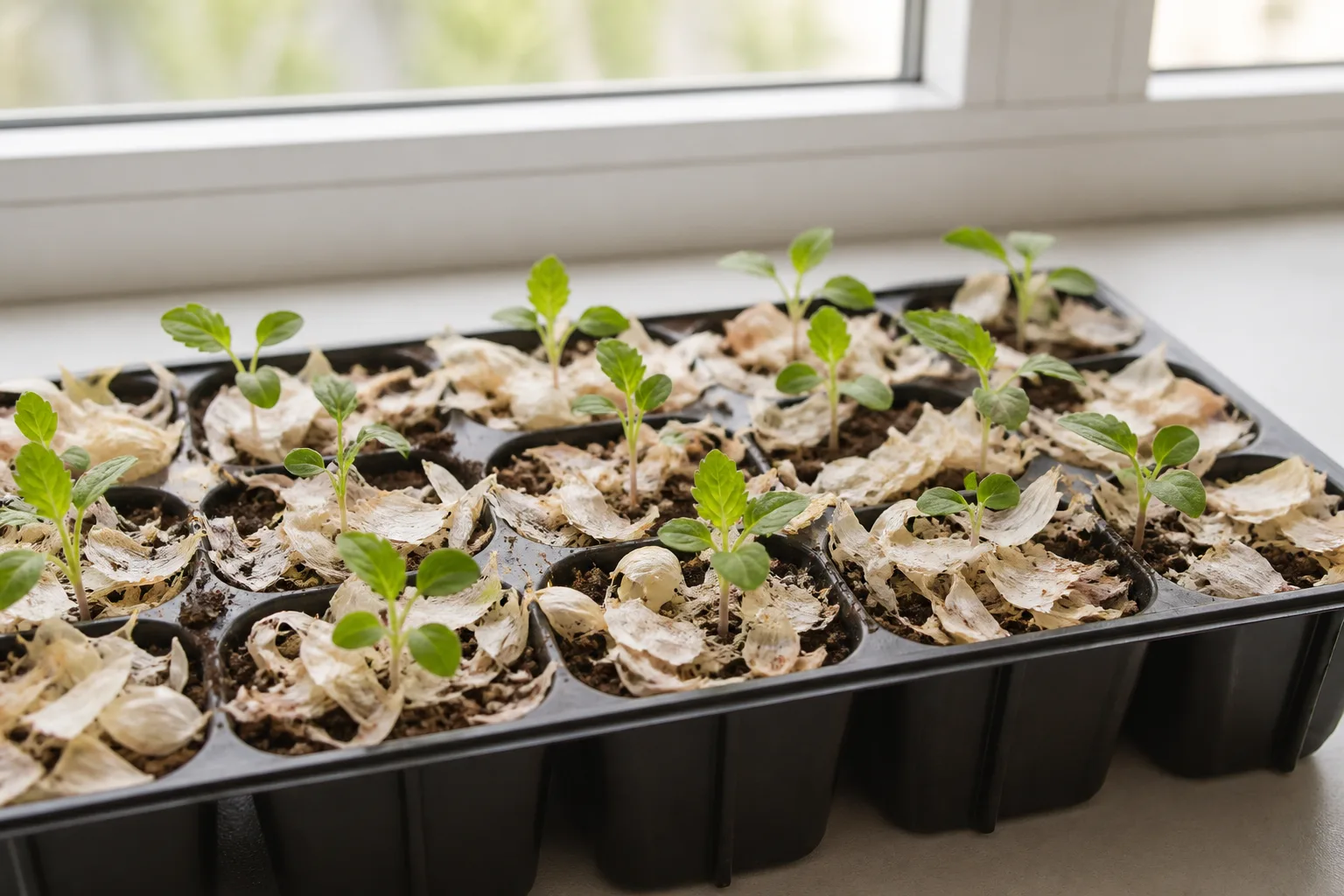
Garlic skins can top-dress seedling pots or shallow container herbs much like a thin leaf mulch. The papery pieces reduce surface evaporation, block a little light from weed seeds, and break down over a few weeks as you water. This works best on indoor seed trays where wind will not blow wrappers across the room—outdoor patio pots in breezy sites lose mulch fast.
Keep the layer one to two skins thick—a fluffy dusting, not a sealed crust. Water gently so skins stay in place. Replace after they dissolve or mold. Pair this with proper bottom watering and clean trays if fungus gnats have been an issue; mulch alone will not fix chronic overwatering. For broader mulch strategy in beds, see our guide on whether mulch prevents weeds—garlic skins are not a replacement for wood chips or straw at scale.
On herb windowsills, a few tan flecks on the soil surface of a rosemary or thyme pot are harmless and disappear with watering. Avoid thick layers on basil or mint you harvest daily—bits cling to leaves and add grit to salads.
Bury Skins in Garden Beds and Trench Compost
When the compost bin is full or frozen, trench composting still uses skins well. Dig a 8–12 inch trench in an empty bed row, drop torn skins and other kitchen scraps, cover with soil, and plant at least four weeks later—longer for heavy loads. Microbes break material down in place, improving structure and organic matter without a separate bin.
You can also work small handfuls into the top 2–3 inches before planting transplants. Keep pieces away from direct contact with stems so fungal collars do not form on wet papery clumps. This method suits empty beds in fall more than active summer containers where undecomposed skins look untidy.
Fall trenching is ideal: bury autumn kitchen scraps plus garlic skins in a row you plan for tomatoes next spring. Winter freeze-thaw cycles shatter residues. Mark the trench with a stake so you do not accidentally sow carrots over unfinished scraps in early spring.
Make a Cold-Steeped Garlic Skin Spray
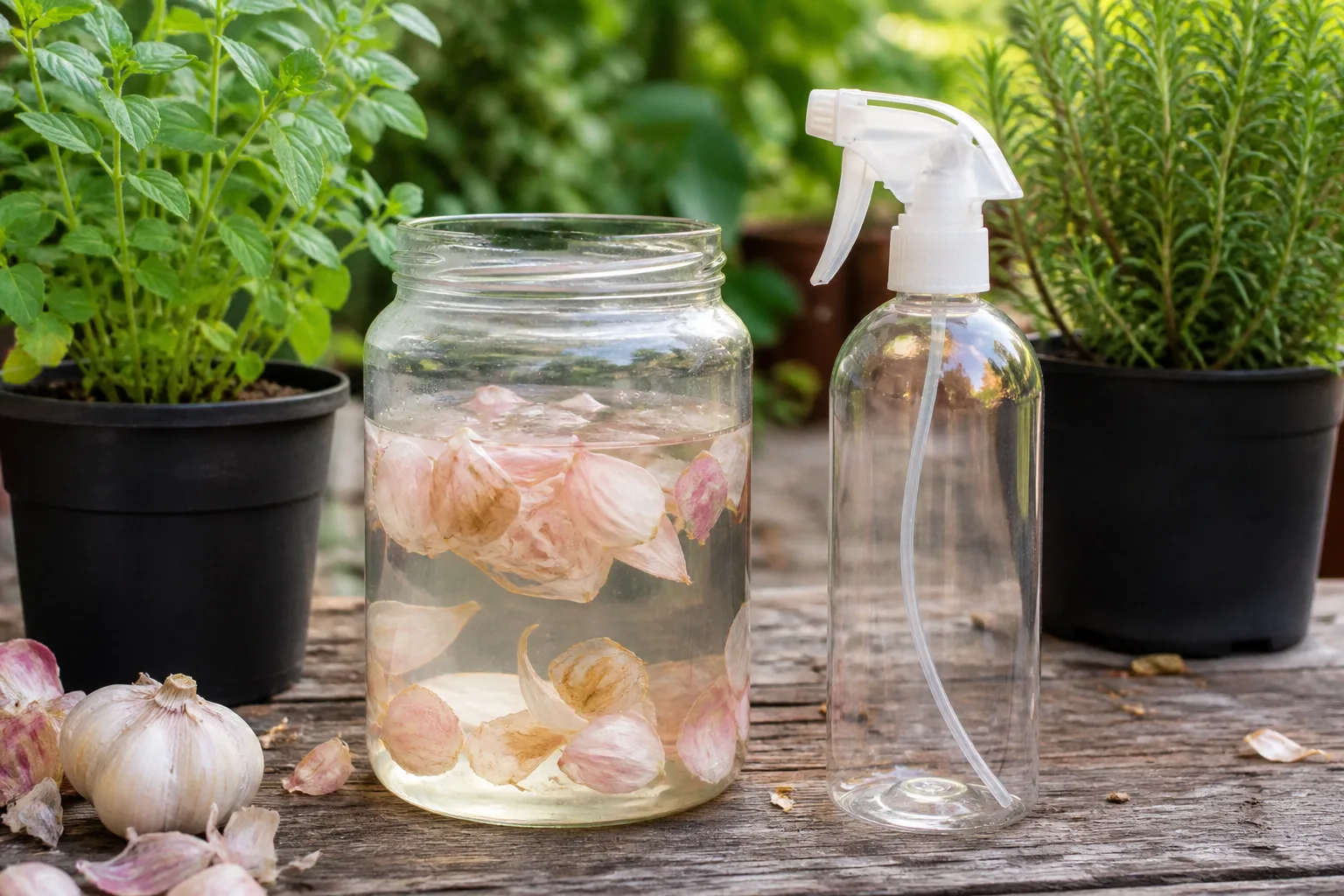
A room-temperature infusion extracts a little sulfur smell without cooking the skins. Fill a quart jar with loosely packed dry skins (save a week of cooking), cover with lukewarm water, cap loosely, and steep two to three days out of direct sun. Strain through cheesecloth into a spray bottle; use the liquid on a test leaf first, wait 24 hours, then spray tops and undersides of affected foliage in early morning or evening.
Reapply after rain; expect days, not weeks, of repellent odor. Do not boil the skins—heat changes chemistry and can make solutions harsher on tender leaves. Label the bottle and keep it away from pets and children; allium sprays are not food.
Use within a week of straining; unrefrigerated tea can sour. A few drops of castile soap can help the liquid coat leaves, but test again for burn on sensitive plants like young peppers.
Realistic Expectations vs. Lab Extracts
Garlic extracts perform well in controlled studies against some soft-bodied pests because concentrations in labs exceed any kitchen steep. Your skin tea is dilute and inconsistent—fine as a first nudge when you spot three aphids, wrong when colonies coat brassicas. Escalate to insecticidal soap, neem, or hand-squishing if counts rise after two weekly applications. Garlic spray also does not discriminate—strong odor may bother you on patio herbs you harvest daily.
Document what you tried: date, crop, pest count before and after, and weather. That habit keeps you from repeating weak sprays on problems that already needed stronger IPM.
Feed a Worm Bin in Moderation
Red wiggler worms can process garlic skins, but they are not a favorite fresh food. Many worms ignore allium peels until partial decomposition begins—the same hesitation noted for citrus in vermicomposting (Gardening Know How). Treat skins like citrus: small amounts, well mixed with coffee grounds, shredded paper, and other scraps—never a thick garlic-only layer.
If worms migrate upward or ball up after a heavy allium feeding, add shredded cardboard, cut back skins for two weeks, and check moisture. A balanced bin should smell like damp forest, not an Italian restaurant. For most households, backyard compost is simpler than tuning a worm bin for weekly garlic waste.
Rule of thumb: one loosely packed cup of skins per square foot of bin surface per month, mixed into the top third of bedding—not a dedicated garlic corner. Pre-tear skins and let them dry overnight on a plate before feeding so they do not clump.
Crushed Skins as a Seedling Soil Amendment
Some gardeners pulse dried skins in a spice grinder and dust a pinch onto seed-starting mix when damping-off (seedling collapse at the soil line from Pythium or Rhizoctonia) has struck before. The logic: allium sulfur may suppress some fungi; the evidence in home gardens is anecdotal, not prescription-grade. If you try it, use barely visible dust, not a visible layer, and still enforce clean trays, airflow, and dry surface cycles.
This pairs with—not replaces—hydrogen peroxide dilution for sterilized trays and avoiding overwatering. Discard any batch that smells musty before grinding.
Grind only fully dry skins; damp material jams grinders and molds in storage jars. Apply dust once at seeding, not weekly—more is not safer.
Store Skins Before You Use Them
Wet skins mold in sealed containers within days. Dry them briefly on a plate after peeling, then transfer to a paper bag or open bowl in the pantry until you walk them to the compost bin. A quart-sized jar with the lid off works if you cook garlic weekly; freeze storage is unnecessary. When the bag fills, tear skins once and carry them out with other browns you have saved (toilet paper tubes, leaves).
Label the bag “browns” if others in the house toss trash there—confusion sends skins to the garbage disposal instead of the garden loop. In humid climates, move the bag to the compost area every few days rather than letting a month’s collection sit indoors.
Garlic Skins vs. Onion Skins: Same Rules, Different Volume
Onion and garlic skins play the same compost roles—dry browns with sulfur scent and trace minerals. Onion-heavy cooks often generate more volume from yellow and red onion husks than from garlic alone. Combine both in one brown stash. The same cautions apply: moderation in worm bins, legume spacing, pet safety, and realistic pest expectations. If you also save onion trimmings, treat thick green tops as greens (nitrogen) and papery husks as browns when layering.
Red onion skins add tan to russet color to compost but no magic pH shift at kitchen volumes. Neither garlic nor onion skins replace agricultural lime when a soil test calls for it.
Conclusion
Garlic skins earn a place in a zero-waste garden loop, not a pedestal. Dry them, compost them by default, and treat every other use—container mulch, trench burial, cold-steeped spray, worm-bin pinches, seedling dust—as a targeted optional. You gain carbon for compost, a little sulfur chemistry for narrow pest moments, and less trash. You do not gain a free pesticide or complete fertilizer. Keep pets away from buried alliums, go easy on legume rows, and escalate to proven IPM tools when infestations grow. Save the skins, match method to goal, and let finished compost—not raw wrappers—do the real soil work.