How to Use Hydrogen Peroxide for Plants: 5 Ways
Learn five safe ways to use hydrogen peroxide for plants—dilution chart, root rot rescue, soil oxygenation, fungus control, and when to skip it.
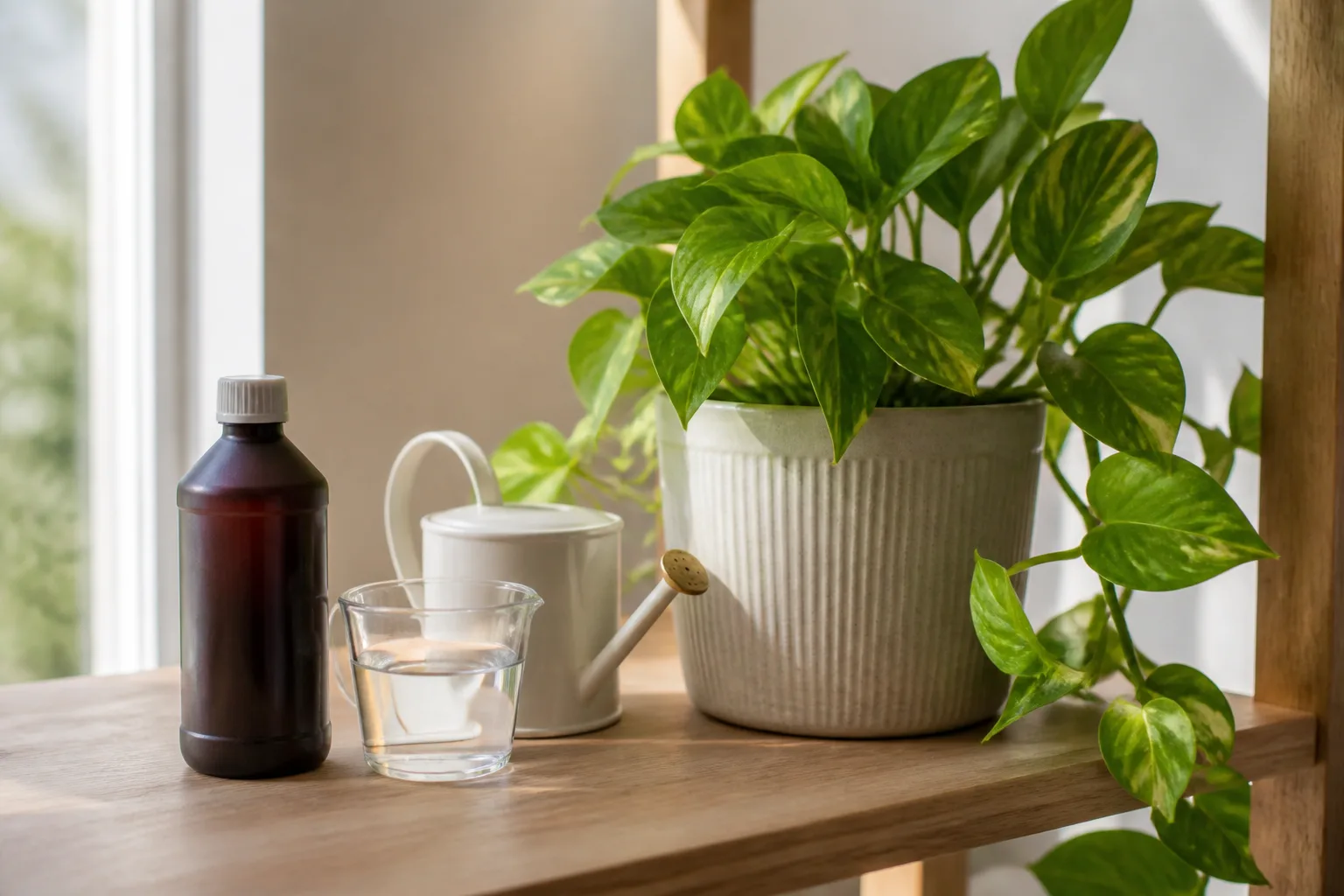
Hydrogen peroxide is a cheap oxidizer that releases extra oxygen when it breaks down in water—which is why gardeners reach for it when soil turns sour, roots smell musty, or tools need sanitizing between diseased plants. It is not plant food, not a substitute for better drainage, and not something you pour at full strength on healthy leaves. Used at the right dilution from a standard 3% brown bottle, it can be a useful first-response tool indoors and out. Used too often or too strong, it stresses roots and wipes out beneficial soil life you actually want.
This guide covers five practical uses, a dilution cheat sheet you can bookmark, and the stop signs that tell you to repot, dry down, or switch to a labeled treatment instead.
Quick Answer: Five Uses at a Glance
If you already have a brown bottle of 3% hydrogen peroxide and a measuring spoon, these are the five jobs worth knowing: (1) sanitize pots and pruners after disease work; (2) one-time root soak when repotting early root rot; (3) weak weekly drench on soggy—not rotting—mix; (4) surface treatment for mold, mild mildew, and fungus gnat larvae in the top layer; (5) narrow hardscape weed spotting where no garden plants live. Everything else in this guide explains the ratios, limits, and mistakes that turn a helpful oxidizer into root stress.
What Hydrogen Peroxide Does in Soil and on Roots
Hydrogen peroxide (H₂O₂) is water with an extra oxygen atom. In moist soil or standing water, it decomposes into water plus free oxygen. That burst of oxygen can briefly improve conditions in waterlogged, anaerobic mix where pathogens such as Pythium and Phytophthora thrive. Wisconsin Horticulture notes that root rots on houseplants usually trace back to overwatering and poor drainage, not a missing chemical spray (Wisconsin Horticulture). Peroxide may help you buy time while you fix those cultural problems—it does not rewrite bad watering habits.
On contact, low concentrations also oxidize surface microbes. That is useful for tool sanitation and early fungal knockback, but it is indiscriminate: repeated drenches can reduce beneficial bacteria and mycorrhizae along with the troublemakers. Think of H₂O₂ as a ** targeted oxidizer**, not a gentle tonic for weekly “plant wellness.”
Why Extra Oxygen Matters When Mix Stays Wet
Roots need oxygen as much as they need water. When pore spaces stay filled with water, roots suffocate and opportunistic fungi move in. A single well-diluted drench can introduce oxygen and disrupt anaerobic zones at the root surface. It cannot aerate a pot that has no drainage holes, a plant sitting in a full saucer, or mix that has collapsed into mud. Missouri Botanical Garden’s overwatering guidance applies here: fix the water regime first (Missouri Botanical Garden).
Which Strength to Buy—and What Never Goes on Leaves Undiluted
For houseplants and garden beds, start with 3% hydrogen peroxide from the pharmacy first-aid aisle—the brown bottle labeled for antiseptic use. That concentration is strong enough to dilute for every use in this guide and weak enough that math mistakes are less catastrophic than with 12%, 29%, or 35% food-grade products.
Higher grades cost less per active oxygen but demand goggles, gloves, and precise measuring. One miscalculation with 35% can burn roots instantly. If you already own food-grade concentrate, convert it to 3% before any plant contact (roughly 1 part 35% to 11 parts water, or follow your supplier’s chart). Never mist undiluted 3% on foliage; it can bleach tender leaves and kill tissue at the margins within hours.
Store bottles upright, away from heat and light. Peroxide loses potency over time—if an old bottle no longer fizzes on a tiny soil test, replace it before relying on it for root rot rescue.
How to Test If Your Bottle Is Still Active
Pour a teaspoon of 3% hydrogen peroxide onto a pinch of dry potting mix or into a small cup of water. Fresh product fizzes immediately as oxygen releases. Weak or expired bottles fizzle little or not at all—fine for cleaning counters, unreliable for root rescue. Write the purchase date on the cap with a marker; plan to replace household 3% within a year of opening, sooner if stored warm or in sunlight.
Hydrogen Peroxide Dilution Cheat Sheet (3% Brown Bottle)
All ratios below start from 3% stock. “Final %” is approximate active H₂O₂ in the finished solution.
| Use | Mix from 3% stock | Final % (approx.) | How to apply |
|---|---|---|---|
| Tool & pot rinse | 1 part 3% + 2 parts water | ~1% | Spray or soak 5–10 min; rinse and dry |
| Root rot root soak | 1 part 3% + 2 parts water | ~1% | Pour through cleaned root ball once at repot |
| Soil oxygenation drench | 2½ tsp (12 ml) 3% per 1 gal water | ~0.1% | Water until slight runoff; max once/week |
| Seed soak (10–20 min) | 1 tsp 3% per 1 cup water | ~0.5% | Rinse seeds; plant immediately |
| Fungus gnat / soil surface | 1 part 3% + 4 parts water | ~0.6% | Top drench to wet upper ½ inch; repeat in 4–5 days |
| Mild foliar knockback | 1 tbsp 3% per 1 cup water | ~1.5% | Mist tops only; spot-test 24 h first |
| Hardscape weed spot spray | 1 part 3% + 0 parts water* | 3% | *Paths/pavers only; shield desired plants |
Epic Gardening’s hydrogen peroxide overview aligns with the general range of 0.5%–3% for plant contact, emphasizing dilution before roots or leaves see any product (Epic Gardening). When in doubt, use the weaker row in the table and escalate only if the plant tolerates a spot test.
The Five Best Uses for Hydrogen Peroxide on Plants
These five jobs cover what most gardeners actually need: sanitation, root rescue, aeration, fungus and gnat control, and occasional hardscape weed spotting. Match the use to the symptom—do not run all five on the same plant in the same week.
Use 1 — Disinfect Pots, Tools, and Hydroponic Gear
Any time you cut into diseased tissue, repot a rotting plant, or trim roots with brown mush, assume your tools and old pot carry spores. Sanitize before the next plant.
Mix 1 part 3% hydrogen peroxide with 2 parts water in a spray bottle or tub. Coat blades, trowels, and the interior of used pots. Let stand 5–10 minutes, rinse with clean water, and dry fully. Porous terra cotta may need a longer soak because it holds organic matter in pores.
For small hydroponic reservoirs between crops, drain the system, fill with the same ~1% solution, run pumps briefly so lines see contact, drain, rinse, and refill with fresh nutrient solution. This is maintenance—not a replacement for replacing infected root mass in an active crop.
UC IPM’s houseplant problem overview stresses clean tools and discarded infected debris as core cultural controls (UC IPM). Peroxide is one acceptable sanitizer; 70% isopropyl alcohol on metal blades also works when you need a quick wipe between cuts.
Use 2 — Rescue Early Root Rot Before the Crown Collapses
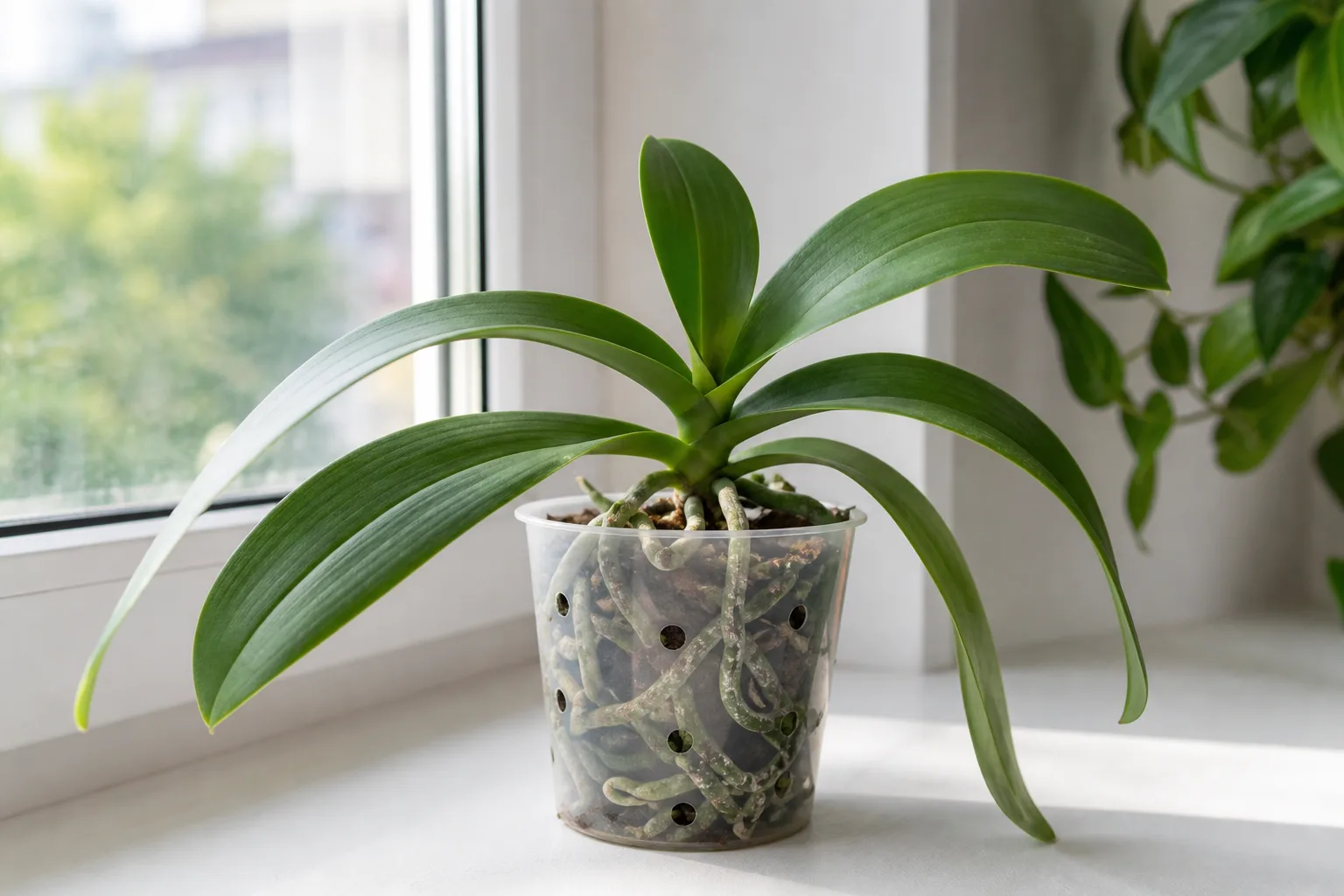
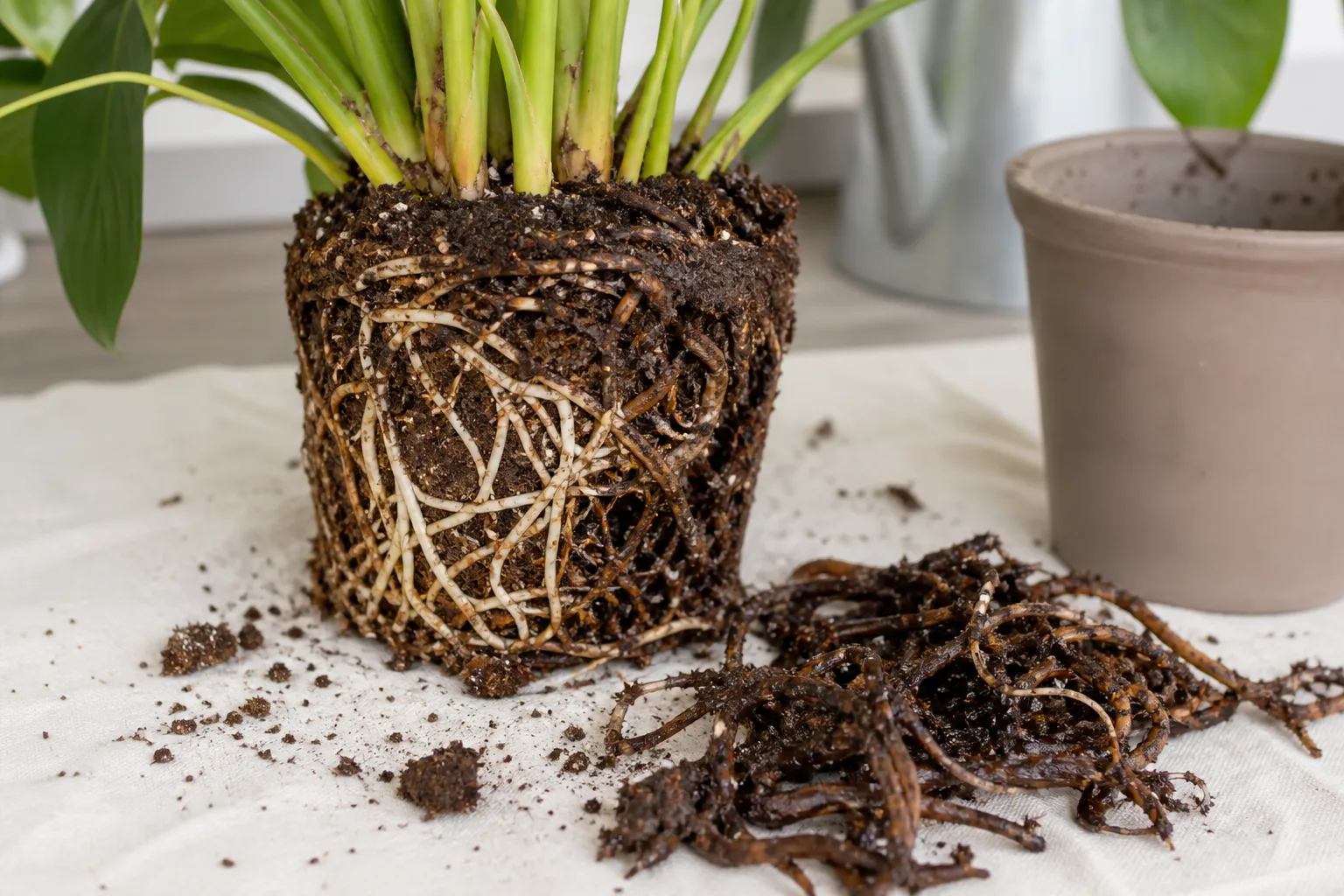
Hydrogen peroxide can help only when root rot is caught early—roots still mostly firm and white with isolated brown sections, stem base still solid, and leaves yellowing but not collapsing. Wisconsin Horticulture describes advanced root rot as mushy roots, persistent wilt despite wet soil, and often a foul smell (Wisconsin Horticulture). At that stage, peroxide is a bandage on a sinking ship. Repotting into fresh mix with corrected watering is the real cure; see our root rot on houseplants guide for the full rescue sequence.
Early rescue steps:
- Unpot and rinse old mix from roots under lukewarm water.
- Trim all brown, mushy roots with clean scissors; sterilize blades between cuts.
- Mix 1 part 3% H₂O₂ with 2 parts water and pour slowly through the root ball until it drips clear.
- Disinfect or replace the pot; never reuse soggy mix.
- Repot into fresh, chunky, well-draining mix; wait until the top inch dries before the first light watering.
Do not soak roots daily. One treatment at repot plus cultural correction is the standard. Repeated strong soaks delay the drying cycle roots need to heal.
Use 3 — Oxygenate Compacted or Overwatered Potting Mix
When a plant is not rotting yet but mix stays wet for days, smells slightly sour, or has shrunk away from the pot edge, a very weak drench can introduce oxygen at the root zone. Mix 2½ teaspoons of 3% peroxide per gallon of water—about one tablespoon per gallon if you are measuring loosely—and water until a little runs from drainage holes.
Apply at most once per week on affected pots only. Skip this on drought-loving succulents, cacti, and plants that prefer to dry completely. This is a bridge while you improve drainage (perlite ratio, pot downsize, saucer emptied after waterings), not a weekly habit on every windowsill plant.
If compaction is severe—water runs straight down the sidewall—peroxide will not reopen structure. Repot with fresh mix instead.
Use 4 — Knock Back Soil Mold, Mildew, and Fungus Gnat Larvae
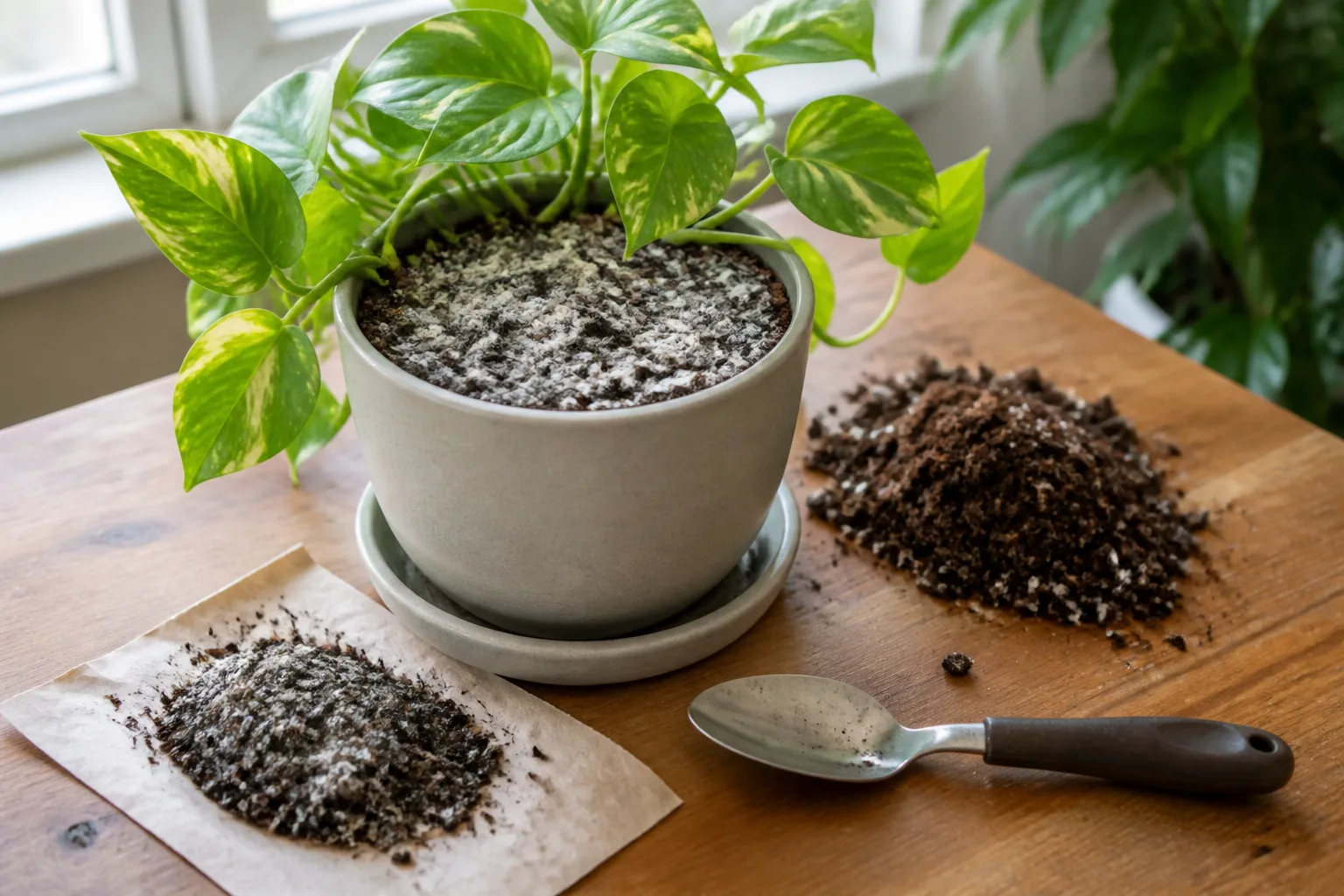
Surface white fuzz on damp potting mix is usually saprophytic mold feeding on organic matter, not a death sentence. It still signals moisture that also feeds fungus gnat larvae. Our mold on houseplant soil guide covers scraping and dry-down; peroxide is an optional add-on when you want a quick surface oxidizer.
For soil surface mold or gnat larvae in the top layer, mix 1 part 3% with 4 parts water (~0.6% final). Drench the top ½ inch until wet; let the surface dry before the next watering. Colorado State Extension notes that fungus gnat larvae live in moist upper mix and that allowing the surface to dry is the most important control (Colorado State University Extension). Peroxide can reach larvae on contact in that zone; pair it with yellow sticky traps for adults and dry-down for prevention.
For powdery mildew on leaves—white dusty patches on foliage, not fuzzy soil—try a weaker foliar mix: 1 tablespoon 3% per cup of water. Mist the tops of affected leaves in early morning so they dry by midday. Spot-test one leaf for 24 hours first. Advanced mildew on crowded beds may need our full powdery mildew cultural plan plus labeled fungicides; peroxide is a mild knockback, not a greenhouse-grade program.
Never combine peroxide foliar sprays with neem oil or horticultural oils in the same session—oxidizers and oils stress leaves. If you need ongoing pest control on foliage, switch to neem oil as an organic insecticide on a different week after leaves recover.
Use 5 — Spot-Treat Weeds on Hardscape (Not in Planted Beds)
Some guides recommend strong peroxide to scorch weeds. Missouri Extension lists hydrogen peroxide among organic oxidizers used in agriculture, but effectiveness as a selective herbicide in planted beds is poor (Missouri Extension). Peroxide non-selectively oxidizes plant tissue. In a vegetable or flower bed, you will hit your crops before you kill the weed.
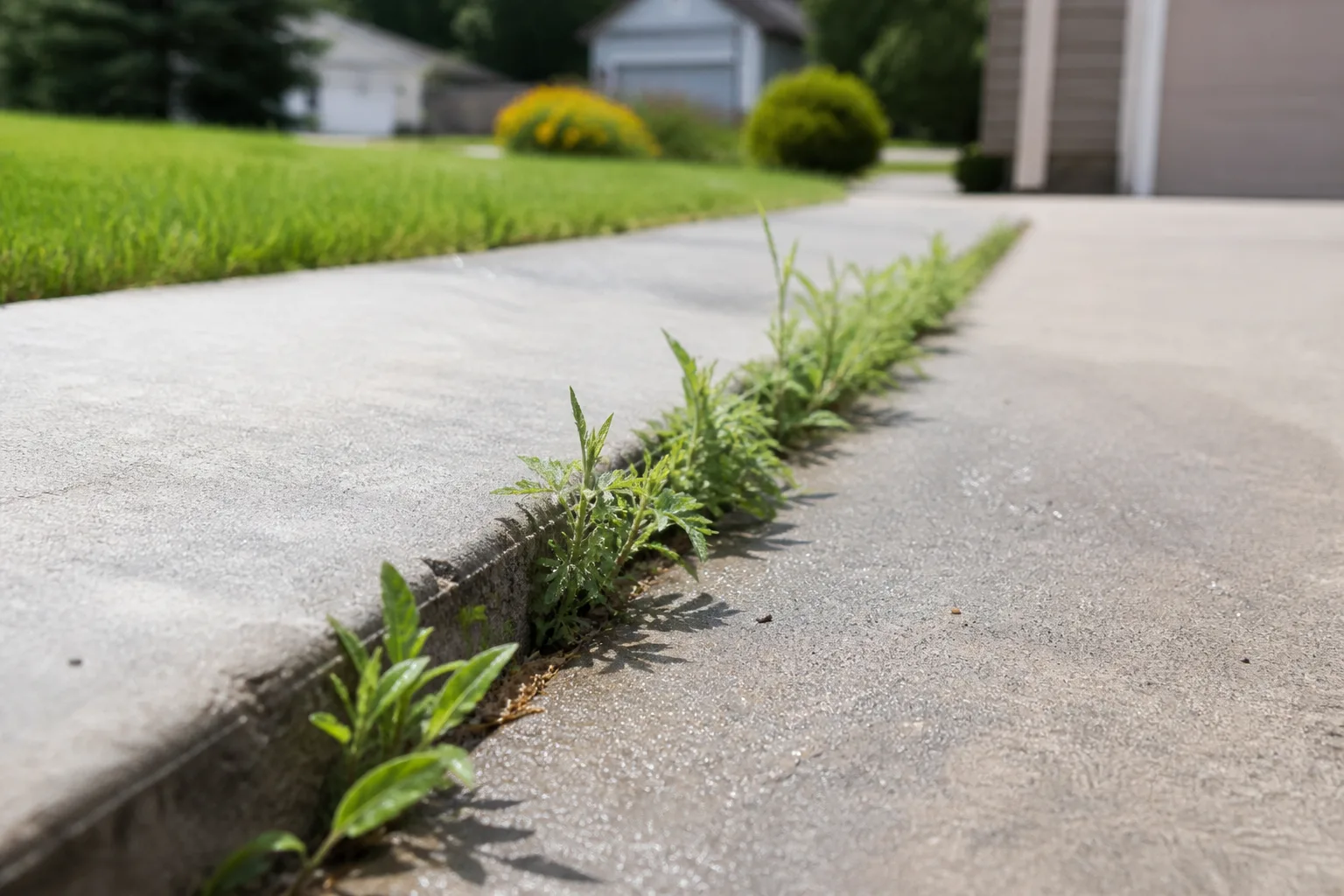
The realistic job: cracks in pavers, gravel paths, and driveway edges where no desirable roots live. Use undiluted 3% in a narrow stream on a calm day, shielding nearby garden beds with cardboard. Expect contact burn, not deep root kill on perennial weeds with taproots. Repeat as new seedlings emerge. For recurring patio weeds, dedicated vinegar-salt soap mixes (used only on hardscape) often outperform peroxide; drift still risks border plants.
Do not mix “10% peroxide” recipes from random blogs unless you understand concentrate math. Jumping from 3% foliar mixes to high-strength weed sprays is how people bleach lawns.
Application Rules: Frequency, Spot Tests, and Stop Signs
Spot-test first on any foliar use: one leaf, wait 24 hours, look for bleaching or crisping. Cap frequency at one soil drench per week on struggling pots only—not the whole collection on a schedule. Stop if leaves wilt harder after treatment, if white roots turn tan uniformly, or if mold returns within 48 hours without moisture change.
Label your spray bottles “plants — diluted H₂O₂” with the ratio written in marker. Never store plant mixes in unmarked bottles that could be mistaken for cleaning strength.
Safe Storage After You Mix a Batch
Use mixed plant solutions the same day when possible. Peroxide breaks down quickly in open containers, especially in warm rooms or bright windowsills. If you must store overnight, use an opaque bottle, keep it cool, and re-check for fizz before applying. Never combine leftover plant peroxide with vinegar, bleach, or ammonia—those pairings create hazardous fumes unrelated to your original dilution.
After any root rot rescue, track dry-down with your finger or a skewer at drainage depth. Oxygenation drenches are pointless if the saucer refills after every watering.
When Hydrogen Peroxide Is the Wrong Tool
Skip peroxide when:
- The plant is healthy. Routine “oxygen boosts” on thriving plants disrupt soil ecology for no gain.
- Root rot is advanced. Mushy stem base, foul odor, all roots gone—compost or propagate clean tissue; peroxide will not resurrect dead vascular tissue.
- You have not fixed drainage. No holes, heavy peat, cachepot holding water—address structure first.
- You need reliable insect control on foliage. Peroxide is not a substitute for insecticidal soap or neem on aphids, thrips, or scale; it can burn leaves before it controls adults.
- You want bed-wide weed control. Use mulch, hand pulling, or labeled herbicides appropriate to the site—not oxidizer drift across seedlings.
Hydrogen peroxide does not replace repotting for salt buildup, chronic gnats, or contaminated bagged mix. It does not fertilize. And it will not save a plant dying from cold damage, sun scorch, or nitrogen deficiency just because roots look unhappy.
Conclusion
Hydrogen peroxide earns a place in the plant-care kit when you respect dilution and match the job to the problem. Disinfect tools and pots after disease work, soak roots once at early root rot repot, oxygenate soggy mix with a weak weekly drench at most, knock back surface mold and gnat larvae while drying the soil surface, and spot-burn hardscape weeds when nothing good is nearby. Buy 3%, measure carefully, spot-test leaves, and stop the moment culture—not chemistry—becomes the bottleneck.
When symptoms outgrow these five uses, pivot to the deeper fixes linked above: full root rot rescue, mold dry-down, mildew IPM, or proper outdoor pest sprays. Used that way, hydrogen peroxide is a sharp helper—not a miracle, and not a reason to keep overwatering.