How to Use Fallen Leaves to Improve Soil
Learn how to use fallen leaves as lawn mulch, garden-bed cover, leaf mold, or compost while avoiding mats, disease, excess depth, and contaminated leaves.
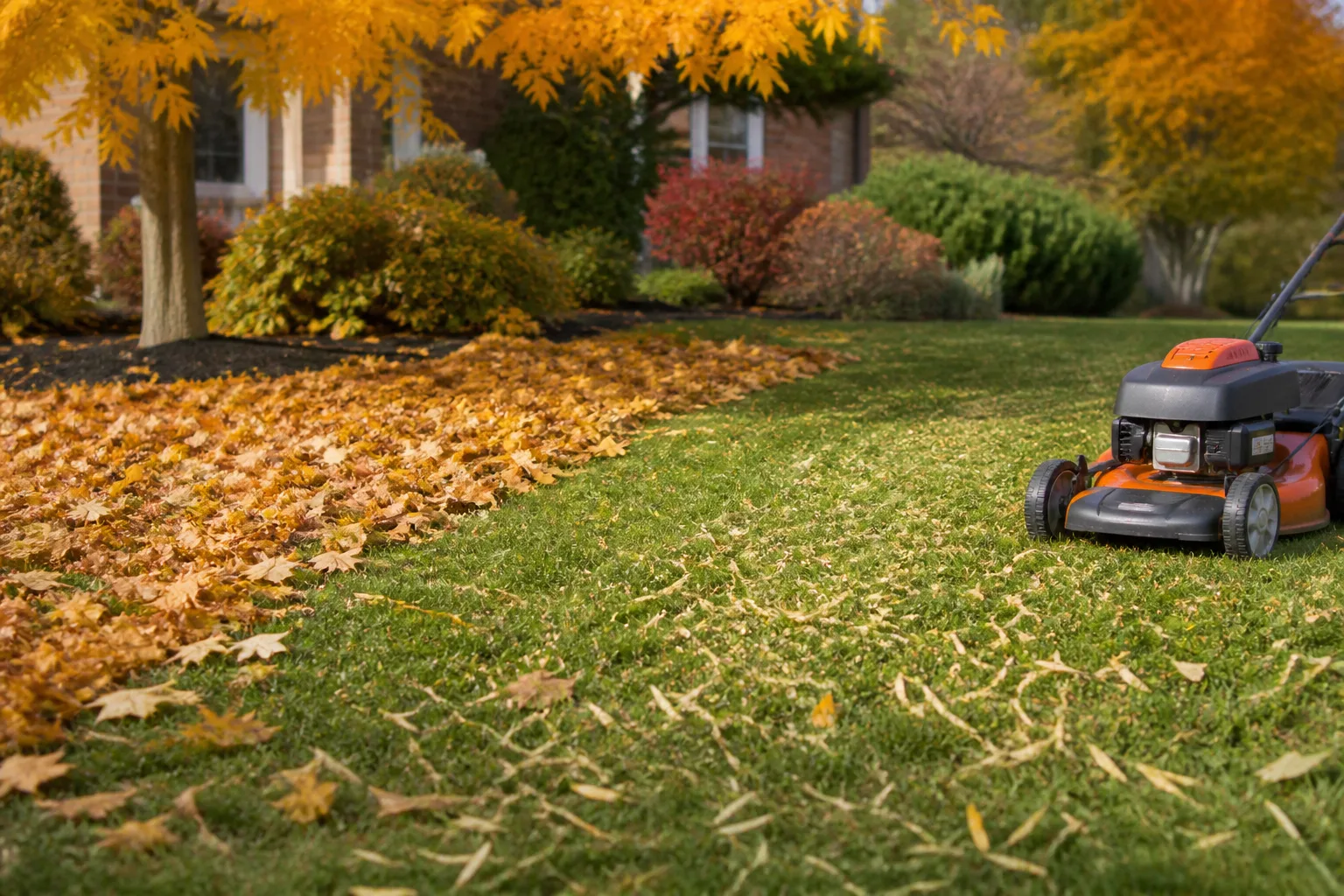
The best use for fallen leaves depends on where they land. Shred a light layer into a healthy lawn, spread a deeper layer over an established bed, save surplus leaves for leaf mold, or mix them with nitrogen-rich material in a compost pile. The same leaf that smothers turf can protect a shrub border, and the same bag of leaves that is awkward to use fresh can become a valuable soil conditioner after a year or two.
Leaves are not instant fertilizer. They are mostly carbon-rich plant material that decomposes into organic matter, helping soil hold water and air over time. The practical goal is not to keep every leaf exactly where it fell; it is to move leaves to the surface where they can do the most good, then prepare them so they do not form a wet, airless blanket.
The Short Answer: Match the Method to the Surface
If you want one default rule, shred dry leaves and use them in thin, even layers. A light scattering can be mowed into a lawn, a few inches can cover a garden bed, and the rest can go into a leaf-mold bin or active compost pile. Whole leaves are still useful, but they need more room, more airflow, and more patience because they can overlap into a water-resistant mat.
This distinction matters because mulch and soil amendment are not the same thing. Colorado State University Extension defines mulch as material placed on the soil surface, while an amendment is mixed into soil; fallen leaves can serve as either, but the depth and timing change the result. Its mulching guidance also connects correctly used mulch with moisture stabilization, erosion control, weed suppression, and more active soil biology.
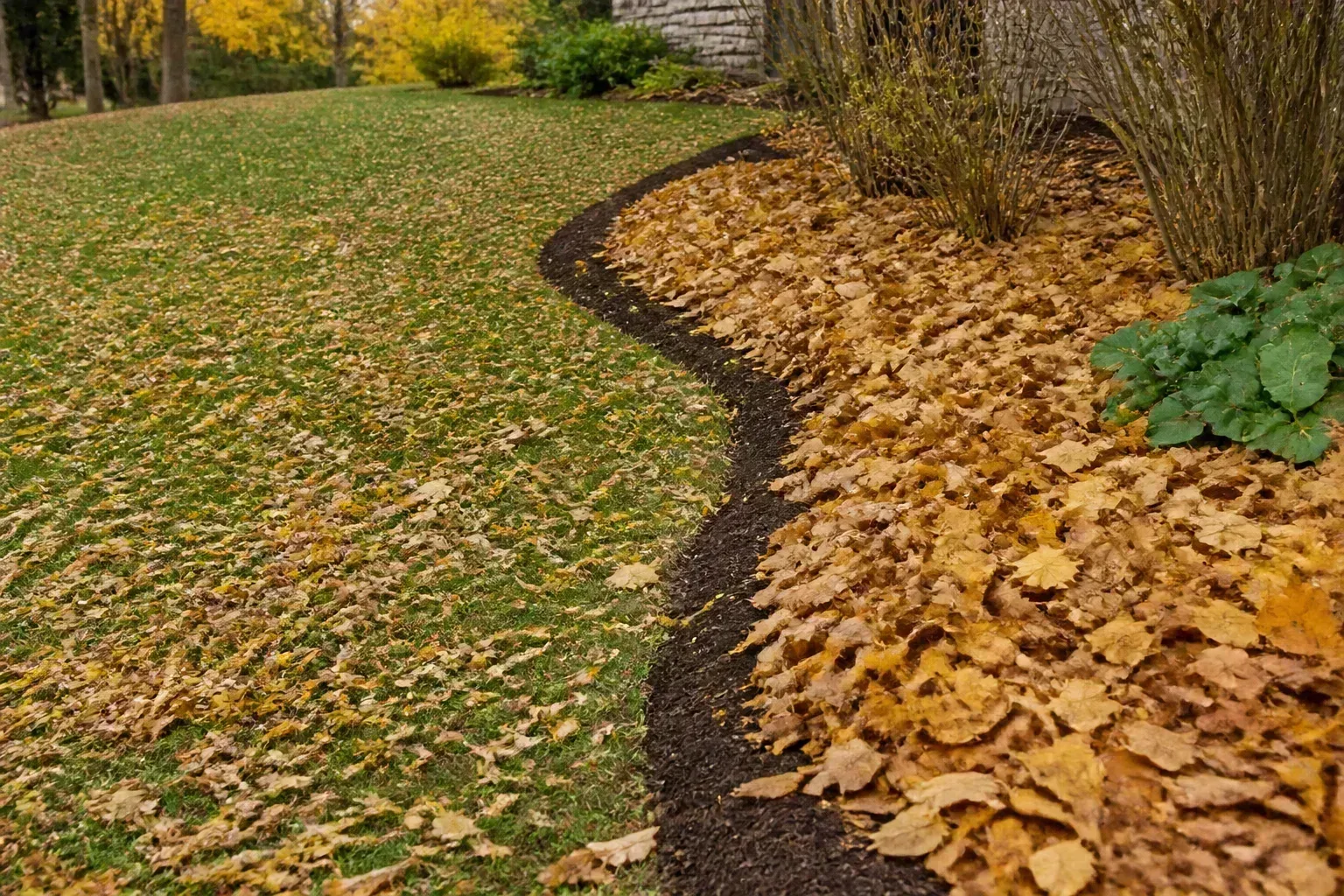
A one-minute decision rule for your next leaf pile
Use the surface as your first decision point:
- Lawn: Mow a light, dry layer until the pieces fall between grass blades. Collect excess instead of leaving a visible blanket.
- Established trees, shrubs, and perennial beds: Spread shredded leaves as surface mulch, keeping them away from stems and trunks.
- Empty annual or vegetable beds: Use shredded leaves as a winter cover, then rake or lightly incorporate the partly decomposed material before spring planting.
- Too many leaves: Build a leaf-mold pile or hold dry leaves beside an active compost pile as a ready supply of carbon-rich browns.
If the leaves are wet, diseased, contaminated with road salt or litter, or mixed with pet waste, pause before spreading them. Sorting first takes less time than correcting a compacted bed, introducing a plant pathogen, or picking plastic and trash out of finished compost.
Why Fallen Leaves Improve Soil Naturally
When leaves break down, they contribute organic matter that changes the physical behavior of soil. Clay soil can become easier to work as organic matter creates more pore space, while sandy soil can hold moisture for longer between irrigations. The improvement is gradual, so a single autumn application will not transform a poor bed overnight.
Leaf cover also protects the soil surface from the direct force of rain. That reduces crusting and erosion, while the layer moderates temperature swings and gives decomposers a steady food source. The benefit is especially clear in beds that would otherwise sit bare through winter, when wind and rain can carry away fine soil.
Leaves do not deliver a predictable dose of nitrogen, phosphorus, or potassium like a labeled fertilizer. Trees reclaim many mobile nutrients before leaves fall, leaving behind a material rich in carbon compounds such as cellulose and lignin. That is why leaves are excellent soil-building feedstock but a poor excuse to skip a soil test or a crop-specific fertility plan.
Leaf mulch, leaf mold, and compost are different products
Leaf mulch is fresh or partly decomposed leaf material used on the soil surface. It protects the ground now and breaks down in place, but it can blow away, mat, or need topping up. Leaf mold is a dark, crumbly conditioner made mostly from decomposed leaves in a cool, moist pile; it is valued more for structure and water-holding capacity than for high nutrient content.
Compost is a managed blend of browns and greens that decomposes with moisture and oxygen, often producing more heat and a more varied finished amendment. A compost pile may include leaves, grass, vegetable scraps, and other plant material, while leaf mold is intentionally leaf-heavy. Treating these as interchangeable is a common source of disappointment: fresh leaf mulch will not behave like finished compost, and leaf mold is not a concentrated fertilizer.
Start With a Safe Leaf Stream
Most clean leaves from healthy, untreated landscape trees are useful. The word “clean” matters: leaves gathered from a curb, parking lot, roadside ditch, or dog run may contain salt, oil, trash, weed seeds, or animal waste. Keep those out of edible beds and home compost unless you can separate the questionable material.
Take extra care with leaves from a tree or plant that had a serious, recurring disease. A cool leaf-mold pile does not reliably sanitize pathogens, and a small backyard compost pile may never reach the temperature needed to kill weed seeds and disease organisms. Colorado State University Extension’s composting guidance gives the conservative threshold: disease organisms and weed seeds are only reliably addressed when the pile heats above 145°F and is turned regularly. Most home piles do not meet that standard consistently.
That does not mean every spotted leaf must be treated as hazardous waste. Cosmetic leaf spots on a non-susceptible tree are a different decision from a known outbreak that could return to nearby roses, fruit trees, tomatoes, or perennials. When in doubt, remove heavily diseased material from the garden rather than using it as surface mulch or putting it in a slow, cold pile.
Leaves to keep out of beds and piles
Separate the following before you start shredding:
- Leaves with severe or clearly identified disease, especially when the same host plant will grow nearby next season.
- Leaves mixed with pet feces, trash, road salt, or oily runoff.
- Leaves collected from a lawn or bed treated with a persistent herbicide when the product’s label or local extension guidance does not clear the material for composting.
- Large amounts of black walnut leaves and nuts when you plan to use the finished material around seedlings or sensitive new plantings.
Black walnut contains juglone, a compound that can inhibit some plants. Fine Gardening’s leaf-cycling overview recommends caution with black walnut while noting that oak leaves and pine needles should not be rejected simply because of the popular “acidifying” myth. The safest household rule is to keep black walnut material separate, use it beneath established plants that already grow under that tree, or let it age before using it widely; do not make it your seed-starting mix.
Shred Leaves for Faster, More Even Breakdown
Shredding increases the number of leaf edges exposed to moisture and decomposers. It also prevents large, slick leaves from stacking into overlapping sheets that shed rain. The ideal result is not dust; extremely fine material can compact, especially when wet. Aim for small flakes rather than powder.
Dry leaves are easier to move and shred than saturated leaves. If a pile is damp, let the surface dry before mowing or use a rake to spread it into a thinner layer. Wet leaves can clog a mower deck or vacuum, smear into dense clumps, and make it harder to judge the final depth.
Choose a tool you already own
A standard rotary mower can shred leaves if you work with a light layer and make additional passes. A mulching mower or mulching blade usually reduces the number of passes, but it is not mandatory. A mower bagger is useful when you need to collect the extra material for beds, compost, or leaf mold rather than redistribute it on the lawn.
For a small yard, rake dry leaves onto a tarp, fold the tarp to move them, and chop the pile with a mower in manageable batches. A leaf vacuum with a shredding function can work well, but it is a convenience rather than a prerequisite. Almanac’s vegetable-garden leaf guide describes a low-tech approach: dry leaves crumble more readily, while occasional crushing and later moisture allow them to soften in a holding bin.
Do not chase a perfect texture at the expense of safety. Wear eye protection around powered equipment, keep stones and sticks out of the pile, and never put your hands under a mower deck or into a vacuum housing to clear a clog. Turn the machine off, disconnect power where applicable, and follow its manual.
Mulch Leaves Into the Lawn
Mulching leaves into turf works when grass blades remain visible and air and light can still reach the crown. Mow when the lawn and leaves are dry, set the deck high enough that you are not scalping the grass, and make passes until the pieces are small enough to settle between blades. The finished surface should look like grass with a light dusting of leaf particles, not a continuous tan or brown sheet.
This is the narrowest use of fallen leaves because turf has a strict light requirement. Fine Gardening’s practical three-use leaf guide makes the useful distinction that a light round of mowing can return organic matter to the lawn, while a heavy fall should be bagged and moved elsewhere. If you can still see broad leaf faces covering the grass after mowing, collect the excess.
Repeat the process as leaves fall instead of waiting for one enormous pile. Several light passes are easier on the mower and produce a more even layer than forcing a thick, damp blanket through the deck. If the lawn is already wet, compacted, thin, or struggling with a disease problem, move the leaves to a bed or compost system and address the turf separately.
Use Shredded Leaves in Garden Beds
Garden beds are usually the best place to put surplus leaves because a surface layer can protect soil without blocking every blade of grass. Spread shredded leaves around established perennials, shrubs, and trees, then use a rake to even out high spots. In a mixed bed, keep the layer loose enough that rain can pass through and emerging shoots can find daylight.
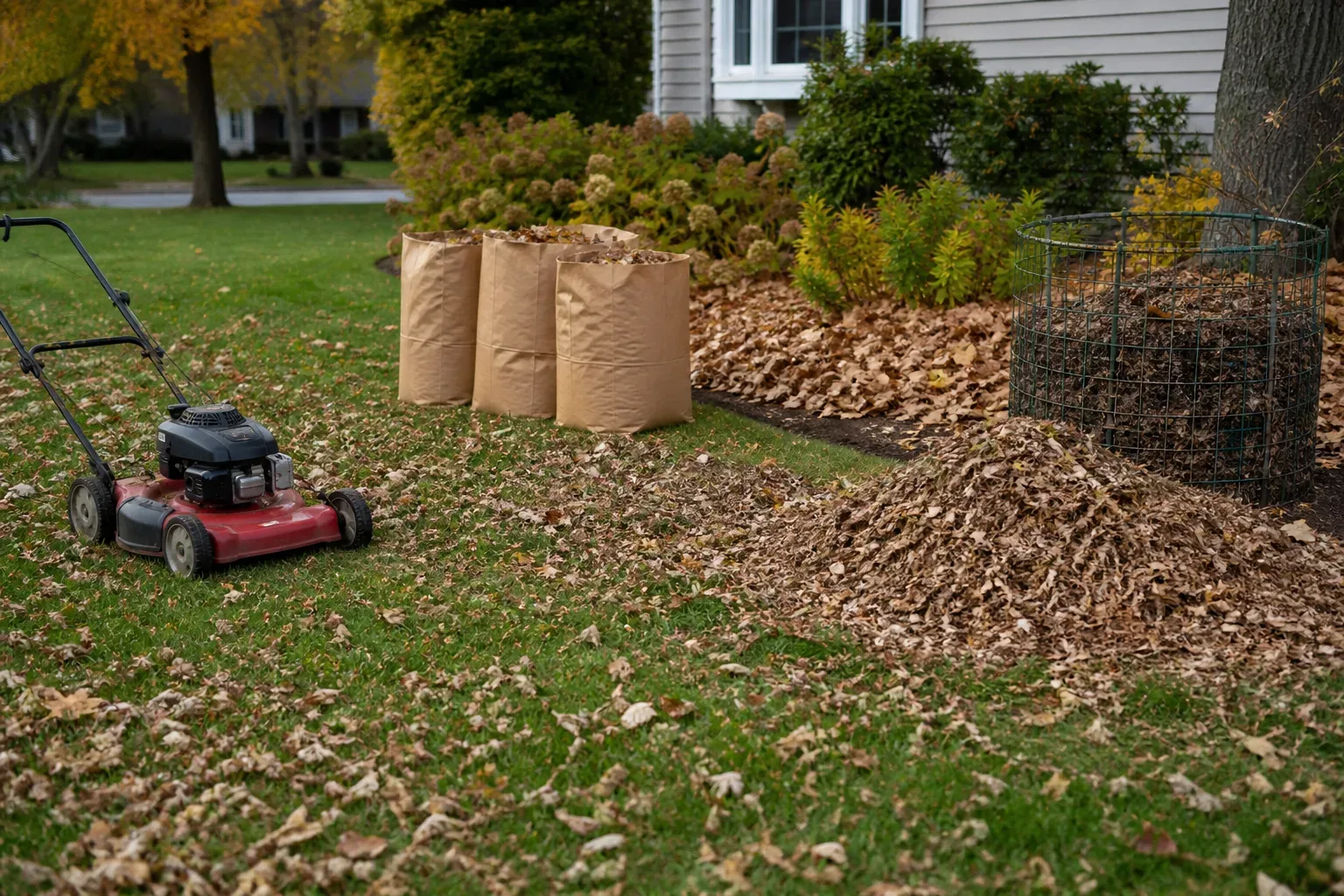
Use about 2 to 4 inches of shredded leaves as a starting range, adjusting for wind, leaf texture, and the plant’s crown. Whole leaves should be shallower—Fine Gardening recommends no more than about 3 inches under trees and shrubs—because they are more likely to mat. Thin, flexible leaves may need topping up; thick oak, sycamore, or waxy evergreen leaves may need more shredding instead.
Depth and placement rules that prevent mats
The correct depth is the deepest layer that stays airy, drains after rain, and does not bury the plant’s crown. More is not automatically better. Colorado State University Extension warns that overly deep mulch can reduce air exchange, while its guidance on leaf mulch notes that leaves decompose quickly and are less resistant to compaction than wood chips or gravel.
Pull leaves back from stems, crowns, and trunks. Leave a visible gap around each plant so wet material is not pressed against tender tissue, and avoid a cone-shaped “mulch volcano” around trees. A level ring that tapers away from the trunk protects the root zone without keeping bark wet.
Check a new layer after the first heavy rain and again after a windy week. If the top has formed a felted crust, fluff it with a rake; if water is running off the surface, reduce the depth or shred the leaves more finely. If slugs become a problem in a damp bed, thin the mulch and improve spacing and airflow rather than adding more organic cover.
Make Leaf Mold for Long-Term Soil Conditioning
Leaf mold is the best destination for leaves you cannot use immediately. It is simple: contain the leaves, keep them slightly moist, provide some air, and wait. Over time, fungi and other decomposers turn the pile into a dark, flexible material that helps loosen dense soil and improves moisture retention without behaving like a strong fertilizer.
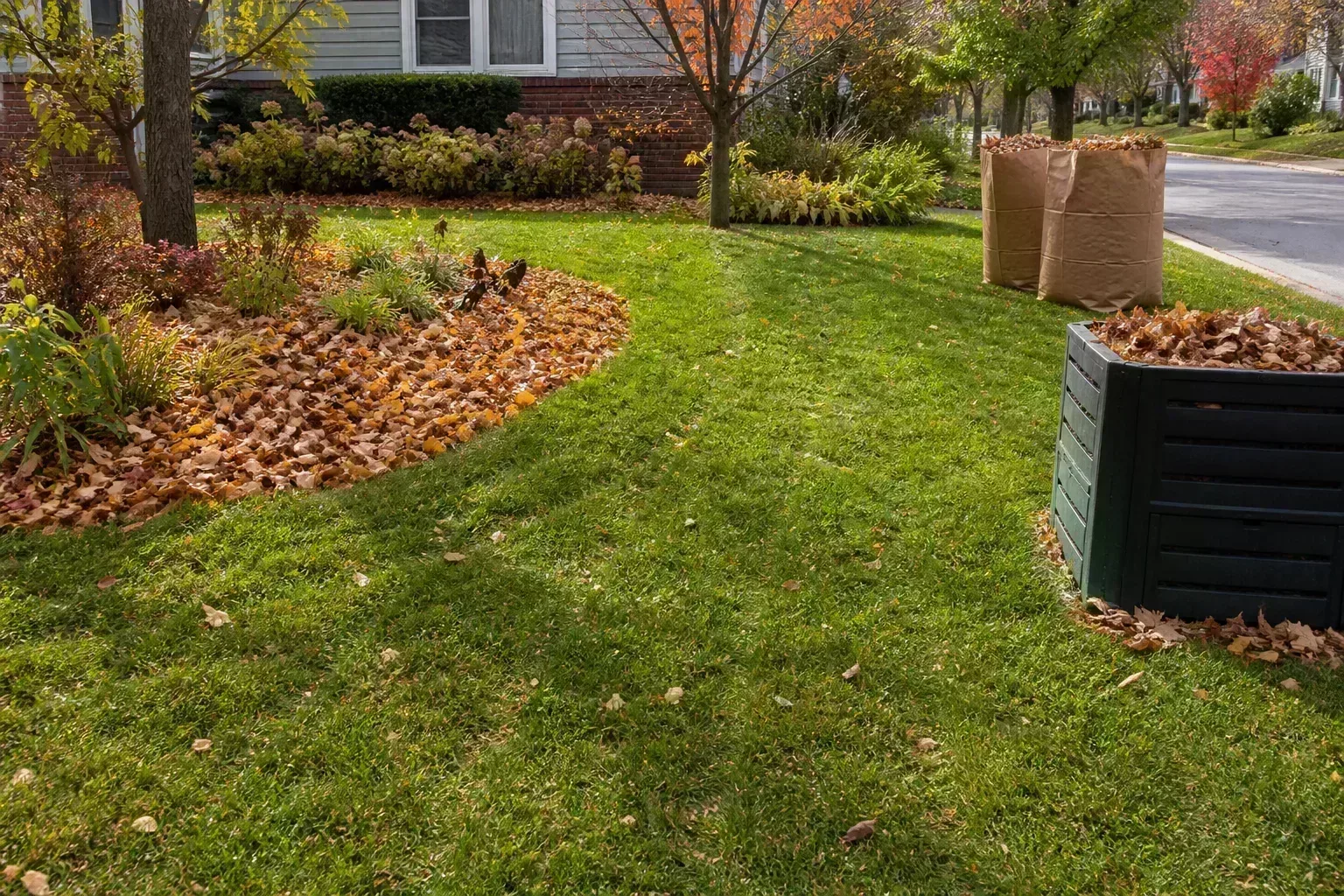
RHS explains in its leafmould guidance that all leaves and conifer needles eventually break down, but thick leaves such as sycamore, walnut, horse chestnut, and sweet chestnut benefit from shredding. Oak, beech, and hornbeam leaves are particularly well suited to leafmould, while waxy evergreens such as holly and cherry laurel are better shredded and mixed into a conventional compost pile.
Build a wire enclosure in a sheltered spot or use sturdy bags with air holes. Fill the bin with leaves, moisten dry material as you add it, and compress only enough to prevent wind loss. A pile that is too small dries out quickly; a larger mass holds moisture and stays biologically active for longer. Check it a few times through the year and add water during extended dry weather.
Expect a patient process. RHS says most leaves take about two years to break down, although shredding, moisture, climate, and turning can shorten the wait. Fine Gardening similarly distinguishes between one to two years for chopped material and longer for whole leaves. Use young leaf mold as a surface mulch or soil cover; reserve the finest, fully rotted material for mixing into beds or potting ingredients.
Add Leaves to a Hot Compost Pile
Leaves are classic brown material: dry, carbon-rich feedstock that balances wet, nitrogen-rich greens such as fresh grass clippings, vegetable scraps, and green plant trimmings. They are especially useful in fall, when a compost pile may suddenly receive a large amount of wet kitchen waste or fresh garden cleanup.
Do not dump an entire load of leaves into the compost bin and expect a fast result. Shred them first, mix them with greens, and keep the pile damp but not soggy. A leaf-only pile is not a failure; it is simply a leaf-mold project and should be managed with more patience.
Balance carbon-rich leaves with nitrogen-rich greens
Colorado State University’s making-compost resource places the ideal compost carbon-to-nitrogen ratio near 30:1 and describes a practical blend of roughly two parts green material to one part brown by volume. The exact ratio is less important than the signs of balance: a good pile is moist, airy, and earthy-smelling, not slimy or sharply ammonia-scented.
Mix leaves through the pile instead of making a thick, isolated leaf layer. If you have mostly leaves, save them in a dry holding bin and add them a bucket at a time as greens become available. If you have too many greens, add shredded leaves or torn, uncoated cardboard to absorb moisture and restore air pockets.
Particle size matters here as well. Colorado State recommends moderate plant pieces—roughly half an inch to one and a half inches—as a useful compromise between surface area and airflow. Material shredded to powder can pack tightly, while whole leaves take longer to wet and decompose. Turn or fluff the pile when it settles, develops an odor, or cools before the material has visibly broken down.
For a home garden, the most important compost habit is restraint. Do not add diseased leaves to a cold pile because you hope a future warm spell will sanitize them, and do not pour on fertilizer to compensate for a brown-heavy batch without knowing the rate. If the pile will not heat, let it mature as leaf mold or remove problematic material rather than using unfinished compost around edible crops.
Use Leaves in Empty Beds and Winter Vegetable Gardens
An empty bed benefits from a living or organic cover more than from a perfectly bare surface. Spread shredded leaves after the main harvest to shield soil from rain, suppress late weeds, and begin adding organic matter before spring. A partly decomposed layer can be raked aside into paths or incorporated shallowly when the bed is ready for planting.
For winter vegetables and garlic, use enough shredded leaf mulch to reduce temperature swings without burying crowns or creating a solid, wet mat. Almanac reports using chopped leaves as winter mulch in vegetable beds and around newly planted garlic, while noting that leaf mulch can keep soil cool and block weed light. That cooling effect is useful for winter protection but can slow spring warming, so rake back excess leaves before sowing small seeds or transplanting heat-loving crops.
Do not till a thick layer of fresh whole leaves deeply into an annual bed just before planting. The material may clump, make the seedbed uneven, and temporarily give microbes a large carbon supply to process. If you need organic matter mixed into the soil, use finished compost or mature leaf mold, or apply shredded leaves well before the planting window so decomposition has time to begin.
Around perennial plants, leave a modest protective cover in place through winter and inspect it when new growth begins. Clear leaves from crowns that are prone to rot, from low plants that need spring light, and from any bed where the material stayed saturated. A seasonal cover is a tool, not a rule that overrides the needs of the crop.
Fix Common Leaf-Mulching Failures
The leaves form a thick, wet mat. Rake or lift the layer to restore airflow, then redistribute it more thinly. Shred the next batch and avoid adding another wet layer before the surface has dried.
Water runs off instead of soaking in. Whole leaves may be acting like overlapping shingles. Break them up, reduce the depth, and check whether compacted soil beneath the mulch also needs aeration or better drainage.
The compost pile smells sour or rotten. Excess water, compaction, or too much fine material has displaced oxygen. Add dry shredded leaves, open air channels, and turn the pile; do not add more kitchen scraps until the odor settles.
The pile smells like ammonia. The mix is too rich in nitrogen. Add a generous amount of dry leaves, mix them through rather than laying them on top, and allow the pile to rebalance.
The leaves blow into the yard or street. Use a sheltered bin, dampen the pile lightly, or cover the surface with a loose, breathable net. Do not solve a wind problem by packing leaves into a dense, water-shedding layer.
Grass looks pale after leaf mulching. First check whether leaf fragments are blocking light or whether the lawn is simply entering seasonal dormancy. If grass is visibly covered, bag the excess; if growth is weak for other reasons, test soil and review mowing height, drainage, and the grass type before adding more organic material.
The bed develops more slugs. Leaf mulch creates a cool, damp refuge that can benefit slugs in wet weather. Thin the layer, remove hiding places next to tender seedlings, water early in the day, and use an integrated approach suited to your local garden rather than abandoning all mulch.
Fallen leaves become easier to manage when you treat a failure as information. A mat says the layer is too thick, too whole, too wet, or poorly matched to the surface; an odor says oxygen or the carbon-to-nitrogen balance is off. Correct the cause before reaching for another material.
Conclusion
Fallen leaves are free soil-building material when you give them the right job. Shred a light layer into a lawn, use a few inches as airy bed mulch, save surplus leaves for leaf mold, and blend them with greens when you want active compost. Keep whole leaves shallow, keep mulch away from crowns and trunks, and remember that finished leaf mold improves structure more than it feeds plants.
Sort before you spread. Remove serious disease, road salt, pet waste, litter, and questionable chemical contamination; keep black walnut material separate when sensitive plants or seedlings are involved. With those limits in place, the autumn leaf pile stops being a cleanup problem and becomes a steady source of moisture protection, organic matter, and healthier soil for the seasons ahead.



