Brooklyn Loft Indoor Jungle Tour Guide
Tour Jessica Tran's Greenpoint loft from In the Weeds Episode 17 — 40+ plants climbing exposed pipes, street rescues, and care lessons for pothos, lipstick plant, and Calathea Musaica.
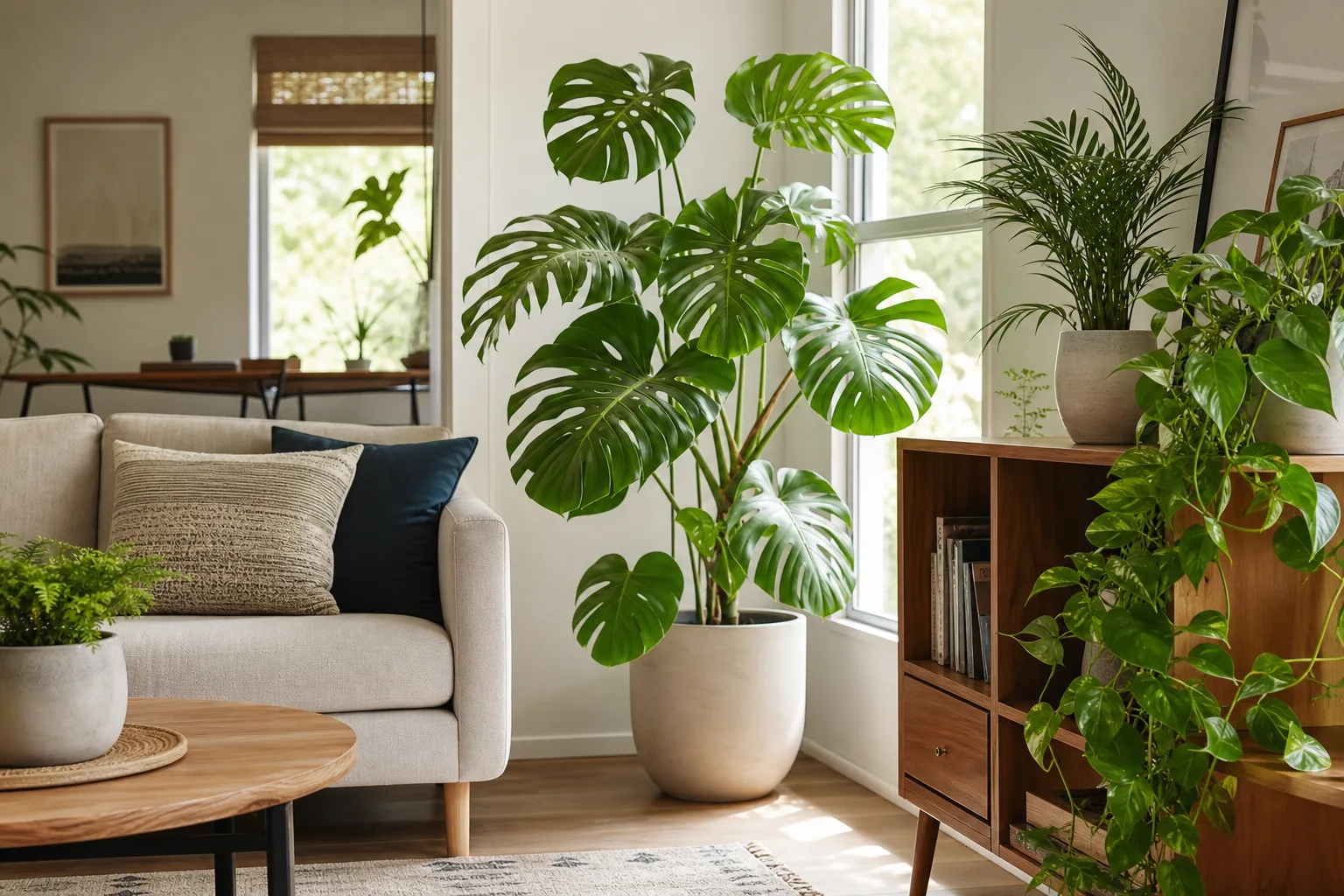
Walk into Jessica Tran’s Greenpoint loft and the first thing you notice is not a single statement tree — it is density at every altitude. More than 40 houseplants share a converted Brooklyn factory apartment with Jessica, her partner, and their dog. Vines trail from ceiling hooks, cascade off shelves, and — most memorably — climb along exposed plumbing poles that run through the open room. Episode 17 of In the Weeds With Plant People slows the tour to plant height so you can see how industrial architecture and forgiving vines turn a loft into a living habitat instead of a furniture showroom.
This page treats the episode as a case study in loft biophilic design, pipe-trained vine display, street-rescue rehabilitation, and the species-specific care behind Jessica’s standout plants: pothos, lipstick vine, network calathea, and pink aglaonema. If you have high ceilings, visible mechanicals, or a partner who keeps handing you abandoned pots, the rules here are more useful than another generic “water weekly” houseplant list.
Meet Jessica Tran and Her Greenpoint Factory Loft
Jessica lives in an old converted factory in Greenpoint, Brooklyn — the kind of unit where exposed pipes, wide spans, and tall ceilings are features renters pay extra for and plant people treat as infrastructure. Forty plants sounds modest until you see them layered: floor pots, hanging baskets, and vines that have grown into the apartment rather than staying politely inside their containers.
Jessica credits her plant obsession to her partner’s love of greenery. Their home is a collaborative collection — not one person’s hobby with passive tolerance from the other. That matters at scale: watering, repotting, and rescue rehab become sustainable when two adults share observation duty. Street finds get nursed back together; repotting season becomes a weekend project instead of a solo marathon.
Converted factory bones and ceiling height
Factory conversions trade standard apartment proportions for volume. Ceiling height changes everything:
- Hanging hooks can sit far enough from windows that trailers get bright indirect light without cooking on glass.
- Vertical sightlines let long pothos stems read as architecture — the vine is part of the room’s geometry.
- Air stratification means heat rises: upper hooks may dry faster than floor pots near the same window.
Jessica’s loft uses that volume deliberately. Most of the collection skews trailing and vining because horizontal floor space is finite but vertical display is unlimited when pipes and beams offer free climbing surfaces.
Why Converted Factory Lofts Work as Indoor Jungles
Industrial lofts reward a different plant palette than a dim railroad flat. Biophilic design — connecting built spaces to living systems — shows up here as layered greenery at multiple heights, natural material contrast (brick, wood, metal), and microclimates grouped by humidity instead of random pot scatter (Interior Plantscapes biophilic design).
Loft-specific advantages:
- Structural anchors — ceiling beams, conduit, and plumbing runs can support hooks or soft ties when used correctly.
- Large windows — many conversions retain factory glazing; bright indirect bands near glass support variegated and flowering species.
- Open plans — airflow moves across the room; fungal issues drop when leaves are not packed against dead corners.
Trade-offs exist too. Winter heat from exposed ductwork dries air fast. Summer sun on south glass can scorch leaves two feet from the pane. Jessica’s success comes from matching species to zone — pothos on cooler pipe runs, humidity lovers grouped away from blasting heat registers.
Industrial ceilings, beams, and microclimate zones
Copyable zoning from loft tours like Jessica’s:
- Bright indirect window band — pink aglaonema, lipstick plant when flowering, newer calathea cuttings.
- Stable mid-room hooks — pothos, marble queen, jade pothos in lower light.
- Upper pipe runs — pothos aerial roots gripping metal; inspect monthly for drip and dust.
- Floor humidity pocket — calathea away from HVAC if possible; pebble tray or humidifier nearby.
At 40 plants, grouping is time management. You water one humidity pocket, scan one bright band, trim one pipe run — not wander with a watering can hoping you remember which pot dried Tuesday.
Pothos on Pipes — Jessica’s Most Admired Plant Family
Jessica opens the tour with pothos (Epipremnum aureum) — the plant family she admires most. “There are so many of them in this house because they just adapt and survive and thrive in any condition,” she says. That is not exaggeration for Instagram; it is horticulture.
NC State Extension describes pothos as a low-maintenance, broadleaf evergreen with cascading stems that can reach 40 feet as vines, climbing by brown aerial roots when given support and adequate light (NC State Epipremnum aureum). It prefers bright indirect light, tolerates long periods of low light, and wants well-drained potting medium dried between waterings. The RHS Epipremnum growing guide adds that vines lose variegation in deep shade and that overwatering causes root rot and blackened leaf margins (RHS Epipremnum growing guide).
In Jessica’s loft, pothos quantity is a strategy: they cover pipes, fill hanging gaps, and recover from missed waterings while rarer plants get focused attention.
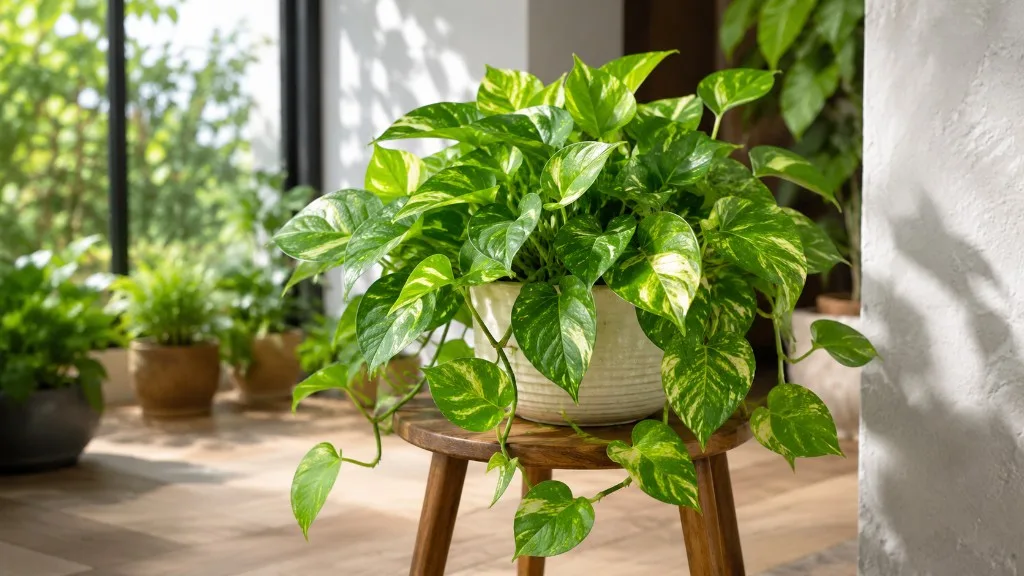
Why pothos survive pipe training and low-light corners
Pothos on exposed plumbing poles work because the plant already climbs in nature. Aerial roots seek rough, damp surfaces — metal pipe is not ideal biologically, but moist air and occasional misting encourage attachment. Keys for copying the look:
- Start with a established vine — thin new cuttings lack root mass to fuel vertical growth.
- Soft ties at first — velcro plant tape or loose jute; never cinch stems against metal edges.
- Light at the top — if the pipe crown is dark, growth stalls and leaves shrink; add a grow lamp or relocate the base pot closer to window brightness.
- Trim redirect — when a stem heads toward a doorway, cut and propagate rather than fighting traffic patterns.
For deeper care on light, water, and soil, see our pothos overview and pothos watering guide.
How to Display Vines on Exposed Pipes and Ceiling Poles
Jessica’s most photographed design move is letting plants grow along roof plumbing poles. It reads effortless on camera; operationally it is display engineering.
Hanging still dominates — most of her collection hangs from the ceiling in baskets — but pipe-trained vines add horizontal movement at eye level and above. The two methods solve different problems:
| Method | Best for | Watch for |
|---|---|---|
| Hanging basket | Long single-drop trailers, lipstick vine, young pothos | Hook load, swing into doorways, dry top soil |
| Pipe / beam training | Mature pothos, philodendron-class vines | Condensation on metal, stem abrasion, heat on pipes |
| Shelf cascade | Calathea, aglaonema, rescue rehab | Tip-over weight, blocked light to lower tiers |
Anchors, weight limits, and moisture risks
Ceiling hooks in converted factories often tie into concrete or steel joists — verify material before drilling. A wet 12-inch basket with mature pothos can exceed 15–20 pounds. Use swivel hooks or carabiners so you can lower baskets for repotting without climbing a ladder every month.
Pipe training rules:
- Do not drill into active supply lines — know which runs are supply vs drain; a punctured water line ends the plant hobby permanently.
- Insulate contact points — foam wrap or fabric between stem and metal reduces abrasion and cold/heat transfer.
- Wipe pipes for dust — grime blocks aerial root adhesion; monthly wipe with damp cloth.
- Check for condensation — chronic moisture on steel encourages rust and fungal leaf spots on contact leaves.
If your lease forbids ceiling holes, tension rod plant bars between exposed columns or freestanding ladder trellises mimic vertical layering without structural risk. Our DIY indoor plant trellis guide covers sizing and soft-tie methods that translate directly to pipe runs.

Street Rescue Plants and the First-14-Day Rehab Protocol
A striking share of Jessica’s collection are rescues — plants abandoned on sidewalks or literally dropped at her feet. “My partner and I just seem to find a lot of plants on the street that are abandoned,” she says. One man walked out a door and set a plant down in front of her mid-stride. They nurse rescues back together, which turns random luck into repeatable skill.
Street rescues are not free plants; they are unknown biosecurity packages.
Quarantine before the collection meets the rescue
First 14 days — isolation protocol:
- Separate room or sealed zone — minimum 10 feet from other plants; no shared watering tray.
- Inspect under leaves, at soil line, and on new growth — mealybugs, scale, and spider mites ride rescues indoors.
- Remove dead tissue — yellow leaves and mushy stems harbor fungus gnats.
- Repot only if necessary — if soil smells sour or is crawling, slip into fresh mix; otherwise stress the plant less in week one.
- Water conservatively — underwatered rescues are common; soggy rescues need dry-down before any fertilizer.
- Document baseline — photo leaves so improvement is visible; rescues recover slowly then suddenly.
- Release after two clean weeks — no new spots, no sticky residue, no webbing.
Jessica’s rescues look “amazing” on tour because quarantine and patience precede display. Skipping isolation at 40 plants turns one free fern into a whole-collection mite job.
Partner Collaboration — How Shared Plant Care Scales
Jessica’s origin story is relational: she got into plants because her partner already loved them. At collection scale, that is infrastructure. Single-owner collections often collapse when life gets busy; paired observation catches dry soil, pest webs, and leaning hooks before they compound.
Practical collaboration habits stolen from successful couples’ collections:
- Split zones, not species — one person owns hanging baskets, the other floor pots; both still scan everything weekly.
- Shared repotting calendar — spring repotting season is Jessica’s biggest expense; batching purchases and labor cuts cost and chaos.
- Rescue veto rule — either partner can say “not this one” if quarantine space is full.
- Celebrate wins — a revived street fern earns shelf space; morale fuels the next rehab.
Biophilic bedroom and loft research consistently links visible greenery to stress reduction and improved mood when placement is intentional (Suite101 biophilic interior ideas) — Jessica’s home is the lived version: plants are not background; they are shared household culture.
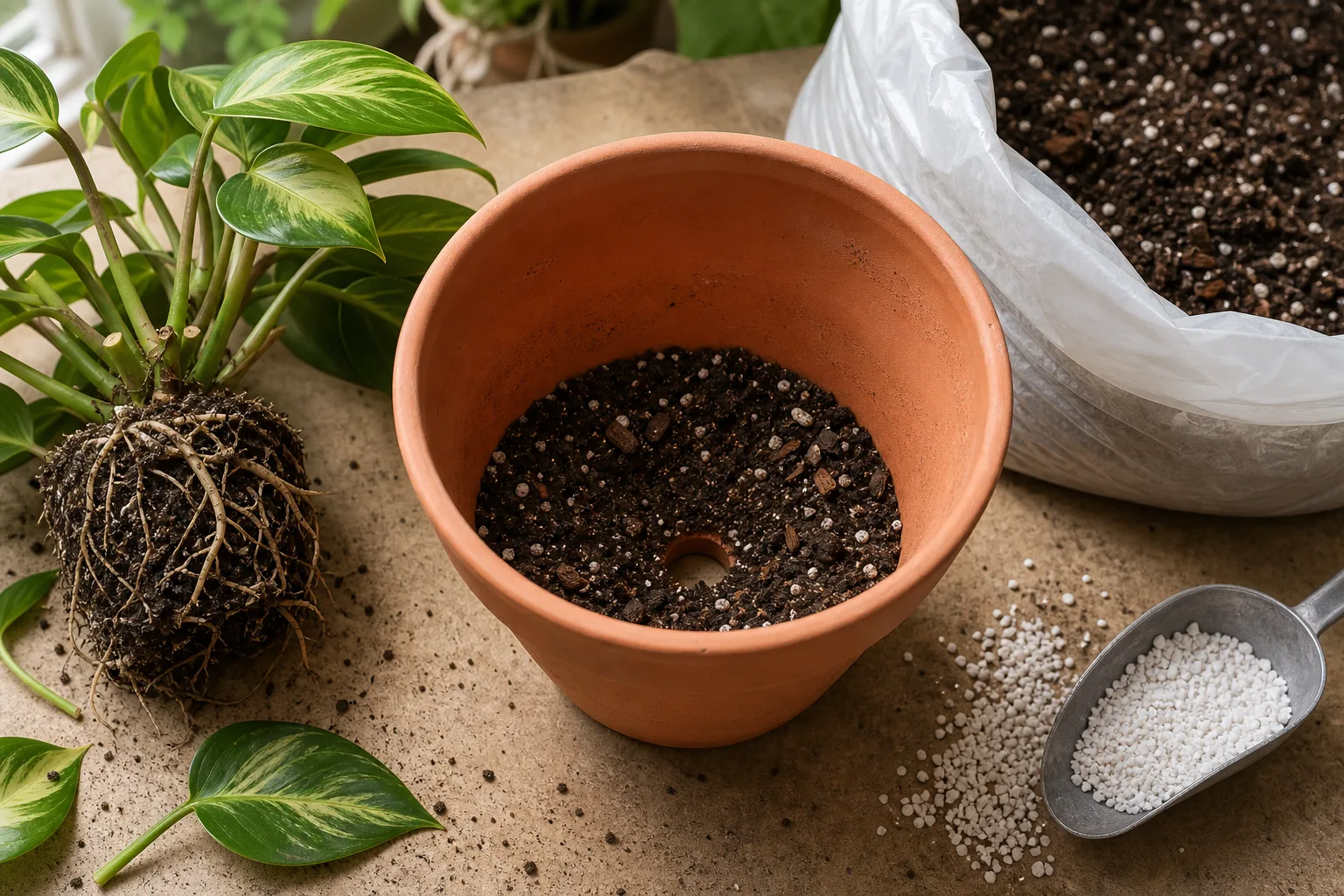
Repotting Season — Where the Real Budget Hits
Jessica names repotting season as her biggest plant expense — not rare cultivars or designer pots. That tracks for anyone past twenty plants. Soil, containers, drainage amendments, and time scale linearly while Instagram suggests collections grow for free.
Budget framework for 40-plant spring repotting:
- Soil — $3–8 per quart bag; large plants may need 2–4 quarts each. Batch a custom mix (peat or coco coir, perlite, bark) instead of buying specialty bags per pot.
- Pots — Jessica keeps unique pots for stars; workhorse rescues stay in functional nursery pots hidden inside cachepots. That split saves money without killing aesthetics.
- Labor — plan one weekend per zone (hanging, floor, rehab) rather than one heroic Sunday.
- Hidden costs — root pruning tools, sterilized snips, extra perlite, sticky traps after soil disturbance stirs gnats.
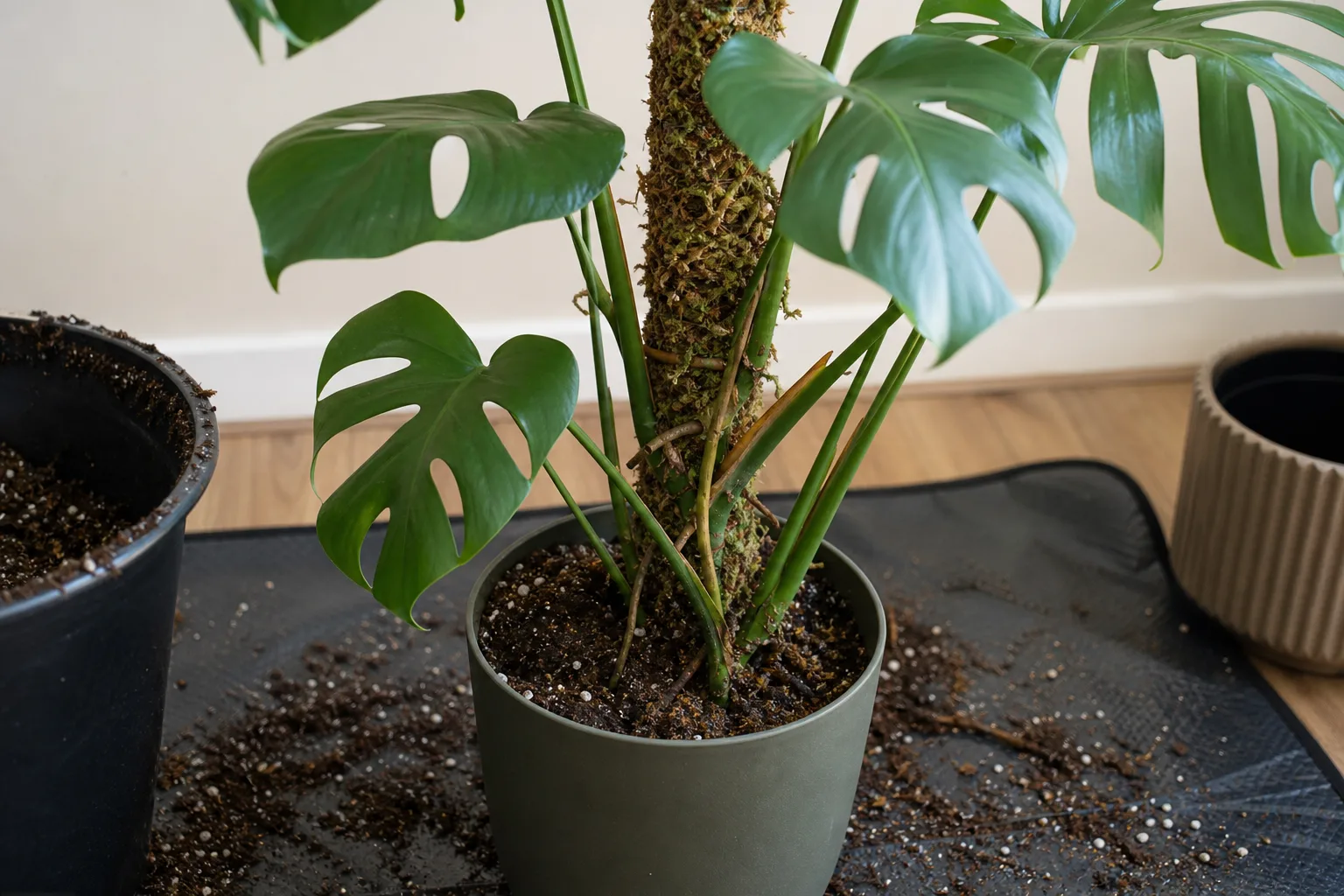
Not every plant needs annual repotting. Root-bound signals — circling roots, water running straight through, stalled growth — matter more than calendar dates. Our pothos repotting guide and aglaonema repotting guide spell out when to upsize vs refresh soil in place.
Lipstick Plant — Beautiful Flowers and Confusing Yellow Leaves
Jessica’s trickiest plant is her lipstick plant (Aeschynanthus radicans) — four years old, still confusing. “She’ll like a location and then decide, ‘not a great location,’ a month later,” she says. It sprouts beautiful flowers while yellowing leaves at the same time — the classic sign that light, water, and humidity are not aligned.
NC State Extension notes lipstick plant wants bright indirect light (not full sun), warm soil 65–70°F during growth, cooler drier winter, and high humidity with air circulation — stagnant moist air invites fungal disease (NC State Aeschynanthus radicans). Below 50°F, leaf drop follows. Water often but never leave roots soggy; use dilute orchid fertilizer in the growing season.
Get Busy Gardening adds practical nuance: yellow leaves often mean overwatering or sudden light change, while red leaf edges can signal sun stress (Get Busy Gardening lipstick plant care). Jessica’s monthly relocation habit fights the plant’s preference for stable conditions.
Lipstick troubleshooting matrix:
- Yellow leaves + wet soil — dry down, check drainage, hold fertilizer.
- Yellow leaves + dry soil — increase watering frequency slightly; misting is not enough alone.
- Flowers + yellow lower leaves — often normal senescence; remove yellow leaves, do not panic-water.
- No flowers, dark location — move brighter; lipstick blooms on mature stems with adequate light.
- Sticky leaves — inspect for aphids and scale; NC State lists both as common pests.
Because Jessica moves hers often, pick one bright spot for three months before judging failure. Hanging near a east or north window with humidifier offset beats perfect shelf rotation.
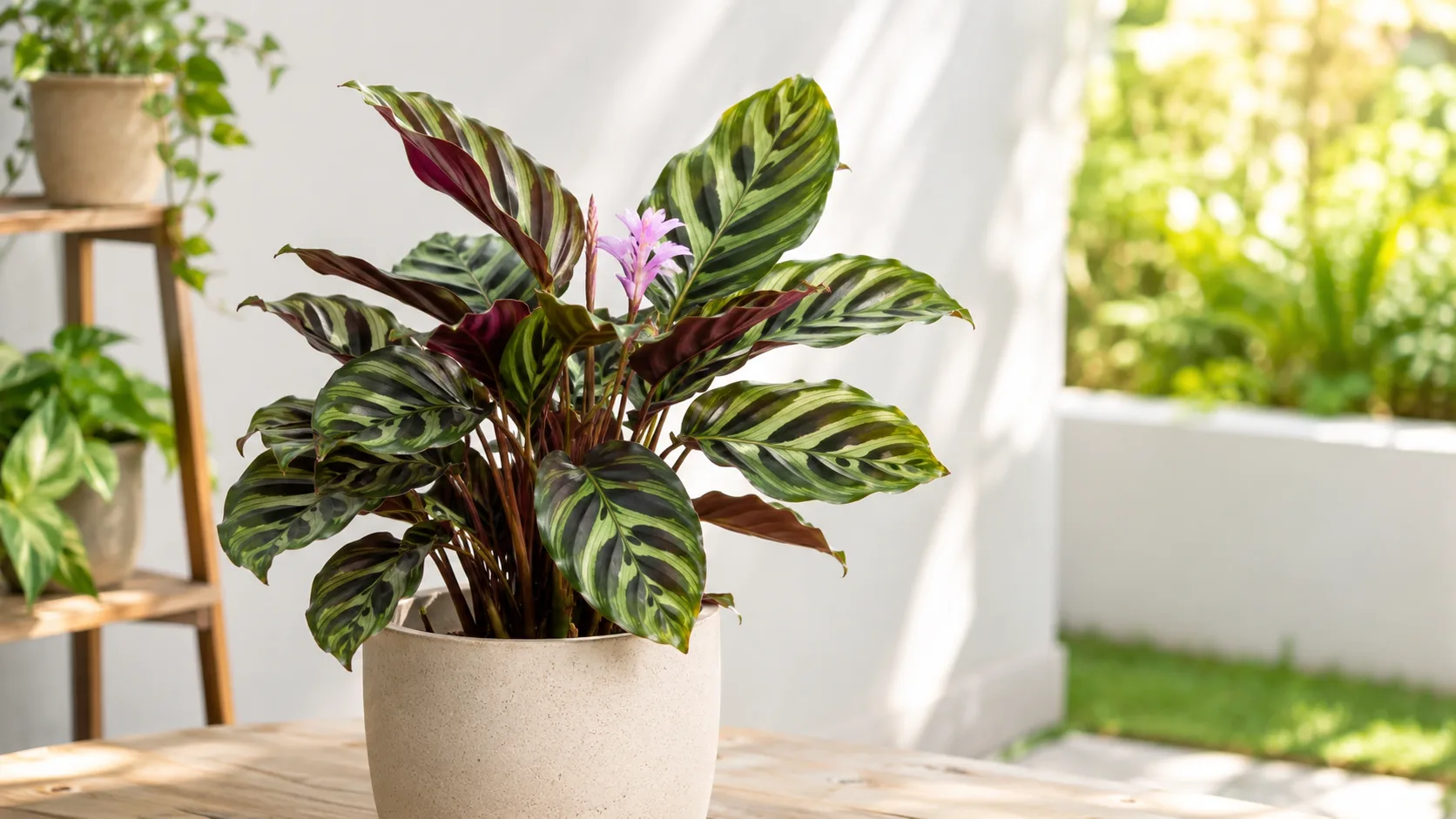
Calathea Musaica — Treasured Etsy Cutting With Strict Humidity Rules
Jessica’s most treasured plant is Calathea Musaica — the network prayer plant with mosaic venation — grown from an Etsy cutting. Treasured status is emotional, but the species is technically demanding, which makes the story more instructive than another easy pothos win.
Reclassified as Goeppertia kegeljanii, the network prayer plant wants partial shade, moist well-drained acidic to neutral mix with perlite, distilled or rain water (fluoride browns edges), 60%+ humidity, and 60–80°F without drafts (NC State network prayer plant). It is non-toxic to pets, but sap can irritate skin — gloves when pruning.
Why Etsy cuttings become heirlooms:
- You watched every node root — emotional investment is real.
- Shipping stress already survived — the plant proved it can handle your home if humidity is right.
- Backup propagation via division is recommended by extension — divide when healthy, not when declining.
In a loft with dry winter heat, Musaica lives best grouped with other humidity lovers, on a pebble tray (water below stone tops), or beside a humidifier. Tap-water splashing without drying invites edge burn. See our calathea watering and calathea overview for room-setup detail.
Jessica keeps show plants in simple pots when function beats display — Musaica may stay portable precisely because she chases humidity pockets.
Pink Aglaonema — Marketplace Finds That Still Need Standard Care
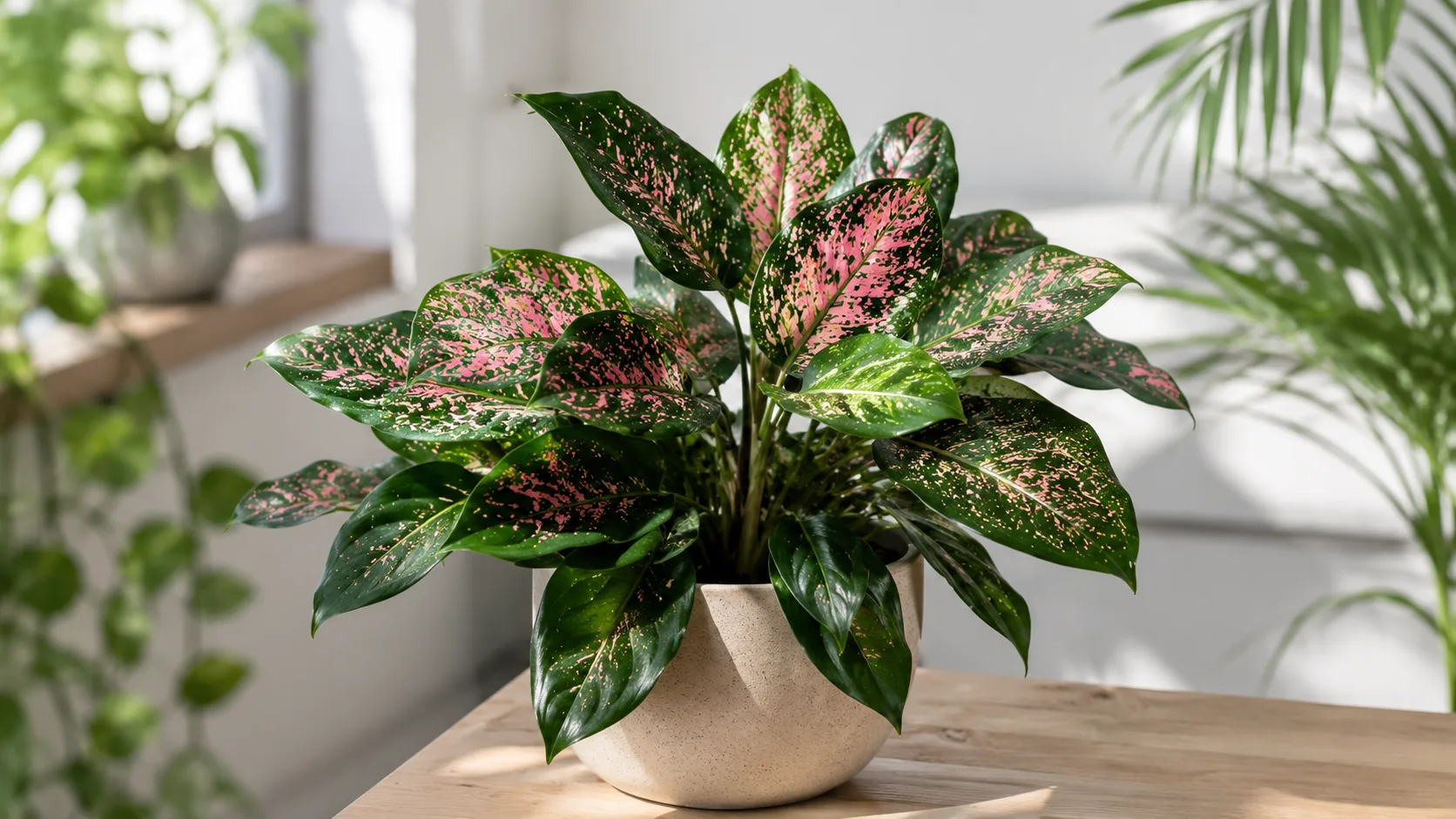
Jessica’s most unique-looking retail plant is a pink aglaonema from Facebook Marketplace — proof that collections grow through nurseries, trades, Etsy, and local listings, not a single aisle. Pink cultivars photograph dramatically; horticulturally they are still aglaonema — tolerant, upright, and forgiving compared to calathea.
NC State describes Aglaonema commutatum as a low-light tolerant foliage plant preferring bright indirect light, even moisture without waterlogging, and warm indoor temperatures (NC State Aglaonema commutatum). Pink and red cultivars need more light than green forms to hold color; dim corners revert toward green.
Marketplace purchase checklist:
- Inspect for pests at the meetup — flip leaves, especially on discounted “moving sale” plants.
- Ask about acclimation — sudden home changes shock even tough aglaonema.
- Price compare — rare pink names inflate; verify cultivar if you care about resale.
- Quarantine anyway — Marketplace does not mean clean.
Our aglaonema overview and aglaonema light guide cover keeping pink pigment without sunburn.
Scaling Past 40 Plants Without Nursery Burnout
Forty plants in a Brooklyn loft is dense but not maximalist Instagram extremes. Jessica’s model scales because pothos and aglaonema absorb variance while calathea and lipstick earn focus.
Rules before you chase loft numbers:
- Master one forgiving vine — pothos pipe training teaches watering rhythm cheaply.
- Cap humidity divas — three calathea in dry heat beats twelve.
- Automate observation — weekly walk-through with sticky traps and a moisture meter beats daily anxiety.
- Rotate display, not care — move pots for aesthetics after needs are met, not instead of meeting them.
- Keep rescue quota — one rehab slot open prevents quarantine overflow.
Collections compound cognitive load faster than square footage. Jessica’s partner split keeps observation humane — solo collectors should set a hard plant count or one-in-one-out rule before pipes disappear behind leaves.
Safety Checklist for Pipes, Water, and Loft Weight
Beauty without safety ends leases and floods apartments.
- Confirm pipe type — know supply vs drain; never puncture.
- Weight audit — sum wet basket weight; upgrade hooks before crashes.
- Electrical clearance — vines near conduit or panels stay clear of live connections.
- Water discipline — saucers and drip trays on upper levels protect downstairs neighbors.
- Pet and dog paths — Jessica has a dog; trailing stems along floors trip humans and animals.
- Fire egress — vines must not block doors or sprinkler heads.
- Ladder protocol — high hooks need stable ladder access, not chair stacks.
Industrial lofts reward bold displays; landlords reward dry ceilings.
Conclusion
Jessica Tran’s Greenpoint loft shows what happens when industrial architecture meets collaborative plant care: pothos claim exposed pipes, rescues get quarantined and revived, and treasured cuttings like Calathea Musaica sit beside Marketplace aglaonema without pretending every plant needs the same water glass. Episode 17 is inspiration, but the operating lessons are concrete — zone the room, train vines safely, budget repotting season, and match species to loft microclimates.
Copy the look with one pipe-trained pothos, one humidity pocket, and one rescue protocol before you hang forty baskets. The jungle aesthetic scales when infrastructure — partners, hooks, quarantine space, and honest species limits — scales first.