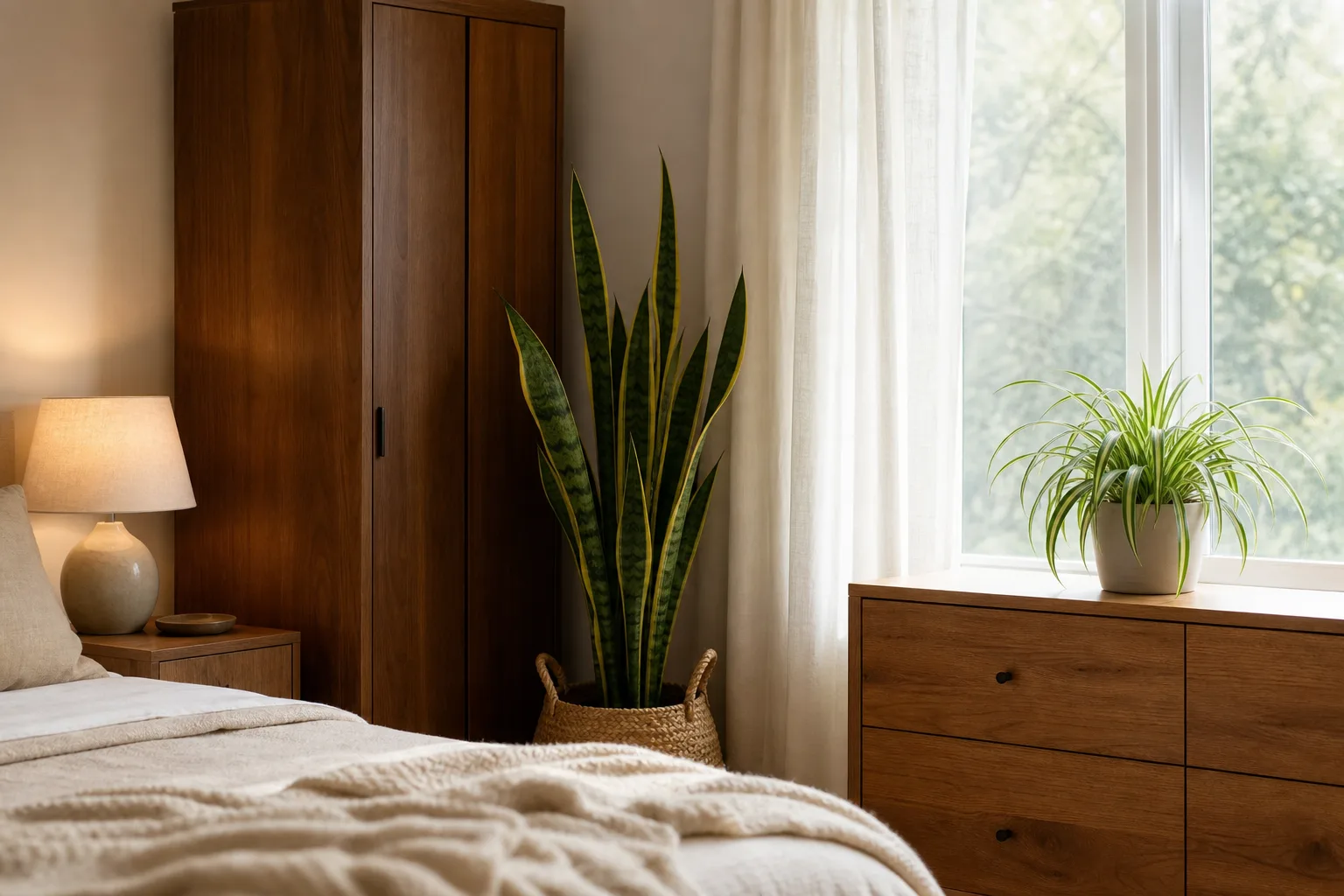
Vivien Chong's Brooklyn Plant Collection: Episode 16 Tour
Tour Vivien Chong's Brooklyn apartment with 150+ houseplants, north-facing light, an IKEA greenhouse, grow lights, and rare aroids — plus practical takeaways from Episode 16.
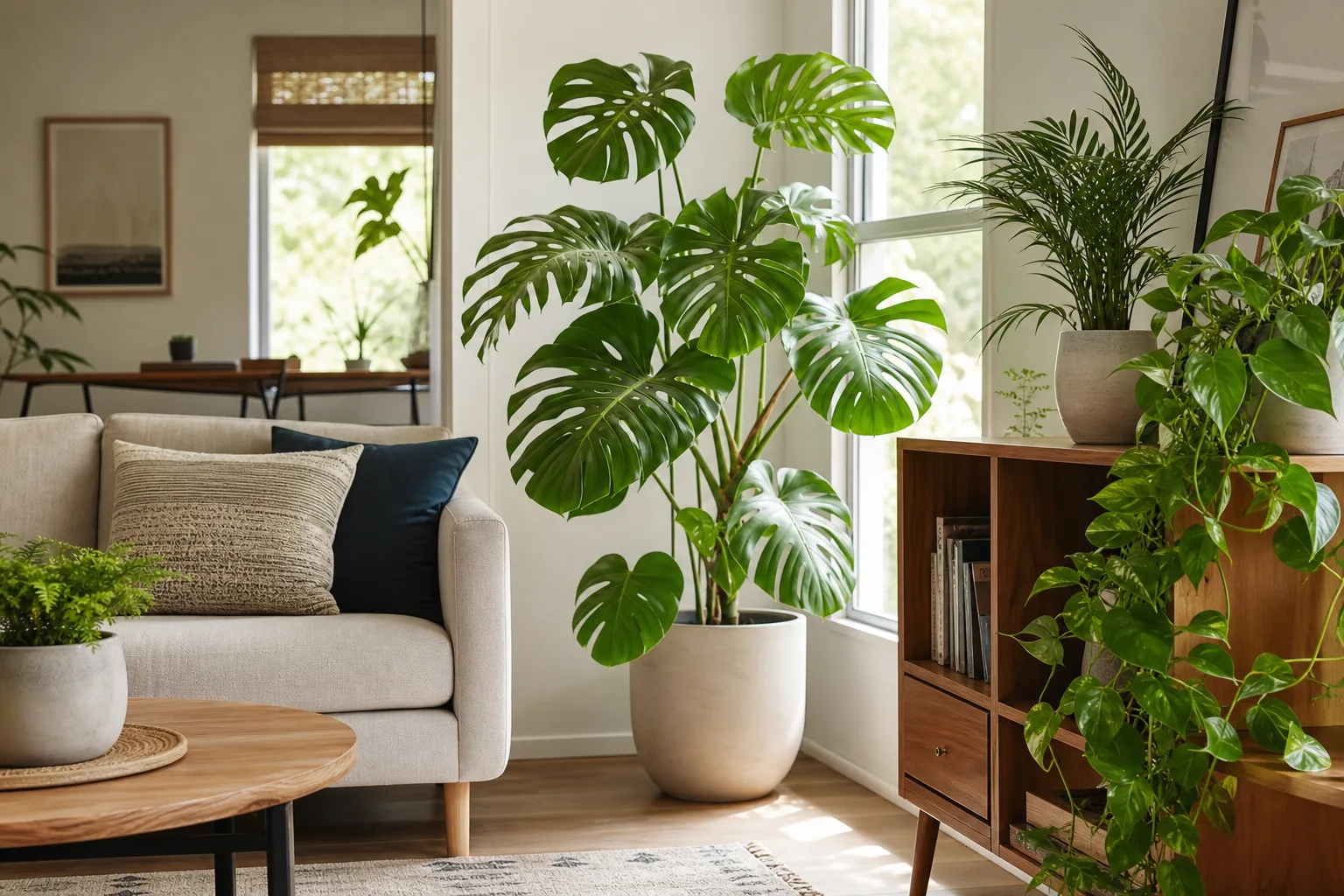
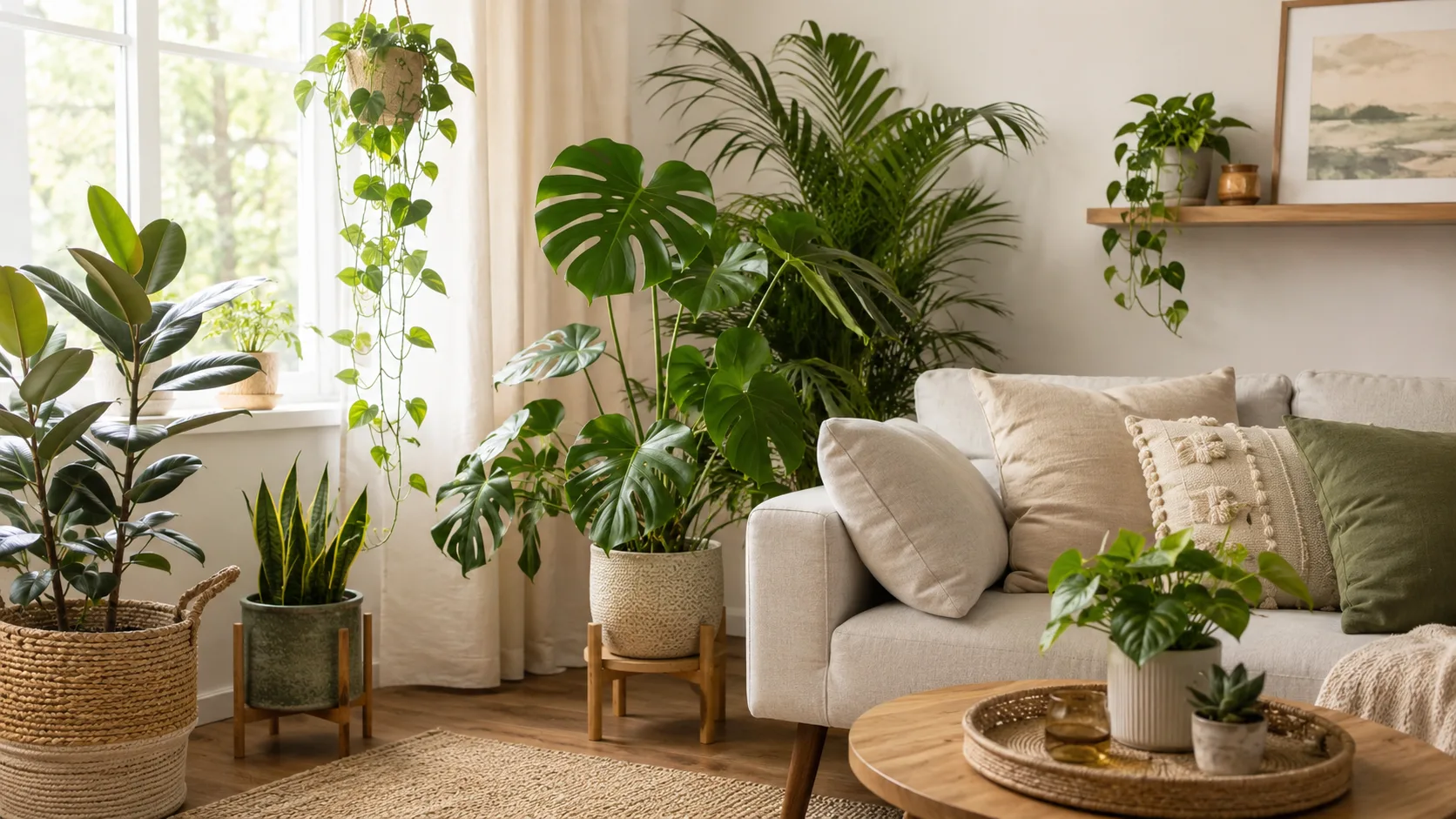
Walk into Vivien Chong’s Brooklyn apartment and the headline stops being hyperbole. She shares the home with her husband, their dog Lyla, and more than 150 houseplants — most of them living in a living room that functions less like a sitting area and more like a climate-managed conservatory. Episode 16 of In the Weeds With Plant People follows that tour at plant height: the north-facing windows that bathe the collection in filtered indirect light all day, the IKEA greenhouse cabinet tucked among shelves, grow lights filling gaps the glass cannot, and the collector favorites that explain why someone would dedicate an entire room to foliage.
This page treats the episode the way a working plant parent would watch it — not as background entertainment, but as a case study in north-window culture, cabinet humidity management, rare-plant economics, and the quiet ritual of treating plant care as self-care.
Meet Vivien Chong’s north-facing Brooklyn jungle
Brooklyn collector homes often get described as “jungles” on social media. Vivien’s reads differently because the light story is specific: north-facing glass that delivers steady, filtered indirect light rather than the harsh swings of south or west exposure. That consistency is part of why so many plants can share one room without a daily sunburn crisis.
A husband, a dog named Lyla, and triple-digit houseplants
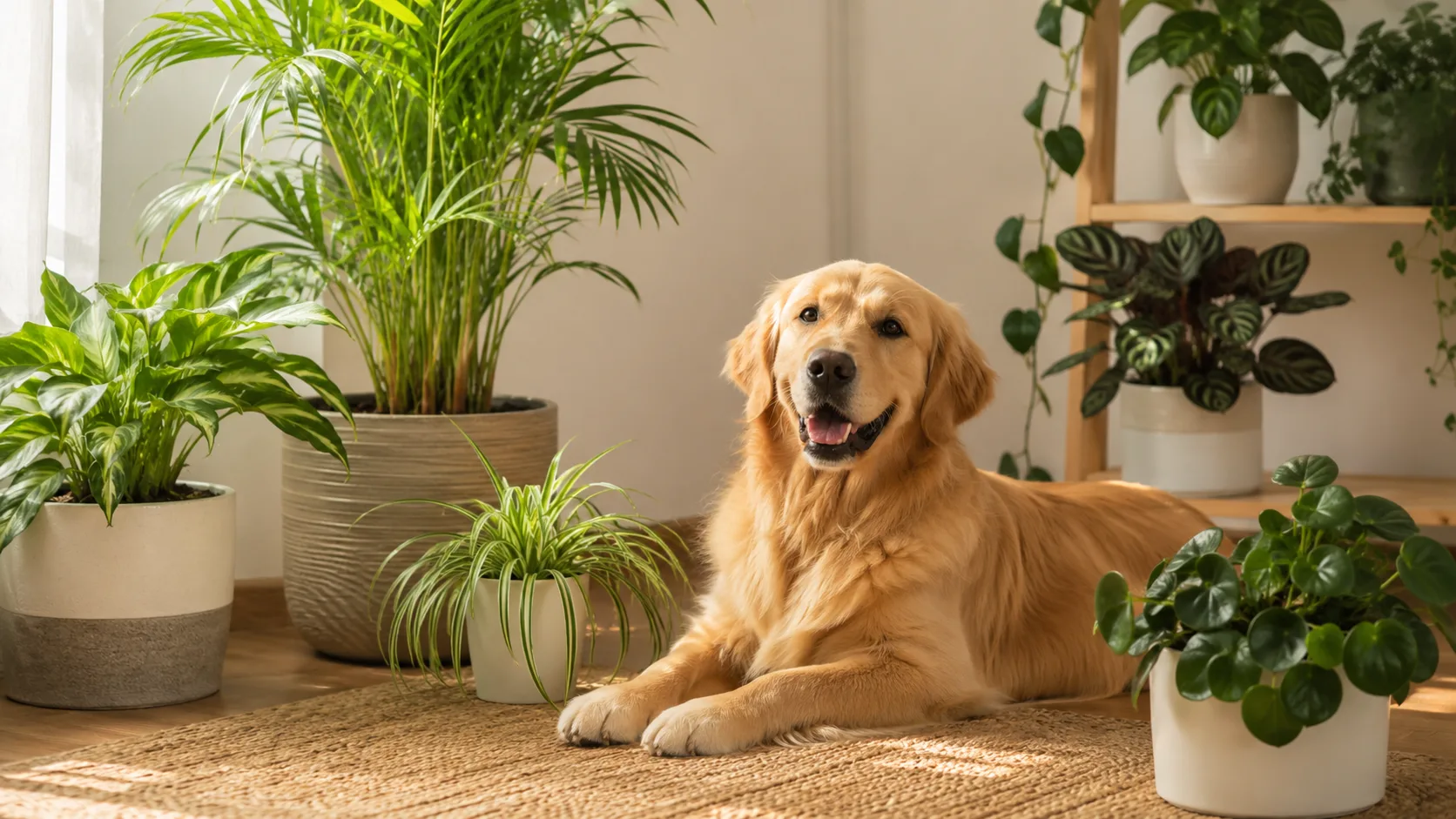
Scale changes everything in a plant home. At 150+ specimens, watering is not a Sunday hobby — it is a recurring schedule that shapes weekends, evenings, and how furniture gets arranged. Vivien’s husband appears in the tour as a partner in the obsession, summoned to admire new growth the way other couples might celebrate a renovation finish. Lyla the dog adds another planning layer: pots must survive curious noses, trailing vines cannot live at floor level without supervision, and many collector favorites are not pet-safe if chewed.
The transferable lesson is not “copy the plant count.” It is that large collections only work when the humans and pets in the home accept the maintenance rhythm — and when display choices account for who can reach which leaves.
How north-facing light shapes a 150-plant apartment
North windows are underrated in plant-tour content because they are not dramatic on camera. They do not produce the golden-hour beams that make fiddle-leaf figs look like sculpture. What they provide is low-intensity, all-day indirect light — exactly the kind many tropical foliage plants evolved to use on forest floors and shaded understories.
Why filtered indirect light works better than you expect
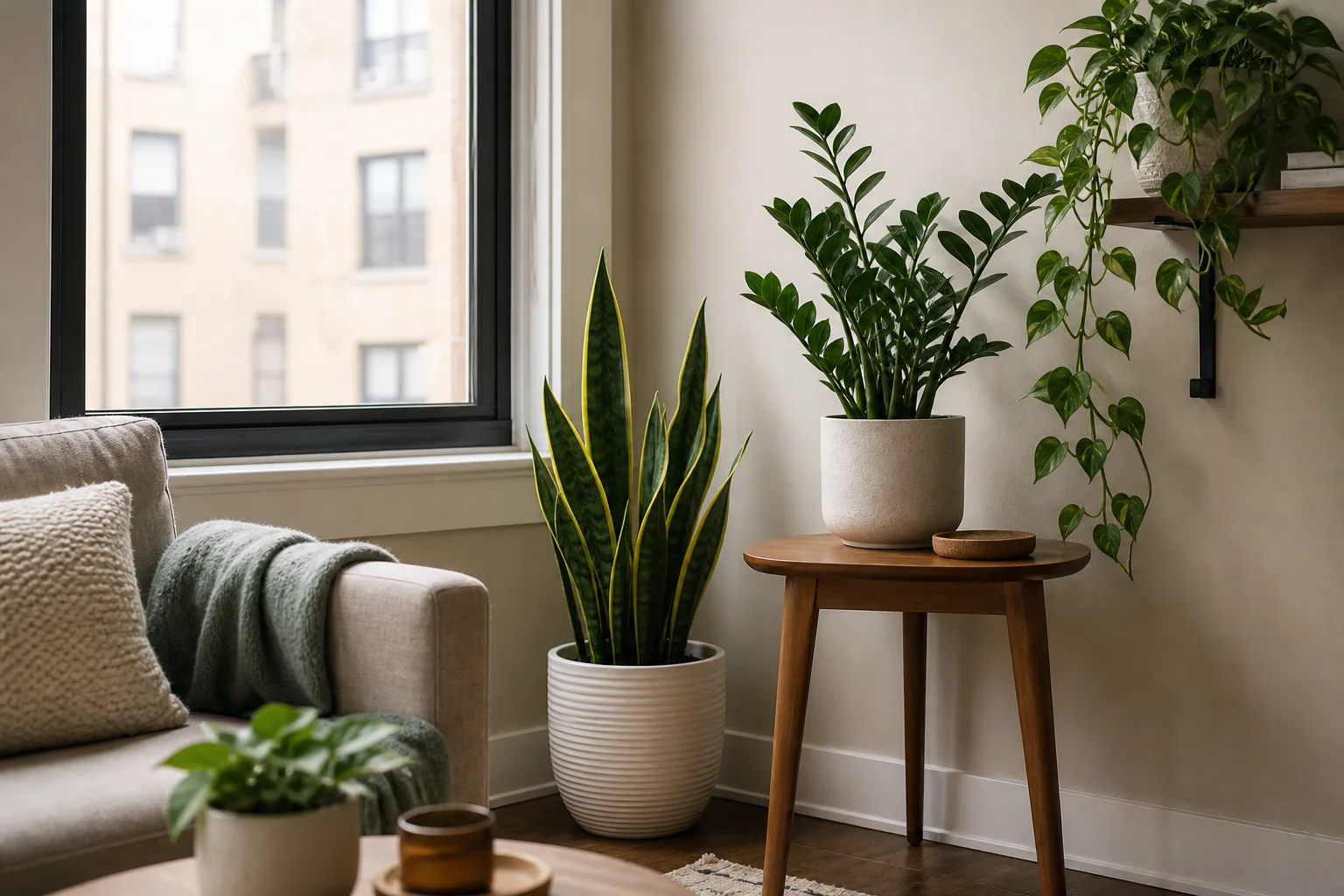
Bright indirect light means the plant sees sky brightness without direct sun on the leaves for long stretches. On a north exposure, that often happens naturally: light enters, bounces off walls and neighboring buildings, and spreads evenly. Vivien’s tour describes amazing indirect filtered light all day — the phrasing collectors use when a room stays bright enough for growth without the midday scorch that cracks variegated leaves.
North light favors:
- Philodendrons and monsteras that want bright indirect, not direct panes
- Begonias with textured or patterned foliage that bleach in harsh sun
- Caudex plants like Stephania suberosa that prefer bright shade over baking windowsills
- Cabinet-grown humidity lovers that still need lumens even when humidity is high
The mistake beginners make is assuming north equals “low light.” It means no direct sun, not darkness. If leaves etiolate — long internodes, pale new growth, smaller fenestrations — the room may still need supplementation even if it feels bright to human eyes.
When grow lights become non-optional
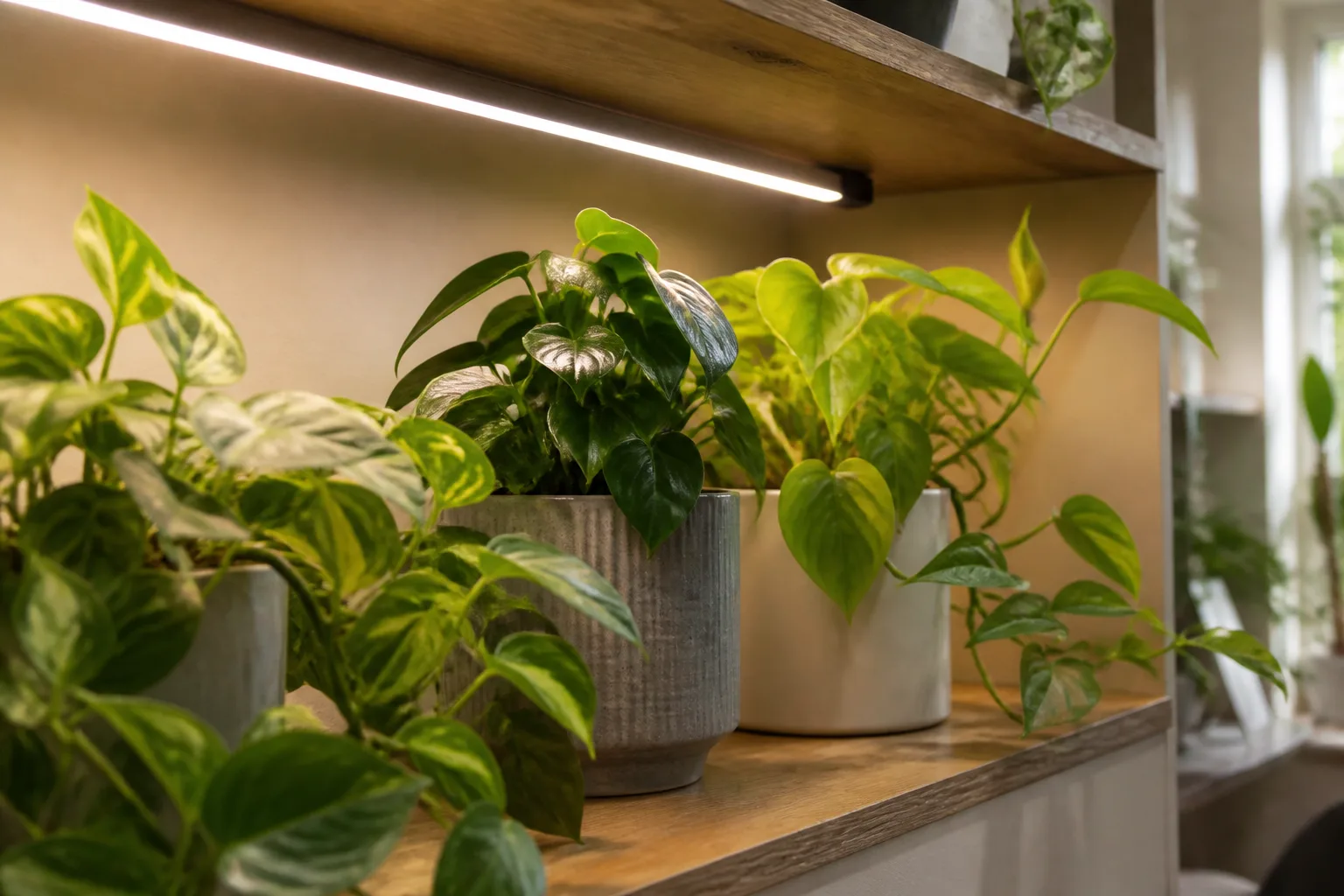
Once a collection crosses from “a dozen pots” into triple digits in one room, window light alone rarely reaches every tier. Vivien places grow lights throughout the living room to lift the plants that sit below window height, deep on shelves, or inside the greenhouse cabinet where glass and framing cut intensity.
Use grow lights as zone fillers, not ceiling sun substitutes:
- Match spectrum to goal — full-spectrum LEDs support foliage and variegation maintenance better than decorative purple panels alone.
- Respect distance — too close bleaches leaves; too far produces leggy growth. Start higher and lower over two weeks while watching new leaves.
- Run timers — 10–14 hours is a common starting range for foliage tropicals; adjust by species and season.
- Group plants by light budget — high-light variegated monsteras near glass or top shelves; tolerant foliage lower down with dedicated bars.
If your north room already grows well at the window line but struggles on the floor, you do not need to relight the entire apartment. You need targeted bars where etiolation appears first.
Plant care as self-care in a collector household
Vivien describes her relationship with plants in language that sounds sentimental until you map it to research. She treats plant care like self-care — finding genuine enjoyment in watering, grooming, and watching new leaves unfurl. She does not talk to her plants, but she celebrates new growth loudly enough to recruit her husband as a second witness. That is not performance; it is a feedback loop.
University and institutional research increasingly treats indoor plants as biophilic stimuli — living elements that engage the brain similarly to other forms of nature contact. Dr. Charlie Hall, a horticultural economist at Texas A&M AgriLife, summarizes decades of work showing that surrounding ourselves with plants can lower stress hormones like cortisol, improve mood during dreary indoor seasons, and support broader quality-of-life measures when nature is otherwise scarce. (Texas A&M AgriLife)
The Royal Horticultural Society notes that indoor plants are associated with improved mood, reduced stress, and better attention in multiple studies — with the strongest evidence cluster around psychological wellbeing rather than miracle air purification. (RHS)
Translate that into daily practice:
- Watering as pacing — a scheduled walk through the collection forces slow attention; you notice pests and dry pockets early.
- New growth as a morale signal — celebrating a fenestrated leaf is a low-cost win that keeps you engaged through dull winter weeks.
- Honest limits — plants help mood; they do not replace clinical care. Frame them as companions in routine, not cures.
If Vivien’s tour resonates emotionally, the actionable version is build a care ritual you actually enjoy, not one you perform for content.
Room by room: the living room that holds most of the collection
Episode 16 concentrates on the living room — the dense heart of the home where shelves, cabinets, and window lines intersect. That choice matters: when one room holds most of the biomass, climate and light become room-scale engineering instead of per-pot luck.
The IKEA greenhouse cabinet and what it actually does
Vivien highlights an IKEA greenhouse cabinet — the metal-and-glass mini greenhouse many collectors retrofit with fans, humidity trays, and supplemental bars. These cabinets are popular because they solve three problems at once:
- Humidity retention — open apartments dry tropical leaves; enclosed glass slows evaporation around finicky specimens.
- Light focus — mounted LEDs shine inward, lifting intensity for plants that would etiolate on a shaded shelf.
- Pest isolation — new imports and rehab plants can live behind glass while you monitor for mites or mealybugs.
Cabinets are not plug-and-play perfection. Without airflow, fungal issues climb. Without calibrated light height, variegated leaves cook. Treat a cabinet as a microclimate tool you tune weekly — wipe condensation, check fan filters, and move plants that outgrow the space before they touch hot glass.

Supplemental grow lights without burning leaves
In Vivien’s living room, grow lights are not a single dramatic fixture. They are distributed support — the difference between a plant wall that photographs well and one that still grows six months later. Position bars parallel to shelf fronts so light reaches leaf faces evenly. For vining monsteras and philodendrons, add vertical clearance so new tendrils do not press against hot diodes.
Pair lighting changes with watering adjustments. More light usually means faster soil drying; a plant that was stable in winter may need a new rhythm by spring. Large collections fail quietly when light increases but watering schedules stay frozen.
Standout plants from the Episode 16 tour
Collector tours seduce with rare leaves. The useful question is what each standout needs — and whether your home can provide it without turning every room into a propagation lab.
Stephania suberosa and the “dirty potato” caudex
Vivien calls her Stephania suberosa the most unique plant in the collection — and the episode title’s “dirty potato” joke lands once you see the caudex: a warty, soil-surfaced tuber that looks like a lumpy potato someone forgot in the pantry. Stephania is a seasonal caudex vine — dormant periods, a burst of growth, and foliage that dies back while the underground storage organ survives.
Culture sketch for caudex curiosity:
- Bright indirect light when in leaf; less demand when dormant
- Excellent drainage — caudices rot fast in soggy mixes
- Rest periods respected — forcing year-round growth weakens the tuber
- Display honesty — many growers showcase the caudex partly above soil because the texture is the point
If you want one “conversation plant” that is not another pink-variegated vine, Stephania delivers — as long as you accept seasonal quiet months.
Monstera Albo and the variegated Adansonii investment
Two monsteras anchor the tour’s prestige tier. Vivien’s current favorite is her Monstera Albo — the white-splashed form of Monstera deliciosa that collectors chase for dramatic fenestrations. Albos want bright indirect light, a sturdy moss pole, and stable humidity; too much direct sun bleaches white sectors into crisp brown patches.
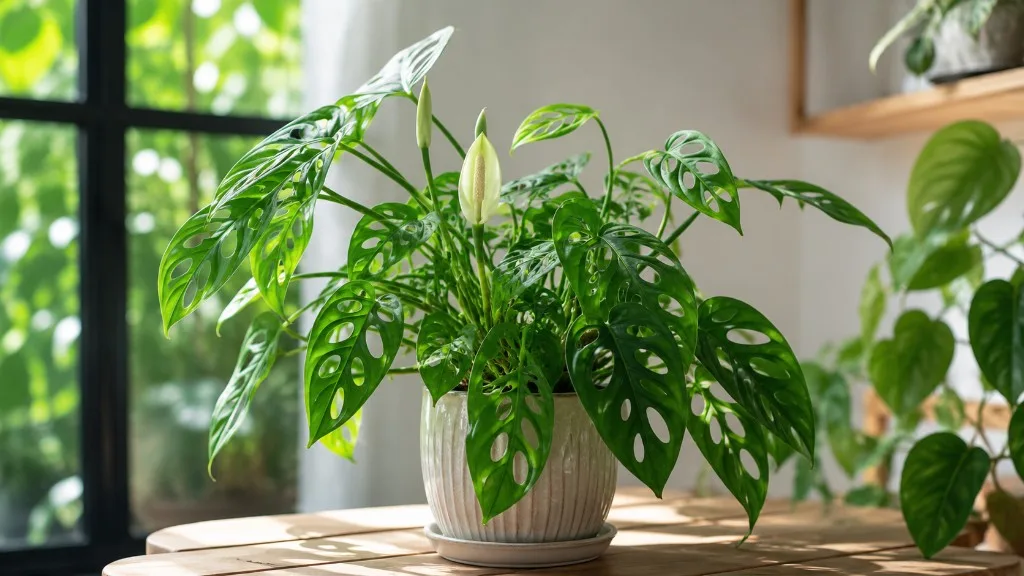
Her most expensive plant is a variegated Monstera adansonii she grew from a single purchased node. Unrooted or lightly rooted variegated Adansonii cuttings have sold from hundreds into thousands of dollars depending on variegation stability, node count, and market fever — which is why growing from a node is both a flex and a risk.
Monstera adansonii itself is a forgiving climber in the right light: bright indirect, moderate watering once the top inch dries, humidity above 40% when possible, and a support for tighter internodes. (Epic Gardening) Variegated forms add light demand and reversion anxiety — green shoots on a pricey plant are a pruning decision, not a moral failure.
Pink Princess Philodendron and foliage-first collecting
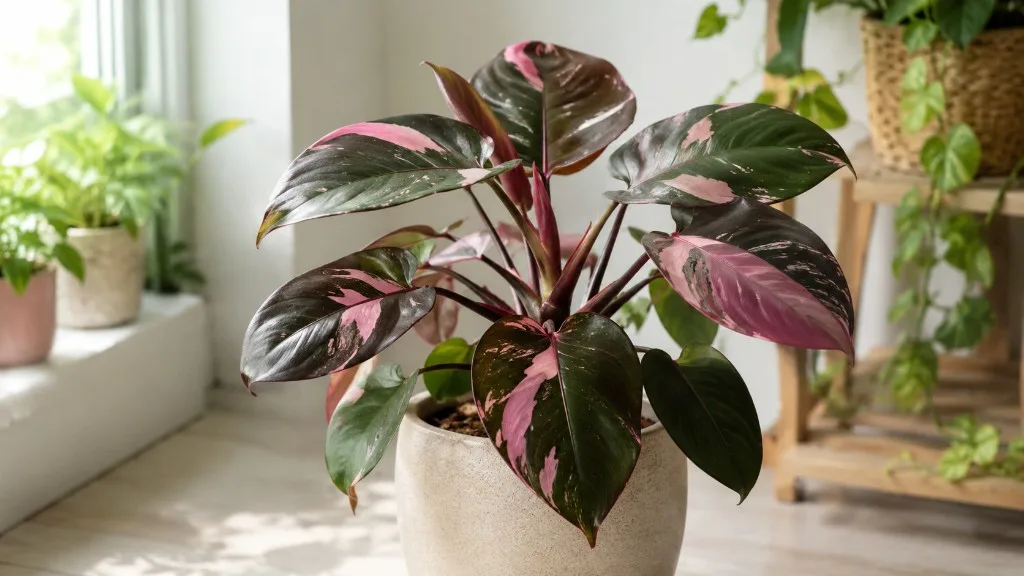
Asked which plant she would be reborn as, Vivien chooses the Pink Princess philodendron — Philodendron erubescens ‘Pink Princess’ — for its pretty, feminine pink variegation against dark green leaves. That answer doubles as her collecting philosophy: she shops for foliage color and texture, not flowers.
Pink Princess culture in brief:
- Bright indirect light sustains pink sectors; dim rooms push green reversion
- Climbing support keeps leaves larger than trailing without support
- Chunky, airy potting mix — philodendrons hate heavy wet soil
- Toxic to pets if chewed — calcium oxalate crystals irritate mouths and stomachs (Gardening Know How)
If Pink Princess prices shock you, learn the same lessons on a heartleaf philodendron first: light, support, and watering rhythm transfer even when the pink is absent.
Begonia resilience and the plant she most resembles
Vivien’s eye also lands on Begonia ‘Tingley Mallet’ — a foliage begonia chosen for leaf pattern. Later she compares herself to begonias generally: “sometimes pretty, sometimes not, but still surviving even down to a stump.” That is not self-deprecation; it is accurate plant biology. Many cane and rhizomatous begonias regrow from bare stems after stress if the rhizome or cane is firm.
Begonias reward collectors who:
- Keep humidity moderate to high without soaking crowns
- Avoid cold drafts on windows in winter
- Accept seasonal ugliness as part of the cycle
- Prune leggy stems to force bushier regrowth
If you want a plant that mirrors human resilience, a begonia is a better metaphor than a finicky variegated vine that sulks when you blink wrong.
Growing a variegated Monstera Adansonii from a single node
Vivien’s Adansonii story is the tour’s most instructive budget beat — and the one most likely to go wrong if copied blindly. Buying a single node is not buying a plant; it is buying potential with rot risk attached.
Use this sequence if you attempt node culture:
- Inspect the cutting on arrival — firm node, no mush, clean cut ends; photograph for seller claims.
- Choose your medium — sphagnum moss in a ventilated prop box, or water propagation with the node above the waterline.
- Provide warmth and bright indirect light — cold windows slow rooting; dim shelves invite decay.
- Hold fertilizer until roots are several inches and new growth hardens slightly.
- Transition to soil gradually — move to a small airy pot when roots bind moss; do not jump to a huge cachepot.
- Document variegation on each new leaf — if growth reverts fully green, you still have Adansonii; you may not have the investment piece you imagined.
The financial upside of node growing is real in collector markets. The horticultural upside is skill: you learn propagation hygiene, humidity control, and patience faster than retail buying ever teaches.
Dogs, cats, and collector plants in shared apartments
Lyla the dog reminds viewers that pet households can host large collections, but not without a toxicity map. Many plants Vivien showcases — monsteras, philodendrons, begonias, and caudex vines — appear on veterinary toxic plant lists because they contain irritants or insoluble calcium oxalates. Dogs explore with mouths; cats bat and chew. Neither reads price tags before tasting.
Build a two-track display:
| Goal | Action |
|---|---|
| Keep collector favorites | Elevate toxic specimens on stable shelves or inside cabinets; clean fallen leaves daily |
| Reduce emergency risk | Add verified non-toxic species in pet-accessible zones |
| Unknown ingestion | Call ASPCA Animal Poison Control at (888) 426-4435 |
For a curated starting set of safer options, see pet-safe houseplants. That does not mean banning aroids — it means not pretending elevation equals immunity when a motivated dog meets a trailing vine at nose height.
What new plant parents should steal from Vivien’s tour
You do not need 150 plants to apply Episode 16. Steal the systems:
- Match plants to your actual window — north-filtered light is a gift for foliage, not a curse to fight with random high-light species.
- Add light before you add pots — if new leaves etiolate, fix lumens before buying fertilizer.
- Use a cabinet as a tool — humidity, quarantine, and focused lighting in one footprint.
- Shop foliage you will still like at “stump phase” — begonia resilience beats perfection chasing.
- Treat watering as wellness time — research supports mood benefits; ritual supports plant survival.
- Scale slowly — Vivien’s living room density assumes years of learning; start with one room zoned by light, then expand.
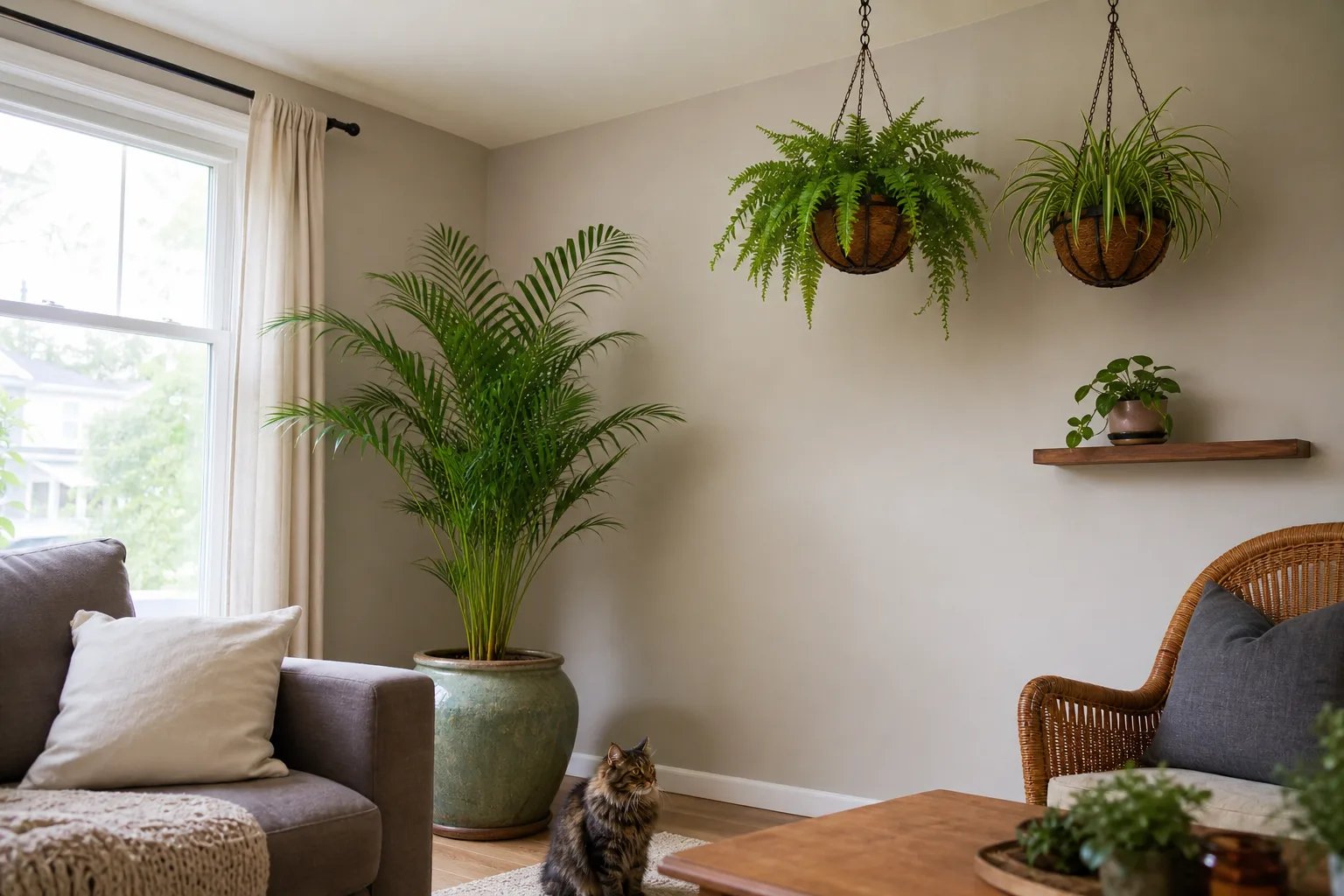
If you want layout ideas beyond shelving, living room plants covers how to place greenery in shared spaces without blocking traffic or heating vents — a common failure mode in Brooklyn apartments where radiators and windows compete for the same wall.
Conclusion
Vivien Chong’s Brooklyn tour is worth studying because it shows a working north-light jungle — not a staged showroom. The filtered indirect exposure, IKEA greenhouse cabinet, distributed grow lights, and foliage-first collecting are the pieces to copy. The Stephania caudex, Monstera Albo, Pink Princess, and node-grown variegated Adansonii explain why collectors push density in the first place.
Watch the episode for inspiration, then build your version slowly: one light zone, one humidity strategy, one honest pet plan, and one plant you water because it calms the week — not because the count impresses anyone on the internet. That is how a living room becomes a habitat instead of a maintenance crisis waiting behind the next new leaf.