60+ Plants in a Tiny Brooklyn Apartment? Here's How
How one Brooklyn collector fits 60+ houseplants in a tiny space: shower caddy tricks, skylight hallways, bathroom humidity, and watering routines.
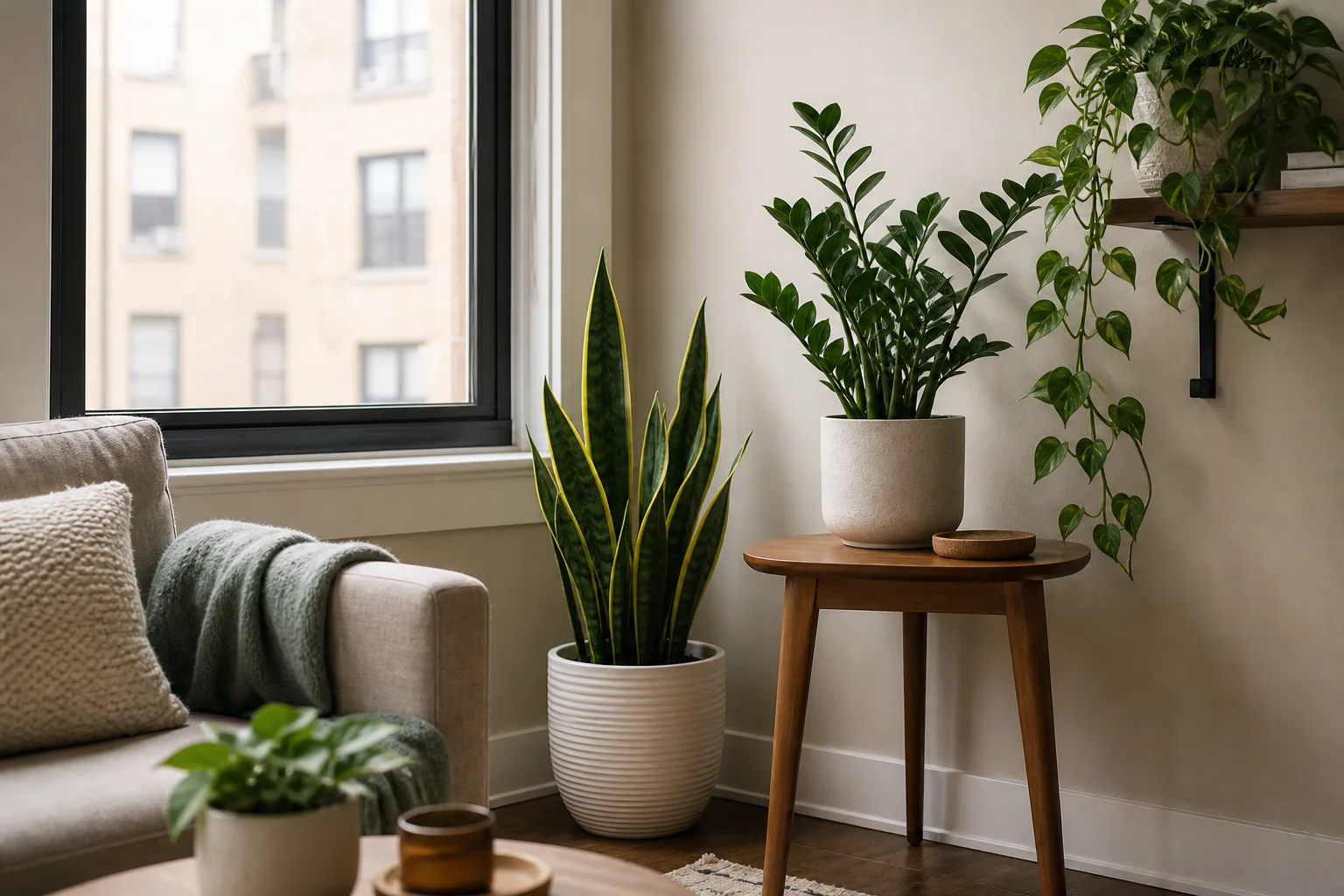
Angela Alba shares a Brooklyn apartment with her boyfriend, a cat, and more than 60 houseplants — including a philodendron hanging from a shower caddy above the tub. Plants line a hallway blessed with a skylight, fill a bedroom corner with a sculptural ponytail palm, and crowd a shelf used for nothing else. It looks effortless on camera. In practice, it is a collection built on zones, light, and routines — not square footage.
This guide uses her home as a case study for anyone trying to grow a small apartment plant collection without turning every surface into a rescue mission. You do not need 60 plants to apply the ideas. You need a honest light map, furniture you are willing to dedicate to greenery, and a watering system that scales.
What a 60-Plant Brooklyn Apartment Teaches Small-Space Collectors
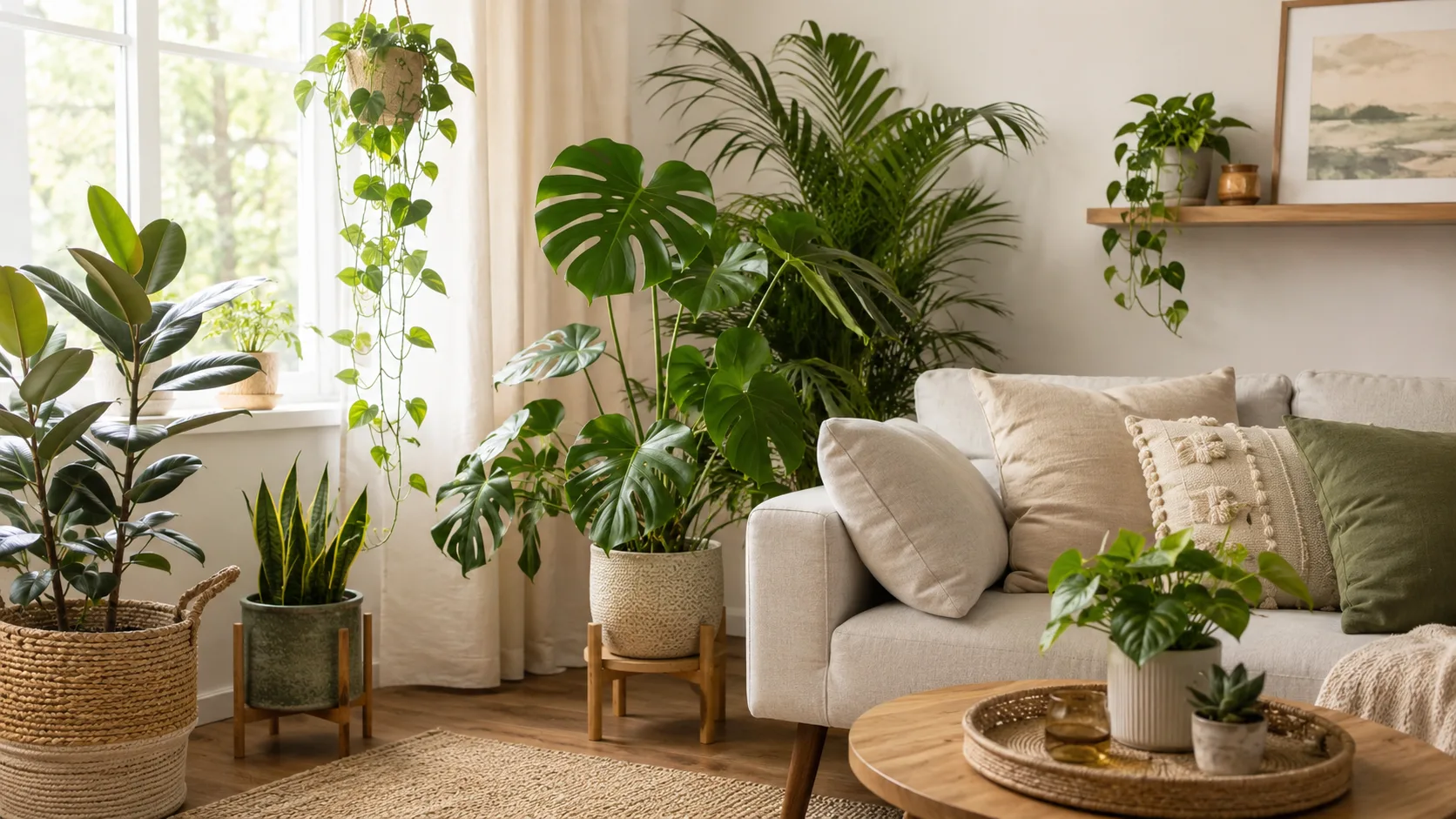
Large collections in tight homes succeed when each plant has a job in a specific room. Alba’s bathroom holds humidity lovers near steam. Her skylit hallway hosts light-hungry foliage. The bedroom keeps slower, structural plants away from the busiest foot traffic. That is the opposite of buying whatever is trending and finding a spot later.
Three principles show up repeatedly in her setup:
Dedicated real estate beats cramming. She keeps a shelf almost exclusively for plants — not books, not mail, not charging cables. One clear zone prevents the slow creep that makes apartments feel cluttered while still looking bare to the collector.
Vertical beats floor space. Shower hooks, wall shelves, and tall specimens (ponytail palm, agave) draw the eye up. Floor area stays walkable for humans and a cat.
Community fills knowledge gaps. Alba credits online plant people with quick DMs, ID help, and swap leads. That social layer matters when you are troubleshooting a fussy cinnamon cactus at midnight.
If you are starting from zero, read our indoor plants for apartments guide first for baseline species picks. Then borrow Alba’s zoning mindset to scale up.
Brooklyn apartments — especially railroad layouts where rooms stack front to back — reward collectors who think in corridors. A single skylight over a hall can deliver more usable photons to six pots on a plant ladder than one sad floor plant in a south living room blocked by a sofa. Alba’s hallway is not decorative; it is primary production space for light-hungry foliage.
Is 60+ Plants Realistic in a Tiny Apartment?
Yes — for some homes, some schedules, and some tolerance for maintenance. No — as a default goal. Sixty plants is not a beginner target. It is a managed ecosystem that only works when light, water, and pest checks stay on rails.
Floor space, light, and the sustainability ceiling
Count usable plant real estate, not pot diameter alone. A 6-inch pot on a 36-inch shelf might share that shelf with three neighbors. A hallway skylight can support more specimens than a north-facing living room corner, even if the floor footprint is smaller.
Before plant number 45, run a collection audit:
- Light: Can every plant see its minimum acceptable brightness for 6+ hours of useful indirect light (or supplemental grow light) daily?
- Dry-down: After watering, do most pots reach the right dryness window for that species before the next cycle — or stay wet too long?
- Pests: Are you finding repeat spider mite, fungus gnat, or mealy outbreaks because airflow is poor and leaves touch?
- Access: Can you reach each pot to water, rotate, and inspect without moving five others?
If two or more answers are shaky, the collection is at its sustainability ceiling — not morally, but practically. Alba’s trick of dedicating furniture and exploiting a skylight hallway is how she pushes that ceiling. Copy the strategy, not the plant count.
A useful benchmark: many experienced collectors report that weekly plant care beyond roughly 90 minutes signals it is time to pause acquisitions — unless you automate watering for uniform species or outsource part of the workload to self-watering inserts for vacation-proof anchors. Sixty plants is manageable when 40 of them dry on similar schedules in grouped zones. It is miserable when every pot is a different species on a different corner of the apartment.
Zone Your Apartment Before You Buy Another Plant
Think in microclimates, not rooms on a lease. A Brooklyn railroad apartment might have a bright bath, a dim bedroom, and a corridor that acts like a greenhouse when a skylight is present.
Dedicated plant furniture and the shelfie strategy
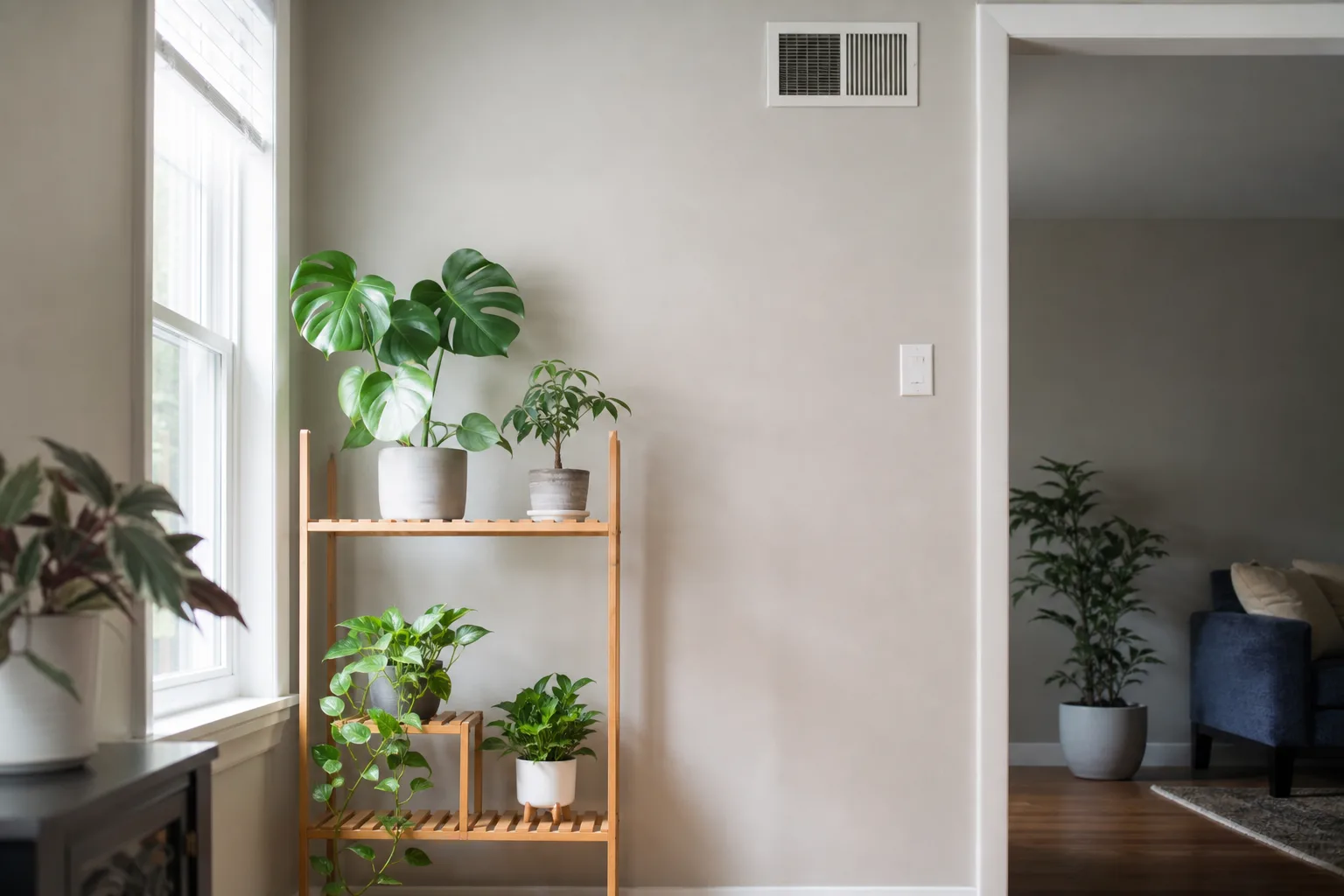
Alba’s best quotable tip is simple: give plants their own furniture. A shelf used “for plants only” sets a visual boundary. You know when it is full. You water that zone together. You do not fight daily life for six inches of counter space.
Practical shelf rules for small homes:
- Weight and water: Use trays or cache pots; never let runoff sit on wood long-term.
- Air gap: Leave space between pots so leaves dry after misting or shower steam.
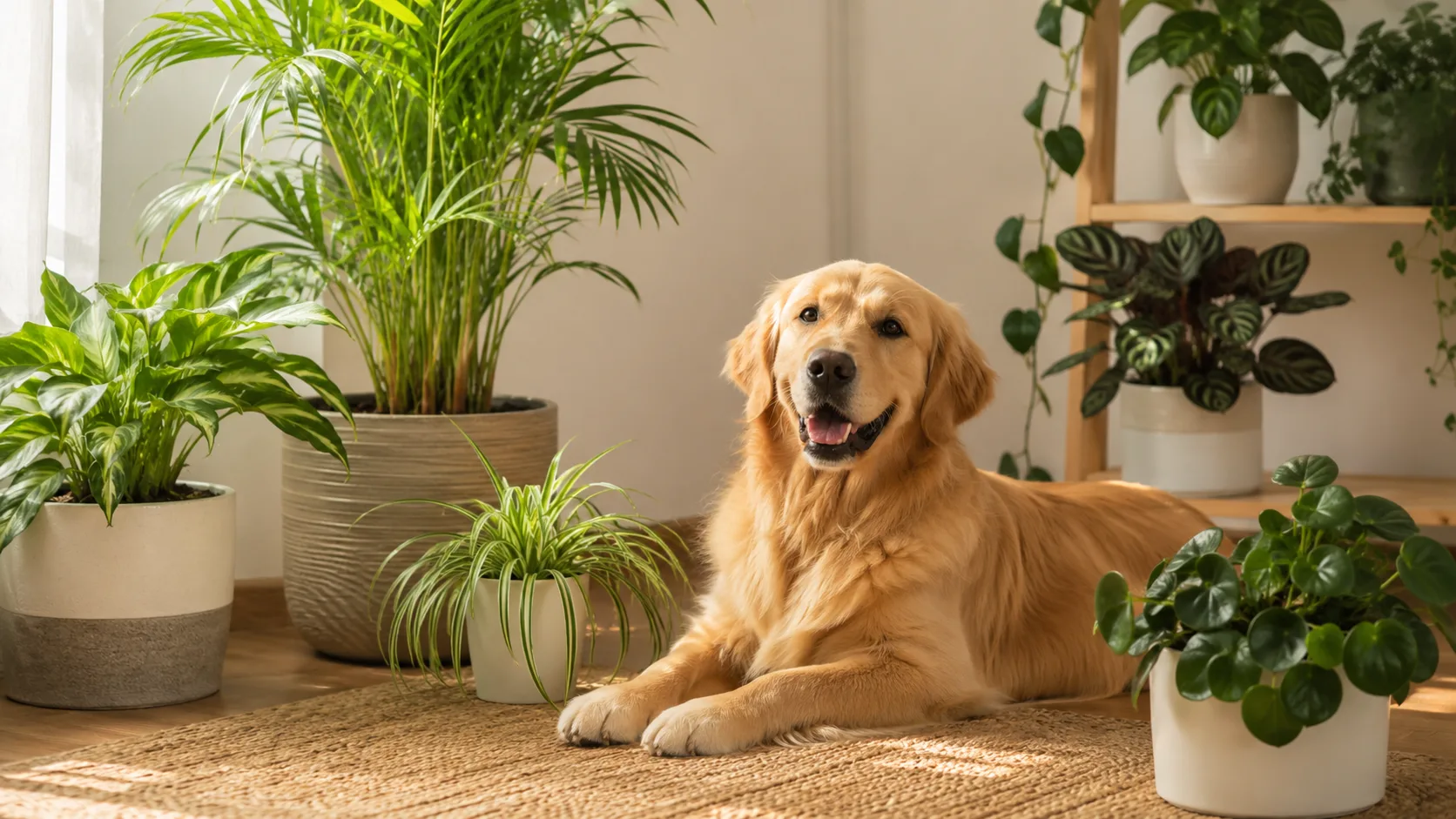
- Cat households: Elevate toxic species; see ASPCA listings before adding begonias, monsteras, or philodendrons within jump range. (ASPCA toxic and non-toxic plants)
- Rotation: Turn or swap pots monthly so skylight corridors do not give one side all the light while the other yellows.
Alba’s boyfriend and cat share the space — proof that household traffic patterns belong on your zone map. A plant on a hallway shelf that gets brushed every trip to the kitchen will lose leaves; move it 6 inches back or up.
Light mapping for hallway skylights and dim corners
A skylight hallway is premium real estate. Diffused top light supports many tropical foliage plants that would stretch in a north window. Measure with a phone lux app or observe shadow sharpness: soft, fuzzy shadows mean bright indirect; sharp midday beams mean you need sheer diffusion.
Dim corners are for low-light tolerant anchors — ZZ plant, snake plant, mature ponytail palm — not new philodendron billietiae acquisitions. Match the plant to the zone before you shop.
Sketch a one-page zone map on paper: mark windows, skylights, radiators, AC vents, and cat perches. Radiators and forced-air vents dry leaves fast; keep finicky ferns at least 3 feet away unless you use deflectors. Cat highways along window sills mean toxic trailers need ceiling hooks or closed rooms.
Shower Plants: Real Benefits, Real Limits
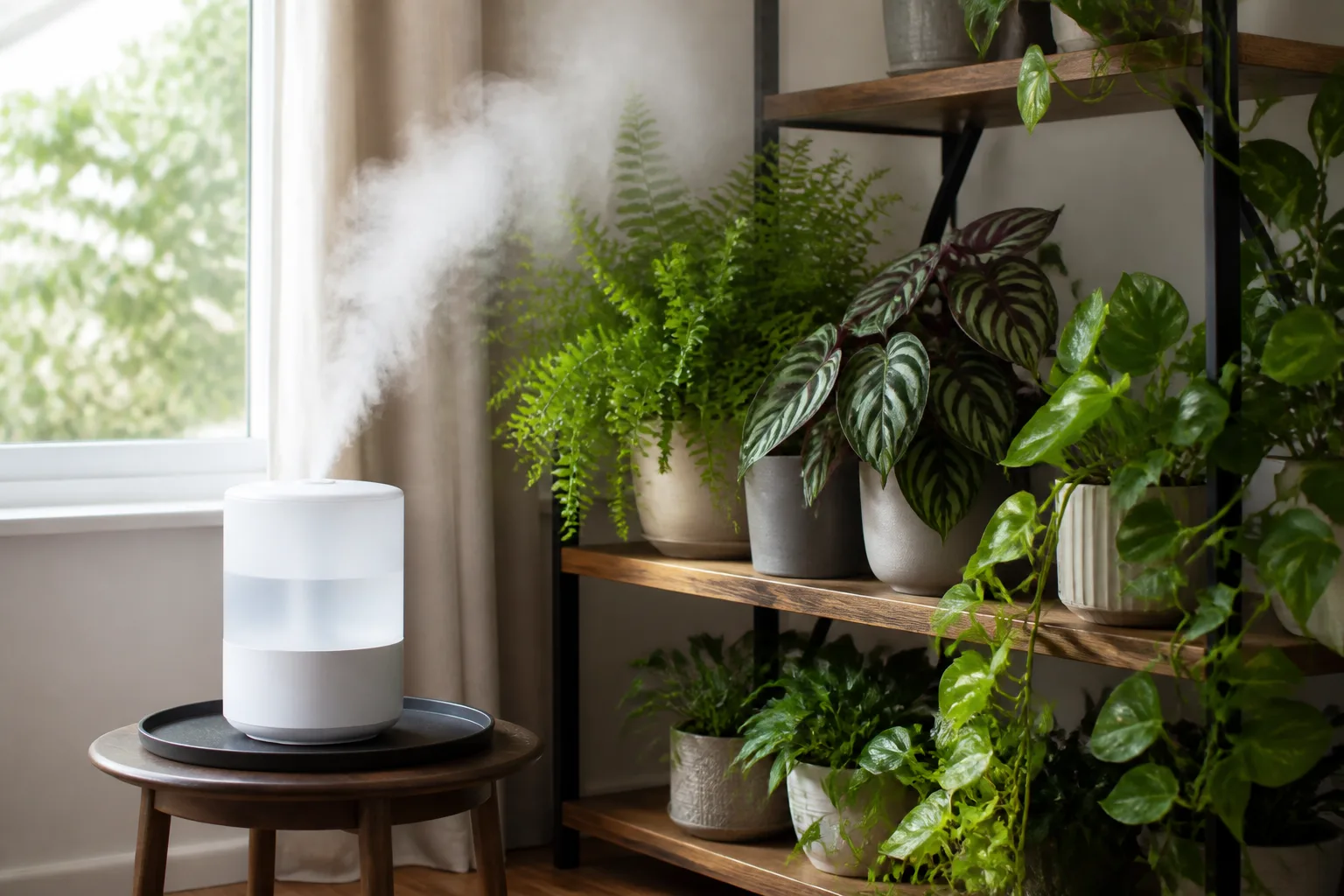
Alba’s most photographed placement is a philodendron on a shower caddy hung from the shower head. It is clever, photogenic, and sometimes genuinely helpful for humidity-loving aroids. It is not automatic success.
What extension research says about bathroom humidity
Bathrooms can be humid, but shower frequency and ventilation change the math. Penn State Extension notes that placing houseplants in bathrooms is hard to prove or disprove as a humidity strategy — it depends on how often the shower runs and whether humidity spikes last once the fan kicks on. (Penn State Extension — Humidity and Houseplants)
The same source is blunt about popular fixes: misting raises humidity only until water evaporates (minutes), and pebble trays diffuse moisture into the whole room with negligible local gain. Shower steam helps most when the bath has adequate light and you avoid leaving leaves wet in stagnant air overnight.
The RHS adds the light-first rule: bathrooms work when they receive plenty of natural light; frosted glass helps diffuse harsh sun. Windowless baths are not suitable for live plants. Guest baths used rarely may be less humid than a primary bath — so “bathroom plant” is not one universal category. (RHS — Best bathroom plants)
For deeper humidity troubleshooting (including when air is too wet), see high humidity houseplants and do pebble trays really increase humidity.
Shower caddy placement and safety rules
If you copy the shower caddy idea, treat it as a semi-permanent mount, not a novelty:
- Confirm weight limits on the caddy and shower arm — wet soil is heavy.
- Keep foliage out of direct water stream; roots appreciate ambient steam more than daily drenching from the shower head.
- Use a lightweight, well-draining mix in a pot with drainage; never seal a pot without holes in a steam room.
- Run the exhaust fan after showers to prevent constant leaf wetness that invites fungal spots.
- Check for soap residue on leaves; rinse gently monthly if shampoos splash.
- Re-evaluate in winter when heating dries the apartment and shower use may drop.
If any step feels risky, a wall shelf just outside the shower delivers most humidity with easier access.
Species that often tolerate primary baths with windows include spider plant, Boston fern, peace lily, bird’s nest fern, and many philodendrons — all want bright indirect light and hate waterlogged soil even in steamy air. Epic Gardening and similar editorial roundups group these as bathroom-friendly because they evolved in warm, moist forests — but every list still assumes you can see daylight in the room. (Epic Gardening — bathroom houseplants)
Standout Plants From Angela’s Collection and Why They Work Here
Alba’s collection is not random hype. Each headline plant illustrates a small-space role.
Philodendron billietiae, begonias, and ponytail palm
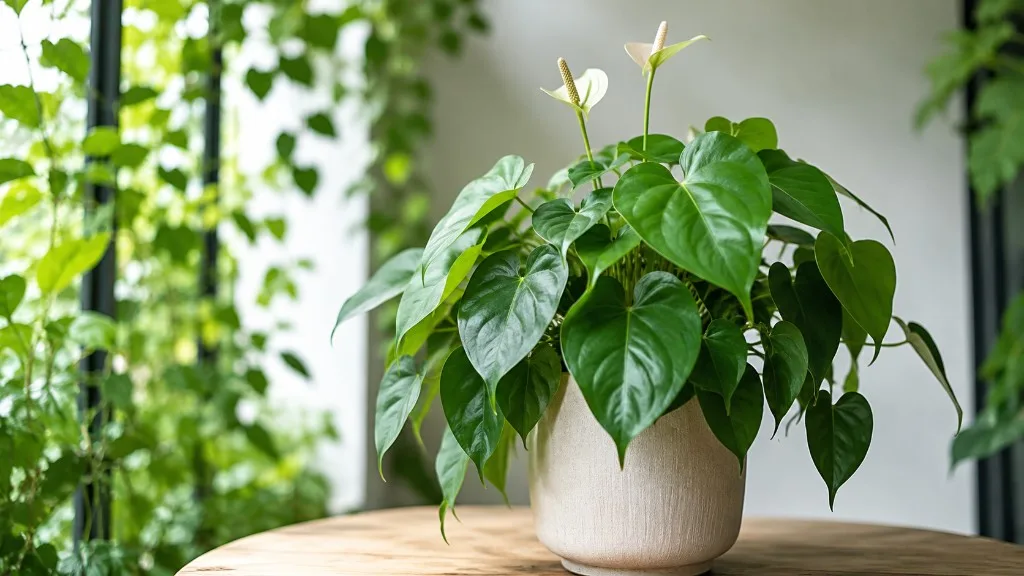
Philodendron billietiae — Alba’s “most unique” pick — uses vertical leaf shape instead of floor spread. Long, narrow leaves draw the eye up, which is gold in narrow baths and halls. It wants bright indirect light, warm temperatures, and consistent moisture without soggy roots. Bathroom placement can work if light is real; otherwise, keep it near the skylight corridor.
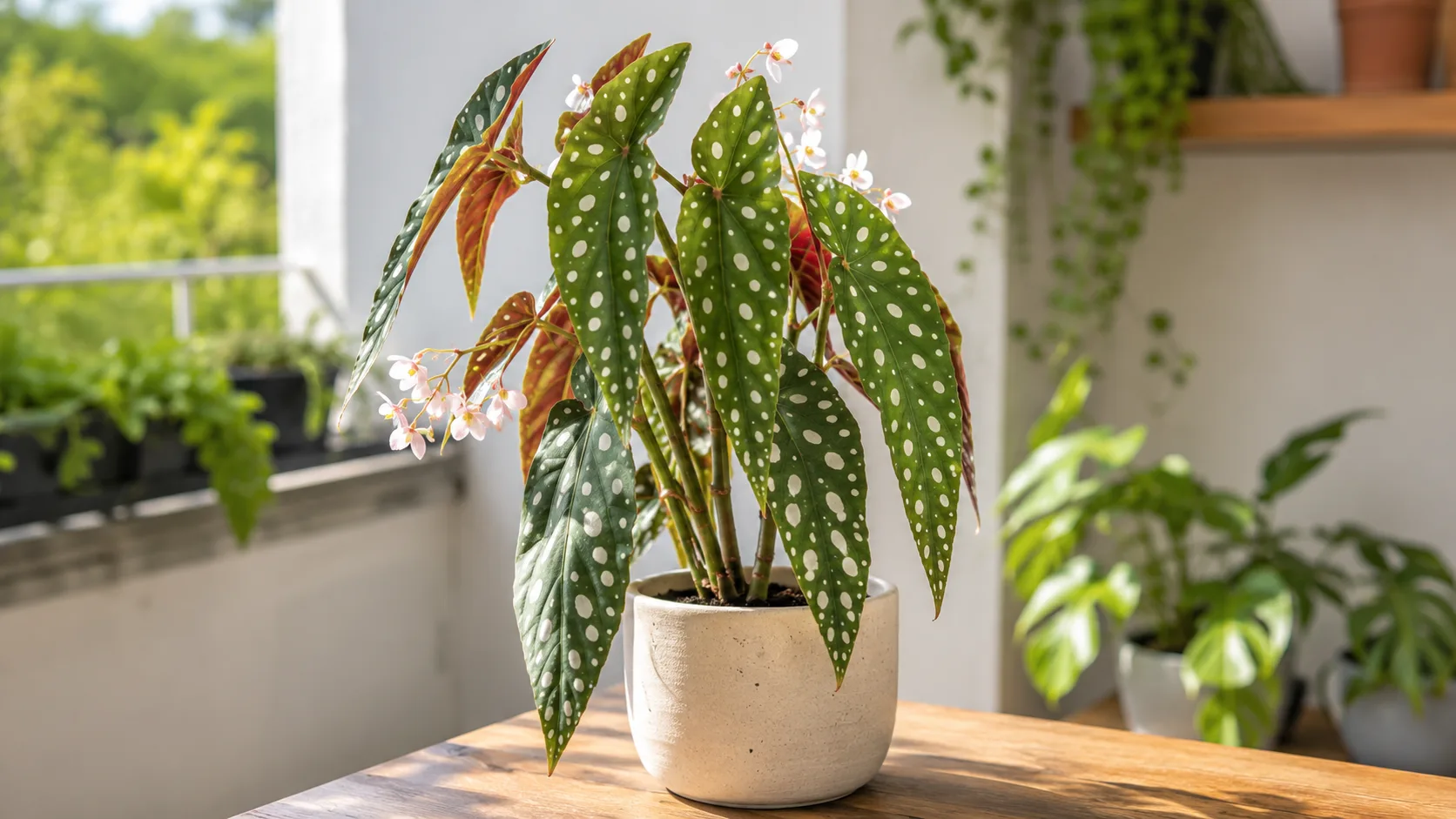
Her maple leaf begonia is the sentimental favorite. Begonias reward humidity and stable warmth — a match for steamy baths with a window. Remember begonias are toxic to cats and dogs if chewed; elevation matters in Alba’s cat home.
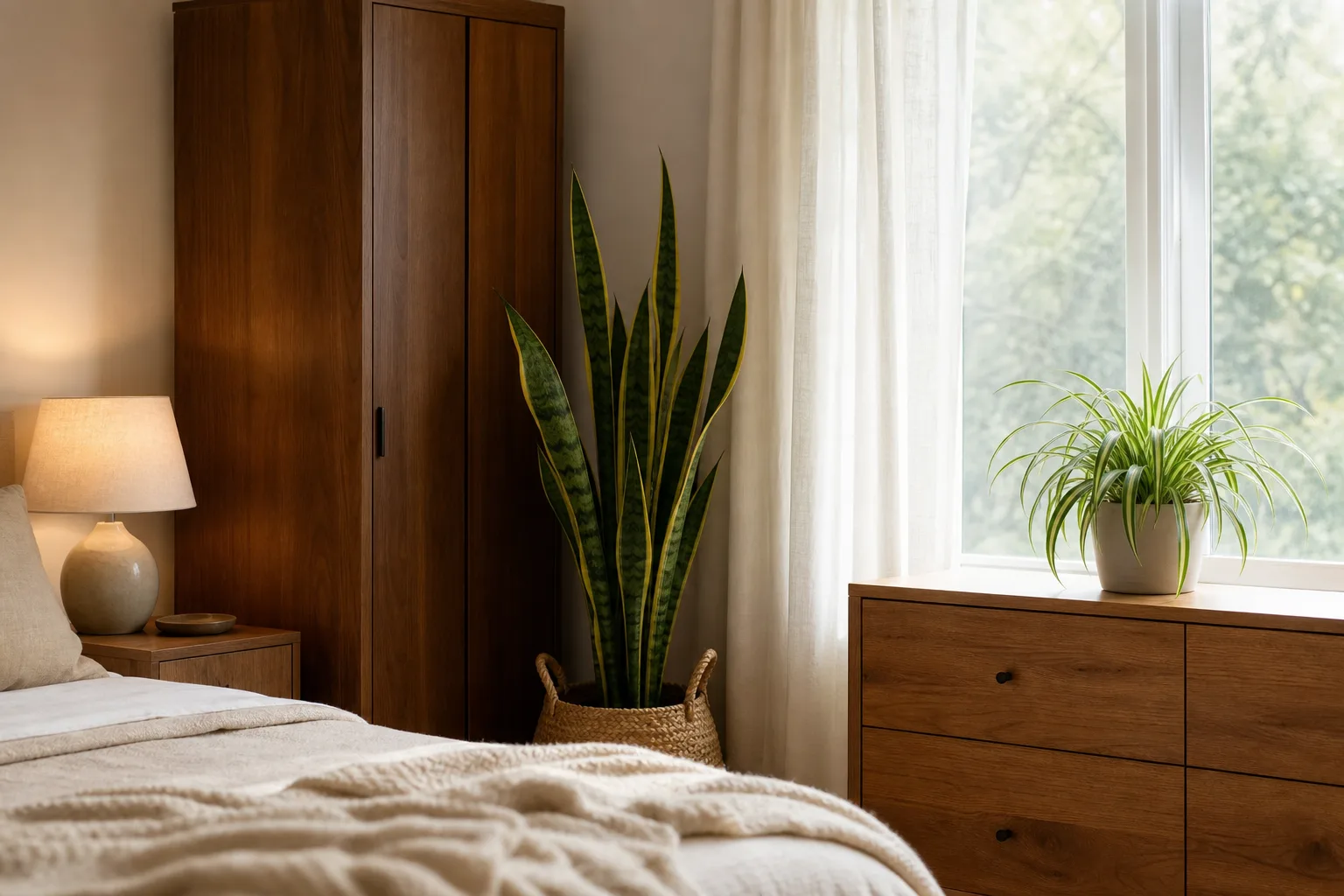
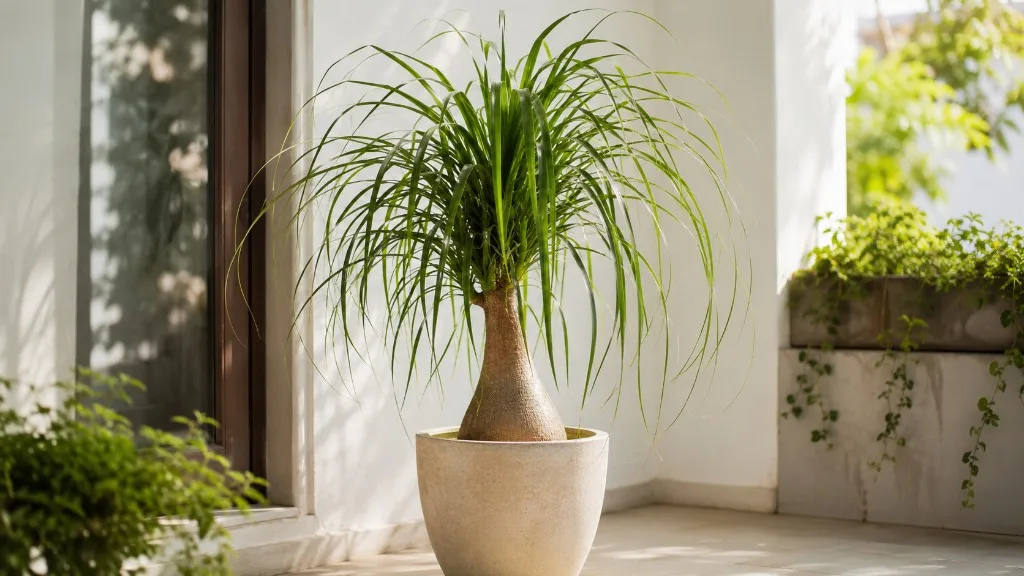
The ponytail palm (Beaucarnea recurvata) in the bedroom is the opposite personality: forgiving, sculptural, slow. It tolerates drier air and infrequent watering — a smart anchor where you do not want high maintenance. Full care: ponytail palm.
Variegated Monstera without wrecking your budget
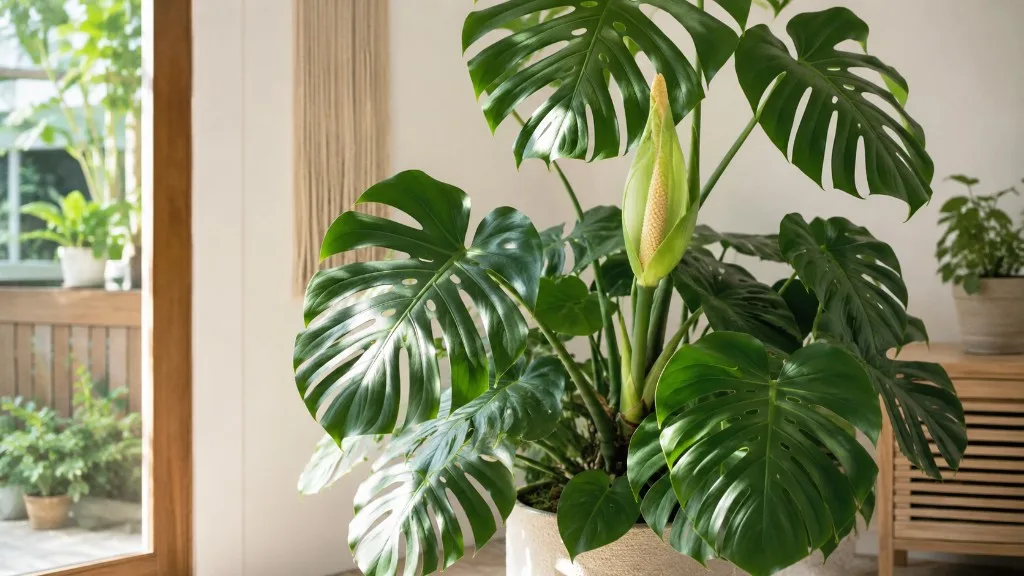
Alba’s priciest plants are variegated monsteras — including a Thai Constellation and a younger specimen she hopes will variegate more with age. Variegated Monstera deliciosa needs bright indirect light to keep white sections; too dim and new leaves revert greener. Budget for a grow light if your brightest “large leaf” spot is only a hallway skylight.
Buy the size your space can host, not the size your feed algorithm rewards. A mature monstera dominates a small living room fast. If you are Monstera-curious, start with care fundamentals on monstera deliciosa before financing a variegated cutting.
Budget reality check: Thai Constellation and similar cultivars command premium prices because variegation is unstable and slow to propagate. In a small apartment, a juvenile plant in a 4-inch pot may be smarter than a statement 10-inch specimen that outgrows its skylight lane in one summer. Grow the space first; upgrade the cultivar when light and shelf infrastructure are proven.
Caring for Difficult Picks Like Cinnamon Cactus Indoors
Alba calls her cinnamon cactus the trickiest plant in the jungle — a useful reminder that “rare” or “interesting” is not the same as “fits my apartment.” Cacti in humid baths often struggle unless airflow is excellent and watering is ruthlessly sparse.
Treat difficult specimens as experiments with exit plans:
- Quarantine new cacti away from the main shelf until pests are ruled out.
- Water on soil dryness, not room humidity vibes.
- If leaves or pads soften, move drier and brighter before rot spreads.
- It is okay to rehome a plant that fights your microclimate. Collection quality beats collection quantity.
Her first plant love, Agave americana, tells the same story. The original died; she replaced it. Long-lived collections include losses. Document what failed and why — usually light or water, not bad luck.
Watering Dozens of Plants Without Burning Out
The unglamorous truth of 60+ plants: watering is a logistics problem. Alba’s home works because zones make batching possible.
Room-batch watering: Water the bath plants on shower days when humidity is already high and you are in the room. Hit hallway skylight plants weekly on a set day. Bedroom anchors on a slower cadence. Carry a small towel and a narrow watering can that fits between pots.
Finger or weight checks beat calendars. A hallway plant under a skylight may dry in four days; a bathroom fern might take ten. Lift pots: light means drink; heavy means wait.
Signs your routine is failing: fungus gnats hovering at soil lines, yellow lower leaves on multiple species at once, salt crust on pot rims, or you dread watering day because it takes three hours. Scale back purchases and fix zones before adding automation.
For baseline technique, see how to water indoor plants the right way.
Tool kit that scales: a narrow-spout watering can, moisture meter for finicky begonias, stackable trays, and a rolling plant caddy if you rotate specimens toward a skylight weekly. Photograph each zone after watering once — the photo archive becomes your memory when fungus gnats make every pot look the same.
Using the Online Plant Community the Right Way
Alba values plant people she may never meet in person — quick DMs, IDs, encouragement. That is not fluff; it is distributed expertise when extension hours and local shops are closed.
Use online communities well:
- Post photos with light direction, pot size, and last watering date — not just “what’s wrong?”
- Verify IDs before copying care; philodendron and pothos care diverge.
- Treat hype cultivars skeptically; ask about acclimation from greenhouse humidity to Brooklyn winter air.
- Give back — answer beginners once you solve a problem. Teaching cements your own skills.
Stress, Drooping, and What Plants Actually Respond To
Alba does not talk to her plants, but she noticed drooping during a stressful cleaning day and wondered if they felt her mood. Plants do not read emotions. They respond to environmental changes you cause while stressed: bumped pots, closed blinds, skipped watering, hot air from hurried cooking, or dry HVAC after leaving windows shut.
If you see sudden wilt:
- Check soil moisture first — stress days often mean forgotten water or accidental double watering.
- Look for physical damage: knocked stems, cracked leaves, pet interference.
- Scan for pests; spider mites surge when heat runs and humidity crashes.
Fix the measurable input. The plant rebounds when conditions stabilize.
Humidity swings matter more than mood. Winter heat in Brooklyn apartments can crash relative humidity below 30% — inside ASHRAE’s recommended 30–60% comfort band that Penn State Extension cites for human occupancy. Plants that looked fine in October may crisp or droop in February even if your stress level is low. A cheap hygrometer on the plant shelf tells you more than intuition.
Conclusion
Angela Alba’s Brooklyn apartment proves you can live with 60+ plants in a tiny space when you treat the home like a set of zones — skylight hallway for light, dedicated shelves for density, bathroom for selected humidity lovers, bedroom for forgiving anchors. The shower caddy is optional; the light map, watering batches, and honest collection ceiling are not.
Start with one zone, one dedicated shelf, and plants matched to real conditions. Add rarity when care is boringly stable, not when a profile makes it look easy. That is how small apartments become jungles you can actually sustain.