Inside a 200-Plant Columbus Home With Ducks
Tour Brian Hood’s Columbus home, where 200+ houseplants, rare Monsteras, moody Calatheas, and curious ducks share a carefully managed indoor jungle.
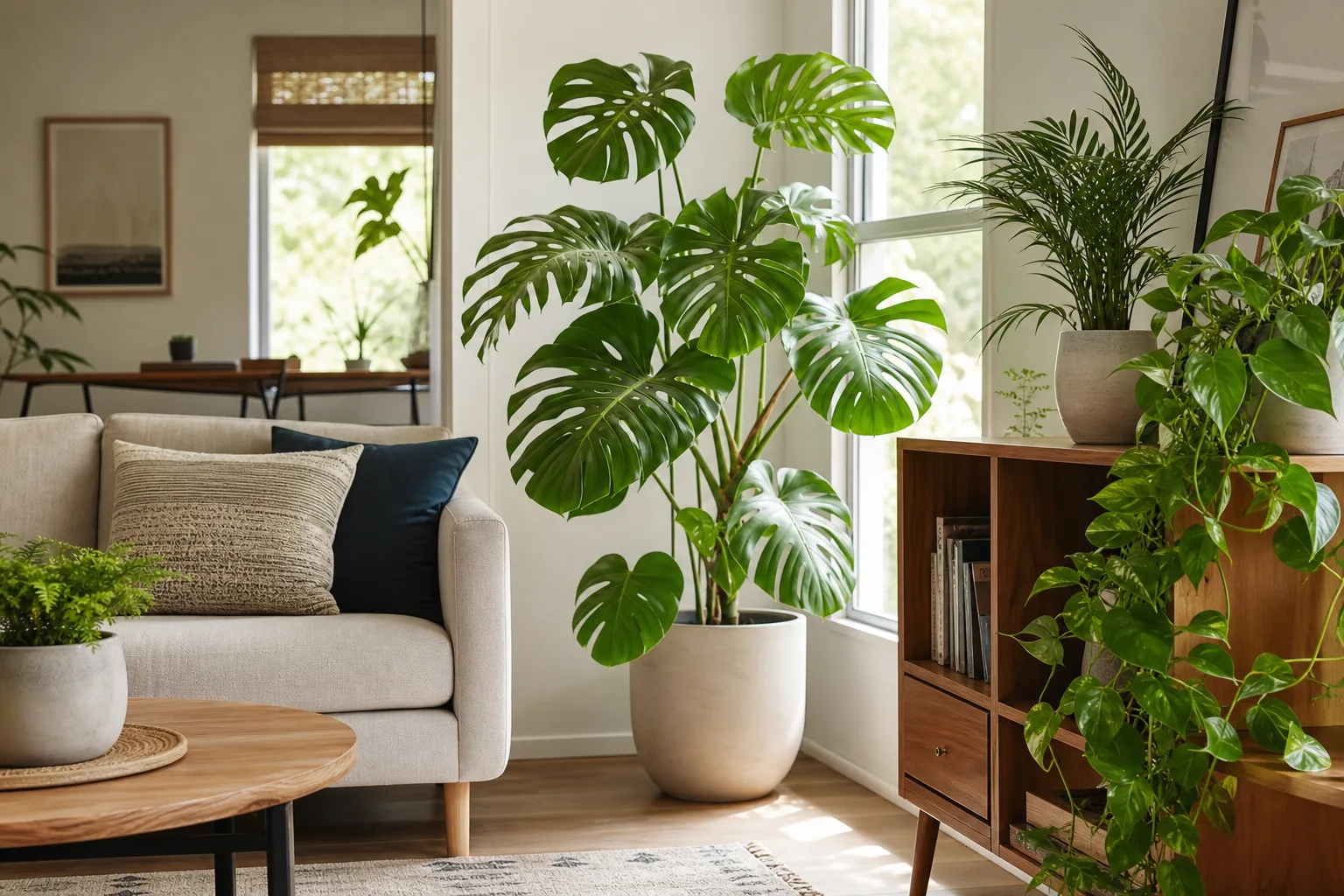
The quickest way to understand Brian Hood’s Columbus home is to stop thinking of it as a house with plants in it. The plants are the architecture: towering foliage sets the scale in the living room, the bedroom gives up walking space to a living canopy, and every empty corner seems to become a future growing spot.
There are more than 200 plants in the collection, but the number is not the most interesting part. Brian collects for impact, gravitates toward unusual foliage, rescues plants from unexpected places, and shares the space with pet ducks—including Daisy, who has developed a taste for the tips of his Sedum. That combination makes the tour feel less like a showroom and more like a working indoor jungle with its own rules.
Why 200 plants can still feel intentional
A large collection becomes visually successful when it has contrast. Brian’s plants are not all the same height, leaf shape, or color: a tall tree-form specimen can sit behind a broad-leafed tropical, while a trailing or sculptural plant fills the lower edge. The result is layered rather than flat, which is why the rooms read as lush instead of merely crowded.
That distinction matters if you are borrowing ideas from the tour. Adding more plants will not automatically create the same feeling. The useful lesson is to choose a few anchors, repeat a handful of leaf shapes or colors, and leave enough negative space that the largest plants remain legible.
The collection also has a clear point of view. Brian looks for plants that stop him in a nursery or appear in an unexpected setting, then gives the standout specimens room to become characters. A plant does not have to be rare to be memorable; it needs a silhouette, texture, history, or growth habit that earns its place.
The collection’s visual architecture
The best indoor jungles use the same basic design logic as a garden border: put the tallest plants toward the back, use medium plants to bridge the height change, and let smaller specimens occupy the foreground. In a home, the “back” may be a corner, a wall, or the space beside a window, but the principle is the same. If every pot is the same height, you lose the depth that makes a collection feel immersive.
Brian’s living room does this with plants that cannot comfortably fit elsewhere. The biggest specimens act as room anchors, while the rest of the collection can move around them as light, growth, and daily life change. That is a smarter approach than arranging every plant for one perfect photograph and discovering later that you cannot reach the window, vacuum the floor, or rotate a pot.
Big plants as room anchors
Large plants solve a design problem quickly: one mature specimen can fill vertical space that would otherwise require a dozen small pots. They also create a visual destination, which gives the rest of the collection something to frame rather than compete with.
The trade-off is weight and access. A tall plant in a heavy container is difficult to move when it needs brighter light, a pest inspection, or a thorough watering, so its final location should be chosen with maintenance in mind. Put a saucer under the pot, protect floors from runoff, and keep enough clearance to examine the leaf undersides and the soil line.
The side-of-the-road Opuntia
One of the tour’s best stories is an Opuntia cactus Brian found as a tiny roadside plant that eventually became a large, slightly unruly presence. It is a reminder that a collection is not only a catalog of expensive or highly bred plants. Some of the most satisfying specimens are the ones with a rescue story and a growth habit you did not fully appreciate at the beginning.
Opuntia also brings a useful counterpoint to the tropical plants around it. A cactus wants a brighter, drier setup than a Monstera or Calathea, so it should not be watered simply because the rest of the room is getting a watering day. In a large collection, unusual plants are easiest to keep happy when they remain exceptions on the care map instead of being forced into the dominant group’s routine.
Build a care system before the collection outgrows you
The difference between 20 plants and 200 plants is not that the owner becomes 10 times more attentive. It is that memory stops being a reliable management tool. A workable collection needs labels, zones, repeatable routes, and a way to notice a problem before it moves through the room.
Start with a simple inventory. Record the plant’s name, room, light zone, pot size, last repot, usual dry-down cue, and any known pest or toxicity concern. You do not need a complicated database; a spreadsheet or numbered tags can be enough if you actually update it when a plant moves.
Group plants by needs, not by room
Rooms are convenient for decorating, but they are poor care categories. A sunny window can contain a cactus, a variegated Monstera, and a plant that will scorch if placed too close to the glass. Conversely, two plants in the same dim bedroom may have completely different tolerance for staying wet.
Think in light and dry-down zones instead. A bright-window zone might contain plants that use water quickly, while a few feet back may suit foliage plants that prefer bright but filtered light. A lower-light zone should be populated with plants that grow slowly there, because low light does not turn a thirsty tropical into a dry-soil plant; it often just makes the same pot stay wet longer.
Within each zone, make smaller groups by root-zone behavior: plants that dry almost completely, plants that want the upper layer to dry but not the whole pot, and plants that prefer more even moisture. This is more useful than a single “water every Sunday” rule because it matches the actual variables that determine how fast a pot dries.
Use a repeatable watering route
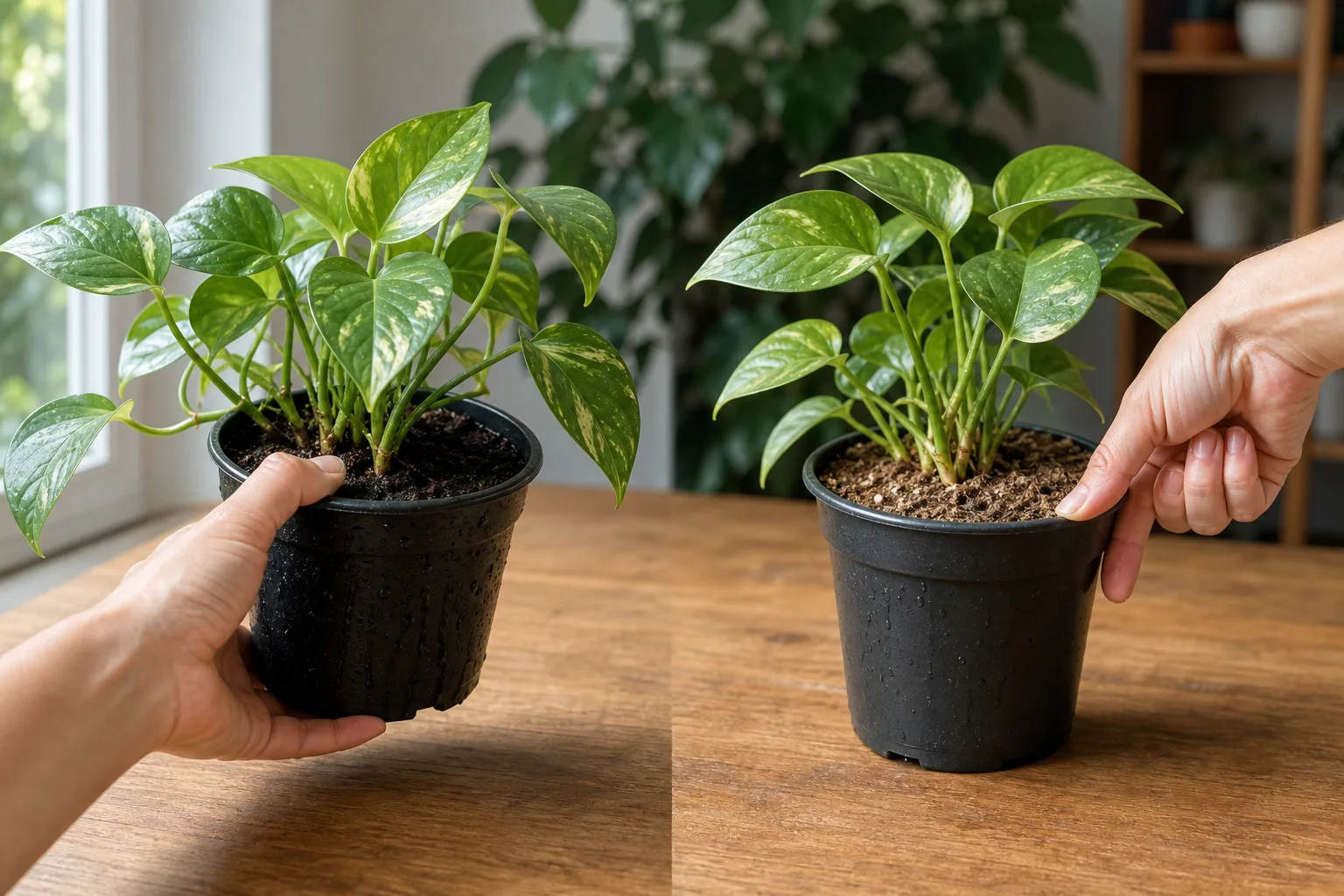
The safest large-collection watering system is a route, not a schedule. Walk one zone at a time, check the soil or pot weight, water only the plants that have reached their dry-down cue, and leave a note when a plant is unusually wet, dry, or unstable. A route keeps the job predictable without pretending every plant follows the same calendar.
For a medium or large pot, lifting the container can reveal more than looking at the surface. A pot that still feels unusually heavy days after watering deserves a drainage and root-zone check before it receives more water. PHS recommends checking moisture rather than watering by habit, and its houseplant guidance also flags overwatering, poor drainage, insufficient light, and delayed pest detection as common problems. The Pennsylvania Horticultural Society’s houseplant-care guidance is a useful practical reference for that inspection mindset.
When you do water, wet the mix thoroughly until runoff begins, then empty the saucer. Do not let a decorative cachepot hide a pot that is sitting in water. If a plant repeatedly stays wet for too long, change the light, pot, mix, or container—not just the day you water it.
Quarantine every new arrival
A new plant should not go straight into the most densely packed room, even if it looks healthy at the nursery. Keep it separate for roughly two to three weeks while you inspect leaf undersides, stems, petioles, and the soil surface. Watch for webbing, scale bumps, cottony residue, flying adults, distorted new growth, or a sudden decline that was hidden by a sales bench.
Quarantine is also the time to remove decorative moss, wipe foliage, confirm the plant’s identity, and decide whether it belongs near the ducks. Use separate tools when possible, wash hands between rooms, and avoid sharing runoff water. One plant with a problem is manageable; a pest introduced into a tightly spaced collection becomes a project measured in weeks.
Create a winter plan in Columbus
Ohio adds a seasonal challenge that a lush summer tour can hide. Winter brings shorter days, colder windows, dry heated air, and drafts that can stress tropical foliage even when the thermostat says the room is comfortable. The collection does not need the same care in January that it receives in July.
Light changes are the first problem
In winter, a plant can be standing in the same place while receiving meaningfully less usable light. That changes growth, water use, and the plant’s ability to recover from a wet root zone. Before watering more often because leaves look dull, check whether the plant has been moved away from the brightest window or shaded by a larger specimen.
Move plants closer to the window only if the temperature and draft are suitable, and acclimate any plant that is suddenly exposed to stronger direct sun. For a collection this large, grow lights can create a stable supplementary zone for the plants that are most valuable, most variegated, or most prone to stretching. Better Homes & Gardens’ expert-reviewed houseplant guidance emphasizes choosing the plant for the light you actually have and treating winter fertilizing cautiously; its houseplant-mistakes overview is a useful reminder that more attention is not always better care.
Variegated Monsteras are a good example of why a collection needs light planning. The pale parts of a leaf contribute less photosynthetic tissue than green areas, so a highly variegated plant may need brighter conditions than a darker green counterpart. That does not mean placing it against a freezing pane or in sudden hot sun; it means giving it the brightest safe, consistent position available.
Reduce water and watch cold drafts
Lower light and slower growth usually mean a plant uses water more slowly. The correct winter adjustment is not to starve every plant on a fixed schedule, but to extend the interval between waterings when the root zone stays wet longer. Check the pot, the mix, and the plant’s light before deciding what changed.
Cold drafts create a separate problem. NC State’s profile for Ficus elastica recommends bright indirect light or partial shade indoors, protection from afternoon sun, regular but not excessive watering, and less water during dormancy; it also warns that rubber plants dislike drafts and cold temperatures. Those details apply directly to the way a Ficus Tineke should be positioned in an Ohio home: bright enough to hold its variegation, but away from a leaky window, exterior door, or heater blast.
Humidity is not a substitute for light, airflow, or a healthy root system. A humidifier can help a room feel less arid, but plants should not be packed so tightly that leaves remain wet for long periods. Leave space between pots, clean dusty leaves, and treat persistent crispy edges or curling as a diagnosis problem rather than proof that every plant needs more misting.
The plants that make the tour memorable
Brian’s collection is memorable because it mixes familiar houseplants with specimens that have unusual scale, texture, or movement. The care lesson is to understand what each plant is asking for before copying its placement.
Monstera deliciosa and the case for support
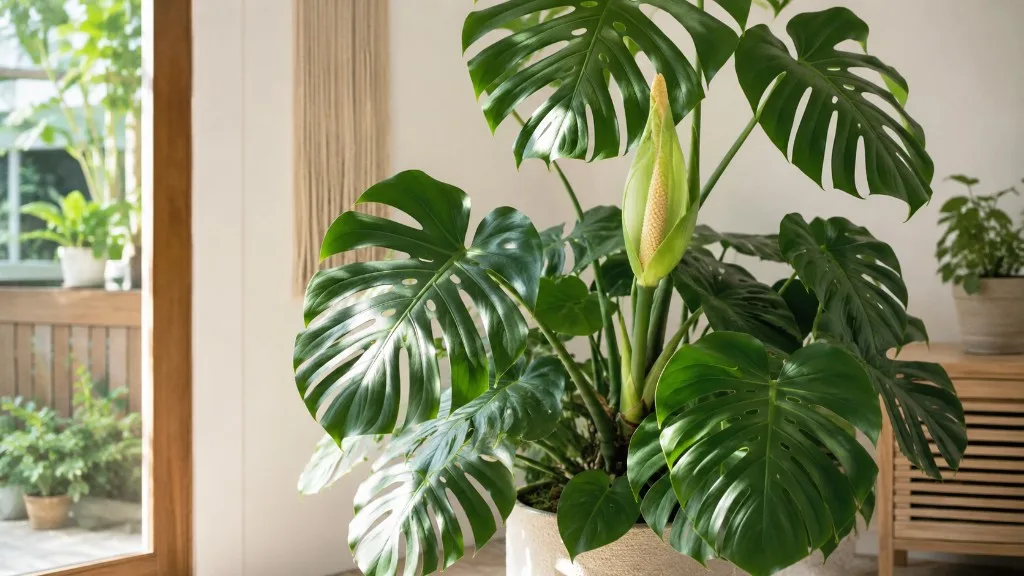
The Monstera deliciosa is the plant that turns a room into a jungle fastest. Mature leaves can become enormous, and the climbing habit means a plant that looks wide and self-supporting at the nursery may eventually lean, sprawl, or break without a stable support.
NC State Extension describes Monstera as a warm, humid houseplant that prefers moderate brightness without direct sun. Its guidance recommends thorough watering followed by a partial dry-down, and it notes that variegated cultivars need more light than darker green forms. The NC State Plant Toolbox profile for Monstera deliciosa supports a practical rule: give the plant a bright, steady position, let the upper portion of the mix dry before watering again, and add support before the stems are carrying more weight than the pot can handle.
The Monstera Albo Variegata in Brian’s collection also illustrates the emotional side of rare plants. A cutting can be a gift, a trade, or a major purchase, and its value can change quickly with supply and demand. Protect the plant by documenting its identity, keeping the light stable, and avoiding a care experiment that you would not risk on an ordinary green Monstera.
Ficus Tineke and Alocasia Regal Shield
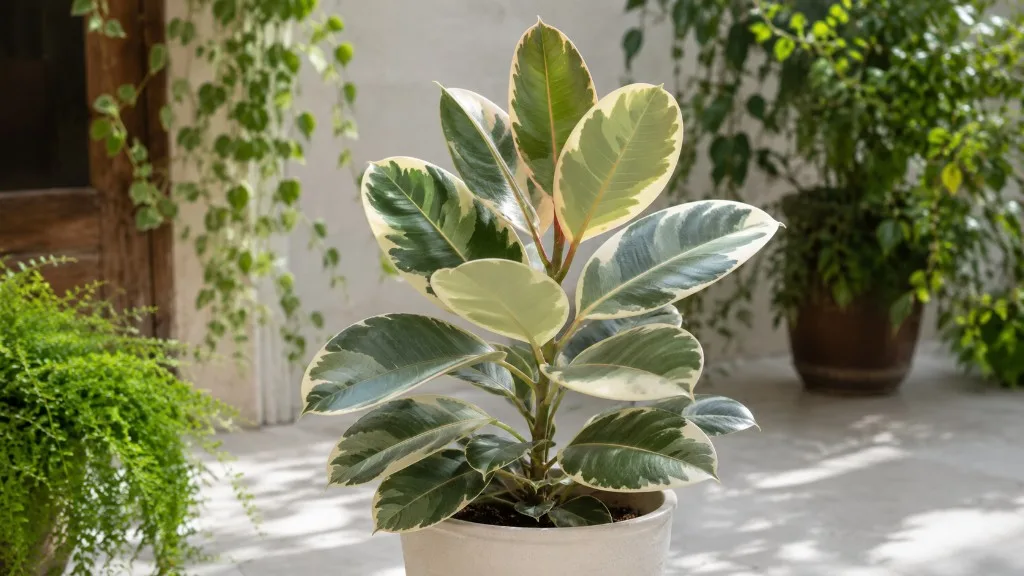
The Ficus elastica ‘Tineke’ is Brian’s self-described visual counterpart: colorful, changeable, and less exuberant in winter. Its variegated leaves make it a strong focal point, but the plant still needs the basics—good light, a measured watering rhythm, and protection from temperature swings.
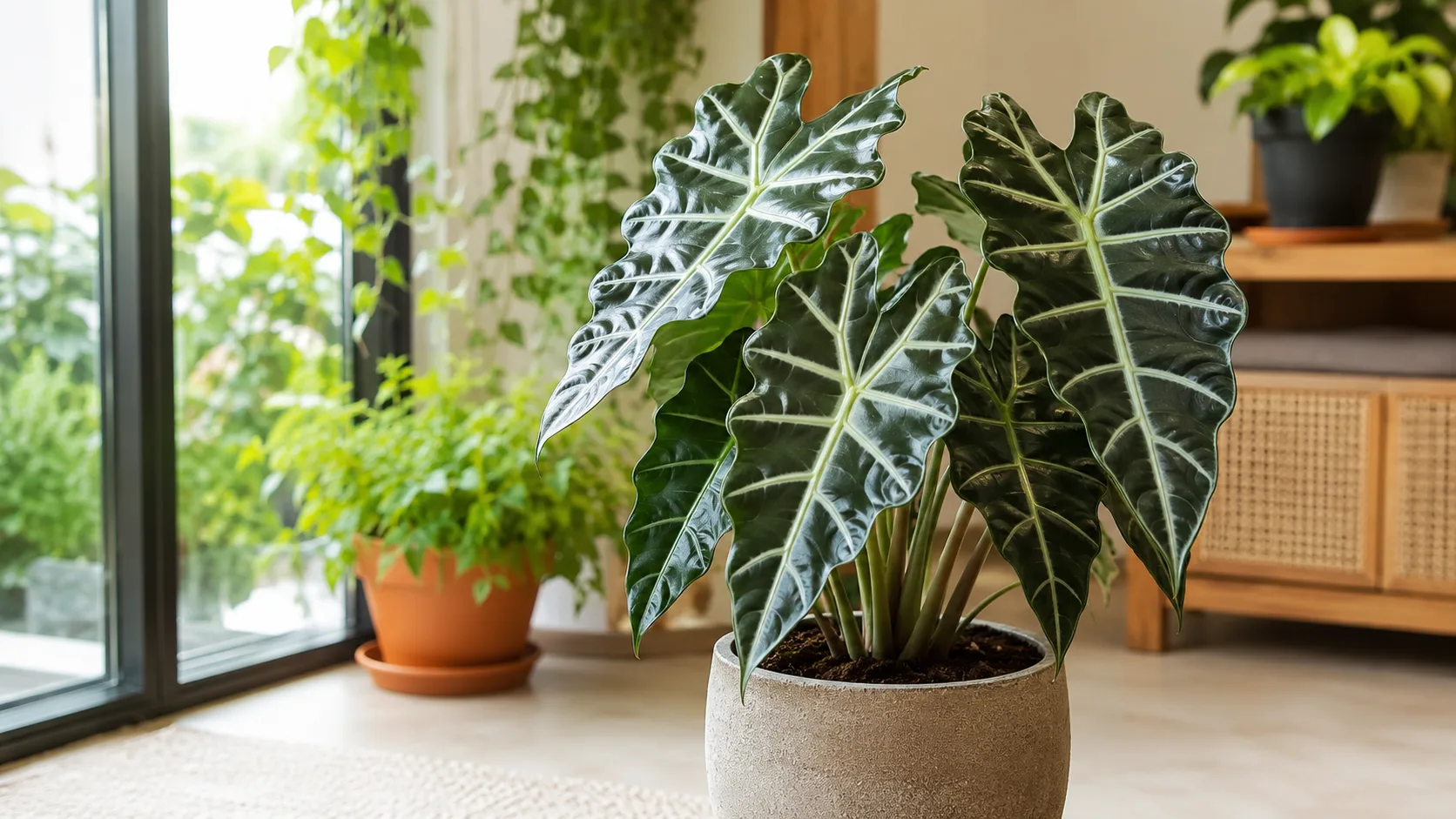
His favorite plant is an Alocasia Regal Shield, a choice that makes sense in a collection built around impact. Alocasia brings size and texture without relying on flowers, but it is not a low-maintenance background plant. NC State’s Alocasia profile describes a warm, shaded-to-part-shade plant that wants moisture and good drainage, and it notes that spider mites, aphids, mealybugs, root rot, and leaf spots can all become problems.
That profile also carries a safety warning: Alocasia has poisonous characteristics and should be used with caution around children and pets. The warning is especially relevant in a home with curious animals because a dramatic leaf is also an obvious target for exploration. Keep the plant physically separated from the ducks rather than relying on a label or assuming that a brief nibble is harmless.
Calatheas, Marantas, and Stromanthe
The “moody” plants in Brian’s collection—Calatheas, Marantas, and Stromanthe—are not moody in the human sense. Their leaves are simply quick to show environmental mismatches: a dry root ball, a sudden change in light, a draft, mineral-heavy water, low humidity, or soil that stays wet while the plant is short on usable light.
Treat these plants as an early-warning group. Check the underside of leaves for pests, feel the mix below the surface, and look for a pattern rather than reacting to one imperfect leaf. Brown edges after a winter move may point to dry air or a water-quality issue; persistent droop in wet mix points toward roots, light, or drainage instead.
The best setup is bright filtered light, even moisture without saturation, gentle airflow, and a stable location. Avoid the temptation to compensate for every blemish with more water. A plant that is already struggling to use water can decline faster when its pot is kept constantly wet.
Living with ducks and houseplants
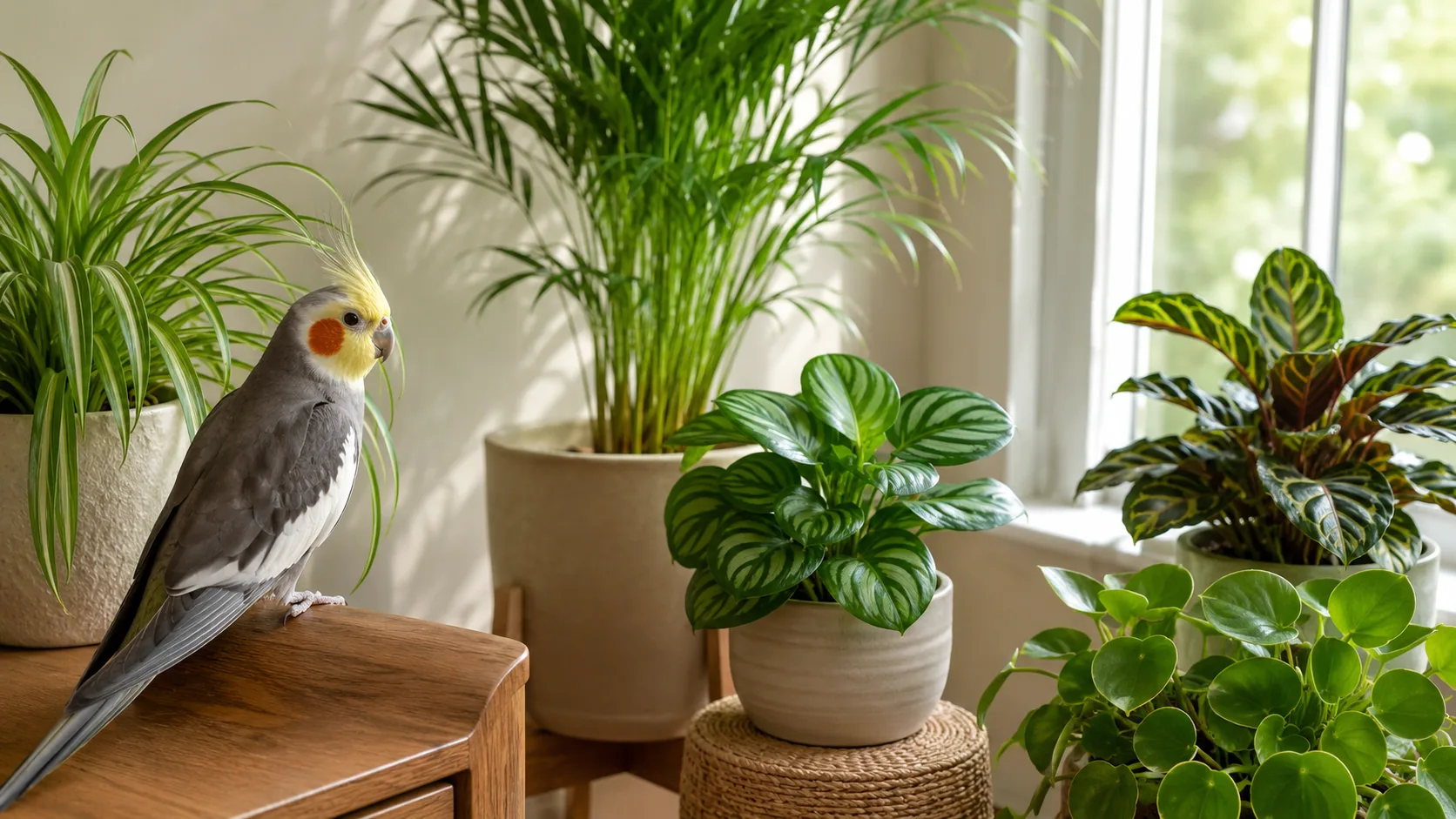
Daisy’s Sedum snack is funny because the damage is small and the duck’s preference is clear. It is also the point where a plant collection becomes an animal-management problem. Ducks explore with their bills, and a plant that is ignored for months may become interesting after a move, a new leaf, or a change in access.
Set a no-grazing boundary
Do not treat “the duck only took a few bites” as a plant-safety test. VCA’s bird-plant guidance says studies on the safety of specific plants for birds are limited, and that risk may need to be inferred from other species; it recommends preventing access unless a plant’s safety for the particular bird is known. VCA’s guidance on plants toxic to birds is written for companion birds rather than ducks, so the safest interpretation for a backyard duck is not to generalize a “safe bird” list without veterinary input.
That matters for several plants featured in this collection. VCA lists common ornamentals such as philodendrons, pothos, elephant ears, and Swiss cheese plants among plants that may be poisonous to birds, while NC State flags Monstera and Alocasia as having poisonous characteristics in its plant profiles. Those labels do not predict exactly what will happen to a duck, but they are enough reason to keep the plants out of reach.
Physical separation is more reliable than training. Use a closed room, a sturdy barrier, elevated shelves that a duck cannot reach, or a designated plant area that is off-limits during free-roaming time. Keep fallen leaves, pruned stems, potting mix, fertilizer, pesticides, and standing runoff out of the same foraging area; the soil and products around a plant can be a risk even when the leaf itself is not the only concern.
What to do after a possible nibble
If a duck may have eaten a leaf, move the animal away from the plant and save a clear photo, plant label, or fresh sample in a sealed bag. Note the plant’s common and botanical name, the approximate amount missing, the time of exposure, and any product applied to the plant or soil.
Do not induce vomiting or give a home remedy. Contact an avian or exotic-animal veterinarian promptly, especially if the duck is weak, unusually quiet, having trouble breathing, showing diarrhea, losing coordination, or refusing food and water. Merck Veterinary Manual’s poultry-poisoning guidance emphasizes preserving records of environmental exposures and foraging behavior when toxicosis is suspected; its poultry reference explains why those details help a veterinarian investigate a backyard flock.
The best long-term response is a plant-and-animal inventory. Mark plants that are inaccessible, plants that need a safety review, and plants that should never enter the duck area. If a duck repeatedly seeks one plant, move the plant rather than escalating the game; Daisy has already demonstrated that a few missing Sedum tips can turn an ordinary specimen into a favorite snack.
Conclusion
Brian Hood’s Columbus home works because the collection has personality and structure. The towering plants create the indoor-jungle effect, the unusual specimens supply stories, and the ducks keep the house from becoming a perfectly controlled display.
The practical takeaway is not to chase a number like 200. Start with the habits that make a large collection possible: build light and dry-down zones, water by observation, quarantine new arrivals, plan for winter, support climbing plants early, and keep curious animals away from anything whose safety is uncertain. With those systems in place, a home can hold a remarkable amount of greenery without losing the pleasure that made the first plant worth bringing home.



