Meet MissLeidy: NYC Drag Queen With 200+ Plants
Tour MissLeidy The Plant Lady's Brooklyn apartment, meet her standout houseplants, and learn the practical ideas behind a lush 200+ plant collection.
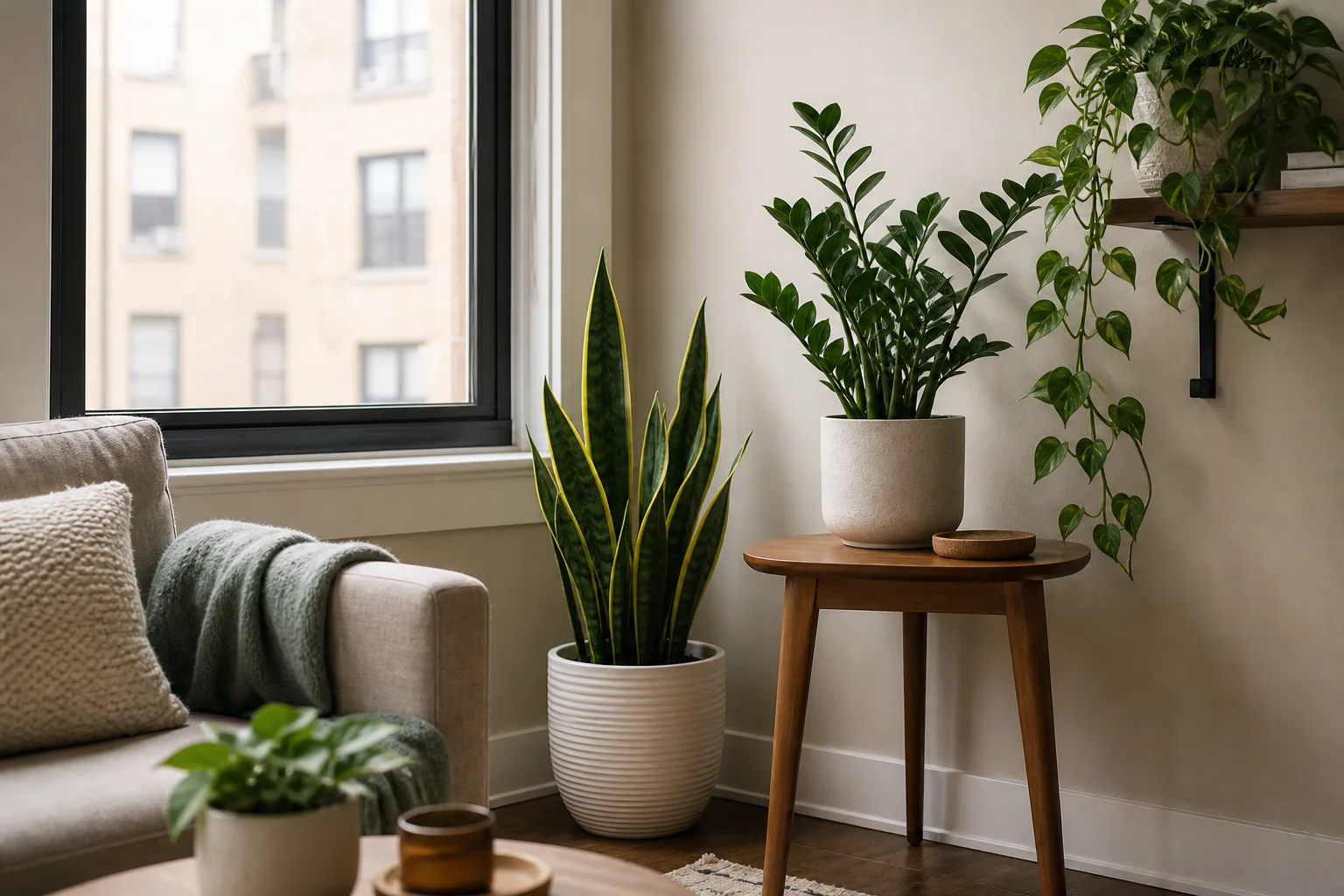
MissLeidy The Plant Lady’s Brooklyn apartment is the kind of home that makes a plant person stop scrolling. The featured tour shows more than 200 plants, from striped snake-plant leaves and peacock-patterned foliage to rare-looking aroids and a propagation station tucked into the bedroom.
The spectacle is fun, but the collection is not just a pile of green things. MissLeidy’s plant style is a collision of family memory, drag, fashion, interior design, and the daily responsibility of keeping living plants well. Her best lesson is not “buy more plants”; it is to learn what a plant needs, give it a place to grow, and let the collection become part of the room rather than an obstacle inside it.
Seen that way, the tour is as much about belonging as horticulture. Each plant helps turn a rented room into a chosen environment with its own rhythm, color, and point of view.
Who Is MissLeidy The Plant Lady?
MissLeidy The Plant Lady is a New York City drag performer and plant personality who shares houseplant knowledge through public social channels and video. A 2021 Apartment Therapy interview identifies the creative director and fashion stylist behind the persona as Jimi Urquiaga and describes a Brooklyn home with large windows, a backyard, and an intentionally controlled sense of abundance.
That distinction matters because MissLeidy is not simply a collector presented in a pretty room. The plants are part of a visual language: bold, tropical, slightly unruly, and styled with the same point of view that drives her drag and fashion work. The apartment works because the foliage has personality, but also because the room still has structure underneath it.
The collection count should be read as a snapshot from the tour, not a permanent inventory. Plants are traded, propagated, pruned, lost, moved, and renamed; even a devoted collector’s number changes whenever a cutting becomes a rooted plant or a large specimen is given away.
How a No-Window Apartment Became a Plant Collection
The origin story is unusually relatable. MissLeidy first lived in a warehouse apartment with no windows, then moved into a smaller place that offered a little natural light. One plant became the opening note, and the collection reportedly grew by roughly 40 more plants within 10 days.
That jump sounds extreme until you recognize the emotional logic. A window is not just a place to put a pot; it is proof that a home can support growth. Once a person learns that a room has a workable light pocket, every nearby shelf, table, and empty corner can start looking like a possible plant home.
From One Window to 40 Plants in 10 Days
The useful takeaway is not the speed of the buying spree. It is the way a collection can reveal the limits of a space very quickly: the brightest window fills first, the watering route becomes longer, and plants with different moisture needs start competing for attention.
Before copying that pace, map your own apartment. Note which windows receive direct sun, which stay bright but filtered, where radiators or air-conditioner vents create drafts, and which surfaces can safely hold a wet pot. Iowa State University Extension emphasizes that indoor light is often the limiting factor, and that light drops quickly as plants are moved farther from a window.
Cuban Family Memories in Every Green Corner
MissLeidy has connected her plant love to her Cuban grandparents and to the lush, tropical feeling of the homes she remembers from childhood. That history gives the collection more meaning than a generic “urban jungle” label: the foliage is also a way to bring a familiar atmosphere into a New York apartment.
Her style combines two influences that might seem opposite. One is a clean, carefully arranged home with white surfaces and everything in its place; the other is the exuberant, exotic energy of plants and nature. Put together, the effect is not minimalism or maximalism alone, but minimal structure holding maximal foliage.
The Design Idea Behind the Brooklyn Jungle
Minimal Structure, Maximal Foliage
The apartment’s visual trick is repetition with variation. Pots, shelves, and open floor areas create a quiet framework, while the plants supply different leaf shapes, heights, textures, and silhouettes. A tall upright plant can mark a corner, a climber can soften a hard line, and a trailing plant can connect a high shelf to the furniture below.
This is also why a dense collection does not have to look like clutter. Keep a reliable path from door to window, leave enough space to remove each pot without knocking over its neighbor, and use height layers so every plant is not competing at eye level. The room should read as a home first and a collection second, even when the collection is the most memorable thing in it.
The most important design rule is functional: never style a plant into a care problem. A beautiful specimen that is pressed against glass, blocking a radiator, hidden behind another pot, or impossible to reach for watering will not stay beautiful for long.
The Plants That Define Her Collection
The tour is memorable because it does not show only easy, familiar foliage. It moves through plants with different shapes and demands, which makes the collection feel personal rather than assembled from one shopping list.
The Snake Plant and Calathea That Feel Like Signatures
One of the first featured plants is Dracaena trifasciata ‘Bantel’s Sensation,’ a snake-plant cultivar with pale vertical striping. Its upright shape is useful in a crowded room because it provides height without taking up the sprawling footprint of a large-leaf tropical.
MissLeidy also compares herself to a Calathea makoyana, commonly sold under the older name Calathea makoyana. The patterned, peacock-like leaves make the comparison easy to understand, but the plant is also a reminder that beauty comes with a narrower care margin than a snake plant. The Royal Horticultural Society profile for Goeppertia makoyana recommends indirect or filtered light, moist but well-drained conditions, and protection from drafts and scorch.
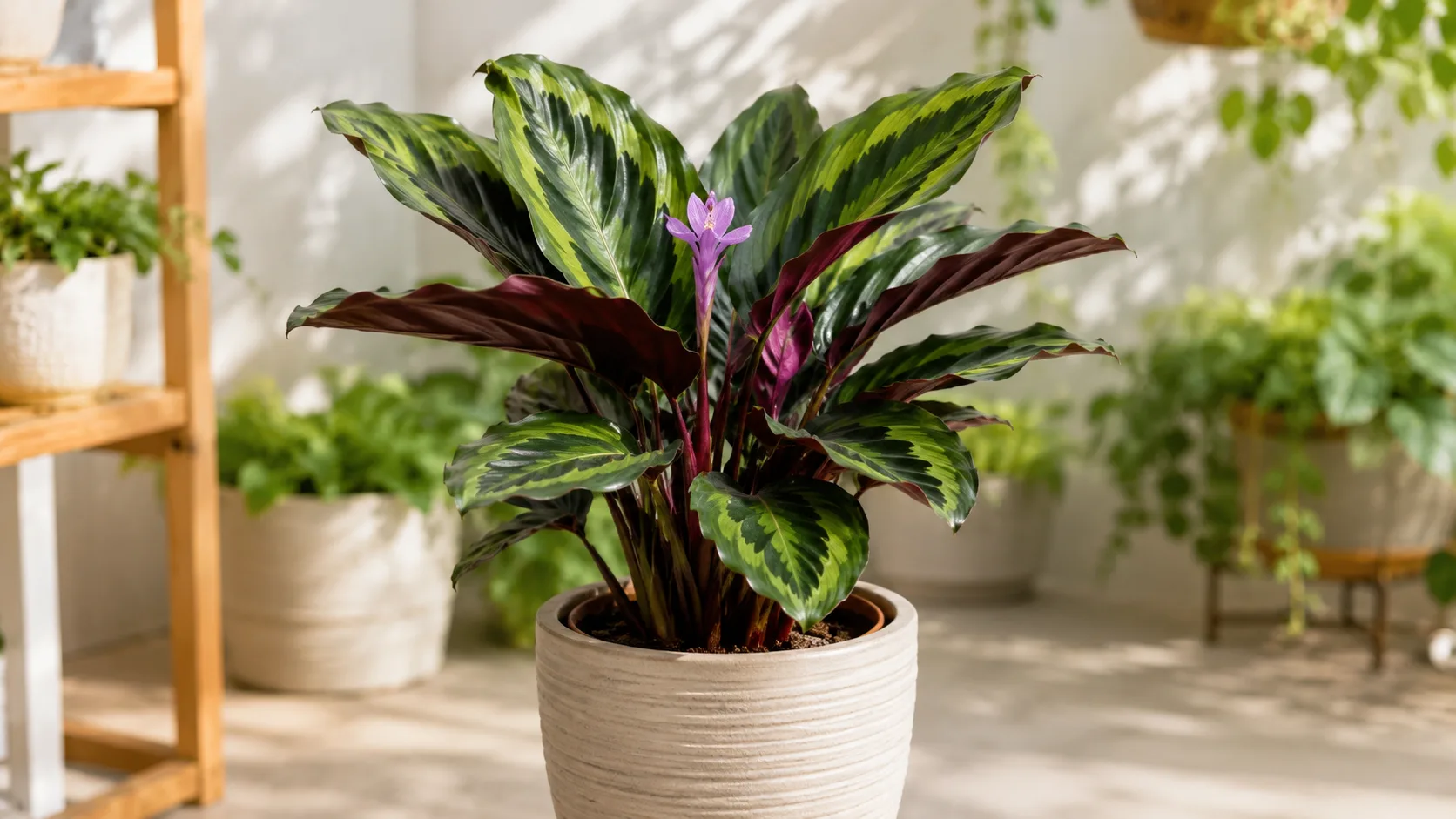
For a home collection, these two plants make an interesting pair. The snake plant can often tolerate a wider range of indoor conditions once it is not overwatered, while the peacock plant asks for steadier moisture and gentler light. Grouping them visually is fine; giving them identical watering schedules is not.
A Strange Rhipsalis and a Philodendron Diva
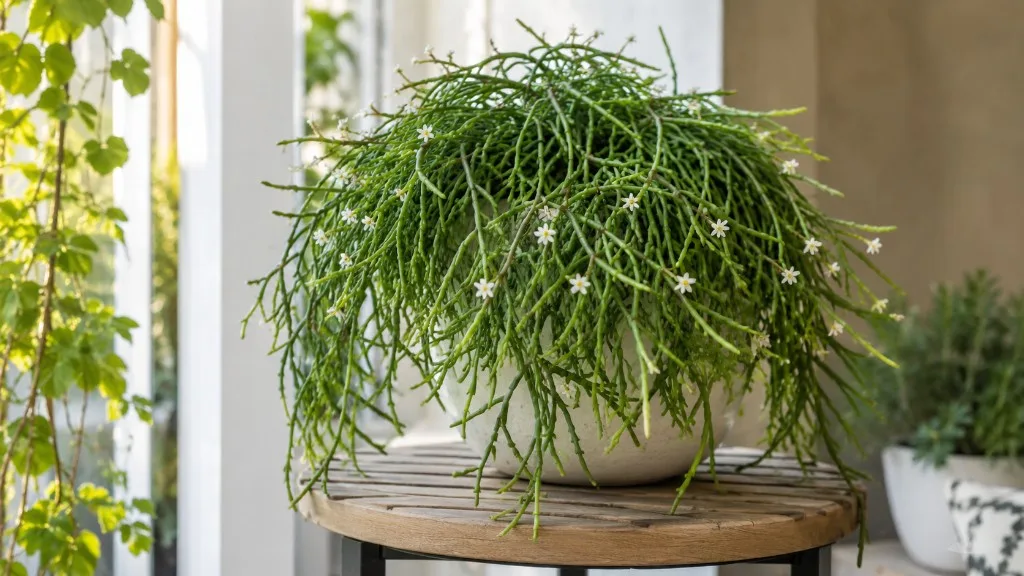
The tour’s unusual plant is Rhipsalis pilocarpa, a slender, branching cactus that looks more like a living tassel than the spiky desert plant many people expect. Rhipsalis belongs to the group of tropical or epiphytic cacti that generally appreciate more even moisture and humidity than classic arid cacti, so its presence adds both visual contrast and a useful reminder not to care for every cactus the same way.
MissLeidy’s treasured Philodendron plowmanii is described as a diva, and that nickname captures the collector’s relationship with a prized plant better than a generic care paragraph could. The plant is valuable to her because it has a story and a presence, not simply because it is rare or expensive.
The RHS philodendron guide notes that philodendrons vary widely in leaf shape and growth habit, and that many prefer bright, indirect light with a moisture-retentive but well-drained mix. It also warns that philodendron sap can irritate skin and that the plants should be kept away from children and pets, a practical consideration in any large collection.
Monstera Adansonii, El Choco Red, and the Fantasy-Leaf Plants
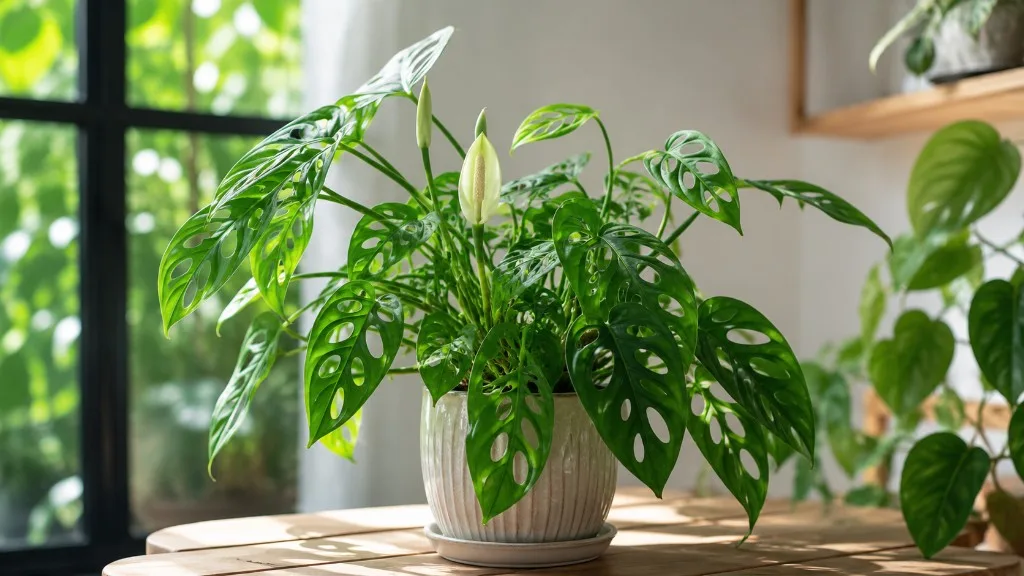
Monstera adansonii is presented as MissLeidy’s first plant, recognizable by its pierced leaves. It is an especially fitting beginning for a collection built around personality: the plant looks dramatic without needing a giant floor footprint, and its vines can be trained, trailed, or propagated as the room evolves.
The bedroom propagation station gives the collection a second layer. Alongside favorite plants, the tour highlights Philodendron ‘El Choco Red,’ named for the chocolatey or reddish color on the backs of its leaves, and Thaumatophyllum spruceanum, a sculptural plant that looks almost prehistoric when it matures.
The exact labels in a houseplant tour can be difficult to independently verify from a screen, especially when plants are young, juvenile leaves have not developed their mature shape, or common trade names overlap. That uncertainty does not diminish the tour; it is a good reason for collectors to keep nursery labels, note where a plant came from, and confirm an identification before making care or toxicity decisions.
What a 200-Plant Apartment Actually Requires
A collection this large is a care system disguised as decor. The visible result is a lush room, but behind it are decisions about light, potting media, drainage, pests, watering order, pruning, transport, and the amount of time the owner can realistically give the plants.
It also requires accepting that not every plant will look perfect at the same time. A new arrival may need quarantine, a recently moved plant may pause, and a favorite can still develop brown edges or lose an old leaf. A serious collection is not a showroom frozen at its best angle; it is a living set of trade-offs managed over months and seasons.
The workload is easier to understand when it is broken into passes. A quick pass catches wilt, fallen leaves, and visible pests; a weekly pass checks moisture and rotates plants; a slower monthly pass cleans foliage, prunes, inspects roots when needed, and updates the collection log. That rhythm keeps small problems from becoming a 200-pot emergency.
Match Plants to Windows, Not Vibes
Start with the apartment’s light map, then choose plants that fit each zone. A plant may look perfect on a dark console in a photograph, but if the window is several feet away or filtered by buildings and curtains, it may slowly stretch, fade, drop leaves, or stop producing healthy new growth.
The Iowa State houseplant guide recommends treating light, soil, containers, temperature, humidity, water, and fertilizer as a connected system. Its practical warning is worth borrowing: south- and east-facing windows are often bright, but direction alone does not tell you how much light a plant receives because distance, glass, coverings, and outdoor obstructions all matter.
Use the brightest windows for plants that need strong growth, place tolerant foliage farther back, and reserve the darkest corners for objects or for plants only after you have confirmed they can handle the conditions. If a room cannot supply enough natural light, supplemental lighting may be the honest fix; moving in another plant is not.
New York apartments also change character through the year. A sunny summer window can become a cold, dry, low-light edge in winter, while a heating vent can turn a previously comfortable corner into a fast-drying microclimate. Recheck placement after seasonal changes instead of assuming that a plant that thrived in July will want the same distance from glass in January.
Build a Care System Before Buying Another Plant
Large collections become manageable when the owner stops treating every pot as a surprise. Group plants by broad care needs, not by botanical family alone: plants that like to dry more between waterings can share one inspection route, while moisture-loving tropicals can form a separate group that receives closer attention.
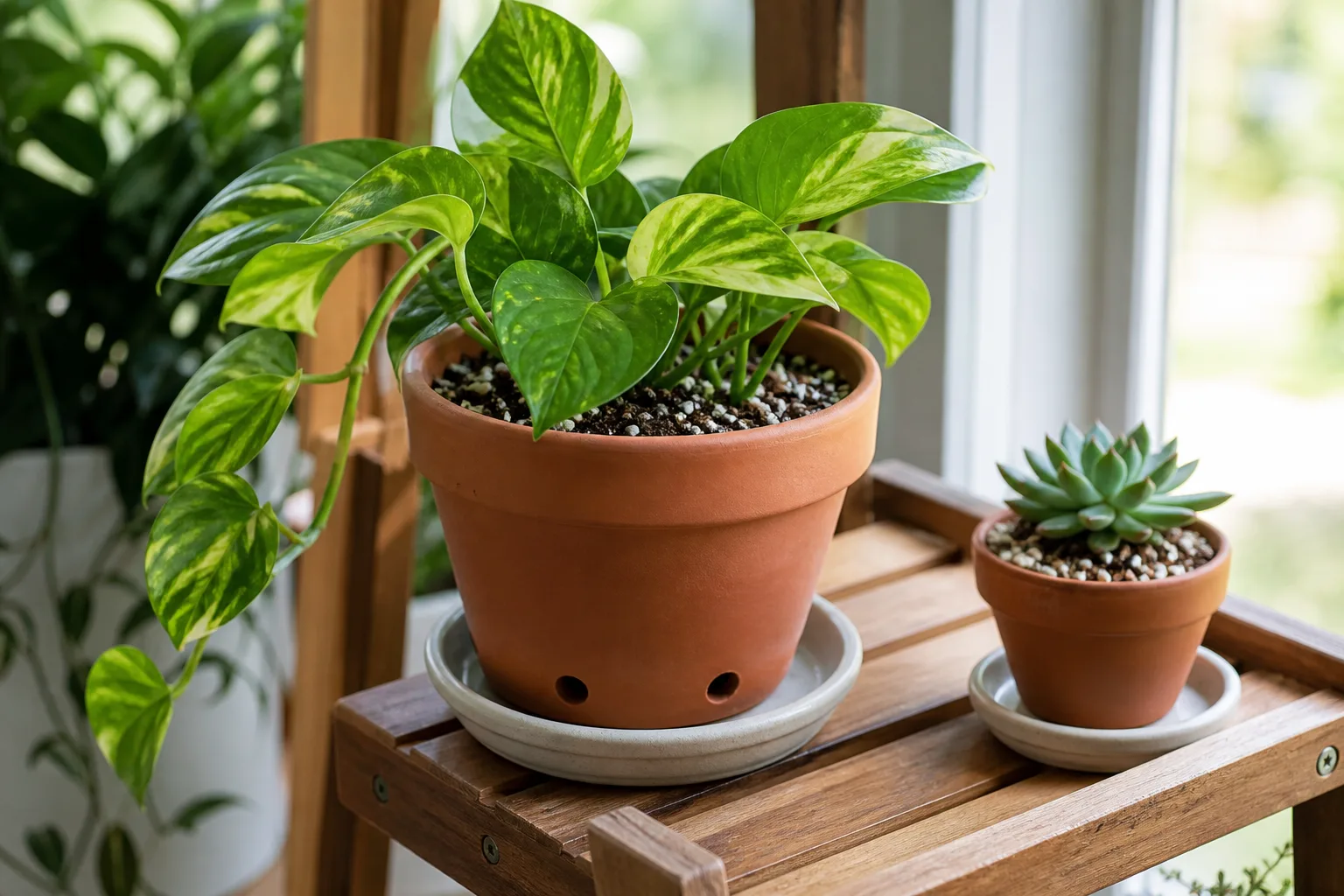
UF/IFAS makes the same point in its guidance on indoor gardens: the easiest groupings contain plants with compatible light, water, soil, and nutrient needs. That does not mean every plant on one shelf must be identical, but it does mean a shelf should not force a dry-soil succulent, a thirsty fern, and a moisture-sensitive prayer plant into one automatic routine.
Keep the system visible. A simple plant log can record the date of the last thorough watering, recent fertilizer, pest checks, repotting, and whether a plant is in quarantine. Water by checking the mix and the plant, not by the calendar; the same room can dry at different speeds depending on pot size, soil structure, light, and airflow.
There are physical constraints too. Use pots with drainage holes or a nursery pot inside a cachepot, protect floors and furniture from runoff, keep heavy containers on stable surfaces, and leave a clear route to windows and exits. Iowa State notes that a gravel layer cannot compensate for a container without drainage, and that a pot that stays wet too long can lead to root loss.
Use Propagation as Pruning, Not Just Multiplication
A propagation station is not merely a cute row of jars. It is a holding area for cuttings, a way to observe roots, a source of gifts, and a practical tool for keeping vigorous plants from swallowing a room.
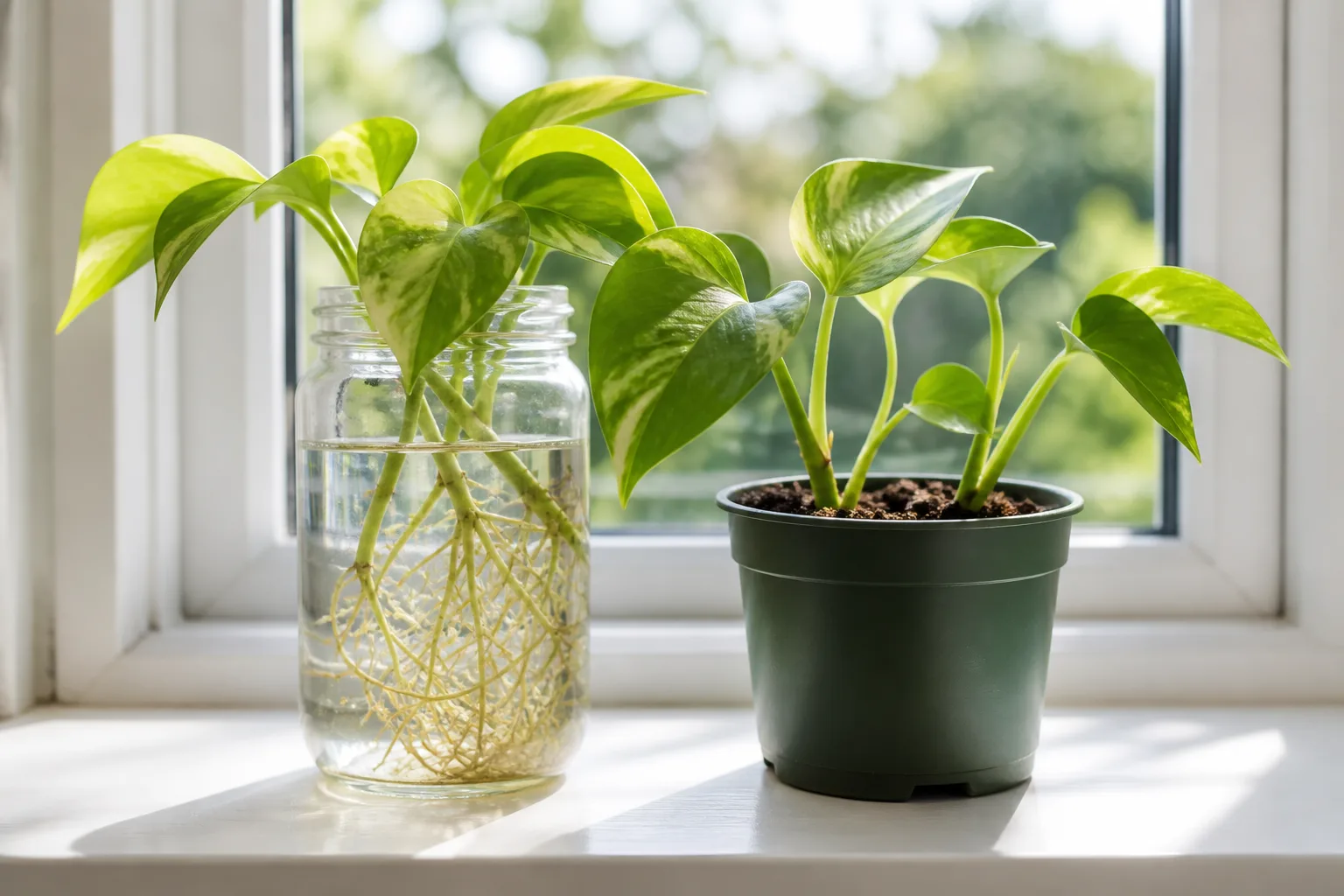
The cleanest way to use propagation in a large collection is to begin with a reason to cut. Remove a stem that has outgrown its support, reduce a plant that blocks a walkway, or make a backup from healthy growth before a move. Then use a clean, sharp tool and confirm that the cutting includes the node or plant structure needed for new growth.
Illinois Extension’s propagation guide explains that vegetative propagation can use cuttings, division, or layering and that clean tools matter. Keep leaves above water when rooting a stem cutting, change stagnant water, give the cutting bright indirect light, and move it into an airy medium once the roots and the plant are ready rather than leaving every cutting in a jar indefinitely.
Propagation is not a free pass to keep every plant forever. If a cutting has no place to live, no recipient, or no clear purpose, it becomes another care obligation. MissLeidy’s station is most useful as a model for a cycle: grow, shape, share, and make room.
Why the Collection Matters Beyond Decor
MissLeidy has described plant care as something that gives her a reason to get up and tend to her space when she is feeling low. That is her experience, not a promise that houseplants will fix anyone’s mental health, but it explains why the collection feels emotionally charged rather than purely decorative.
Plants create small, repeated encounters with time. A new leaf uncurls slowly, a cutting develops roots when nobody is watching, and a plant that looked awkward after a move can settle into a better window. Those moments are modest, but they can make a room feel responsive and lived in.
The collection also holds family memory. The tropical abundance associated with her Cuban grandparents becomes part of the apartment’s atmosphere, while the clean lines and intentional styling reflect the discipline of fashion and design. The result is a home that says something about the person living there before anyone asks how many plants are inside.
There is a useful boundary here for readers who are inspired by the story. Plants can support a routine, a sense of place, and a creative practice, but they are still living responsibilities. If a collection becomes a source of guilt, unsafe clutter, financial strain, or conflict with roommates, the responsible move may be to pause purchases, rehome plants, or simplify the care load.
What Readers Can Borrow From MissLeidy’s Approach
You do not need 200 plants, a Brooklyn apartment, or a drag persona to borrow the underlying method. Start with the part of the collection that is actually transferable: choose plants for your conditions, make the room functional, and let your reasons for growing guide the look.
For a smaller indoor jungle, try this order:
- Map light before shopping. Photograph each window at morning, midday, and late afternoon so you know which spaces are bright, filtered, or genuinely dim.
- Choose one anchor plant. Pick a specimen with the height or leaf shape you want, then add smaller plants that can share the same broad conditions.
- Build a care lane. Keep a watering can, saucer, cloth, snips, and plant notes together so basic care does not require a scavenger hunt.
- Leave breathing room. Plants need access for watering, inspection, rotation, pruning, and pest isolation; a packed shelf is not automatically a healthy shelf.
- Quarantine new arrivals. Keep a new plant separate long enough to inspect the leaves, stems, and potting mix before placing it among established plants.
- Use pruning to edit the room. Cut back or propagate growth that blocks a path, overwhelms a window, or makes it impossible to reach another plant.
The goal is not to reproduce a photograph exactly. It is to create a home where plants can be dramatic without becoming fragile, expensive, or exhausting to maintain.
One final test is to imagine an ordinary bad day rather than a perfect tour day. Could you reach the back row, notice a mite before it spreads, carry a watering can without stepping over vines, and move a pot if a window suddenly becomes too hot? If the answer is no, reduce density or redesign the shelf before adding another specimen.
Conclusion
MissLeidy The Plant Lady’s 200-plus-plant Brooklyn apartment is compelling because the plants are doing several jobs at once. They are living objects, family references, design material, drag-world storytelling, and daily commitments that keep the home changing.
The most useful lesson is wonderfully practical: abundance works when it has a system. Give plants the light they need, group them by care rather than appearance, keep paths clear, and use propagation to shape the collection instead of letting growth dictate the room. That is how a plant-filled apartment becomes a personal habitat rather than a green pileup.



