Monstera Albo Care Guide: Buying, Light & Reversion
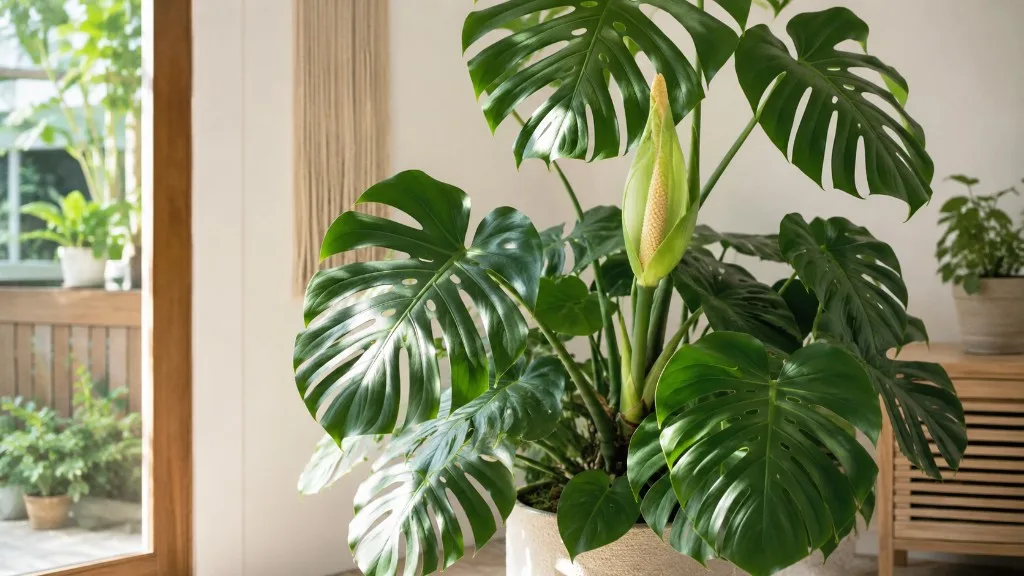
Monstera deliciosa 'Albo Variegata'
Grow Monstera Albo with a buyer checklist, Albo vs Thai comparison, bright filtered light, watering, support, reversion warnings, and pet-safety citations from NC State, Penn State, RHS, ASPCA, and Merck.
Monstera Albo Care Guide: Buying, Light & Reversion
Start with wateringThe most common care mistake for Monstera AlboWatering guide →Monstera Albo care essentials
Light
Water
Every 7–10 days in active growth — allow top 3–5 cm to dry. Water thoroughly. Reduce to every 10–14 days in winter. Avoid chronic overwatering; variegated tissue slows recovery from rot.
Soil
Standard potting mix + 20–25 % perlite + 10–15 % orchid bark. Well-draining chunky aroid mix. pH 5.5–7.0.
Humidity
Temperature
Fertilizer
" | **[Propagation guide](/plants/monstera-albo/propagation/)** | | "Do I need fertilizer or patience?
About Monstera Albo
Monstera Albo has a upright growth habit. It is also known as Monstera Albo Variegata, Albo Monstera, Monstera deliciosa Albo, Monstera deliciosa 'Albo Borsigiana', and Variegated Monstera Albo.
| Detail | Information |
|---|---|
| Also known as | Monstera Albo Variegata, Albo Monstera, Monstera deliciosa Albo, Monstera deliciosa 'Albo Borsigiana', Variegated Monstera Albo |
| Growth habit | Upright |
| Scientific name | Monstera deliciosa 'Albo Variegata' |
Monstera Albo Care Guide: Buying, Light & Reversion
Monstera Albo (Monstera deliciosa ‘Albo Variegata’) is not just a white version of the green Swiss cheese plant. It is a variegated cultivar of the same climbing species, and NC State Extension lists ‘Albo Variegata’ as a rare, expensive variegated cultivar of Monstera deliciosa. The care challenge is simple but unforgiving: give the plant enough filtered light to support white-and-green growth without exposing the white sectors to harsh direct sun.
Use this overview as the decision page before you buy, move, water, prune, or propagate an Albo. For the detailed how-to, branch into the focused Monstera Albo light guide, watering guide, soil guide, propagation guide, or pruning guide when that specific problem is the next bottleneck.
Author: sai-ananth · Reviewer: LeafyPixels Review Board · Reviewed: 2026-07-04
What Monstera Albo is
Monstera Albo is a variegated form of Monstera deliciosa, a woody evergreen climbing aroid. The species is native from Mexico to Panama, and NC State describes it as a climbing vine that can stay around 6 to 8 feet in most home environments even though it grows much larger outdoors. That climbing habit matters indoors because an Albo without stable support usually sprawls, leans, and stays in smaller juvenile growth longer.
The white pattern is the reason people pay collector prices, but it is also the reason the plant behaves differently. RHS explains that white areas of variegated leaves do not contain chlorophyll, and that white-variegated plants tend to be slower growing and need a bright position to capture enough light. For Albo, that means the goal is not maximum sun; it is bright filtered light with enough green tissue left on the plant to feed future growth.
Albo vs Thai Constellation vs green deliciosa
Green Monstera deliciosa is the baseline: faster, more forgiving, and less sensitive to small placement mistakes. It still wants support, warmth, and drainage, but it has more green leaf area working for it. If you want the species-level comparison, start with the Monstera deliciosa overview.
Monstera Albo usually shows sharper white blocks, marbling, or half-moon sectors on leaves and stems. Thai Constellation usually shows cream speckling and shorter internodes; Penn State Extension describes Thai Constellation as fuller and more compact because of shorter internodes. For shoppers, Albo is the higher-inspection purchase because future growth depends on the stem and node, not just the most photogenic leaf.
Before you buy: the Albo inspection checklist
| Check | Better signal | Risk signal |
|---|---|---|
| Identity | Labeled Monstera deliciosa ‘Albo Variegata’ | Generic “variegated monstera” with no species |
| Stem | Green and pale striping near an active node | Seller shows only a leaf, no node or stem |
| Newest growth | Balanced green and white, firm texture | Repeated all-white leaves or recent all-green growth |
| Roots | Firm roots, clean smell, airy mix | Sour smell, wet heavy mix, mushy aerial roots |
| Pests | Clean petioles and undersides | Webbing, sticky residue, scale bumps, thrips scars |
A leaf-only cutting is not a future vine. Monstera is propagated through stem cuttings or air layering, not by rooting a detached leaf blade. For Albo specifically, practical grower inspection adds one more filter: the cutting should include a viable node and enough green-and-pale stem tissue to make balanced future growth plausible.
Light: bright, filtered, and gradual
Light is the main Albo care lever. NC State recommends moderate brightness but not direct sunlight for M. deliciosa and notes that variegated cultivars need more sunlight than darker green cultivars. Penn State gives the same practical indoor direction: bright light near a sunny window, but not direct sun.
Place Albo near an east window, a few feet back from a bright south or west window, or behind a sheer curtain where the plant sees strong ambient light without hot glass exposure. Wisconsin Horticulture notes that Monstera does not develop leaf perforations when light is inadequate and warns that plants moved outdoors need gradual acclimation to higher light or they can sunburn. That is the model indoors too: move an Albo brighter in steps, then judge the newest leaf.
Use symptoms instead of a fixed number. Smaller, greener, wider-spaced new leaves point toward weak light or poor support. Brown crispy patches on white sectors point toward harsh sun, heat, or dry-root stress. If you need window-by-window placement and grow-light troubleshooting, use the Monstera Albo light guide.
Watering and root health
Albo watering should be boring: soak thoroughly, let the top layer dry, and do not water again because a calendar says so. Penn State recommends watering Monstera thoroughly and letting the top 1 to 2 inches of soil dry between waterings, while NC State recommends allowing the top quarter to one-third of the container to dry on larger specimens. In a typical indoor Albo pot, that usually becomes a top 3-5 cm check plus a pot-weight check.
The variegation changes the risk calculation. A green deliciosa can often replace a damaged leaf quickly in strong conditions; Albo is slower, so root mistakes cost more time. Yellowing while the mix stays wet, a sour pot smell, or soft roots should send you to the Monstera Albo watering guide before adding fertilizer or moving the plant into stronger sun.
Soil, pot, humidity, and temperature
Use a chunky, oxygen-rich aroid mix. Penn State recommends a well-draining soilless mix rich in organic matter and says bark or perlite can be added to a purchased mix. For Albo, the practical target is a mix that holds enough moisture for aerial-root growth but drains fast enough that the root ball is not sitting wet in low light.
Warmth and humidity reduce cosmetic damage on white tissue. NC State lists a 60-85°F range and high humidity for M. deliciosa, and Penn State says Monstera prefers humidity above 50%. If winter heat drops your room below that, expect more brown edges on pale sectors and slower recovery after watering mistakes. For exact mix ratios, pot sizing, and drainage tests, use the Monstera Albo soil guide.
Moss poles and mature leaves
Albo is a climbing vine, not a self-supporting floor shrub. NC State says sturdy support is necessary to prevent stems from breaking, and Wisconsin recommends a tree-bark or moss-covered support for aerial roots to attach to. A pole does not magically create fenestrations, but it gives the vine the structure it expects.
Install support before the stem becomes heavy and awkward. Tie the vine below nodes with soft ties, keep the pole lightly moist when you water, and avoid cutting healthy aerial roots just because they look untidy. If the plant is older but still producing small, unsplit leaves, improve light and support before assuming it needs more fertilizer.
Reversion, all-white leaves, and pruning decisions
Reversion is the Albo anxiety topic, but the safest wording is conservative. RHS says a variegated plant reverting to all green is often a sign that light levels are too low. In Albo, growers also watch stem striping because future leaves emerge from nodes, not from the pattern on an older leaf.
If one leaf comes in greener, do not panic-prune the same day. First stabilize filtered brightness, watering, and support. If several consecutive nodes push all-green growth from a previously variegated vine, then use the Monstera Albo pruning guide to decide whether to cut back to a node that still shows variegation. Repeated all-white growth is the opposite problem: it may look valuable, but without enough green tissue the plant has less photosynthetic capacity.
Propagation: node first, leaf second
The reliable home methods are stem cuttings and air layering. NC State lists layering and stem cutting as propagation methods for M. deliciosa, and the University of Minnesota Extension shows Monstera propagation from a cutting that includes a node and aerial root. That node requirement is why leaf-only Albo listings are risky.
For Albo, choose a cutting with at least one viable node, firm tissue, and a visible mix of green and pale striping on the stem. A highly variegated leaf can be a selling point, but it does not guarantee future variegation if the node has poor balance. Use the Monstera Albo propagation guide before cutting a premium vine.
Toxicity and household fit
Monstera Albo is not a good pet-accessible plant. The ASPCA lists Swiss cheese plant (Monstera deliciosa) as toxic to cats and dogs, with insoluble calcium oxalates and signs including oral irritation, drooling, vomiting, and difficulty swallowing. Merck Veterinary Manual explains that chewing insoluble oxalate plants releases needle-like raphides that irritate tissue.
Keep the plant out of reach of pets and children, especially because a climbing Albo often sits on a pole where dropped leaves, trimmings, and aerial roots may be accessible. UF/IFAS also identifies Monstera deliciosa as a poisonous houseplant and notes that all Monstera species and plant parts are toxic to dogs, cats, and humans even though ripe fruit is a special outdoor exception. If a pet chews the plant, contact your veterinarian or ASPCA Animal Poison Control.
First 30 days after bringing Albo home
Do less than you want to do. Quarantine the plant, set it in bright filtered light, and learn the dry-down speed before repotting. Do not stack repotting, pruning, fertilizer, and a major light change into the same weekend.
Week one is for placement and pest checks. Week two is for measuring how long the top 1-2 inches take to dry. Week three is for watching the newest leaf for burn, greener growth, or stress. Week four is when you can decide whether the mix truly needs replacing or whether the plant simply needed stability.
Seasonal care rhythm
| Season | What changes | First adjustment |
|---|---|---|
| Spring | Growth resumes and repotting is safer | Increase checks; repot only if roots or mix justify it |
| Summer | Sun intensity rises | Filter hot windows before white sectors crisp |
| Fall | Day length drops | Reduce watering frequency as dry-down slows |
| Winter | Light is weakest indoors | Consider supplemental light before adding water or fertilizer |
Albo problems often come from treating winter like summer. Lower light slows water use, and variegated tissue already has less chlorophyll to work with. If the plant stalls in winter, improve light and root-zone oxygen before feeding.
When to use this page vs other Monstera Albo guides
Use this page when you need the whole-plant decision: should you buy this Albo, where should it live, what is the likely cause of a new symptom, and which guide should you read next? It is the gateway for care priorities, buying risk, reversion risk, and household safety.
Use the topic guides when one variable is clearly the problem. Choose light for window placement and burn, watering for dry-down and root warnings, soil for mix and drainage, fertilizer for feeding restraint, repotting for pot timing, propagation for node selection, and pruning for reversion decisions.
Conclusion
Choose Monstera Albo if you can give it bright filtered light, a stable climbing support, a chunky root zone, and patience with slower growth. Pass or choose green deliciosa if the only available spot is dim, pet-accessible, or blasted by direct afternoon sun.
The first move is not fertilizer or a bigger pot. Put the plant in filtered brightness, water only after the top layer dries, inspect the newest leaf, and make one change at a time. That care style protects the expensive parts of Albo: the roots, the growing node, and the balance of green and white tissue that future leaves depend on.
How to care for Monstera Albo?
When should you water Monstera Albo?
Every 7–10 days in active growth — allow top 3–5 cm to dry. Water thoroughly. Reduce to every 10–14 days in winter. Avoid chronic overwatering; variegated tissue slows recovery from rot.
- Check top 2 inches - Every 7–10 days in active growth — allow top 3–5 cm to dry.
- Drain excess water - Water thoroughly.
What soil works best for Monstera Albo?
Standard potting mix + 20–25 % perlite + 10–15 % orchid bark. Well-draining chunky aroid mix. pH 5.5–7.0.
- Well-draining mix - Well-draining chunky aroid mix.
Grower notes for Monstera Albo
Chimeric variegation is the appeal and the risk
Monstera Albo is grown for large white-and-green sectors on a variegated Monstera deliciosa vine. White leaf areas have less chlorophyll, and RHS explains that white variegated tissue cannot capture light the way green tissue does, so variegated plants tend to grow more slowly and need brighter placement. Keep Albo in bright filtered light, never harsh window sun, and treat reversion or all-white growth as a practical grower warning rather than a normal upgrade.
Albo vs Thai Constellation is a buying decision
NC State Extension lists both 'Albo Variegata' and 'Thai Constellation' as rare variegated cultivars of Monstera deliciosa. Penn State Extension adds that Thai Constellation is fuller and more compact because of shorter internodes. For Albo, the buyer's inspection is different; look for balanced green and white on recent leaves and visible stem striping near active nodes, not just one high-contrast leaf staged for a seller photo.
The quick care checkpoint
Use this order: light first, watering second, fertilizer last. NC State recommends moderate brightness without direct sun for Monstera deliciosa and says variegated cultivars need more sunlight than darker green cultivars. Place Albo near an east window or behind a sheer curtain in a south/west exposure, water only after the top 3–5 cm dries, and keep the mix chunky enough that oxygen reaches the roots.
What to check before you buy
Choose a plant with firm new growth, clean leaf undersides, roots that do not smell sour, and a stem with both green and pale striping near the newest node. Pass on wet soil in low light, sticky residue, pests, a one-leaf cutting with no visible node, a fully reverted green vine sold at Albo pricing, or repeated all-white leaves without enough green tissue to support growth.
First month at home
Quarantine the plant, keep its support stable, and learn its dry-down speed before repotting. Penn State recommends bright light without direct sun, humidity above 50%, and letting the top 1–2 inches dry between waterings for Monstera. Do not repot, relocate, prune, and fertilize in the same weekend; if the newest leaf browns, first separate light scorch, dry roots, and wet-root yellowing.
Propagation is stem-cutting work, not leaf collecting
NC State and Penn State both describe Monstera propagation by stem cutting or layering. For Albo, practical grower selection adds one more checkpoint; the cutting should include an active node and a stem section with both green and pale tissue. A leaf-only cutting is a decoration, not a future vine, and a node with almost no green tissue is a high-risk purchase even if it roots.
Is it pet safe?
Monstera Albo is toxic to cats and dogs.
Contains insoluble calcium oxalate crystals and other irritants. Ingestion causes oral irritation, intense burning, swelling, drooling, and vomiting in pets. If a pet chews or swallows plant tissue, call your veterinarian or ASPCA Animal Poison Control promptly.
Watering Monstera Albo
Every 7–10 days in active growth — allow top 3–5 cm to dry. Water thoroughly. Reduce to every 10–14 days in winter. Avoid chronic overwatering; variegated tissue slows recovery from rot.
Soil & potting for Monstera Albo
Standard potting mix + 20–25 % perlite + 10–15 % orchid bark. Well-draining chunky aroid mix. pH 5.5–7.0.
Humidity & temperature for Monstera Albo
Fertilizer & pruning for Monstera Albo
Use " | **[Propagation guide](/plants/monstera-albo/propagation/)** | | "Do I need fertilizer or patience? for Monstera Albo.
| Detail | Information |
|---|---|
| Fertilizer type | " | **[Propagation guide](/plants/monstera-albo/propagation/)** | | "Do I need fertilizer or patience? |
Common problems on Monstera Albo
Yellow Leaves
MediumLikely cause: Common on this plant type; confirm with recent watering, light, and root checks.
Quick fix: Inspect the plant and correct the most likely care stressor before stacking treatments.
Full fix guide →Brown Tips
MediumLikely cause: Common on this plant type; confirm with recent watering, light, and root checks.
Quick fix: Inspect the plant and correct the most likely care stressor before stacking treatments.
Full fix guide →Root Rot
MediumLikely cause: Common on this plant type; confirm with recent watering, light, and root checks.
Quick fix: Inspect the plant and correct the most likely care stressor before stacking treatments.
Full fix guide →Overwatering
MediumLikely cause: Common on this plant type; confirm with recent watering, light, and root checks.
Quick fix: Inspect the plant and correct the most likely care stressor before stacking treatments.
Full fix guide →Underwatering
MediumLikely cause: Common on this plant type; confirm with recent watering, light, and root checks.
Quick fix: Inspect the plant and correct the most likely care stressor before stacking treatments.
Full fix guide →Spider Mites
MediumLikely cause: Common on this plant type; confirm with recent watering, light, and root checks.
Quick fix: Inspect the plant and correct the most likely care stressor before stacking treatments.
Full fix guide →Mealybugs
MediumLikely cause: Common on this plant type; confirm with recent watering, light, and root checks.
Quick fix: Inspect the plant and correct the most likely care stressor before stacking treatments.
Full fix guide →Aphids
MediumLikely cause: Common on this plant type; confirm with recent watering, light, and root checks.
Quick fix: Inspect the plant and correct the most likely care stressor before stacking treatments.
Full fix guide →Leggy Growth
MediumLikely cause: Common on this plant type; confirm with recent watering, light, and root checks.
Quick fix: Inspect the plant and correct the most likely care stressor before stacking treatments.
Full fix guide →Slow Growth
MediumLikely cause: Common on this plant type; confirm with recent watering, light, and root checks.
Quick fix: Inspect the plant and correct the most likely care stressor before stacking treatments.
Full fix guide →Wilting
MediumLikely cause: Common on this plant type; confirm with recent watering, light, and root checks.
Quick fix: Inspect the plant and correct the most likely care stressor before stacking treatments.
Full fix guide →Drooping Leaves
MediumLikely cause: Common on this plant type; confirm with recent watering, light, and root checks.
Quick fix: Inspect the plant and correct the most likely care stressor before stacking treatments.
Full fix guide →Low Humidity
MediumLikely cause: Common on this plant type; confirm with recent watering, light, and root checks.
Quick fix: Inspect the plant and correct the most likely care stressor before stacking treatments.
Full fix guide →Not Enough Light
MediumLikely cause: Common on this plant type; confirm with recent watering, light, and root checks.
Quick fix: Inspect the plant and correct the most likely care stressor before stacking treatments.
Full fix guide →Fungus Gnats
MediumLikely cause: Common on this plant type; confirm with recent watering, light, and root checks.
Quick fix: Inspect the plant and correct the most likely care stressor before stacking treatments.
Full fix guide →Mold on Soil
MediumLikely cause: Common on this plant type; confirm with recent watering, light, and root checks.
Quick fix: Inspect the plant and correct the most likely care stressor before stacking treatments.
Full fix guide →