Best Indoor Plants for Apartments With Little Light
Discover the best indoor plants for apartments with little light, including low-light picks, watering tips, placement ideas and common mistakes to avoid.
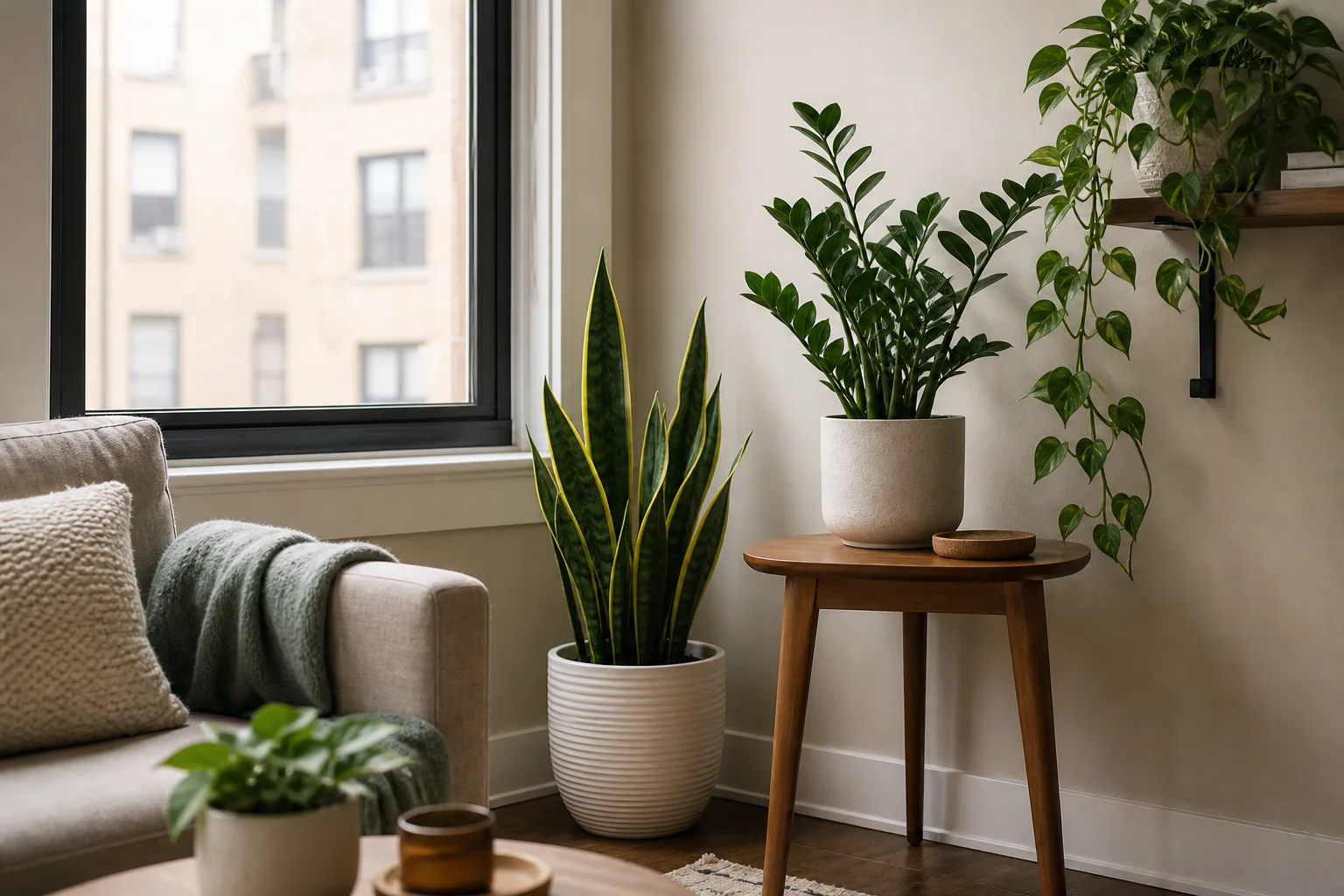
An apartment with little natural light feels like a non-starter for indoor plants. North-facing windows, tall neighboring buildings, tree cover, small rooms, deep floor plans far from windows — any one of these cuts usable light, and many apartments have two or three. The plants below were chosen because they actually work in these conditions, not because they look good in a catalog photo.
Before jumping to the plants, understand one thing: low light is not no light. University of Georgia Extension classifies low-light indoor areas as 25–75 foot-candles for minimum survival and 75–200 foot-candles for decent growth. (UGA Extension) A north-facing windowsill on a clear winter day can measure around 200 foot-candles — barely enough for many plants, but enough for the species on this list.
Quick Answer: The Best Indoor Plants for Low-Light Apartments
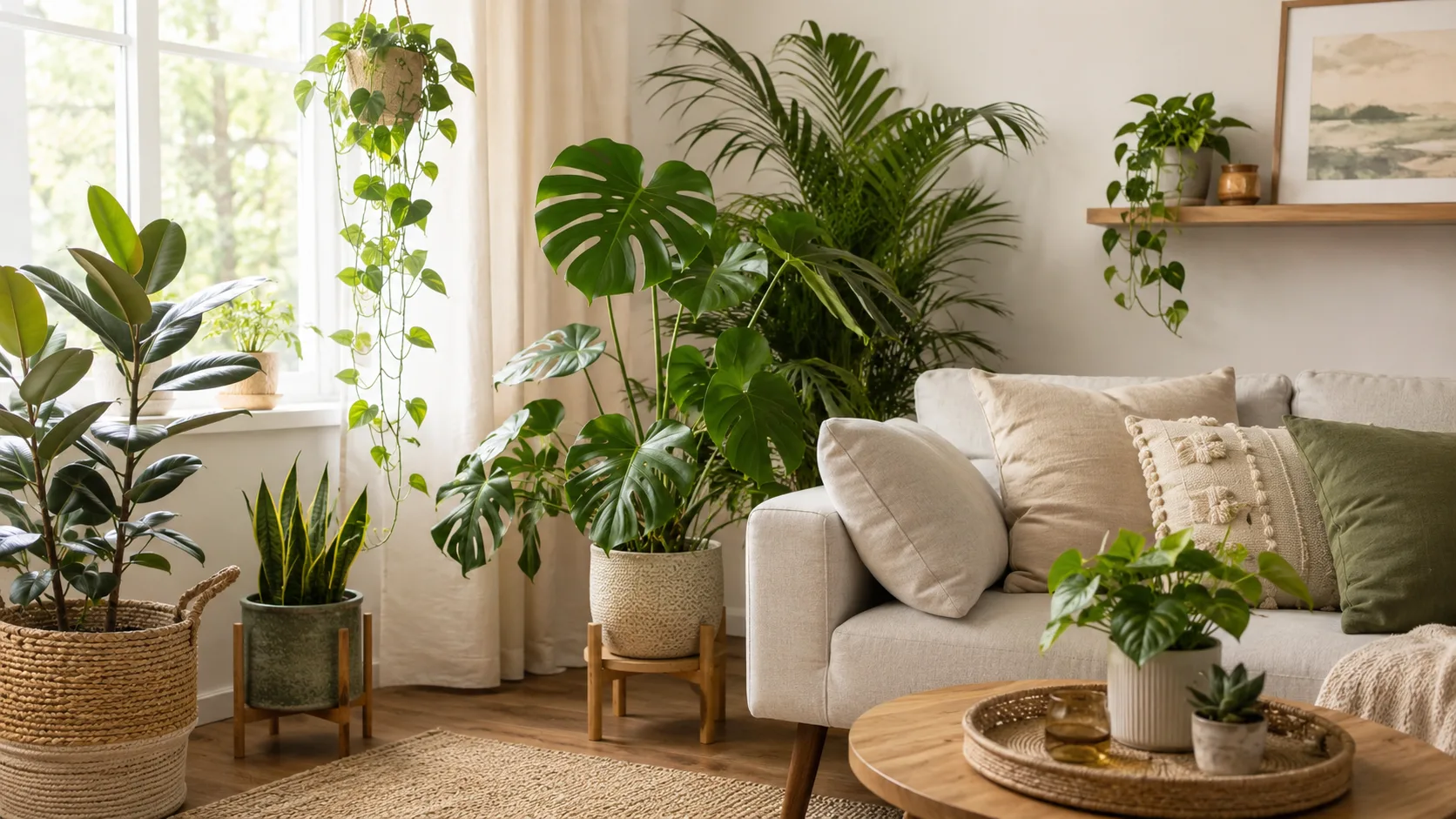
The best indoor plants for apartments with little light are snake plant, ZZ plant, pothos, heartleaf philodendron, peace lily, spider plant, cast iron plant, aglaonema, dracaena, parlor palm, monstera deliciosa, and lucky bamboo.
Start here if you:
- Have a north-facing window or a room far from windows → snake plant, ZZ plant, or cast iron plant
- Want fast trailing greenery for shelves → pothos or heartleaf philodendron
- Have pets and need safer picks → spider plant, parlor palm, or cast iron plant
- Want something that flowers in low light → peace lily
- Want a tall statement plant for a dim corner → dracaena or monstera deliciosa
- Want colorful leaves without bright sun → aglaonema
Iowa State University Extension lists snake plant, pothos, ZZ plant, philodendron, and peace lily among easier houseplants suitable for varied indoor conditions. (Iowa State Yard and Garden) The trick with low-light apartments is matching the plant to the light you actually have — not the light you wish you had.
What Counts as Low Light in an Apartment?
“Low light” gets thrown around loosely. In practical apartment terms, it breaks into three levels that matter:
| Light Level | What It Looks Like | Example Apartment Spots | Plants That Work |
|---|---|---|---|
| Bright indirect | You can read easily, no direct sun hits the plant | East-facing window, a few feet from south/west window | Most plants on this list grow well here |
| Moderate low light | You can read with some effort, shadows are soft | North-facing windowsill, interior wall 4–6 feet from a window | Snake plant, ZZ plant, pothos, philodendron, peace lily, cast iron plant, aglaonema |
| True low light | You’d turn on a lamp to read comfortably | Deep interior room, bathroom with frosted glass, hallway with no window | Snake plant, ZZ plant, cast iron plant — and even these need a grow light long-term |
UGA Extension notes that north-facing windows provide the least light and lowest temperature year-round in the northern hemisphere. (UGA Extension) If you have a north-facing apartment, the windowsill itself is your best plant real estate — every foot you move away from the glass cuts light dramatically.
One myth to kill immediately: no houseplant grows in a windowless room without a grow light. None. Plants that “tolerate low light” are just plants that die slower in dim conditions. For truly dark apartments, a small grow light on a timer opens up significantly more options.
How to Choose the Right Plant for Your Apartment Light
Before buying, answer three questions honestly:
1. What direction do your windows face, and what’s outside them? South and west windows get the most light. East windows get gentle morning sun. North windows get the least. But a north window with no buildings or trees blocking it can still support more plants than a south window facing a brick wall three feet away. Your actual light matters more than window direction on paper.
2. How many feet from the nearest window is the spot? Light drops off fast with distance. A plant on a north-facing windowsill gets roughly 200 foot-candles. Move it six feet into the room and you’re down to 25–50 foot-candles — the survival threshold for even the toughest species.
3. Is the air dry from heating or AC? Most apartments in North America run forced-air heating in winter and air conditioning in summer. Both dry the air. Low-light plants from tropical origins — calathea, fern, peace lily — will show crispy leaf edges in dry air even when the light is right. If your apartment runs dry, stick with the tougher species: snake plant, ZZ plant, pothos, cast iron plant.
For a visual comparison before you dive into the list, the table below matches each plant to its apartment sweet spot:
| Plant | Minimum Light | Watering Forgiveness | Pet Safety | Best Apartment Spot |
|---|---|---|---|---|
| Snake plant | True low light | Very high | Toxic | Anywhere with ambient light |
| ZZ plant | True low light | Very high | Toxic | Darkest corners, offices |
| Pothos | Moderate low light | High | Toxic | Shelves, hanging baskets |
| Heartleaf philodendron | Moderate low light | High | Toxic | Bookshelves, cabinets |
| Peace lily | Moderate low light | Moderate | Toxic/irritating | North-facing windowsill |
| Spider plant | Bright indirect to moderate | Moderate–high | Non-toxic | Hanging near a window |
| Cast iron plant | True low light | High | Non-toxic | Dark corners, hallways |
| Aglaonema | Moderate low light | Moderate | Toxic | Desks, side tables |
| Dracaena | Moderate low light | Moderate–high | Toxic | Floor plant in dim rooms |
| Parlor palm | Moderate low light | Moderate | Non-toxic | Living room corners |
| Monstera deliciosa | Bright indirect to moderate | Moderate | Toxic | Near east or shaded south window |
| Lucky bamboo | Moderate low light | High (in water) | Toxic | Desks, bathrooms |
The 12 Best Indoor Plants for Apartments With Little Light
1. Snake Plant
Minimum light: True low light — survives 25–75 foot-candles
Best apartment spot: Anywhere with some ambient daylight; next to a north window, on the floor in a living room, bedroom corners
Watering forgiveness: Extremely high — water every 2–4 weeks, less in winter
Pet safety: Toxic to cats and dogs per ASPCA if chewed
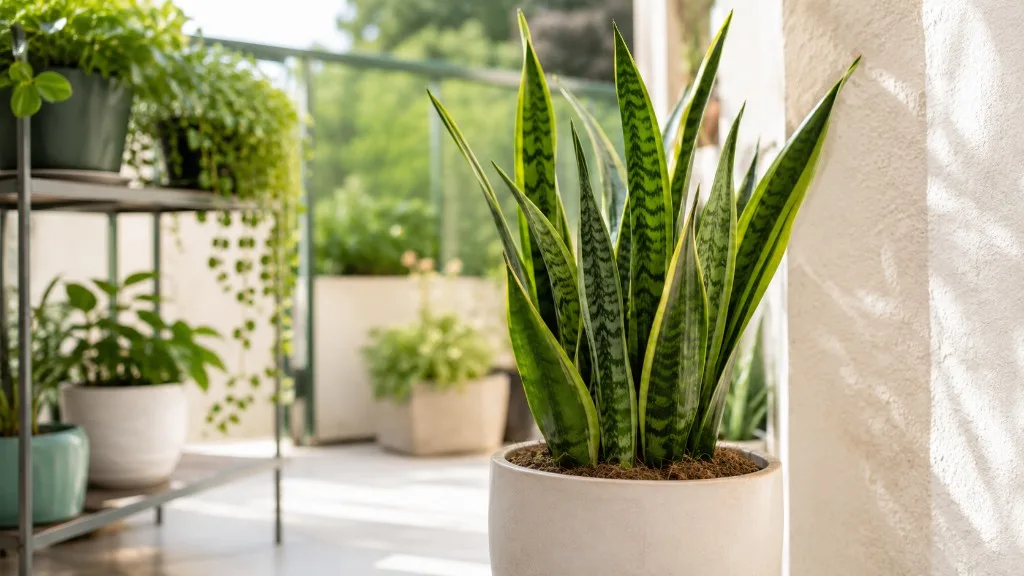
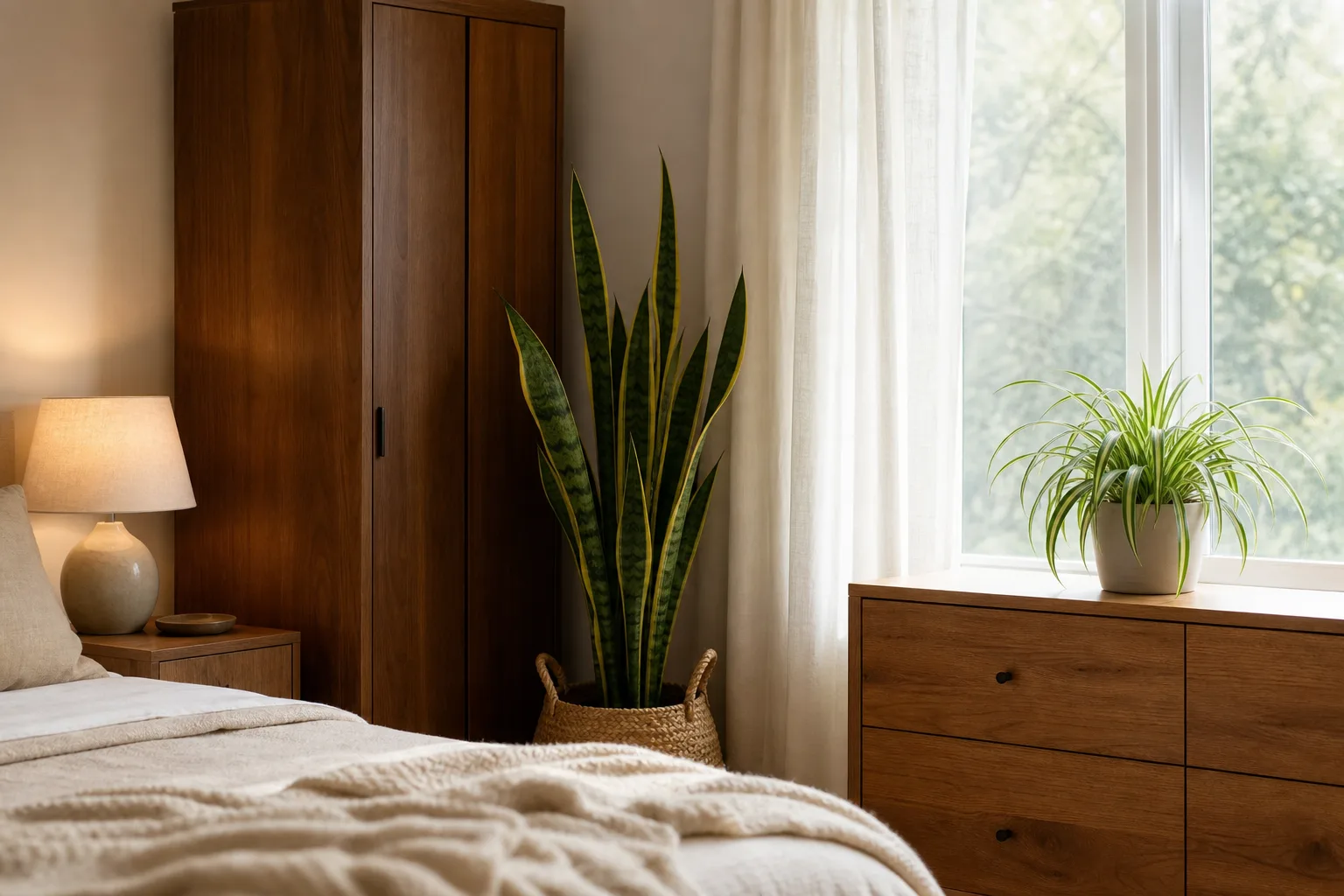
Snake plant is the closest thing to a plant that thrives on neglect in dim apartments. Its upright, sword-like leaves store water and handle the low foot-candle levels common in north-facing rooms and interior spots. UGA Extension classifies snake plant (Sansevieria, now Dracaena trifasciata) as a low-light species that tolerates 25–75 foot-candles minimum. (UGA Extension)
Why it works in apartments: Architectural shape fills vertical space without spreading wide — useful in cramped apartments. It tolerates dry forced-air heat better than most tropical foliage plants. It does not outgrow its pot quickly, so you will not need to repot often.
Care tip: Use a pot with drainage holes and gritty, fast-draining mix. Snake plant rots in soggy soil faster than almost any other houseplant. Water thoroughly, then let the soil go bone-dry between drinks — in low-light winter months, that might mean once a month or less.
Common mistake: Watering on a calendar instead of checking soil. In a dim apartment, snake plant in winter might need water every 4–6 weeks, not every weekend. When in doubt, wait another week.
Useful care guides:
2. ZZ Plant
Minimum light: True low light — survives 25–75 foot-candles, tolerates fluorescent office light
Best apartment spot: Darkest corners, interior bathrooms with no windows (with occasional light), home offices
Watering forgiveness: Extremely high — thick rhizomes store water for weeks
Pet safety: Toxic to cats and dogs if chewed
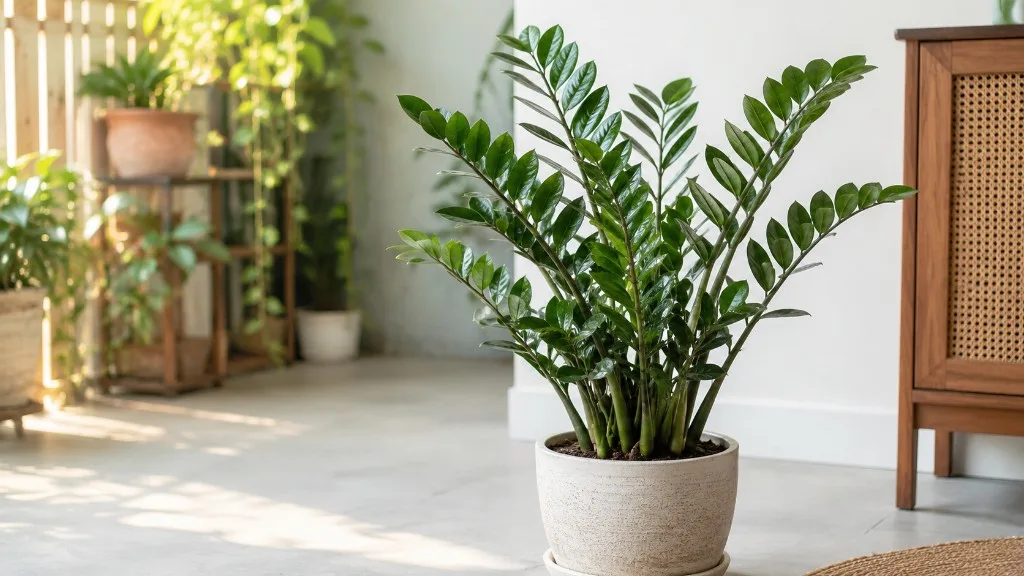
ZZ plant keeps glossy, polished-looking leaflets even when most other plants would be yellowing and dropping. Its underground rhizomes act like water reservoirs, which is why it handles both dim light and infrequent watering better than almost any plant on this list.
Why it works in apartments: Slow growth means it stays the size you bought it for years — no sudden takeover of your studio apartment. The glossy leaves look healthy even in corners where nothing else grows. It tolerates artificial office lighting better than most plants, making it the best pick for a windowless home office with fluorescent or LED ceiling lights on during work hours.
Care tip: Lift the pot to check weight — a dry ZZ feels significantly lighter than a recently watered one. This is more reliable than poking the soil in a deep pot. Water only when the pot feels light and the top few inches are dry.
Common mistake: Overwatering because the leaves still look fine. ZZ plant rots from the bottom up when rhizomes sit in wet soil. If stems turn yellow and mushy at the base, you have watered too often — not too little.
Useful care guides:
3. Pothos
Minimum light: Moderate low light — needs 75+ foot-candles for decent growth
Best apartment spot: Shelves, hanging baskets, top of kitchen cabinets, trailing across a bookshelf
Watering forgiveness: High — droops when thirsty but rebounds quickly after watering
Pet safety: Toxic to cats and dogs if chewed
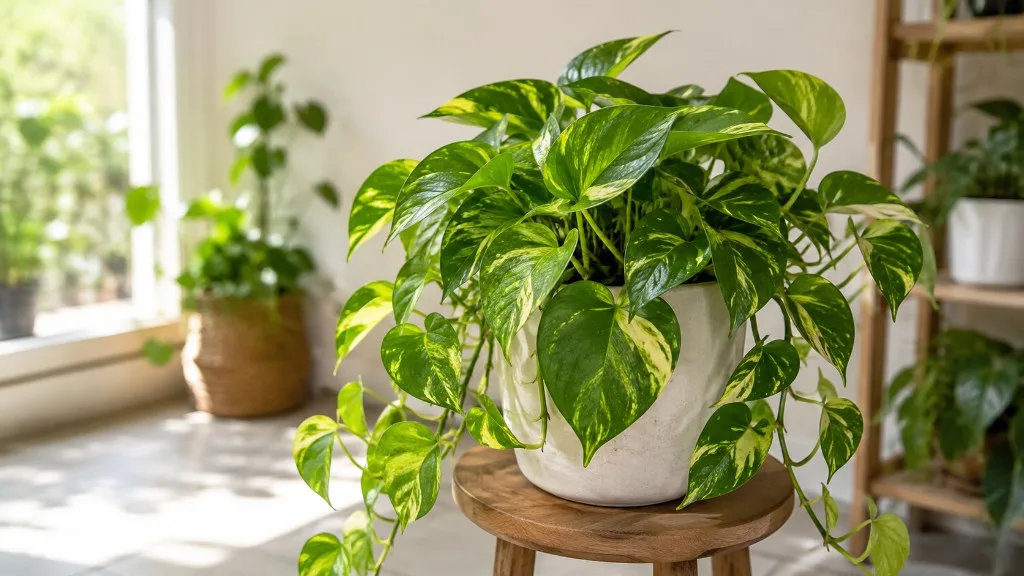
Pothos is the apartment renter’s best friend because it grows fast, trails beautifully, and gives you visible “I’m thirsty” signals. When the leaves droop slightly, water it. When they perk back up within hours, you know you got it right. No guessing. Popular varieties like golden pothos, marble queen, and neon pothos all work in moderate low light, though variegated types may fade toward solid green in dimmer spots.
Why it works in apartments: Fast, visible growth delivers satisfaction quickly — important when you are starting out and want proof that something is alive and happy. The trailing habit uses vertical space (shelves, hanging planters) instead of floor space, which matters in small apartments. Cuttings root easily in water, so one plant can become several for free.
Care tip: Trim long, sparse vines back to a node to encourage fuller growth near the pot. If the leaves are getting smaller and farther apart as the vine grows, the tip is reaching for light — either move it closer to a window or trim it back.
Common mistake: Keeping the soil constantly wet because pothos “looks tropical.” Let the top half of the soil dry out between waterings. Soggy soil leads to yellow leaves and root rot faster than underwatering.
Useful care guides:
4. Heartleaf Philodendron
Minimum light: Moderate low light — similar to pothos
Best apartment spot: Bookshelves, cabinet tops, macramé hangers, trailing down a dresser
Watering forgiveness: High — similar forgiving profile to pothos
Pet safety: Toxic to cats and dogs if chewed
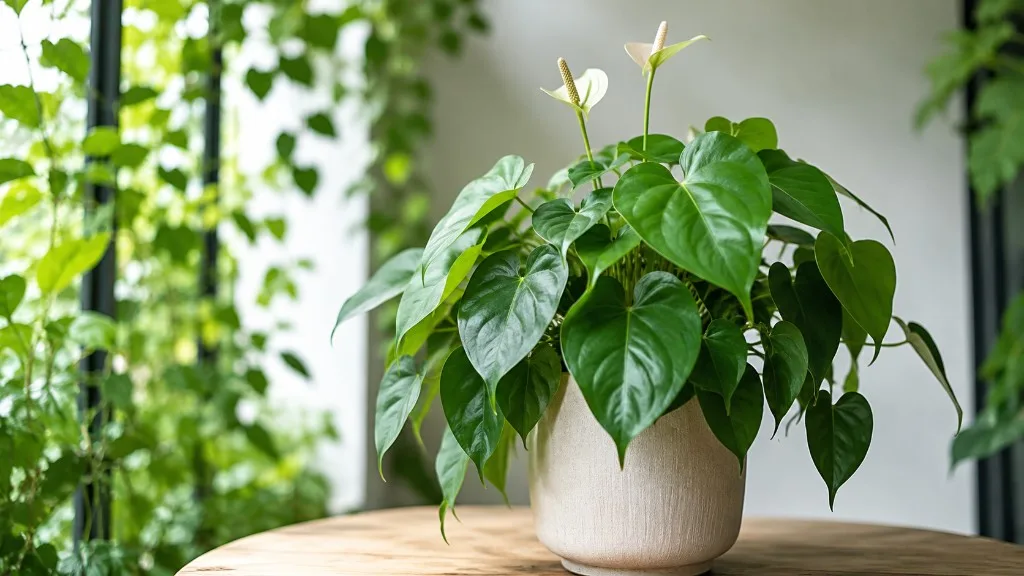
Heartleaf philodendron is pothos’s softer, more delicate-looking cousin. The leaves are smaller and truly heart-shaped, and the vines are thinner. It trails as reliably as pothos but gives a different visual texture — useful if you want variety across shelves in the same room without doubling maintenance complexity.
Why it works in apartments: Same trailing, forgiving, low-light benefits as pothos with a different look. Both plants share nearly identical care needs, so you can treat them the same way without juggling different watering schedules. It handles the average temperature swings in apartments — from summer AC to winter heating — without reacting dramatically.
Care tip: If the leaves develop yellow halos or brown edges, the apartment air is likely too dry or the plant is getting hit by a draft from a heating vent or AC unit. Move it away from direct airflow and consider grouping it with other plants to raise local humidity slightly.
Common mistake: Placing it within pet reach. Heartleaf philodendron is toxic if chewed, and its trailing vines are exactly the kind of dangling thing cats go after. Hang it high or choose spider plant if pets are part of the household.
Useful care guides:
- Heartleaf philodendron care guide
- Philodendron watering guide
- Philodendron light guide
- Philodendron propagation guide
5. Peace Lily
Minimum light: Moderate low light — tolerates surprisingly dim spots, but blooms better with medium indirect light
Best apartment spot: North-facing windowsill, a few feet from an east window, bedroom or living room floor near ambient light
Watering forgiveness: Moderate — wilts dramatically when thirsty but recovers fast
Pet safety: Toxic and irritating to cats and dogs if chewed
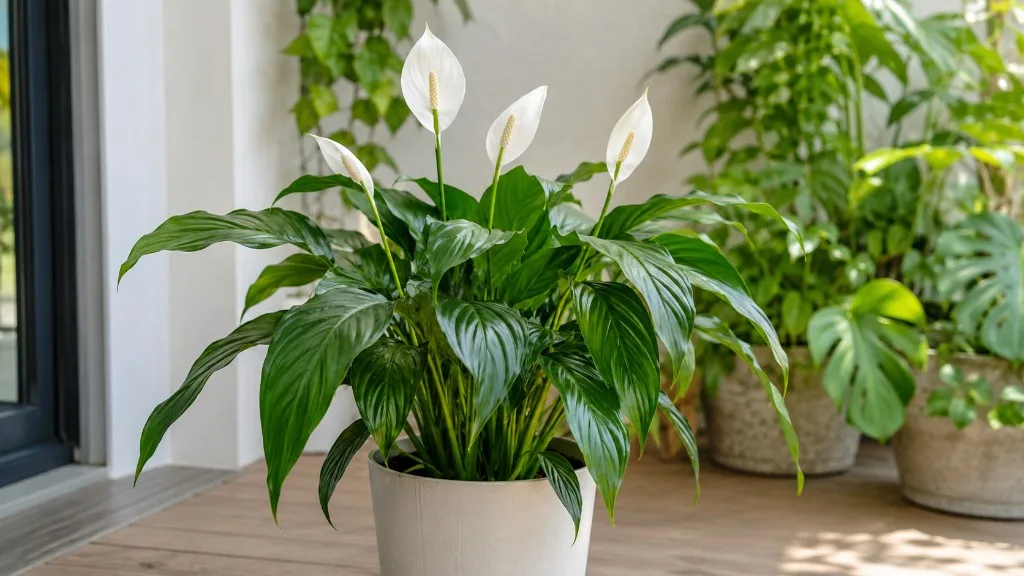
Peace lily is one of the few plants that reliably produces flowers in lower-light apartments. The white “flowers” are actually modified leaves (spathes), but they look elegant and last for weeks. The plant’s dramatic wilt is actually a feature for apartment dwellers — it is impossible to miss when it needs water, and it usually perks back up within a day of a thorough drink.
Why it works in apartments: The visible wilt signal is a built-in reminder system for people who forget to check soil. It is one of the few flowering options that works in a north-facing apartment without a grow light. The glossy dark green leaves look polished even when the plant is not blooming.
Care tip: Water before the plant reaches full dramatic wilt. Repeated wilting stresses the plant over time and can lead to brown leaf tips. When the leaves just barely start to dip, water thoroughly and let it drain completely. Never let it sit in a saucer of standing water.
Common mistake: Assuming it is as drought-tolerant as snake plant or ZZ plant because it survives low light. Peace lily needs more consistent moisture than those two — it will not forgive a three-week dry spell the way a ZZ plant will.
Useful care guides:
6. Spider Plant
Minimum light: Bright indirect to moderate — prefers more light than snake plant or ZZ plant
Best apartment spot: Hanging basket near a window, shelf in a moderately bright room
Watering forgiveness: Moderate–high — thick, tuberous roots store water
Pet safety: Non-toxic to cats and dogs per ASPCA; chewing may still cause mild stomach upset
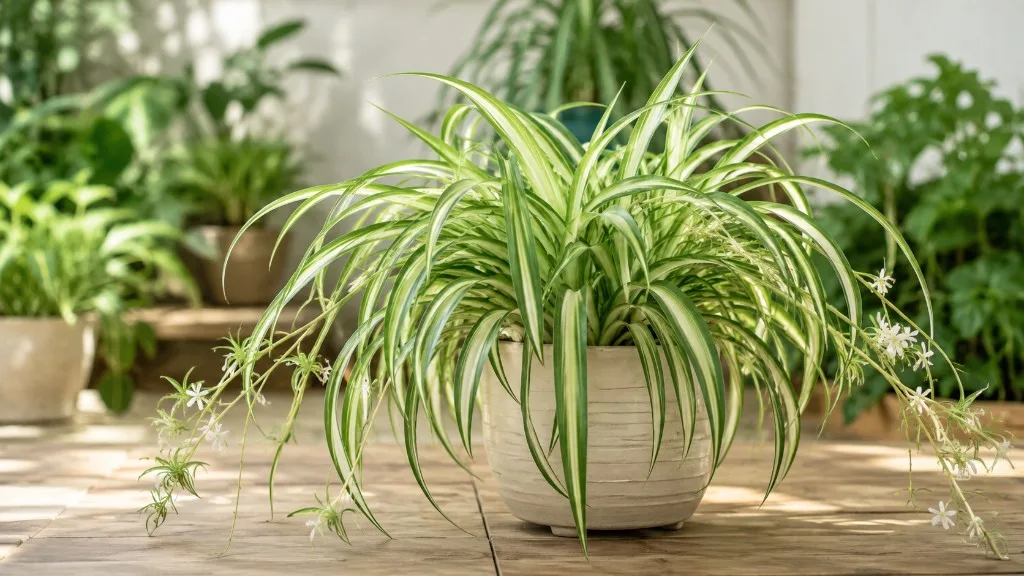
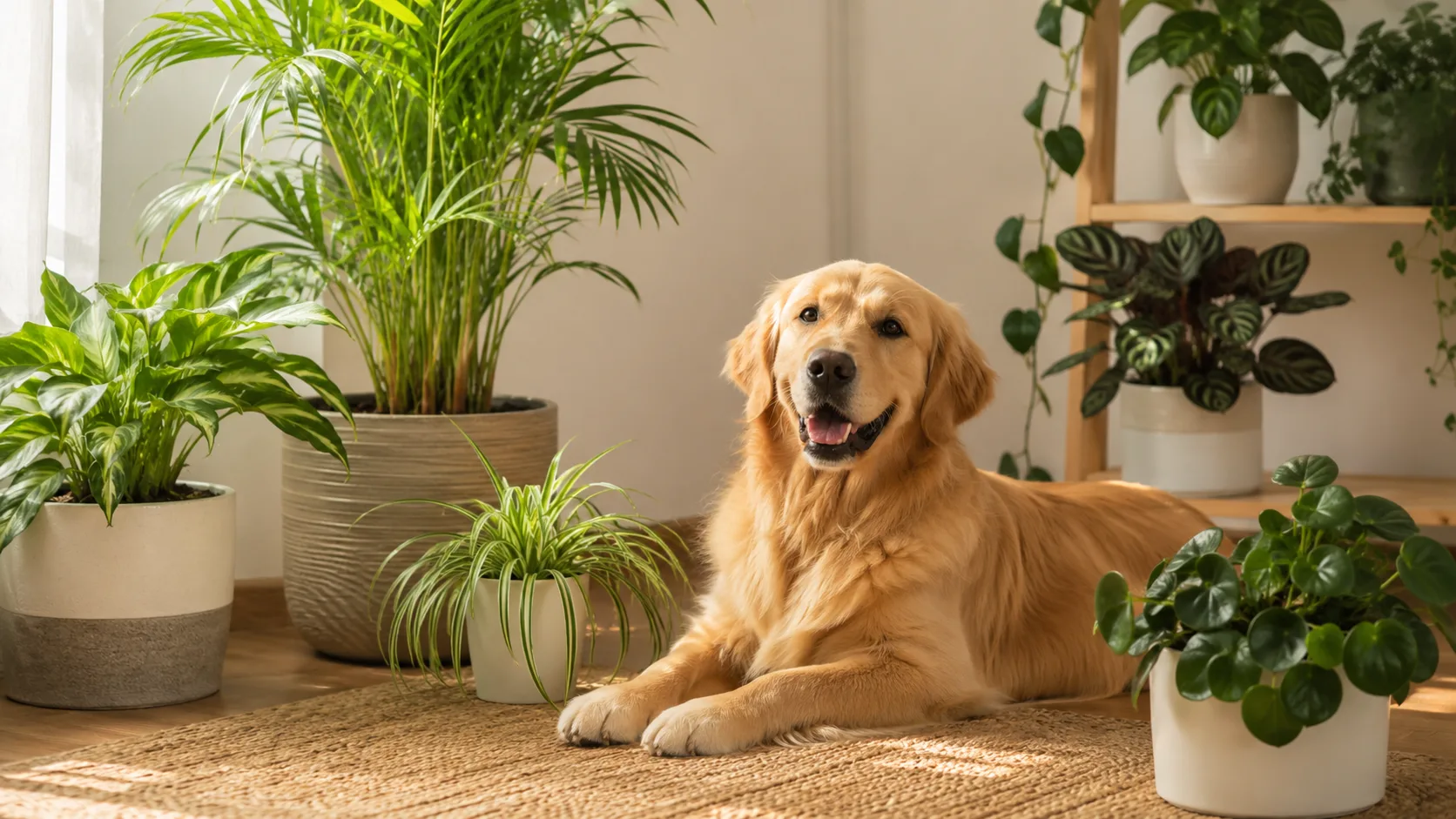
Spider plant produces arching grassy leaves and baby plantlets that dangle on runners — a lively look that fills vertical space in small apartments. ASPCA lists it as non-toxic, making it the strongest pet-safer alternative on this list for apartments where cats roam freely.
Why it works in apartments: The plantlets create a dynamic, changing display without any extra work from you — they just appear on their own. It handles the busy-apartment reality of occasional missed waterings because the tuberous roots store moisture. It grows fast enough to feel rewarding but stays compact enough for a hanging pot in even a studio apartment.
Care tip: Brown leaf tips are common on spider plants and usually mean dry air, excess fertilizer salts, or fluoride in tap water — not thirst. Flush the soil with distilled or rainwater occasionally, and do not increase watering frequency if brown tips appear.
Common mistake: Moving it too far from the window. Spider plant tolerates moderate light but performs noticeably better near a window. In a dim corner, growth slows and plantlets stop forming. Place it in the brightest available spot in your apartment.
Useful care guides:
- Spider plant care guide
- Spider plant watering guide
- Spider plant light guide
- Spider plant propagation guide
7. Cast Iron Plant
Minimum light: True low light — one of the few plants that genuinely handles very dim conditions
Best apartment spot: Dark hallway, dim living room corner, entryway with no windows nearby
Watering forgiveness: High — tolerates inconsistent watering and general neglect
Pet safety: Non-toxic to cats and dogs per ASPCA (Aspidistra elatior)
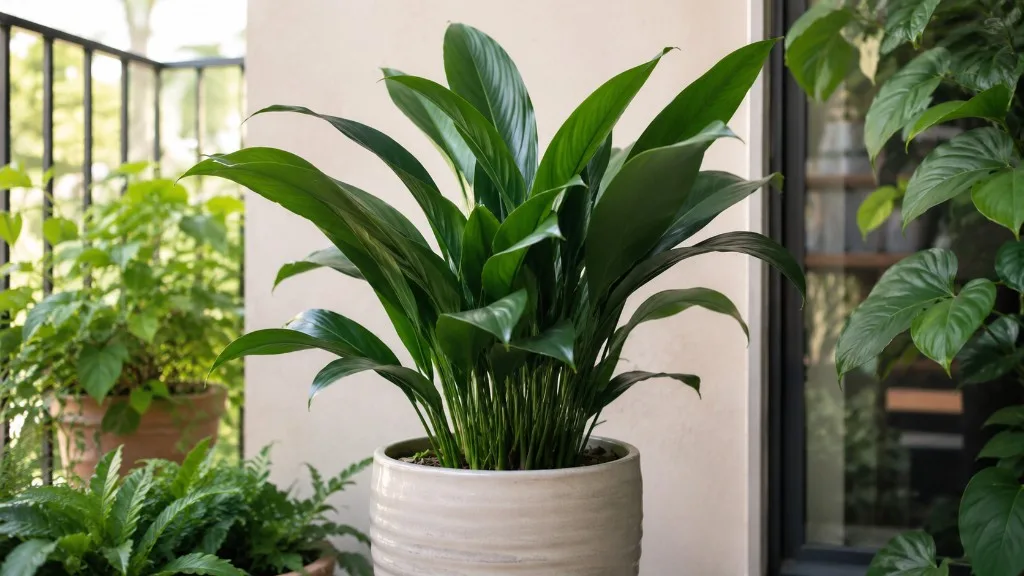
Cast iron plant earned its name honestly. It handles low light, temperature swings, dry air, and missed waterings better than most plants listed here. The trade-off is that it grows slowly and will never deliver the fast, lush payoff of a pothos. What you get instead is quiet, reliable green in the spots where nothing else survives.
Why it works in apartments: It is one of the only genuinely non-toxic picks that also handles true low light — spider plant needs more brightness, and parlor palm needs more consistent moisture. For a dark hallway or a corner far from any window in a pet-friendly apartment, cast iron plant is the top choice.
Care tip: Buy the largest, fullest plant you can afford. Cast iron plant grows slowly, so what you see at the store is close to what you will have for the next year or two. A single-leaf cutting in a small pot will not fill out quickly. Do not over-fertilize — this slow grower needs less food, not more.
Common mistake: Over-caring. Frequent watering, repotting, and fertilizing all backfire on a plant that evolved for neglect. Water when the top half of the soil is dry, repot only when roots visibly circle the pot, and fertilize lightly a few times a year at most.
Useful care guides:
- Cast iron plant care guide
- Cast iron plant watering guide
- Cast iron plant light guide
- Cast iron plant propagation guide
8. Aglaonema (Chinese Evergreen)
Minimum light: Moderate low light — tolerates dim conditions well
Best apartment spot: Desks, side tables, bedroom dressers, anywhere you want a splash of color
Watering forgiveness: Moderate — do not let it sit bone-dry for extended periods
Pet safety: Toxic to cats and dogs if chewed
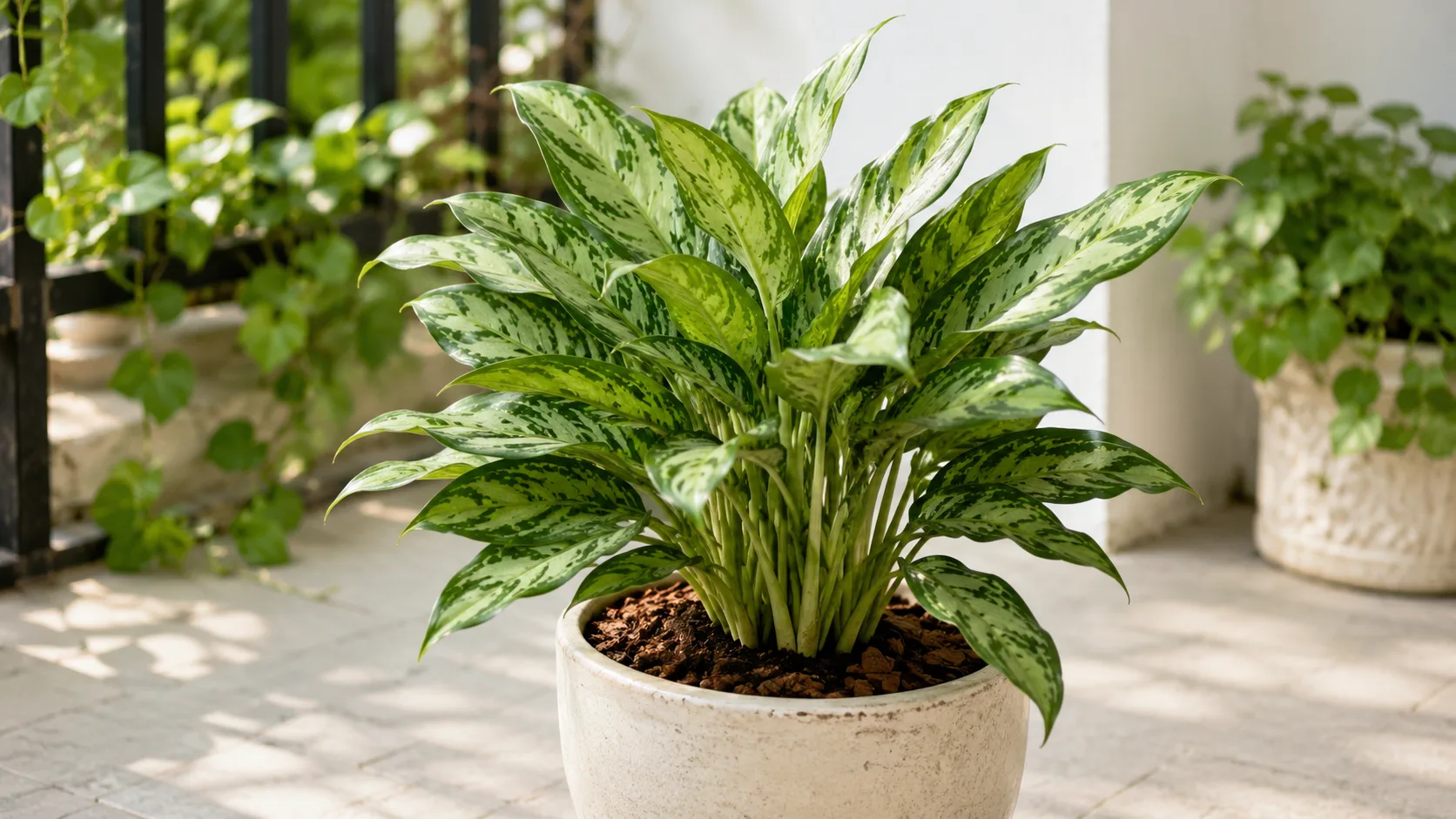
Aglaonema is the best pick on this list when you want colorful foliage without bright light. Varieties come in silver, pink, red, and cream patterns, and unlike most colorful plants, they do not revert to plain green in lower light. Proven Winners lists aglaonema among top low-light houseplants specifically for its ability to hold variegation in dimmer spaces. (Proven Winners)
Why it works in apartments: It brings color to dim rooms without the light demands of crotons, coleus, or other brightly variegated plants. Compact growth suits small apartments — it rarely exceeds two feet tall or wide. It works well on desks, nightstands, and shelves.
Care tip: Aglaonema is sensitive to cold drafts and temperatures below 60°F. In winter apartments, keep it away from drafty windows and exterior doors. UGA Extension notes that Chinese evergreen (Aglaonema) is among foliage plants susceptible to chill damage, with symptoms including yellowing lower leaves and defoliation. (UGA Extension)
Common mistake: Overwatering in winter. Aglaonema slows down in cooler, dimmer months and needs less water. Let the top inch or two of soil dry between waterings during winter, even if you water more often in summer.
Useful care guides:
9. Dracaena (Corn Plant)
Minimum light: Moderate low light — handles dim rooms better than most tall floor plants
Best apartment spot: Floor plant near a north or east window, living room corner, behind a sofa
Watering forgiveness: Moderate–high — let the top half of soil dry between waterings
Pet safety: Toxic to cats and dogs if chewed
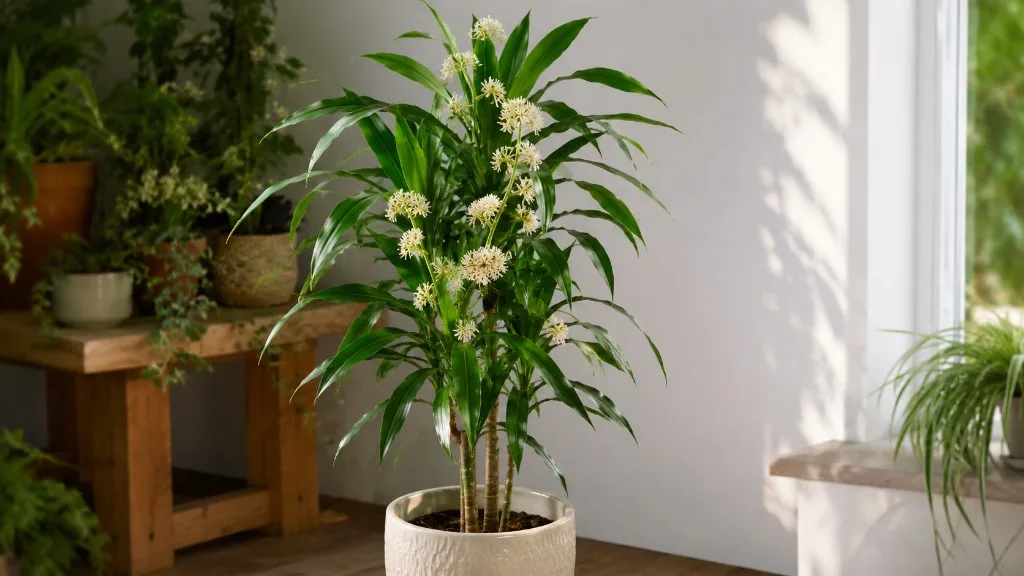
Dracaena is the answer when you want something tall — four to six feet — that does not need a south-facing window. Most tall floor plants (fiddle leaf fig, rubber plant, bird of paradise) demand bright light. Dracaena fragrans (corn plant) and Dracaena marginata (dragon tree) are among the few vertical options that accept moderate to low light without losing their lower leaves rapidly.
Why it works in apartments: It fills vertical space in rooms with standard eight-foot ceilings without blocking windows. The slender profile — especially dragon tree varieties — works in narrow apartment layouts where a wide plant would crowd walkways. It tolerates the dry air of heated and air-conditioned apartments better than most tropical floor plants.
Care tip: Dracaenas are sensitive to fluoride and chlorine in tap water, which cause brown leaf tips and margins. UGA Extension notes that corn plant (Dracaena) is among plants susceptible to fluorine damage, showing tip and leaf scorching. (UGA Extension) Let tap water sit out overnight before watering, or use filtered water.
Common mistake: Placing in a spot with zero ambient light. Dracaena tolerates low light, but it still needs to be able to see its own leaves — if the corner is genuinely dark all day, move it or add a grow light.
Useful care guides:
10. Parlor Palm
Minimum light: Moderate low light — a classic low-light palm
Best apartment spot: Living room corner, entryway, near a north-facing window
Watering forgiveness: Moderate — keep soil lightly moist but never soggy
Pet safety: Non-toxic to cats and dogs per ASPCA (Chamaedorea elegans)
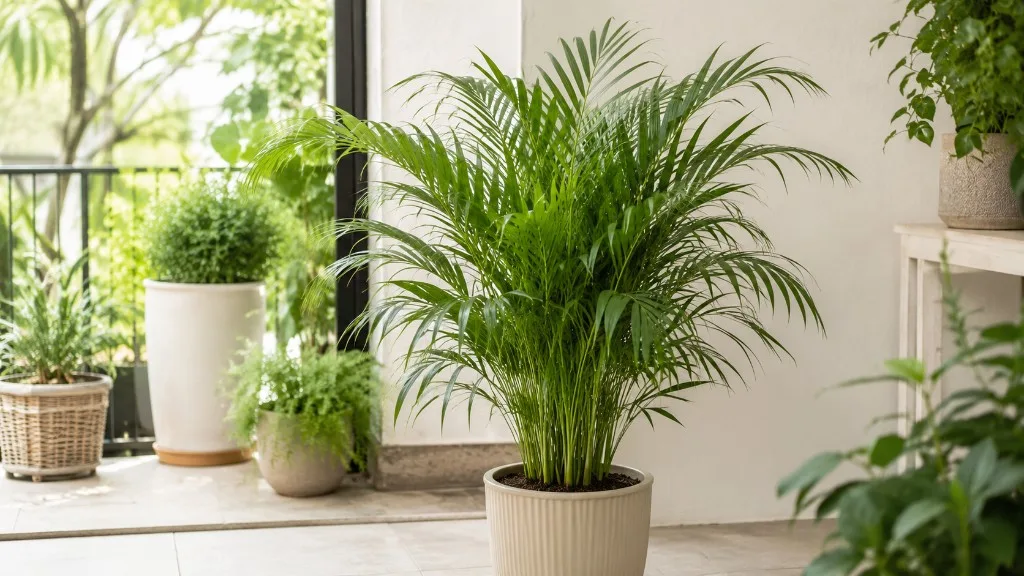
Parlor palm has been a low-light indoor staple since the Victorian era, and for good reason. It delivers a tropical, feathery look in light conditions where most palms fail. It stays compact — typically three to four feet indoors — and grows slowly enough that it will not outgrow a small apartment.
Why it works in apartments: It is one of only a few palms that accept north-facing window light, and one of very few non-toxic options that also handle low light alongside cast iron plant. The fronds add texture that contrasts well with the broad, simple leaves of snake plants and pothos — useful for varied plant groupings in a single apartment room.
Care tip: Parlor palm is sensitive to overwatering and will develop yellow fronds if the soil stays wet. Water when the top inch of soil feels dry. In a low-light apartment, this might mean once every 10–14 days rather than weekly. Use a pot with drainage holes.
Common mistake: Treating it like a high-light palm and placing it in direct sun. Parlor palm burns in direct sunlight — keep it in filtered or indirect light only. Brown, crispy fronds in direct sun are sunburn, not underwatering.
Useful care guides:
11. Monstera Deliciosa
Minimum light: Bright indirect to moderate — tolerates lower light than most statement plants but needs some brightness
Best apartment spot: Near an east-facing window, a few feet from a shaded south window, or under a skylight
Watering forgiveness: Moderate — water when the top inch or two of soil is dry
Pet safety: Toxic to cats and dogs if chewed
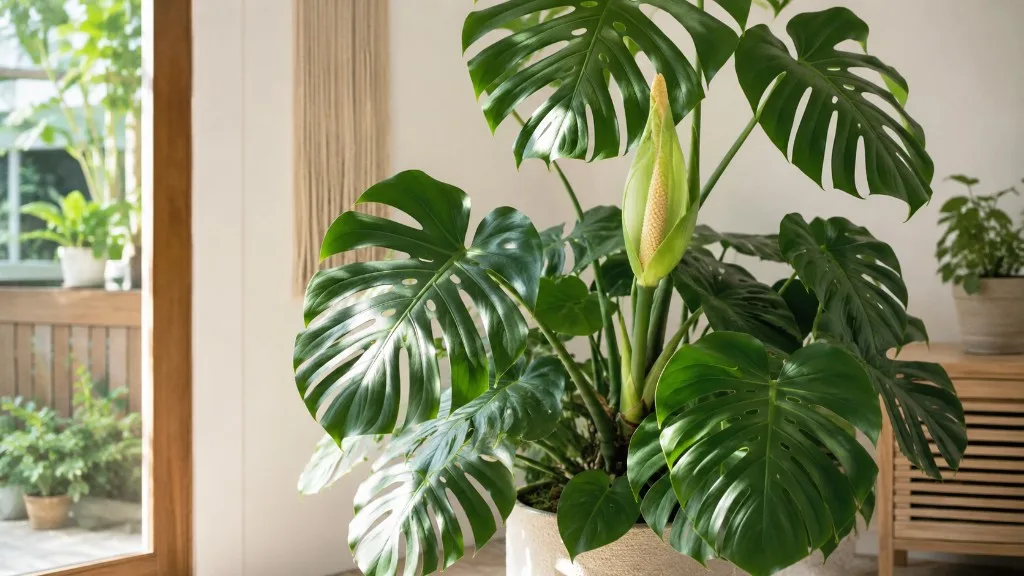
Monstera deliciosa is the Instagram-famous plant that actually works in more apartments than people assume. It is often sold as a bright-light plant, but in practice it tolerates moderate light far better than fiddle leaf figs, rubber plants, or birds of paradise. In a dimmer apartment, it will grow slower and produce fewer (or no) fenestrations — those iconic split leaves — but it survives and stays healthy.
Why it works in apartments: It delivers the dramatic, tropical statement-plant look that transforms a room, and it does it with less light than most plants of its visual impact. In a studio or one-bedroom apartment, one healthy monstera near the best window is often enough greenery for the whole space.
Care tip: Monstera is an epiphytic climber. In an apartment with limited floor space, train it up a moss pole or trellis to grow vertically rather than sprawling outward. Rotate the pot a quarter turn every few weeks so all sides get light exposure and the plant grows evenly.
Common mistake: Buying a monstera for a genuinely dark apartment. While it tolerates lower light than many statement plants, it will not be happy in a north-facing room more than a few feet from the window or in a room where you need lamps during the day. If your apartment is truly dim, stick with snake plant, ZZ plant, or cast iron plant for floor-level impact.
Useful care guides:
12. Lucky Bamboo
Minimum light: Moderate low light — one of the few plants that grows in water with minimal light
Best apartment spot: Desks, bathroom counters, windowsills, anywhere you want a sculptural accent
Watering forgiveness: High — grows in water; just keep the roots submerged
Pet safety: Toxic to cats and dogs (it is Dracaena sanderiana, not true bamboo)
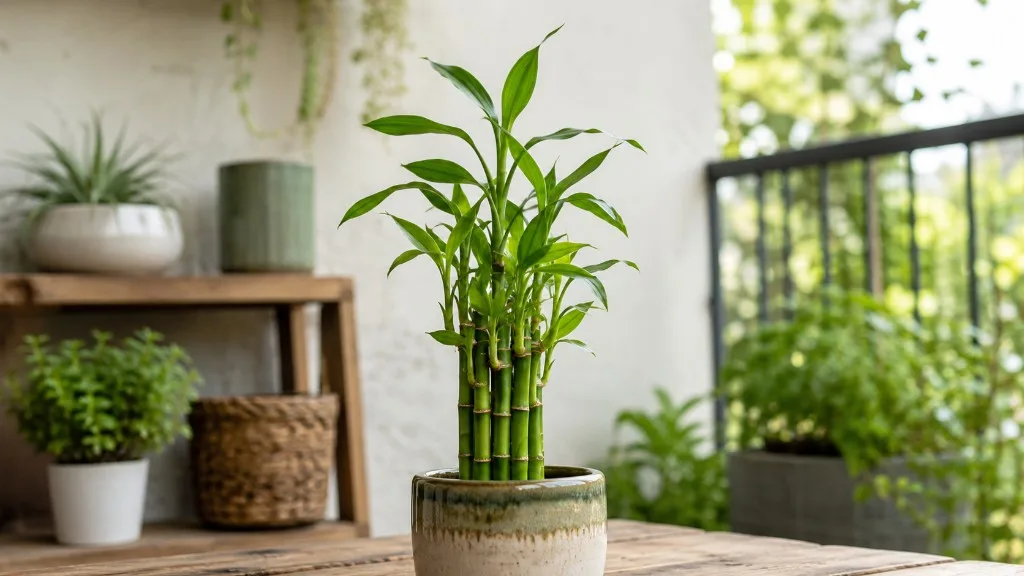
Lucky bamboo is the simplest plant on this list because there is no soil to manage. It grows in a vase of water with pebbles or marbles holding the stalks upright. The light requirements are minimal — it thrives in the same moderate low light that sustains pothos and philodendron — and the care routine is just topping off or changing the water every week or two.
Why it works in apartments: Zero soil means zero mess in a small apartment. The sculptural, twisty stalks add visual interest that other low-light plants do not offer. It fits on a desk, bathroom counter, or narrow windowsill where a potted plant with a wide footprint would not work.
Care tip: Use distilled, filtered, or tap water that has sat out overnight. Lucky bamboo is sensitive to chlorine and fluoride like other dracaenas. Change the water completely every one to two weeks to prevent algae and bacteria buildup. If using tap water and brown tips appear, switch to filtered or distilled water.
Common mistake: Placing in direct sun. Lucky bamboo in a vase of water acts like a magnifying glass — direct sunlight can heat the water and cook the roots. Keep it in indirect light only.
Useful care guides:
- Lucky bamboo care guide
- Lucky bamboo watering guide
- Lucky bamboo light guide
- Lucky bamboo propagation guide
Common Mistakes When Keeping Plants in Low-Light Apartments
Buying plants before checking your light. Walk through your apartment at different times of day and note which spots actually stay bright enough to read in without a lamp. Buy plants for those spots, not for the dark corner you wish had a plant.
Watering too much. This is the number one killer across every plant on this list. In low light, plants use less water because photosynthesis slows down. If you are watering a ZZ plant or snake plant every week in a dim apartment, you are almost certainly overwatering. Always check soil before watering — not the calendar.
Using decorative pots without drainage. Cachepots look great, but they trap water at the bottom where roots sit and rot. Use a nursery pot with drainage inside the decorative pot, and empty any standing water from the outer pot after watering.
Treating “low light tolerant” as “no light.” Every plant on this list eventually declines in true darkness. If you live in a basement apartment or a room with zero natural light, a grow light is not optional — it is the difference between a plant surviving and a plant dying. See the grow lights complete guide for practical apartment-friendly options.
Placing plants near heating vents or AC units. Forced-air heating and air conditioning blast dry, temperature-extreme air directly at plants. Even the toughest snake plant will develop brown, crispy edges if it sits in the path of a heating vent all winter. Move plants away from direct airflow.
Not adjusting care by season. Winter means less light, lower temperatures near windows, and dry heating air. Most plants on this list need less water in winter. UGA Extension explains that when sugar production drops under low winter light, high temperatures can break down what little sugars are made — leaving nothing for growth. (UGA Extension) Water less, pause fertilizer, and accept slower growth as normal.
How to Pick the Best Plants for Your Specific Apartment
If you have a north-facing apartment with one small window: Stick to the three toughest: snake plant, ZZ plant, and cast iron plant. Place them directly on or next to the windowsill — not across the room. One plant on the sill, one on a plant stand next to it, and one on the floor below can fill a small apartment without competing for light.
If you have an east-facing apartment with morning light: You have more options. Monstera, pothos, philodendron, peace lily, spider plant, parlor palm, aglaonema, and dracaena all do well with gentle morning sun. Use the windowsill for your light-hungriest plant (monstera or spider plant) and place shade-tolerant plants like snake plant and ZZ plant in the deeper parts of the room.
If you have a studio apartment with one window: Cluster 2–3 plants at different heights near that window. A floor-level snake plant, a hanging pothos at window height, and a peace lily on a plant stand create layers without fighting for the same square footage. Do not scatter plants around the dark parts of the studio — they will decline there.
If you have pets: Lead with spider plant, parlor palm, and cast iron plant for planters within pet reach. Use hanging baskets for trailing plants like pothos (toxic) and philodendron (toxic) to keep them out of chewing range. For a broader pet-safe shortlist, browse the pet-safe indoor plants list.
If you have absolutely no natural light: Accept that a grow light is required. Even a small USB-powered LED grow light on a timer for 12–14 hours a day can sustain snake plant, ZZ plant, pothos, and lucky bamboo in a windowless room. No grow light means no plant will last more than a few months.
Conclusion
Start with one plant in your brightest spot. If it thrives for three months, add a second. The safest first picks for most low-light apartments are snake plant and ZZ plant — they are the most forgiving of dim conditions and missed waterings. For pet-friendly households, lead with spider plant or cast iron plant in your brightest available spot. For trailing greenery on a shelf or bookcase, pothos is the fastest and most satisfying.
A dim apartment is not a plant-free apartment. It is simply one that rewards choosing the right species, placing them intelligently, and watering only when the soil — not the calendar — tells you to.
Related Guides
- Best Low-Light Indoor Plants — filterable quick list from LeafyPixels plant metadata
- Low-Maintenance Indoor Plants for Busy Homes — overlap species with watering-forgiveness depth
- Grow Lights Complete Guide for Indoor Plants — when low light is really no light
- How to Water Indoor Plants the Right Way — soil checks that prevent overwatering
- Best Pet-Safe Indoor Plants — safety-first shortlist
- Top 7 Scientifically Proven Benefits of Indoor Plants — wellbeing evidence with honest air-quality limits