Best Indoor Plants for Living Rooms – 15 Statement & Accent Picks
Not sure which living room plants actually survive beyond the Instagram photo? These 15 picks cover bright windows, dark corners, and pet-friendly homes.
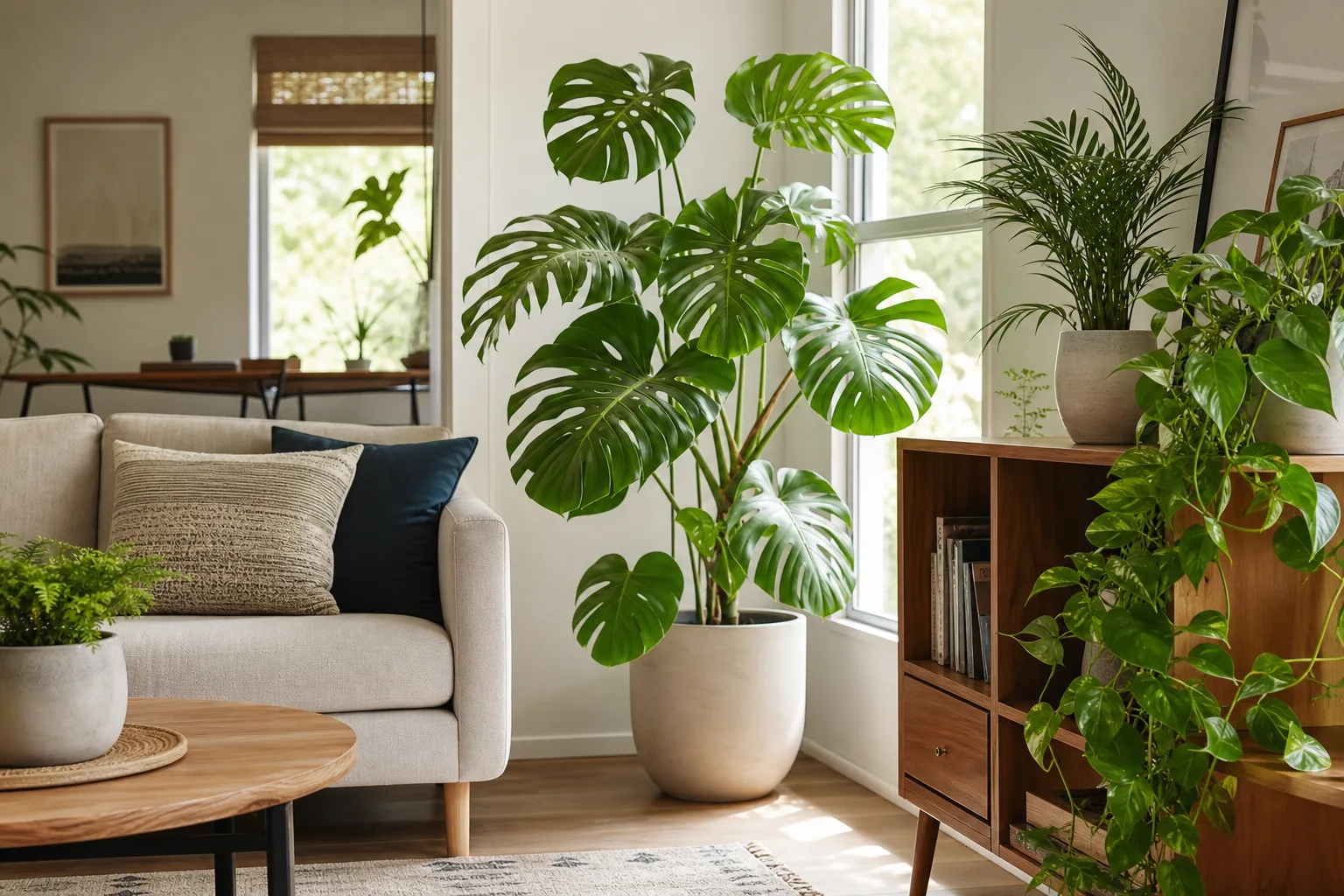
A living room without plants looks like a room someone just moved out of. The right plant fills an empty corner, softens a hard sofa line, and gives guests something to comment on besides the TV. The wrong plant browns in three weeks and confirms every suspicion you had about your ability to keep things alive.
The best living room plants do not need to be rare or expensive. They need to match your window light, survive the temperature swings of open doors and heating vents, and scale correctly with your furniture. A six-foot monstera in a studio apartment overwhelms. A four-inch succulent on a bare floor disappears. Neither works.
If you want a filterable metadata list covering more species, see Large Indoor Plants for floor-scale options or Low-Light Indoor Plants for dimmer rooms. This guide picks 15 living room plants across three tiers: floor statements, mid-height fillers, and shelf accents – with honest light needs, pet-safety notes, and the styling mistakes that make even good plants look wrong.
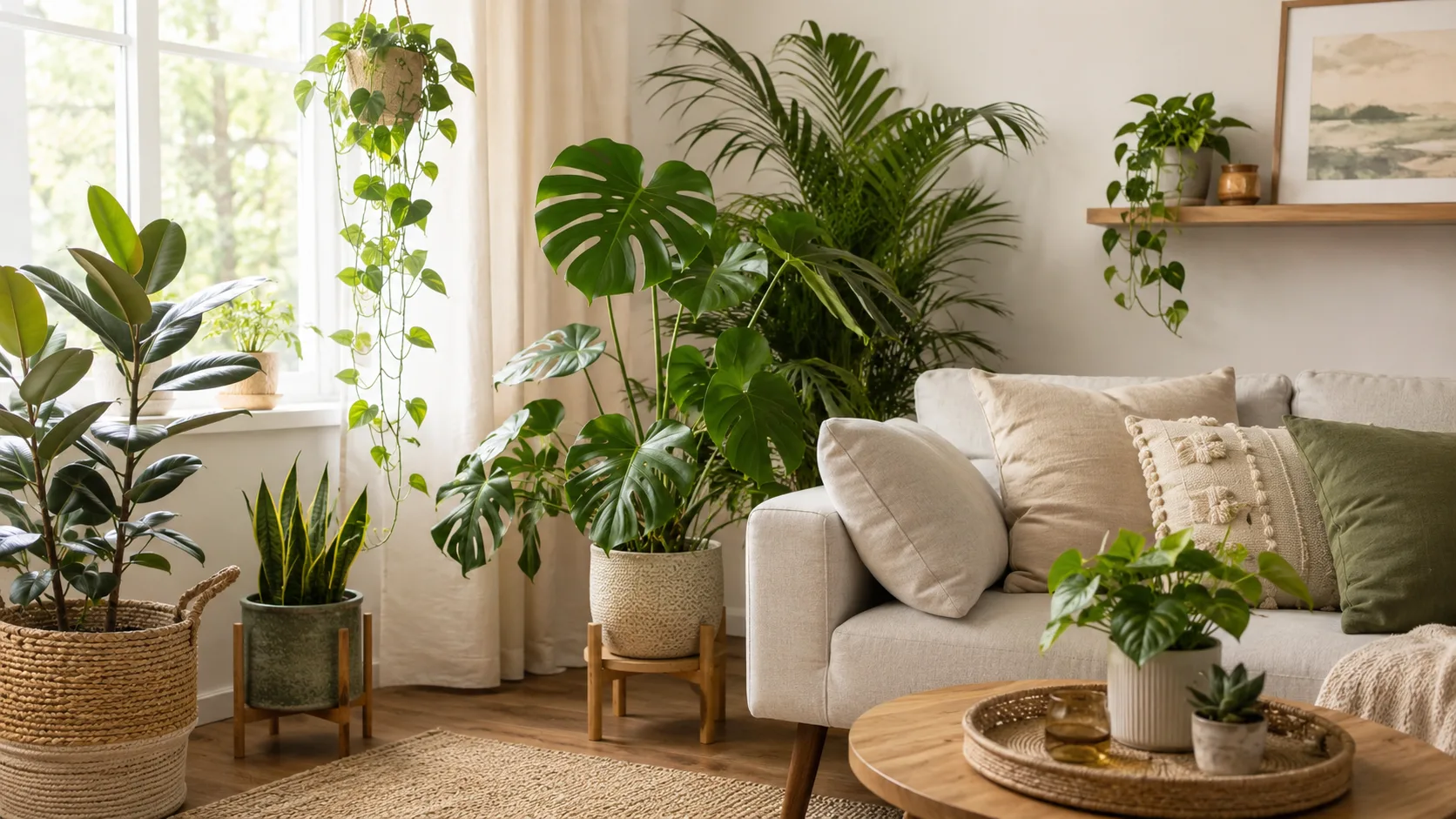
The 15 best living room plants for most homes are monstera deliciosa, fiddle leaf fig, rubber plant, bird of paradise, philodendron selloum, areca palm, dracaena, yucca plant, money tree, snake plant, ZZ plant, peace lily, aglaonema, pothos, and spider plant.
What Makes a Good Living Room Plant
Living rooms are not greenhouses. They have sofas blocking windows, floor vents blasting hot air in winter, and lighting that changes dramatically between 10 a.m. and 6 p.m. A good living room plant tolerates all of this without throwing a leaf-dropping tantrum.
Three things separate living-room survivors from decorative impulse buys:
Light tolerance within a real room. “Bright indirect light” means something different three feet from a south window versus eight feet back behind a sectional. The plants on this list either handle a range of distances from windows or come with clear placement boundaries so you know where they will and will not work.
Scale that matches furniture. Floor plants need at least three feet of clearance from traffic paths. Console plants should not block the TV. Shelf plants should trail without tangling in lamp cords. Every plant here includes a best-placement note tied to a real room zone.
Forgiveness for irregular care. Living rooms are where you relax, not where you keep a watering spreadsheet. The plants here survive the occasional forgotten week – even the medium-difficulty ones come with explicit warnings about what actually kills them so you can avoid it.
Plants that fail in living rooms typically fail for one reason: they were chosen for a light condition that does not exist in that room. The next section helps you avoid that before picking a single pot.
Quick Pick: Best Living Room Plant for Your Setup
For a bright living room with an empty corner, choose monstera deliciosa or rubber plant. Both read as intentional design choices, grow steadily in good light, and forgive missed waterings better than fiddle leaf fig.
For sculptural height when you will not move the pot, choose fiddle leaf fig beside your largest window. Fiddle leaf figs reward stable locations and stable light – move them seasonally and they protest by dropping leaves.
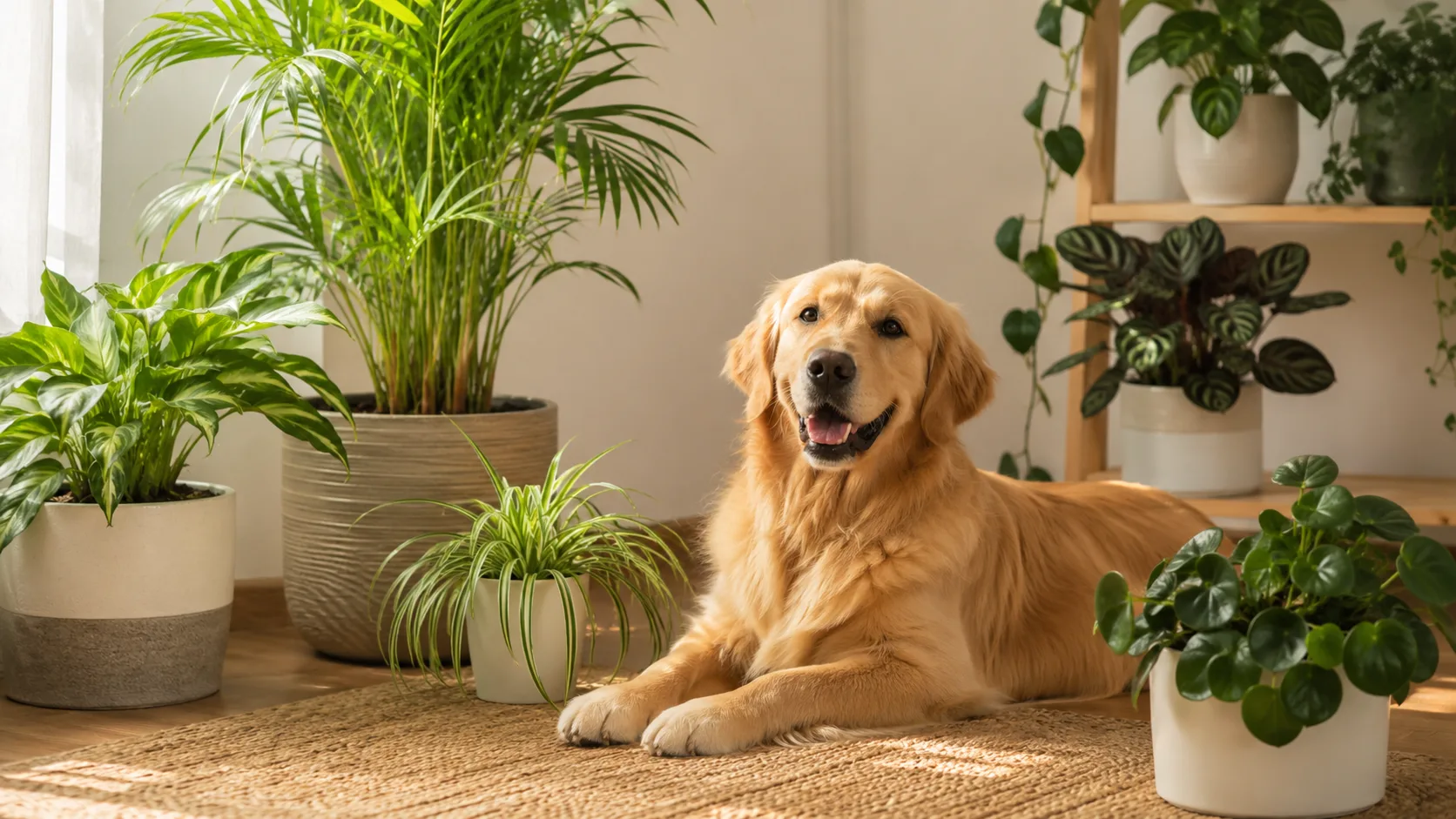
For pet-aware households that need floor height, choose areca palm. The ASPCA lists it non-toxic to cats and dogs – uncommon among tall living-room specimens.
For the dim corner far from windows, choose snake plant or ZZ plant as supporting accents – not competing focal points. These survive where tropical statements would stretch and fade.
For a shelf or console that needs greenery without floor space, choose pothos or spider plant. Trailing plants cost less, take up zero floor space, and soften hard furniture lines instantly.
How We Selected These 15 Plants
Chosen for living-room visual impact, distinct silhouettes, realistic indoor culture, and LeafyPixels guide depth. We favored plants that work in shared living spaces – not greenhouse specimens that need grow tents to look good.
Every plant on this list exists in the LeafyPixels database with full care guides, watering advice, light requirements, and propagation instructions. We cross-referenced light guidance against University of Maryland Extension recommendations for window orientation and indoor placement. Pet toxicity was checked against the ASPCA toxic and non-toxic plants database where applicable.
The 15 plants divide into three tiers:
- Floor statements (1–5): Six-foot-plus specimens that anchor a corner or frame a window
- Mid-height fillers (6–10): Three-to-six-foot plants for secondary zones and transition spaces
- Shelf and trailing accents (11–15): Compact or cascading plants for consoles, shelves, and side tables
Living Room Plants Compared at a Glance
| Plant | Best Role | Light | Watering | Difficulty | Pet Safety |
|---|---|---|---|---|---|
| Monstera deliciosa | Tropical focal point | Bright indirect | Top 2 in. dry | Easy–medium | Toxic |
| Fiddle leaf fig | Sculptural tree | Bright indirect | Top 2 in. dry | Medium–hard | Toxic |
| Rubber plant | Glossy corner anchor | Bright indirect | Top 2 in. dry | Easy | Toxic |
| Bird of paradise | Wide-leaf drama | Bright+ | Steady moisture | Medium | Toxic |
| Philodendron selloum | Lush floor mass | Medium–bright | Top 2 in. dry | Easy–medium | Toxic |
| Areca palm | Pet-safe soft height | Bright indirect | Steady moisture | Medium | Non-toxic* |
| Dracaena | Striped upright filler | Medium–bright | Half soil dry | Easy | Toxic |
| Yucca plant | Modern cane structure | Bright to direct | Dry between | Easy | Toxic |
| Money tree | Braided trunk accent | Bright indirect | Top 2 in. dry | Easy–medium | Verify |
| Snake plant | Low-light support | Low–bright indirect | Fully dry | Easy | Toxic |
| ZZ plant | Dark-corner survivor | Low–bright indirect | Fully dry | Easy | Toxic |
| Peace lily | Flowering console accent | Low–medium indirect | Slightly moist | Easy–medium | Toxic |
| Aglaonema | Colorful low-light foliage | Low–medium indirect | Half soil dry | Easy | Toxic |
| Pothos | Trailing shelf accent | Low–bright indirect | Top 2 in. dry | Easy | Toxic |
| Spider plant | Hanging or shelf accent | Medium–bright indirect | Top 2 in. dry | Easy | Non-toxic* |
*ASPCA non-toxic listing for cats and dogs; chewing can still cause mild stomach upset.
How to Choose Living Room Plants
Five decisions determine whether your living room plant thrives or becomes compost. Make them in this order.
Map Your Window Light First
Before you buy a single plant, know what light your living room actually delivers. South and west windows provide the brightest indoor light – suitable for fiddle leaf fig, bird of paradise, and yucca. East windows give gentle morning sun ideal for monstera and rubber plant. North windows and rooms with small or shaded windows need snake plant, ZZ plant, aglaonema, or supplemental grow lights for anything larger.
Do not guess. Hold your hand 12 inches from the wall where the plant will sit at midday. A sharp, defined shadow means bright light. A soft, blurry shadow means medium light. No visible shadow means low light – stick to the last five plants on this list.
Pick One Focal Point, Then Accent
Designers use one statement plant per sightline. A monstera by the window plus a snake plant in the opposite corner works. Two six-foot trees competing for the same visual zone reads as clutter, not design.
Start with your brightest spot. Put your largest, most light-hungry plant there. Then fill remaining zones with smaller, lower-light species that complement rather than compete.
Factor Pets and Kids
Floor-level pots in living rooms get investigated by noses, paws, and toddlers. Areca palm and spider plant are the primary pet-safe options here. Most statement plants – monstera, fiddle leaf fig, rubber plant, bird of paradise, philodendron – are toxic if chewed. If pets roam freely at floor level, elevate toxic plants on sturdy stands or choose from pet-safe indoor plants.
“Non-toxic” does not mean “edible.” Even ASPCA-listed non-toxic plants can cause drooling or stomach upset if a pet eats enough of them.
Match Scale to Furniture
A plant’s pot sits roughly at furniture height – match the visual weight. Beside a low-profile sofa, choose wide, horizontal plants like philodendron selloum. Next to a tall bookcase, upright plants like dracaena or yucca echo the vertical lines. Tiny plants on empty floor space look lost; oversized plants on narrow consoles look precarious.
The 15 Best Living Room Plants
1. Monstera Deliciosa
Best for: primary focal point, split-leaf tropical look
Difficulty: Easy to medium | Light: Bright indirect | Water: Top 2 inches dry
Pet safety: Toxic | Typical indoor size: 6–10 ft with support
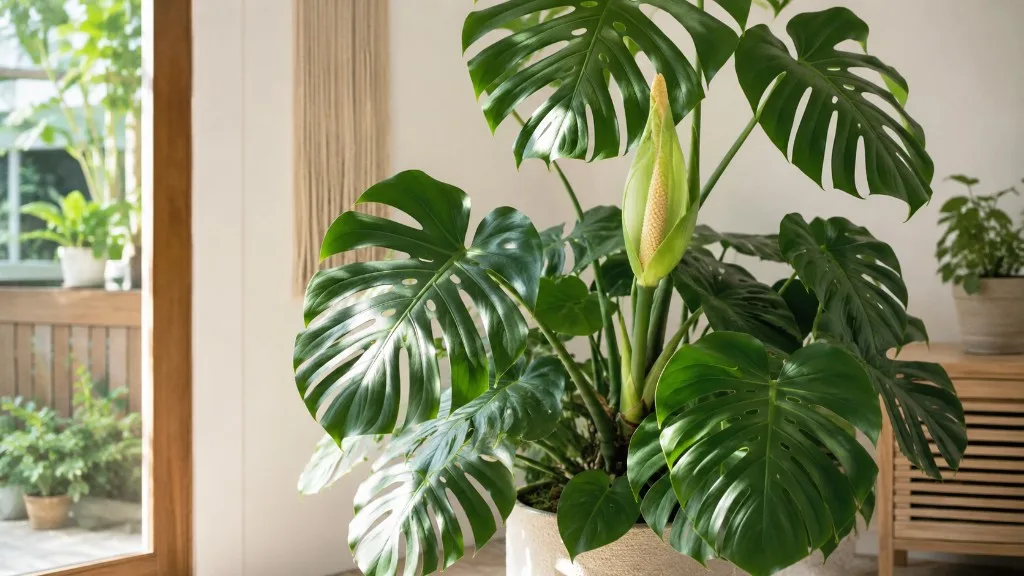
Monstera deliciosa turns a living room corner into a designed space faster than any other plant on this list. The fenestrated leaves read as intentional – guests assume you know what you are doing with plants even if this is your first one. It climbs on a moss pole to stay vertical under eight-foot ceilings, and a healthy specimen in good light pushes out a new leaf every few weeks during growing season.
Why it works: Maximum visual impact per pot in bright living rooms. Leaves can reach two feet across, filling negative space that would otherwise need furniture or art.
Care tip: Dust large leaves monthly – living rooms near HVAC returns accumulate dust faster than other rooms. Dirty leaves photosynthesize less.
Common mistake: Placing monstera in a north-facing corner with no supplemental light. It will survive but stop producing splits and grow leggy, reaching toward the nearest light source.
Avoid this plant if: Your ceiling is under eight feet and you have no pruning plan. Monstera does not stop growing when it hits the ceiling.
Useful care guides:
- Monstera Deliciosa care guide
- Monstera Deliciosa light guide
- Monstera Deliciosa watering guide
- Monstera Deliciosa propagation guide
2. Fiddle Leaf Fig
Best for: single-trunk sculpture beside large windows
Difficulty: Medium to hard | Light: Bright indirect | Water: Consistent, not soggy
Pet safety: Toxic | Typical indoor size: 6–10 ft
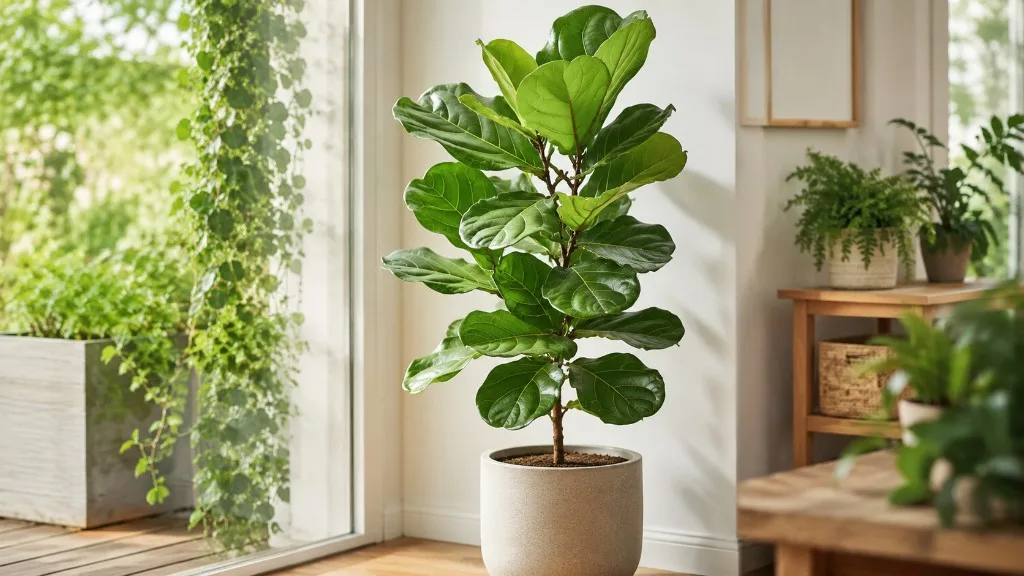
Fiddle leaf fig is the living room plant most photographed on social media – and the one most likely to drop leaves within a month if conditions are not dialed in. Choose it only if your brightest window spot is its permanent home. Fiddle leaf figs hate being moved, hate drafts, and hate irregular watering. In exchange for stability, they deliver an architectural silhouette that no other indoor tree quite matches.
Why it works: The large, violin-shaped leaves create a sculptural profile that defines modern and minimalist living rooms. A healthy fiddle leaf fig looks like intentional design, not just “a plant in the corner.”
Care tip: Clean leaves with a damp microfiber cloth, not leaf-shine products. Dust blocks light and dulls the gloss that makes this plant attractive.
Common mistake: Moving the plant between summer and winter positions. Fiddle leaf figs drop leaves in response to light changes – find its permanent spot and leave it there.
Avoid this plant if: You rearrange furniture seasonally, have floor vents directly beneath your windows, or travel frequently. This is not a plant for inconsistent homes.
Useful care guides:
3. Rubber Plant
Best for: forgiving focal point with glossy, dark foliage
Difficulty: Easy | Light: Bright indirect | Water: Top 2 inches dry
Pet safety: Toxic | Typical indoor size: 6–8 ft
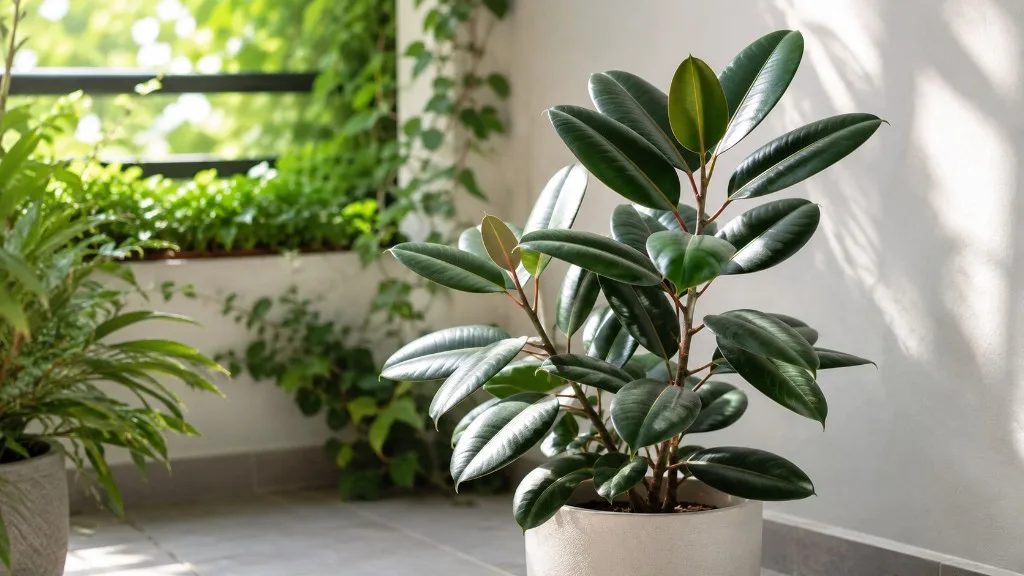
Rubber plant delivers the tall-Ficus look without fiddle-leaf sensitivity. Its broad, glossy leaves in deep green or burgundy (depending on variety) anchor a corner with less drama and more reliability. If you want a statement plant but do not trust yourself with a fiddle leaf fig, this is the better default.
Why it works: Beginner-friendly height with designer look. Tolerates occasional missed waterings and humidity swings from heating vents far better than fiddle leaf fig.
Care tip: Rotate the pot a quarter turn monthly – not weekly. Rubber plants adjust slowly, and over-rotating can stress them.
Common mistake: Overwatering after leaves collect dust and look dull. Dusty leaves need cleaning, not extra water. Check soil moisture before reaching for the watering can.
Avoid this plant if: Pets routinely chew floor-level foliage. The sap is irritating and the leaves are toxic when ingested.
Useful care guides:
- Rubber Plant care guide
- Rubber Plant light guide
- Rubber Plant watering guide
- Rubber Plant propagation guide
4. Bird of Paradise
Best for: wide paddle leaves and tropical drama in sunny living rooms
Difficulty: Medium | Light: Bright to some direct sun | Water: Steady moisture
Pet safety: Toxic | Typical indoor size: 5–7 ft
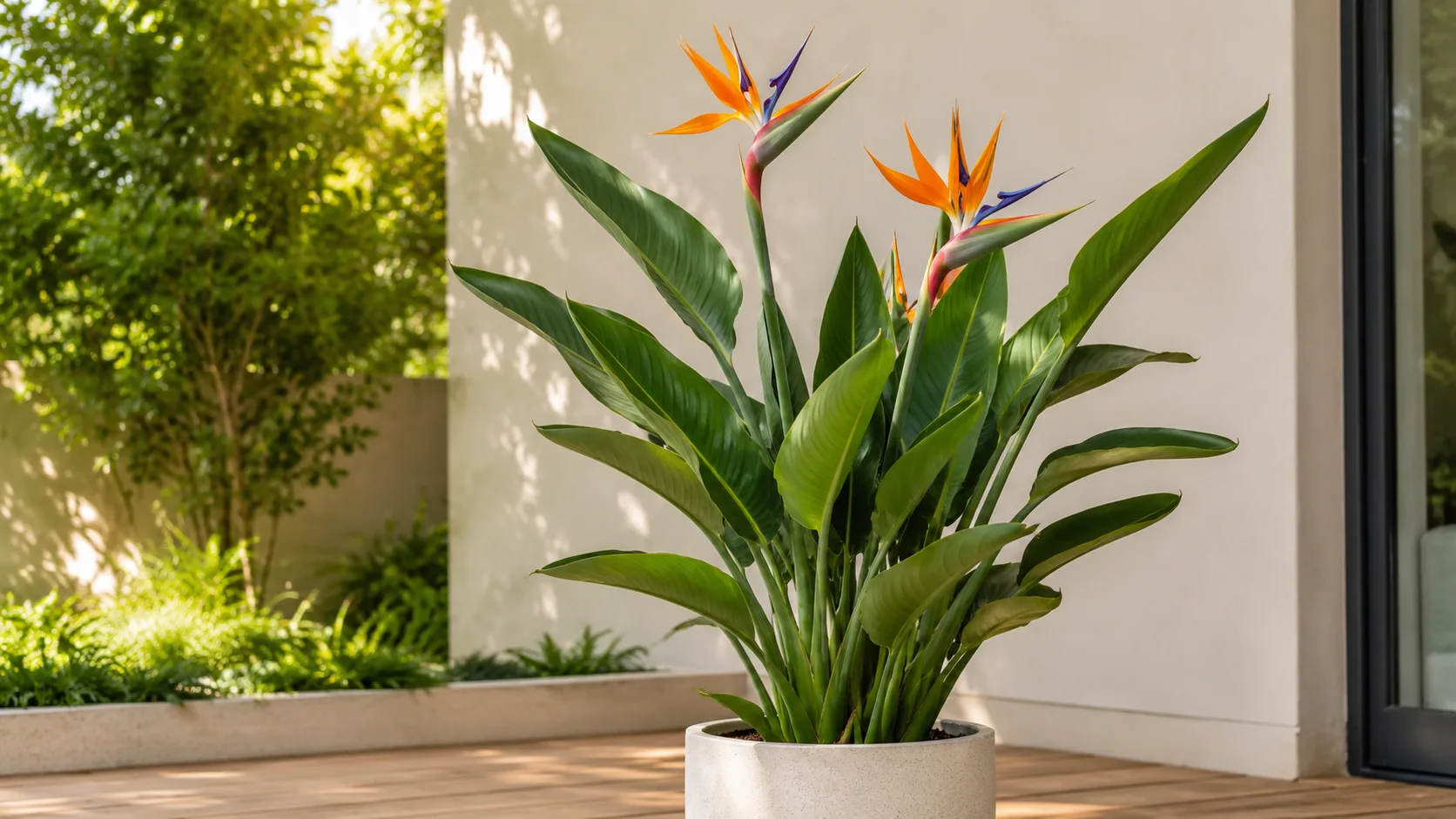
Bird of paradise suits open-plan living rooms with wall-to-wall windows. Its leaves arch outward two feet or more – wider than most indoor trees – so it needs floor space, not just ceiling clearance. In the right light, mature plants can produce orange and blue flowers, though indoor blooming is uncommon without near-greenhouse conditions.
Why it works: Resort-scale foliage indoors. The oversized, banana-like leaves create a tropical statement that no other common houseplant matches in width.
Care tip: Use a heavy ceramic pot. Bird of paradise is top-heavy, and lightweight pots tip easily in traffic paths or when pets brush past.
Common mistake: Expecting flowers in average apartment light. Indoor bird of paradise blooms only in very bright conditions with high humidity – treat any flower as a bonus, not a guarantee.
Avoid this plant if: You only have north-window light or your living room is narrow with limited floor clearance. This plant needs width more than height.
Useful care guides:
5. Philodendron Selloum
Best for: lush tropical mass without climbing hardware
Difficulty: Easy to medium | Light: Medium to bright indirect | Water: Top 2 inches dry
Pet safety: Toxic | Typical indoor size: 5–6 ft wide
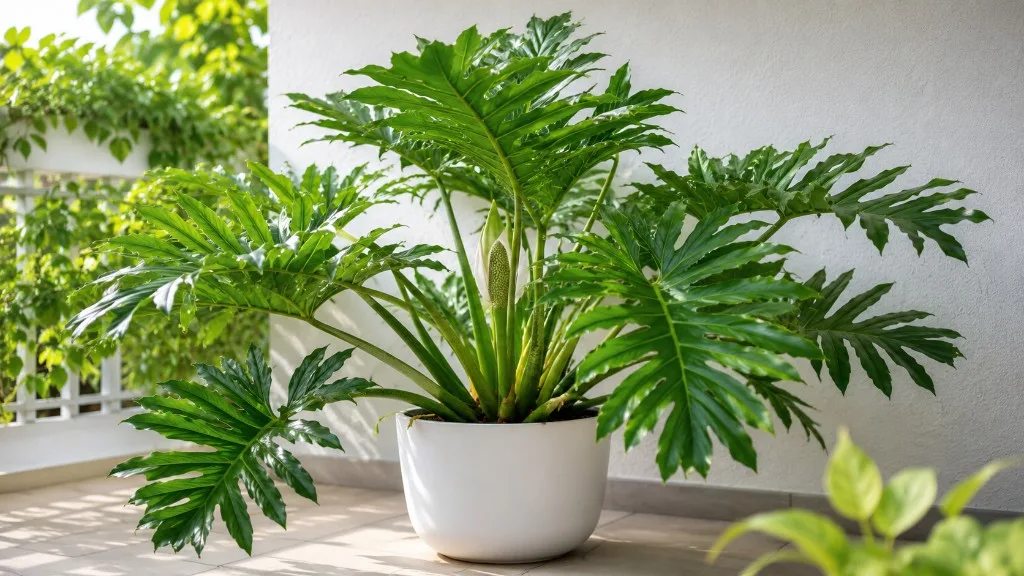
Philodendron selloum fills wide corners where a narrow dracaena would look lost and a monstera would need a moss pole. Its deeply lobed leaves spread horizontally, softening hard-edged modern furniture and filling negative space beside low sofas. Unlike climbing philodendrons, selloum grows as a self-supporting mound.
Why it works: Horizontal tropical presence. Where most tall plants draw the eye upward, selloum spreads outward – ideal for filling the space between a sofa arm and a corner.
Care tip: Leave at least 12 inches of clearance from walls so outer leaves are not crushed or misshapen by contact.
Common mistake: Squeezing selloum into a tight alcove or narrow hallway. The plant’s spread is its main feature – restrict it and you lose the effect.
Avoid this plant if: You need a slim, upright profile beside a doorway or between furniture pieces.
Useful care guides:
- Philodendron Selloum care guide
- Philodendron Selloum light guide
- Philodendron Selloum watering guide
6. Areca Palm
Best for: pet-safe soft height and feathery texture
Difficulty: Medium | Light: Bright indirect | Water: Steady moisture
Pet safety: ASPCA non-toxic | Typical indoor size: 6–8 ft
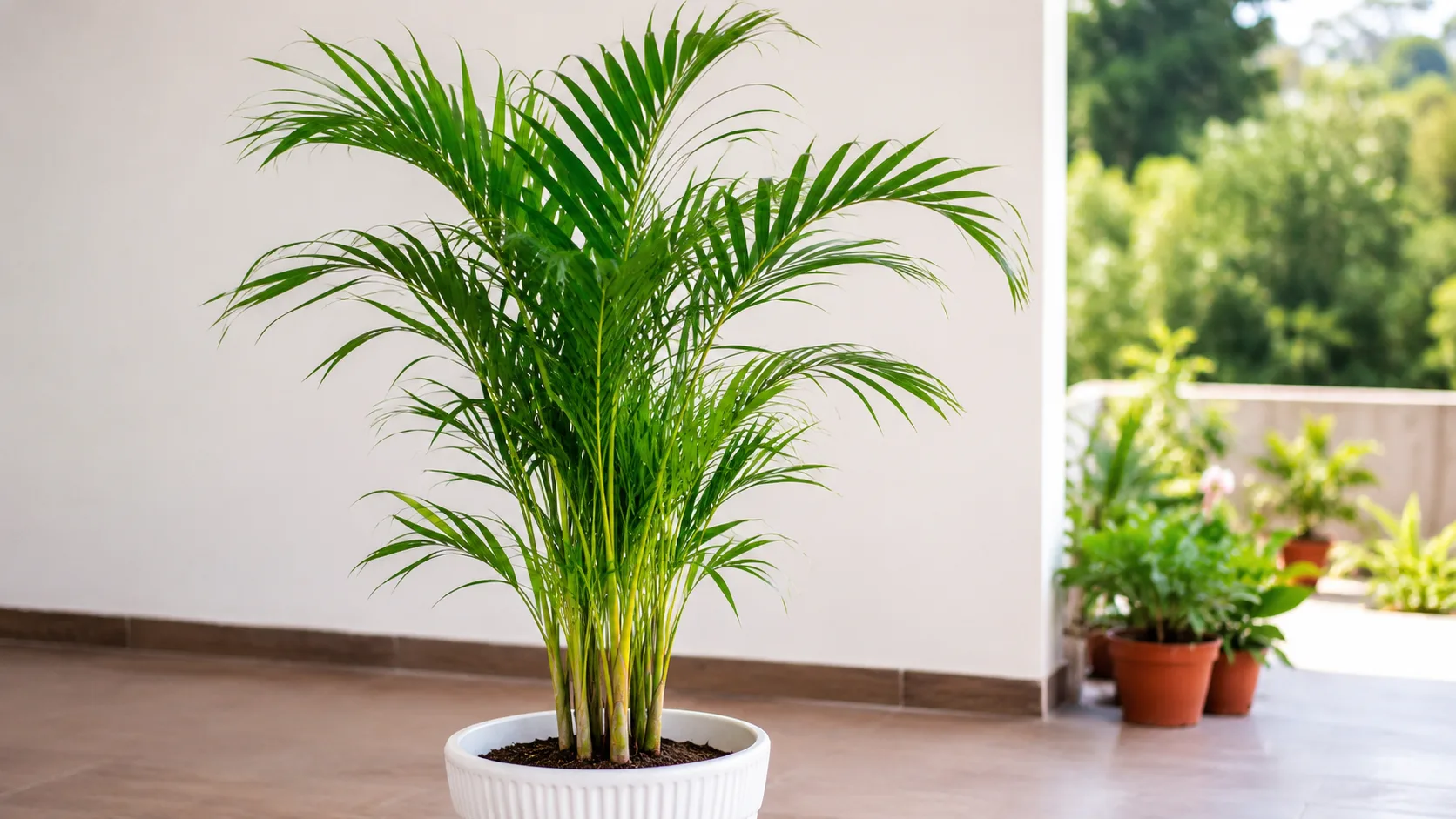
Areca palm is the living room palm for homes with cats and dogs that still want floor-scale greenery. Its feathery fronds soften leather sofas, stone surfaces, and hard architectural lines. Among tall indoor specimens, it is one of the few that carries a verified non-toxic listing – most statement plants are toxic if chewed.
Why it works: Pet-safe vertical texture without sacrificing height. The fine, arching fronds add movement and softness that broad-leaf plants cannot.
Care tip: Group areca palm with other humidity-loving plants or use a pebble tray to raise local humidity. Dry living room air – especially in winter with heating – browns frond tips quickly.
Common mistake: Placing areca palm in a dark corner. It needs bright indirect light to maintain full fronds; in low light, fronds thin, yellow, and eventually die back.
Avoid this plant if: You cannot maintain consistent soil moisture. Areca palm does not tolerate drying out completely between waterings.
Useful care guides:
7. Dracaena
Best for: medium-light corners and vertical stripes
Difficulty: Easy | Light: Medium to bright indirect | Water: Top half of soil dry
Pet safety: Toxic | Typical indoor size: 5–8 ft
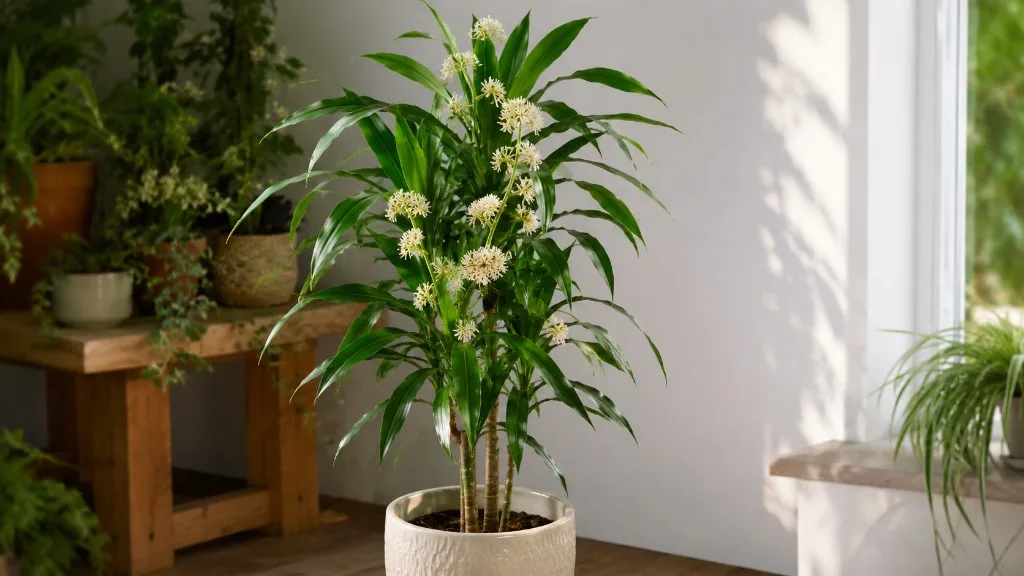
Dracaena bridges bright and medium-light living rooms – useful when your statement spot is already occupied and you need a secondary tree form that does not demand premium window real estate. Varieties like ‘Janet Craig’ and ‘Warneckii’ offer striped foliage that reads as intentional design rather than default greenery.
Why it works: Upright habit without the sprawl of monstera or philodendron. Fits beside media consoles, between doorways, and in transition zones where width is limited.
Care tip: Use filtered or distilled water if your tap water is fluoridated. Dracaena is sensitive to fluoride, which causes brown leaf tips that cannot be reversed.
Common mistake: Placing dracaena beside a frequently opened patio door or HVAC vent. Cold drafts and hot dry air cause leaf damage faster than most owners expect.
Avoid this plant if: Pets chew woody stems or you use unfiltered fluoridated tap water exclusively.
Useful care guides:
8. Yucca Plant
Best for: sunny modern living rooms with low humidity
Difficulty: Easy | Light: Bright to some direct sun | Water: Dry completely between
Pet safety: Toxic | Typical indoor size: 4–8 ft canes
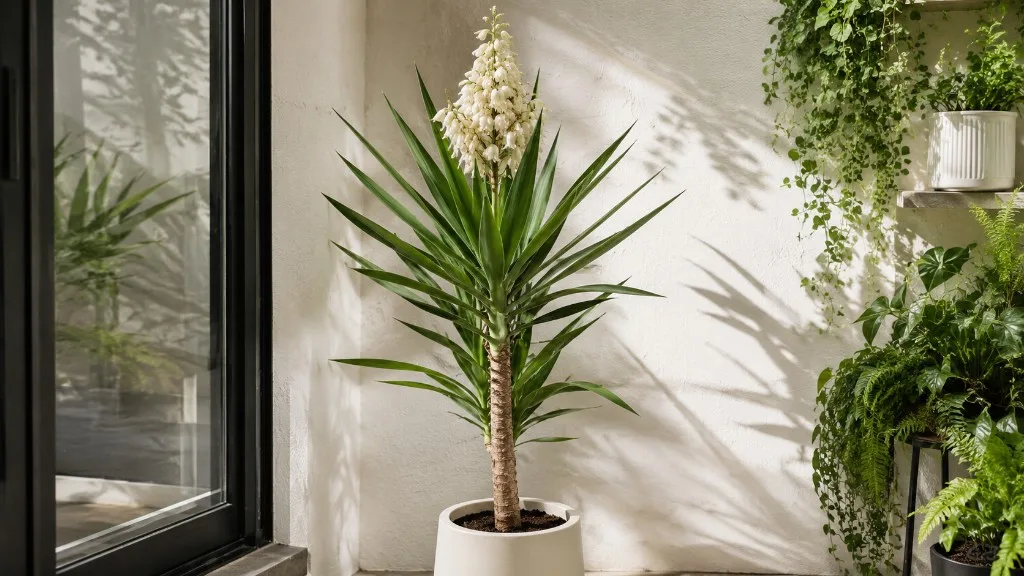
Yucca adds architectural lines beside floor lamps, media consoles, and mid-century modern furniture. Unlike areca palm or other tropicals, yucca tolerates the dry winter air from heating vents without browning. Its stiff, sword-like leaves create clean vertical lines that suit minimalist and contemporary spaces.
Why it works: Sculptural height without tropical humidity demands. Yucca thrives in conditions that stress palms and ferns – dry air, bright light, and infrequent watering.
Care tip: Place yucca where its sharp leaf tips are out of reach of pets and children at sofa height. The points are genuinely sharp and can scratch.
Common mistake: Low light placement. Yucca in dim rooms grows leggy with weak, drooping leaves and a stretched trunk that cannot support its own weight.
Avoid this plant if: You want soft, pet-safe fronds or your living room has mostly medium-to-low light zones.
Useful care guides:
9. Money Tree
Best for: entry consoles and living room transition zones
Difficulty: Easy to medium | Light: Bright indirect | Water: Top 2 inches dry
Pet safety: Verify species | Typical indoor size: 6–8 ft
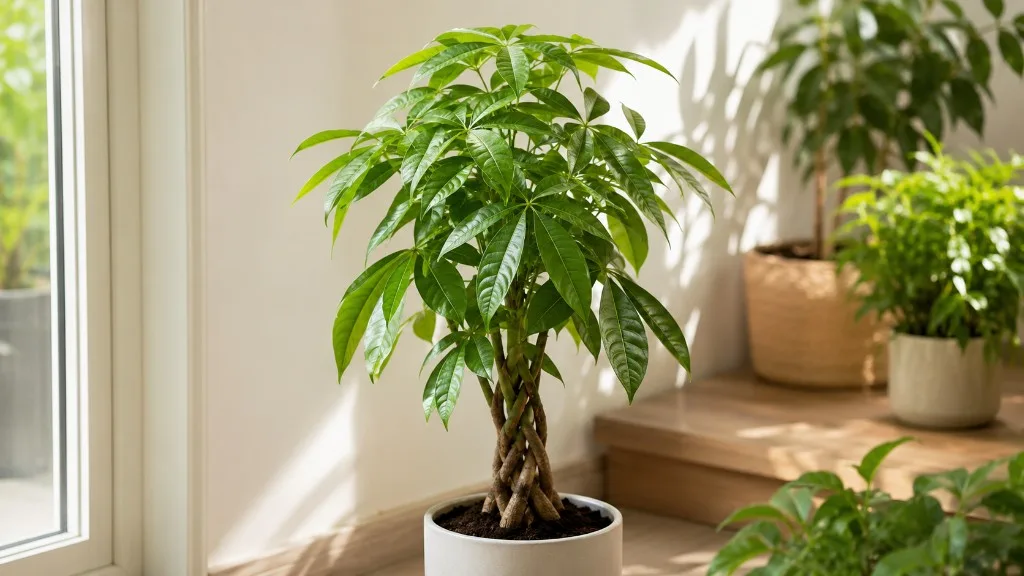
Money tree works beside entry consoles visible from the living room or in transition zones between open-plan spaces. Its braided trunk – trained at the nursery, not grown that way naturally – provides instant sculptural interest without waiting years for a tree to develop character. The palmate leaves add a distinct texture that contrasts well with broad-leaf statement plants nearby.
Why it works: Instant sculptural trunk at nursery size. No other common indoor plant delivers this much trunk interest at purchase.
Care tip: Keep the soil at the braid points from staying soggy. Water pooling where trunks intertwine invites rot.
Common mistake: Overwatering based on the species name aquatica. Despite the “water” association, money tree roots rot in consistently wet soil – let the top layer dry between waterings.
Avoid this plant if: You need verified pet-safe floor placement. Toxicity data for money tree is inconsistent across sources – assume toxic unless you confirm otherwise with your specific variety.
Useful care guides:
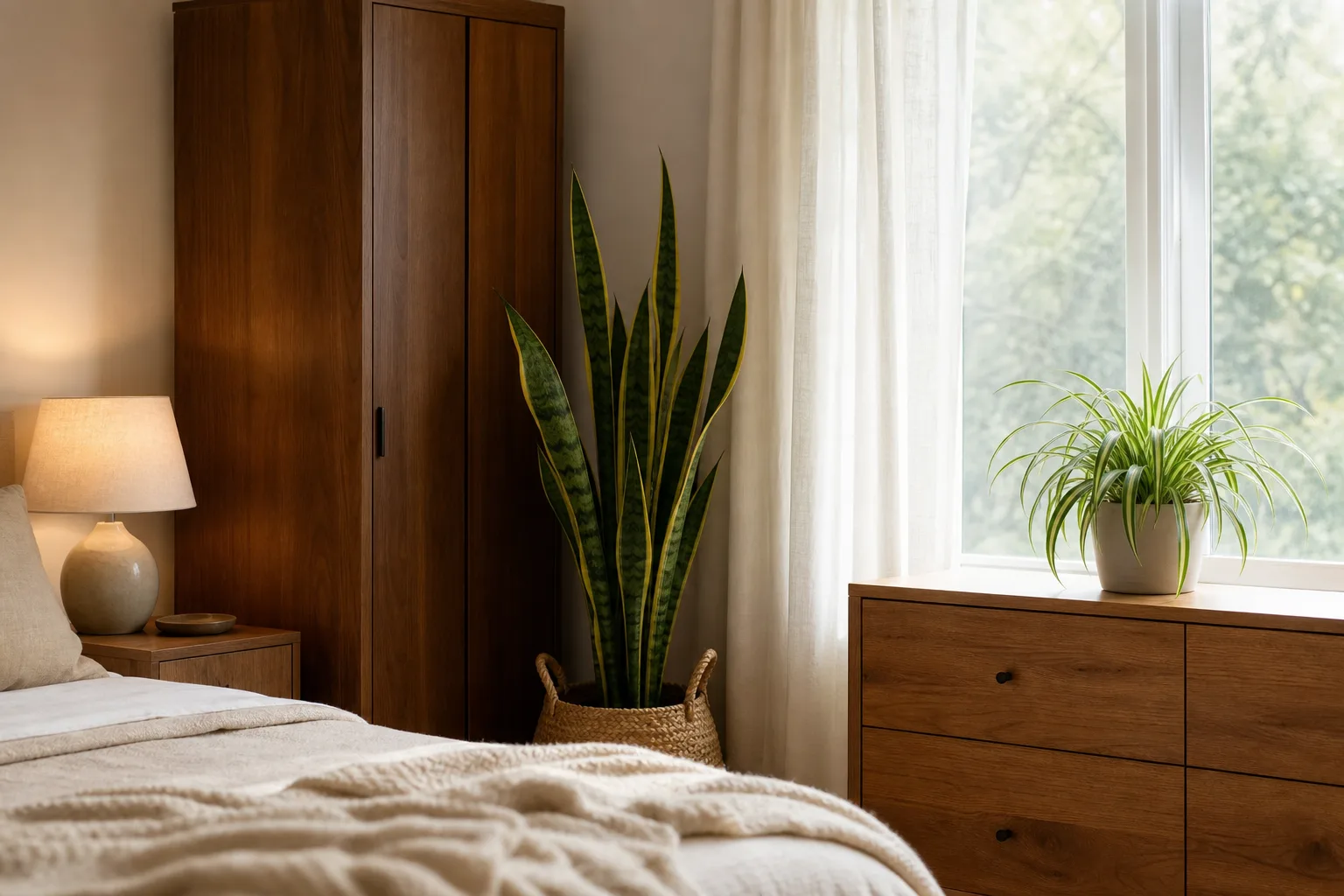
10. Snake Plant
Best for: dim living room corners and low-maintenance balance
Difficulty: Easy | Light: Low to bright indirect | Water: Fully dry between
Pet safety: Toxic | Typical indoor size: 2–4 ft upright
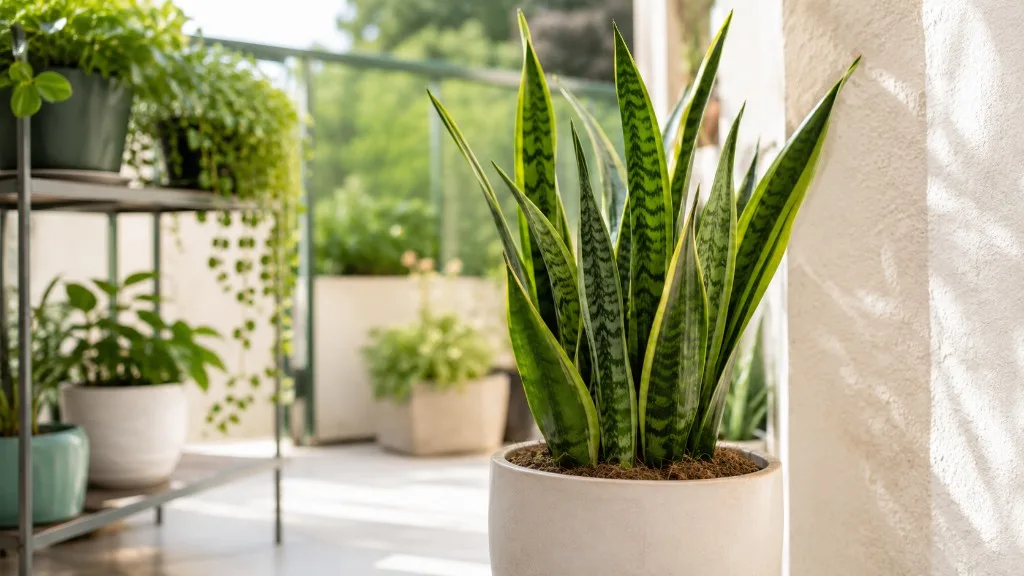
Snake plant is the supporting cast, not the star, in most living rooms. Use it where sofas block window light and a tropical statement would fail. Its upright, architectural leaves add vertical lines in dark zones without demanding premium real estate near windows. Snake plant converts CO₂ to oxygen at night via CAM photosynthesis – useful, though the practical air-quality impact of one plant in a ventilated room is negligible.
Why it works: Survives the darkest viable living room zones where every other plant on this list would decline. It tolerates fluorescent light, indirect window spill, and the dim space behind a sectional.
Care tip: Pair dim placement with infrequent watering. A snake plant in low light might need water once a month or less – overwatering in dark conditions causes root rot faster than neglect.
Common mistake: Using snake plant as the only plant in a bright living room. You are wasting good window light on a plant that does not need it. Put your light-hungry statement plant there and move the snake plant to the dark corner.
Avoid this plant if: You want a single dramatic focal point. Snake plant reads as background greenery, not a centerpiece.
Useful care guides:
- Snake Plant care guide
- Snake Plant light guide
- Snake Plant watering guide
- Snake Plant propagation guide
11. ZZ Plant
Best for: near-zero-maintenance dark corners
Difficulty: Easy | Light: Low to bright indirect | Water: Fully dry between
Pet safety: Toxic | Typical indoor size: 2–4 ft
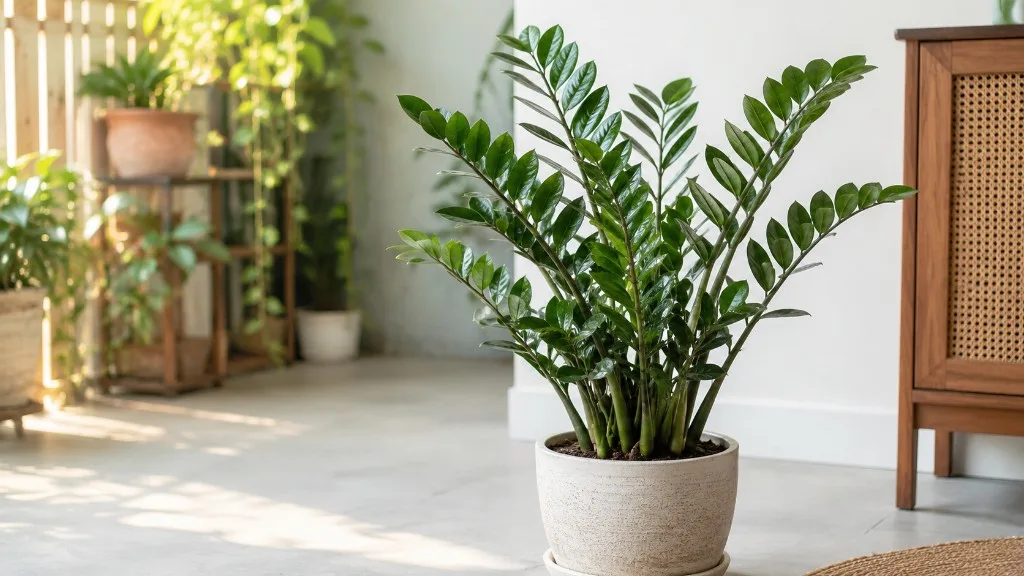
ZZ plant is the plant you buy when every other plant has died in that one corner and you refuse to give up. Its waxy, dark green leaves reflect light in a way that makes dim spaces feel intentional rather than neglected. ZZ stores water in potato-like rhizomes, surviving weeks or even a month without attention – longer than snake plant in equivalent conditions.
Why it works: The most light-tolerant indoor plant that still looks like a deliberate decor choice. Glossy leaves read as polished, not struggling.
Care tip: Wipe leaves with a damp cloth every two months. The waxy surface repels dust naturally, but buildup still accumulates in living rooms near kitchens or open windows.
Common mistake: Watering on a schedule instead of checking soil. A ZZ in low light may go 4–6 weeks between waterings – a weekly schedule will rot the rhizomes.
Avoid this plant if: Pets or small children may chew the leaves and stems. All parts of ZZ plant contain calcium oxalate crystals and are toxic when ingested.
Useful care guides:
12. Peace Lily
Best for: flowering console accent in medium-to-low light
Difficulty: Easy to medium | Light: Low to medium indirect | Water: Keep slightly moist
Pet safety: Toxic | Typical indoor size: 1–3 ft
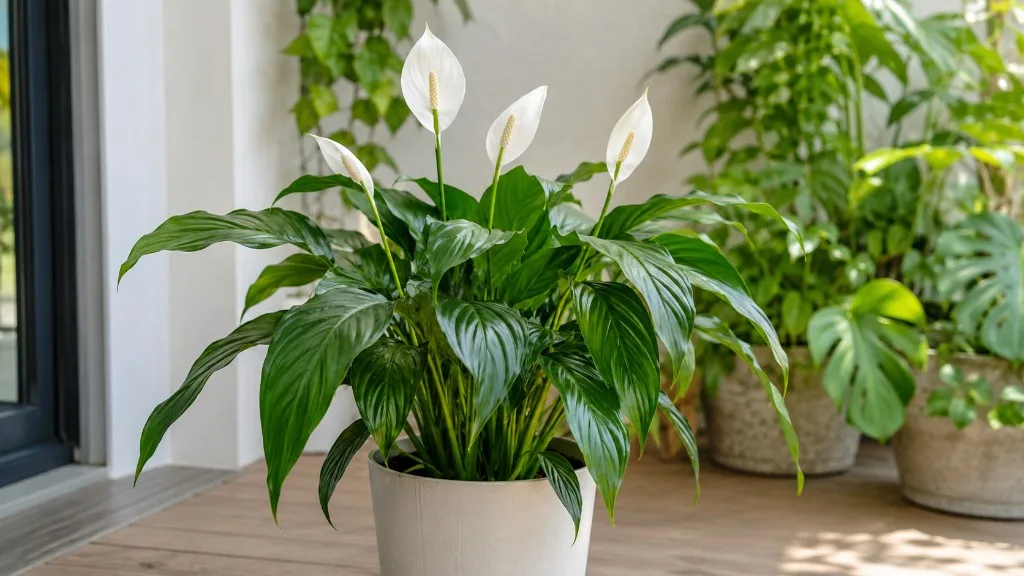
Peace lily earns its spot on living room console tables and side tables for one reason: it flowers in light conditions where most blooming plants refuse. The white spathes appear sporadically throughout the year and last for weeks. When it needs water, the leaves droop dramatically – a built-in reminder system that makes it hard to accidentally kill.
Why it works: Flowers in medium-to-low light. No other common indoor bloomer tolerates living room light levels this forgiving. The glossy dark leaves look polished even between bloom cycles.
Care tip: Water when leaves just begin to droop – not sooner, not much later. Peace lily’s dramatic wilt is a reliable signal; learn to read it rather than watering on a fixed schedule.
Common mistake: Placing peace lily in bright direct light expecting more flowers. Direct sun scorches the leaves. Peace lily flowers most reliably in medium indirect light, not bright.
Avoid this plant if: Pets routinely access surfaces at table height. Peace lily contains calcium oxalate crystals that cause oral irritation, drooling, and vomiting if chewed.
Useful care guides:
13. Aglaonema
Best for: colorful foliage in low-to-medium light zones
Difficulty: Easy | Light: Low to medium indirect | Water: Top half of soil dry
Pet safety: Toxic | Typical indoor size: 1–3 ft
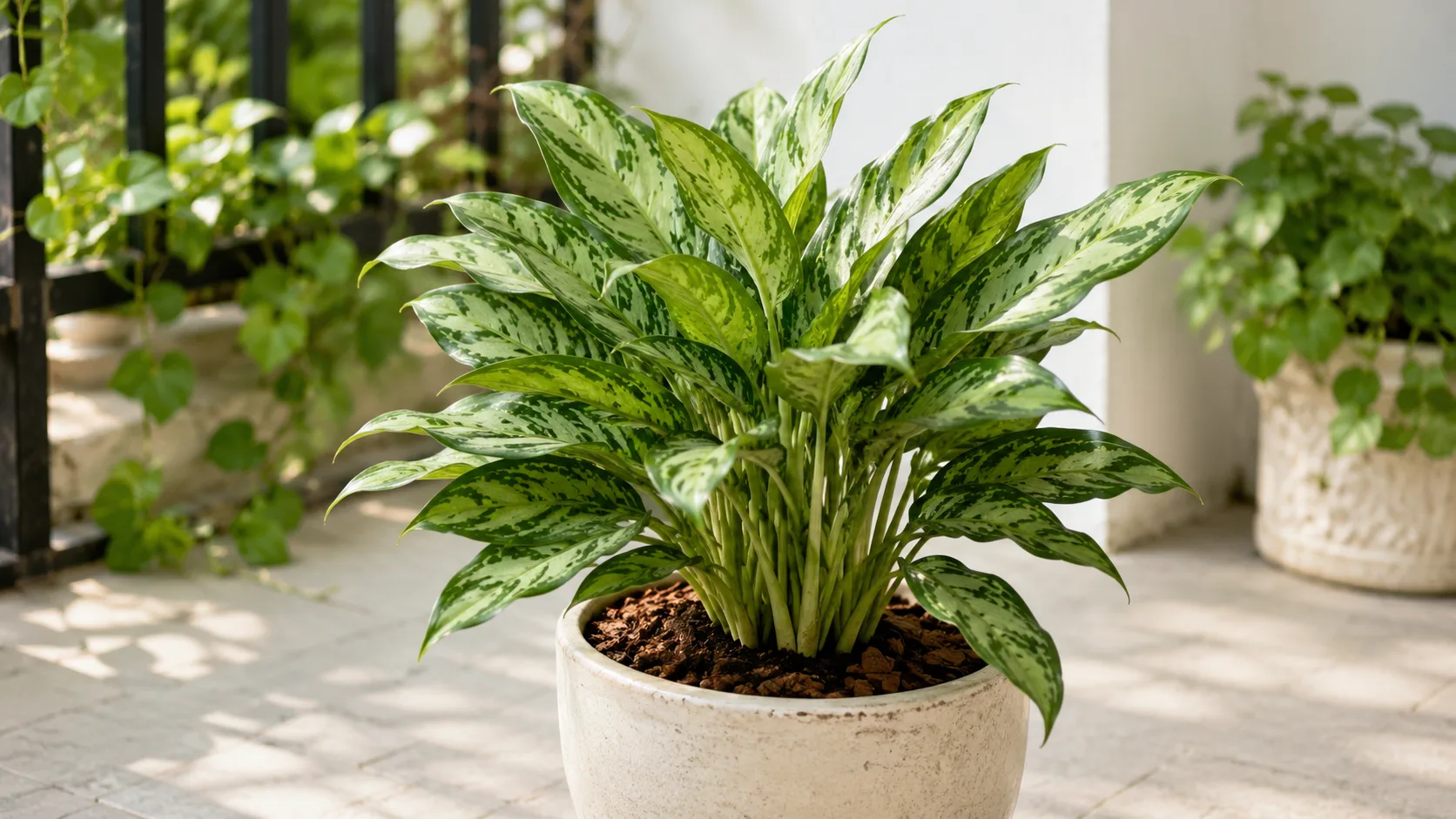
Aglaonema – commonly called Chinese evergreen – brings pink, red, silver, and cream variegation into living room zones where colorful plants typically fade to solid green. Most variegated plants need bright light to maintain their patterns. Aglaonema holds its color in medium and even low indirect light, making it the best option for a colorful accent on a side table or shelf that does not get direct window exposure.
Why it works: Color without bright light. The speckled, striped, and blotched foliage patterns on varieties like ‘Silver Bay’ and ‘Red Siam’ stay vivid in conditions where calathea and croton would lose their markings.
Care tip: Avoid cold drafts from frequently opened doors. Aglaonema is sensitive to temperatures below 60°F and will develop yellow lower leaves in response.
Common mistake: Overwatering in low light. Aglaonema in dim conditions needs water less often than you think – wait until the top half of the soil is dry, not just the surface.
Avoid this plant if: You have pets that chew anything at coffee-table height. Aglaonema contains calcium oxalate crystals and is toxic when ingested.
Useful care guides:
14. Pothos
Best for: trailing greenery on shelves, mantels, and bookcases
Difficulty: Easy | Light: Low to bright indirect | Water: Top 2 inches dry
Pet safety: Toxic | Typical indoor size: Vines 6–10 ft
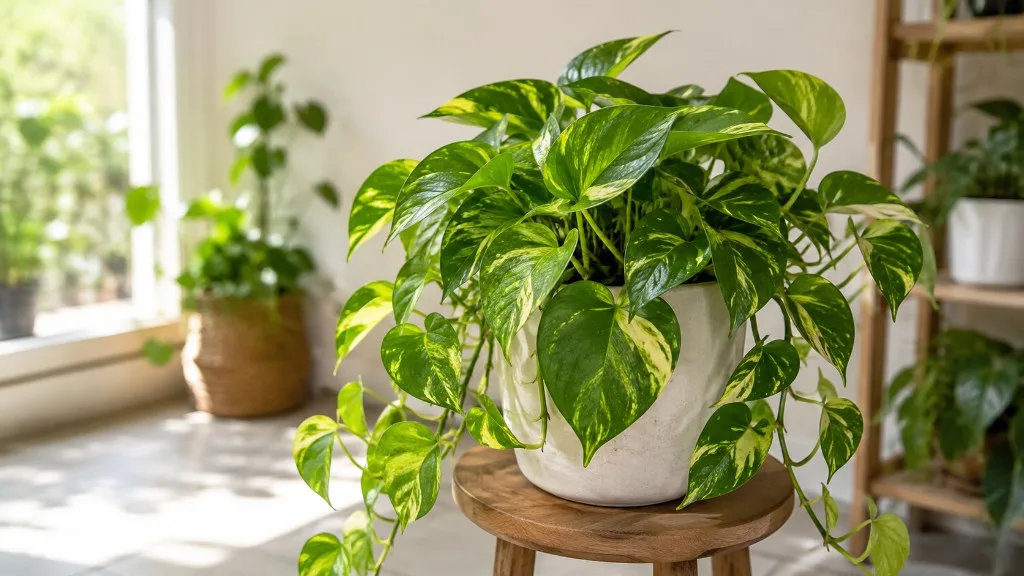
Pothos is the living room plant that costs $15 at a nursery and transforms a bare shelf into something that looks styled. Its heart-shaped leaves trail down from bookcases, mantels, and console tables, softening hard furniture edges and filling vertical dead space that art does not reach. Golden pothos, marble queen, and neon varieties offer different color profiles for different decor palettes.
Why it works: Maximum visual coverage per dollar. A single pothos can trail six feet within a year in good light, covering more linear shelf space than any other plant at its price point.
Care tip: Trim vines that reach the floor before they get stepped on or tangled in vacuum cords. Pothos grows fast enough that pruning does not set it back.
Common mistake: Placing pothos in a dark corner and expecting the same growth rate as a bright windowsill. In low light, vines stretch with fewer, smaller leaves and wider gaps between nodes.
Avoid this plant if: Pets can reach trailing vines from floor level. Pothos is toxic when ingested, and dangling vines are irresistible to cats.
Useful care guides:
15. Spider Plant
Best for: hanging baskets and high shelves in bright-to-medium light
Difficulty: Easy | Light: Medium to bright indirect | Water: Top 2 inches dry
Pet safety: ASPCA non-toxic | Typical indoor size: 1–2 ft with trailing runners
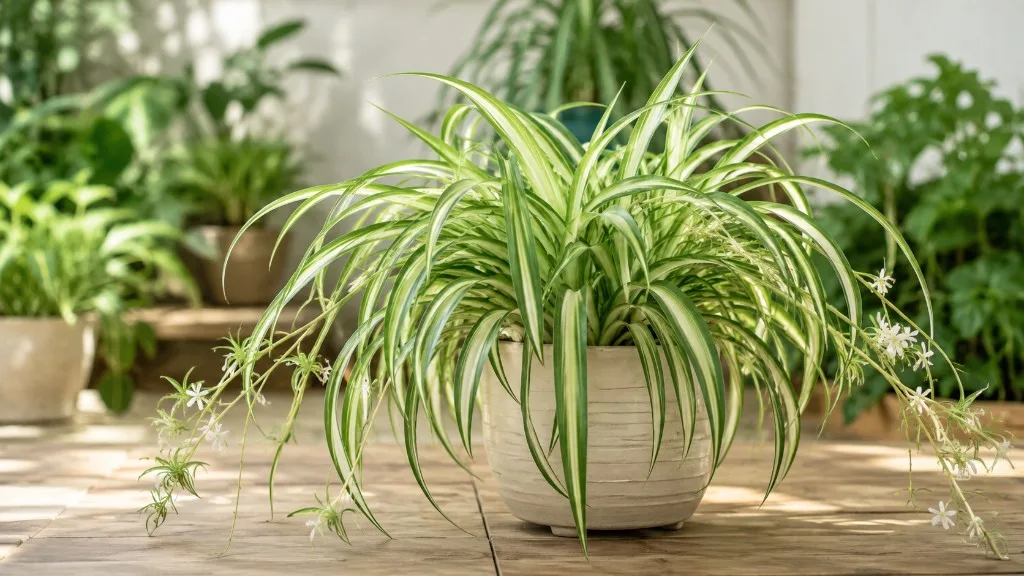
Spider plant earns the final spot for pet owners who want hanging or shelf greenery without toxicity concerns. It produces baby plantlets on long runners – “spiderettes” – that dangle below the mother plant, creating a layered effect from hanging baskets or high shelves. Spider plant is one of the few trailing plants verified non-toxic to both cats and dogs.
Why it works: Trailing display without toxicity risk. The arching, grass-like leaves and dangling offsets add movement and layers that pothos cannot match in pet-safe form.
Care tip: Brown leaf tips are almost always from fluoride or chlorine in tap water, not underwatering. Switch to filtered, distilled, or rainwater if tips bother you – but the plant itself is fine either way.
Common mistake: Placing spider plant in direct afternoon sun. The leaves bleach and crisp within days. Medium-to-bright indirect light produces the best color and most plantlets.
Avoid this plant if: You want floor-scale impact. Spider plant maxes out at about two feet across – it is an accent, not a statement.
Useful care guides:
- Spider Plant care guide
- Spider Plant light guide
- Spider Plant watering guide
- Spider Plant propagation guide
Common Living Room Plant Mistakes
Three competing focal plants in one sightline. A monstera, fiddle leaf fig, and bird of paradise in the same room reads as a nursery, not a designed space. Anchor one corner with your statement plant and use smaller species elsewhere.
Plants on the floor in main walkways. Floor plants need at least six inches of clearance behind furniture traffic lines. Pots in footpaths get kicked, tipped, and eventually resented.
Ignoring HVAC vents. Hot dry air from floor registers browns palm tips and stresses fiddle leaf figs within weeks. Redirect vents with deflectors or move pots seasonally – a plant’s winter position may need to differ from its summer spot.
Decorative pots without drainage. Cachepots without holes rot roots on heavy floor specimens you cannot easily lift and inspect. Either drill drainage holes, use a nursery pot inside the decorative pot, or choose plants like snake plant and ZZ that tolerate occasional overwatering better than most.
Watering all plants on the same day. A monstera in bright light dries out faster than a ZZ in a dark corner. Group plants by watering need, not by decor zone.
Choosing plants before measuring light. The most common reason living room plants die is not underwatering or pests – it is being placed in a light condition the plant cannot survive. Check your light before you check your cart.
How to Style Plants in Your Living Room
The One-Focal-Point Rule
Every sightline needs exactly one plant that draws the eye first. In a living room, this is usually the plant closest to the main window – the one getting the most light and growing the largest. Everything else supports it. If you have an open-plan space with two sightlines (living room → dining area, for example), each zone gets its own focal plant, separated by enough distance that they do not visually compete.
Height Layering
Place plants at three heights: floor (statement plants at 4–8 feet), console or table (mid-height plants at 2–4 feet), and shelf or hanging (trailing plants above eye level). This creates depth that a single-height arrangement cannot. A room with only floor plants looks bottom-heavy. A room with only shelf plants looks disconnected from the furniture.
Trailing Plants on Shelves and Consoles
Pothos and spider plant belong on surfaces at least four feet off the ground – high enough that vines hang freely without pooling on the floor. Position trailing plants at the ends of shelves or bookcases, not the center, so vines frame the display rather than covering books and objects.
Conclusion
Bright living rooms with good windows: start with monstera deliciosa or rubber plant as your focal point. Add a dracaena or yucca in secondary zones. Finish with pothos trailing from a shelf.
Medium-light living rooms with east or partially shaded windows: lead with philodendron selloum or money tree. Accent with aglaonema on side tables and snake plant in the darkest corners.
Pet-aware living rooms at any light level: areca palm for floor height, spider plant for hanging or shelf display. Both carry ASPCA non-toxic listings.
Low-light living rooms with small or north-facing windows: build around ZZ plant and snake plant on the floor, peace lily on consoles, and pothos on high shelves. Accept that large statement plants will struggle without supplemental grow lights.
One intentional floor plant plus two to three thoughtful accents beats a jungle you cannot keep evenly watered. Match light zones before you match furniture. The plant that thrives in your specific living room is always better than the one trending online.