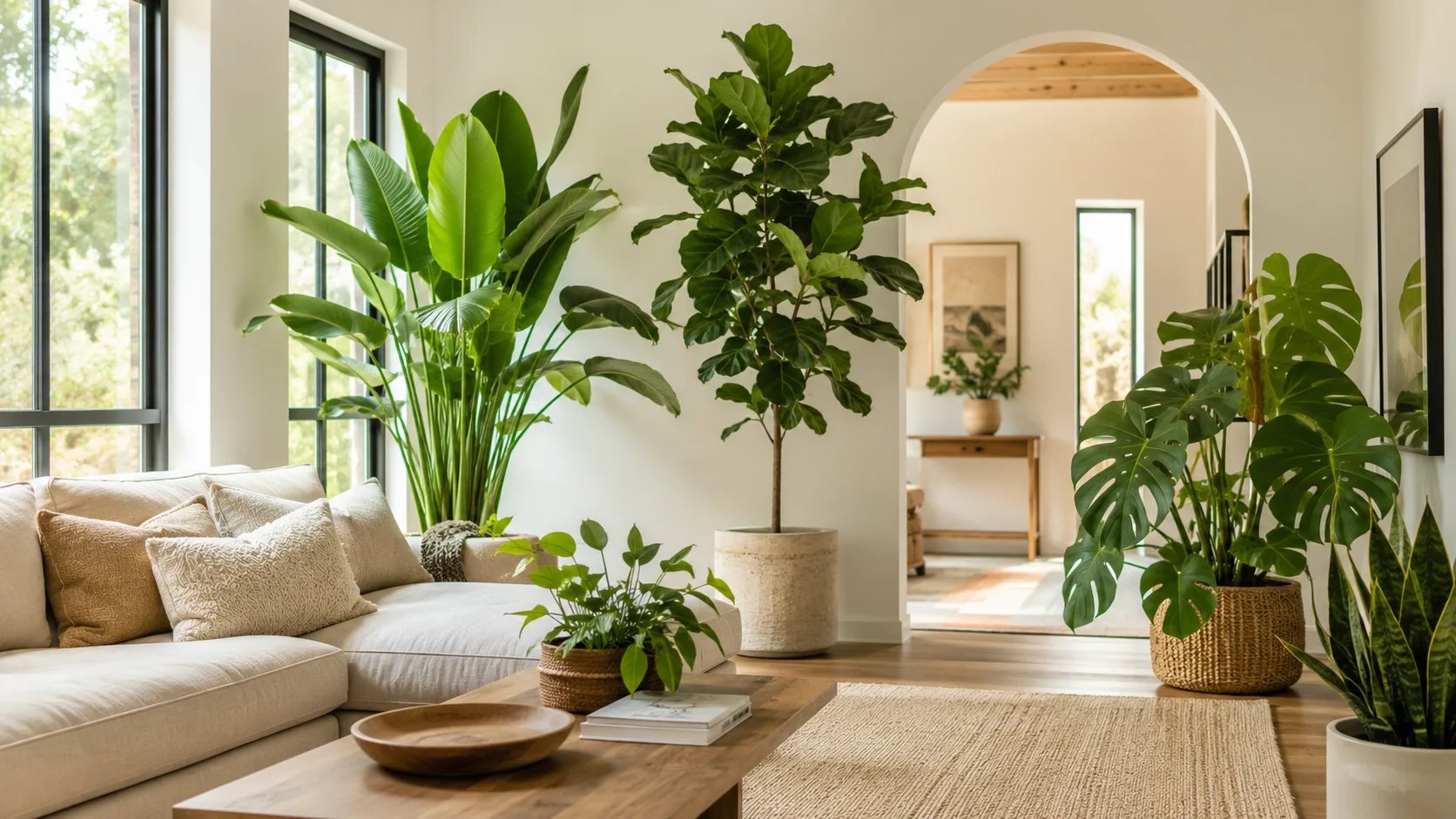
A large indoor plant should anchor the room—not fight it. The best floor specimens fill vertical space without outgrowing your ceiling, tolerate the light you actually have, and stay manageable in a container. Buying for Instagram scale alone is how renters end up with a six-foot fiddle leaf fig in a north-facing corner and a moving bill.
If you want a filterable quick list from LeafyPixels metadata, browse plants tagged for size in Small Indoor Plants for the opposite end of the scale. This guide goes deeper: ten floor-scale species compared by height, light, watering, pet safety, and the placement mistakes that keep big plants small.
The 10 best large indoor plants for most homes are monstera deliciosa, fiddle leaf fig, rubber plant, bird of paradise, yucca plant, dracaena, philodendron selloum, areca palm, money tree, and Norfolk Island pine. They are not interchangeable—some need bright south windows, others tolerate medium light, and mature height indoors ranges from four feet to well over eight.
Editor note (corner placement): In typical apartments, the plant that looks best in a empty corner is often two to four feet from the nearest window—not pressed against the wall where light drops sharply. Pulling the pot forward even 18 inches frequently improves leaf size more than fertilizer does.
Quick Pick: Best Large Plant for Your Room
For the most forgiving tall tropical in a bright room, choose rubber plant or monstera deliciosa. Both grow visibly when light is adequate, recover from occasional watering mistakes better than fiddle leaf fig, and deliver the “big leaf” look beginners want.
For architectural height with lower watering demands, choose yucca plant or dracaena. Yucca’s cane form reads modern; dracaena varieties add color stripes without monstera’s spread.
For soft tropical volume in a pet-aware home, choose areca palm. The ASPCA lists areca palm as non-toxic to cats and dogs—rare among floor-scale palms. It needs bright indirect light and steady moisture, not drought cycles.
For a statement tree that rewards patience, choose fiddle leaf fig—but only if you have a stable bright window and will not move the pot weekly. Fiddle leaf figs sulk after relocation and overwatering.
For holiday texture that is not a true cold-hardy pine, choose Norfolk Island pine in cool, bright rooms. It is a living-room conifer look-alike that still behaves like a tropical houseplant indoors.
How to Choose a Large Indoor Plant
Judge floor plants against four factors before you haul a heavy ceramic pot upstairs: ceiling height, window light, watering habit, and long-term width.
University extension guidance treats light as the primary limit indoors—big leaves need energy to stay large. A plant in a dim corner may survive while leaves shrink and internodes stretch. (University of Maryland Extension)
Measure Height and Spread First
Mature indoor height is not the label at the nursery today. Monstera and philodendron selloum widen as they age; bird of paradise needs width for paddle leaves. Leave headroom for ceiling fans and allow two to three feet of pot footprint plus leaf clearance from sofas and walkways.
Match Light to Leaf Size
Bright indirect light means a comfortable reading spot by day without harsh afternoon sun burning leaves for hours. South and west windows suit fiddle leaf fig, bird of paradise, and yucca; east windows suit monstera and rubber plant; areca palm wants brightness but burns in hot direct sun.
Plan for Repotting and Weight
Large plants in heavy pots are hard to move once established. Use saucers with wheels or place the final pot where it will live for years. Repot in spring when roots circle the drainage holes—one pot size up only. (University of Florida IFAS)
How We Selected These Ten
These ten were chosen for indoor floor impact, nursery availability, distinct silhouettes, and LeafyPixels care depth—not because they are the only tall houseplants worth growing.
We excluded outdoor trees that fail indoors without greenhouse conditions and skipped species without enough on-site guidance. Peace lily and snake plant grow large in time but read as medium specimens compared to monstera or bird of paradise—see Beginner-Friendly Houseplants for forgiving starters at smaller scale.
Large Indoor Plants Compared
*ASPCA lists areca palm non-toxic to cats and dogs; chewing any plant can still upset stomachs.
The 10 Best Large Indoor Plants
1. Monstera Deliciosa
Best for: tropical living rooms, moss-pole vertical growth, bright indirect windows.
Difficulty: Easy to medium
Light: Bright indirect
Water: When top 2 inches of soil dry
Best placement: Floor pot 3–5 ft from south or west window
Pet safety: Toxic to cats and dogs per ASPCA
Typical indoor size: 6–10 ft with support; leaves 12–18 in wide
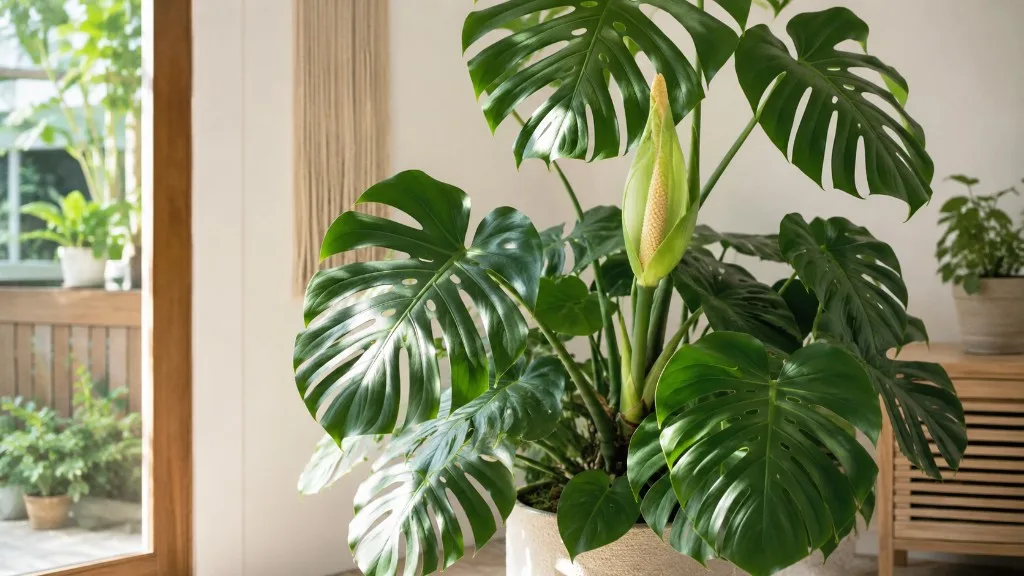
Monstera deliciosa (Monstera deliciosa) is the default large indoor plant for good reason: huge perforated leaves, vigorous growth in good light, and a habit that climbs when given a moss pole. It reads “designed interior” without needing flawless care.
The trade-off is space and pet toxicity. Monstera spreads horizontally as it matures; a corner pot can occupy four feet of floor width. Aerial roots are normal—not a crisis. ASPCA lists monstera as toxic to pets.
Why it works: Maximum leaf drama per plant with faster growth than most floor trees.
Care tip: Wipe dust off leaves monthly—big surfaces collect grime that blocks light.
Common mistake: Staking too late; start a moss pole while the plant is still flexible.
Avoid this plant if: You have a low ceiling under eight feet and no pruning plan.
Useful care guides:
2. Fiddle Leaf Fig
Best for: sculptural tree silhouette, bright modern living rooms.
Difficulty: Medium to hard
Light: Bright indirect; some morning sun
Water: When top 2 inches dry—consistent, not soggy
Best placement: Stable spot by large window; avoid HVAC vents
Pet safety: Toxic to cats and dogs per ASPCA
Typical indoor size: 6–10 ft; single trunk or branched form
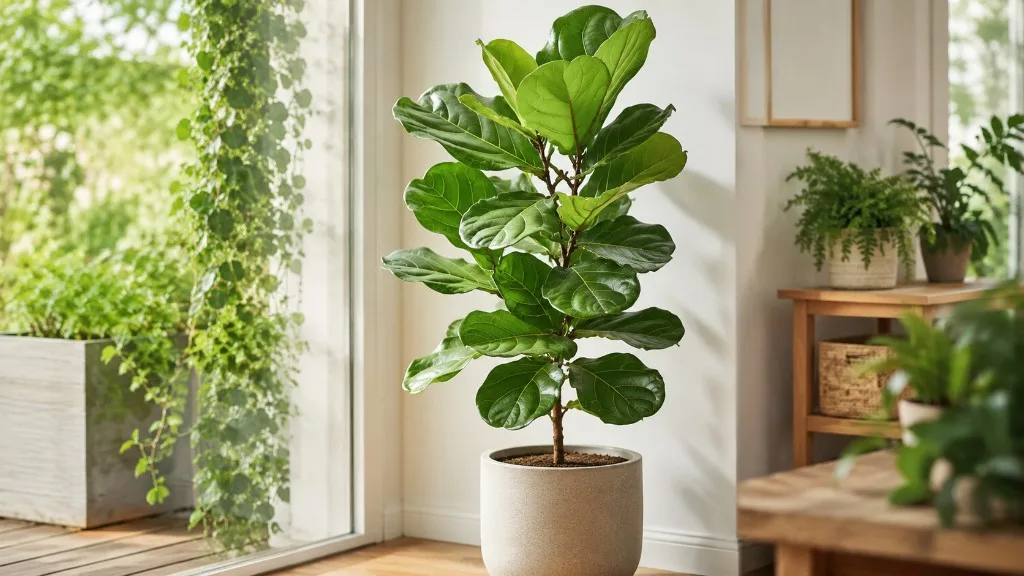
Fiddle leaf fig (Ficus lyrata) delivers the iconic single-trunk tree look designers photograph. Leaves are enormous when light is strong; the plant becomes a room landmark.
The trade-off is sensitivity. Fiddle leaf figs drop leaves after moves, hate wet cold soil, and brown from inconsistent watering. They are not the best first large plant—rubber plant forgives more.
Why it works: Unmatched vertical sculpture in bright spaces.
Care tip: Rotate a quarter turn monthly for even growth instead of dramatic relocations.
Common mistake: Repotting immediately after purchase into a huge decorative pot.
Avoid this plant if: Your brightest window is more than eight feet away with no grow light.
Useful care guides:
3. Rubber Plant
Best for: beginners wanting height, glossy leaves, medium-to-bright rooms.
Difficulty: Easy
Light: Bright indirect
Water: When top 2 inches of soil dry
Best placement: Corner near east or filtered south window
Pet safety: Toxic to cats and dogs per ASPCA
Typical indoor size: 6–8 ft; upright unless pruned
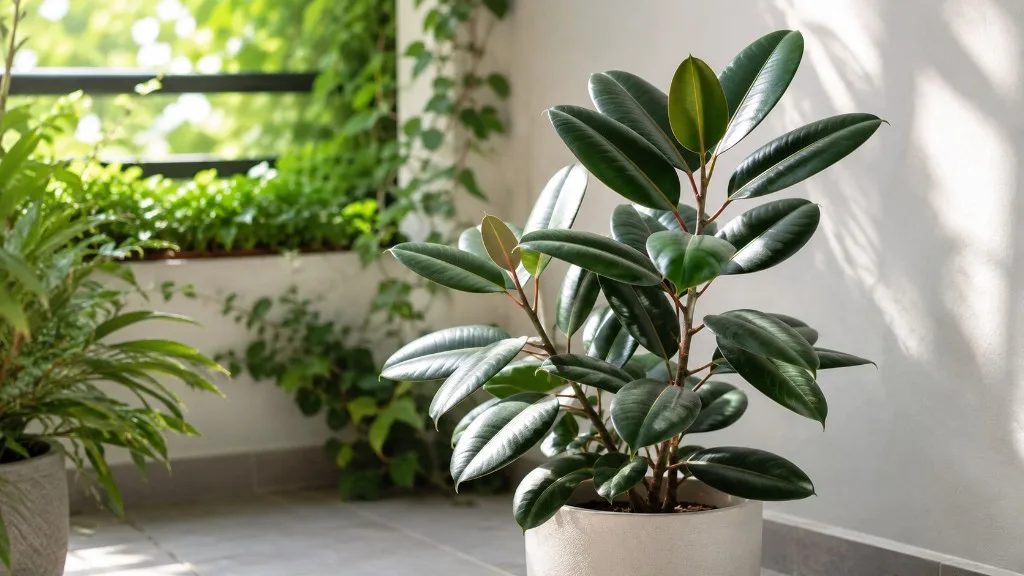
Rubber plant (Ficus elastica) is the large plant we recommend most often to beginners who want height without fiddle leaf drama. Thick leaves tolerate average indoor humidity; growth is steady in adequate light.
The trade-off is pet toxicity and eventual size. Burgundy and variegated cultivars need more light than classic green. Sap can irritate skin when pruning—wash hands after cuts.
Why it works: Forgiving Ficus relative with true floor presence.
Care tip: Pinch top growth to encourage branching if you want a bushier form.
Common mistake: Overwatering in winter when light is weaker and soil stays wet longer.
Avoid this plant if: Pets chew floor-level leaves—choose areca palm instead.
Useful care guides:
4. Bird of Paradise
Best for: wide paddle leaves, sunny living rooms, tropical drama.
Difficulty: Medium
Light: Bright indirect to some direct sun
Water: Steady moisture when top inch dries
Best placement: Bright bay window or sunroom floor
Pet safety: Toxic to cats and dogs per ASPCA
Typical indoor size: 5–7 ft; leaves span 18–24 in
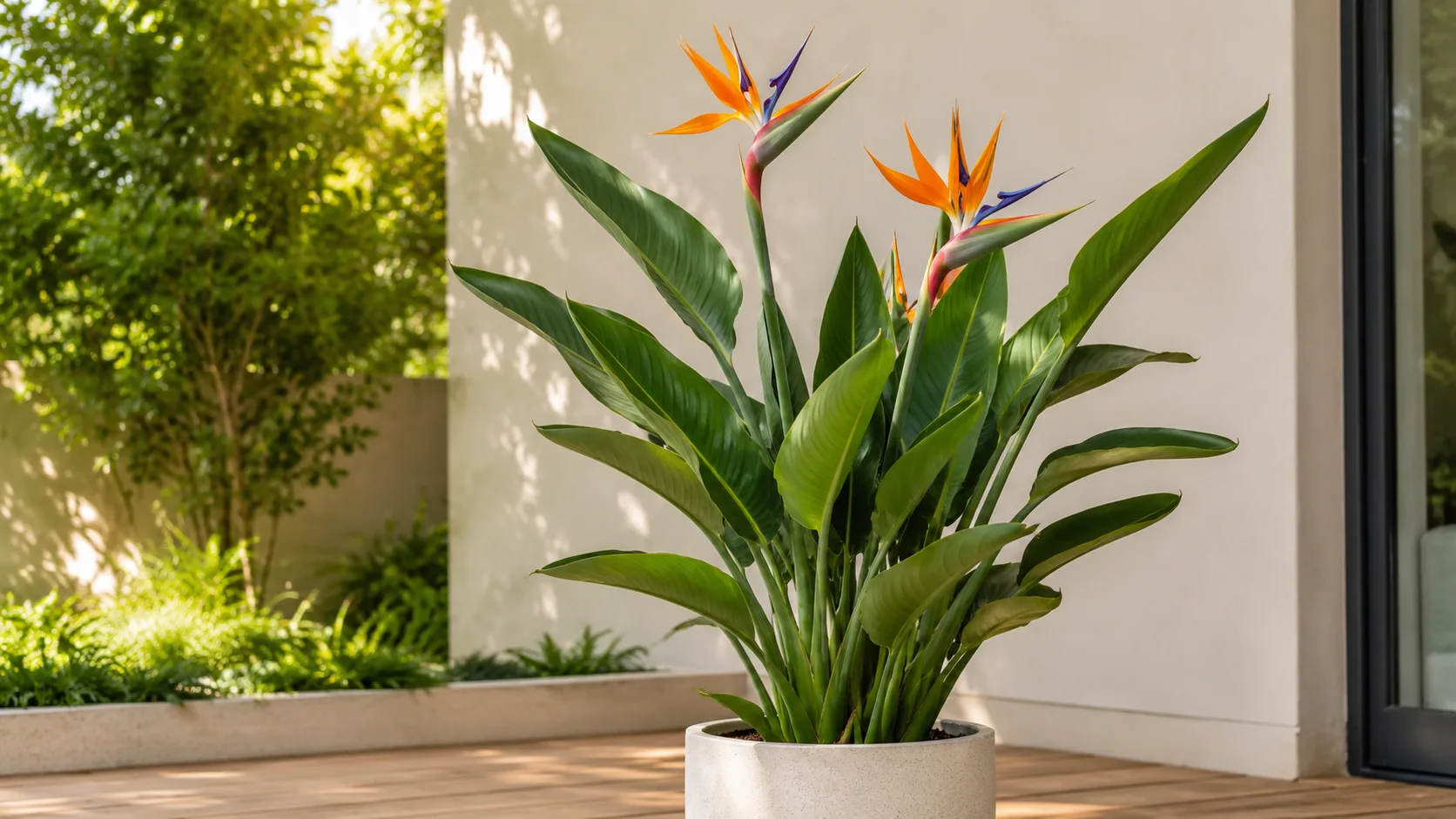
Bird of paradise (Strelitzia nicolai or S. reginae indoors) brings resort-hotel scale with banana-like leaves. It needs brightness—dim rooms produce smaller leaves on long petioles.
The trade-off is width and expectations. Indoor bird of paradise rarely flowers without exceptional light; buy it for foliage, not orange blooms. Leaves tear in wind near balcony doors—normal, not disease.
Why it works: Broadleaf tropical mass without vining chaos.
Care tip: Use a heavy pot; top-heavy leaves tip light containers.
Common mistake: Buying for flowers in a typical apartment window.
Avoid this plant if: You only have north-facing light—see Low-Light Indoor Plants.
Useful care guides:
5. Yucca Plant
Best for: modern cane form, dry air, bright rooms, low watering frequency.
Difficulty: Easy
Light: Bright indirect to direct sun indoors
Water: Dry thoroughly between waterings
Best placement: Sunny living room or office atrium
Pet safety: Toxic to cats and dogs per ASPCA
Typical indoor size: 4–8 ft multi-trunk cane
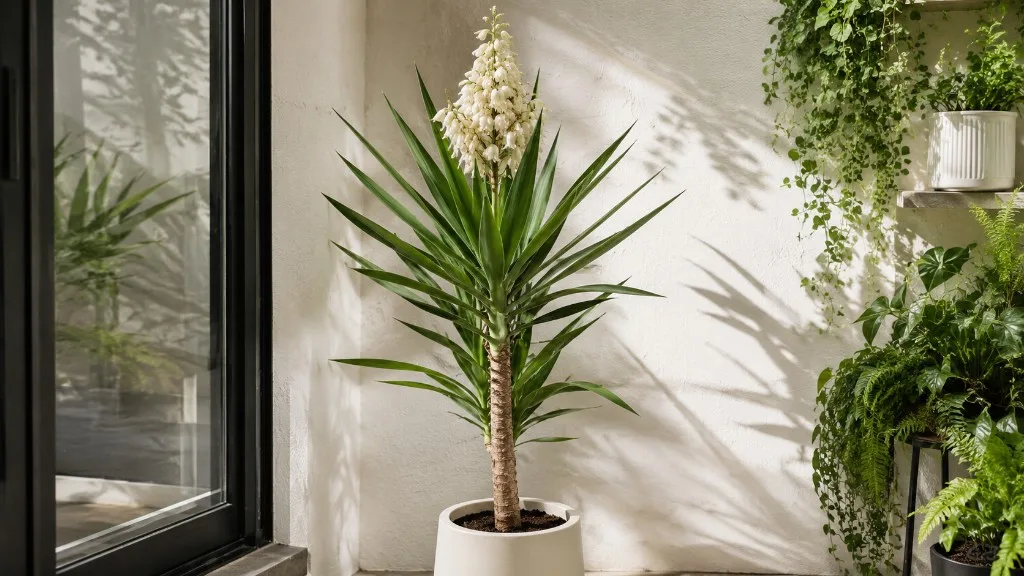
Yucca plant (Yucca elephantipes) offers stacked trunks and spiky leaves—sculptural without tropical humidity demands. It suits renters who forget to water and run dry heating in winter.
The trade-off is sharp leaf tips and light hunger. Yucca in dim corners loses lower leaves and looks leggy. Not ideal for homes with running toddlers or curious dogs at eye level.
Why it works: Drought-tolerant floor height for bright, dry rooms.
Care tip: Rotate the pot so all cane faces get light—otherwise growth leans hard.
Common mistake: Planting in heavy peat soil that stays wet around thick roots.
Avoid this plant if: You want soft, pet-safe fronds—choose areca palm.
Useful care guides:
6. Dracaena
Best for: upright color, medium-light corners, office lobbies.
Difficulty: Easy
Light: Medium to bright indirect
Water: When top half of soil dries
Best placement: Living room corner away from cold drafts
Pet safety: Toxic to cats and dogs per ASPCA
Typical indoor size: 5–8 ft depending on variety
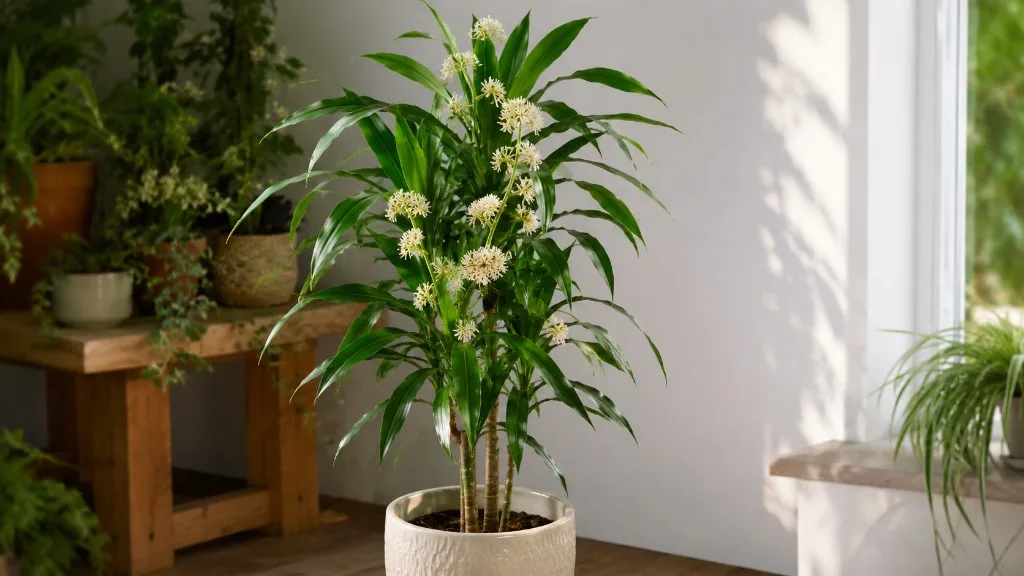
Dracaena (Dracaena spp.) covers corn plant, marginata, and fragrans types—striped leaves on woody stems that read “indoor tree” without monstera spread. Tolerates medium light better than bird of paradise.
The trade-off is fluoride sensitivity in some cultivars—brown leaf tips on tap water are common. Fluoride-free or filtered water helps if tips persist despite good watering.
Why it works: Tall form with lower humidity demands than palms.
Care tip: Wipe leaves and leach soil occasionally if brown tips spread up new growth.
Common mistake: Keeping dracaena beside exterior doors with winter cold drafts.
Avoid this plant if: Pets chew woody stems at floor level.
Useful care guides:
7. Philodendron Selloum
Best for: lush floor tropical mass, medium-bright living rooms.
Difficulty: Easy to medium
Light: Medium to bright indirect
Water: When top 2 inches of soil dry
Best placement: Wide corner with clearance for arching leaves
Pet safety: Toxic to cats and dogs per ASPCA
Typical indoor size: 5–6 ft tall and wide; deeply lobed leaves
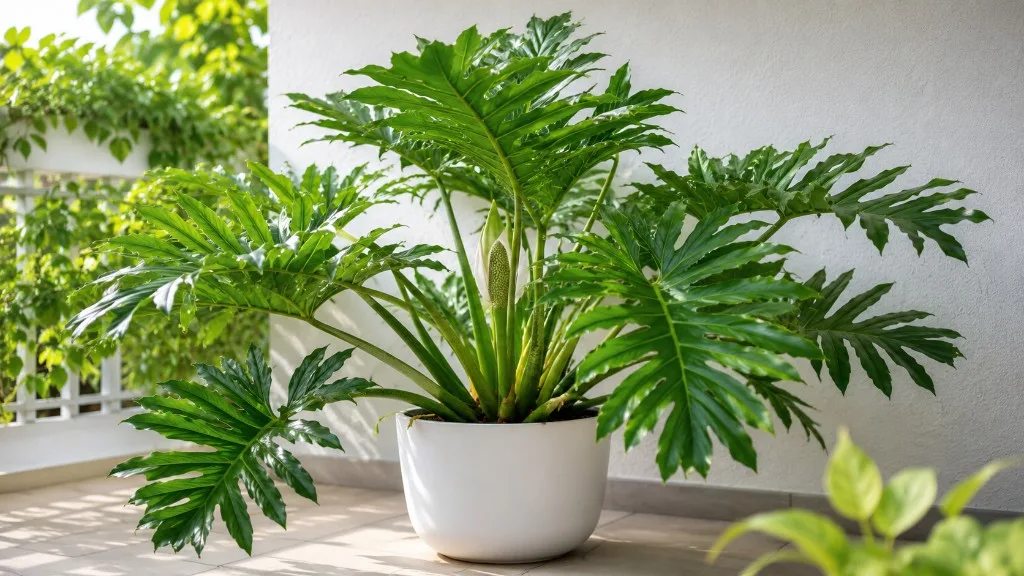
Philodendron selloum (Thaumatophyllum bipinnatifidum, formerly Philodendron selloum) fills floor space with deep-cut leaves that look prehistoric at scale. Growth is vigorous when watered and lit correctly.
The trade-off is horizontal spread—this is not a narrow corner plant. Sap irritates skin; keep away from chewing pets. Lower leaves yellow naturally as the trunk forms; do not panic-trim everything.
Why it works: Wide tropical presence without climbing hardware.
Care tip: Give elbow room—leaves arch outward two to three feet.
Common mistake: Squeezing into a tight alcove where leaves get crushed against walls.
Avoid this plant if: You need a slim vertical silhouette—choose yucca or dracaena.
Useful care guides:
8. Areca Palm
Best for: pet-aware homes, soft height, bright living rooms.
Difficulty: Medium
Light: Bright indirect
Water: Steady moisture when top inch dries
Best placement: Bright corner with humidity from grouping plants
Pet safety: ASPCA-listed non-toxic to cats and dogs
Typical indoor size: 6–8 ft clumping fronds
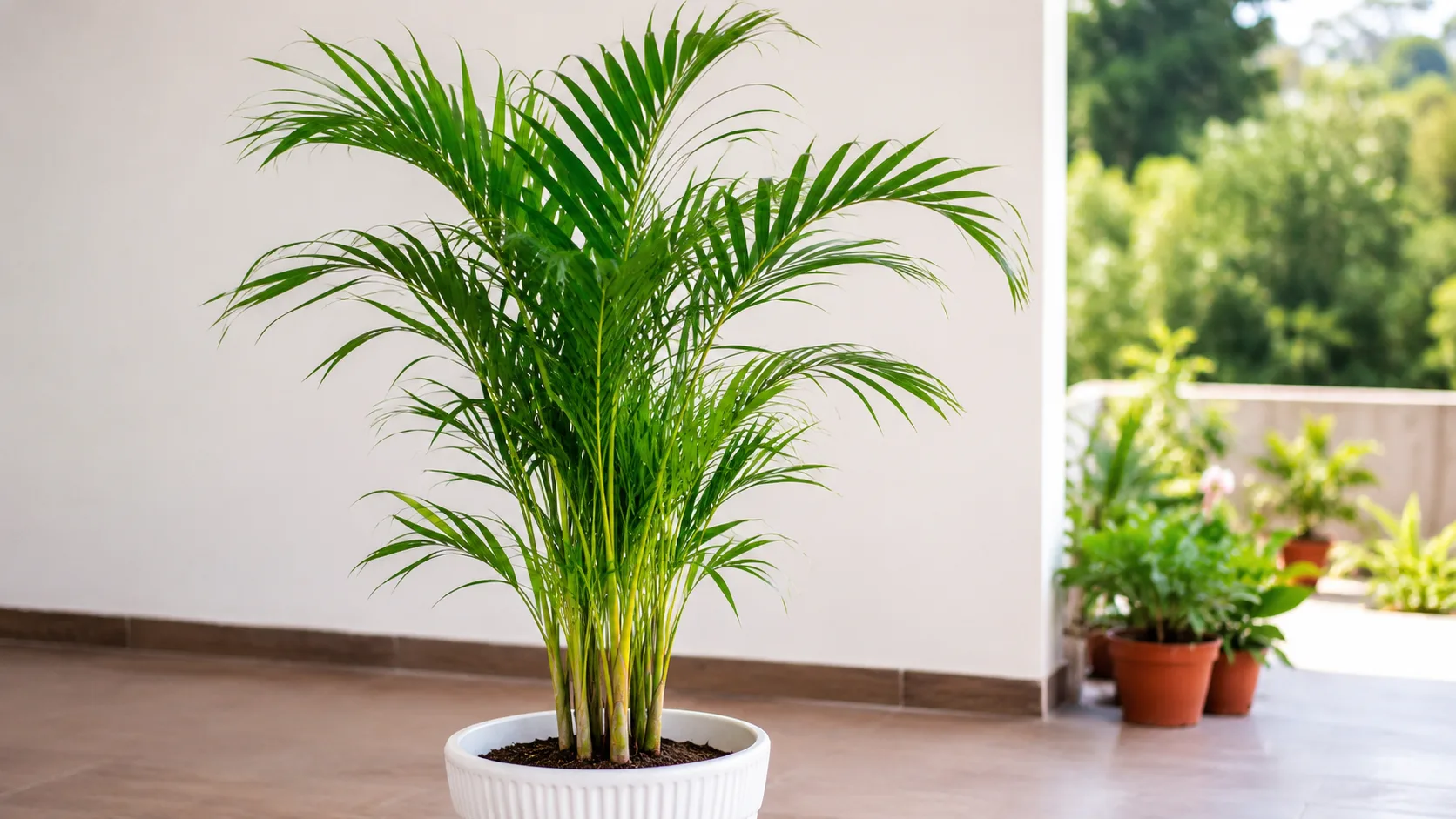
Areca palm (Dypsis lutescens) is one of the few floor-scale plants that is both tall and ASPCA-listed non-toxic to cats and dogs. Feathery fronds soften modern furniture without fiddle leaf rigidity.
The trade-off is moisture and light—areca browns in dry, dark rooms. Spider mites appear when air is arid; shower fronds or use a humidifier nearby in winter.
Why it works: Pet-safe vertical softness when light is adequate.
Care tip: Group with other plants or use a pebble tray to raise local humidity.
Common mistake: Treating areca like a snake plant in a dim hallway.
Avoid this plant if: You cannot keep soil lightly moist in bright light—choose yucca.
Useful care guides:
9. Money Tree
Best for: braided trunk focal point, bright offices and living rooms.
Difficulty: Easy to medium
Light: Bright indirect
Water: When top 2 inches of soil dry
Best placement: Entry table or floor by east window
Pet safety: Verify nursery ID—common houseplant money tree differs from outdoor species
Typical indoor size: 6–8 ft with age
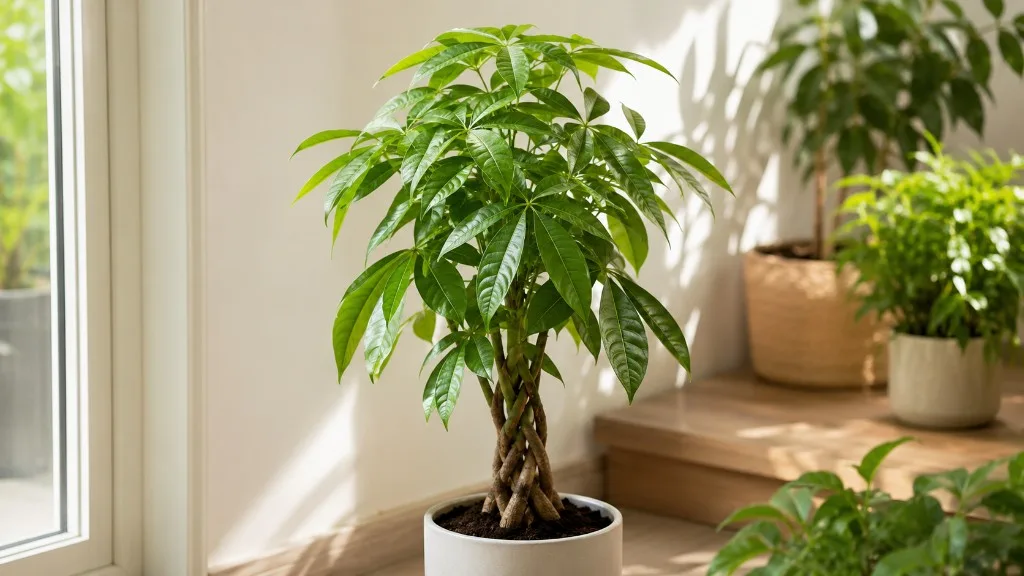
Money tree (Pachira aquatica in most nurseries) sells with braided trunks that read intentional even when young. Palmate leaves are lighter in texture than rubber plant—good contrast beside leather sofas.
The trade-off is overwatering sensitivity despite the “aquatica” name. Braided trunks trap moisture at the braid points if soil stays soggy. Confirm you have the houseplant species, not a landscape tree with the same common name.
Why it works: Built-in sculptural trunk without years of training.
Care tip: Water less in winter; let soil dry slightly deeper when growth slows.
Common mistake: Daily watering because the name suggests wetland culture indoors.
Avoid this plant if: You need proven pet-safe floor placement—verify toxicity for your exact plant.
Useful care guides:
10. Norfolk Island Pine
Best for: soft conifer aesthetic, cool bright rooms, holiday styling.
Difficulty: Medium
Light: Cool, bright indirect—needs strong indoor light
Water: Even moisture; do not dry completely for long
Best placement: Bright living room away from heat registers
Pet safety: Toxic to cats and dogs per ASPCA
Typical indoor size: 6–10 ft over years indoors
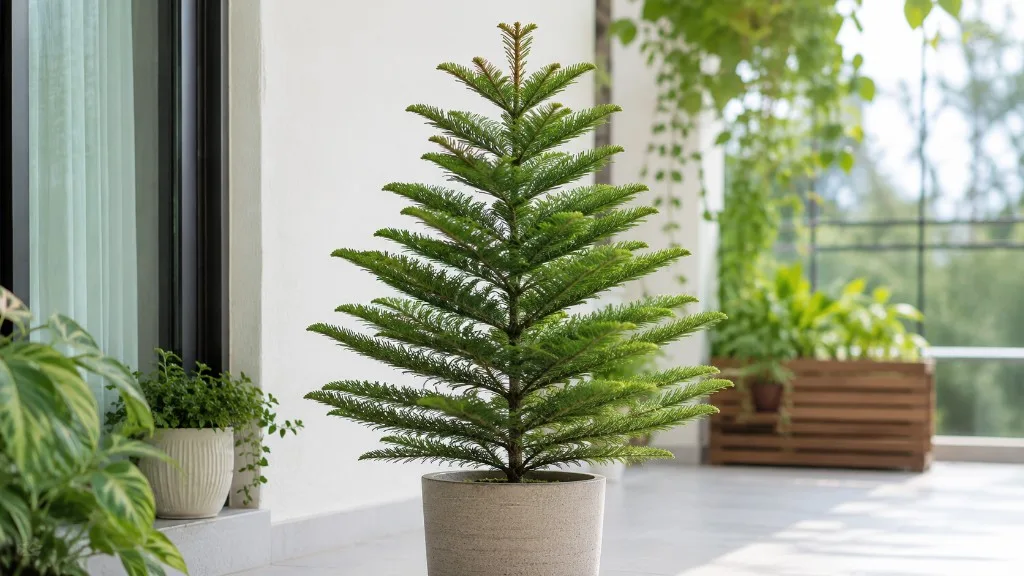
Norfolk Island pine (Araucaria heterophylla) is not a true pine—it is a tropical conifer that hates dry heat and dark corners. In cool, bright rooms it offers symmetrical tiers that read evergreen without outdoor cold hardiness.
The trade-off is humidity and temperature. Brown tips follow dry winter air and hot vents. It is not a disposable holiday plant if you want height later—treat it as a long-lived houseplant.
Why it works: Unique silhouette among tropical floor plants.
Care tip: Keep away from fireplaces and radiator blasts; misting alone rarely fixes dry air.
Common mistake: Discarding after December instead of moving to the brightest window year-round.
Avoid this plant if: Your room runs hot and dry 24/7—choose dracaena or yucca.
Useful care guides:
Common Mistakes With Large Indoor Plants
Buying height before measuring light. A six-foot specimen in a dark corner will shed lower leaves until it matches the energy available. Test your spot with the shadow-hand method before purchase.
Skipping drainage for aesthetics. Cachepots without holes are the fastest way to rot roots on a heavy plant you cannot easily repot. Use an inner nursery pot with holes or drill drainage.
Moving statement plants weekly. Fiddle leaf fig, bird of paradise, and even monstera sulk after relocations. Pick the final spot, then leave it.
Overpotting after purchase. Jumping from a 10-inch grow pot to a 20-inch decorative pot holds excess water around roots for weeks. Size up one inch at a time.
Ignoring horizontal spread. Philodendron selloum and monstera need clearance—not just ceiling height.
Conclusion
For the best balance of impact and forgiveness, start with rubber plant or monstera deliciosa in a bright room. For pet-safe floor height, choose areca palm with a humidity plan. For sculptural drama when you have stable bright light, graduate to fiddle leaf fig after you have kept one large plant healthy for a season.
One well-placed floor plant defines a room better than three struggling corners. Match light first, measure second, buy third—and link out to species watering and light guides when you bring the pot home.