Dish Soap on Plants: Safer Pest Control Alternatives
Dish soap on plants can strip leaf cuticles and cause burn. Learn the safer soap distinction, what to do after spraying, and a plant-first pest plan.
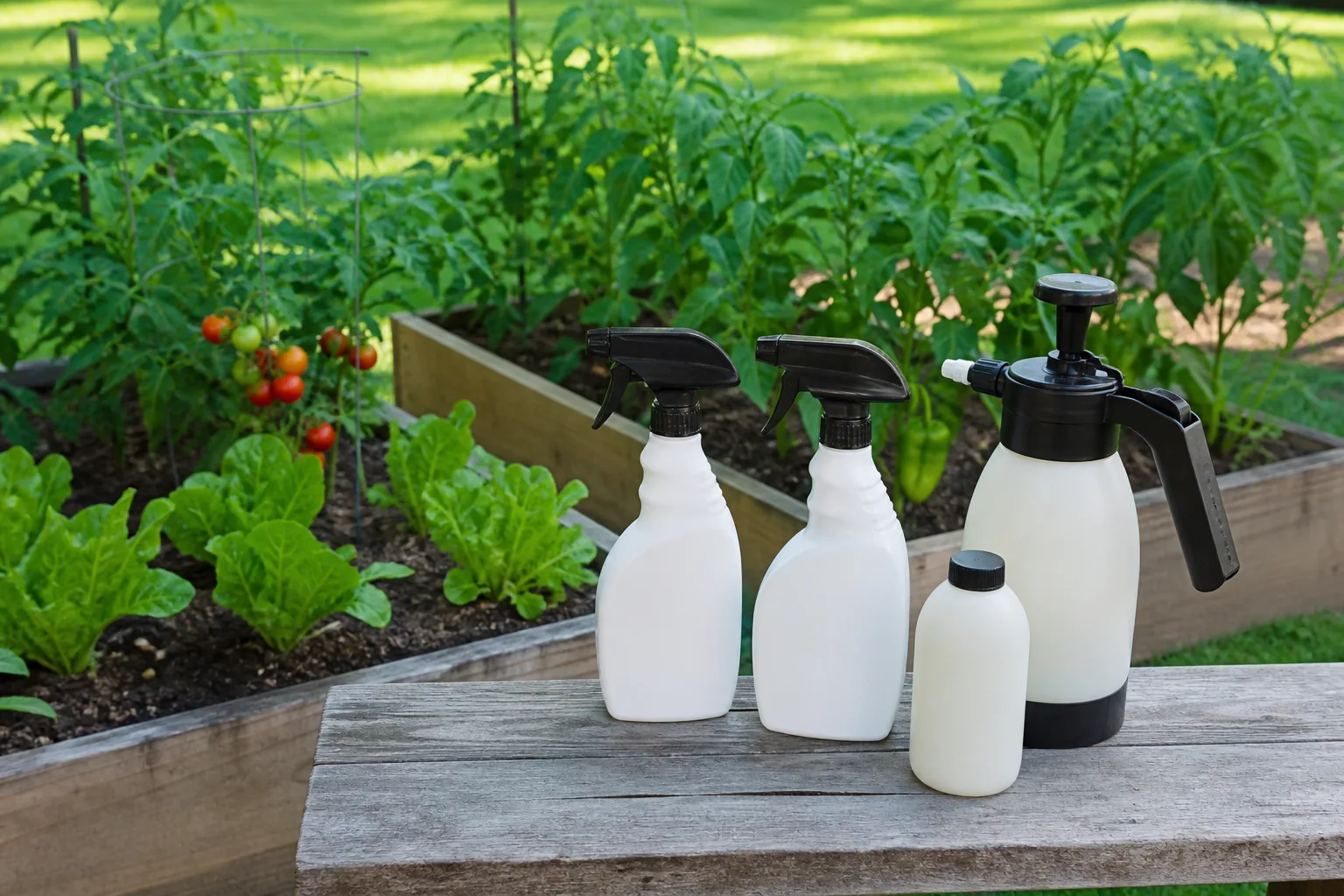
The DIY pest solution most likely to backfire is a squirt of household dish detergent mixed with water and sprayed over living foliage. It may knock down a few aphids, but a cleaner designed to dissolve grease can also strip the leaf’s protective surface, leave scorched patches, and turn a manageable pest problem into a plant-recovery problem.
The important distinction is not whether a bottle says “soap,” “natural,” or “gentle” on the front. It is whether the product is a pesticide formulated and labeled for plants, whether the target pest is exposed to a contact spray, and whether the plant and weather can tolerate the application. Household dish detergent is not a dependable substitute for labeled insecticidal soap.
That does not mean every garden pest requires a harsh chemical. A better plan begins with identification and monitoring, then uses barriers, hand removal, sanitation, natural enemies, and a targeted product only when the damage justifies it. Here is how to make that decision without sacrificing your leaves or the insects that help your garden.
Short answer: skip household dish detergent on living leaves
Do not spray ordinary dishwashing liquid, laundry detergent, all-purpose cleaner, or a fragranced degreaser over garden plants. These products are blends made to remove food oils and grime from hard surfaces; their surfactants, solvents, fragrances, dyes, preservatives, and other additives are not selected or tested for plant safety. Colorado State University Extension specifically advises against home remedies made from household liquid soaps or cleaning products as pesticides because their formulation is inconsistent and can injure plants, soil, and waterways. (Colorado State University Extension)
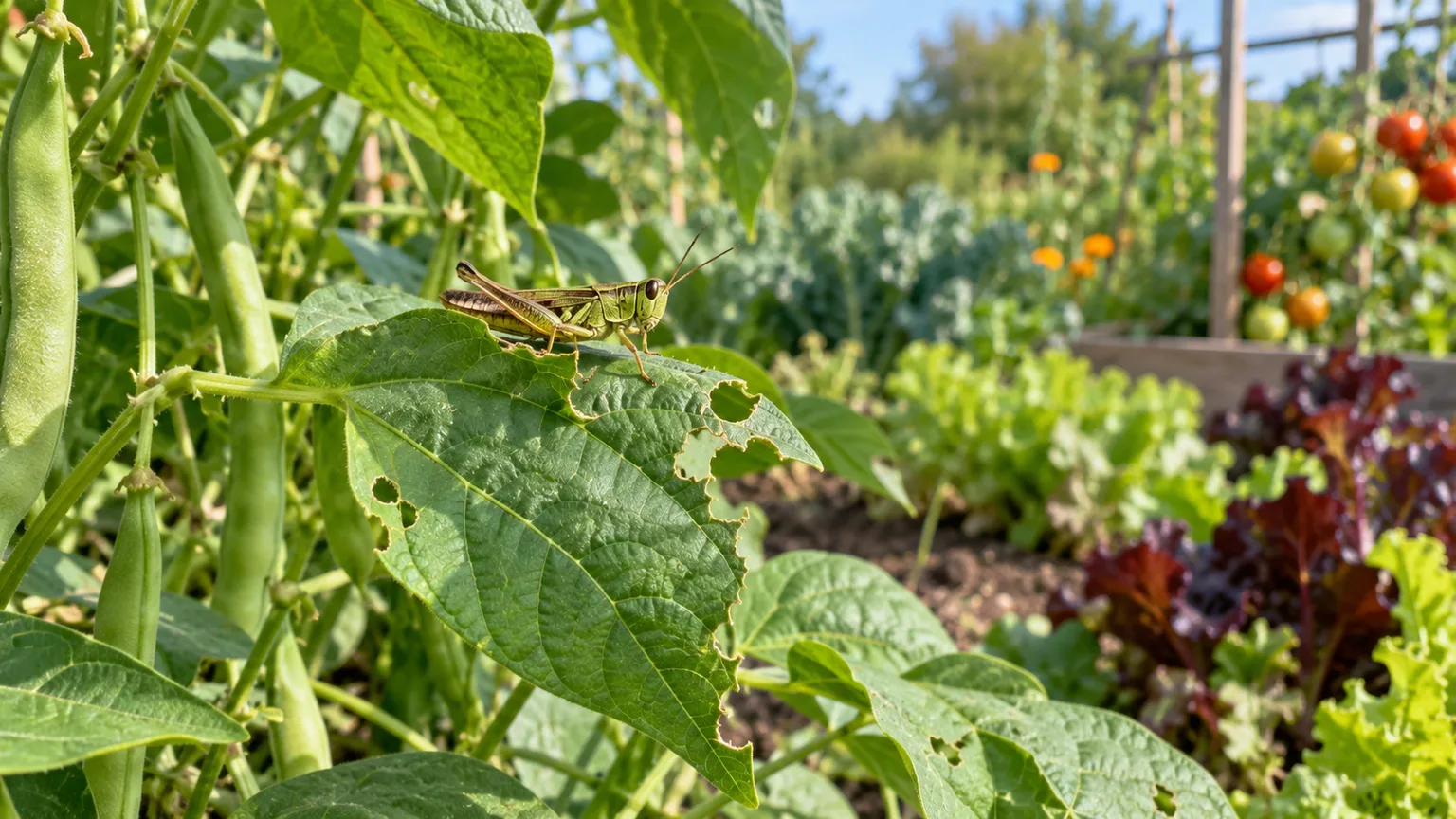
If a plant has a few aphids, first ask whether those aphids are actually causing meaningful damage. Established plants can often tolerate a small population, and a strong stream of plain water may dislodge exposed colonies. If the pest is spreading across new growth, distorting leaves, weakening seedlings, or threatening a crop you need to protect, move to a method designed for that pest rather than reaching for the kitchen sink.
The word detergent matters because a diluted product is not automatically safe. Water reduces concentration, but it does not remove the chemistry that makes the liquid good at dissolving oils. A low-dose spray may appear harmless on the first day, while repeated applications, hot sun, drought, tender new growth, or a sensitive cultivar push the plant past its tolerance.
Why dish detergent injures foliage
Leaves are not bare green surfaces. Their outermost layer includes a waxy cuticle that slows water loss and helps shield the underlying epidermal cells from weather, pathogens, and abrasion. Dish detergents are engineered to loosen grease, so when they spread over a leaf they can disturb the same oily compounds that help the leaf manage moisture.
That is why “it is safe enough for dishes” is the wrong comparison. A ceramic plate has no living cells, pores, or water-balance system to protect. A leaf does. Once its surface barrier is compromised, sun, wind, low humidity, and heat can dry the tissue faster than the plant can replace water.
Cuticle and cell membrane damage
The visible injury is called phytotoxicity, meaning chemical damage to a plant. It can look like tiny brown flecks, translucent patches, scorched margins, crispy tips, yellow stippling, or a larger bleached area where droplets dried. In more serious cases, treated leaves wilt or drop even though the roots were watered correctly.
The mechanism is straightforward. Surfactants can remove or disrupt the cuticle, and stronger or repeated exposure can injure cell membranes beneath it. The damaged cells lose their normal ability to hold water, so the tissue dies in spots rather than the entire plant collapsing at once. That patchy pattern is one reason gardeners sometimes blame the sun, fertilizer, or a disease that was not there before the spray.
The risk is not identical for every plant. Thin-leaved seedlings, unrooted cuttings, ferns, some succulents with sensitive surfaces, and plants already stressed by drought or heat have less margin for error. Waxy or glaucous leaves can also show an altered bloom or coating even when the tissue does not immediately die. University of Connecticut Extension lists plant vigor, cultivar, spray concentration, pH, temperature, humidity, timing, and frequency as factors that influence soap injury. (University of Connecticut Extension)
Why the damage can appear later
A spray can look successful at sunset and harmful by the following afternoon. Droplets dry into a more concentrated residue as water evaporates, and the combination of detergent residue plus direct sun can scorch the areas where the liquid pooled. A plant that was already thirsty may show the same damage more quickly because it cannot replace water lost through a compromised cuticle.
Repeated exposure is another hidden problem. Household recipes often encourage spraying every few days because the pests return. That can create a cycle in which the gardener removes some aphids, burns more leaf area, sees the plant weaken, and then assumes an even stronger mix is needed. Colorado State notes that leaf damage from soap can accumulate with repeated exposure, even when short residual action makes repeat treatments tempting. (Colorado State University Extension)
The timing also matters for the insects. Soap products work by direct contact; they do not sterilize the soil, travel through the plant, or protect new leaves after they dry. If aphids are tucked inside curled foliage, spider mites are hidden on leaf undersides, or scale eggs have not hatched, a blanket spray can coat a lot of plant surface while missing the stage you need to control.
Dish detergent versus insecticidal soap
Insecticidal soap is a category of pesticide, not a synonym for anything bubbly. Commercial products use selected potassium salts of fatty acids and are formulated, tested, and sold with directions for target pests, plants, application rates, and precautions. Household dish detergents may share some surface-active behavior, but they contain different blends and do not give you the same predictable margin of safety.
| Product | What it is made for | How it works | Main limitation or risk |
|---|---|---|---|
| Household dish detergent | Removing grease from dishes | May disrupt soft-bodied insects, but formulation varies | Can strip the cuticle and burn foliage; not a reliable plant pesticide |
| Labeled insecticidal soap | Managing listed plant pests | Kills exposed pests by contact, disrupting membranes and protective waxes | Needs thorough coverage, can still injure sensitive plants, and has no lasting residual effect |
| Plain water spray | Dislodging exposed pests | Physical removal from leaves and stems | Misses protected pests and does not prevent reinfestation |
| Barrier or row cover | Excluding pests before they reach the crop | Physically blocks insects, birds, or mammals | Must be installed correctly and may need removal during flowering |
The safest default is to use a product whose label specifically lists your crop or ornamental and the pest you identified. “Organic,” “botanical,” “natural,” and “non-toxic” are not substitutes for reading the label. A product can be useful and relatively low-risk while still irritating skin, harming aquatic organisms, burning foliage in hot weather, or affecting a non-target insect that is directly sprayed.
What a labeled insecticidal soap actually is
Modern insecticidal soaps are generally potassium salts of fatty acids. The fatty-acid chains interact with the cell membranes and protective coatings of small, soft-bodied arthropods, causing rapid dehydration. University of Connecticut Extension explains that the product loses its insecticidal activity after it dries because it is a direct-contact treatment rather than a residual barrier. (University of Connecticut Extension)
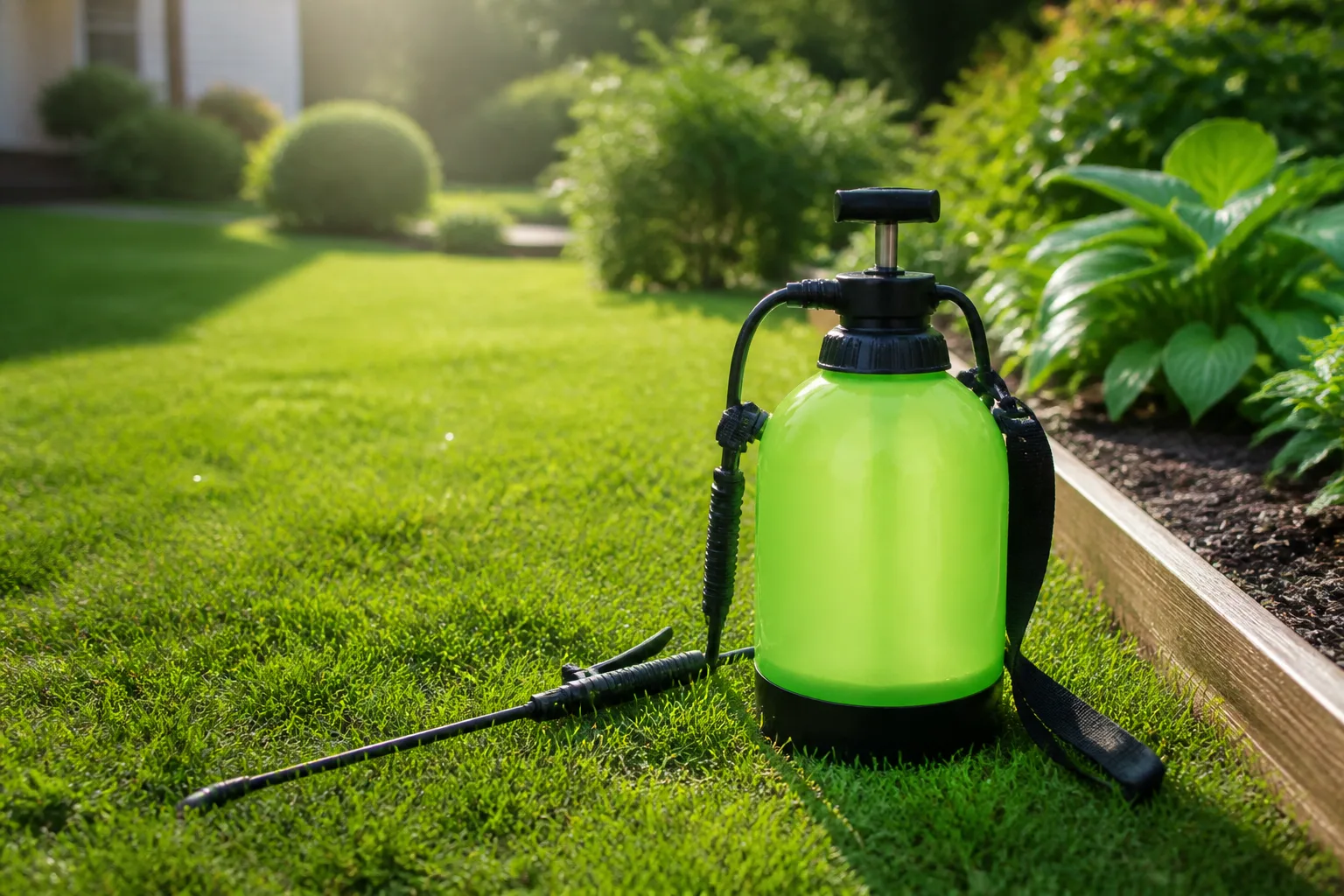
That chemistry explains both the appeal and the limits. The product can be useful when it reaches a visible colony, but it cannot kill what the spray never wets. It also does not keep later-arriving aphids from landing on the plant, so a gardener must scout again instead of assuming one thorough application ended the problem.
Hard water can complicate the job. Minerals such as calcium, magnesium, or iron may react with soap and form a precipitate, reducing performance and potentially increasing residue on leaves. If the label warns about hard water, follow that instruction; do not improvise with extra detergent, vinegar, or another cleaner to “fix” the mix.
What it can and cannot control
Insecticidal soaps are best suited to exposed, small, soft-bodied pests. Extension guidance commonly lists aphids, whiteflies, mealybugs, spider mites, psyllids, thrips, young scale crawlers, lace bugs, and some sawfly larvae among the more susceptible targets. They are less useful against eggs, protected insects, large caterpillars, and hard-bodied adult beetles. Colorado State University Extension summarizes these target and life-stage limits in its insecticidal soap guidance. (Colorado State University Extension)
Coverage is more important than making the solution “strong.” Spray the plant parts where the pest actually lives, including the undersides of leaves and crowded growing tips, but stay within the label’s point of runoff. A stronger concentration does not solve a missed leaf underside; it mainly increases the chance of plant injury.
There is also a non-target issue. A direct spray can affect predatory mites and exposed immature beneficial insects along with pest mites or aphids. Adult bees and larger beetles may be less susceptible than tiny soft-bodied larvae, but “less susceptible” is not a promise that direct wetting is harmless. Avoid open flowers, active pollinators, and broad blanket applications whenever a smaller treatment will do.
If you already sprayed, limit the damage now
If you used household dish detergent by mistake, do not panic and do not follow it with another homemade mixture. The next useful action depends on how recently you sprayed, whether the foliage is still wet, and whether the plant is in a pot or in the ground.
- Stop the recipe. Set aside the bottle and record what product you used, how much, when, and which plants were treated. That information helps you interpret symptoms later and prevents an accidental repeat.
- Rinse fresh residue gently. If the leaves are still wet and the plant can tolerate handling, rinse with clean, lukewarm water using a gentle stream. Aim to remove surface residue rather than blast tender stems or flood the soil. Do not scrub the leaves.
- Reduce immediate sun stress. Move a potted plant out of hot direct afternoon light for a day or two, or provide temporary shade to an in-ground plant if practical. Do not place a wet plant in a dark, stagnant corner for a week; it still needs usable light and airflow.
- Do not fertilize or “neutralize” the spray. Fertilizer cannot repair a damaged cuticle, and vinegar, oil, alcohol, baking soda, or another cleaner can add a second chemical injury. Keep care steady while you observe.
- Watch new growth, not just old marks. Existing brown tissue will not turn green again. The better recovery signal is firm new growth without expanding scorch, wilting, or widespread leaf drop over the next week or two.
- Remove badly damaged leaves later. Wait until you can see the pattern clearly, then prune tissue that is mostly dead with clean shears. Removing every slightly spotted leaf immediately can reduce the plant’s remaining photosynthetic area and add unnecessary stress.
Rinsing can reduce fresh residue, but it cannot reverse cells that have already died. If the plant continues to decline despite stable watering and shade from harsh heat, inspect the roots, pests, and other recent changes rather than assuming the soap is the only possible cause.
Four popular DIY pest fixes to treat with skepticism
The dish-detergent mistake is part of a larger pattern: a kitchen ingredient is promoted as a universal pesticide even though it may repel one pest briefly, work only under narrow conditions, or harm more than the target. “DIY” describes how you mixed it, not how selective, tested, or plant-safe it is.
Essential-oil sprays
Peppermint, eucalyptus, clove, citrus, and similar oils have strong odors and biologically active compounds, so they sound like a natural answer to insects. In practice, their performance varies with the pest, concentration, coverage, weather, and how quickly sunlight and rain remove the volatile compounds. A strong oil mixture can also mark or scorch sensitive foliage and affect pollinators that contact wet residue.
Use an essential oil only when you have a product labeled for that use and a reason to accept the trade-off. Do not assume a few drops in water are evenly dispersed; oil and water separate unless the formulation includes an appropriate emulsifier, and homemade “more is better” recipes can leave concentrated droplets on leaves. For a garden pest, a physical barrier or direct removal is usually easier to evaluate.
Vinegar, garlic, and chili mixtures
Vinegar is useful in some cleaning and weed-control contexts because its acidity can damage green tissue. That is exactly why it is a poor all-purpose insect spray around desirable plants: drift or overspray can burn leaves, tender stems, and nearby seedlings without solving the insect’s life cycle. A plant that regrows after the leaves are scorched has not necessarily been protected.
Garlic, cayenne, chili powder, and hot-pepper sprays are better understood as short-lived repellents at most, not dependable population control. They wash away, break down, or vary dramatically by recipe. If you apply them to edible crops, consider residue, harvest timing, eye and skin irritation, and the possibility that repeated spraying coats flowers and beneficial insects while the target pest simply returns.
Coffee grounds, eggshells, and tobacco
Spent coffee grounds can be a compost ingredient, but scattering them around a bed does not create a measured insect barrier. Eggshells have a legitimate calcium role when incorporated into soil over time, yet the idea that a ring of shell reliably stops slugs is not supported by every test. GrowVeg reports that its own trial and tests from slug researchers found eggshell rings did not deter feeding, while the Royal Horticultural Society’s slug guidance says many rough or sharp-textured barriers lack evidence of effectiveness.
Tobacco tea and cigarette-butt soaks deserve a firm pass. Nicotine is an insecticidal compound, but homemade tobacco extracts have no dependable concentration, crop label, protective-equipment instructions, or harvest interval. A substance that is potent enough to affect insects is not made responsible by being steeped in water; keep tobacco waste out of garden soil, compost, edible beds, and places children or pets can reach.
If you want to reuse kitchen leftovers, compost clean plant-safe materials and improve soil structure rather than treating scraps as pesticides. Pest control needs a target, a dose, an exposure route, and a way to judge whether the result was worth the risk.
Beer traps and slug logic
Beer traps can catch some slugs, but they are not a reason to pour beer throughout a garden and declare the problem solved. The scent and moisture can draw slugs toward a small area, and the trap needs frequent checking and emptying. The RHS explains that slugs and snails are part of garden food webs, that many feed on decaying material rather than living plants, and that targeted management is more sensible than trying to eradicate them all.
If young seedlings are being eaten overnight, look for slime trails, ragged holes, and the pests themselves with a flashlight after dark. Hand-pick from the crop, reduce hiding places around the most vulnerable plants, water in the morning rather than creating a damp evening surface, and consider a targeted barrier or biological option suited to your region. A trap can be one tool near a high-value bed, but it is not a substitute for checking whether slugs are actually the cause.
A plant-first pest control sequence
The most reliable “natural” pest solution is not a magic ingredient. It is a sequence that prevents you from treating the wrong organism, gives the plant a chance to tolerate minor damage, and reserves sprays for situations where the likely benefit is greater than the disruption.
Scout and identify before you spray
Walk the garden on a schedule during active growth, and inspect new leaves, growing tips, stems, leaf undersides, soil level, and the area beneath the plant. Look for the pest itself, eggs, shed skins, webbing, honeydew, frass, slime trails, holes, and the pattern of fresh damage. Photograph an unfamiliar insect before removing it; a local extension office or plant clinic can often help distinguish a pest from a predator.
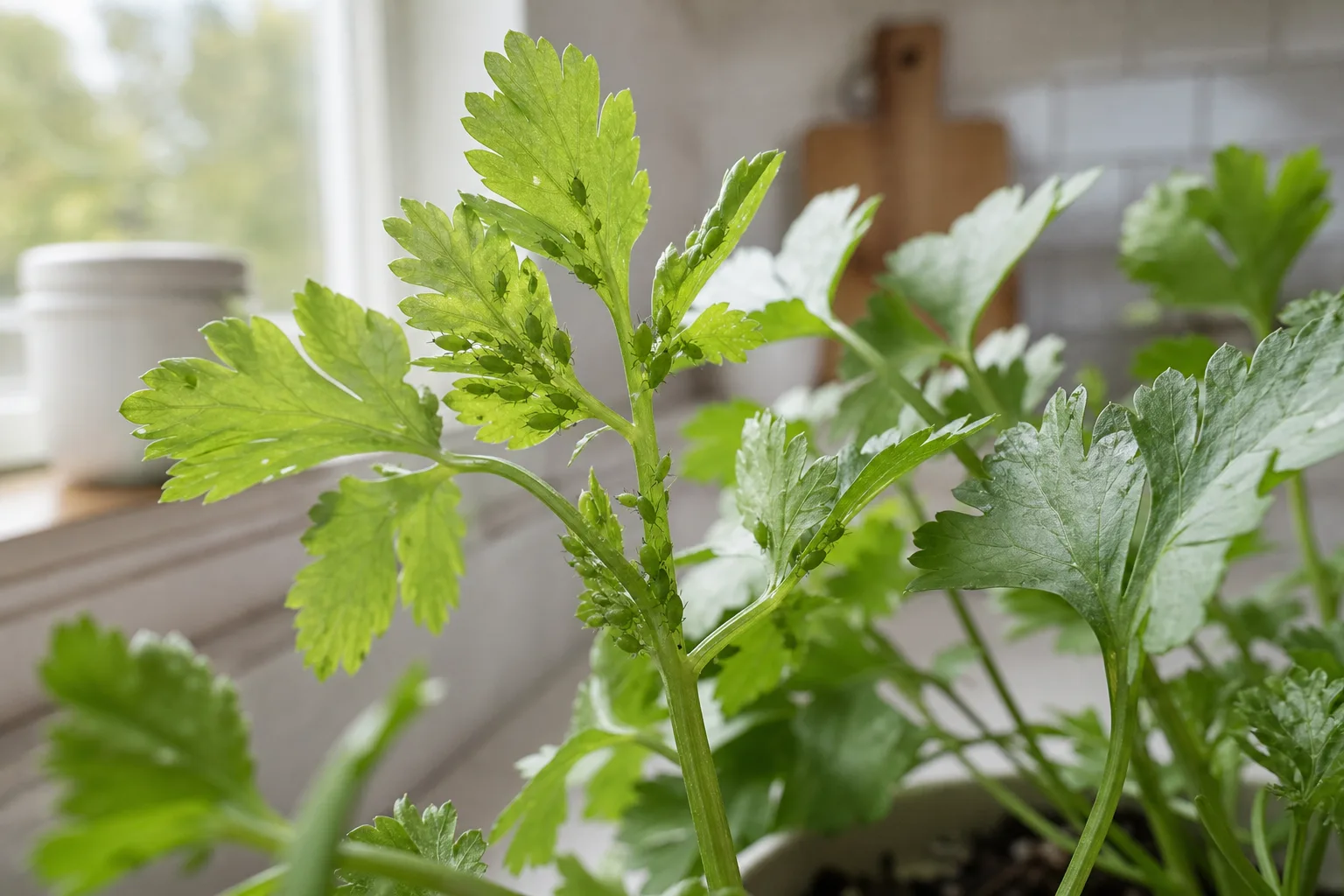
Correct identification changes the treatment. Aphids clustered on soft new growth call for a different response from caterpillars chewing leaf edges, spider mites stippling the undersides, or slugs feeding at night. Yellow leaves may reflect wet roots or nutrient stress rather than insects, and ragged leaves may come from hail or mammals. Spraying the wrong problem creates injury without addressing the cause.
Use a simple action threshold instead of treating every insect. Count affected leaves or plants, note whether damage is increasing, and consider the crop’s stage. A few aphids on an established nasturtium may be tolerable, while aphids covering the growing point of a young pepper deserve faster action. UC Statewide Integrated Pest Management Program describes monitoring and correct identification as the basis for deciding whether a pest warrants control, then combining biological, cultural, physical, and chemical tools to minimize risk. (UC Statewide Integrated Pest Management Program)
Start with barriers, sanitation, and hand removal
Physical controls often solve the problem with less collateral damage than a spray. Fine insect netting or row cover can protect seedlings and brassicas from incoming pests, collars can interrupt cutworms, and properly installed mesh can exclude birds and mammals. Covers need to be fitted to the soil or container rim so pests cannot crawl underneath, and they may need to come off when a crop flowers and requires pollination.
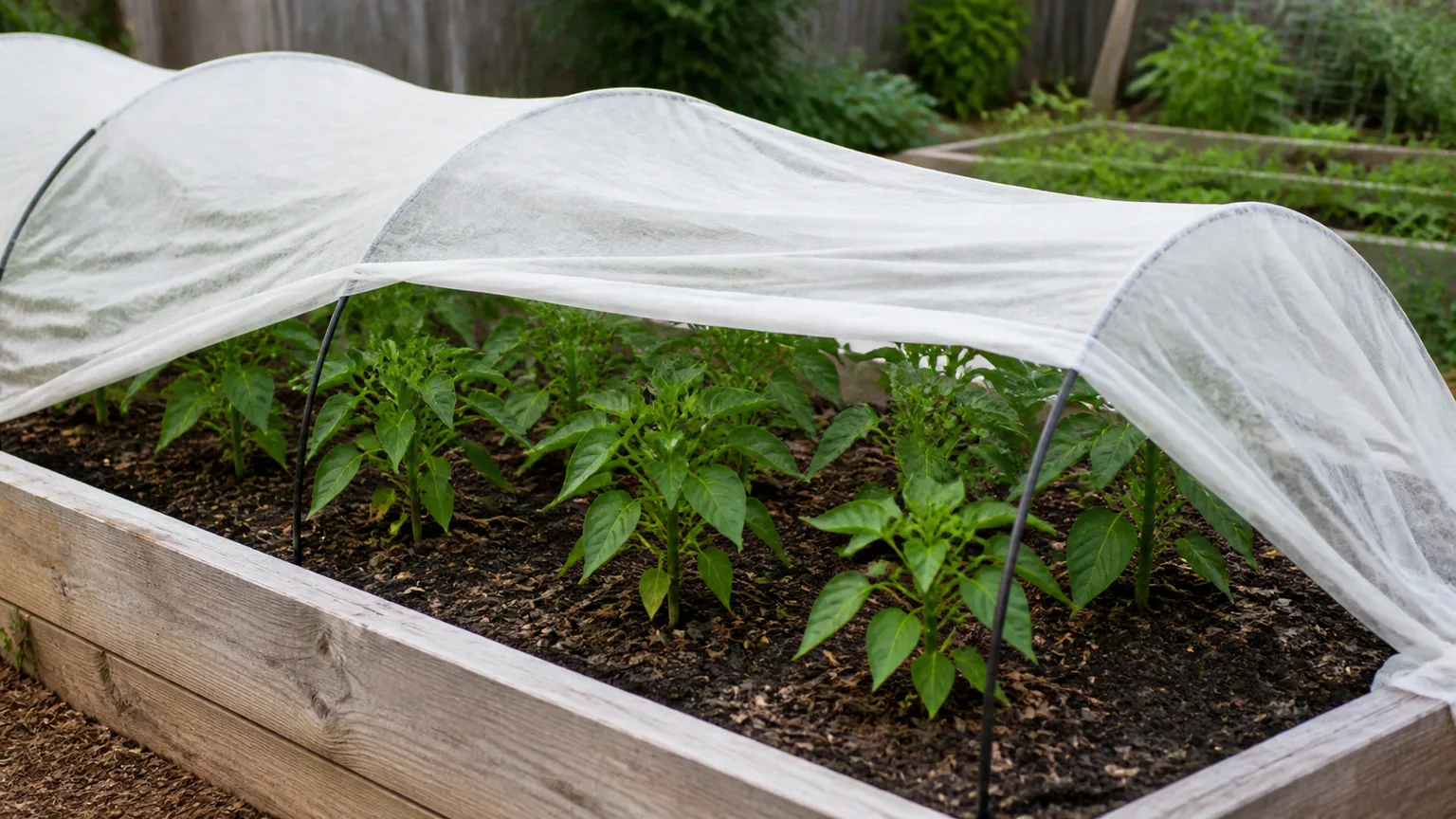
Hand removal is underrated because it is simple rather than exciting. Pinch aphid colonies from a small plant, brush scale crawlers from a stem, drop caterpillars into soapy water away from the bed, or pick slugs during a damp evening inspection. Remove badly infested leaves when the plant has enough healthy foliage left, clear diseased debris, control weeds that shelter pests, and avoid dense growth that makes inspection impossible.
Change the growing conditions that help the problem repeat. Give plants enough spacing for airflow, avoid pushing soft growth with excessive nitrogen, water at the root zone, and rotate crop families where practical. Gardening Know How’s layered “three-ring” approach groups physical barriers, biological controls, and carefully selected chemical controls so one missed tactic does not force the gardener into blanket spraying. (Gardening Know How)
Companion plants can add habitat, scent, flowers, or a sacrificial crop, but they are not an invisible force field. Treat claims that marigolds, garlic, or herbs will repel every pest as a hypothesis to test in your own bed, not a replacement for netting, scouting, and plant health. If a companion attracts a pest, place it far enough from the crop to manage it rather than creating a crowded nursery beside the plants you are trying to protect.
Protect beneficial insects while you intervene
The insect you see is not always the insect hurting the plant. Lady beetles, lacewings, hoverfly larvae, ground beetles, predatory mites, spiders, and parasitic wasps can all contribute to pest suppression, and some are easy to mistake for pests in an immature stage. Look for the pest and its damage before removing every moving thing from a bed.
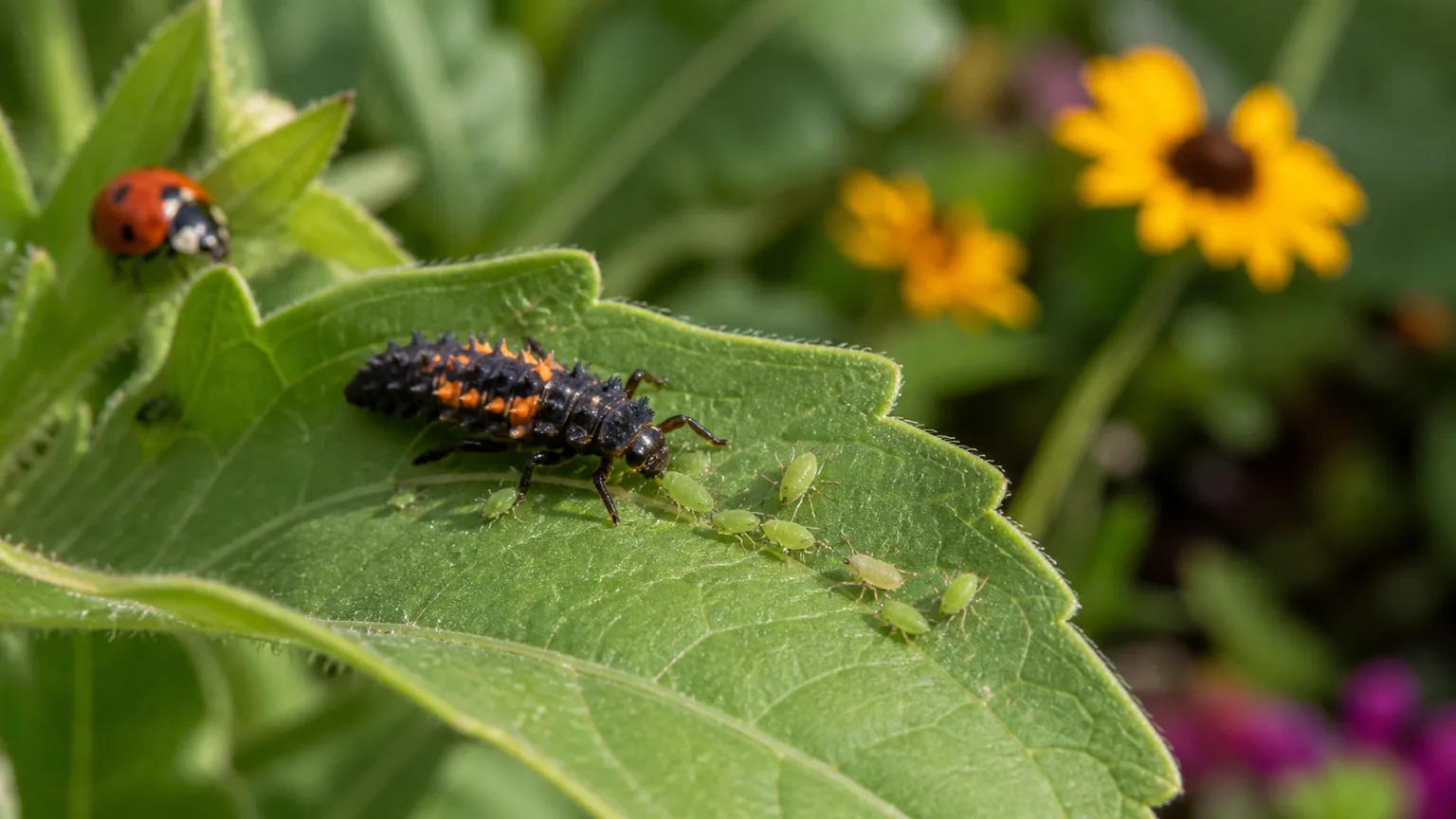
Habitat is a form of long-term pest control. Diverse flowering plants provide nectar and pollen for adult beneficials, while undisturbed stems, leaf litter, shallow water, and sheltered edges can provide places for wildlife to feed or overwinter. Savvy Gardening’s habitat-garden guidance frames a wildlife-friendly space around food, shelter, and water, with sustainable practices that support a wider garden community rather than a sterile, insect-free bed. (Savvy Gardening)
When treatment is needed, limit the treated area and the timing. Do not spray open flowers or active pollinators, avoid windy conditions, and prefer a spot treatment to covering the whole bed. A contact product can be relatively selective by target and life stage, but it is not selective if you wet every insect in its path.
When a labeled product makes sense
Use a pesticide when you have a confirmed or well-supported diagnosis, damage is crossing your action threshold, and lower-disruption methods are impractical or insufficient. Choose the least disruptive labeled option that fits the crop and pest, then read the entire label before mixing or applying. The label is the source of truth for rate, personal protective equipment, treated plants, harvest interval, reentry, storage, disposal, water precautions, and pollinator warnings.
For a soft-bodied pest, a labeled insecticidal soap may be a reasonable short-term tool if the plant is well hydrated, the weather is cool enough for the label, the pest can be thoroughly wetted, and you have tested a small area when the label permits. University and extension guidance commonly warns against treating in hot sun, on drought-stressed plants, or above roughly 90°F; product directions may be narrower or different, so follow the current label rather than a generic recipe. North Carolina Cooperative Extension summarizes the contact-only action, sensitive-plant warning, 24-hour test, and heat precaution for insecticidal soaps. (North Carolina Cooperative Extension)
Neem oil and horticultural oils also require label-based care. “Natural” does not remove the risk of leaf injury, and oil sprays can be especially unforgiving in heat or on stressed foliage. Apply only to listed plants and pests, keep the product off open blooms and water, and do not mix it with another household ingredient unless the label explicitly allows the combination.
Evaluate the result instead of spraying by calendar. Reinspect the same leaves after the interval on the label, look for live pests and fresh damage, and record what changed. If the population is not declining, reassess coverage, life stage, weather, resistance, and—most importantly—the diagnosis before increasing concentration or switching randomly between remedies.
Conclusion
Household dish detergent is a poor garden shortcut because its ability to dissolve oils can work against the leaf’s protective cuticle. It may kill a few exposed soft-bodied pests, but that narrow win does not justify risking scorch, damaged new growth, soil residue, pollinator exposure, or repeated applications with an untested recipe.
Start with a close inspection and an honest damage threshold. Use water, hand removal, sanitation, spacing, crop rotation, row covers, insect netting, and beneficial-insect habitat when they fit the problem. When a spray is justified, choose a product labeled for the crop and pest, apply it under label conditions, keep it off flowers and waterways, and check the result before treating again. The safest pest-control habit is not finding a stronger kitchen mixture; it is matching the smallest effective intervention to the pest actually in front of you.