How to Grow and Care for Horsetail
Horsetail loves wet soil but spreads fast. Get clear care, planting, propagation, pruning, and escape-control steps for Equisetum hyemale.
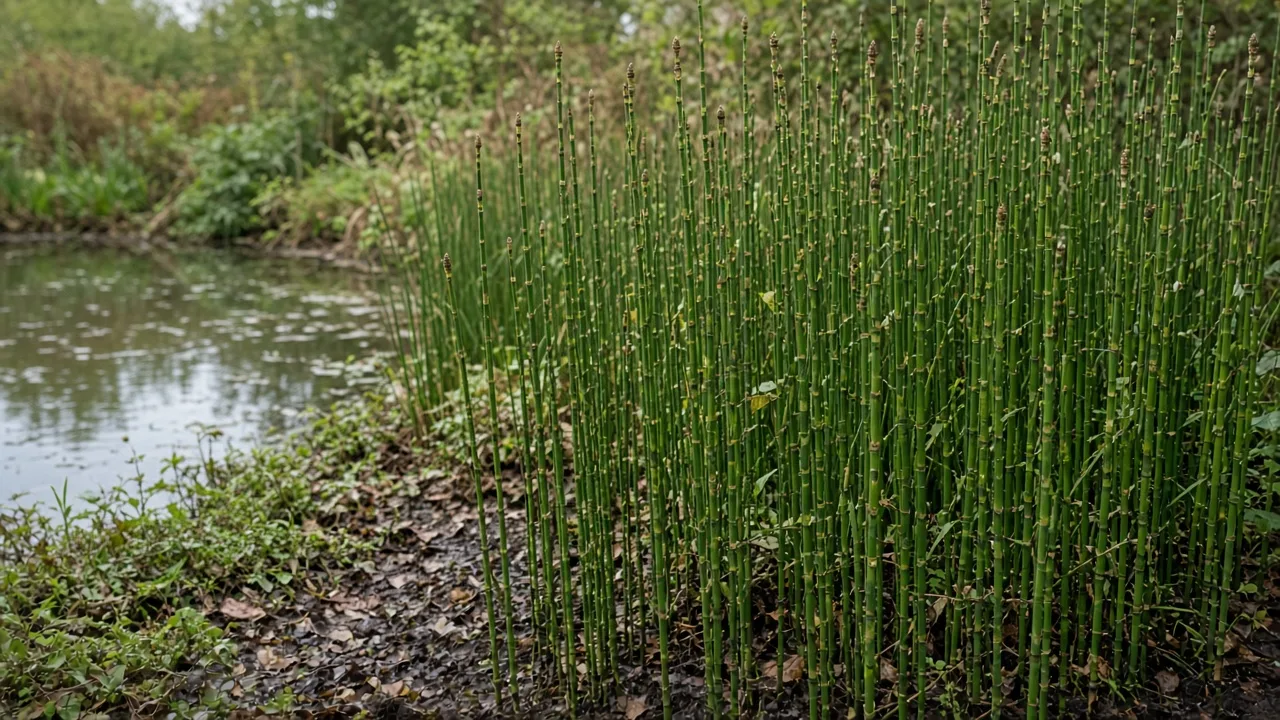
Horsetail (Equisetum hyemale), also called rough horsetail or scouring rush, is a striking evergreen perennial for a pond edge, bog garden, rain-fed hollow, or large container. Its upright green stems look architectural all year in mild climates, and its tolerance for wet, poor ground makes it useful in a place where many garden plants sulk.
The catch is built into the plant. Horsetail spreads through underground rhizomes and reproduces by spores, so “easy to grow” does not mean “safe to plant anywhere.” The best care plan starts before the first stem goes into the soil: decide how much spread you can accept, choose a vessel that roots cannot escape, and then provide steady moisture without turning the crown into a neglected, stagnant pot.
This guide focuses on rough horsetail, not every plant sold or noticed under the common name. You will learn how to identify it, plant it in a contained setup, manage light and water, divide it responsibly, and respond if stems yellow, thin out, or appear on the wrong side of a path.
What Horsetail Is—and Why It Needs a Containment Plan
Horsetail is not a flowering grass or a bamboo. It belongs to the ancient Equisetaceae family, and the living genus reproduces by spores rather than seeds. The plant’s green stems do the photosynthetic work that leaves do in most garden plants; each stem is hollow, jointed, and ringed with dark bands. The RHS describes rough horsetail as a tall, upright, evergreen perennial that can reach roughly 1.5 to 2.5 meters depending on form and conditions (the RHS rough horsetail profile).
That growth habit explains both its appeal and its risk. A clean clump gives a pond or modern border a strong vertical accent with very little fuss, while the same vigor can push new shoots through cracks, beds, lawn edges, or soil beneath a hardscape. A plant that is healthy but escaping is not suffering from poor care; it is doing exactly what its underground system is designed to do.
Treat containment as part of cultivation, not as an optional repair. If you want a freely spreading wetland plant, choose an area where new shoots will not interfere with paths, lawns, drains, neighboring beds, or natural waterways. If you want a defined clump, grow it in a root-tight container from the beginning.
Identify Rough Horsetail Before You Plant
Rough horsetail has upright, unbranched, green stems with repeated joints and dark or black bands. It does not form the feathery side branches that make field horsetail look like a tiny pine tree. Washington State University Extension notes that field horsetail (Equisetum arvense) produces separate early fertile stems and later green vegetative stems, while scouring rush has green stems with black bands at the joints (Washington State University Extension’s horsetail profile).
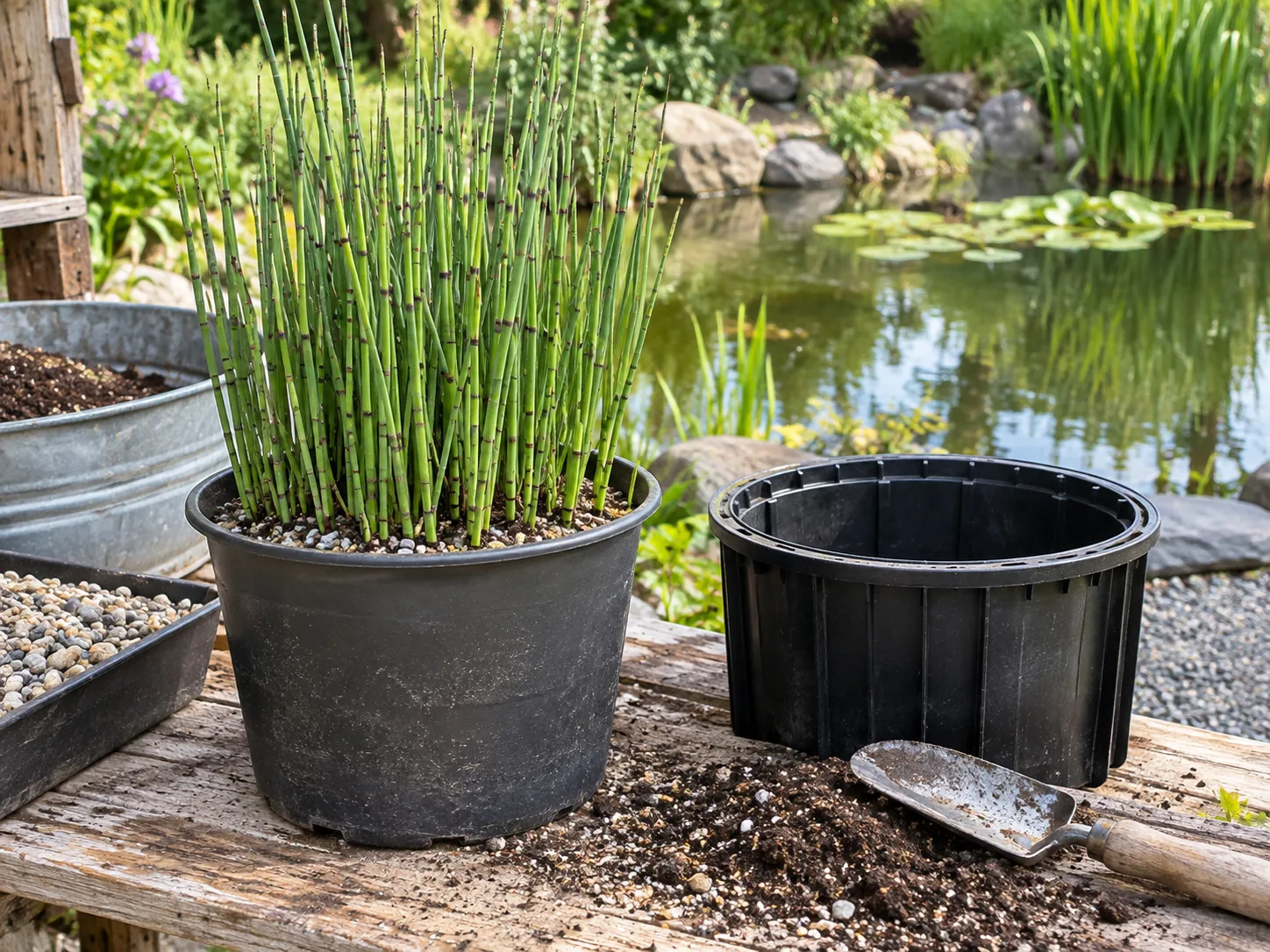
The distinction matters when a plant arrives in a nursery pot, volunteers in a damp corner, or is offered by a friend. Field horsetail is often encountered as a weed and can spread through a deep, tenacious root system; rough horsetail is the more commonly sold architectural form. Neither should be casually planted in open ground just because the label says “horsetail.” Confirm the botanical name, inspect the rhizome mass, and ask whether the plant is legal or considered invasive in your area.
Do not expect flowers. A cone-like spore-bearing tip may form at the end of a stem, but the plant’s ornamental value comes from its texture, color, and geometry. If the plant you are considering has branched, brushy stems or a different seasonal stem pattern, pause and identify it before choosing a care routine.
Choose a Site: Wet, Bright, and Separate
The ideal site is bright, consistently moist, and physically separated from plants that need ordinary garden soil. The RHS lists full sun or partial shade, a wide range of soil textures, and permanently moist soil or water up to 10 centimeters deep for rough horsetail (the RHS cultivation notes). Horticulture magazine’s wet-site guidance places horsetail among plants suited to shallow standing water, while noting that wet ground ranges from open water to boggy soil that may dry during summer (Horticulture’s wet-site guidance).
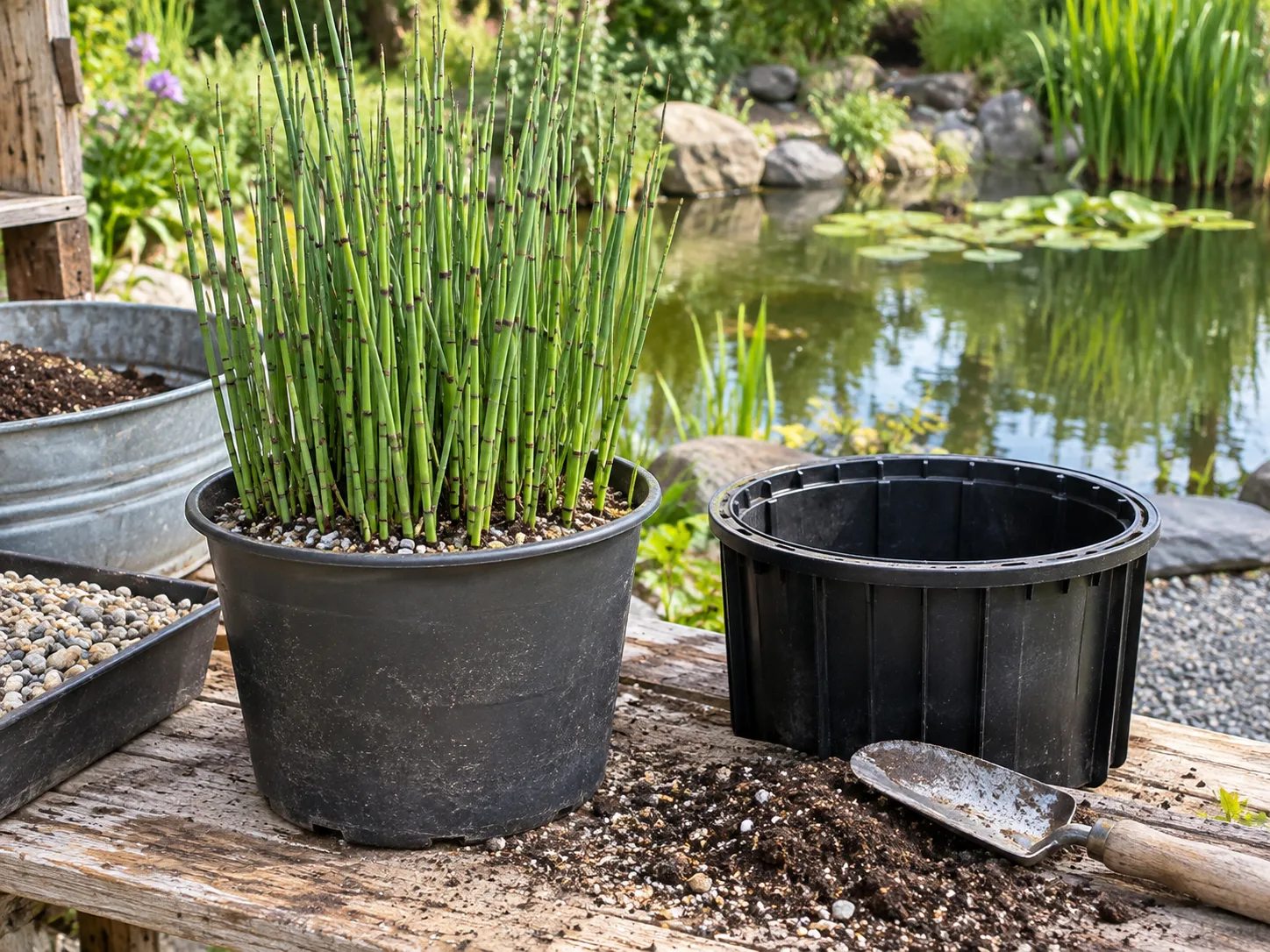
Use that range to match the site rather than forcing one rigid schedule. A pond margin with water below the stem bases can work, as can a damp gravel pocket that receives runoff. A hot, exposed pot on a paved patio is a different situation: it may need daily checks and a reservoir, even though the same species can survive in a cooler, naturally wet bed with little supplemental irrigation.
Give the plant enough visual and physical room to make its habit look intentional. A narrow line of stems beside a path will make every escaped shoot noticeable; a contained group at the back of a pond edge can provide height without competing with low plants. Keep the rim, access point, or inspection gap visible so you can check the container without digging up the whole planting.
Use a Real Container, Not a Token Barrier
For a defined clump, choose a rigid, smooth-walled container with a bottom, no cracks, and no open drainage path into the surrounding soil. A deep aquatic pot or heavy nursery container is more dependable than a thin plastic bag, a bottomless basket, or a shallow edging strip. Set the container above ground, or sink it with the rim standing about 1 to 2 inches above the finished soil so rhizomes cannot simply run over the lip.
If you use a container with drainage holes, place it inside a second root-tight tub or a lined water feature and check the lower vessel regularly. For a completely contained bed, do not rely on a loose plastic liner with seams or on a barrier that stops only shallow roots. The rhizome system is the reason to choose a vessel with an intact bottom and to inspect the perimeter at least once each growing season.
A no-drainage container can work for a water-loving plant, but it shifts the job to you. Add water slowly, keep the mix evenly wet, and do not let a stagnant, foul-smelling reservoir sit unnoticed for weeks. A saucer or outer tub can provide a modest water reserve for a standalone pot, but it should not become an excuse to stop checking roots, stems, or container integrity.
Plant Horsetail Step by Step
Plant in spring when new growth is beginning and the soil or container can be handled without exposing the crown to prolonged cold. A nursery plant is the most predictable starting point because you can identify the stems and see whether the rhizome clump is healthy. Division is also reliable, but it is best done only when you already have a contained plant and a clear destination for every piece.
- Inspect the plant. Choose firm green stems and a moist but not sour-smelling root mass. Reject a pot with mushy rhizomes, a cracked container, or pieces of unknown origin.
- Prepare the vessel first. Confirm that the bottom is intact, the rim will remain accessible, and the container is large and heavy enough not to tip. If it will sit in a pond, make sure the location is stable and does not allow roots or fragments to reach the liner edge.
- Use a moisture-holding but open mix. Combine quality potting mix with coarse sand, fine gravel, or another structural material. The goal is a mix that stays wet without collapsing into an airless brick; do not fill a container with heavy garden soil alone if it becomes sealed and compacted.
- Set the crown at its original level. Cover the roots and rhizomes, but do not bury the stem bases deeply under a mound of soil. Firm the mix gently so the plant cannot rock, leaving enough headspace to water without washing soil over the rim.
- Water thoroughly and settle the site. Keep the mix uniformly moist from planting day forward. Watch the container for a week: a pot that tips, dries at the edges, or overflows toward a bed needs a different position before the plant fills out.
Do not plant rough horsetail directly into a shared perennial border as a trial. “I will pull it if I dislike it” is a poor plan for a rhizomatous plant because every broken piece can complicate removal. If you are unsure, keep it in a movable, root-tight pot for one season and observe its height, moisture demand, and spread before committing to a permanent water feature.
Light, Soil, and Water: The Core Care Routine
Light: Full sun to partial shade is suitable. In a cool, wet climate, more sun can keep stems dense and strongly colored. In a hot, dry setting, morning sun with afternoon shade may reduce evaporation, but deep shade can produce weaker, less architectural growth. If stems lean toward one side, improve light exposure before reaching for fertilizer.
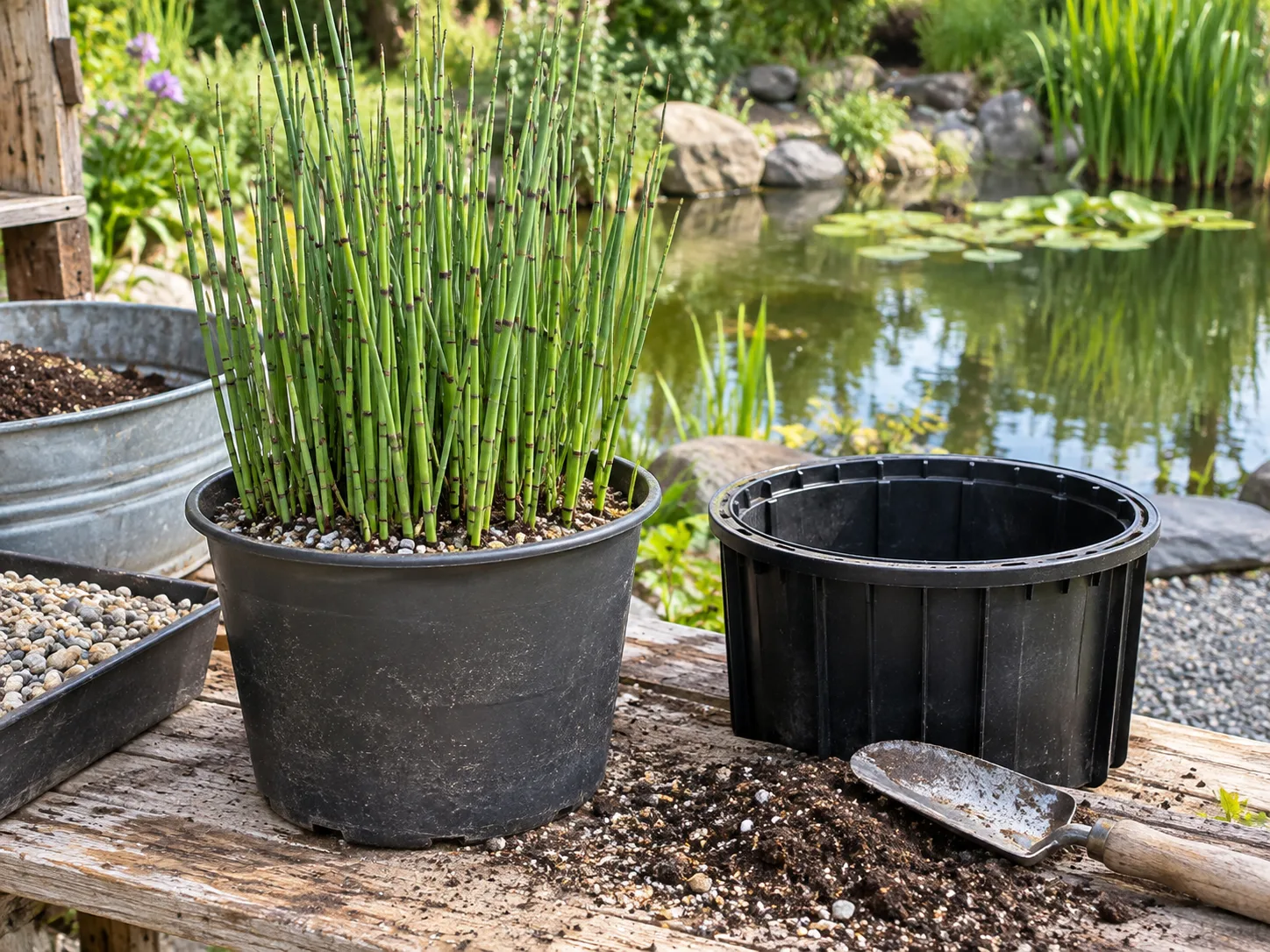
Soil: Rough horsetail is flexible about texture and pH when moisture is reliable. The RHS lists clay, loam, and sand, with acidic, alkaline, or neutral conditions all possible (the RHS soil and position data). That does not mean every soil is equally practical. Compacted soil can hold water in a stagnant layer, while a very porous pot can dry around the roots even when the surface looks damp.
Water: Keep the root zone moist to wet. Newly planted containers can need a check every day in warm or windy weather; established plants in naturally wet ground may need little additional water after rain. Water when the top layer is beginning to lose its sheen or the container feels noticeably lighter, not because a calendar says it is watering day.
Use a simple two-part test. First feel below the surface at the edge of the container, where roots often dry sooner. Then look at the stems: widespread dullness, curling, or crisping after a hot day supports a moisture problem, while a sour pot, soft stem bases, and persistently stagnant water point toward poor root conditions. Correct the root-zone issue before changing light, feeding, or pruning.
Rough horsetail can tolerate shallow standing water, but do not confuse tolerance with neglect. Water should be clean enough for the setting, the container should not be submerged so deeply that the stems are buried, and overflow should not carry soil or rhizome fragments into another planting. In a pond, keep the plant in its own pot rather than allowing it to root through the liner or into an uncontained bank.
Temperature, Hardiness, and Winter Care
Rough horsetail is cold-tolerant, but the visible result depends on the form, climate, and exposure. The RHS lists it as hardiness H7 and notes an evergreen habit, while a regional nursery profile lists a much colder zone rating and describes winter dieback in its local plant profile (RHS hardiness and winter profile; Pender Pines plant profile). Those systems and observations are not interchangeable guarantees.
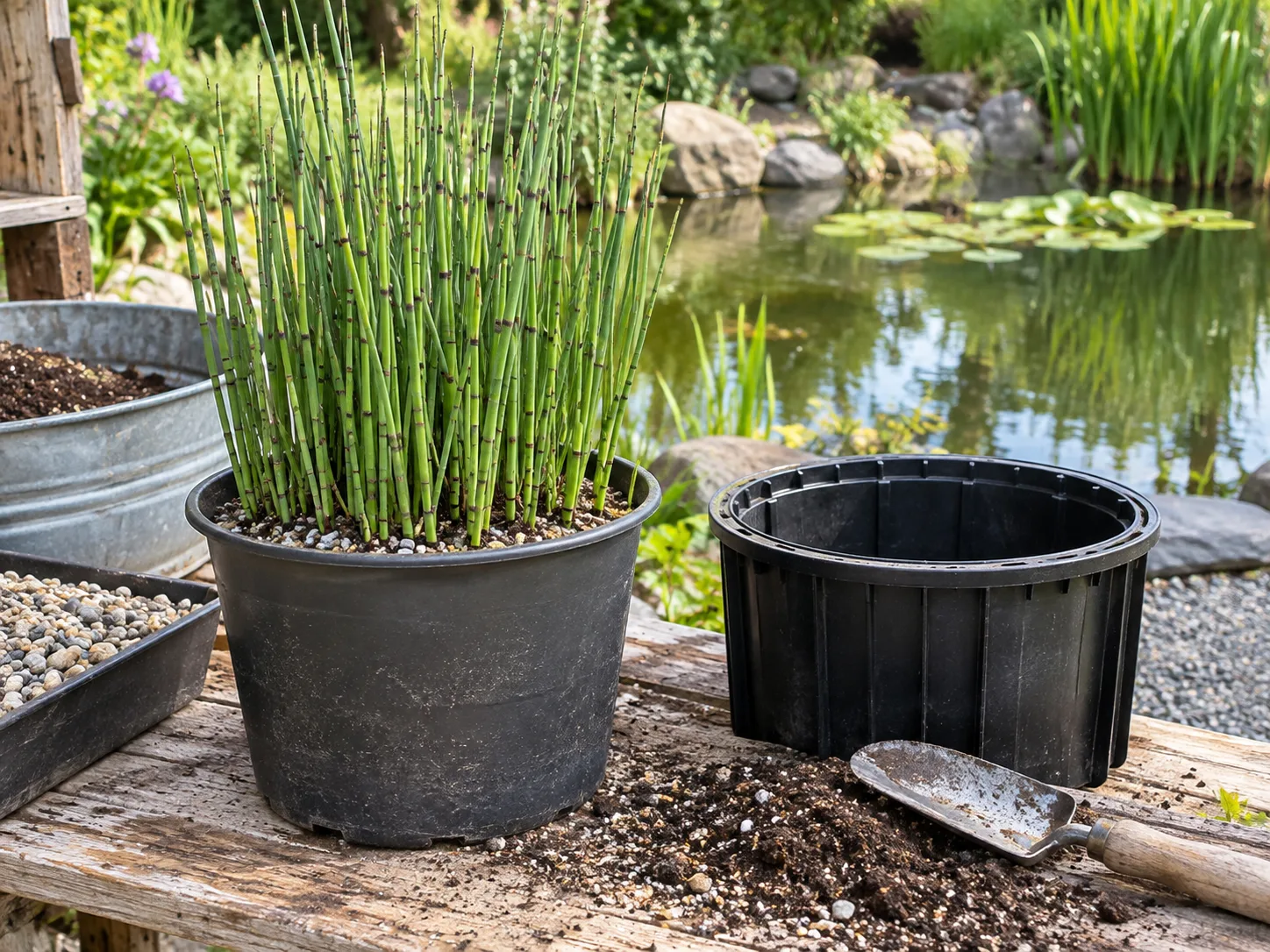
In a mild winter, leave healthy green stems in place and remove only broken or diseased-looking material. In a colder climate, stems may fade, flatten, or die back while the crown and rhizomes remain alive. Mark the container edge before winter so you do not mistake a dormant crown for an empty pot or disturb it while clearing leaves.
Protect a container from repeated freeze-thaw movement that can crack its walls. Move a portable pot to a sheltered position, group it with other heavy containers, or insulate the outside of the vessel without sealing the crown under wet debris. Resume closer moisture checks in spring as new stems appear; a winter-protected pot can dry surprisingly fast before the canopy returns.
Fertilizer and Mulch: Keep Inputs Modest
Horsetail is not a hungry flowering perennial. A healthy plant in wet soil usually needs little supplemental fertilizer, and extra nitrogen can encourage lush, weak-looking growth without solving a light or root problem. The better order is to correct moisture, light, and container crowding first.
If a long-established container has pale new growth and the root zone is sound, use a restrained, label-directed dose of a balanced fertilizer during active growth. Do not pour concentrated fertilizer into a stagnant water reservoir or use feed as a rescue for brown stems. In an open bed, a thin organic mulch can slow evaporation, but keep it away from the stem bases and do not use thick mulch as a substitute for a root barrier.
Pruning and Seasonal Maintenance
Pruning rough horsetail is mostly cleanup and spread management. Remove stems that are fully brown, broken, or collapsed by cutting them near the soil line with clean pruners. Avoid shearing the entire clump simply to make it “neater”; the upright stems are the plant’s main feature, and unnecessary cuts create more loose material to manage.
Inspect the tips during the growing season. If a cone-like spore-bearing structure develops, remove it before it releases spores, seal it in a bag, and put it in the trash rather than compost. This is only one layer of control—the rhizomes are the larger long-term issue—but preventing a fresh spore release is a sensible maintenance habit when you are growing the plant near other beds.
In late winter or early spring, clean away dead stems before new shoots become crowded. Lift or move the container only when you can keep the root mass intact, and check the outside walls for cracks or roots emerging through holes. Rinse tools and footwear after working on a spreading patch, especially before moving to a clean bed, because damp rhizome fragments can travel on equipment.
How to Keep Horsetail From Taking Over
The most effective control is prevention. A root-tight container, an accessible rim, and a site with no easy route into lawn or hardscape do more than a once-a-year promise to pull shoots. Keep a narrow inspection zone around the pot so you can see new stems while they are small.
If a shoot appears outside the intended area, remove the whole visible connection if you can do so without breaking it. Use a hand fork or narrow trowel to loosen soil, lift slowly, and follow the rhizome rather than chopping it into pieces. Washington State University Extension cautions that mechanical work can worsen horsetail when rhizomatous pieces are spread, and recommends combining management methods rather than relying on one pass (WSU’s control guidance).
Repeated cutting can reduce a patch over time because the plant must spend stored energy replacing stems. Cut regrowth while it is young, remove it from the site, and keep records of where new shoots appear. Do not rototill an infestation, move contaminated soil to a new bed, or add roots and fertile stems to home compost.
For a large escape beneath paving, a retaining wall, or a property boundary, set expectations carefully. Digging and screening soil may miss deep or distant pieces, while herbicides are situation- and label-specific and can damage nearby plants or water. Ask your local extension service or a licensed professional for a site-specific plan; never choose a product, concentration, or aquatic use based on a generic internet recipe.
Propagate by Division Without Spreading It
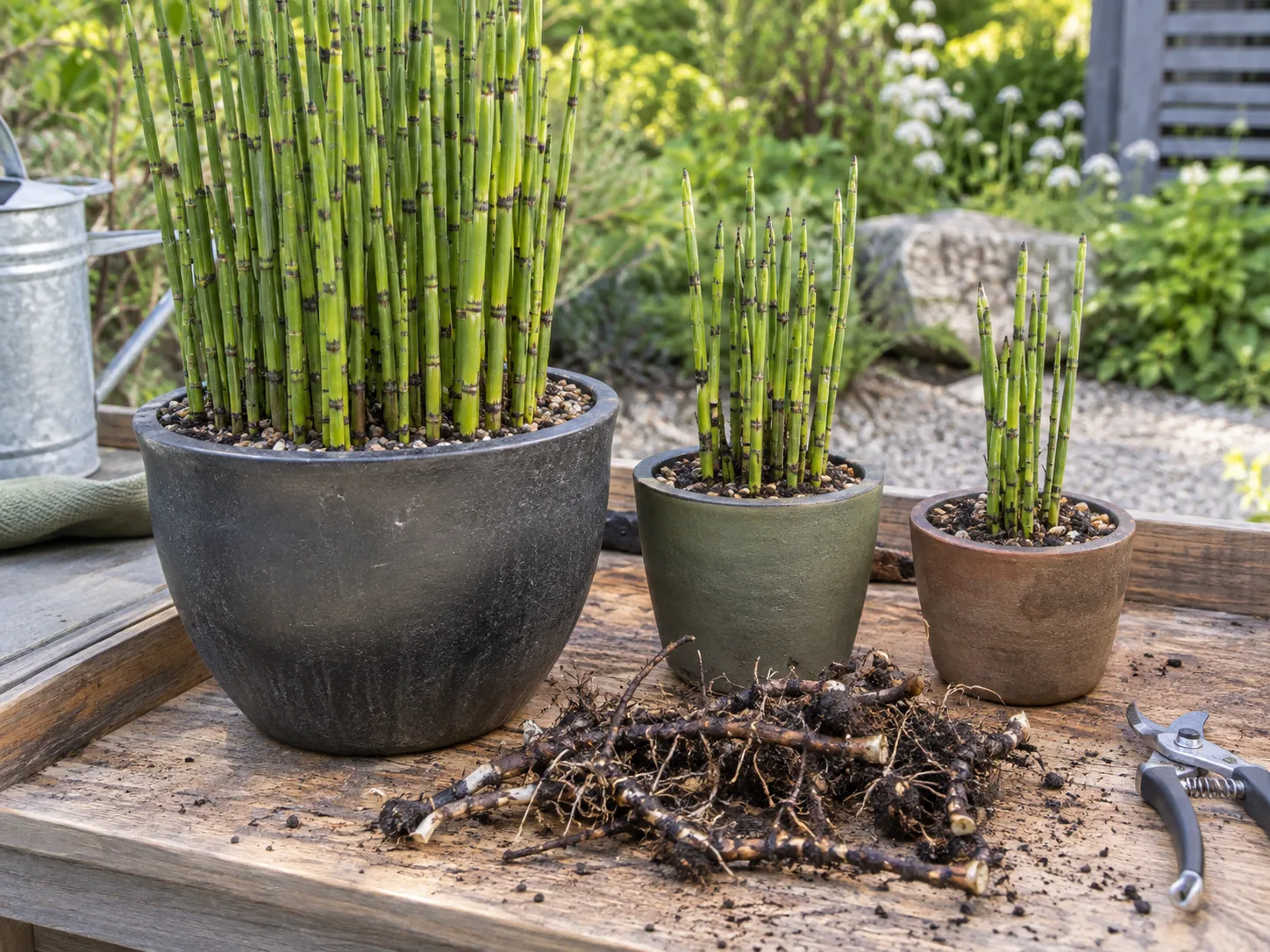
Division is the practical way to propagate a named clump. The RHS recommends dividing rough horsetail in spring (the RHS propagation guidance). Before lifting the plant, prepare the new root-tight pots and decide where every division will go. If you have no contained destination, do not divide merely because the clump looks full.
Water the parent plant first so the root mass holds together. Remove the container, brush away enough soil to see the rhizome network, and separate a section with viable roots and several healthy stems. A clean knife or spade is better than tearing a large mass into ragged pieces. Replant each division at the original depth, water it thoroughly, and keep it evenly moist while it re-establishes.
Keep divisions in separate pots until you know the containers are intact and the plants are growing well. Labeling is useful when you are managing several forms, but the label does not replace inspection. Never dump surplus divisions beside a stream, in a vacant lot, or into a compost pile; give them away only with a clear warning about vigorous spread and only where the recipient can contain them.
Horsetail in Ponds, Bog Gardens, and Containers
At a pond edge, rough horsetail can provide a strong vertical layer behind lower plants and stones. Place the pot where you can reach it from the bank, where seasonal water levels will not float or tip it, and where overflow cannot move rhizomes into the natural shoreline. A separate pot also lets you lift the plant if the pond needs cleaning or if its size no longer suits the space.
In a bog garden, use the wettest area only if the boundary is intentional and monitored. A naturally wet depression can look contained during a dry month and connect to a drainage channel during a storm. If the site leads toward a neighbor’s property or a natural waterway, choose a clumping, locally appropriate wet-site plant instead.
For a patio or balcony, use a broad, heavy container that will not dry or tip quickly. A pot with a shallow water reservoir can reduce daily fluctuations, but it still needs fresh checks in hot weather and protection from freezing water that expands against the walls. Indoor growing is generally a poor fit: the plant needs abundant light, constant moisture, room for vigorous rhizomes, and a container you can safely keep wet without damaging floors or furnishings.
Troubleshoot Common Growth Problems
Start with the root zone before assuming a disease. Rough horsetail is generally described as pest- and disease-free in horticultural profiles, but “pest-free” does not mean immune to drought, cold, broken stems, a cracked pot, or a crown that stays in stagnant water (the RHS problem notes). Look at the whole clump, the container, and the recent weather together.
Why Stems Turn Yellow or Brown
One or two old lower stems turning brown is often routine aging or physical damage. Cut those stems at the base and watch the new growth. If the whole clump turns dull yellow, check moisture below the surface: dry mix calls for a slow, thorough watering, while a sour smell, soft stem bases, or blackened rhizomes calls for better aeration, a fresh container, or removal of damaged roots.
Cold exposure can fade stems without killing the crown, especially in a pot that is more exposed than the surrounding ground. Sun scorch is less common in a wet, established bed but can appear when a sheltered plant is moved abruptly into intense sun. Stabilize the site, remove only dead tissue, and give the crown time to show whether fresh shoots are healthy before feeding.
Why Stems Are Thin or Floppy
Thin stems usually point first to light, water, or crowding. Compare the affected side with the brighter side of the pot, check whether the container dries within a day, and look for a dense root mass that has left little room for new growth. Move the plant to brighter filtered light, improve the water reserve, or divide it in spring rather than adding a heavy dose of nitrogen.
Do not mistake a few leaning stems for a crisis. Wind, a newly divided plant, or stems growing around a crowded center can all create a temporary lean. If the entire clump is weak and pale, change one factor at a time and observe new stems; otherwise you will not know whether light, moisture, or fertilizer made the difference.
What to Do When Shoots Appear Outside the Pot
Treat an escaped shoot as a containment failure, not as a normal volunteer to transplant elsewhere. Mark the location, trace the rhizome carefully, and remove as much of the connected piece as practical without chopping it into fragments. Bag the material and check the same area again after rain or irrigation.
Then inspect the parent vessel. A root through a drainage hole, a crack in the wall, a rim buried below grade, or a nearby pile of discarded trimmings can explain the escape. Repair or replace the setup before the next flush of growth, and do not spread the soil to another part of the yard.
Pests, Diseases, and Livestock Safety
Rough horsetail is valued partly because it is rarely bothered by ordinary garden pests. When stems decline, look for environmental causes first: dry roots, deep shade, frost, physical breakage, a waterlogged crown, or rhizomes packed into a failing pot. Remove damaged stems and improve the growing conditions rather than spraying a symptom you have not identified.
Keep the plant and its trimmings away from horses, cattle, and other grazing livestock. Washington State University Extension reports that horsetail species are considered toxic to livestock, particularly horses, and are rarely eaten only because they are unpalatable—not because they are safe (WSU’s livestock note). Do not place cut stems where they can dry into hay, and do not assume that a “herbal horsetail” label makes ornamental material appropriate for food or medicine.
The same caution applies to pets and children: this guide does not establish safety for every animal or for ingestion. If a horse or other animal has eaten the plant, contact a veterinarian or animal poison resource promptly and provide the botanical name if you have it. Wear gloves for ordinary handling, wash up after pruning, and keep the planting out of a grazing route.
When Another Plant Is a Better Choice
Choose another plant if you cannot commit to a root-tight container and regular inspection. That is especially true for a small bed, a rental property, a garden bordering natural habitat, or a pond whose edges connect to open drainage. The plant’s architectural silhouette is not worth a spread problem that will be inherited by the next gardener.
For a wet site, ask a local extension service, native-plant society, or reputable nursery for a clumping species suited to your region and the exact water level. If you want the vertical effect, compare mature spread, rhizome behavior, winter habit, and livestock safety—not just the height on a plant tag. A smaller, less vigorous plant that stays where it is planted will often create a better-looking feature with less maintenance.
Conclusion
The reliable way to grow and care for horsetail is to give it what it wants while refusing to give it an escape route. Use bright light or partial shade, permanently moist soil, and a root-tight container or deliberately bounded wet site. Check the water below the surface, remove dead or spore-bearing material before it travels, and divide only when every piece has a secure destination.
If stems yellow, brown, or flop, inspect moisture, roots, light, temperature, and crowding in that order. If shoots appear outside the pot, stop moving soil and start tracing the rhizome. With those decisions made early, rough horsetail can remain a clean, durable accent beside water instead of becoming a long-term removal project.