Norfolk Island Pine Problems: Causes & Quick Fixes
Quick answer
Norfolk Island Pine is prone to 16 common issues - each link below is a plant-specific fix guide.
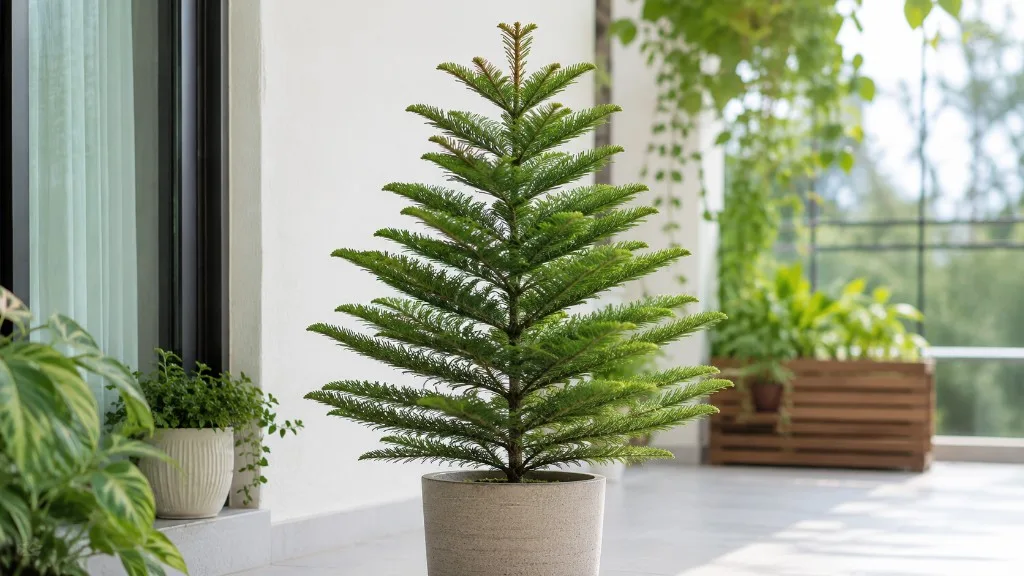
Norfolk Island Pine problems
Use the guides below to diagnose and fix common issues on Norfolk Island Pine. Each problem page explains why it happens on this species and what to do first.
Or use our problem diagnosis tool to narrow down symptoms.
Common problems on Norfolk Island Pine
Brown Tips
HighLikely cause: Very low humidity from dry heated indoor air
Quick fix: Increase humidity to 50%+; keep away from heating vents
Full fix guide →Leggy Growth
MediumLikely cause: Insufficient light causing asymmetric or drooping growth
Quick fix: Move to brightest available position; rotate monthly
Full fix guide →Root Rot
MediumLikely cause: Persistently wet soil
Quick fix: Repot in acidic draining mix; correct watering frequency
Full fix guide →Yellow Leaves
MediumLikely cause: Overwatering or root rot
Quick fix: Allow top 2–3 cm to dry; ensure drainage
Full fix guide →Aphids
MediumLikely cause: Aphids on Norfolk Island Pine colonize soft new whorls at branch tips and the central crown. First step: isolate the tree, inspect the newest whorl and needle axils with a hand lens, and rinse colonie
Quick fix: See plant-specific guide for step-by-step fixes.
Full fix guide →Drooping Leaves
MediumLikely cause: Drooping on Norfolk Island Pine almost always traces to water imbalance or weak light. First step: probe the top 2–3 cm of soil and lift the pot-dry and light means underwatering; wet and heavy means
Quick fix: See plant-specific guide for step-by-step fixes.
Full fix guide →Fungus Gnats
MediumLikely cause: Fungus gnats on Norfolk Island pine mean the soil surface stays wet too long-adults hover near the pot and larvae feed in the damp top layer. First step: stop watering until the top 1 inch of mix is d
Quick fix: See plant-specific guide for step-by-step fixes.
Full fix guide →Low Humidity
MediumLikely cause: Low humidity on Norfolk Island Pine shows as brown needle tips, slowed growth, and spider mite outbreaks in heated winter rooms. First step: move the tree away from vents and radiators, then raise amb
Quick fix: See plant-specific guide for step-by-step fixes.
Full fix guide →Mealybugs
MediumLikely cause: Mealybugs on Norfolk Island Pine hide in branch whorl axils and the central crown where soft needles overlap. First step: isolate the tree, inspect whorl junctions with a hand lens, and dab visible in
Quick fix: See plant-specific guide for step-by-step fixes.
Full fix guide →Mold on Soil
MediumLikely cause: White or gray fuzzy mold on Norfolk Island pine soil is usually harmless saprophytic fungus on damp organic mix-not a needle disease. First step: scrape off the moldy top layer, then let the top 1 inc
Quick fix: See plant-specific guide for step-by-step fixes.
Full fix guide →Not Enough Light
MediumLikely cause: Norfolk Island pine is a high-light conifer, not a shade houseplant. Pale weak needles, drooping branch tips, and fewer than five branches per whorl mean the canopy needs brighter exposure. First step
Quick fix: See plant-specific guide for step-by-step fixes.
Full fix guide →Overwatering
MediumLikely cause: Overwatered Norfolk Island pine sits in wet mix too long-lower whorls droop, needles soften or yellow on damp soil, and the pot stays heavy for days. First step: stop watering until the top 1 inch of
Quick fix: See plant-specific guide for step-by-step fixes.
Full fix guide →Slow Growth
MediumLikely cause: Norfolk Island pine is naturally slow indoors-often 3–6 inches per year. Stalled growth beyond that usually means too little light, cool rooms, or tight roots. Lower whorls lost to chronic dim light n
Quick fix: See plant-specific guide for step-by-step fixes.
Full fix guide →Spider Mites
MediumLikely cause: Spider mites on Norfolk Island Pine cause pale stippling and fine webbing in dry heated winter air-often after holiday display near vents. First step: isolate the tree and rinse every whorl tier with
Quick fix: See plant-specific guide for step-by-step fixes.
Full fix guide →Underwatering
MediumLikely cause: Underwatering on Norfolk Island Pine shows as a light dry pot, limp horizontal whorls, and brown needle tips on dusty mix. First step: probe the top inch-if dry throughout, bottom-water until the surf
Quick fix: See plant-specific guide for step-by-step fixes.
Full fix guide →Wilting
MediumLikely cause: Wilting on Norfolk Island Pine starts with a soil moisture check at 2–3 cm depth. Dry soil with a light pot means underwatering; wet heavy soil with limp branches means stop watering and inspect roots
Quick fix: See plant-specific guide for step-by-step fixes.
Full fix guide →