Not Enough Light on Norfolk Island Pine: Causes, Checks &
Quick answer
Norfolk Island pine is a high-light conifer, not a shade houseplant. Pale weak needles, drooping branch tips, and fewer than five branches per whorl mean the canopy needs brighter exposure. First step: move the pot within 12–24 inches of your brightest east or filtered south/west window.
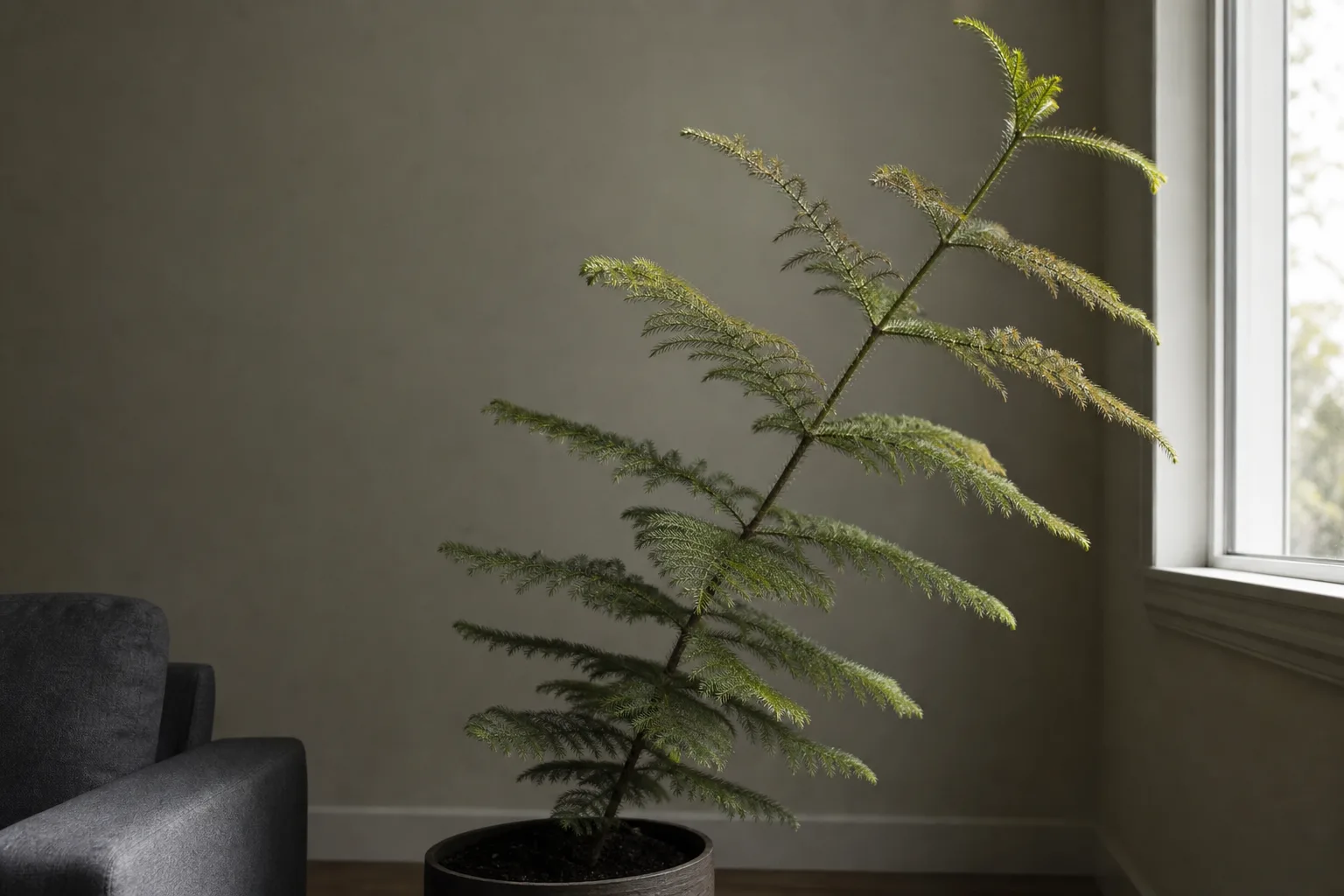
Not Enough Light on Norfolk Island Pine: Causes, Checks & Fixes
This guide covers not enough light on Norfolk Island Pine. See also the general Not Enough Light guide, watering, and light pages for this plant.
Not Enough Light on Norfolk Island Pine: Causes, Checks & Fixes
Quick answer
Norfolk Island pine (Araucaria heterophylla) sells as a cute living Christmas tree you can set anywhere the room looks balanced. That instinct fails fast. This subtropical conifer belongs in the high-light houseplant group-roughly 500 to 1,000 foot-candles at the canopy with several hours of strong brightness daily-not a dim hallway or interior shelf.
When light runs short, the tree does not merely grow slowly. Lower whorls weaken, droop, and drop, leaving a bare trunk that will not fill back in. Pale weak needles, drooping branch tips, and whorls with fewer than five branches are the early warnings.
First step: move the pot within 12 to 24 inches of your brightest suitable window-typically an east exposure or filtered south/west pane. Do not repot, fertilize, or overhaul watering the same week. Brighter placement is the single change that unlocks recovery.
For proactive window placement, foot-candle targets, and grow-light specs, see the Norfolk Island pine light guide. This page focuses on diagnosing confirmed or suspected insufficient light, ruling out lookalikes, and fixing placement before structural damage becomes permanent.
What not enough light looks like on Norfolk Island pine
Low-light stress on Araucaria heterophylla shows up in whorl structure and needle quality, not angiosperm-style leaf yellowing alone. Watch the tiered branches, not just individual needles.
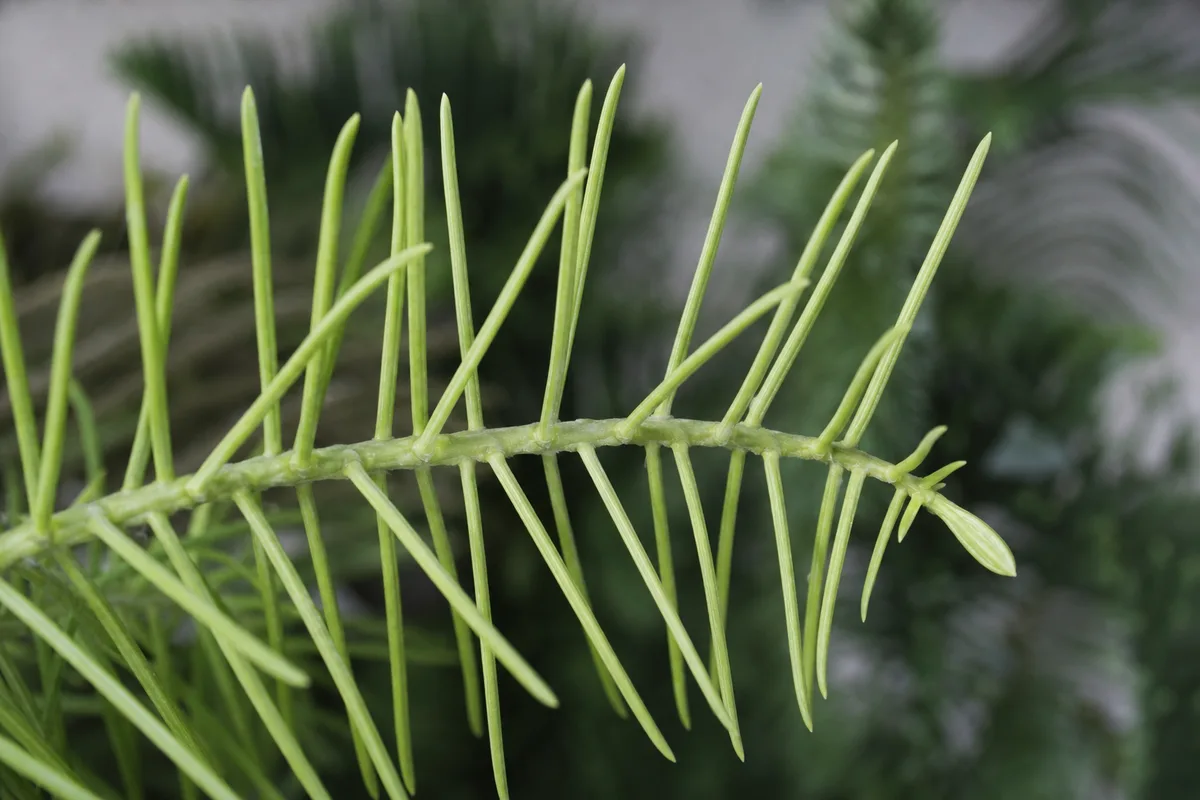
Not Enough Light symptoms on Norfolk Island Pine - compare with healthy tissue on the same plant.
Typical low-light signs:
- Pale, weak, or yellowish new needles instead of firm medium green- the plant cannot maintain dense chlorophyll in chronic deficit
- Drooping branch tips while the branch base still attaches firmly- Missouri IPM distinguishes this tip droop from lower-branch wilt caused by dry soil
- Fewer than five to six branches per whorl on new growth; healthy specimens form symmetrical horizontal tiers at each node
- Long, droopy branches with slowed terminal growth- Illinois Extension notes branches become elongated and growth stalls in low light
- A short, broad, asymmetrical silhouette when terminal growth slows but lateral branches keep stretching toward the brightest vector
- Hard lean toward the window or brightest wall
- Lower whorls yellowing, browning, and detaching- structural branch loss that starts at the bottom where light is weakest
- Soil that stays wet for ten days or more because the dim tree transpires slowly
What adequate light looks like for comparison:
- Firm horizontal branches in evenly spaced whorls around the trunk
- About five to six branches per tier on fresh growth
- Medium to dark green needles with the species’ overlapping herringbone pattern
- Steady but slow vertical growth- typically three to six inches per year indoors
Judge new whorls at the top, not old needles from brighter months. Damaged lower tiers will not restore themselves even after light improves.
Why Norfolk Island pine runs out of light indoors
Norfolk Island pine evolved on bright coastal Pacific islands with open sky and constant onshore light. Indoors it is classified as a high-light interior plant preferring strong daily brightness, with direct sun desirable though bright indirect alone can sustain acceptable growth when the total dose is high enough.
Several home situations push trees into chronic under-lighting:
Post-holiday dim-shelf trap. Trees staged as centerpieces far from windows survive on stored reserves through December, then decline in January when light remains poor and reserves are gone.
North rooms and interior shelves. A spot that looks “bright” to human eyes across the room may deliver far less usable light at needle height. North exposures rarely sustain dense tiered growth without supplementation.
Winter daylight loss. Shorter days and lower sun angle cut exposure even when the pot never moved. Marginal summer placement can become a crisis by February.
Self-shading whorls. Lower tiers sit in the shadow of upper branches and furniture. A tree near a window can still starve its base whorls if the canopy hogs the light pool.
Obstructed glass. Sheer curtains, tinted film, porch overhangs, and dirty panes all reduce foot-candles more than owners expect.
Low light also slows water use. A dim tree keeps mix moist longer, which pairs dangerously with branch yellowing and drop that mimics drought. Always check root-zone moisture before assuming underwatering. Chronic wet soil in a dark room raises root rot risk-see the urgent pairing in When to worry below.
How to confirm insufficient light
Work through these checks before Norfolk Island Pine repotting guide, fertilizing, or treating for pests:
-
Whorl-count test - Examine the newest tier at the top. Count horizontal branches at the node. Fewer than five strongly suggests the canopy still needs more intensity.
-
Hand-shadow at canopy height - Hold your open hand at the top whorl at midday. You should see a soft but visible shadow. No shadow at canopy level means the spot is too dim for reliable tiered growth, even if the floor beneath the window looks bright.
-
Tip droop vs. lower wilt - Drooping at branch tips with otherwise firm attachment points toward low light. Drooping lower branches with dry, lightweight soil points to underwatering instead.
-
Needle color on new growth - Pale, weak, or yellowish fresh needles confirm deficit. Uniform brown tips on otherwise green needles in dry air may be low humidity instead.
-
Lean direction - Consistent tilt toward one window means the tree is actively seeking photons.
-
Soil dry-down speed - Press a finger into the top inch. If mix stays damp ten days or more in normal room temperatures and new growth is absent, low light may be slowing metabolism. Confirm roots are still firm-not a rot issue masked as thirst.
-
Rule out lookalikes - Yellowing lower whorls with soggy soil and sour smell suggest overwatering, not light alone. Crisp brown tips on dry soil point to drought. Only when pale needles, sparse whorls, tip droop, and slow growth cluster together should you confirm insufficient light.
First fix for Norfolk Island pine
Move the pot within 12 to 24 inches of the brightest suitable window-and leave everything else alone for two weeks.
An east-facing window is the most reliable default: one to three hours of gentle morning sun, then strong indirect light the rest of the day. If east is unavailable, use a filtered south or west window with the canopy close to glass-not a north room unless you add a grow light.
If the tree lived on a holiday buffet or nursery dim shelf for weeks, acclimate over 7 to 14 days rather than jumping to harsh afternoon sun:
- Days 1–4: bright indirect close to the target window, outside direct beam path
- Days 5–7: add one hour of early direct sun (east pane or south/west with sheer curtain)
- Days 8–14: add another hour every three to four days until you reach stable morning direct or strong filtered all-day brightness
After moving:
- Do not fertilize until new whorl growth looks firm and evenly spaced
- Do not repot unless mix is clearly failing
- Recheck moisture every few days; brighter light usually means faster dry-down
If no window spot passes the hand-shadow test at canopy height, add a full-spectrum LED grow light 12 to 24 inches above the top whorl for 12 to 14 hours daily on a timer. North rooms and post-holiday interior placements almost always need this upgrade.
Step-by-step recovery
Once the tree is in brighter light, follow this sequence:
Week 1–2: Acclimate and observe
Watch whether drooping tips firm up and whether the next whorl begins with stronger branch attachments. Some older needles may yellow as the plant reallocates energy-normal if roots are healthy.
Adjust watering to match the new growth rate: check the top inch instead of following a calendar.
Week 3–8: Support even growth
Rotate the pot one quarter turn at each watering so all sides share exposure. Avoid large 180° spins that shock a previously shaded face with sudden intense light.
Dust needle surfaces lightly when you water-indoor film cuts photosynthetic efficiency and effectively lowers light another few percent.
Month 3 onward: Structural honesty
Improved light preserves remaining whorls and supports healthier top growth. Bare trunk sections stay bare. If multiple lower tiers are already gone, your goal shifts from full restoration to salvaging upper symmetry-and honestly evaluating whether a younger replacement in a brighter window is the better display.
For etiolation and stretch overlap, see leggy growth on Norfolk Island pine with the scope note that leggy pages focus on internode stretch while this page covers branch-tier failure and permanent loss.
Recovery timeline
| Stage | What to expect |
|---|---|
| 1–2 weeks | Tip droop may reduce; lean may slow if rotation starts |
| 2–4 weeks | New whorl begins with firmer branch attachments; needle color on fresh growth improves |
| 1–3 months | Whorl count approaches five to six branches per tier if light is now adequate |
| 3–6 months | Predictable wet/dry soil cycle; upper symmetry stabilizes with regular rotation |
| 6–12 months | Full structural assessment-lost lower whorls will not return; judge by top-tier health |
Old stretched whorls and dropped lower branches do not revert. Judge success by new tiers, not by repairing bare trunk sections.
Lookalike symptoms
| What you see | Likely cause | First check |
|---|---|---|
| Tip droop, pale needles, sparse whorls, lean | Insufficient light | Whorl count + hand-shadow at canopy |
| Lower branch wilt, lightweight dry pot | Underwatering | Soil moisture at depth; see underwatering |
| Yellow lower whorls, soggy soil, sour smell | Overwatering / root stress | Root firmness; see overwatering and root rot |
| Lower branch droop in dry soil | Drought wilt (not tip droop) | Missouri IPM notes wilt droop sits on lower branches, not tips |
| Uniform brown needle tips, otherwise firm branches | Low humidity / dry air | Low humidity and Norfolk Island Pine watering guide |
| Yellowing needles on lower tiers only | Low light or normal aging shed | Pair with whorl count and placement history |
| Drooping entire branches in dim room + wet soil 10+ days | Low light slowing uptake + overwatering | Brighten and correct watering together |
Slow growth alone in an otherwise bright window may be normal species pace-see slow growth on Norfolk Island pine when light checks pass but the tree barely adds height.
For branch droop without pale needles, cross-check drooping leaves on Norfolk Island pine. For yellowing without sparse whorls, see yellow leaves.
Mistakes to avoid
- Leaving the tree on the holiday buffet after December - Re-window within a week of taking decorations down.
- Jumping from a dim hallway to unfiltered south afternoon sun in one day - Needles bleach and crisp within days. Acclimate over 7 to 14 days.
- Fertilizing a pale, stalled tree - Extra nutrients cannot replace photons. Feed only after new whorl growth confirms the placement works.
- Repotting to “fix” sparse whorls - Fresh mix does not substitute for foot-candles.
- Assuming rotation fixes dim rooms - Spinning a tree in a north hallway produces symmetrically sparse growth. Fix intensity first.
- Treating all droop as underwatering - Tip droop in moist soil points to light, not thirst.
- Waiting for lower branches to grow back - They will not. Act while upper whorls are still healthy.
How to prevent low light next time
- Default placement: Brightest east window, or filtered south/west within 12 to 24 inches of glass
- Post-holiday rule: Return to a real window within seven days of display teardown
- Seasonal check: Retest hand-shadow at canopy height each November; add grow lights before winter stall
- Rotate weekly at watering so tiers stay symmetrical
- Clean windows at least twice a year
- North rooms: Plan for a full-spectrum LED from day one-not as a last resort after branch loss
- Track whorl count on each new tier-fewer than five branches means brighten immediately
Norfolk Island pine tolerates very low light briefly-as NC State notes, indoor specimens may survive dim conditions for two to three years before showing leaf drop and lower branch loss-but survival is not the same as adequate light. Full sun normally produces the most compact, symmetrical indoor growth when acclimated.
When to worry
Low light alone is rarely fatal overnight. Worry when:
- Multiple lower whorls have already dropped - structural damage is permanent; focus on saving the upper canopy
- Soil stays wet two weeks or more in a dim room with yellowing needles-rot risk needs immediate watering correction; see root rot
- Entire branches yellow after a sudden move to a darker spot without acclimation- Illinois Extension warns unacclimated light drops can kill whole tiers
- No new whorl in six months despite your brightest window-verify with a light meter or add supplemental LED before assuming the specimen is spent
A tree with firm roots, remaining upper whorls, and only early tip droop is recoverable. Move it to better light, match watering to the new growth rate, and give it time-knowing that lost lower branches will not return.
Full species context and care hub: Norfolk Island pine overview.
When to use this page vs other Norfolk Island Pine guides
- Norfolk Island Pine watering guide - Use for routine moisture checks before assuming not enough light is the main issue.
- Norfolk Island Pine problems hub - Browse all 4 common issues on this species.
- Leggy Growth on Norfolk Island Pine - Different entry point when symptoms overlap with not enough light.
- Yellow Leaves on Norfolk Island Pine - Different entry point when symptoms overlap with not enough light.