Underwatering on Norfolk Island Pine: Causes, Checks & Fixes
Quick answer
Underwatering on Norfolk Island Pine shows as a light dry pot, limp horizontal whorls, and brown needle tips on dusty mix. First step: probe the top inch-if dry throughout, bottom-water until the surface moistens, drain fully, then resume checks every 3–5 days for small holiday pots.
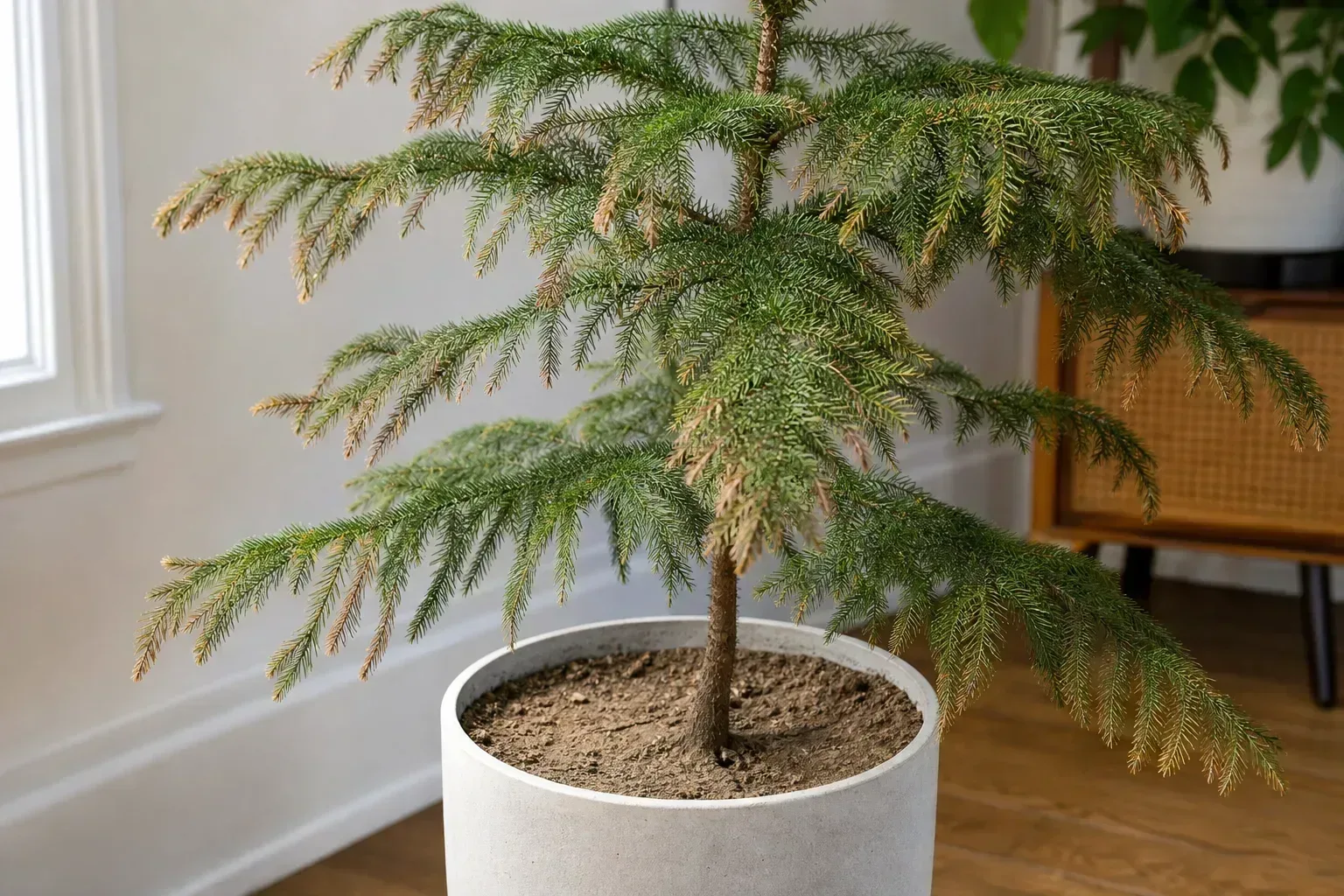
Underwatering on Norfolk Island Pine: Causes, Checks & Fixes
This guide covers underwatering on Norfolk Island Pine. See also the general Underwatering guide, watering, and light pages for this plant.
Underwatering on Norfolk Island Pine: Causes, Checks & Fixes
Quick answer
Underwatering on Norfolk Island Pine (Araucaria heterophylla) means the root zone stayed dry long enough that needles and horizontal branch whorls lost turgor-the internal water pressure that keeps this subtropical conifer stiff. The symptom looks dramatic because each tier of awl-shaped needles hangs instead of holding its usual symmetrical shape.
First step: stick your finger into the top inch (2–3 cm) of mix and lift the pot. A lightweight container with dusty dry soil at depth confirms drought. If the mix is wet and heavy while branches droop, stop- that pattern fits overwatering or root damage, not thirst.
Norfolk Island pines sold as living Christmas trees often sit in fast-drying 2.5–5 inch pots placed in bright, heated rooms where the mix can go bone dry within a few days. Dry indoor air compounds the problem: even briefly moist soil cannot keep up when transpiration outruns root uptake. For the full watering rhythm and seasonal schedule, see the Norfolk Island pine watering guide. When limp whorls appear with wet soil instead, start with wilting on Norfolk Island pine for the wet-versus-dry triage path.
What underwatering looks like on Norfolk Island Pine
Norfolk Island pine is not a true pine-it is a whorled conifer with soft, overlapping needles arranged in horizontal tiers around a central trunk. Underwatering stress shows up on those tiers before it shows up anywhere else on the tree.
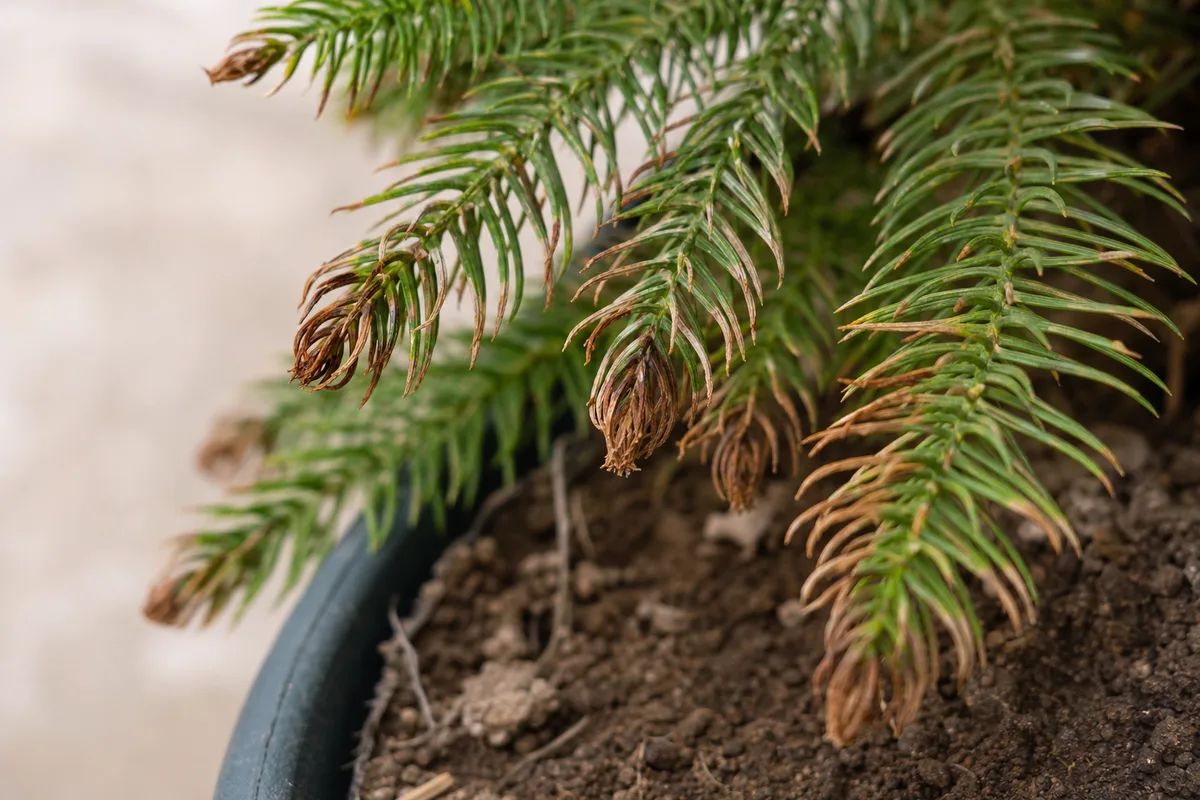
Underwatering symptoms on Norfolk Island Pine - compare with healthy tissue on the same plant.
Brown needle tips and dull whorls on dry soil
Early underwatering often produces crispy brown margins on needle tips while the needle base still looks green. The outermost whorls dull first because transpiration pulls water from the farthest tissue when roots cannot resupply fast enough. Mix at the surface looks pale and dusty; a skewer inserted 2–3 cm deep comes out dry throughout.
Unlike salt burn or vent scorch alone, drought-linked tip browning pairs with a noticeably light pot and soil that has pulled slightly away from the container wall. If tips brown while deeper mix stays cool and damp, suspect low humidity or heat exposure instead-see the lookalike section below.
Lower branch tiers drooping or dropping first
During moderate drought, lower horizontal whorls sag while the central leader and upper tiers may still look relatively firm. Needles feel soft and flexible instead of rigid when you touch them. If dryness persists, entire lower tiers turn brown, die, and drop-leaving bare trunk sections that will not fill in again.
Illinois Extension ties needle drop on Norfolk Island pines to exposure to dry air or dry soil-often both at once indoors. Ask Extension notes that lost lower branches do not regrow; new growth continues only at the top. That permanent tier loss is why repeated dry cycles matter more on this species than on broadleaf houseplants that can push new shoots from old wood.
Why Norfolk Island Pine gets underwatered
Underwatering is rarely one missed watering. It is usually a stack of indoor conditions that dry the root ball faster than the owner expects.
Holiday small-pot dry-out in bright, heated rooms
Norfolk Island pines are marketed heavily as tabletop Christmas trees in small nursery pots with limited soil volume. After the holidays, many stay in those same containers near south windows, fireplace mantels, or foyer tables where warm air and bright light accelerate evaporation. A 3–5 inch pot can lose usable moisture in 3–5 days during active indoor heating-far faster than the weekly schedule many owners assume.
Decorative foil wraps and cachepots without drainage also hide dry-out until whorls collapse. Peel back wraps to check weight and soil depth during the first month after display season.
Fear of overwatering after brown-tip scares
Brown needle tips are a common Norfolk failure mode, and they have multiple causes. Owners who recently dealt with tip browning sometimes under-water to avoid rot, especially after reading warnings about soggy soil. That swing can leave the mix dust-dry for a week while room humidity stays low-compounding stress on lower whorls.
Tip browning from dry air alone can occur with technically moist soil. Cutting water further when the pot is already light makes underwatering the dominant problem. Cross-check brown tips on Norfolk Island pine when margin burn appeared before whorls sagged.
Dry indoor air compounding root-zone drought
Even with appropriate soil moisture at the start of the week, forced-air heat below 50% humidity pulls water from needles faster than roots replace it. PlantTalk Colorado lists excessive needle browning as a sign of too little humidity, inconsistent watering, or furnace drafts. NC State Extension notes the species adapts to warm dry home air but still needs management in heated rooms.
Underwatering and low humidity share symptoms on the needles. Fixing soil alone without addressing air moisture may leave outer whorls crisping while you believe watering is solved.
How to confirm the cause
Work through these checks in order before you pour. Each step narrows underwatering against lookalikes that need opposite fixes.
Soil depth check, pot weight, and skewer probe
- Finger or skewer at 2–3 cm depth - Dry and dusty throughout supports drought. Cool damp material at depth with only a dry surface may mean you are underwatering by shallow sips, not by skipping water entirely.
- Pot weight - Lift the container. A light pot plus drooping whorls fits underwatering. A heavy pot plus limp branches despite surface dryness fits overwatering or root uptake failure.
- Whorl pattern - Lower tiers affected first with dry soil suggests thirst. Multiple tiers yellowing with wet soil suggests root trouble.
- Recent history - Travel gaps, fear-driven watering cuts, or a holiday pot left near a heating vent all raise drought probability.
- Humidity at branch height - Below about 50% supports dual stress even when soil checks look borderline.
If the pot is light, mix is dry several centimeters down, and needles feel soft but are not yet fully brown across all tiers, underwatering is the leading diagnosis.
Lookalikes: low humidity vs. overwatering vs. root damage
| What you see | Leading cause | First check |
|---|---|---|
| Light dry pot, brown tips, dusty top inch | Underwatering | Soak and drain; resume top-inch dry-down rhythm |
| Moist soil, brown tips on vent-facing side, firm whorls | Low humidity / heat stress | Hygrometer; humidifier; see low humidity guide |
| Heavy wet pot, yellow lower whorls, sour smell | Overwatering / root rot on Norfolk Island Pine | Stop watering; inspect roots |
| Dry surface, wet center in oversized pot | Water runs around root ball | Bottom-water to rewet; consider repot if chronic |
| Limp whorls with wet soil after repeated watering | Root uptake failure | Wilting triage-not another drink |
Critical trap: Needles brown at the tips while soil feels slightly cool at depth often means dry air, not drought. Adding more water without raising humidity can push the plant toward overwatering without fixing the tips.
Confirmation decision table
| Test result | Diagnosis | Next action |
|---|---|---|
| Top inch dry + light pot + soft needles | Underwatering confirmed | Bottom-water or top soak; drain fully |
| Top inch dry + light pot + only tip browning, firm whorls | Mild drought + likely dry air | Soak once; add humidity |
| Moist soil + limp whorls | Not underwatering | Stop watering; inspect roots |
| Dry soil + collapsed whorls + brittle brown branches | Advanced drought | Soak; accept lost tiers won’t return |
First fix for Norfolk Island Pine
Give one thorough rehydration matched to pot size-nothing else until drainage is complete.
Mild cases: thorough bottom-water and drain
For a dry but otherwise healthy root ball:
- Bottom-water by setting the pot in a basin of room-temperature water for 30–45 minutes until the surface moistens, or top-water slowly until water runs from drainage holes.
- Drain completely and empty the saucer within 15–20 minutes so roots are not sitting in stale runoff.
- Place the tree in Norfolk Island Pine light guide away from heating vents while it recovers turgor.
- Recheck soil in 3–5 days for small pots or when the top inch dries on larger containers-do not revert to a fixed weekly calendar.
Purdue Extension recommends touching the top inch and watering when dry, then removing standing water from decorative pots after about 20 minutes. That soak-and-drain pattern re-wets a root ball that has shrunk away from the pot wall far better than repeated shallow sips.
Do not mist, fertilize, or repot on day one. One correct moisture correction tells you whether whorls will firm up within hours.
Moderate cases: inspect roots, trim damaged fine roots, adjust rhythm
If the mix dried so completely that water runs straight through without absorbing, bottom-water once, then probe deeper after draining. Slide the root ball partly out of the pot if whorls stay limp 48–72 hours after a proper soak:
- Firm, pale roots - Continue the top-inch dry-down rhythm; add humidity if tips stay crisp.
- Shriveled but firm roots - Recovery is likely with consistent moisture and humidity.
- Brown, mushy roots with sour smell - That is wet-soil damage, not simple underwatering. Trim mushy tissue, repot into fresh well-drained mix, and see overwatering for the wet-side recovery path.
Recovery timeline
| Severity | What to expect |
|---|---|
| Mild dry-out (one missed cycle) | Whorls firm within hours to 24 hours after proper soak |
| Holiday pot fully dry 5–7 days | 1–3 days for stiffness to return; some lower needles may brown permanently |
| Repeated drought over weeks | Lower tiers may drop and never regrow; top whorls can continue if roots survive |
| Severe root desiccation | Weeks to judge by new tip growth, not old branch re-greening |
What regrows vs. what may not
Recoverable: Turgor in existing green needles; firmness returning to whorls that were limp but not fully brown; new needle clusters at branch tips within several weeks once moisture and humidity stabilize.
Not recoverable: Fully brown or crispy branch tiers; bare trunk sections after lower whorls drop. Ask Extension confirms new growth will not develop on bare areas-only at the top. Crisp brown needle tips on tissue that already desiccated will not turn green again even after the tree rehydrates.
Judge success by pot weight returning to normal after watering, whorls holding horizontal without sagging, and plump new growth at the central leader-not by expecting lost lower branches to sprout back.
What not to do
- Do not drench daily after one dry spell - that swings to overwatering and suffocates roots recovering from drought stress.
- Do not assume underwatering when tips brown but soil is moist - fix humidity and vent placement first.
- Do not use ice-cold water or leave the pot submerged for days - room-temperature soaks with full drainage match this species better than prolonged standing water.
- Do not fertilize a drought-stressed tree - wait until new growth resumes and watering is stable.
- Do not prune the central leader to compensate for lost lower tiers-shape recovery is limited once bare trunk sections appear.
- Do not rely on misting alone - it does not rehydrate a dry root ball in a small holiday pot.
How to prevent underwatering next time
Make pot weight and top-inch checks part of your routine instead of calendar watering. The Norfolk Island pine watering guide target-water when the top inch dries, roughly every 5–7 days in spring and summer and every 7–10 days in cooler months for medium pots per Illinois Extension-scales down to every 3–5 days for small holiday containers in warm, bright rooms.
Pair soil rhythm with humidity around 50% or higher using a humidifier near the canopy, not just a floor-level pebble tray on tall specimens. Keep the tree several feet from heating vents and fireplace blow paths. Empty saucers after every soak.
After display season, move the tree out of foyer heat paths into stable bright indirect light before the small nursery pot dries out completely. Plan Norfolk Island Pine repotting guide in spring if roots circle the container-root-bound pots alternate between drying too fast and repelling water.
When you travel, arrange for soil checks rather than leaving a tabletop Norfolk in a hot window to bake dry for a week. One severe dry cycle can kill lower branch tiers permanently even if the top eventually recovers.
When to worry
Escalate beyond a single soak when:
- No firmness returns 72 hours after correct underwatering rehydration
- Multiple whorls collapse while soil reads wet-inspect for root rot, not drought
- Lower branches turn fully brown and brittle across several tiers in one week
- Stem tissue softens at the soil line
- The tree was dry for two weeks or more in a small pot-root death may exceed what one soak reverses
Norfolk Island pines can live for years indoors when moisture and humidity stay in range. They rarely survive repeated cycles of bone-dry soil followed by waterlogged recovery attempts. Catching drought at the first limp lower whorl-and reading the soil before you act-keeps most trees on the recoverable side of permanent tier loss.
For full species context: Norfolk Island pine overview.
When to use this page vs other Norfolk Island Pine guides
- Norfolk Island Pine watering guide - Use for routine moisture checks before assuming underwatering is the main issue.
- Norfolk Island Pine problems hub - Browse all 4 common issues on this species.
- Brown Tips on Norfolk Island Pine - Different entry point when symptoms overlap with underwatering.
- Yellow Leaves on Norfolk Island Pine - Different entry point when symptoms overlap with underwatering.