Overwatering on Norfolk Island Pine: Causes, Checks & Fixes
Quick answer
Overwatered Norfolk Island pine sits in wet mix too long-lower whorls droop, needles soften or yellow on damp soil, and the pot stays heavy for days. First step: stop watering until the top 1 inch of mix dries and empty any standing saucer water.
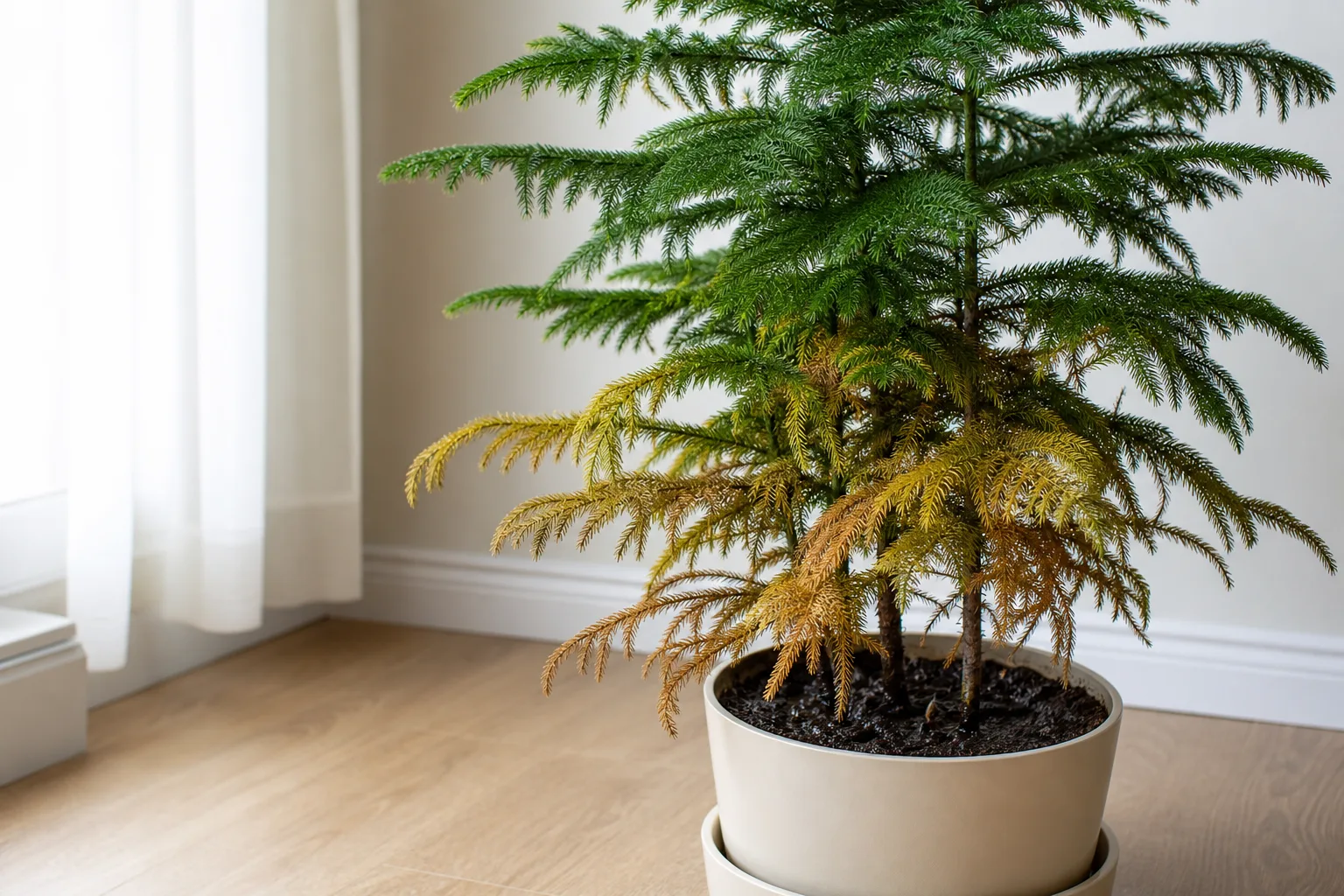
Overwatering on Norfolk Island Pine: Causes, Checks & Fixes
This guide covers overwatering on Norfolk Island Pine. See also the general Overwatering guide, watering, and light pages for this plant.
Overwatering on Norfolk Island Pine: Causes, Checks & Fixes
Quick answer
Overwatered Norfolk Island pine (Araucaria heterophylla) sits in wet mix too long. Fine roots lose oxygen, uptake fails, and the tree shows drooping lower whorls, soft or yellowing needles, and sometimes a sour smell from the pot-even though the soil feels damp at depth.
First step: stop watering until the top 1 inch (roughly 2–3 cm) of mix feels dry to the touch. Empty any standing saucer water and confirm drainage holes are open. This subtropical conifer expects evenly moist roots, not permanent sogginess-Illinois Extension warns that overwatering can lead to branch loss on Norfolk Island pines, the same outward symptom as severe drought, which is why wet-soil wilt is so confusing on this species.
For full watering rhythm, seasonal cadence, and humidity pairing, see the Norfolk Island pine watering guide. For advanced rescue when roots are mushy, see root rot on Norfolk Island pine.
What overwatering looks like on Norfolk Island Pine
Norfolk Island pine does not present overwatering like a pothos with broad yellow leaves. On this whorled subtropical conifer, damage climbs from the bottom up because lower branch tiers depend on the root zone first.
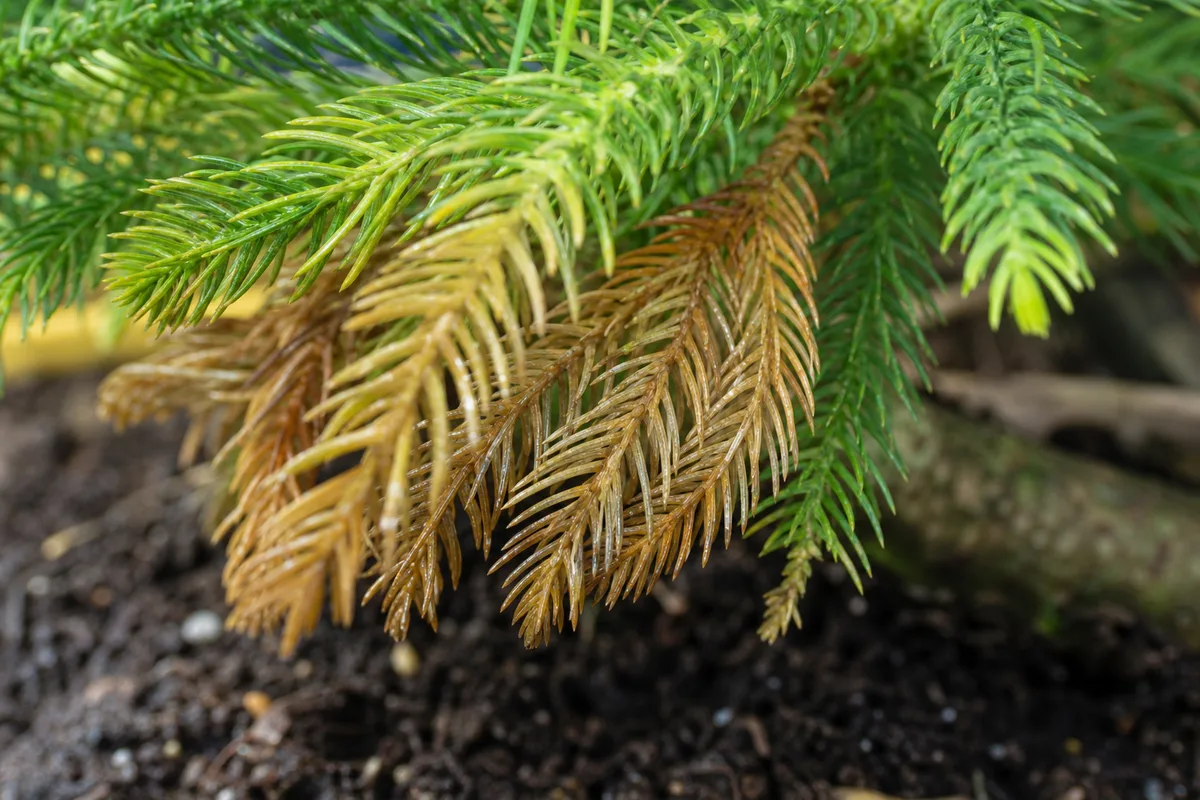
Overwatering symptoms on Norfolk Island Pine - compare with healthy tissue on the same plant.
Typical overwatering pattern:
- Drooping horizontal whorls, often starting on the lowest tiers while upper branches still look relatively firm
- Soft or yellowing awl-shaped needles on lower branches despite damp mix at 2–3 cm depth
- Heavy pot that stays wet for many days after one watering-the skewer comes up muddy rather than lightly damp
- Wilting needles on wet soil-the telltale mismatch when rotting roots cannot move water upward
- Whole lower branch tiers browning and dying while soil stays saturated; lost tiers do not grow back
- Musty or sour smell when you lift the plant or disturb the surface
- Fungus gnats hovering near the pot and white mold on the soil surface
- Softening at the trunk base or central leader on advanced cases-escalate toward root-rot protocol
Healthy Norfolk Island pine needles are soft and plump when young, arranged in symmetrical horizontal whorls. Overwatered tissue often turns dull yellow-green or soft brown on lower tiers rather than the crisp, papery brown tips you see with drought or low humidity.
The wilting paradox is the diagnostic that separates overwatering from underwatering on this plant: damaged roots cannot deliver water to needles, so whorls droop even while mix at depth stays wet. Watering again deepens the failure loop.
Why Norfolk Island Pine gets overwatered
Norfolk Island pine is sold as a living Christmas tree in small tabletop pots that dry fast in bright rooms-but many owners overcorrect brown tips with generous watering, especially after the holidays when the tree moves from a display table to a dim corner.
Holiday small-pot saturation is a top trigger. A 2.5- to 5-inch gift pot in a foil wrap traps runoff, blocks airflow, and keeps the root zone saturated after one heavy soak. Illinois Extension notes that holiday foil wraps trap moisture and block proper drying-remove or punch drainage holes before the first serious watering.
Calendar watering in low light is the next most common cause. Norfolk Island pine uses less water in cool, dim winter rooms but many owners keep a summer weekly schedule. Mix stays wet at the center while the surface looks acceptable.
Oversized pots surround a small root ball with a large wet zone. A recently repotted floor tree in a container two sizes too large may stay saturated for two weeks-tempting owners to wait on surface checks while the bottom stagnates.
Heavy, compacted peat mixes hold water like a sponge. Missouri Botanical Garden recommends porous, well-drained, slightly acidic mix and warns against soils that are too wet or too dry. Dense old media suffocates roots even when you water lightly.
No drainage or full saucers trap water at the bottom. Decorative cachepots without holes are a frequent post-holiday failure mode.
Cool winter rooms slow evaporation. A Norfolk Island pine near a north window in January may take twelve days to dry the top inch-continuing a five-day summer rhythm keeps roots saturated through the whole season.
Overcorrecting brown tips with more water when the real problem is low humidity or underwatering worsens both needle and root health. Check pot weight and top-inch moisture before you assume thirst.
How to confirm the cause
Work through these checks before Norfolk Island Pine repotting guide or trimming:
- Soil moisture at depth - Press a finger into the top inch. If it clings and feels cool, wait. Insert a wooden skewer 2–3 inches along the pot wall. Wet clinging particles days after watering confirm saturation, not a one-time mistake.
- Pot weight - Lift the container after a known good watering and again now. A heavy pot with drooping lower whorls points to waterlogged mix; a light pot with drooping needles suggests underwatering instead.
- Whorl pattern - Soft yellow needles on multiple lower tiers plus wet soil fits overwatering. Crisp brown tips with dry dusty mix fits drought or dry air.
- Trunk and leader check - Press the trunk base and central leader gently. Firm is reassuring; soft or spongy on wet soil means escalate toward root rot.
- Drainage check - Water should exit holes within minutes. Saucer water sitting for hours means roots may be standing in liquid. Purdue Extension recommends emptying cachepots after about 20 minutes.
- Smell and pests - Sour or musty mix and fungus gnats support chronic wet feet.
- Light and season - Note room brightness and heating. Dim, cool conditions extend drying time and make your usual schedule excessive.
- Root spot-check (if unsure) - Slide the plant out gently. Healthy roots are firm and pale; brown, slimy roots that collapse between fingers confirm advanced damage.
Lookalike comparison
| Sign | Overwatering | Underwatering | Low humidity | Root rot (advanced) |
|---|---|---|---|---|
| Pot weight | Heavy, stays wet | Light, dries fast | Normal for your rhythm | Heavy, sour wet |
| Top inch | Wet for many days | Dry, crumbly | May be normal | Wet, may smell |
| Needle pattern | Soft yellow on lower whorls; wilt on wet soil | Crisp brown tips; perks after soak | Brown outer tips; soil appropriately moist | Whole lower tiers die on wet soil |
| Smell | Musty if chronic | None | None | Sour, rotten |
| Recovery | Dry-down + drainage | Thorough soak + checks | Humidifier + stable watering | Trim, repot, rescue protocol |
If the mix is dry throughout, the pot is light, and needles are crispy, underwatering is more likely. Do not withhold water further without checking.
First fix for Norfolk Island Pine
Stop watering until the top 1 inch of mix feels dry to the touch.
That single pause lets oxygen return to the root zone and breaks the cycle of wet soil → failed uptake → drooping whorls → more water. Move the pot to brighter indirect light if it has been in deep shade-faster photosynthesis uses water and helps the mix dry evenly without scorching soft needles.
Empty any saucer water. If the plant sits inside a decorative outer pot or holiday foil wrap, remove the wrap or pull the nursery pot out so air reaches the bottom holes.
Do not fertilize, mist heavily, or repot on day one unless the central leader is already soft or roots are clearly mushy on inspection. Most early overwatering cases stabilize with dry-down plus better light and drainage alone.
Step-by-step recovery
If symptoms are mild (one drooping lower whorl, wet mix, firm trunk):
- Hold water until the top inch is dry, then water thoroughly once and pour off excess from the saucer within 15–20 minutes.
- Adjust placement - Bright, indirect light with some morning sun speeds recovery. Avoid hot dry vents that compound stress; see low humidity if winter air is desert-dry.
- Remove dead lower needles on tiers that have already browned-they will not re-green.
- Monitor new apex growth - A fresh whorl at the growing tip means roots are working again.
If symptoms are moderate (persistent wet mix, multiple yellowing whorls, fungus gnats):
- Scrape the top inch of moldy or gnat-infested surface soil and discard it.
- Let the pot dry until the top inch passes the finger test-this may take one to two weeks in a cool room.
- Set yellow sticky traps near the pot to reduce adult gnats while soil dries.
- Resume watering only when the top inch is dry; never on a fixed weekday. Match the watering guide rhythm-roughly every 5–7 days in warm months and every 7–10 days in winter for medium pots.
If symptoms are severe (soft trunk base, sour smell, mushy roots on unpotting):
- Unpot and rinse roots under lukewarm water.
- Trim all brown, mushy roots with clean scissors, keeping firm pale tissue.
- Repot into fresh, airy mix with perlite in a pot only slightly larger than the root ball, with drainage holes.
- Wait several days before the first light watering so cut roots callus.
- Follow the full root rot rescue protocol if multiple lower tiers have already died.
Recovery timeline
Stabilization often takes one to two weeks after you stop watering and the top inch dries-drooping on lower whorls should ease before new apex growth appears.
New whorls at the growing tip are the best success signal. Expect them in three to six weeks during spring or summer active growth; winter recovery may take longer in cool, dim rooms.
Softened or yellowed needles on damaged whorls will not turn green again. They may brown and drop, or stay dull until you accept the tier is lost.
Lost lower branch tiers do not regrow. Bare trunk sections stay bare while the tree may continue upward from the apex. Plan prevention around protecting remaining whorls, not expecting structural fill-in.
Worsening signs: central leader softens after dry-down, multiple lower tiers brown within days, or new apex growth emerges small then collapses-those point toward active rot, not simple overwatering.
What not to do
Do not water because needles look limp when soil is already wet-that feeds the failure loop on this conifer. Avoid repotting into a much larger pot to “help drying”; a wet dead zone around sparse roots makes saturation worse.
Do not fertilize a waterlogged plant; salts on damaged roots add stress. Skip misting as a fix for wet roots-it does not dry the mix and can leave soft needles wet too long in cool rooms.
Do not assume lower branches will grow back after chronic wet feet-Ask Extension notes that lost lower branches do not sprout back. Protect tiers proactively.
Do not keep holiday foil wraps intact after the season. Remove or drain them immediately.
When unpotting, support the trunk-Norfolk Island pine is top-heavy. The species is generally considered non-toxic to pets, but keep trimmed needles and old soil away from curious chewers.
How to prevent overwatering on Norfolk Island Pine
Match water to top-inch dryness, not the calendar. Water when the soil just begins to feel dry, soak thoroughly until runoff exits drainage holes, then empty the saucer within 15–20 minutes so the pot does not sit in stale runoff.
Use slightly acidic, well-draining potting mix with perlite and pots with open drainage. Size up only one inch at a time when repotting so excess mix does not stay wet around small roots.
Reduce frequency in winter or dim rooms-many homes need the 7–10 day winter check rhythm from the watering guide when growth slows, even while humidity work intensifies.
Pair soil checks with humidity. Dry winter air and wet soil together compound needle stress. Target high humidity at branch height per NC State Extension guidance - mist in heated rooms when air is dry-see low humidity fixes if tips brown while your watering rhythm seems correct.
Lift before you pour-a noticeably lighter pot means the top inch has dried and it is safe to water again.
Remove foil wraps and empty cachepots after every watering, especially on holiday gift specimens.
When to worry
Escalate immediately if the central leader or trunk base feels soft on wet soil, mix smells rotten, or more than one lower whorl browns within a week despite pausing water. Those signs mean root rot is active-dry-down alone is unlikely to save the plant.
A single drooping lower whorl with firm leader tissue and mix that dries normally within ten days can wait for a schedule and drainage adjustment.
If every lower tier yellows while mix stays wet for two weeks or more, treat as urgent even before repotting-structural loss on Norfolk Island pine is permanent once whorls die.
Conclusion
Overwatering on Norfolk Island pine is a moisture-timing and drainage problem, not bad luck with a “pine that should like drought.” Confirm it with wet mix at depth plus drooping lower whorls on a heavy pot, then stop watering until the top inch dries. Fix foil wraps, saucer standing water, oversized pots, and dim placement so the mix breathes between drinks. Protect remaining branch tiers-lost lower whorls do not return-and judge recovery by firm roots and new apex growth, not by expecting old needles to re-firm.
For species context and baseline care, see the Norfolk Island pine overview.
When to use this page vs other Norfolk Island Pine guides
- Norfolk Island Pine watering guide - Use for routine moisture checks before assuming overwatering is the main issue.
- Norfolk Island Pine problems hub - Browse all 4 common issues on this species.
- Root Rot on Norfolk Island Pine - Different entry point when symptoms overlap with overwatering.
- Yellow Leaves on Norfolk Island Pine - Different entry point when symptoms overlap with overwatering.