Spider Mites on Norfolk Island Pine: Causes, Checks & Fixes
Quick answer
Spider mites on Norfolk Island Pine cause pale stippling and fine webbing in dry heated winter air-often after holiday display near vents. First step: isolate the tree and rinse every whorl tier with lukewarm water before applying labeled horticultural oil or insecticidal soap.
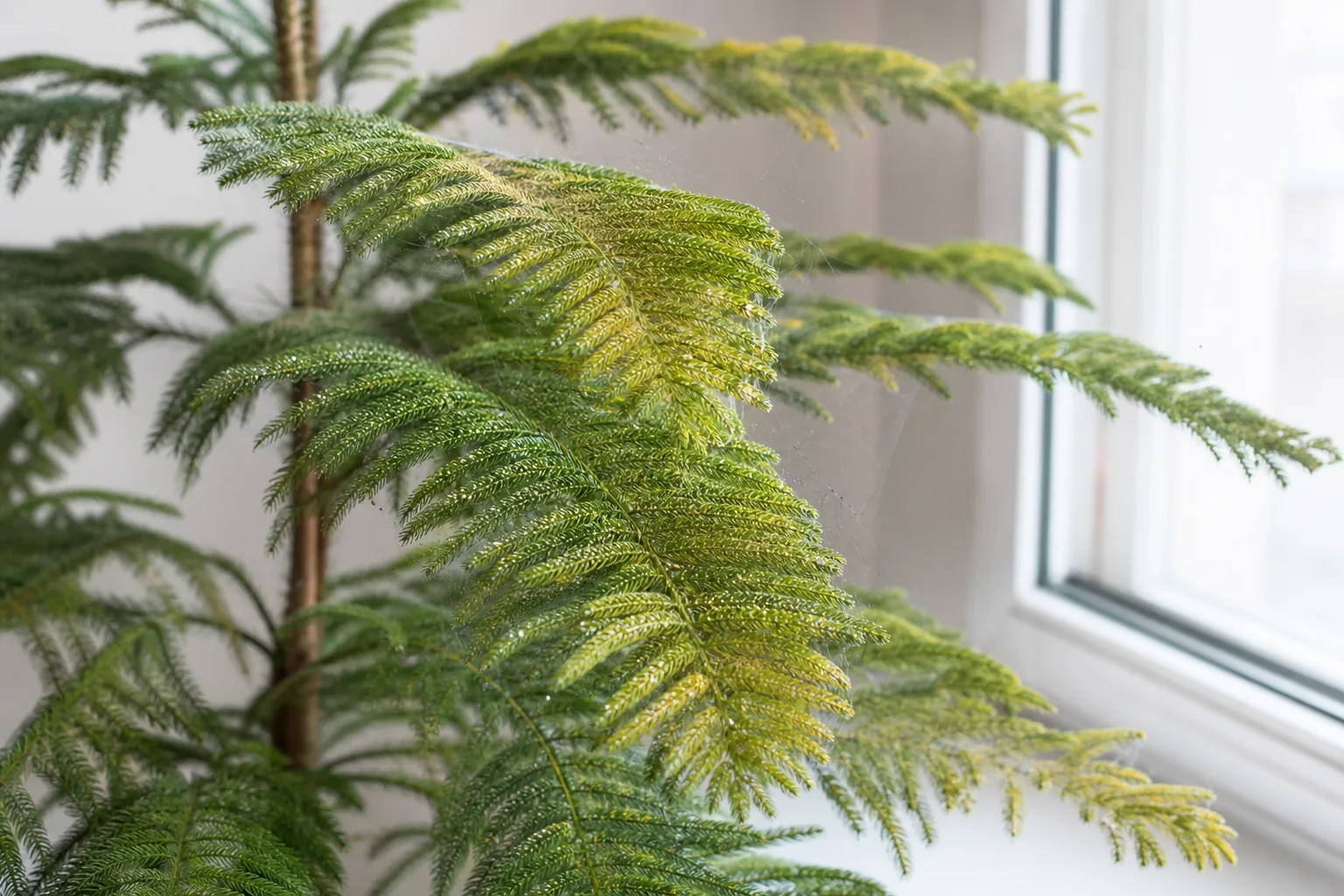
Spider Mites on Norfolk Island Pine: Causes, Checks & Fixes
This guide covers spider mites on Norfolk Island Pine. See also the general Spider Mites guide, watering, and light pages for this plant.
Spider Mites on Norfolk Island Pine: Causes, Checks & Fixes
Quick answer
Spider mites on Norfolk Island Pine (Araucaria heterophylla) thrive in warm, dry indoor air-exactly what holiday displays create when a living Christmas tree sits near a fireplace, floor register, or sunny window with forced heat running. Damage shows as pale stippling on soft juvenile needles and fine silk webbing tucked between horizontal whorl tiers, not as the uniform crispy brown tips that low humidity alone produces.
First step: isolate the tree from other houseplants and rinse every whorl tier with lukewarm water, working from the top down so water reaches needle undersides and branch crotches where mites feed. After the foliage dries, apply horticultural oil or insecticidal soap labeled for mites and repeat the rinse-plus-spray cycle every three to five days for three to four rounds to catch newly hatched mites.
For species baseline care during recovery, see the Norfolk Island pine overview. If margins brown without stippling, cross-check brown tips and low humidity before treating for pests.
What spider mites look like on Norfolk Island Pine
Norfolk Island Pine is not a true pine-its juvenile needles are soft, awl-shaped, and arranged in overlapping rows along symmetrical horizontal branch tiers. Spider mite damage reads differently on this foliage than on broad-leaved houseplants.
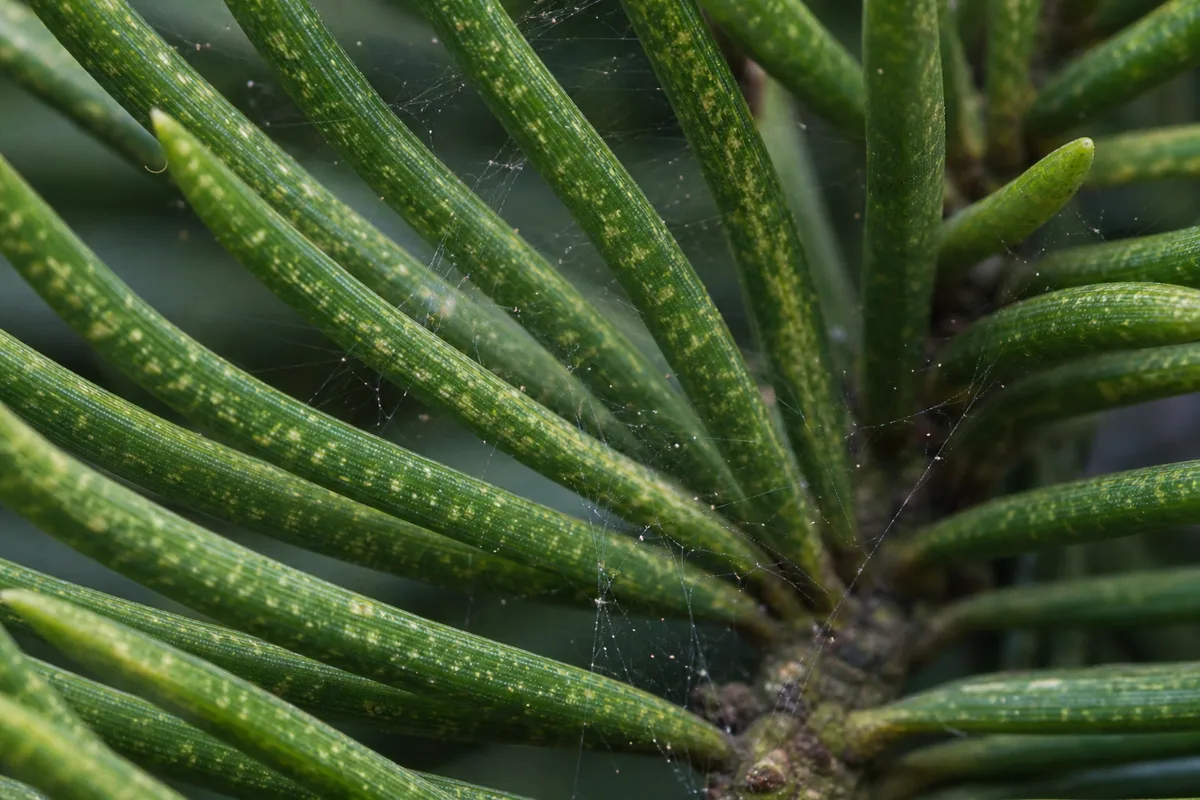
Spider Mites symptoms on Norfolk Island Pine - compare with healthy tissue on the same plant.
Typical signs include:
Fine stippling on needle faces (earliest clue):
- Pale yellow, gray, or white dots where mites pierce individual cells
- Dull, slightly bronzed needles across an entire whorl before webbing is obvious
- Damage often starts on the outer needles of upper tiers exposed to dry heat
Delicate webbing in whorl architecture (confirms mites):
- Fine silk threads between needles and at branch crotches where horizontal tiers meet the trunk
- Webbing collects in compressed holiday-display branches where airflow is poor
- Unlike thrips scars, mite webbing is silk-not sticky honeydew residue
Progression on tall tree-form specimens:
- Lower whorls may look fine while upper tiers stipple first-inspect above eye level with a step stool
- Heavy feeding causes needles to crisp and drop from actively attacked tiers
- The central leader can stay firm while perimeter whorls decline
Unlike brown tips from dry air, mite damage is speckled across the needle face, not confined to a symmetrical tan margin at the point. Unlike mealybugs, mites do not form white cottony wax clusters that smear pink when crushed.
Why Norfolk Island Pine gets spider mites in heated winter rooms
Spider mites are common sap-feeding pests on houseplants that explode when humidity drops and temperatures stay warm. Norfolk Island pine evolved in coastal subtropical humidity-roughly 50% relative humidity or higher-not the 15–30% relative humidity many heated homes reach by February.
Several indoor factors stack on this species:
Holiday heat-vent placement. Trees sold as living Christmas trees often sit on mantels, foyer tables, or near floor registers for weeks. Purdue Extension describes Norfolk Island pine as needing bright, cool conditions away from heating vents-yet display season puts the crown in the hottest, driest microclimate in the house. Mites that were barely present in the nursery can become visible within two weeks of forced-air exposure.
Whorled architecture traps dust and webbing. NC State Extension notes branches arranged in symmetrical horizontal whorls around a single trunk. Each junction creates a sheltered pocket where mites feed undisturbed and rinsing from above misses undersides unless you fan each tier deliberately.
Dry air that also browns needle tips. The same winter conditions that cause low-humidity stress also favor mites. Stressed trees near heat sources attract pests faster than well-humidified specimens in Norfolk Island Pine light guide. Humidity correction alone will not clear an active colony-but it slows reinfestation after treatment.
Spread from grouped collections. Mites hitch on newly purchased gift plants, reused stakes, and hands moving between holiday tree clusters. Missouri Botanical Garden lists spider mites among common indoor pests on this species alongside scale.
Spider mites vs. low humidity brown tips, thrips, scale, and salt burn
Brown needle tips without stippling are almost always humidity, heat, or watering stress on Norfolk Island pine-not mites. Use this table before you spray:
| What you see | Likely cause | Differentiating check |
|---|---|---|
| Pale dots across needle faces + fine webbing in whorls | Spider mites | White-paper tap test shows moving specks; dry heat history |
| Uniform crispy brown tips, no speckling | Low humidity or heat vents | Hygrometer below 40% at canopy height; vent-facing side worse |
| Moist soil + brown tips on one side | Heat or draft exposure | Tips face register or window glass; no webbing |
| White crust on soil, burnt margins on many whorls | Salt or fertilizer burn | Mineral rim on pot; follows heavy feeding or hard tap water |
| Fixed brown or tan bumps on stems | Scale insects | Bumps do not move; no stippling pattern on needles |
| Silver scratch marks, no silk | Thrips | No webbing; damage looks scraped rather than dotted |
| Slow loss of lowest branches only | Normal ageing in dim light | Upper whorls clean; no stippling or webbing |
If stippling and webbing confirm mites, proceed to treatment. If margins brown symmetrically with no dots, fix humidity and placement first-pesticides will not un-brown desiccated tips.
How to confirm spider mites (six-step checklist)
Work through these steps before stacking chemical treatments:
- Isolate the tree - Move it away from grouped houseplants, holiday tree clusters, and shared watering trays until you finish at least three treatment cycles.
- Inspect whorl undersides - Lift branch tips gently and check where horizontal tiers meet the trunk with a hand lens or bright phone light. Webbing here confirms mites over humidity-only browning.
- Run the paper-tap test - Hold white paper under a suspect branch and tap firmly. Slow-moving specks confirm live spider mites; static dust does not crawl.
- Compare stippling vs. margin burn - Speckles across the needle face mean mites. A clean needle base with only a dry brown tip points to brown tips from dry air instead.
- Check the environment - Note proximity to fireplaces, registers, and recent holiday relocation. Warm dry rooms support mite diagnosis even before webbing is obvious.
- Screen neighbors - Inspect other indoor trees on the same shelf. Mites often appear on several plants before you notice the Norfolk Island pine.
Also rule out wilting from watering stress if whole branches droop-mite damage looks speckled and webbed, not limp from root-zone failure alone.
First fix: isolate neighbors, rinse whorls, and treat on a schedule
Isolate the tree and rinse every whorl tier with lukewarm water before applying any spray.
Move the pot to a stable work area-shower floor, bathtub, or outdoor patio in mild weather. Support the trunk so a tall specimen does not topple. Spray from the top down, fanning each horizontal branch tier so water reaches needle undersides and branch crotches. Washing mites from foliage with a forceful spray is practical and effective when repeated at three- to five-day intervals.
After foliage dries, apply horticultural oil or insecticidal soap labeled for spider mites on ornamentals. UF/IFAS notes that soaps and oils are effective against mites and among the least toxic options for indoor use-but most miticides are not effective on eggs, so you need multiple applications. Plan three to four rinse-plus-spray cycles at three- to five-day intervals before judging success.
Do not fertilize a stressed infested tree. Do not repot on day one. Do not move the tree into a dark corner-recovery still needs bright indirect light per species baseline.
Step-by-step recovery
After the first rinse, scale treatment to severity:
Light infestation (stippling on one or two whorls, minimal webbing)
- Rinse all whorl tiers thoroughly; repeat every three to five days.
- Apply labeled oil or soap after each rinse once needles are dry.
- Raise humidity modestly-a humidifier targeting 50% at canopy height helps more than occasional misting.
- Inspect neighboring plants; treat if stippling appears.
- Continue until two consecutive weekly checks show no new stippling, then do one extra cycle.
Moderate infestation (webbing across multiple tiers)
- Isolate at least six feet from other houseplants.
- Shower or spray every whorl and branch crotch; use a step stool for upper tiers.
- Apply oil or soap to all needle surfaces, including undersides, in indirect light.
- Repeat every three to five days for four to five cycles-mite generations overlap in warm rooms.
- Relocate the pot away from heat vents permanently; see low humidity recovery for humidifier setup on tall specimens.
- Resume normal Norfolk Island Pine watering guide only after active stippling stops-check soil moisture before increasing frequency.
Heavy infestation (webbing on leader, widespread bronzing)
- Follow the moderate protocol but expect six to eight weeks if upper whorls were compressed during holiday display.
- Consider whether ornament-damaged branches are worth saving-severely desiccated tiers may not recover even after mites clear.
- Escalate to a second labeled product class only if oil or soap fails after four disciplined cycles; always patch-test one branch first.
Recovery timeline and what clean new growth looks like
Light infestations may stop spreading within one to two weeks of consistent rinse-and-spray cycles. Tall specimens with hidden webbing in compressed whorls can take four to six weeks if upper tiers were hard to reach.
Stippled needles do not un-speckle-judge success by clean new needles at branch tips and whorls without fresh webbing. Old bronzed tissue persists even after mites are gone. A firm green central leader with unstippled new whorls means your cadence is working.
Signs the problem is getting worse include webbing climbing toward the leader, new growth emerging dull and distorted, or stippling reappearing within days of the last spray. That usually means missed branch crotches, intervals too long for warm-room mite reproduction, or the tree still sitting in a heat-trap location.
What not to do
Do not assume insecticides labeled for insects will kill mites-mites need miticides, horticultural oil, or insecticidal soap labeled for mite control. Systemic imidacloprid treatments do not control spider mites.
Do not spray oil or soap in hot direct sun on soft needles-work in indirect light or evening conditions and patch-test one branch first. Some conifers are sensitive to repeated oil at high rates.
Do not leave the central crown saturated overnight in stagnant air after rinsing-fine needles tolerate gentle washing, but a waterlogged whorl center in a dim corner invites fungal issues. Rinse during the day and let airflow dry the tree before night.
Do not keep treating beside a fireplace or floor register and expect mites to stay gone. Relocate the tree several feet from heat paths.
Do not ignore pet-accessible runoff when rinsing or spraying indoors. Norfolk Island pine is non-toxic to cats and dogs per the ASPCA, but ingestion can still cause mild stomach upset-and soap or oil residue in standing water is not meant for pets to drink. Rinse plants in areas pets cannot access until foliage dries.
Prevention: humidity, scouting, and quarantine after holiday display
Quarantine new plants two weeks before placing them near your Norfolk Island pine. After holiday display, move the tree within days to its permanent bright, cool spot-not a dim hallway until spring.
Scout whorl undersides weekly during heating season. Mites are easier to knock back with one rinse when stippling is limited to a single tier. Pair scouting with humidity management-Illinois Extension notes Norfolk Island pines struggle long-term in dry indoor air, and the same dry conditions that brown tips also favor mite flare-ups.
Keep the pot several feet from heating vents and fireplaces year-round. A humidifier near the tree targeting roughly 50% at canopy height helps both people and this subtropical conifer. Grouping plants raises local humidity modestly; pebble trays work at small scale but rarely suffice alone for a floor-height specimen.
Dust needles gently during monthly checks-mites prefer neglected surfaces. Inspect alongside mealybug scouting at whorl junctions; both pests share sheltered crown habitat on this species.
When to escalate or call it quits
Escalate within days if webbing covers the leader, multiple horizontal tiers bronze simultaneously, or the same stippling pattern appears on several grouped holiday trees. Contact your local extension office or a reputable nursery if four disciplined oil-or-soap cycles fail-persistent infestations may need professional identification of mite species.
Consider discarding a severely compromised small holiday specimen if most whorls are bronzed, the trunk softens at the base, or treatment cycles fail while the tree remains beside a heat source. Large healthy specimens with damage limited to outer tiers are worth saving-lower whorls may drop but the central leader can recover over a full growing season.
Conclusion
Spider mites on Norfolk Island Pine show stippling and webbing in whorled soft needles when warm dry air-often from holiday placement near heat-outpaces this subtropical conifer’s humidity needs. Confirm with a paper-tap test, separate mites from brown-tip dryness, isolate the tree, rinse every branch tier on a three- to five-day schedule, and follow with labeled horticultural oil or insecticidal soap until new whorls emerge clean.
When to use this page vs other Norfolk Island Pine guides
- Norfolk Island Pine watering guide - Use for routine moisture checks before assuming spider mites is the main issue.
- Norfolk Island Pine problems hub - Browse all 4 common issues on this species.