Mealybugs on Norfolk Island Pine: Causes, Checks & Fixes
Quick answer
Mealybugs on Norfolk Island Pine hide in branch whorl axils and the central crown where soft needles overlap. First step: isolate the tree, inspect whorl junctions with a hand lens, and dab visible insects with 70% isopropyl alcohol on a cotton swab before spraying the whole plant.
Mealybugs on Norfolk Island Pine: Causes, Checks & Fixes
This guide covers mealybugs on Norfolk Island Pine. See also the general Mealybugs guide, watering, and light pages for this plant.
Mealybugs on Norfolk Island Pine: Causes, Checks & Fixes
Quick answer
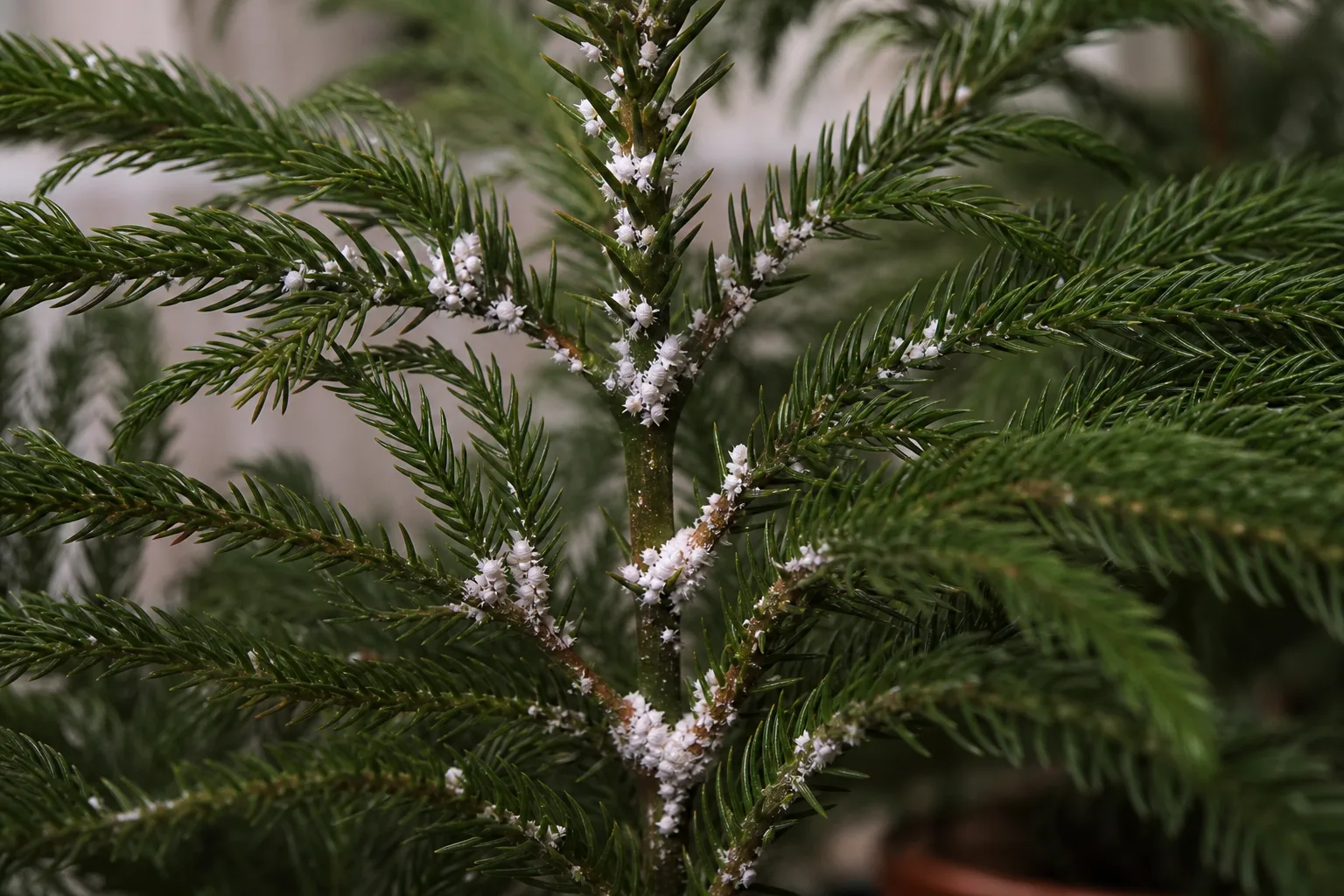
Mealybugs on Norfolk Island Pine (Araucaria heterophylla) are sap-sucking insects that cluster in branch whorl axils, along stems, and in the central crown where soft juvenile needles overlap. This subtropical conifer grows in symmetrical horizontal tiers-not a rosette succulent-so pests hide in the crotches between each whorl and under compressed holiday-display branches long before you notice yellowing needles.
First step: isolate the tree from other houseplants and inspect whorl junctions with a hand lens or bright phone light. Dab each visible insect with 70% isopropyl alcohol on a cotton swab rather than spraying the whole crown on day one. Repeat weekly for at least three to four weeks to catch newly hatched crawlers that contact treatments miss.
White cottony masses that smear pink or orange when crushed confirm mealybugs. Sticky honeydew on the pot rim, nearby furniture, or lower branch undersides is an early secondary sign. For species context and baseline care during recovery, see the Norfolk Island pine overview.
What mealybugs look like on Norfolk Island Pine
Norfolk Island Pine carries soft, awl-shaped juvenile needles in overlapping herringbone rows along each horizontal branch tier. Mealybugs exploit the sheltered gaps where needles meet stems and where whorls attach to the trunk-spots easy to miss when you water from above without lifting branch tips.
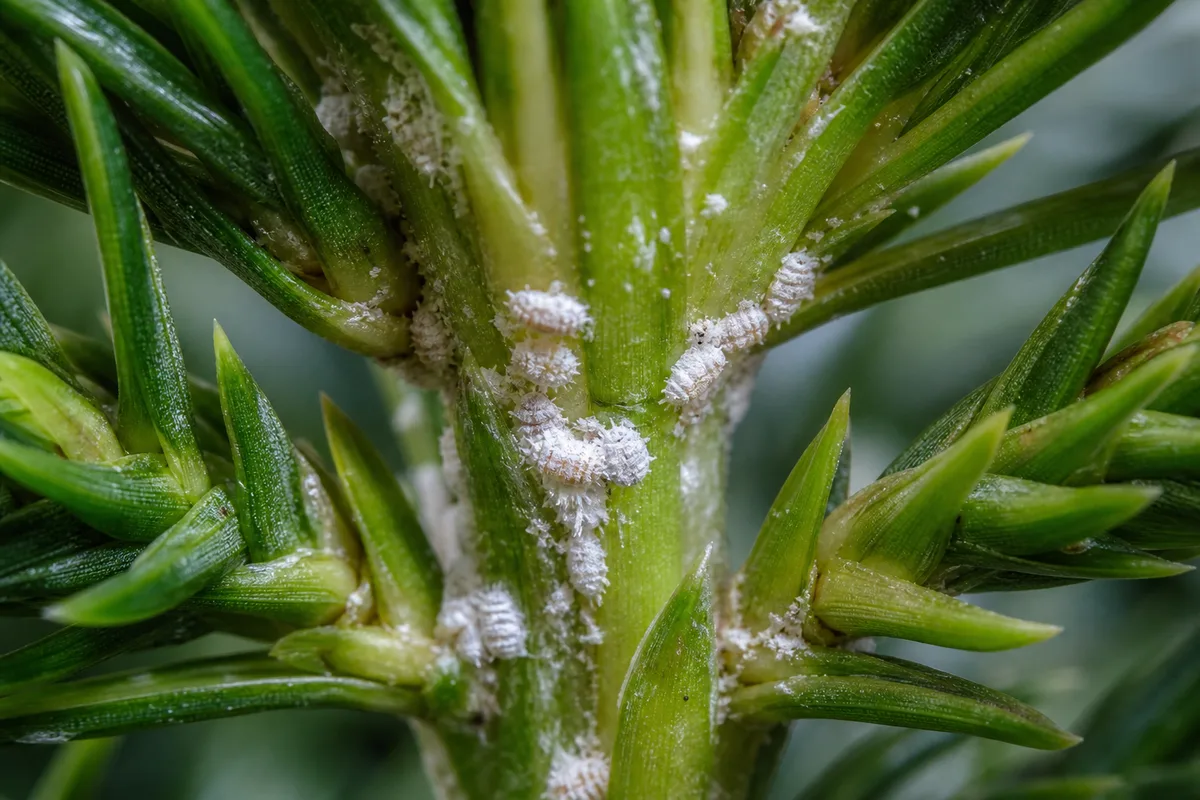
Mealybugs symptoms on Norfolk Island Pine - compare with healthy tissue on the same plant.
Typical signs include:
White cottony clusters in whorl crotches (most common):
- Loose, powdery wax masses tucked where a horizontal branch tier meets the central trunk
- Smaller white tufts along petiole bases and under overlapping needle rows
- Insects look like tiny oval bodies under the wax when you pull a cluster apart with a toothpick
Honeydew and sooty mold on lower growth:
- Sticky clear residue on pot rims, saucers, or floor beneath the lowest whorls
- Black sooty mold growing on honeydew-coated needle undersides after the infestation has been active for weeks
- Ants trailing up the trunk to harvest honeydew-ants protect mealybugs from predators
Needle stress after heavy feeding:
- Dull, yellow-green needles on infested whorls while the central leader may still look firm
- Premature needle drop on actively attacked tiers-not the slow loss of lowest branches that happens in dim light alone
- Stunted new whorl expansion when populations are high at the growing tip
Unlike fixed scale insects, mealybugs stay loosely attached and smear when crushed. Unlike spider mites, they do not produce fine webbing or uniform stippling-see spider mites on Norfolk Island pine if you find webbing in dry winter heat.
Why Norfolk Island Pine gets mealybugs
Mealybugs are common on indoor ornamentals, including Norfolk Island pine. The citrus mealybug (Planococcus citri) is the species most often reported on houseplants. Females lay eggs in cottony sacs; crawlers hatch mobile, settle in protected crown areas, and soon develop their own wax coating.
Several factors make this tree vulnerable indoors:
Sheltered whorl architecture. NC State Extension describes Norfolk Island pine as growing with branches symmetrically arranged in whorled, horizontal tiers around a single trunk-typically about five branches per whorl. Each junction creates a pocket where mealybugs feed undisturbed. Tall specimens put the worst infestations above easy eye level unless you use a step stool.
Holiday display compression. Dense ornament weight and reduced airflow at the crown center after seasonal decorating create warm, sheltered pockets-exactly where mealybugs cluster. Trees moved from bright shop displays into dim interior corners after the holidays are also stressed, which can coincide with pest flare-ups already present on the plant.
Introduction from new plants and grouped collections. Mealybugs arrive on infested gift plants, reused stakes, or pots moved between rooms. They crawl slowly but spread when you handle multiple trees without washing hands or isolating newcomers. Missouri Botanical Garden lists scale and spider mites as common indoor pests on this species-mealybugs share the same warm, protected crown habitat.
Tender new whorl growth after heavy feeding. Over-fertilizing with nitrogen pushes soft new tissue that mealybugs prefer for egg laying. Stressed trees in dry winter air may also be weaker when pests establish-humidity stress and pest damage often overlap indoors but require different long-term fixes.
Root mealybugs at the soil line. Some mealybug species feed on roots near the pot surface. Aboveground whorls can look clean while populations persist in the root zone on large specimens-check the soil line and drainage holes if stem clusters return after treatment.
How to confirm the cause
Work through this checklist before spraying whole-plant pesticides or Norfolk Island Pine repotting guide:
- Isolate the tree - Move it away from grouped houseplants, holiday tree clusters, and shared watering trays until you finish treatment.
- Inspect the central crown - Lift soft branch tips gently and look into the leader whorl with a hand lens. Cottony masses here confirm an active infestation.
- Check each whorl junction - Run a cotton swab along where horizontal tiers meet the trunk and along the underside of each branch base.
- Crush-test suspicious wax - Press a white tuft onto a swab; mealybugs smear pink or orange. Mineral dust, hard water spots, and natural resin do not smear.
- Look for honeydew and ants - Sticky residue on the pot, saucer, or floor beneath lower branches supports mealybugs even when upper whorls look clean.
- Screen lookalikes - Use the table below to separate scale, dust, natural needle texture, and pest damage.
- Check nearby plants - Inspect other indoor trees and broadleaf houseplants in the same room; mealybugs often appear on several species before you notice the Norfolk Island pine.
- Examine the soil line - White cottony patches at the base of the trunk or on surface roots suggest root-zone mealybugs that contact sprays will not reach.
Lookalike symptoms to rule out
| What you see | Likely cause | Differentiating check |
|---|---|---|
| Loose white cottony clusters in whorl crotches | Mealybugs | Smears pink/orange when crushed; insects visible under wax |
| Fixed brown or tan bumps on stems | Scale insects | Does not smear; shell stays attached when scraped |
| Fine webbing + pale stippling on needles | Spider mites | Tap branch over white paper-moving specks; dry heat history |
| Uniform dust on outer needles | Household dust | Wipes off dry; no clustering in axils; no honeydew |
| Soft green needles overlapping in rows | Normal juvenile foliage | Firmly attached; uniform green; no wax tufts |
| Slow loss of lowest branches only | Normal ageing in dim light | Upper whorls stay clean; no honeydew or wax clusters |
| White crust on soil surface | Mineral salt buildup | On soil, not in branch axils; follows hard water or heavy feed |
| Amber or clear hardened spots on trunk | Resin or sap exudate | Hard, not cottony; does not smear pink |
If you confirm mealybugs, note severity before choosing treatment intensity-light clusters on one whorl need contact dabs; crown-wide cottony masses need a structured multi-week protocol.
First fix for Norfolk Island Pine
Isolate the tree and dab each visible mealybug with 70% isopropyl alcohol on a cotton swab or fine brush.
Move the pot to a spot where you can work around all whorls without brushing against nearby plants. Alcohol kills mealybugs on contact but has no residual effect-contact sprays only work upon direct touch with the insect and will not reach hidden crawlers without repeat applications. Focus on whorl crotches, stem joints, and the central crown rather than misting the entire tree on day one.
Work in indirect light or evening conditions-not hot afternoon sun on soft needles. Test a small part of the plant first and wait 1 to 2 days before treating broadly; dab insects directly and avoid soaking whole branch tiers if you see leaf burn. Pick off large cottony egg sacs with tweezers and destroy them in sealed trash rather than composting indoors.
Do not fertilize a stressed infested tree. Do not repot on day one unless you confirmed root mealybugs and need to inspect the root ball. Do not move the tree into a dark corner-recovery still needs bright indirect light per species baseline.
Step-by-step recovery
After the first alcohol dab, scale treatment to infestation severity:
Light infestation (isolated clusters on one or two whorls)
- Dab all visible insects and egg sacs with alcohol weekly.
- Wipe honeydew from needles and pot surfaces with a damp cloth to reduce sooty mold.
- Inspect whorl junctions on each watering pass with a hand lens.
- Continue three to four weekly rounds even after visible clusters disappear-crawlers hatch on staggered schedules indoors where no cold season breaks the cycle.
Moderate infestation (multiple whorls, honeydew present, no sooty mold yet)
- Complete the weekly alcohol dab protocol on all accessible clusters.
- Supplement with insecticidal soap labeled for houseplants on needle undersides and stem joints-test one branch first for phytotoxicity on soft conifer foliage.
- Prune only heavily encrusted small branch tips you can reach without stripping the tree silhouette-see pruning Norfolk Island pine for safe removal limits.
- Raise humidity modestly if the room is very dry, but do not soak the crown-wet whorls in stagnant air invite fungal issues on this species.
Heavy infestation (crown-wide cotton, sooty mold, ants, or spread to collection)
- Repeat alcohol dabs and insecticidal soap on a weekly schedule for at least four weeks.
- Consider a shower rinse of lower and mid whorls with lukewarm water to knock down crawlers-keep the central crown from staying wet overnight; tilt the pot so water runs off branch tips.
- Inspect every nearby houseplant and treat or isolate any new clusters immediately.
- If populations remain high after four consistent weekly rounds on a large holiday specimen, weigh discard versus persistence-see when to worry below. Replacing one heavily infested tree is often cheaper than losing a whole collection.
Throughout recovery, judge progress by fewer live clusters, no new honeydew, and clean new growth at the central leader-not by old yellowed needles re-greening.
Recovery timeline
Visible cottony clusters should decline within two weeks of consistent weekly alcohol dabs on reachable insects. Plan three to four weekly treatment passes minimum before calling the tree clear-indoor mealybugs can produce multiple overlapping generations when temperatures stay mild year-round.
New whorl growth at the leader should emerge clean and evenly green within four to eight weeks after the last live cluster is gone. Needles that yellowed or dropped during heavy feeding do not fully recover; watch fresh tiers instead.
Sooty mold on honeydew-coated needles fades once honeydew stops and you wipe residue away-it does not require separate fungicide on intact foliage. If mold persists on dead needle litter at the soil surface, remove debris without disturbing roots.
Mistakes to avoid
- Spraying alcohol over the entire crown without a spot test - Soft juvenile needles can burn in direct sun or when alcohol pools in whorl cups.
- Stopping treatment after one pass - Contact kills miss eggs and crawlers; weekly repeats are required.
- Composting infested prunings indoors - Crawlers survive in warm compost bins and spread back to clean plants.
- Confusing scale for mealybugs - Fixed brown bumps need scraping or targeted oil, not cotton-swab dabs alone.
- Overwatering to “help” a stressed tree - Soggy soil does not fix pest damage and worsens root health on a conifer that already dislikes wet crowns.
- Heavy nitrogen feeding during recovery - Tender new whorl growth attracts the next generation.
- Soaking the central crown repeatedly - Rinse lower whorls if needed; keep the leader area from staying wet for hours in cool rooms.
- Ignoring nearby plants - Mealybugs on a grouped holiday display often infest several pots before one tree is diagnosed.
Norfolk Island Pine care cross-check
After pest pressure drops, stabilize the environment so new growth stays clean:
Light. Norfolk Island pine needs bright indirect light with some morning sun for compact whorls. Dim recovery corners invite leggy growth and slower pest detection on upper tiers. See light requirements.
Watering. Water when the top inch of mix is dry, then soak until a little water exits the drainage hole-discard saucer runoff. Match rhythm to your pot and season per the watering guide. Do not keep soil soggy while the tree regrows.
Humidity. Target 50% or higher at branch height in heated winter rooms. Dry air alone does not cause mealybugs, but it stresses needles and overlaps with spider mite risk. A humidifier beats occasional misting for tall specimens.
Temperature. Cool stable air suits this species better than hot dry drafts from vents. Keep the pot away from radiator paths that desiccate outer whorls while pests hide in the sheltered crown center.
Feeding. Resume dilute fertilizer only after new growth looks clean for several weeks-avoid heavy nitrogen that pushes soft whorl tissue pests prefer.
According to the ASPCA, Norfolk Island pine is non-toxic to cats and dogs-still keep alcohol swabs and pruned material away from pets during treatment.
How to prevent mealybugs on Norfolk Island Pine
- Quarantine new plants for at least two weeks before placing them beside your Norfolk Island pine-inspect whorl junctions and leaf axils on every newcomer.
- Scout during each watering - Lift branch tips on the lowest whorl you can reach and glance into the crown center; early clusters are easier to dab than crown-wide infestations.
- Inspect after holiday display - Remove ornaments within days of the season ending and check compressed branch tiers where airflow was reduced.
- Avoid over-fertilizing - Steady moderate growth is less attractive to egg-laying females than lush nitrogen-flushed whorls.
- Clean stakes, saucers, and pot rims - Mealybugs and egg sacs hide on supports and container edges, not only on needles.
- Wash hands and tools between plants when you maintain a grouped indoor tree collection.
Winter heating season is the highest-risk window indoors-pests reproduce year-round in warm rooms, and dry stress from low humidity can coincide with outbreaks. Pair pest scouting with humidity checks at canopy height, not floor level.
When to worry
Escalate or consider discarding the plant if:
- Cottony clusters cover most whorls and remain dense after four weekly alcohol-and-soap rounds
- Sooty mold and ants persist despite declining honeydew-secondary pests complicate recovery
- The same mealybug species appears on three or more grouped indoor plants and isolation is not practical
- Root mealybugs return after repotting and soil-line treatment-aboveground contact sprays cannot reach them reliably
- The central leader stalls while lower whorls yellow and drop-combined pest and root stress
A few white tufts on one accessible branch tier with firm wood and green new growth at the tip is not an emergency-follow the weekly dab protocol and monitor.
For a heavily infested small holiday tabletop specimen that shares a room with a large collection, discarding one pot early often protects many others. Mealybugs are difficult to eradicate completely on dense crowns without repeated weekly work for a month or more.
If needles yellow widely while soil stays wet and the trunk softens at the base, pivot to overwatering and root checks-pest damage and root failure can overlap on large potted trees.
When to use this page vs other Norfolk Island Pine guides
- Norfolk Island Pine watering guide - Use for routine moisture checks before assuming mealybugs is the main issue.
- Norfolk Island Pine problems hub - Browse all 4 common issues on this species.
- Yellow Leaves on Norfolk Island Pine - Different entry point when symptoms overlap with mealybugs.