Fungus Gnats on Norfolk Island Pine: Causes, Checks & Fixes
Quick answer
Fungus gnats on Norfolk Island pine mean the soil surface stays wet too long-adults hover near the pot and larvae feed in the damp top layer. First step: stop watering until the top 1 inch of mix is dry, and set a yellow sticky trap at the pot rim.
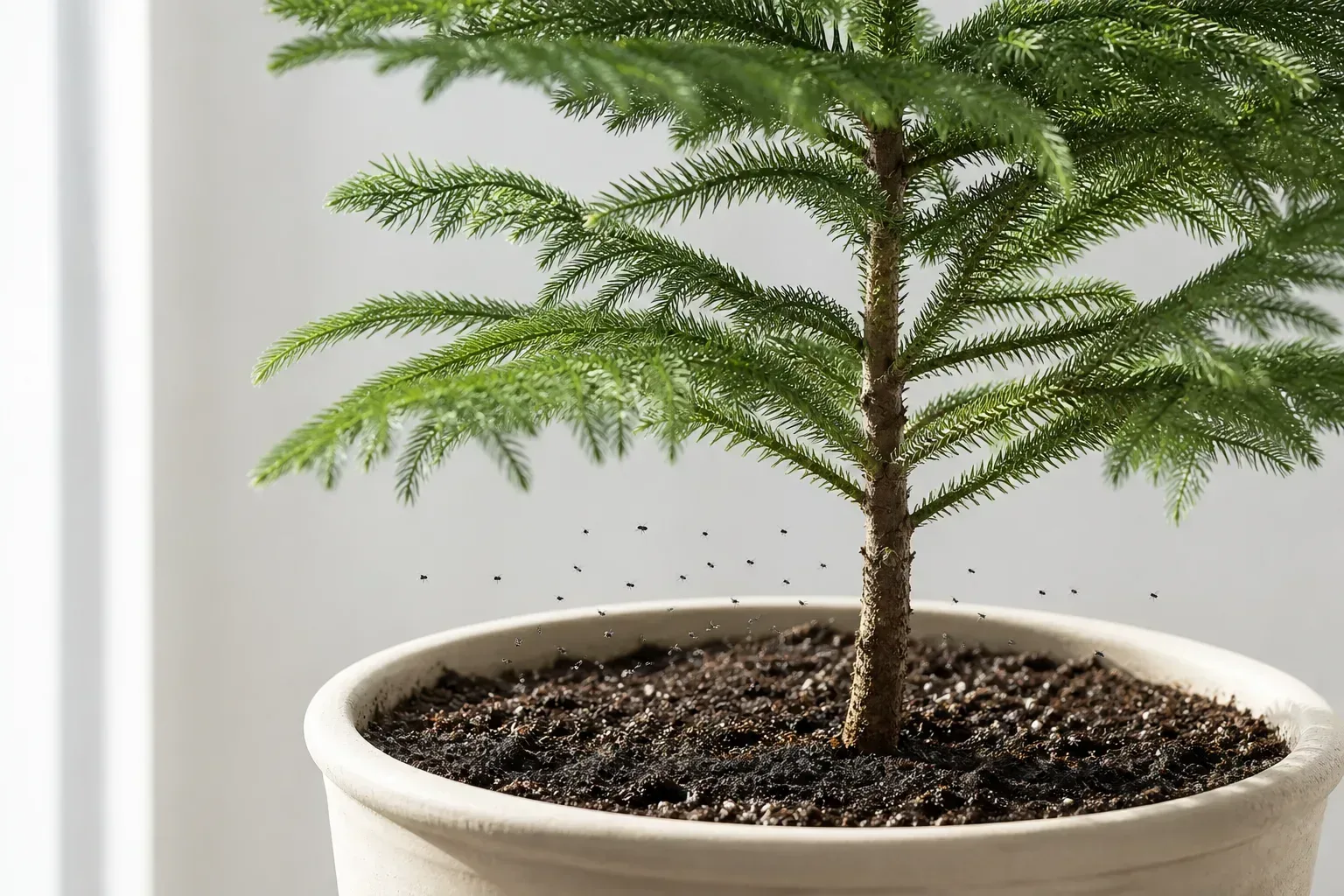
Fungus Gnats on Norfolk Island Pine: Causes, Checks & Fixes
This guide covers fungus gnats on Norfolk Island Pine. See also the general Fungus Gnats guide, watering, and light pages for this plant.
Fungus Gnats on Norfolk Island Pine: Causes, Checks & Fixes
Quick answer
Fungus gnats on Norfolk Island pine (Araucaria heterophylla) almost always mean the potting mix surface stays wet too long. Adults are tiny dark flies that hover near the soil when you water or walk past the pot. Their larvae live in the damp top layer, feeding on fungi and organic debris-and sometimes fine roots.
First step: stop watering until the top 1 inch of mix is completely dry, and place a yellow sticky trap at the pot rim. Gnats are a moisture signal, not a needle disease. Spraying conifer foliage will not reach the larvae in soil.
Norfolk Island pine is sold as a living Christmas tree in small tabletop pots that dry fast in bright rooms-yet many owners interpret “evenly moist” as keeping the surface constantly damp. That mismatch is exactly why holiday specimens become gnat nurseries while the tiered whorls still look green.
For full watering rhythm and the top-inch dry-down rule, see the Norfolk Island pine watering guide.
Why Norfolk Island pine gets fungus gnats
Fungus gnats need moist organic soil to reproduce. Colorado State Extension notes that adult females lay eggs in cracks of growing media, especially peat-rich mixes that hold surface moisture. Larvae stay in the top 2 to 3 inches, feeding on fungi, algae, and decaying matter-and chewing roots when populations are high.
Norfolk Island pine invites this problem through care mistakes tied to the species:
Holiday small-pot saturation. A 2.5- to 5-inch gift pot in a foil wrap traps runoff and keeps the root zone saturated after one heavy soak. Illinois Extension warns that overwatering and poor drainage stress Norfolk Island pines - remove decorative foil wraps that trap runoff-remove or punch drainage holes before the first serious watering.
Top watering on schedule instead of soil dryness. This subtropical conifer expects evenly moist roots, not permanent sogginess-but evenly moist does not mean wet at the surface every day. Many owners water weekly because brown needle tips worry them, without checking whether the top inch has dried. The same constantly damp conditions that lead to overwatering also sustain gnat larvae.
Cool winter rooms slow evaporation. Norfolk Island pine uses less water in cool, dim winter rooms per NC State Extension guidance, but many owners keep a summer rhythm. A pot near a north window in January may take twelve days to dry the top inch-long enough for multiple gnat generations while the tree sits in a heavy wet container.
Decorative cachepots without drainage. Floor specimens and post-holiday gift trees often sit in outer pots that hold saucer water against the root zone. Both keep the surface wet longer than the watering guide dry-down window allows.
Dense, aged peat mix. Old potting soil breaks down and retains more moisture. Repot when media has degraded and holds water too long-the same hidden trigger that raises root rot risk on Norfolk Island pine.
New plant introductions. UC IPM reports fungus gnats commonly arrive on newly purchased or recently repotted houseplants. One infested nursery pot can spread adults to every Norfolk Island pine on the same shelf.
Gnats rarely mean your needle whorls are infected. They mean the soil environment is wrong-and on this conifer, that same environment eventually leads to drooping lower tiers and root stress if ignored.
What fungus gnats look like on Norfolk Island pine
Adult flies:
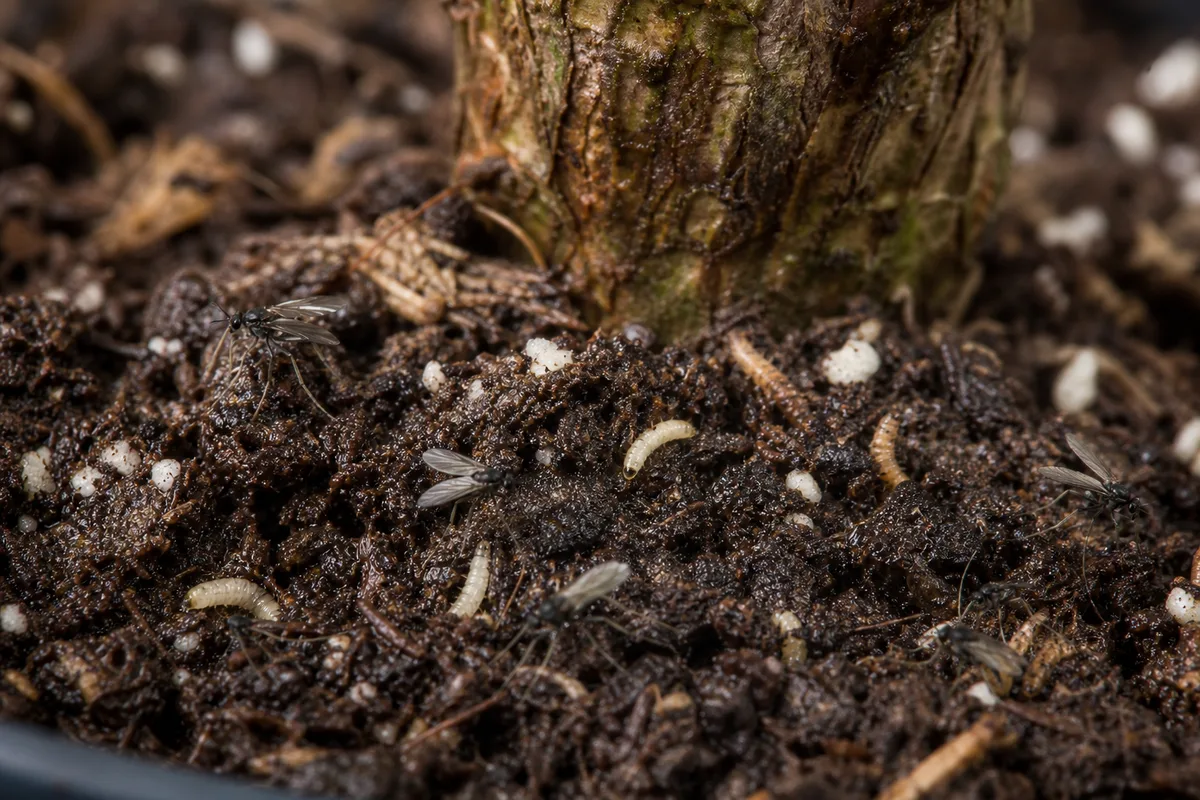
Fungus Gnats symptoms on Norfolk Island Pine - compare with healthy tissue on the same plant.
- Tiny dark mosquito-like insects, roughly 1/8 inch long, with long legs
- Rise in a cloud when you water, repot, or bump the pot
- Rest on soil surface, pot rim, nearby windows, or the lowest branch whorls
- Do not bite people or pets
Larval stage in soil:
- Translucent wormlike larvae with dark head capsules in the top inch of mix
- Visible when you scrape back wet surface soil or flip a potato test slice
- Sometimes algae or green film on constantly wet soil surface alongside mold on soil
What you usually will not see on Norfolk Island pine needles:
- Webbing (spider mites)
- White fuzzy clusters (mealybugs)
- Sticky honeydew patches (aphids or scale)
- Needle spots or holes from gnat feeding-damage happens below soil
Plant symptoms when infestation or overwatering overlap:
- Drooping lower horizontal whorls despite damp mix
- Soft or dull yellow-green needles on lower tiers
- Slow new growth at the apex in winter when gnats peak indoors
- Sour or musty smell from anaerobic wet soil
On a healthy established Norfolk Island pine, upper whorls stay firm while gnats annoy you at the soil line. That separation helps confirm you are dealing with a soil pest, not a foliar disease.
How to confirm the cause
Work through these checks in order:
- Flight pattern - Do insects appear when you disturb the pot, not when you shake needle whorls? Fungus gnats live in soil. Fruit flies hover near kitchen fruit. Whiteflies fly from foliage when stems are shaken.
- Soil moisture - Stick a finger 1 inch deep. If the top layer has stayed wet for days, gnat habitat is confirmed. Dry mix with flying insects may mean a recent overwater or larvae still pupating.
- Potato slice test - CSU Extension recommends inserting 1/4-inch potato wedges into the surface. Check the underside after a few days for larvae feeding. This confirms larvae in your Norfolk Island pine mix, not just random flies in the room.
- Sticky trap count - Place a yellow sticky card at soil level. Catching small dark flies over 24 to 48 hours confirms active adults breeding in that pot.
- Drainage check - Lift the pot. Are drainage holes open? Is a cachepot or foil wrap holding water? Does the saucer stay full more than 20 minutes after watering?
- Root smell and lower whorl check - If lower tiers droop, sniff the surface and press the trunk base gently. Firm roots with a mild gnat count point to early stress. Mushy roots, sour smell, and soft trunk base mean root rot overlapping with gnats-a more urgent problem.
If traps stay empty, soil dries normally, and flies only appear near the kitchen, your Norfolk Island pine may not be the source. Check other houseplants on the same shelf before treating.
Symptom lookalike comparison
| Sign | Fungus gnats | Fruit flies | Overwatering alone | Low humidity |
|---|---|---|---|---|
| Insects at pot | Small dark flies rise from soil | Hover near food, not consistently at one pot | None | None |
| Soil surface | Often wet for days | Any moisture level | Heavy, wet for days | Can be dry |
| Needle pattern | Lower whorls may droop if roots stressed | Needles unaffected | Soft yellow lower tiers on wet soil | Crisp brown tips, dry pot |
| Confirm test | Potato slice, sticky trap | Vinegar trap catches them | Skewer wet at depth, heavy pot | Dry mix, light pot, no flies |
First fix for Norfolk Island pine
Stop watering and let the top 1 inch of potting mix dry completely. Place one yellow sticky trap at the pot rim.
That single cultural change hits both life stages: dry surface soil kills eggs and larvae while reducing new egg laying, and traps remove egg-laying females. UC IPM lists allowing soil to dry between waterings as the primary fungus gnat management tactic.
Do not spray Norfolk Island pine needles on day one-larvae are not on foliage. Do not repot immediately unless mix is clearly degraded and never dries. Do not pour hydrogen peroxide drench before adjusting water, especially when lower branches are already browning from root stress.
Test dryness with your finger, not a calendar. A Norfolk Island pine in a cool bright window may need ten to fourteen days of surface drying after chronic overwatering; a small holiday pot in warm dry air may need less.
BTI drench protocol for persistent larvae
If sticky trap counts stay high after two weeks of dry surface soil, apply a product containing Bacillus thuringiensis subsp. israelensis (BTI), such as Mosquito Bits. Wisconsin Horticulture Extension recommends BTI as a soil drench applied with enough water to reach the top 2 to 3 inches where larvae live. Repeat every five to seven days for two to three weeks because BTI does not affect eggs or pupae.
Keep pets away from treated soil until the surface dries-cats that dig in houseplant pots can ingest damp mix. Sticky traps should sit where curious pets cannot reach them.
Step-by-step recovery
After the initial dry-and-trap step, work through these in order based on severity:
- Resume bottom-up watering only when dry - When the top 1 inch is dry, water thoroughly until excess drains, then empty the saucer within 15–20 minutes per the watering guide. Bottom watering can keep the surface drier while still hydrating roots-useful for compact holiday pots where top watering soaks the whole surface every time.
- Replace sticky traps weekly - Monitor whether adult counts drop. Rising catches after a dry spell may mean larvae are still maturing-stay the course.
- Apply BTI if larvae persist - Follow the protocol above when trap counts fail to fall after two weeks of correct dry-down.
- Top-dress or repot if mix never dries - Add a half-inch layer of coarse sand or fine gravel to slow surface moisture, or repot into fresh airy mix with perlite if old peat stays soggy for a week or more in normal indoor light.
- Adjust light without scorching - Norfolk Island Pine light guide with some cool-room tolerance speeds drying cycles. Avoid jumping a holiday tree from a dim corner to hot afternoon sun-needle clusters can scorch.
- Quarantine heavily infested pots - Isolate the worst pot from other houseplants until trap counts fall for two consecutive weeks.
- Address root rot only if confirmed - Trim mushy roots, repot dry into fresh mix, and follow the root rot protocol if inspection finds decay. Gnat treatment alone will not fix rotted roots.
Skip fertilizer until new apex growth looks normal for two weeks. Stressed Norfolk Island pine roots do not need extra salts while recovering from wet soil.
Recovery timeline
You should see fewer adults on sticky traps within one to two weeks once the surface stays dry. Larval generations overlap, so CSU Extension notes the full life cycle can complete in three to four weeks at room temperature-expect two to six weeks of consistent drying plus larval control before counts stay low.
Judge progress by trap counts and whether the top inch dries between waterings-not by whether every fly disappears overnight. One moist watering can restart the cycle.
Lower whorls that drooped from root stress will not fully recover if tissue has died, but new growth at the apex should look firm once soil moisture stabilizes. If multiple lower tiers keep browning while mix stays wet, inspect roots rather than adding more gnat products.
Lookalike symptoms to rule out
Fruit flies hover near food waste and ripening fruit, not consistently at a Norfolk Island pine pot. Vinegar traps catch fruit flies; they do not work for fungus gnats per Wisconsin Extension.
Shore flies also breed in wet media but have shorter, bristle-like antennae and are more common in greenhouses. Home Norfolk Island pine infestations are almost always fungus gnats.
Whiteflies fly from leaves when disturbed and leave sticky honeydew. Needle whorls stay clean with gnats alone.
Spider mites cause stippling and fine webbing on needle undersides in hot dry air-the opposite habitat from fungus gnats.
Mold on soil surface often appears alongside gnats in wet pots but is a separate fungus issue. Drying the mix helps both.
Low humidity needle browning shows crisp papery brown tips on dry mix, not flies at the pot. See low humidity on Norfolk Island pine if tips brown while your watering rhythm seems correct.
Mistakes to avoid
Do not spray Norfolk Island pine needle whorls for soil gnats-it wastes product, can spot soft young needles in hot sun, and misses larvae entirely.
Do not keep watering on your old schedule while adding traps. Moist surface soil defeats every other control.
Do not let the entire root ball bake to dust while fixing gnats-this species needs evenly moist roots deeper down. Dry the surface, not the whole profile.
Do not assume gnats killed your Norfolk Island pine if the trunk base feels soft and soil smells sour-that pattern is root rot requiring inspection, not just fly control.
Do not use hydrogen peroxide soil drenches when lower branches are already browning from suspected root stress-fix moisture first and escalate to the root-rot protocol if decay is confirmed.
Do not stop treatment after adults disappear for a few days. Pupae in soil can restart the population within a week.
Do not leave Norfolk Island pine sitting in full saucers after watering. Empty standing water within 15–20 minutes.
Norfolk Island pine care cross-check
Use this quick audit against your normal routine:
| Check | Healthy target | Gnat-friendly mistake |
|---|---|---|
| Water timing | Top 1 inch dry before each drink | Calendar watering every few days regardless of dryness |
| Light | Bright indirect; tolerates cool rooms | Dim corner plus frequent watering |
| Mix | Airy, well-draining with perlite | Old peat that stays wet a week |
| Pot | Drainage holes open; saucer emptied | Foil wrap or cachepot with no drainage |
| Humidity | 50% or higher at branch height | Dry winter heat ignored while soil stays wet |
| New plants | Quarantined two to three weeks | Placed directly on the Norfolk Island pine shelf |
Norfolk Island pine does not wilt dramatically when thirsty the way a pothos does-lower needle tips brown instead. If the tree looks stressed but soil is always wet, you are watering too often for your conditions.
How to prevent fungus gnats on Norfolk Island pine
Water by touch, not habit. Let the top 1 inch dry between soaks, then water thoroughly and empty the saucer-the same practice that breaks gnat cycles and matches Illinois Extension guidance on avoiding waterlogged soil.
Remove foil wraps and confirm drainage holes on holiday gift pots before January indoor placement.
Use fresh well-draining mix when Norfolk Island Pine repotting guide. Add perlite to standard bagged potting soil so Norfolk Island pine pots dry evenly at the surface.
Remove fallen needles and debris from the soil surface. Decaying organic matter feeds larvae.
Inspect new Norfolk Island pine and nursery pots before placing them near existing plants. Treat or isolate any pot that releases flies when bumped.
Consider yellow sticky traps as permanent monitors on shelves with many plants-early catches prevent full infestations.
In fall and winter, gnats often peak indoors because Norfolk Island pine slows growth and uses less water while watering habits stay the same. Cut back frequency when the pot stays heavy and pair soil checks with humidity so needle tips do not brown from dry air while you fix wet soil.
When to worry
Standard gnat control is enough when a Norfolk Island pine has firm trunk and tiers, normal new apex growth, and only moderate fly counts-but no sour soil or widespread lower whorl decline.
Treat as urgent when:
- Soil smells rotten and roots feel mushy on inspection
- Multiple lower whorls droop or brown while mix stays wet
- Trunk base or central leader feels soft on wet soil
- Trap counts rise weekly despite dry surface soil, suggesting severely degraded mix or blocked drainage
- Gnats appeared right after repotting into heavy wet mix in an oversized container-check roots before the problem compounds
Norfolk Island pine is tough when roots stay healthy, but chronic wet soil plus larvae stress can open the door to root rot. Flies are the early warning; soft roots and dying lower tiers are the alarm.
Balancing gnat control with humidity and evenly moist roots
Norfolk Island pine needs surface dry-down between soaks and steady moisture deeper in the root ball-not contradictory goals if you water correctly. The top inch dries while the center stays lightly damp, which is exactly the rhythm in the watering guide.
Dry indoor air and wet soil together compound needle stress in winter. Illinois Extension ties needle drop to dry air and dry soil together-target moderate to high humidity at branch height while you fix surface moisture. See low humidity fixes if tips brown while trap counts fall.
Do not run a humidifier as an excuse to keep watering daily. Humidity helps foliage; it does not replace the dry-down window at the soil surface.
Conclusion
Fungus gnats on Norfolk Island pine tell you the potting mix surface has stayed wet too long-not that your conifer is doomed. Confirm flies rise from soil, dry the top 1 inch, trap adults, and treat larvae with BTI only if needed. Fix watering and drainage first, and most specimens recover without heroic measures. The same dry-surface habit that clears gnats also keeps this subtropical conifer out of overwatering and root rot trouble long term.
For species context and baseline care, see the Norfolk Island pine overview.
When to use this page vs other Norfolk Island Pine guides
- Norfolk Island Pine watering guide - Use for routine moisture checks before assuming fungus gnats is the main issue.
- Norfolk Island Pine problems hub - Browse all 4 common issues on this species.
- Root Rot on Norfolk Island Pine - Different entry point when symptoms overlap with fungus gnats.