What To Do About Mold on Houseplant Soil
Mold on houseplant soil is usually harmless but signals wet mix. Scrape, dry down, fix drainage, and know when to repot.
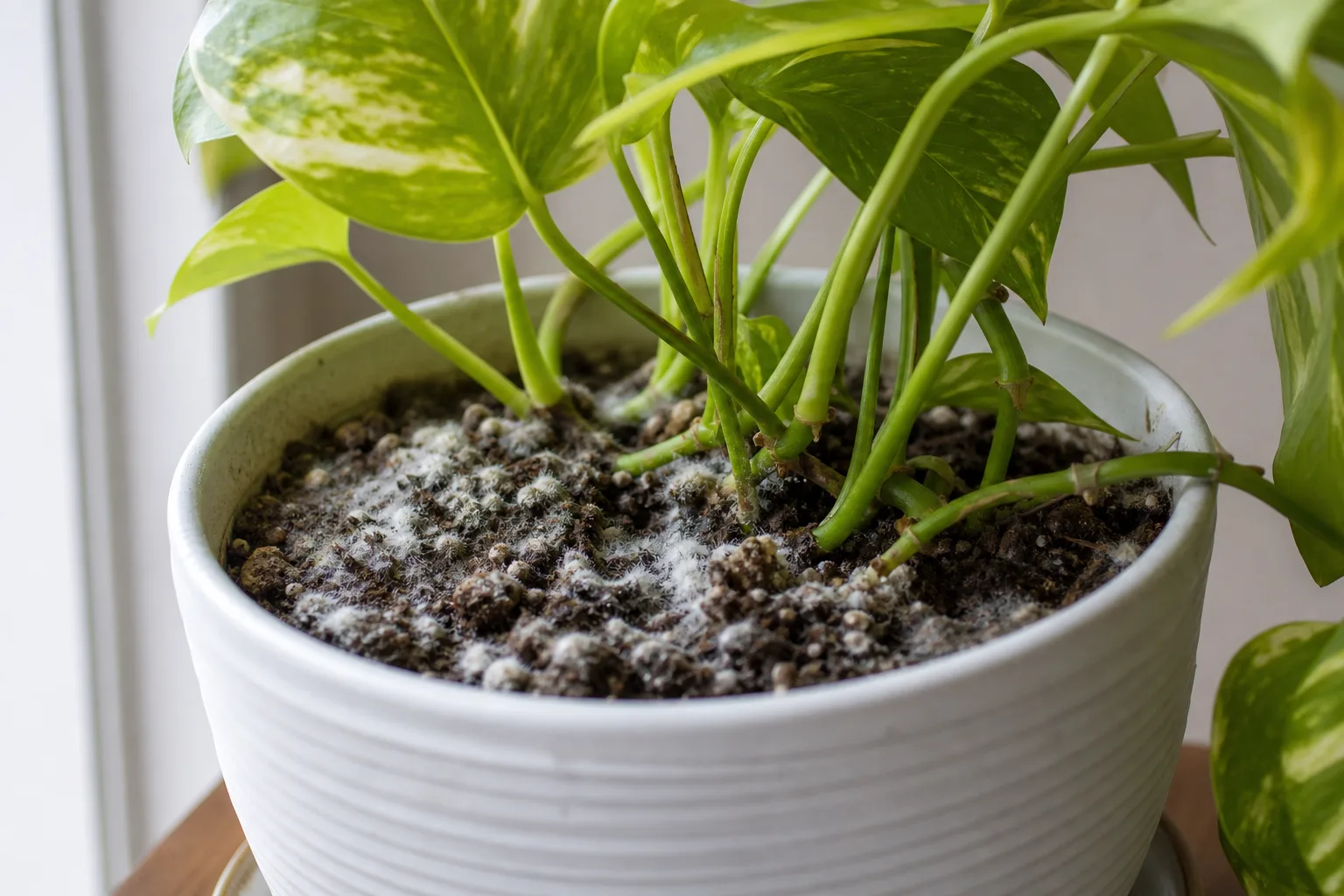
You lift a watering can, glance at the pot, and notice a soft white fuzz spread across the potting mix like a thin blanket. Your first instinct might be panic — or reaching for vinegar, cinnamon, or the trash bag. Slow down. The fuzzy layer on top of houseplant soil is almost always a saprophytic fungus feeding on dead organic matter in the mix, not a disease attacking living roots. The mold itself is rarely the crisis. The wet, stagnant conditions that let it bloom are.
This guide walks you through what that white stuff is, how to remove it without hurting the plant, and how to change watering and drainage so it stops returning. You will also learn how to tell mold from salt crusts, mealybugs, and leaf powdery mildew — four problems that look similar from across the room but need different fixes.
The Quick Answer: Scrape, Dry the Surface, Fix the Moisture Habit
For most pots: scrape off the top 1–2 cm (½–¾ inch) of moldy mix, discard it in the trash (not the compost pile if you hot-compost indoors), and let the remaining surface dry before the next thorough watering. Empty saucers after every water. Water only when the top layer is dry for moisture-loving plants — or when the mix is appropriately dry for succulents and snake plants. If the mold covers most of the surface, the pot smells sour, or fungus gnats rise when you water, move to Level 3 repotting with fresh mix and a clean pot.
You do not need to throw the plant away. You do need to treat the fuzz as a moisture dashboard, not a cosmetic annoyance you can ignore forever. Most healthy houseplants recover within one to two dry-down cycles once saucers are emptied and watering follows the mix — not the calendar. Reserve repotting for pots where mold, smell, or gnats keep winning after you have honestly changed those habits for two to three weeks.
What Mold on Houseplant Soil Looks Like
Healthy potting mix should look dark and granular, maybe lightly damp after watering — not coated in a persistent mat. Mold on houseplant soil usually appears as small to large patches of white, off-white, or gray fuzz on the surface.
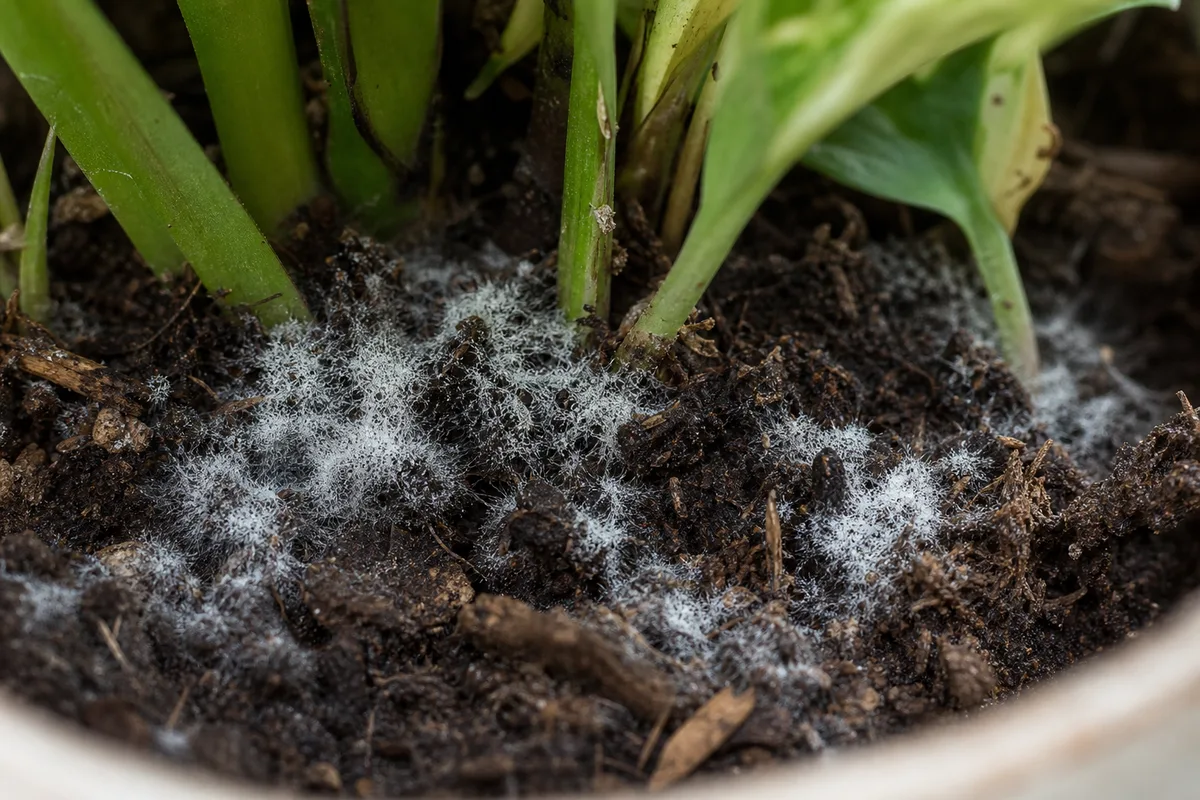 Press it gently with a clean finger: saprophytic mycelium feels soft and cottony, not hard like chalk. It often shows up within a day or two of heavy watering, in dim corners, or on pots that sit in water-filled saucers. You may also see threads peeking from drainage holes when the bottom of the root ball stays wet.
The Royal Horticultural Society describes saprotrophic fungi as organisms that break down dead organic material; their white thread-like mycelium becomes visible on soil surfaces when humidity and moisture favor growth (RHS). That is different from powdery mildew on leaves — a foliar disease — and from damping off, where seedlings collapse under a mass of white growth (RHS). Adult houseplants with firm stems and normal new growth usually have the benign surface version.
White, Gray, and Yellow Fuzz — and What Each Usually Means
White or gray fuzz on damp peat- or bark-based mix is the classic saprophytic pattern. Yellowish mold on the surface is often another harmless decomposer on wet organics — scrape and dry down the same way. Green film is usually algae, not mold: it means the surface stays wet and light reaches it (common in clear nursery pots or bathroom shelves). Gray fuzzy growth on stems or flowers may be Botrytis (grey mould), which is a foliar problem — isolate the plant, improve airflow, and remove affected tissue; do not treat it like soil-surface fuzz alone.
If the white patch is hard and crystalline, you are probably looking at fertilizer or hard-water salt crust, not fungus. Salt needs flushing, not scraping-and-forgetting. Compare textures before you change your watering calendar.
Why Your Potting Mix Grew Mold in the First Place
Mold spores are everywhere indoors. They wait for food plus moisture. Potting mixes full of peat, composted bark, and leaf debris supply the food; your watering habits supply the moisture. When the top centimeter stays wet for days, mycelium expands across the buffet.
Overwatering, Cachepots, and Bagged Mix That Sat Wet
Overwatering is the number one trigger. Missouri Botanical Garden ties chronic wet soil to houseplant decline — surface mold often appears before roots fail, which is why it is useful early warning (Missouri Botanical Garden). Cold rooms slow evaporation, so the same watering schedule that worked in summer can leave mix soggy all winter.
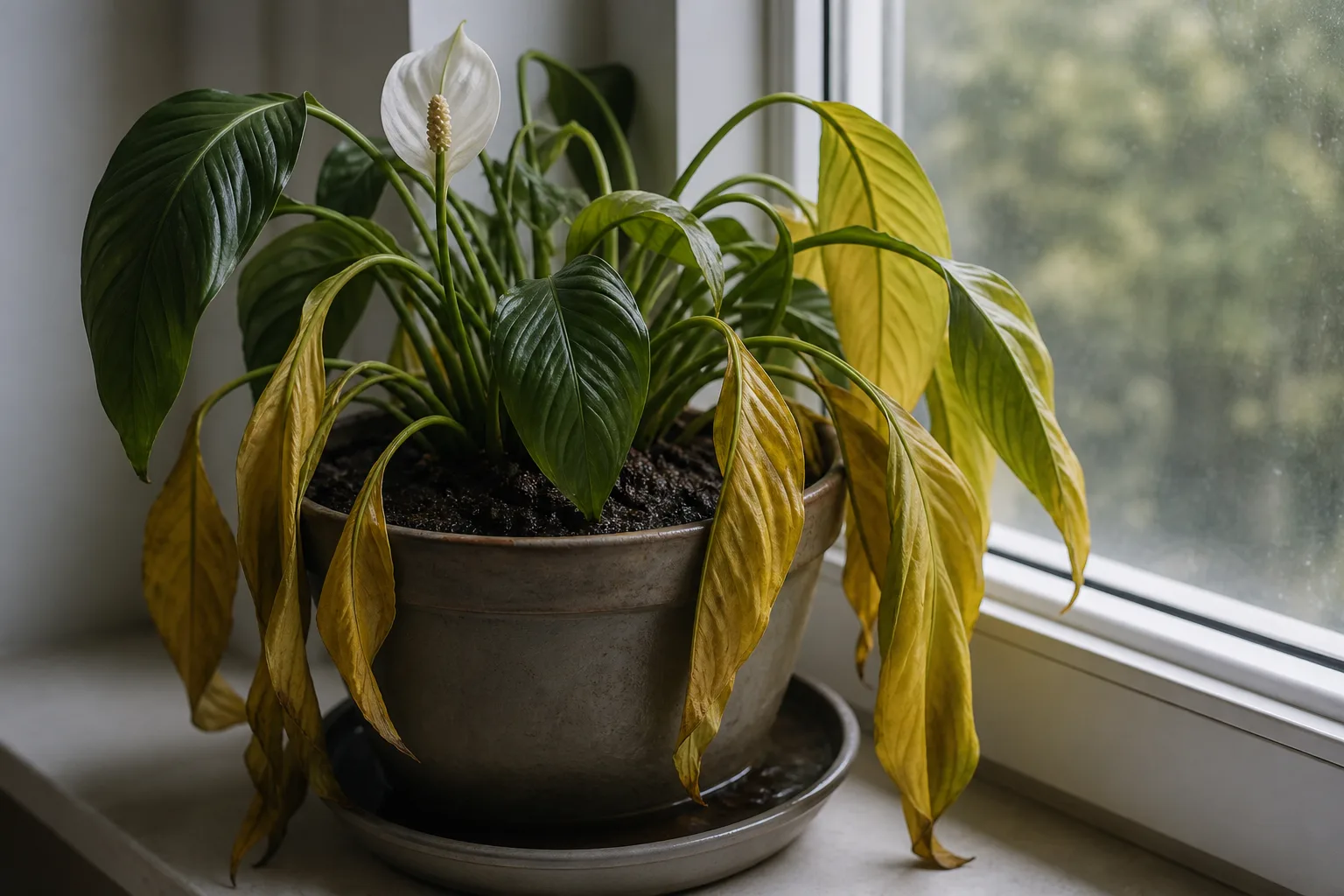
Poor drainage keeps the root zone saturated: pots without holes, compacted old mix, or decorative cachepots that trap runoff. A reliable fix is the nursery-pot-inside-decorator-pot method: keep the plant in a plastic grow pot with drainage holes; when you water, lift it out, soak over a sink until water runs free, let it drain completely, then return it to the cover pot without leaving standing water in the bottom.
Contaminated or poorly stored bagged mix can arrive with spores already active. Bags left open in a damp garage, or half-used peat that sat wet in the bin, often grow white fuzz before you even pot a plant. If a sealed bag smells musty or shows mold inside, discard it — saving a few dollars of mix is not worth reinfecting every repot.
High humidity (above roughly 65% RH in stagnant air) slows surface dry-down. Bathrooms and crowded plant shelves are common mold zones. Humidity-loving plants still need a dry interval at the soil surface between waterings — mist the leaves if you must, but do not keep the mix soupy.
Decomposing debris on the surface — fallen leaves, spent flowers, top-dressed moss that never dries — adds organic food exactly where mold likes to start. Pick debris off when you check moisture.
Is Moldy Soil Harmful to Your Plant — or to You?
For the plant, surface saprophytic mold is usually not directly harmful. It is not eating living roots; it is recycling dead organics. The danger is indirect: persistently wet mix stresses roots, invites fungus gnats, and can precede root rot if oxygen stays low in the root zone (UC IPM).
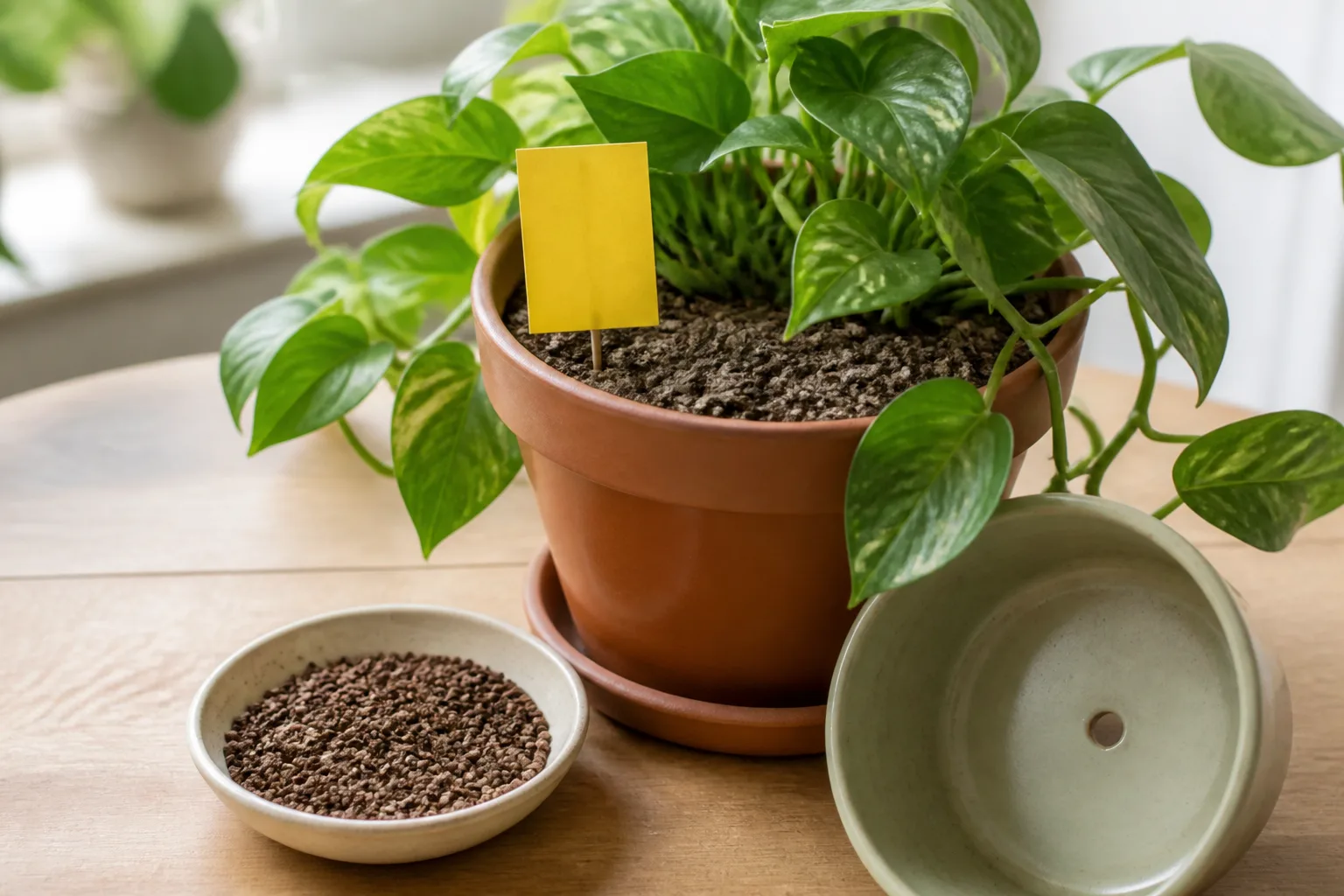
Fungus gnats are the most common co-traveler with moldy soil. Colorado State University Extension explains that adults lay eggs in moist organic media; larvae feed on fungi and fine roots in the top layer. Yellow sticky traps catch adults for monitoring, but drying the surface is the control that stops the cycle — not spraying the leaves. If gnats persist after three weeks of proper dry-down, suspect a cachepot holding water or a root ball that never dries in an oversized pot.
For people, the white fuzz on a single houseplant pot is not the same risk category as household black mold on drywall. Saprophytic soil fungi are adapted to decomposing plant matter, not colonizing human lungs. That said, anyone with severe mold allergy or compromised immunity should avoid inhaling dust when scraping dry mold; work near an open window, wear a simple mask if you are sensitive, and wash hands after. For general indoor moisture and mold context — why chronic damp rooms matter for health — see the EPA brief on mold and moisture. Your houseplant pot is a small, localized signal to fix wet culture, not a reason to evacuate the room.
When Surface Mold Becomes a Root-Rot Warning
Escalate from scrape-and-dry to root inspection when you see any of these together with fuzzy soil:
- Wilting or yellowing while the mix is still wet
- Sour or swampy smell from the pot or drainage holes
- Soft stem base or mushy lower leaves
- Fungus gnats hovering every time you water (Colorado State University Extension)
- Mold that returns within 48 hours after scraping despite changed watering
Wisconsin Horticulture notes that root rots on houseplants develop in overwatered, poorly drained conditions — surface mold alone does not prove rot, but wet soil plus collapse symptoms does (Wisconsin Horticulture). Open our overwatered plant rescue guide if you are at that stage.
Mold vs Salt Crust, Mealybugs, and Leaf Powdery Mildew
Misidentifying the white stuff costs time. Use location and texture first.
| What you see | Where | Texture / clue | First move |
|---|---|---|---|
| Soil-surface mold | Top of damp mix | Soft, fuzzy, returns if wet | Scrape; dry surface between waterings |
| Salt / fertilizer crust | Soil surface, pot rim | Hard, chalky, crystalline | Flush pot; reduce fertilizer / hard-water buildup |
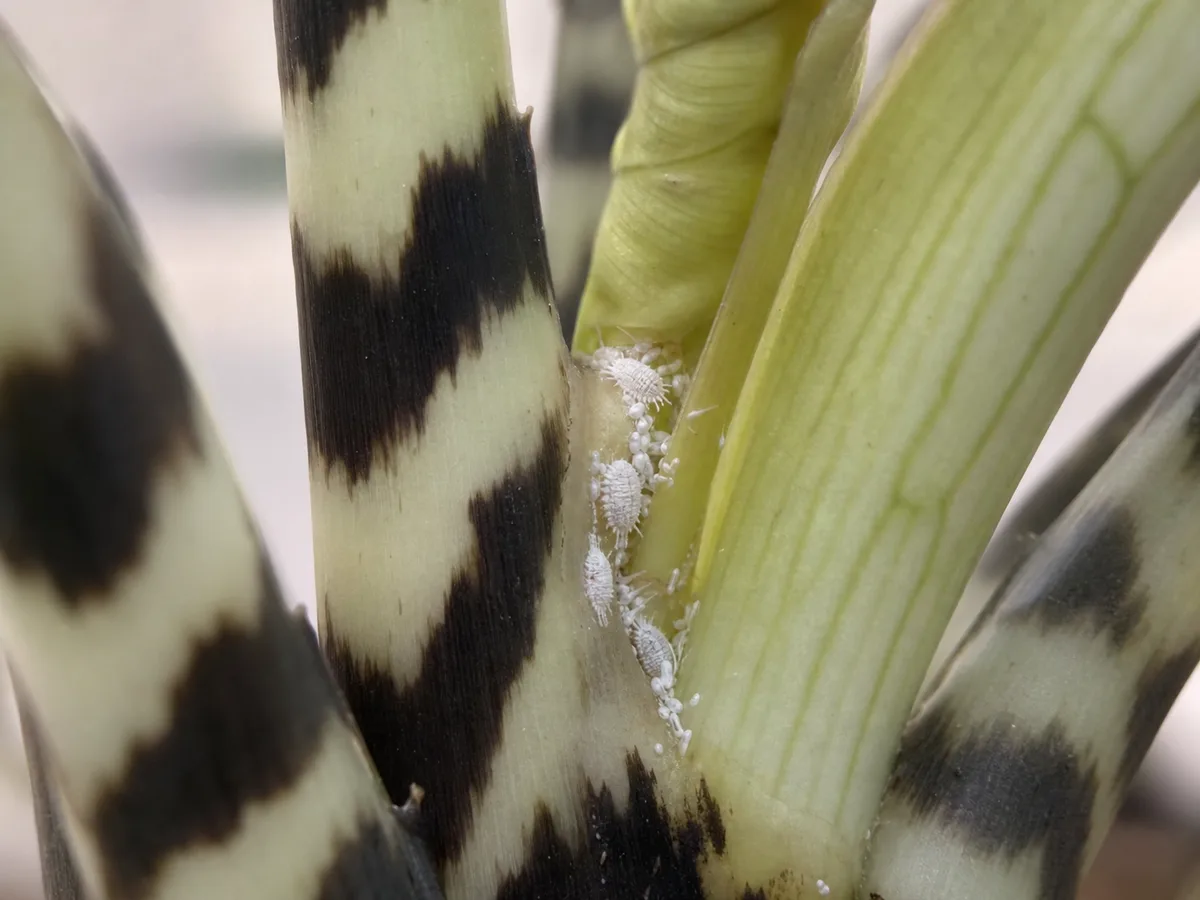
| Mealybugs | Stems, leaf axils, undersides | Cottony tufts on plant tissue, sticky honeydew | Treat pests — see mealybugs on houseplants |
| Powdery mildew | Leaves and stems, not soil | White powder that rubs off foliage | Foliar disease protocol — powdery mildew on houseplants |
| Fungus gnats | Air above pot | Tiny flying insects when disturbed | Dry top layer + traps — fungus gnats guide |
Mealybugs vs soil mold: Mealybugs cluster on living plant parts and smear when crushed. Soil mold stays on the mix and does not crawl up healthy stems unless the whole pot is neglected. If you see white fluff only on soil and the plant looks fine, mold is the likely call.
For a deeper diagnostic path on pale spots anywhere on the plant, see white spots on houseplants. For the same soil-mold topic with species-specific links, our mold on soil houseplants cluster guide goes further on dry-down by plant type.
Choose the Right Fix: A Three-Level Action Plan
Match your response to severity. Most pots never need more than Level 1 or 2.
Level 1 — Scrape the Top Layer and Let It Dry
Best for: Small fuzzy patches; firm plant; no smell; no gnats.
- Isolate lightly if gnats are present — otherwise optional.
- Scrape the top 1–2 cm of moldy mix with a clean spoon or small trowel. Hold the plant steady so crumbles do not fall back into the pot.
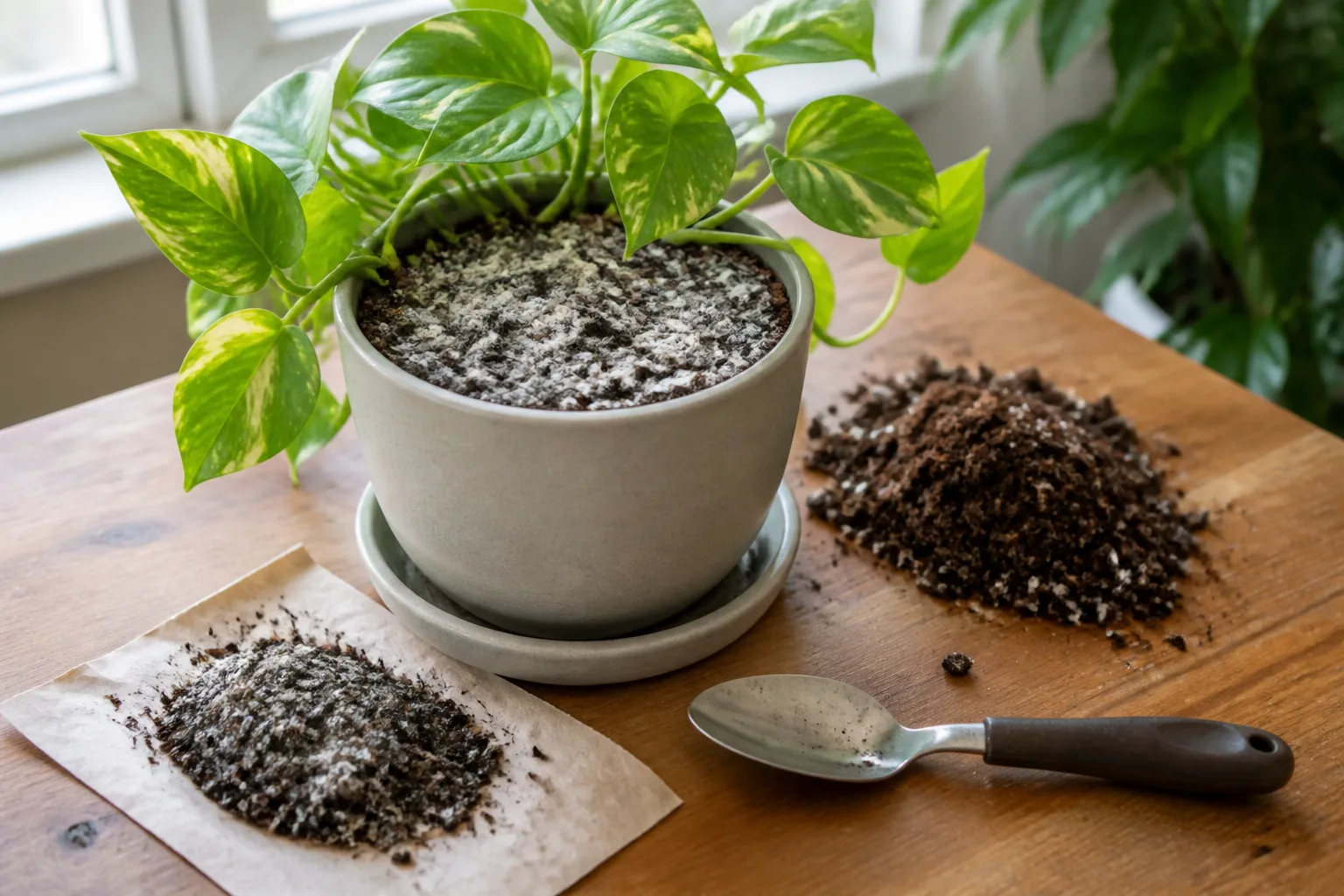 3. Discard scraped material in the trash.
4. Topdress with a thin layer of dry potting mix only after the surface below is no longer soggy.
5. Stop watering until the top layer dries for that plant’s normal schedule — often several days to two weeks in winter.
6. Empty the saucer after any future watering.
3. Discard scraped material in the trash.
4. Topdress with a thin layer of dry potting mix only after the surface below is no longer soggy.
5. Stop watering until the top layer dries for that plant’s normal schedule — often several days to two weeks in winter.
6. Empty the saucer after any future watering.
Sun-drying the pot helps in warm months: bright indirect light accelerates surface evaporation. Avoid blasting a shade-loving fern with direct midday sun just to kill mold — you may scorch leaves while fixing soil.
Level 2 — Adjust Watering, Airflow, and Topdress
Best for: Mold that covered a third of the surface or returned once after Level 1.
Level 2 is where most chronic cases finally turn. You are not repotting yet — you are proving whether culture change alone can starve the mycelium.
- Switch from calendar watering to finger or skewer tests — water when the appropriate depth is dry, not because it is Sunday. For a 15 cm (6 inch) tropical pot, that often means the top 2–3 cm feels dry; for a snake plant in the same pot, wait until the mix is dry halfway down or more.
- Water thoroughly until runoff, then discard saucer water within 30 minutes — shallow sips keep the surface wet while roots stay thirsty. One deep soak that drains beats four teaspoons every day.
- Add perlite or coarse bark on the next refresh if mix stays dense; see best potting mix for indoor plants. A 70/30 blend of quality potting mix to perlite is a common starting point for foliage houseplants that mold easily in peat-heavy bags.
- Improve airflow — space crowded shelves so leaves are not touching, run a fan on low in stagnant rooms, crack a window when outdoor humidity allows. Stagnant humid air keeps the soil surface from evaporating even when the room feels comfortable to you.
- Dust cinnamon lightly on the dry surface after scraping if you want a low-toxicity extra step. A 2021 review in Molecules documents antifungal properties of cinnamon compounds (PMC). Cinnamon is not a substitute for dry-down — think of it as a thin barrier after you fixed moisture, not magic dust on soggy peat.
- Yellow sticky traps if gnats appear — they monitor the problem while soil dries (Colorado State University Extension). Place traps horizontally at the pot rim, not dangling mid-air, so you see whether counts fall over two to three weeks.
Level 3 — Repot With Fresh Mix and a Clean Pot
Best for: Mold over most of the surface; sour smell; recurring gnats; mix that never dries; or mold after using suspect bagged soil.
- Unpot on a tarp or outdoors if weather allows.
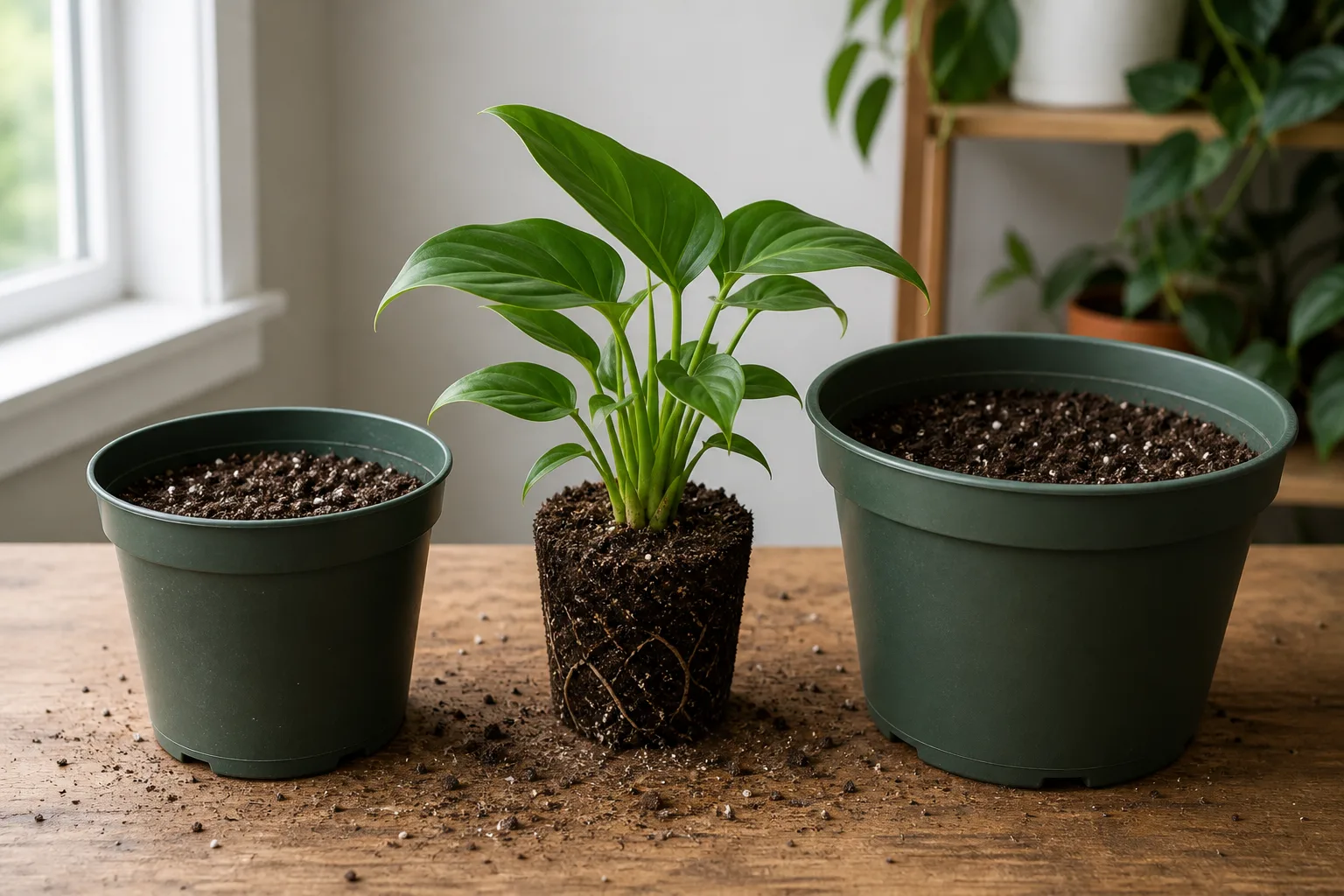 2. Shake or rinse old mix from roots with lukewarm water if the root ball is compacted and sour — skip aggressive rinsing on orchids and other sensitive epiphytes.
3. Inspect roots — trim brown, mushy sections with clean shears; healthy roots are firm and white or tan.
4. Clean or replace the pot — wash plastic or glazed pots in hot soapy water; porous unglazed terracotta that held chronic mold may be replaced if washing does not satisfy you.
5. Repot into fresh, appropriate mix with drainage holes. Follow repotting houseplants for depth and aftercare.
6. Wait before the first post-repot soak if roots were trimmed — slightly moist new mix is enough for the first few days.
2. Shake or rinse old mix from roots with lukewarm water if the root ball is compacted and sour — skip aggressive rinsing on orchids and other sensitive epiphytes.
3. Inspect roots — trim brown, mushy sections with clean shears; healthy roots are firm and white or tan.
4. Clean or replace the pot — wash plastic or glazed pots in hot soapy water; porous unglazed terracotta that held chronic mold may be replaced if washing does not satisfy you.
5. Repot into fresh, appropriate mix with drainage holes. Follow repotting houseplants for depth and aftercare.
6. Wait before the first post-repot soak if roots were trimmed — slightly moist new mix is enough for the first few days.
Do not repot into the same wet, moldy mix “to save time.” That guarantees a rerun.
What Not to Pour or Spray on Moldy Potting Mix
Vinegar: Household vinegar is acetic acid. Drenches can lower pH sharply and damage fine roots — especially repeated applications. Extension and horticulture sources warn against vinegar drenches on potted plants for good reason; scrape and dry instead.
Undiluted hydrogen peroxide soil flushes: Dilute dips on trimmed roots during repot can have a place in some rescue workflows, but pouring full-strength peroxide into the pot as a mold cure is inconsistent and can stress roots. Fix drainage first.
Random fungicide sprays labeled for outdoor gardens: Many are not labeled for indoor potted use and will not reach the real problem — wet organic surface layer — without fixing culture.
Heavy baking-soda foliar sprays on soil: Mild bicarbonate sprays help some leaf diseases; dumping baking soda on the mix changes salinity without fixing chronic wetness.
When in doubt: scrape, dry, drain. Culture beats chemistry for saprophytic surface mold.
How to Prevent Mold From Coming Back
Prevention is boring and effective:
- Water on evidence, not habit — top dry-down for most tropicals; deeper dry-down for succulents and snake plants.
- Drainage holes always — if you love a hole-less cover pot, use the lift-and-drain method every time.
- Empty saucers within 30 minutes of watering.
- Remove fallen leaves and flowers from the soil surface weekly.
- Store bagged mix sealed and dry; discard opened bags that grew fuzz inside.
- Match light to plant — dim rooms need less water, not more sympathy watering.
- Refresh dense old mix every 1–2 years; broken-down peat holds water like a sponge.
- Watch humidity trays — pebble trays and humidifiers help leaves but must not keep the pot base sitting in water (humidifier placement for houseplants).
If mold returns after you truly changed watering, suspect hidden wet spots: a cachepot holding water, a plugged drainage hole, or a root ball that never dries in an oversized pot. Fix the vessel before buying another fungicide.
Terracotta vs plastic: Unglazed terracotta breathes through the walls and often dries faster — helpful in mold-prone setups — but a saucer left full of water defeats the advantage. Plastic holds moisture longer, which is fine when drainage and watering depth are correct but risky when every water ends in a full saucer. Match pot material to your discipline, not just aesthetics.
When White Soil Means You Should Inspect Roots Today
Treat same-day root inspection as mandatory when:
- The plant wilts in wet soil
- Multiple lower leaves yellow over a week
- Stem base feels soft
- Gnats are constant despite dry surface attempts
- You recently overwatered on vacation and returned to a white carpet plus smell
Surface mold with a healthy-looking plant can wait for a scheduled scrape on watering day. Mold plus decline symptoms cannot wait — unpot, inspect, and follow the overwatered plant workflow before the stem rots through.
Conclusion
Mold on houseplant soil is usually a harmless saprophytic fungus telling you the mix stayed too wet too long. Scrape the visible growth, let the surface dry between thorough waterings, fix drainage and cachepot habits, and repot into fresh mix when mold, smell, or gnats keep winning. Tell mold from salt crusts and mealybugs before you treat. Skip vinegar and miracle sprays — dry-down and drainage are the cure. Fix the moisture story and the white fuzz stops being a recurring guest; ignore it and you are practicing for fungus gnats and root rot instead.