Money Tree Yellow Leaves: Causes and Fixes
Yellow money tree leaves usually mean wet soil, dry air, or normal aging—not one mystery disease. Learn eight causes, how to read compound leaflets, and what to fix first.
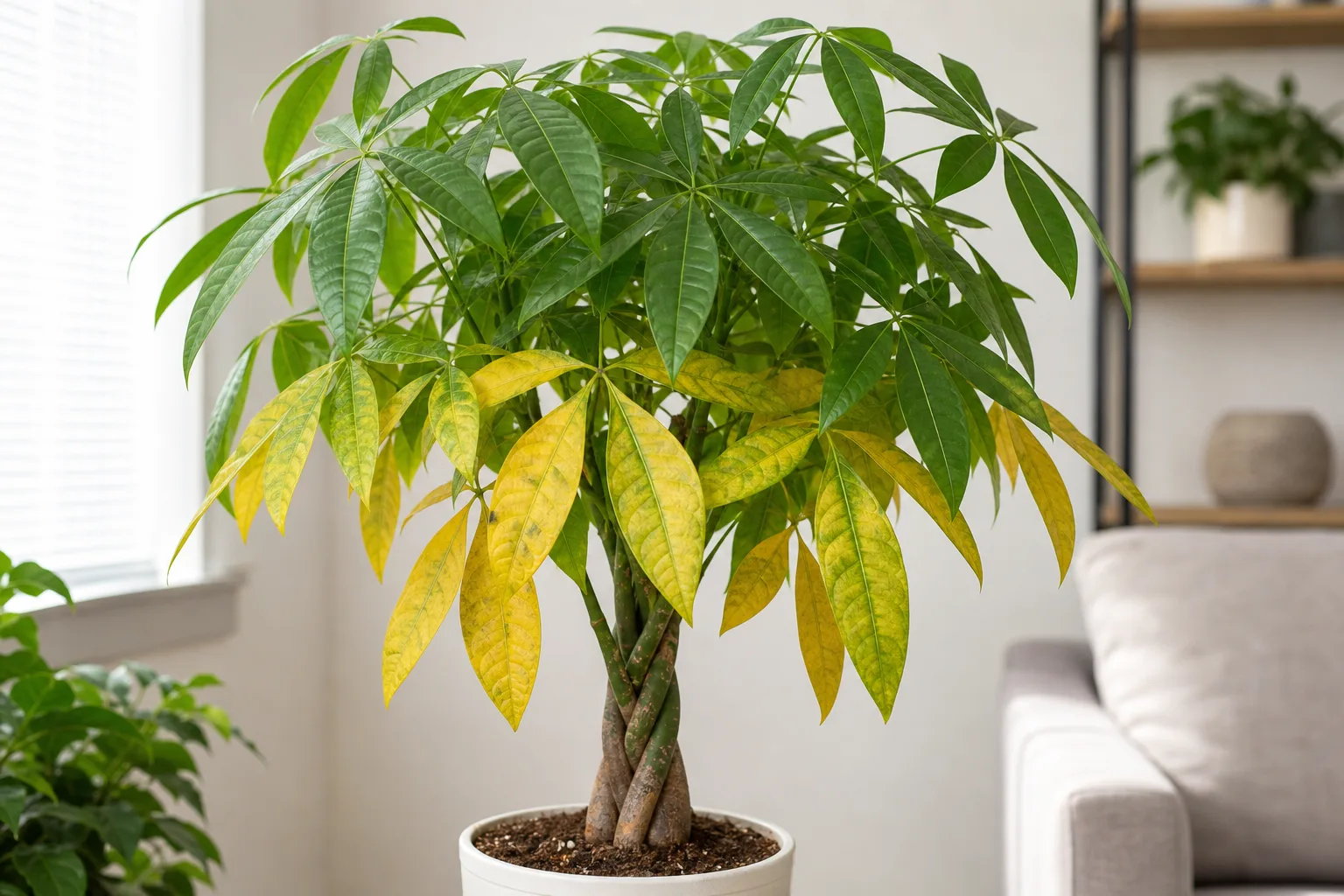
Yellow leaves on a money tree (Pachira aquatica) look scary, especially when the braided trunk and glossy compound leaves are the whole point of the plant. In most homes the fade starts from one fixable stress—usually wet soil that starves roots of oxygen, dry winter air, or a single old leaf aging out—not a death sentence. The mistake is treating every yellow leaflet the same way: watering more, repotting immediately, or stripping half the canopy before you know which pattern you are looking at.
This guide walks through eight common causes, how to read money-tree-specific signals like braided trunk firmness and whole compound-leaf whorls, and the first low-risk action for each. For species-specific deep dives after you identify your pattern, use the Money Tree hub and the dedicated yellow leaves problem page.
Start With a 60-Second Leaf, Trunk, and Soil Check
Before you repot, fertilize, or cut away every yellow leaflet, run a quick snapshot. Stick your finger 2 inches (5 cm) into the mix, press the braided trunk at the soil line with a knuckle, and note which leaves turned first—bottom whorls only, scattered leaflets, or pale patches on the window side.
Photograph one affected compound leaf, the trunk base, and the soil surface. If the mix smells sour, stays wet three days after watering, or the trunk feels spongy, treat that as root stress and pause all watering until you read the overwatering section below.
Four Questions That Narrow the Cause Fast
1. Is the top 2 inches of soil wet or dry right now? Wet soil plus limp yellow leaflets often means overwatering or poor drainage—not thirst. Bone-dry mix that has pulled away from the pot edge, a light pot, and drooping leaflets that perk after a thorough soak point to underwatering.
2. Does the braided trunk feel firm or soft at the base? A firm trunk with one slow yellow lower whorl suggests normal aging. Spongy wood through the braid base is the money tree’s signature root rot warning—see the root rot guide before you add more water.
3. Did yellowing start on lower whorls, scattered leaflets, or sun-facing patches? Bottom-up whole whorls on damp soil track overwatering. Scattered yellow on dry soil tracks drought or salt stress. Bleached tan patches on the window side track sun scorch.
4. Is damage spreading to new growth at the top? One or two lower leaves yellowing over months while new whorls stay green is low urgency. Fresh top growth emerging pale or yellow means the current environment is still wrong—keep diagnosing.
5. Does the pot feel heavy days after you last watered? A pot that stays heavy while leaflets yellow is a drainage or frequency problem, not a lighting mystery. Lift the inner pot out of decorative sleeves to confirm runoff is not pooling at the bottom.
How Money Tree Leaves Yellow (Compound Leaves and Braided Trunks)
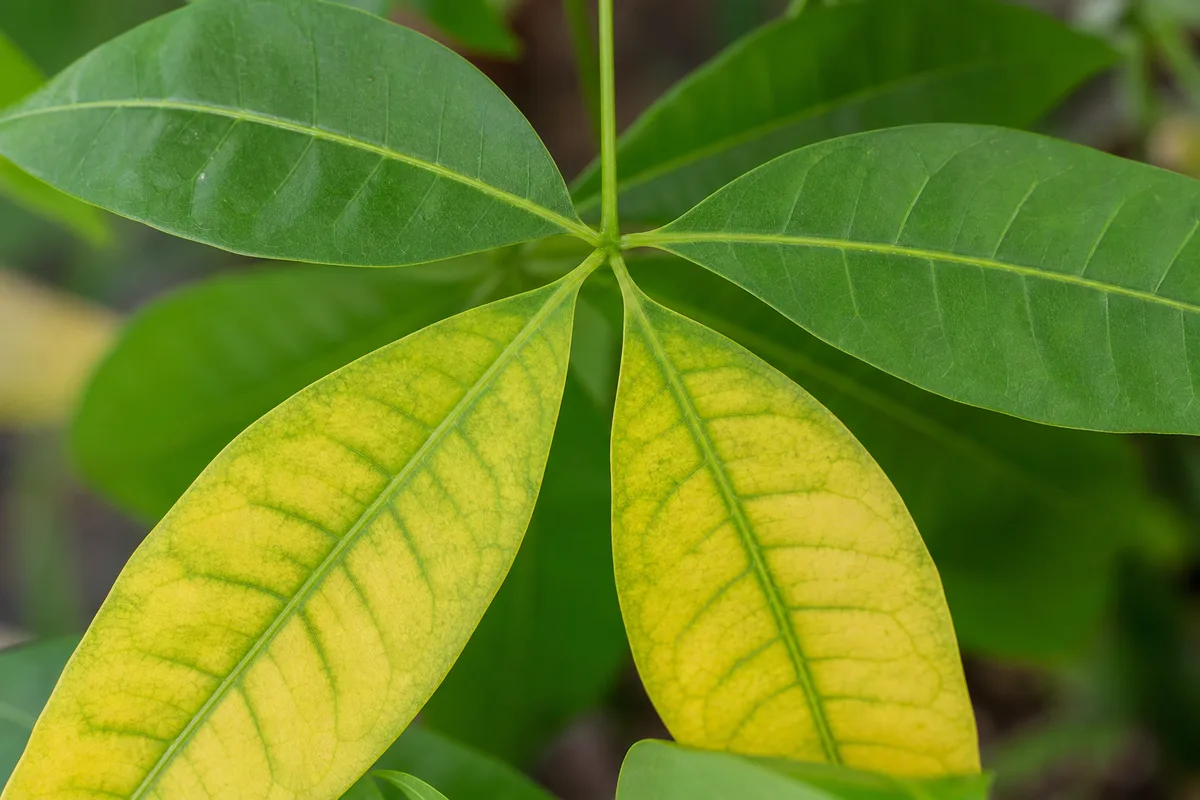
Unlike simple-leaf houseplants, Pachira aquatica carries five to nine leaflets per compound leaf on a palmate whorl, often on a braided trunk sold that way for aesthetics (Missouri Botanical Garden). Yellowing usually hits an entire whorl at once when roots fail, or individual older leaflets when water rhythm or humidity is off.
That structure matters for diagnosis. A pothos might show one yellow leaf at a time; a money tree often loses a full hand of leaflets when the root zone stays saturated. Always pair leaf color with trunk feel and soil moisture at depth, not just the surface.
Normal Aging vs Real Stress
On a healthy mature tree, one or two lower compound leaves may turn chartreuse, then yellow, over several months while new whorls at the top stay deep green and the braided trunk remains firm. That slow bottom-up pattern on an otherwise vigorous plant is routine senescence—not an emergency.
Real stress spreads faster: multiple whorls yellow within weeks, new growth stays pale, fungus gnats hover over wet soil, or the trunk softens. If you are unsure, dry the soil completely and watch for two weeks; aging plants stabilize, rotting plants keep declining.
Overwatering and Root Rot — the Most Common Indoor Cause
Overwatering is the leading indoor trigger for yellow money tree leaves. Retail plants often sit in oversized decorative pots, cachepots without drainage, or peat-heavy mix that stays wet in dim corners. NC State Extension notes that although Pachira aquatica grows near water in the wild, standing water in containers is not tolerated and causes root rot—the same pattern RHS warns against for houseplant culture.
Calendar watering (“every Tuesday”) is a common trigger. In low light the plant drinks slowly while the mix stays damp at the bottom, oxygen drops, roots die, and leaflets lose chlorophyll from the bottom up. Decorative cachepots are a silent killer: the inner nursery pot drains, but water sits in the outer shell and wicks back up through the drainage holes overnight.
If your tree came in a foil wrap or sits inside a ceramic pot with no hole, assume overwatering until proven otherwise. Remove the sleeve, feel the inner root ball, and never let the plant sit in drained water for more than thirty minutes after a soak.
What Overwatering Looks Like on Pachira aquatica
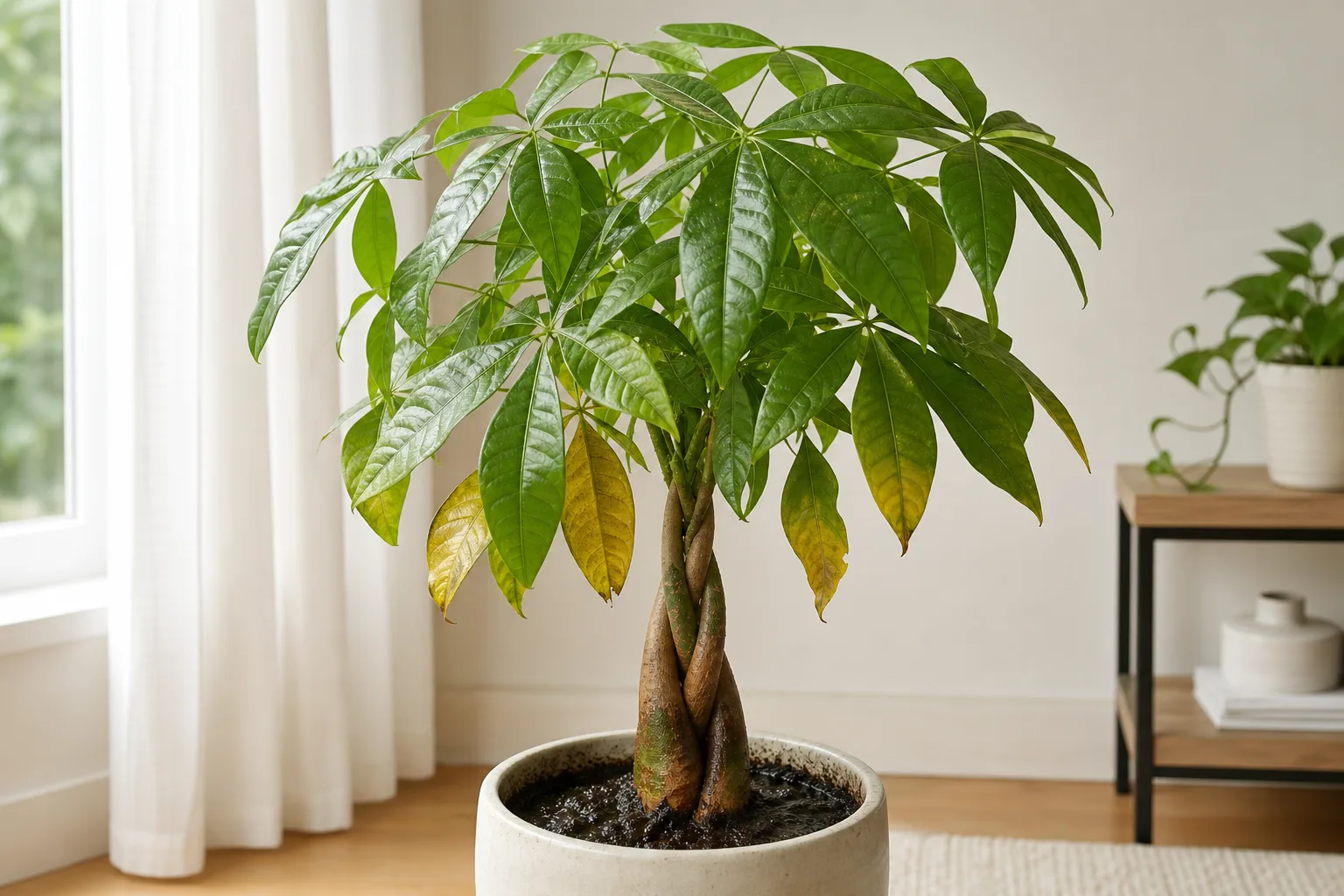
Classic overwatering starts on older lower compound leaves—the whole whorl turns yellow-green, then bright yellow, while leaflets hang limp despite moisture. Soil at 2 inches depth stays damp for days. Fungus gnats, surface mold, and a soft braided trunk at the soil line often appear together. See overwatering on Money Tree when wet weight and yellow whorls match.
First Fixes for Wet Soil and Soft Trunks
Stop watering immediately and remove the pot from any saucer or cachepot holding runoff. If the trunk is still mostly firm, let the top half of the mix dry before the next soak, move the plant to brighter filtered light so the pot dries predictably, and empty cachepots after every watering. Read the full watering guide for seasonal rhythm.
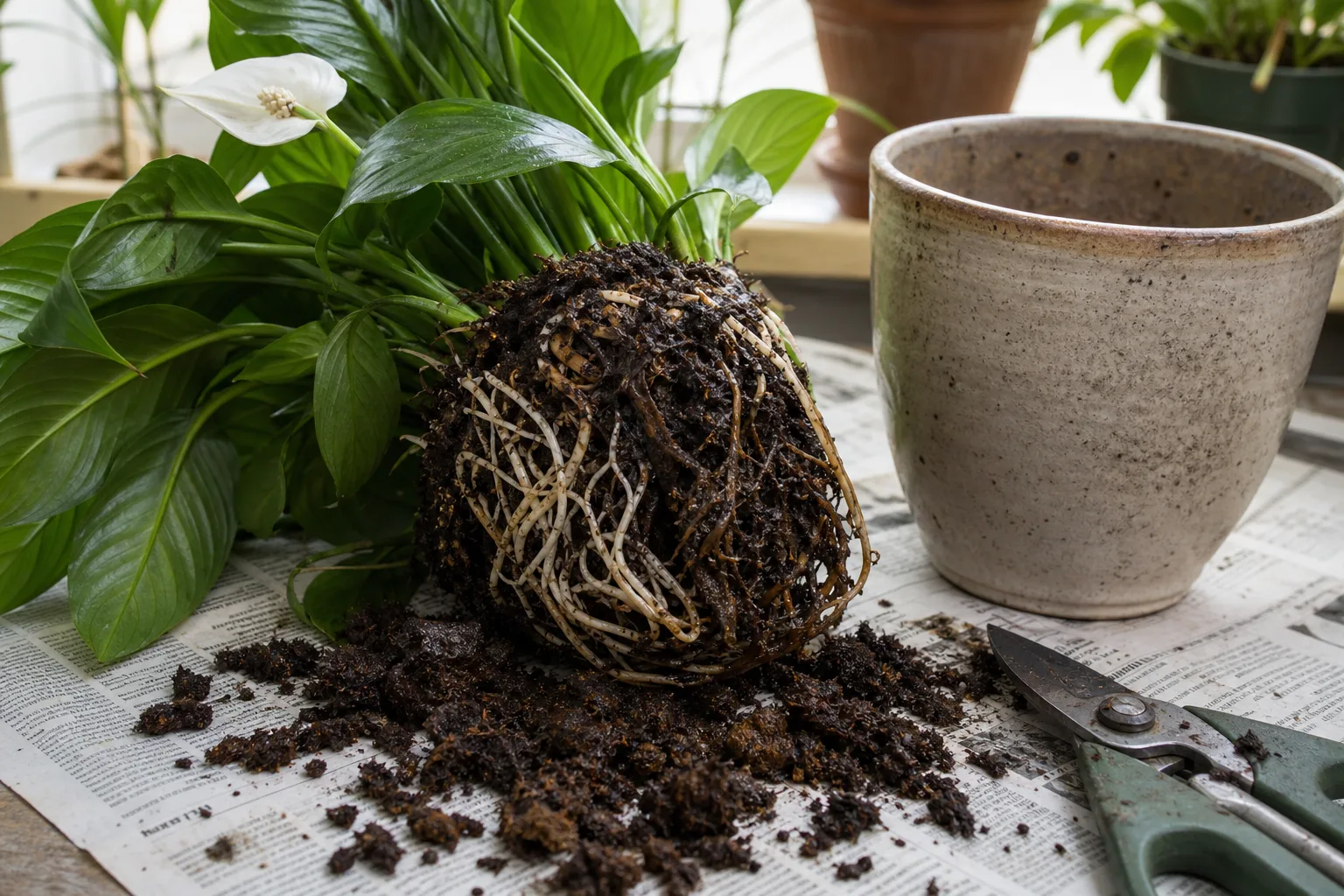
If the trunk is spongy, soil smells sour, or yellowing climbs fast, unpot and inspect roots. Trim mushy roots with sterile shears, repot into fresh well-draining mix one size up at most, and skip fertilizer for four to six weeks. A firm trunk after rescue beats a perfect watering schedule on rotted roots. When several stems are braided together, rot in one trunk can spread through the bind—check each stem base individually and cut away any that are black and hollow.
Underwatering and Salt Buildup
Chronic drought yellows scattered leaflets along the canopy with dry, light soil and mix pulling away from pot edges. The trunk should still feel firm, not spongy. Leaflets may curl slightly and the plant droops in the afternoon but perks within hours after a thorough soak if roots are healthy.
Long-term underwatering plus heavy tap-water minerals can leave crisp brown tips on yellowing leaflets—a salt-stress pattern. Water deeply until runoff drains, empty the saucer, and resume checking dryness at 2 inches depth. See underwatering on Money Tree when dry weight matches the yellowing.
When salts are the suspect, flush the pot: water slowly until water runs freely from the bottom for several minutes, let the pot drain fully, then repeat once. If crusty white deposits ring the pot lip, repotting into fresh mix is faster than repeated flushing.
Do not assume yellow always means too much water. Dry-soil yellowing needs more consistent deep watering, not a dry-down.
Too Much Direct Sun and Leaf Scorch
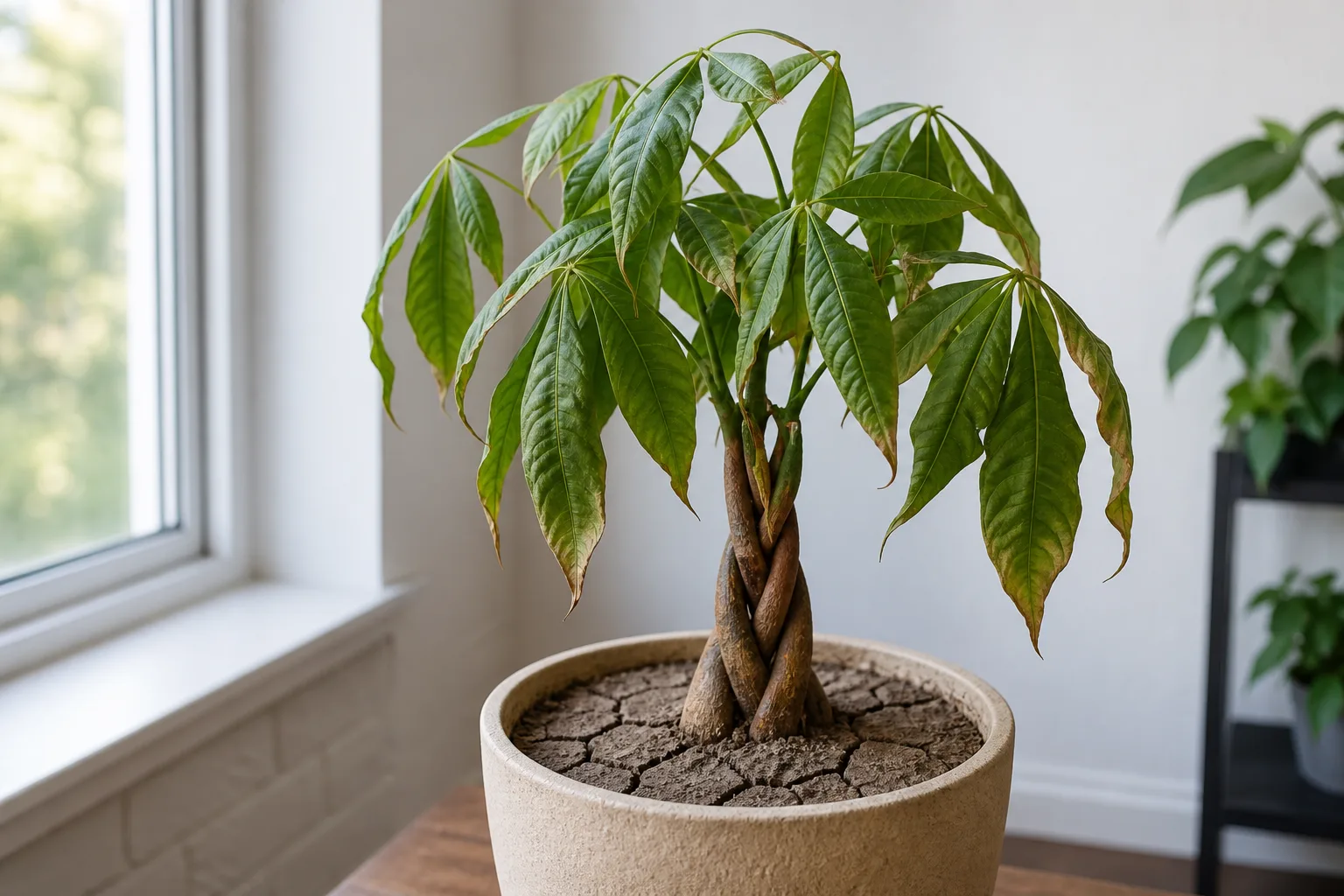
Money trees prefer bright, indirect light (NC State Extension). Direct sun—especially from south- or west-facing glass—causes pale yellow or bleached tan patches on leaflets facing the window while the shaded side stays green. This is sun scorch, not root rot; the trunk stays firm and soil moisture follows your normal rhythm.
Move the plant 3 to 6 feet back from harsh glass, filter light with a sheer curtain, or shift it to an east exposure. Trim badly scorched leaflets for appearance only; new whorls should emerge green once light is softened. See not enough light for the opposite problem—dim corners that keep soil wet and stretch stems.
Low Humidity and Dry Winter Air
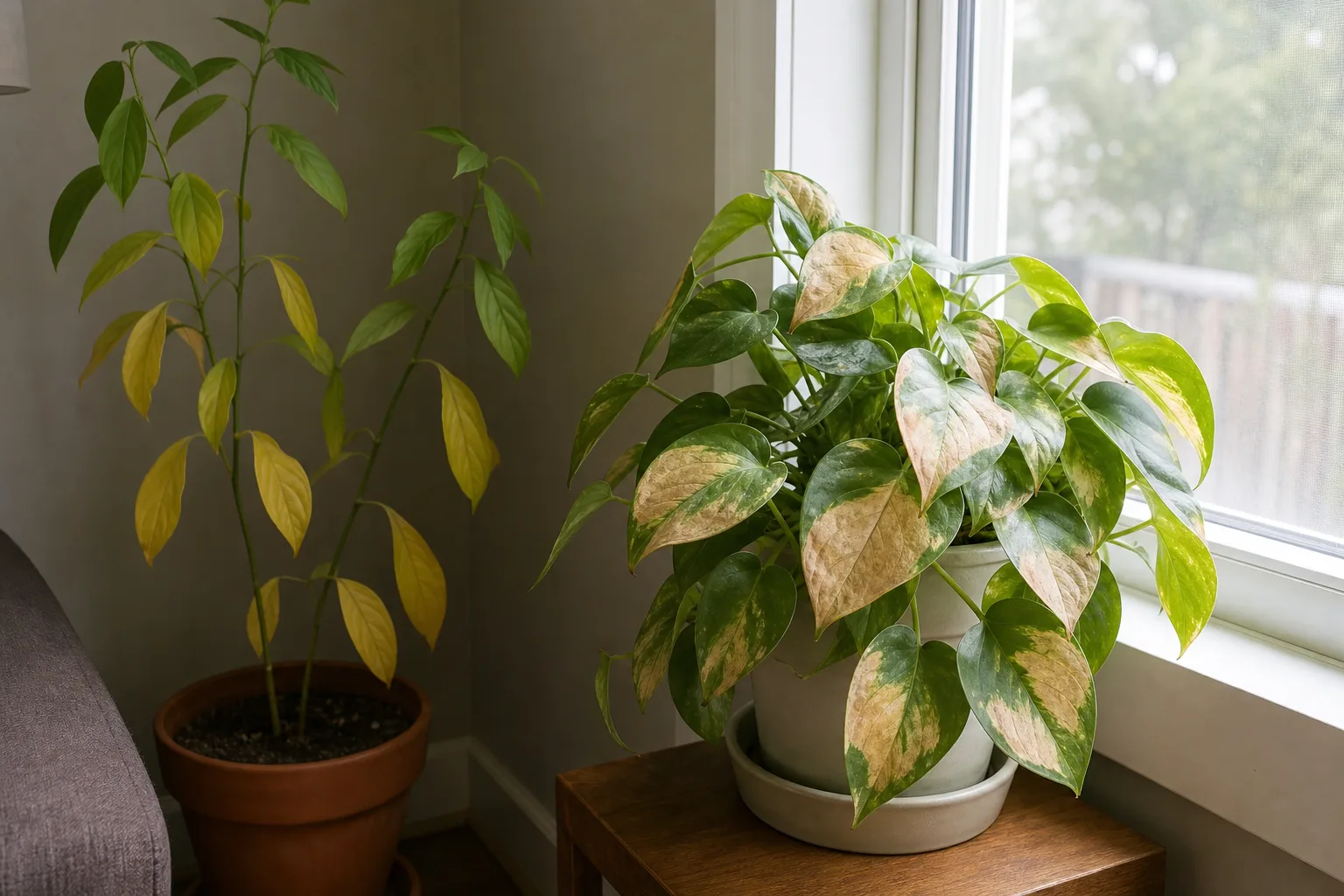
Native to tropical Central and South America, money trees grow best with roughly 50% humidity at leaf level (NC State Extension). Heated indoor air in winter often sits near 20–30%, which dries leaflet edges to crisp brown before whole leaflets yellow and drop.
Raise humidity with a pebble tray (pot above the waterline), a small humidifier nearby, or grouping plants—without misting leaves daily, which can spread fungal spots. See low humidity on Money Tree when brown edges precede yellowing. Humidity fixes work slowly; expect clearer new growth within two to four weeks, not overnight regreening.
Temperature Swings Near Vents and Drafts
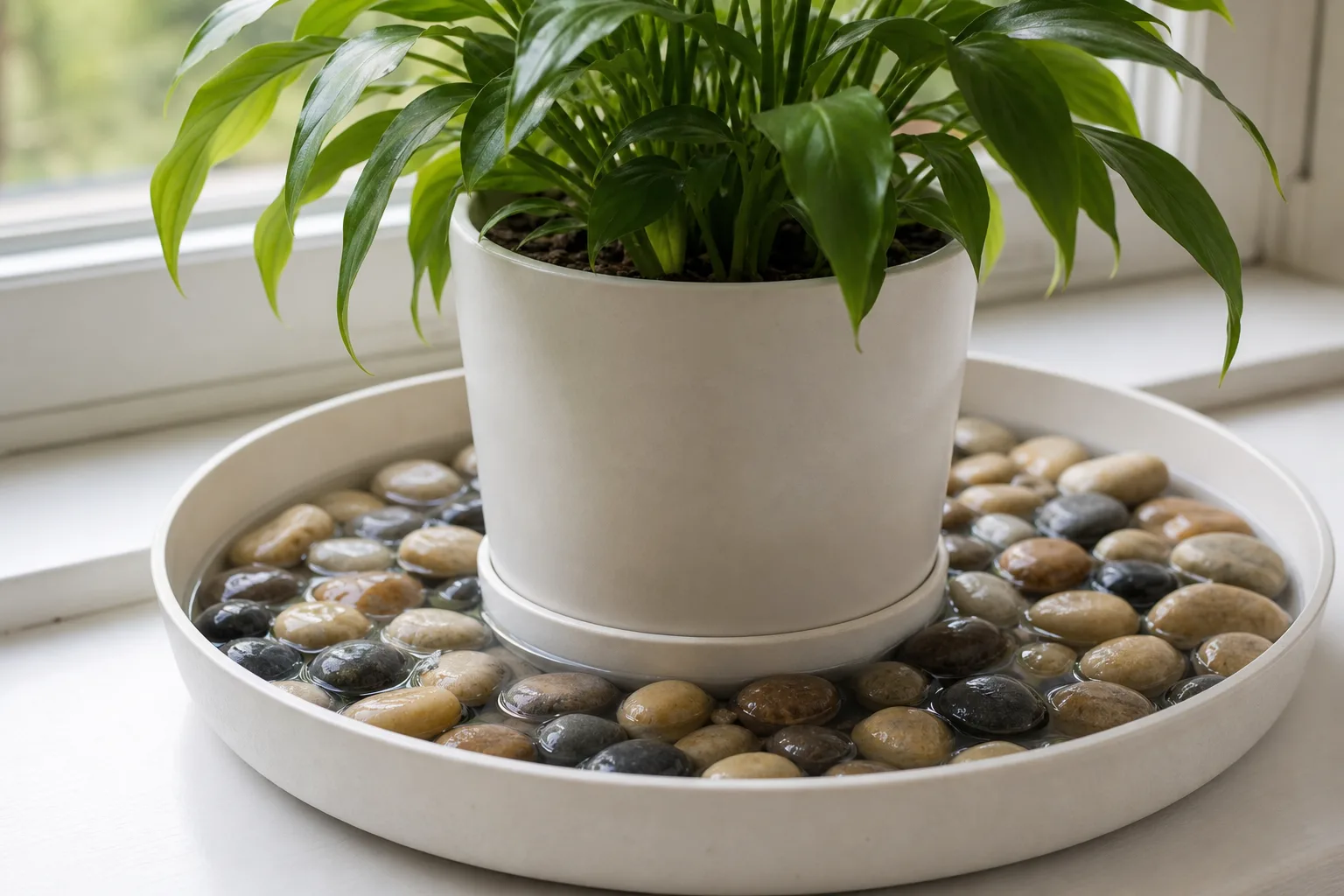
Pachira aquatica prefers consistent warmth between 65 and 75°F (18–24°C) (Missouri Botanical Garden). Blast heat from radiators, cold drafts from doors, or air-conditioning vents hitting the canopy causes sudden yellowing and leaf drop unrelated to watering.
Relocate the pot several feet from vents, avoid touching cold window glass in winter, and keep night temperatures above 50°F (10°C) indoors. Recovery shows up as stable new whorls once the microclimate steadies—do not compensate with extra water while the plant is cold-shocked. Money trees dropped outdoors for summer should come back inside before nights fall below 45°F (7°C) (NC State Extension).
Pests That Drain Sap and Yellow Leaves
Spider mites, mealybugs, scale, and aphids feed on sap and leave stippled, yellowing leaflets. Check leaf undersides, stem joints, and the braid crevices where pests hide. Sticky honeydew, fine webbing, or cottony masses are confirmatory signs. Mites are easier to miss until stippling spreads—tap a leaflet over white paper and look for moving specks.
Isolate the plant, rinse pests off with lukewarm water (cover the soil), and treat with neem oil or insecticidal soap on a two-week cycle until clear. Heavy infestations may require pruning the worst whorls. See spider mites and mealybugs on Money Tree for species-specific treatment timing. Avoid heavy oil sprays on stressed, sun-scorched leaflets in direct hot windows—they can burn tender tissue.
Nutrient Deficiency and Old Potting Mix
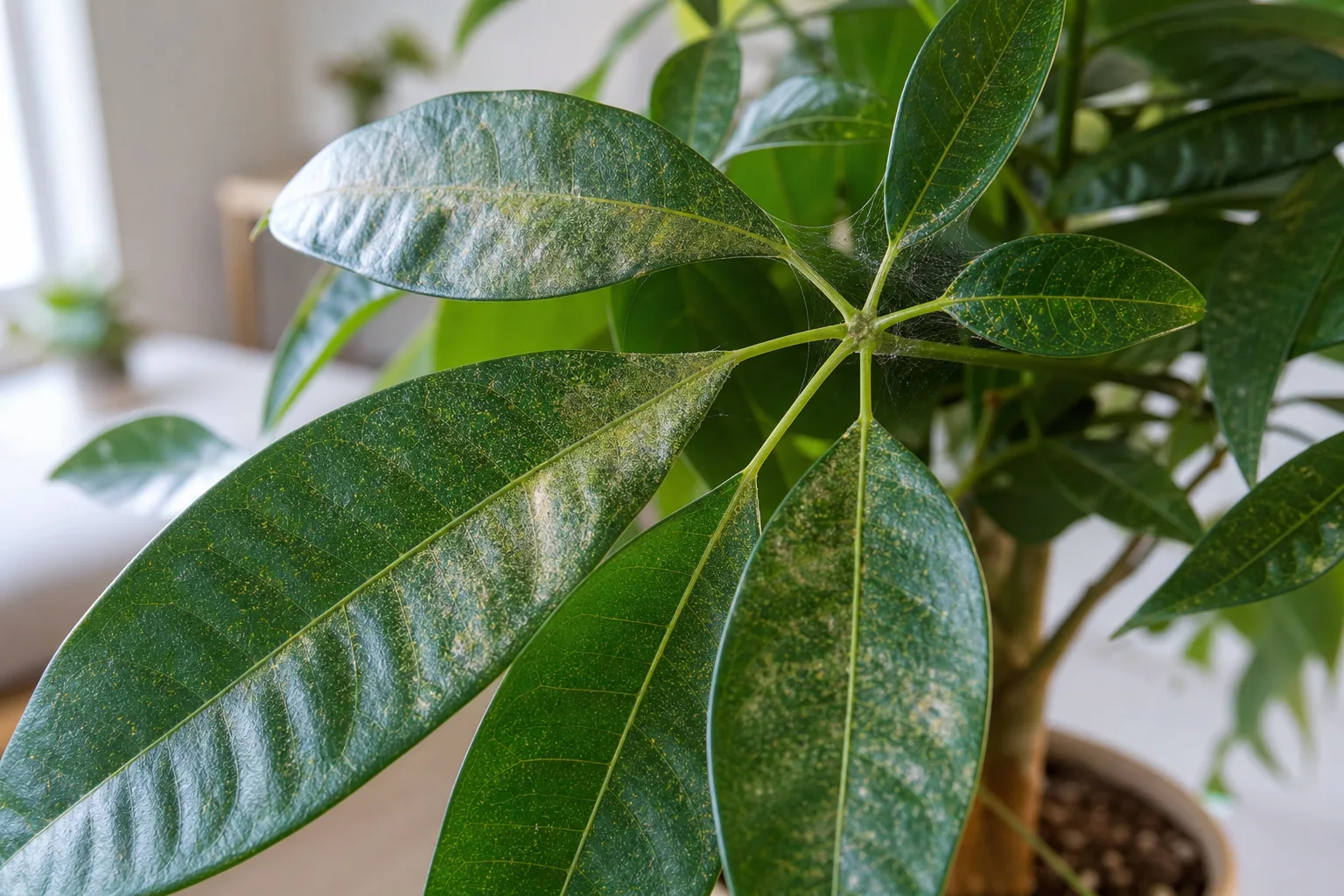
Less common but real: a money tree in the same peat mix for three or more years may yellow on new and old leaflets alike while watering and light look fine. Nitrogen deficiency shows overall pale green before yellow; locked-out minerals from salt buildup show brown tips with yellow margins.
If roots are white and the trunk is firm, a half-strength balanced liquid fertilizer once during active spring growth can help—never feed a drought-stressed or rotting plant. When salts are suspected, flush the pot with water until runoff runs clear, or repot into fresh mix. See the fertilizer guide for seasonal rates.
What to Do With Yellow Leaves You Already Have
Yellow leaflets will not turn green again—chlorophyll loss in that tissue is permanent. Once you have matched the cause and started the fix, trim yellow or brown leaflets with clean shears for appearance and to redirect energy to healthy whorls. Remove only what looks dead; keep green leaflets even if the whorl is partly damaged. Cut at the petiole base where the leaflet meets the stem, or remove the entire compound leaf if every leaflet on that whorl is spent.
Judge recovery by new growth, not old color. A firm trunk, drying soil rhythm, and fresh green whorls within three to six weeks mean your fix is working. Spongy trunk spread despite dry soil may mean the plant cannot be saved—better to learn the cachepot lesson on the next one.
Prevent Yellow Leaves on Your Money Tree
Prevention is consistent care, not perfection. Water when the top 2 inches of mix are dry, always empty cachepots, use bright indirect light so pots dry predictably, and slow watering in fall and winter when growth pauses (Epic Gardening recommends roughly twice-monthly soaks in cool seasons versus weekly in active growth, adjusted to your room).
Scan leaf undersides monthly for pests, rotate the pot quarterly for even light, and repot every two to three years into slightly larger pots with drainage holes—not giant decorative tubs. Remember that one yellow lower whorl every few months on an otherwise green, firm-trunked tree is normal housekeeping, not a crisis.
Conclusion
Yellow money tree leaves are a symptom chart, not a single disease. Read soil moisture at depth, braided trunk firmness, and which leaflets yellowed first, then match the pattern to overwatering, underwatering, light, humidity, temperature, pests, nutrients, or slow aging. Fix the cause that fits, trim spent leaflets you cannot save, and watch new whorls for proof the plant is recovering—most indoor money trees bounce back once wet roots dry out or dry air gets a humidity boost.