Overwatering on Money Tree: Causes, Checks & Fixes
Quick answer
Overwatering on Money Tree shows as a heavy wet pot, limp palmate leaves on damp mix, and sometimes yellow lower leaves-with fungus gnats hovering nearby. First step: stop watering until the top 5 cm of mix dries completely.
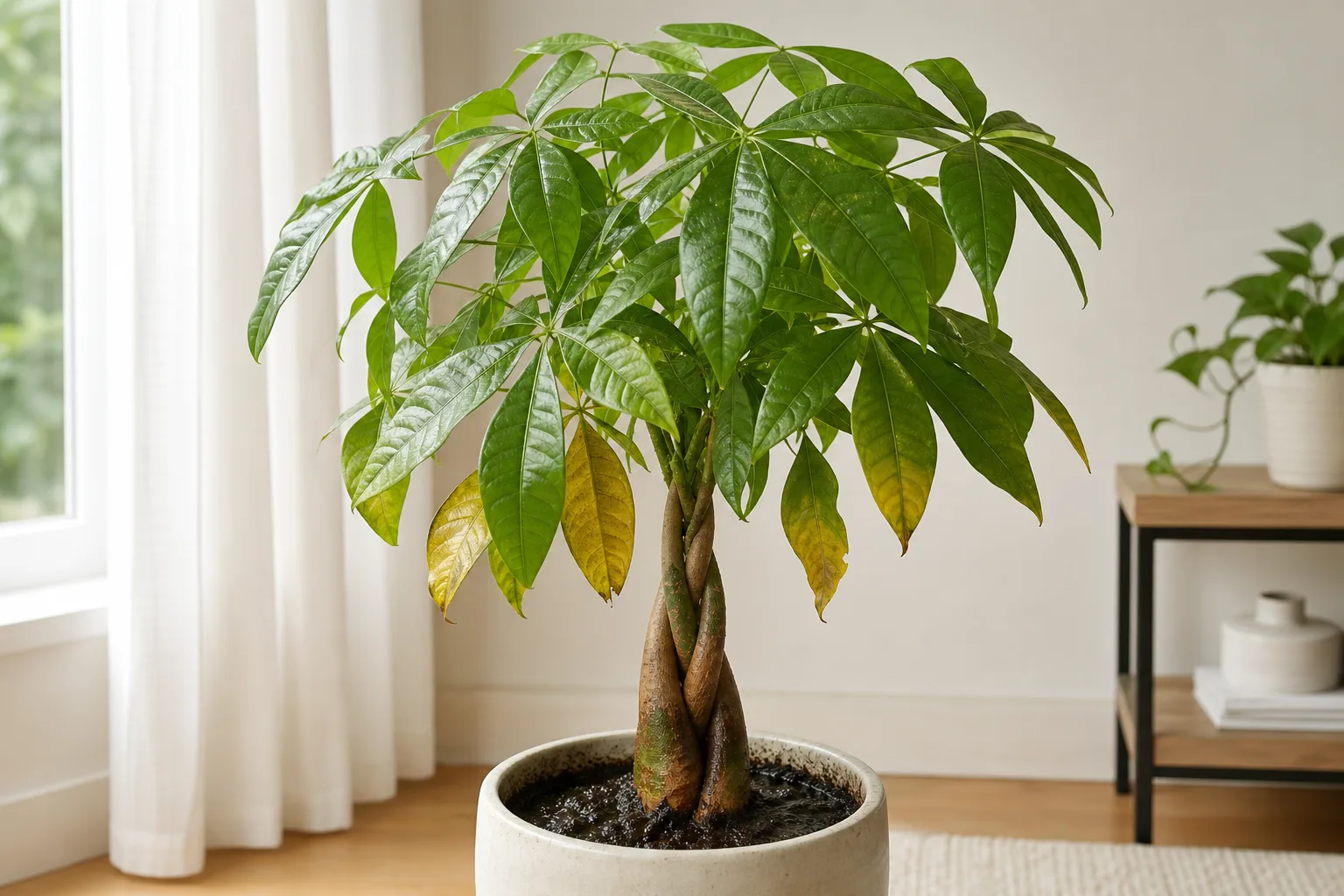
Overwatering on Money Tree: Causes, Checks & Fixes
This guide covers overwatering on Money Tree. See also the general Overwatering guide, watering, and light pages for this plant.
Overwatering on Money Tree: Causes, Checks & Fixes
Quick answer
Money Tree (Pachira aquatica) is a wetland-origin tree sold indoors with a braided trunk and palmate leaves. Overwatering means the root zone stays wet too long-and the classic trap is limp leaves on heavy damp soil. Growers see drooping foliage and water again, while roots in saturated soil lose oxygen and function.
First step: stop watering immediately. Probe 5 cm into the mix. If soil is wet at that depth, wait until it dries before the next drink. Empty cachepots and confirm drain holes are open. Do not fertilize or repot on day one unless the braided trunk is already soft.
Overwatering vs. other Money Tree problems
The wilt-on-wet-soil paradox separates overwatering from thirst on money tree better than leaf color alone.
| Pattern | Pot weight | Soil at 5 cm | Braided trunk | What it usually means |
|---|---|---|---|---|
| Overwatering | Heavy | Wet, cool | Firm or softening | Failed roots on saturated mix |
| Underwatering | Light | Dry, crumbly | Firm, may wrinkle | Turgor loss; dry edges pulling away |
| Low light + slow dry-down | Medium-heavy | Damp for weeks | Firm | Chronic sogginess risk |
| Natural aging | Normal | Dry on schedule | Firm | Older lower leaves yellow |
Fungus gnats over the pot surface often appear with chronically wet mix-see fungus gnats and root rot if stems soften.
What overwatering looks like on Money Tree
Money tree shows stress through leaf turgor, trunk firmness, and pot weight before random spots appear.
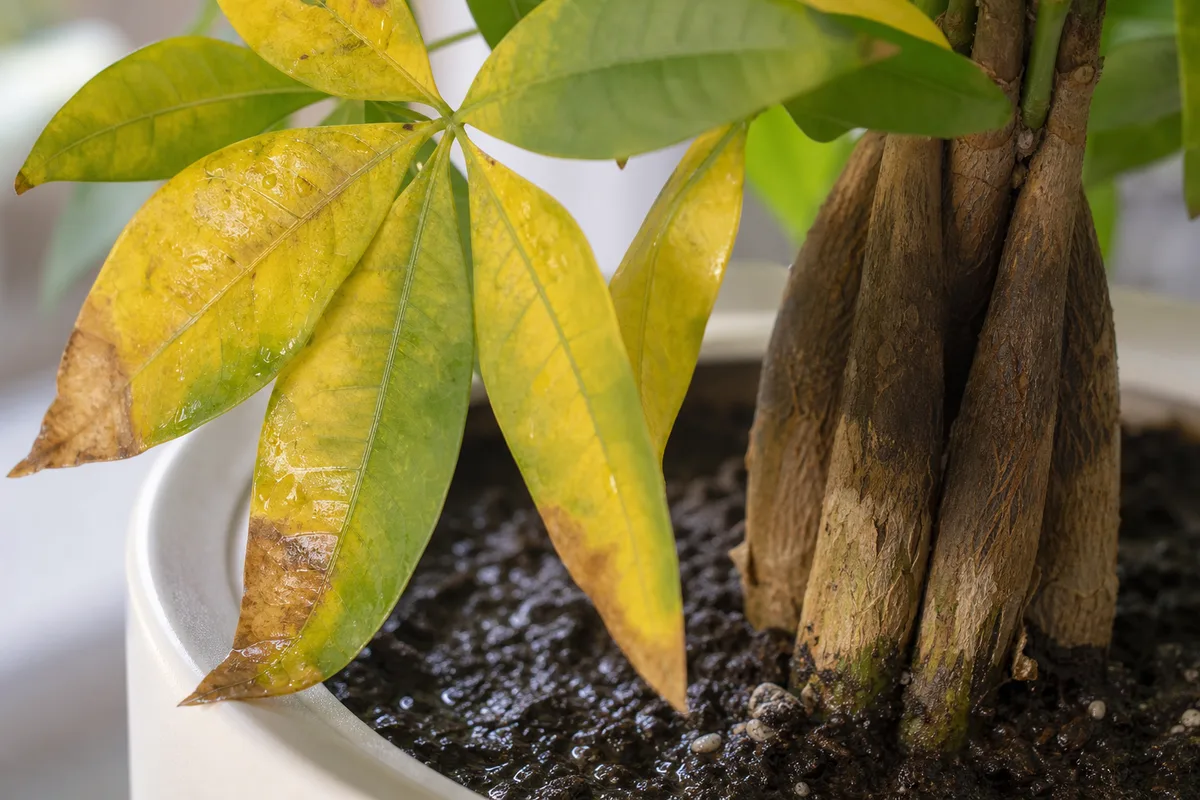
Overwatering symptoms on Money Tree - compare with healthy tissue on the same plant.
Early signs:
- Limp, soft palmate leaves on wet soil that do not firm after watering
- Yellow lower leaves while mix stays damp 5 cm down
- Heavy pot days after you thought you watered lightly
- Fungus gnats when you disturb the surface
- Slowed new leaf clusters or smaller new growth at branch tips
Advanced signs:
- Softening in the braided trunk where multiple stems fuse-rot often starts in those crevices
- Black mushy roots when you unpot-healthy roots are firm and white or tan
- Leaf drop from lower branches on soggy mix
- Sour smell from cachepots holding runoff
Compare with underwatering: light pot, wrinkled trunk, soil pulling from pot edges, recovery after one deep soak.
Why Money Tree gets overwatered
Calendar watering in winter. Growth slows when light drops. Summer weekly watering in a dim winter room keeps mix wet for weeks.
Decorative cachepots without drainage. Water poured into sealed display pots has nowhere to go. The nursery pot sits in standing water-classic money tree setup in shops.
Wetland reputation misread as “likes wet soil.” Pachira grows in swamps in nature but standing water in containers causes root rot. Indoors it needs soak-then-dry, not perpetual dampness.
Braided trunk traps moisture. Water runs into the braid crevices and stays against bark longer than on a single-stem tree.
Oversized pots. Extra wet soil around a modest root ball is the most common overwatering setup for display trees.
Ice cubes and trickle watering. Small daily doses keep the upper mix damp while the center stays irregularly wet-encouraging shallow roots and braid-zone rot.
How to confirm the cause
- Pot weight - Heavy days after skipping a scheduled drink confirms chronic sogginess.
- Moisture at 5 cm - Wet, cool, clinging soil with limp leaves strongly suggests overwatering.
- Post-water response - Leaves that stay limp after watering mean roots, not thirst.
- Trunk braid check - Softness where stems fuse escalates toward rot even if leaves are still green.
- Gnat check - Flies at the surface add evidence of persistent moisture.
- Cachepot inspection - Standing water in the outer pot confirms the failure mode.
First fix for Money Tree
Stop watering until the top 5 cm of mix dries.
- Skip all watering until 5 cm down is dry crumbly mix-often seven to twenty-one days depending on season.
- Remove the nursery pot from any cachepot; empty saucers; open blocked drain holes.
- Move to brighter indirect light if the tree sits in deep shade-slow evaporation worsens wet soil.
- Do not fertilize a waterlogged money tree.
If the braided trunk stays firm and yellowing stops after dry-down, Money Tree repotting guide may not be needed. If the trunk softens, unpot and inspect roots immediately.
Step-by-step recovery
Mild (firm trunk, yellow lower leaves only):
- Dry-down only; resume watering when 5 cm is dry, with a full soak and complete drain.
- Empty cachepots every time; never return to standing water.
Moderate (limp leaves, persistent wet mix, gnats):
- Unpot if mix smells sour or stays wet more than ten days without watering.
- Trim black mushy roots; repot into fresh well-drained mix in the same or slightly smaller pot.
- Hold fertilizer four to six weeks.
Severe (soft braided trunk, advancing black roots):
- Treat as root rot-remove all mushy tissue, repot shallow if needed, stake if unstable.
- Discard only when most of the braid is soft and no firm roots remain.
Judge recovery by new firm palmate leaves and stable trunk firmness, not old yellow foliage re-greening.
Recovery timeline
| Stage | What to expect |
|---|---|
| Days 3–7 | Mix drying; limp leaves may firm if roots are intact |
| Week 1–2 | Yellowing stops spreading; new growth may pause |
| Week 3–6 | New leaf clusters if roots recovered |
| Month 2+ | Normal watering rhythm on dry-down checks |
Fully yellow leaves do not re-green. Soft trunk tissue does not re-firm-only healthy tissue above the rot line recovers.
Mistakes to avoid
- Watering because leaves look wilted without checking soil moisture at 5 cm.
- Leaving the tree in a sealed decorative pot - Repot into real drainage or use remove-water-at-sink workflow.
- Winter calendar watering - Reduce checks to every two to three weeks in cool dim rooms.
- Repotting into a much larger pot “to help it recover” - Extra wet soil worsens rot.
- Fertilizing stressed roots - Wait until new growth returns.
Money Tree care cross-check
- Watering - Soak-then-dry at 5 cm depth, not constant moisture.
- Soil - 20–30% perlite; dense peat holds water too long.
- Light - Dim corners slow dry-down and invite overwatering.
- Root rot - Next stage if trunk softens on wet mix.
How to prevent overwatering next time
- Finger test at 5 cm before every drink-not the calendar.
- Lift the pot to learn heavy vs. light weight after watering.
- Drain cachepots within 30 minutes of every soak.
- Cut winter frequency when growth slows.
- Reject sealed display setups or water only at the sink with full drain.
When to worry
Escalate within days if the braided trunk softens, mix smells sour despite dry surface, or leaves drop daily on wet soil. Green leaves with a soft braid is an urgent pattern-cambium can fail while foliage still looks alive.
A few yellow lower leaves on firm trunk and drying mix is lower urgency if you stop watering and confirm drainage.
Conclusion
Overwatering on Money Tree is a drainage and dry-down problem disguised as thirst. Confirm limp leaves on wet soil, stop watering until 5 cm dries, and fix cachepot standing water before repotting. Prevention is the finger test, winter slowdown, and never letting a braided display tree sit in its own runoff.
When to use this page vs other Money Tree guides
- Money Tree watering guide - Use for routine moisture checks before assuming overwatering is the main issue.
- Money Tree problems hub - Browse all 4 common issues on this species.
- Root Rot on Money Tree - Different entry point when symptoms overlap with overwatering.
- Yellow Leaves on Money Tree - Different entry point when symptoms overlap with overwatering.