Underwatering on Money Tree: Causes, Checks & Fixes
Quick answer
Underwatering on Money Tree shows as a light pot, dusty dry mix 5 cm deep, and limp compound leaflets on a firm braided trunk. First step: confirm dryness with a finger probe and pot weight, then give one deep soak-not daily sips.
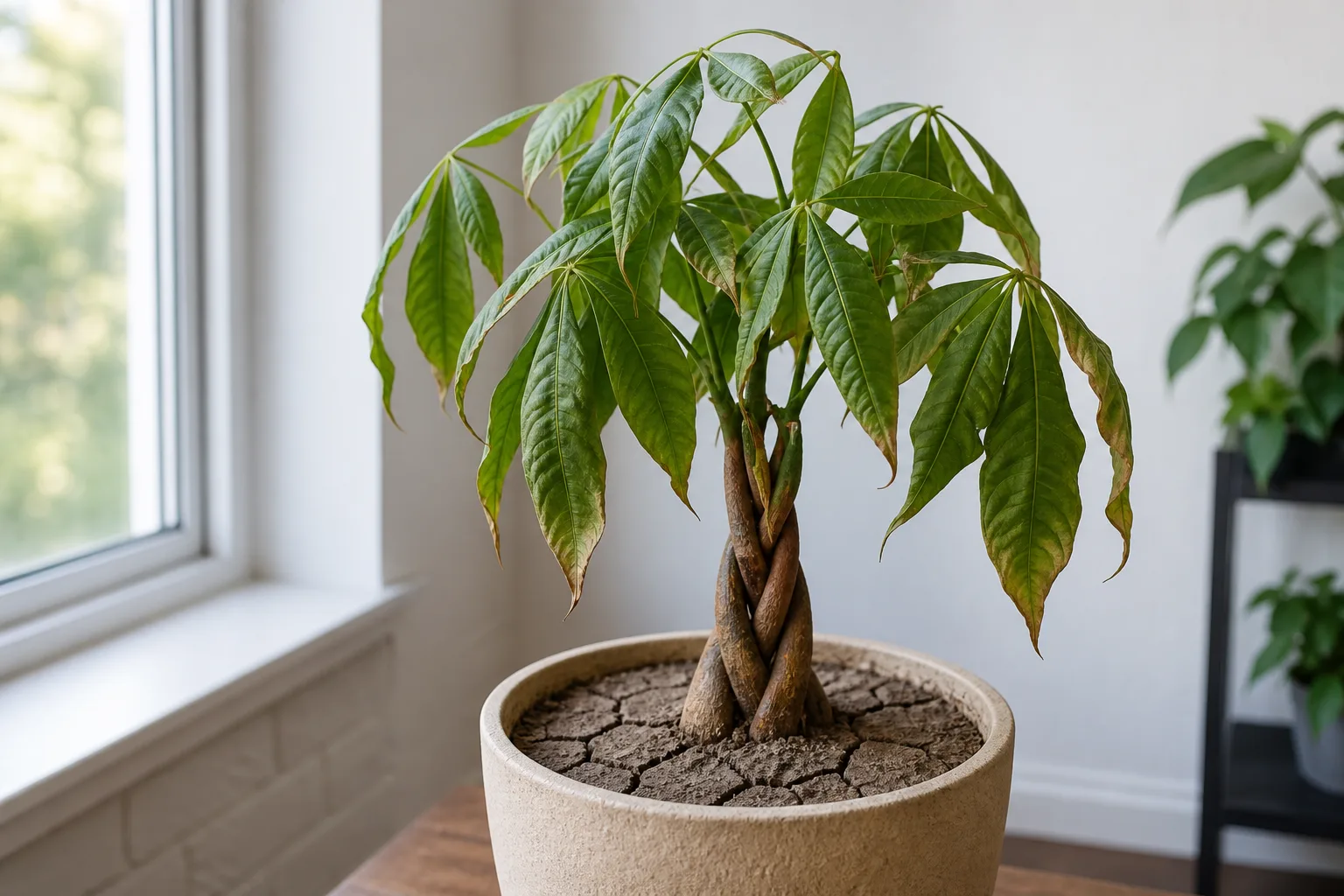
Underwatering on Money Tree: Causes, Checks & Fixes
This guide covers underwatering on Money Tree. See also the general Underwatering guide, watering, and light pages for this plant.
Underwatering on Money Tree: Causes, Checks & Fixes
Quick answer
Underwatering on Money Tree (Pachira aquatica) means the root zone has dried out enough that water cannot reach the leaflets fast enough to hold turgor. On store-bought braided specimens, the signature pattern is a lightweight pot, dusty dry mix 5 cm deep, limp compound leaflets, and a firm braided trunk that may look slightly less plump-not soft or spongy.
First step: probe soil moisture 5 cm deep and lift the pot. If the mix is dry throughout and the container feels noticeably lighter than after a thorough watering, give one deep soak and drain completely. Do not water again until the top 5 cm dries.
This page covers dry-soil drought only. If your Money Tree wilts on wet soil, a soft trunk, or sour-smelling mix, the cause is usually root stress or rot-use the wilting guide to split wet wilt from dry wilt before you soak.
What underwatering looks like on Money Tree
Money Tree carries palmately compound leaves: five to nine glossy leaflets fan from each petiole on a tree-like stem, often with a braided trunk formed from several young stems twisted together. Thirst stress shows up as limp but still green leaflet clusters that hang instead of standing stiff. Unlike advanced rot, the leaflets are usually green when drought is the only problem-yellowing lower leaves more often pair with wet, failing roots.
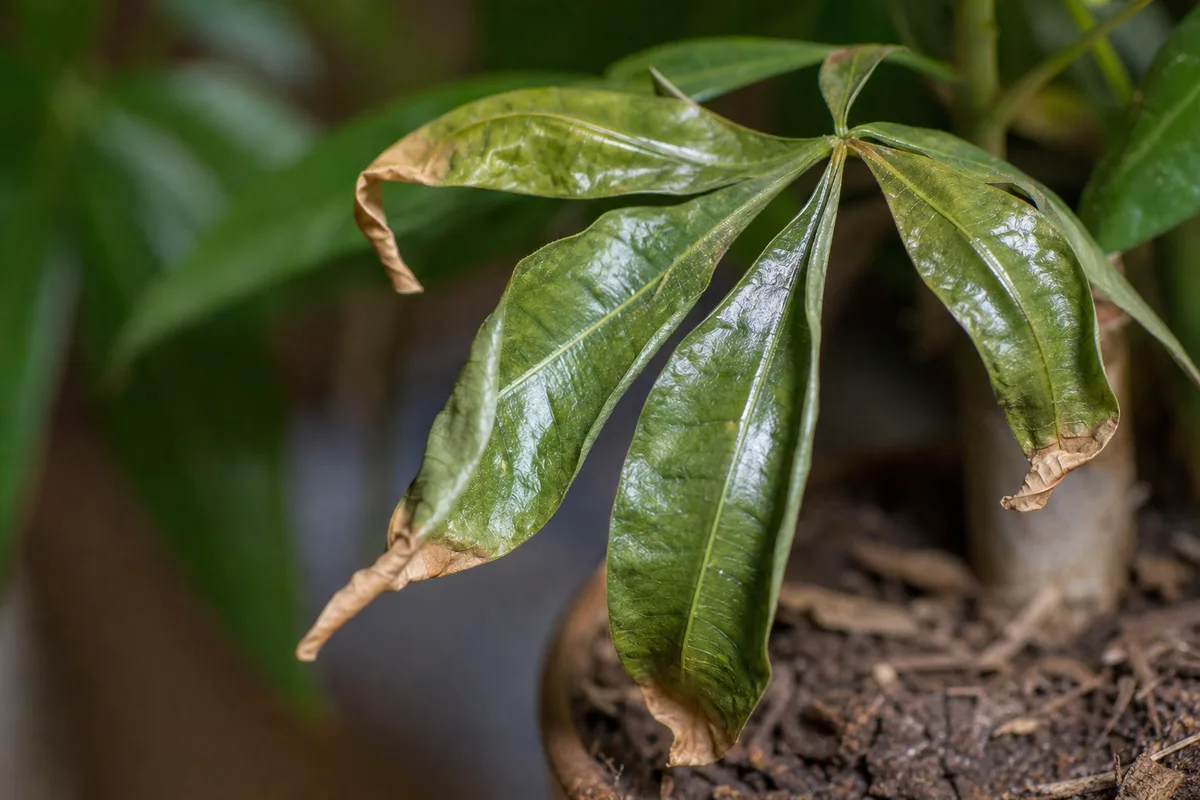
Underwatering symptoms on Money Tree - compare with healthy tissue on the same plant.
Limp leaflets and a light pot
A dry Money Tree feels easy to lift. The mix looks pale, crumbly, and may pull slightly away from the pot wall after prolonged dryness. Press the braided base: bark-like tissue should stay firm even if the braid looks a bit wrinkled or less swollen from depleted trunk reserves.
Braided-trunk wrinkling (firm, not spongy)
Pachira aquatica stores some water in its trunk. When the mix stays dry too long, that reserve drains and the braid can look slightly shriveled or less plump-but the tissue still feels solid under gentle pressure. Spongy, denting bark with wet soil is not underwatering; that pattern belongs on the root rot and wilting pages.
Crisp brown leaflet edges
Prolonged drought dries leaflet margins to brown, papery crispness while the canopy still wilts. Those edges rarely green up again. Recovery is judged by new firm leaflets, not by old damaged tissue flattening.
Soil shrink gaps and dry pockets
Peat-heavy store mixes that dry completely can become hydrophobic-water runs down the gap beside the root ball without rewetting the center. You may water on schedule yet still see limp leaflets and a light pot. That is underwatering with a watering-technique problem layered on top.
Why Money Tree gets underwatered
Money Tree evolved in Central and South American freshwater swamps and river banks, yet indoor specimens in containers dry on a different clock than their wetland habitat suggests. Plants will drop leaves if soils become dry, and container culture needs deliberate dry-down between drinks-not constant saturation and not weeks of neglect.
Common Money Tree–specific drought triggers:
- Bright light and small pots - Summer sun near a window or a tight nursery pot dries the top 5 cm in days.
- Fear of overwatering - After a past overwatering scare, owners skip drinks until the whole root ball is parched.
- Calendar watering in winter - Growth slows but heating vents still pull moisture; the same sparse schedule that worked in shade may leave mix bone dry by February.
- Hydrophobic aged peat - Mix that has shrunk from the pot sides repels water; surface sprinkling never reaches roots.
- Self-watering wick failure - Reservoirs run dry or wicks clog, starving braided multi-stem root balls tied at the base.
- Localized dry sides - On braided specimens, one section of the pot can dry faster than another, limping a single stem while neighbors stay firm.
The wetland-origin paradox: wild Pachira tolerates flood cycles, but a sealed indoor pot with limited soil volume cannot store endless moisture. Trunk reserves buy time after one missed watering-not weeks of drought.
How to confirm underwatering (7-step checklist)
Work through these checks before soaking. If any step points to wet roots, stop and read wilting on Money Tree instead.
- 5 cm moisture probe - Insert a finger or dowel 5 cm deep. Dusty, dry, crumbly mix throughout supports thirst. Cool, clinging wet soil at depth rules underwatering out.
- Pot weight - Lift the container. Noticeably light weight plus limp leaflets fits drought; heavy and wet fits root stress.
- Trunk firmness - Press the braided base gently. Firm bark-like tissue with dry soil confirms thirst. Spongy denting tissue with wet mix needs root inspection, not more water.
- Leaflet color and pattern - Limp green leaflets on a firm trunk point to dryness. Yellow lower leaflets on damp soil often mean failing roots.
- Soil gap check - Look for shrink lines between mix and pot wall. Gaps plus a light pot suggest hydrophobic drought.
- Recent history - Travel, new bright window, heat wave, or skipped winter watering narrows timing.
- Root spot-check (optional) - Slide the plant out if you are unsure. Thirst roots stay firm and pale; rotted roots are brown, slimy, or collapse when touched.
If steps 1–3 show dry soil, firm trunk, and limp green leaflets, underwatering is confirmed-proceed to one deep rehydration. Do not repot on day one unless hydrophobic mix will not rewet after two soak cycles.
First fix for Money Tree
Give one thorough soak, then drain completely.
Add room-temperature water until it runs from drainage holes, or bottom-water in a tray until the top surface darkens. Empty the saucer within 30 minutes. Pour off any water that collects in saucers so the recovery drink does not become standing water that invites rot.
Hold off on fertilizer, misting campaigns, and Money Tree repotting guide until turgor returns. A dry Money Tree does not need plant food-it needs water reaching the whole root ball once.
Step-by-step rehydration
Standard dry mix (no shrink gap)
- Water thoroughly once - Top-water until runoff exits holes, or bottom-water until the surface moistens.
- Drain fully - Tilt the pot and empty the saucer.
- Wait for perking - Mild wilt often improves within 6–24 hours; stiff leaflet clusters by the next morning are a good sign.
- Resume dry-down rhythm - Water again only when the top 5 cm is fully dry.
Hydrophobic or shrunken mix
When soil has pulled from the pot wall or water races through without darkening the center:
- Submerge halfway - Place the pot in a sink or bucket of warm water so the water line reaches about halfway up the pot. Allow one to two hours for slow reabsorption when mix has shrunk from the sides.
- Or repeat short cycles - Several applications may be needed to rehydrate potting mix that has dried completely; water, drain, wait 20 minutes, repeat until the top darkens.
- Bottom-water alternative - Set the pot in a shallow tray until the surface moistens, then remove. Do not leave pots soaking continuously-check after an hour or two.
- Probe again at 5 cm - Confirm the center is moist, not just the edges.
- Drain and resume normal rhythm - Return to dry-down watering at 5 cm depth.
After chronic drought
If many lower leaflets dropped or edges turned crisp, keep light stable and moisture even. New growth at stem tips-not old leaf repair-marks success. Severe collapse with mostly firm roots still recovers over one to three weeks of balanced care.
Recovery timeline
Mild thirst on a firm-trunked Money Tree often shows visible perking within 6–24 hours after a proper soak. Full stiffness across leaflet clusters may take one to two days.
Hydrophobic mix may need two soak cycles before turgor returns-allow 24–48 hours between judging failure.
Chronic drought with leaf drop rebuilds through new leaflet clusters over two to four weeks in warm active growth; winter recovery runs slower.
Worsening signs after correct soaking: trunk softening, sour smell from wet mix, or no perking 48 hours after confirmed dry-soil treatment-re-check for hidden rot on the wilting page.
Lookalike symptoms
| Pattern | Pot weight | Soil at 5 cm | Trunk | What it usually means |
|---|---|---|---|---|
| Underwatering | Light | Dry, dusty | Firm, may wrinkle | Thirst-soak once |
| Wet-soil wilt | Heavy | Wet, clings | Soft or spongy | Root rot-see wilting |
| Heat afternoon wilt | Normal | Balanced moisture | Firm | Transpiration-perks overnight |
| Normal senescence | Normal | Dry on schedule | Firm | One or two old lower leaflets yellow and drop |
| Hydrophobic drought | Light | Dry center, maybe wet rim | Firm | Soak cycles needed |
Drooping without full collapse - Early turgor loss; same dry-soil checks apply. See drooping leaves for early-stage nuance.
Wilting on wet soil - Never soak. That is the core topic of the wilting guide, not this page.
What not to do
Do not drench daily after one dry spell-that swings care toward overwatering and rot. Avoid soaking when soil is already wet at 5 cm-confirm dryness first. Do not fertilize a drought-stressed Money Tree. Skip repotting on day one unless hydrophobic mix fails two proper soak cycles. Do not assume wetland origin means you cannot underwater indoors-limited pot volume exhausts trunk reserves. Do not move a limp plant into harsh direct sun to “help it drink”; bright filtered light is safer during recovery.
How to prevent underwatering next time
Match watering to how fast your pot dries in your light. Deep water when the top 5 cm is fully dry in summer; stretch intervals when winter growth slows. Use bright indirect light so the plant uses water predictably.
Lift the pot weekly to learn dry versus moist weight. Probe depth before travel return or schedule changes. Refresh hydrophobic peat-heavy mix at repot time if shrink gaps recur every drought cycle. For rhythm details, see the Money Tree watering guide.
Money Tree is non-toxic to cats and dogs per the ASPCA-useful if pets nibble fallen leaflets during recovery, though large ingestions can still cause mild stomach upset.
When to worry
Escalate if the braided trunk softens after you soaked dry soil, blackening climbs stems from the base, or unpotting shows mostly mushy roots-those point to rot, not thirst.
A limp canopy on bone-dry soil in hot direct sun needs same-day gentle rehydration and light relief, but firm trunk tissue is reassuring.
If chronic drought dropped most leaflets yet roots remain firm and pale, patience and even moisture over weeks may still save the plant. Hollow soft braid bases with wet sour mix are rarely salvageable-see root rot.
Conclusion
Underwatering on Money Tree is a confirmed dry-soil problem, not a guessing game. Probe 5 cm deep, lift the pot, and press the braid for firm tissue before you soak. One deep drink with full drainage often restores turgor within a day; hydrophobic mix may need repeated soak cycles. Judge success by new firm leaflets and a plumper trunk, not crispy old edges-and when wilt appears on wet soil instead, switch to the wilting guide before you water again.
When to use this page vs other Money Tree guides
- Money Tree watering guide - Use for routine moisture checks before assuming underwatering is the main issue.
- Money Tree problems hub - Browse all 4 common issues on this species.
- Brown Tips on Money Tree - Different entry point when symptoms overlap with underwatering.
- Yellow Leaves on Money Tree - Different entry point when symptoms overlap with underwatering.