Drooping Leaves on Money Tree: Causes, Checks & Fixes
Quick answer
Drooping leaves on Money Tree mean roots are not delivering water to the leaflets. Before watering, probe soil 5 cm deep and lift the pot-dry and light means thirst; wet and heavy means pause and inspect roots.
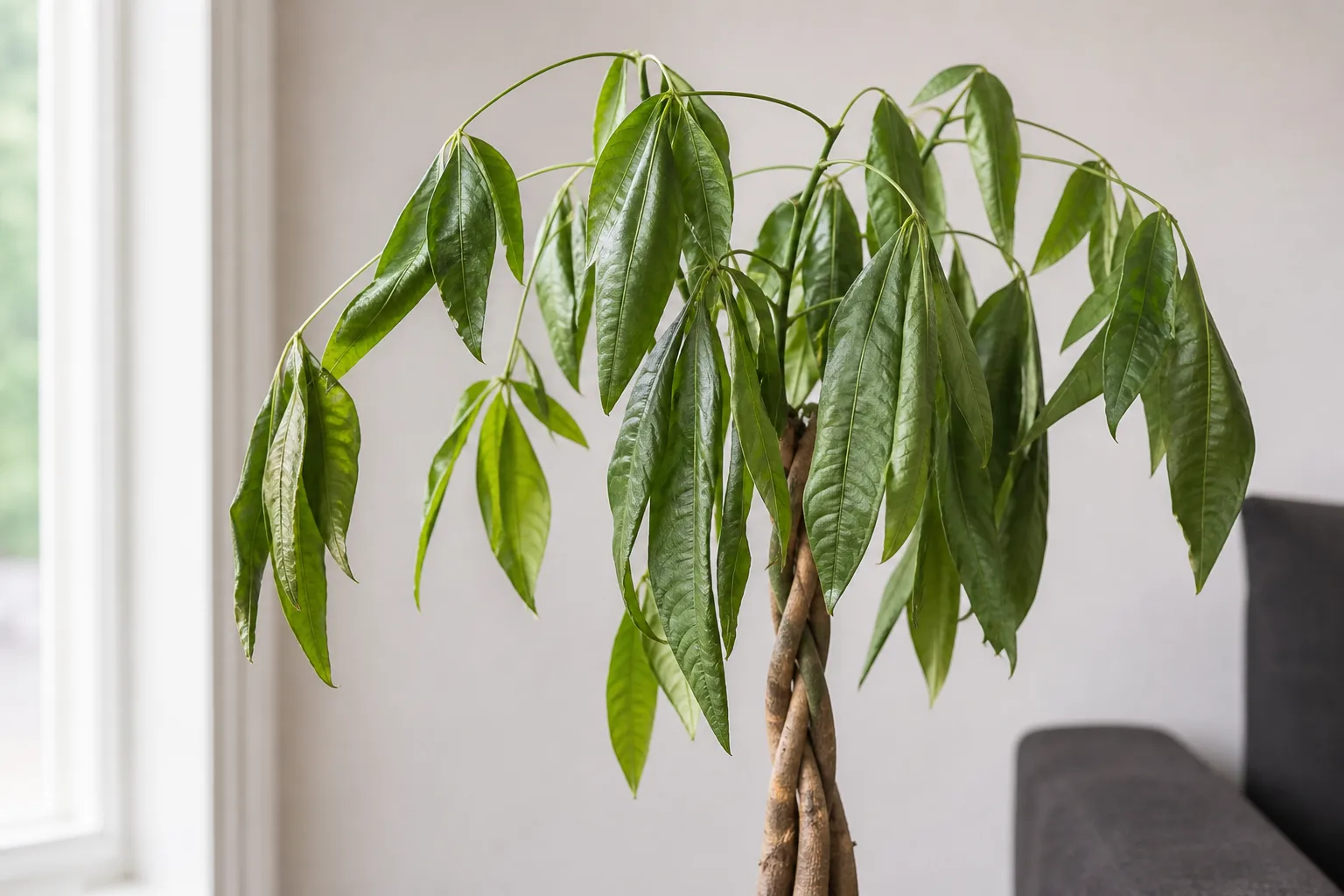
Drooping Leaves on Money Tree: Causes, Checks & Fixes
This guide covers drooping leaves on Money Tree. See also the general Drooping Leaves guide, watering, and light pages for this plant.
Drooping Leaves on Money Tree: Causes, Checks & Fixes
Quick answer
Drooping leaves on Money Tree (Pachira aquatica) look alarming because the palm-like compound leaves hang down and the whole canopy loses its upright shape. The symptom is almost always a water-uptake problem, not a leaf disease-but the fix depends entirely on whether roots are too dry or too wet.
First step: probe the soil 5 cm deep and lift the pot. Money Tree stores water in its trunk and roots; you cannot guess thirst from drooping alone. Dry, dusty mix with a noticeably light pot means the plant needs a deep drink. Wet, heavy mix that has stayed damp for days means stop watering and inspect roots before adding more water.
Do not mist, fertilize, or repot on day one. Read the root zone first, then choose one path: rehydrate or dry out.
What drooping leaves look like on Money Tree
Money Tree carries 5–9 glossy leaflets on each compound leaf, like a small hand on a long petiole. When turgor drops, the entire leaf cluster hangs downward instead of spreading horizontally. Often every leaflet on a stem softens at once; the petiole may bend so leaves nearly touch the pot rim.
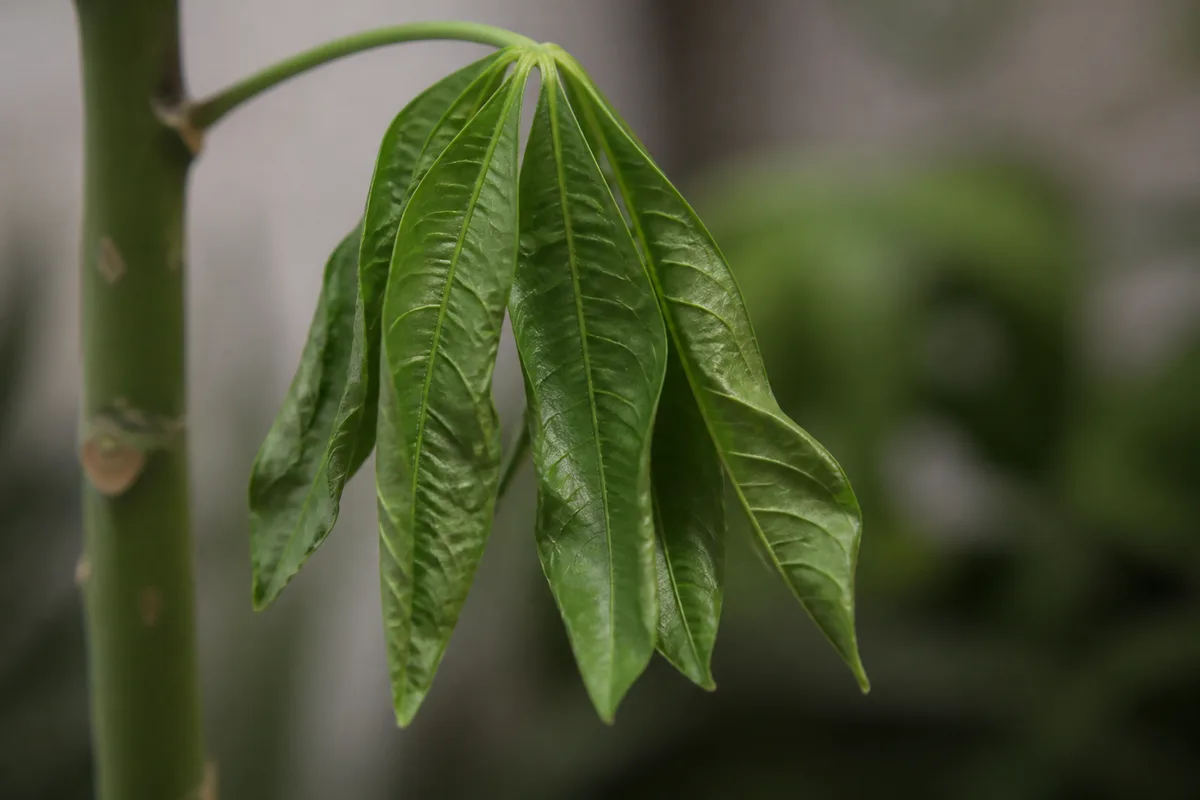
Drooping Leaves symptoms on Money Tree - compare with healthy tissue on the same plant.
Early droop keeps green color-the plant looks tired, not diseased. That distinguishes it from yellowing linked to overwatering, where lower leaflets fade first while the mix stays wet.
Check the braided trunk, a feature most store-bought plants share. On a thirsty Money Tree, the braid may look slightly shrunken or wrinkled while leaflets go limp. On an overwatered plant, the braid can feel soft or spongy at the soil line even though leaves droop-roots are failing, not starved.
Soil clues matter too. Dry mix pulling away from the pot edge, a pot that feels feather-light, and leaflets that perk briefly after water strongly suggest underwatering. Soggy surface, sour smell, fungus gnats, and droop that persists after watering point the other way.
Why Money Tree gets drooping leaves
Money Tree evolved in tropical wetlands, but indoors it behaves like a container tree that needs dry-down cycles. In a pot, roots need oxygen between waterings. That paradox trips up many owners: the species tolerates wet feet in nature yet rots in constantly saturated houseplant mix.
Underwatering
This is the most direct cause. When mix dries through the root zone, roots cannot replace water lost from leaflets. Turgor falls and leaves droop. Money Tree shows thirst clearly in plant care records: drooping leaves, wrinkled trunk, and dry soil pulling from pot edges go together.
Underwatering often follows a fixed calendar (“every Tuesday”) instead of checking dryness at 5 cm depth. It also spikes when heat, low humidity, or a root-bound pot makes the mix dry faster than expected.
Overwatering and root stress
Drooping with wet soil is the classic trap. Saturated mix drives out oxygen; fine roots die. Damaged roots cannot move water upward, so leaflets collapse even though the pot is heavy. Lower leaves may yellow next. A soft braided trunk and sour smell suggest rot advancing from the base.
Winter makes this worse. Cooler rooms and shorter days slow water use, but many people keep summer watering frequency-so mix stays wet for weeks.
Light and environmental shock
Money Tree wants bright indirect light. In deep shade, growth slows and the plant uses less water; paired with unchanged watering, mix stays wet and droop follows root stress. Sudden moves to a hot south window, a heating vent, or an AC draft can make leaflets wilt from rapid transpiration or cold-shocked roots even when moisture looks fine.
Midday droop in summer heat sometimes recovers overnight if soil moisture is adequate-that is temporary wilt, not chronic drooping.
Recent Money Tree repotting guide or root disturbance
Repotting breaks fine roots. For one to two weeks after, a Money Tree may droop while new roots grow, especially if watered heavily right after transplant. Transplant shock droop usually comes with firm trunk tissue and evenly moist-not swampy-mix.
How to confirm the cause
Work through these checks in order:
- Soil moisture at 5 cm - Insert a finger or dowel. Bone dry throughout with a light pot = underwatering. Wet, cool mix days after watering = overwatering risk.
- Pot weight - Lift the container. Compare to how it felt right after a thorough watering. Much lighter than usual supports drought; unusually heavy supports saturation.
- Trunk firmness - Press the braided base gently. Firm and slightly wrinkled fits thirst. Soft, dented, or spongy with wet soil fits rot.
- Leaf pattern - All leaf clusters drooping evenly often means root-zone issue. One side only may mean heat, light, or draft on that exposure.
- Recent care - Did you skip water during travel, repot last week, or move the plant to a new room? Timeline narrows the cause fast.
- Smell and drainage - Sour odor, blocked drainage holes, or standing water in the saucer confirm wet-root trouble.
- Root inspection (if wet + soft trunk) - Slide the plant from the pot. Healthy roots are firm and pale; rotted roots are brown, mushy, and may smell.
If soil is dry, trunk firm, and droop appeared gradually, underwatering is the working diagnosis. If soil is wet, trunk softens, or yellow lower leaves appear, treat root stress as confirmed until inspection proves otherwise.
First fix for Money Tree
Match your first action to soil moisture-never water blindly because leaves hang down.
- If dry: Water deeply until excess runs from drainage holes, then empty the saucer. For severely dry mix that repels water, bottom-soak the pot 30–45 minutes, then let it drain fully.
- If wet: Stop all watering. Move the plant to bright indirect light with good airflow, empty the saucer, and plan a root inspection within 24–48 hours if droop continues or the trunk softens.
That single decision prevents the two worst mistakes: drowning an already rotting root system or leaving a dry Money Tree limp for days.
Step-by-step recovery
Path A - Underwatering
- Soak thoroughly - Water from the top until runoff, or bottom-soak if mix is hydrophobic and water runs straight through.
- Drain completely - Never leave the pot sitting in runoff; Money Tree is sensitive to stagnant wet roots after a dry spell too.
- Wait 12–24 hours - Leaflets should begin to lift as cells rehydrate. Trunk wrinkles often smooth slightly.
- Resume the dry-down rhythm - After recovery, water only when the top 5 cm is fully dry, typically every 7–14 days in active growth and less in winter.
- Adjust for season - Short days and cooler rooms mean slower dry-down; extend the interval rather than soaking on a calendar.
Path B - Overwatering / root stress
- Stop watering - Allow the root zone to begin drying. Do not “test” with another drink because leaves look limp.
- Inspect roots - Unpot if the trunk is soft, smell is sour, or droop persists 48+ hours with wet mix. Trim mushy roots with clean scissors; keep only firm, pale tissue.
- Repot only if needed - Use fresh, well-drained mix with 20–30% perlite and a pot with open drainage. Choose a size that fits the root ball-Money Tree prefers somewhat snug pots.
- Hold fertilizer - Skip feed until new growth looks stable for two weeks. Salt on stressed roots worsens uptake problems.
- Water lightly after repot - First drink should moisten mix once, then let it dry fully at depth before the next watering.
If more than half the root mass is mushy and the trunk base stays soft after trimming, recovery is uncertain. Save healthy stem sections for propagation if the main plant keeps declining.
Recovery timeline
Simple thirst: Leaflets often regain firmness within 6–24 hours after a proper soak. Full canopy rigidity may take one to three days.
Root stress (mild): After correcting watering and improving drainage, expect one to three weeks before new upright leaflets emerge from the crown. Old drooped leaflets may not fully stiffen again-they stay bent but green until replaced by new growth.
root rot on Money Tree (moderate): After trim-and-repot, stabilization takes two to four weeks. Judge success by firm trunk tissue and new leaf clusters, not by saving every old leaflet.
Worsening signs: Trunk softens further, yellowing spreads up the plant, leaflets turn brown and crisp while soil stays wet, or no new growth appears by mid-spring-these mean the root system is still failing.
Lookalike symptoms
- Wilting vs drooping - Both mean low turgor. Wilting often describes sudden midday collapse that recovers overnight; drooping describes a sustained hang over days. The diagnostic steps are the same: check soil moisture first.
- Yellow leaves - Yellow lower leaflets with wet soil usually precede or accompany rot-related droop. Yellow with dry soil is less common and may mean extended drought stress.
- Brown tips on Money Tree - Crispy leaflet edges with firm leaves point to low humidity or salt buildup, not primary droop. Fix humidity or flush salts; do not flood the pot.
- Leggy growth on Money Tree - Long bare stems with small leaf clusters mean low light, not droop from water alone. Move to brighter indirect light and adjust watering to match slower growth.
What not to do
Do not add water because leaves droop when soil is already wet-that accelerates root rot. Avoid misting as a fix; surface moisture does not restore root-zone turgor. Do not fertilize a drooping plant to “ perk it up.” Skip immediate repotting unless roots are mushy or mix is clearly failing; unnecessary repotting breaks more roots. Do not move the plant repeatedly between rooms while it is stressed; pick stable bright indirect light and wait.
Money Tree care cross-check
Drooping often means your baseline rhythm is off. Realign these habits:
- Light: Bright indirect exposure most of the day. Weak light slows drying and invites overwatering mistakes.
- Watering: Deep water, then let the top 5 cm dry completely before the next drink. Never let the pot sit in saucer water.
- Soil: Standard potting mix with 20–30% perlite; excellent drainage is critical in containers.
- Pot size: Snug pots dry more predictably than oversized ones where wet mix surrounds a small root ball.
- Winter: Cut watering frequency sharply when growth slows-wet winter soil is a leading cause of droop-plus-rot.
How to prevent drooping leaves next time
Treat the pot’s dry-down rate as your schedule, not the calendar. Lift the pot weekly until you learn its weight when properly watered versus ready for a drink. In summer, check every few days near heat sources; in winter, stretch intervals to 14–21 days if mix stays damp.
Use pots with drainage holes, empty saucers after watering, and rotate the plant quarterly for even light. After repotting, keep conditions stable and water modestly until new roots establish.
When drooping appears, one correct moisture correction beats a stack of misting, fertilizer, and emergency repotting. Read the soil, read the trunk, act once, then watch for new upright growth-that is how you know the Money Tree is truly recovering.
When to use this page vs other Money Tree guides
- Money Tree watering guide - Use for routine moisture checks before assuming drooping leaves is the main issue.
- Money Tree problems hub - Browse all 4 common issues on this species.
- Root Rot on Money Tree - Different entry point when symptoms overlap with drooping leaves.