Low Humidity on Money Tree: Causes, Checks & Fixes
Quick answer
Dry indoor air stresses Money Tree leaflets and invites spider mites. First step: move the plant away from heating or AC vents and run a humidifier until humidity near the canopy stays above 50%.
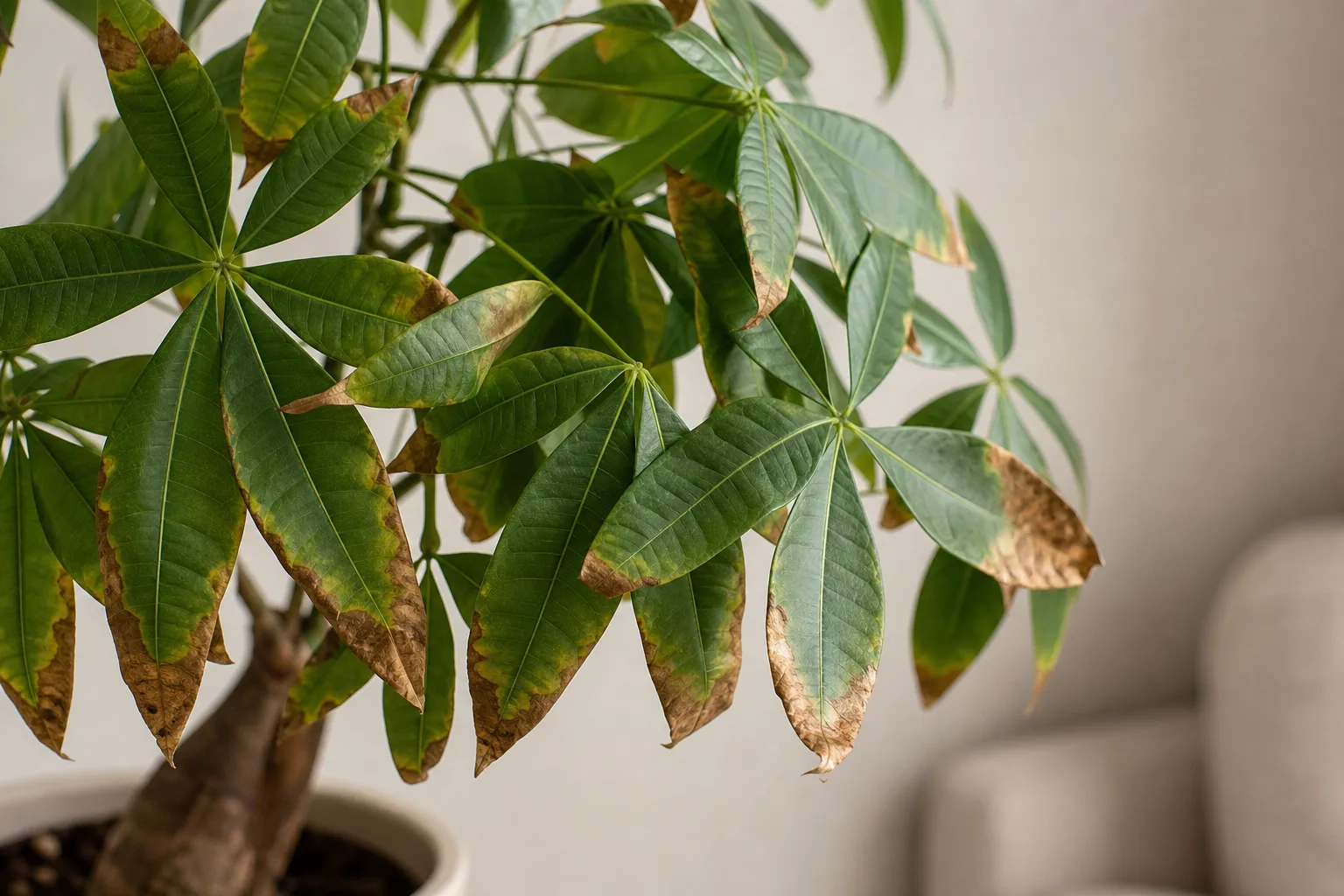
Low Humidity on Money Tree: Causes, Checks & Fixes
This guide covers low humidity on Money Tree. See also the general Low Humidity guide, watering, and light pages for this plant.
Low Humidity on Money Tree: Causes, Checks & Fixes
Quick answer
Money Tree (Pachira aquatica) evolved in tropical wetlands but grows indoors with moderate to high humidity-roughly 50–70% is comfortable, though many homes drop to 20–30% when heat or AC runs. Dry air pulls moisture from the large, hand-shaped leaflets faster than roots can replace it, so edges turn brown and crisp before the rest of the leaf fails.
First step: move the plant away from heating vents, AC registers, and hot window glass, then run a humidifier near the canopy until readings stay above 50%. That single placement and humidity fix addresses the most common trigger without changing watering, fertilizer, or pot size on the same day.
What low humidity looks like on Money Tree
On Money Tree overview, dry-air damage usually starts at the tips and margins of individual leaflets-the small fingers on each compound leaf-not randomly across the whole tree. Early signs include:
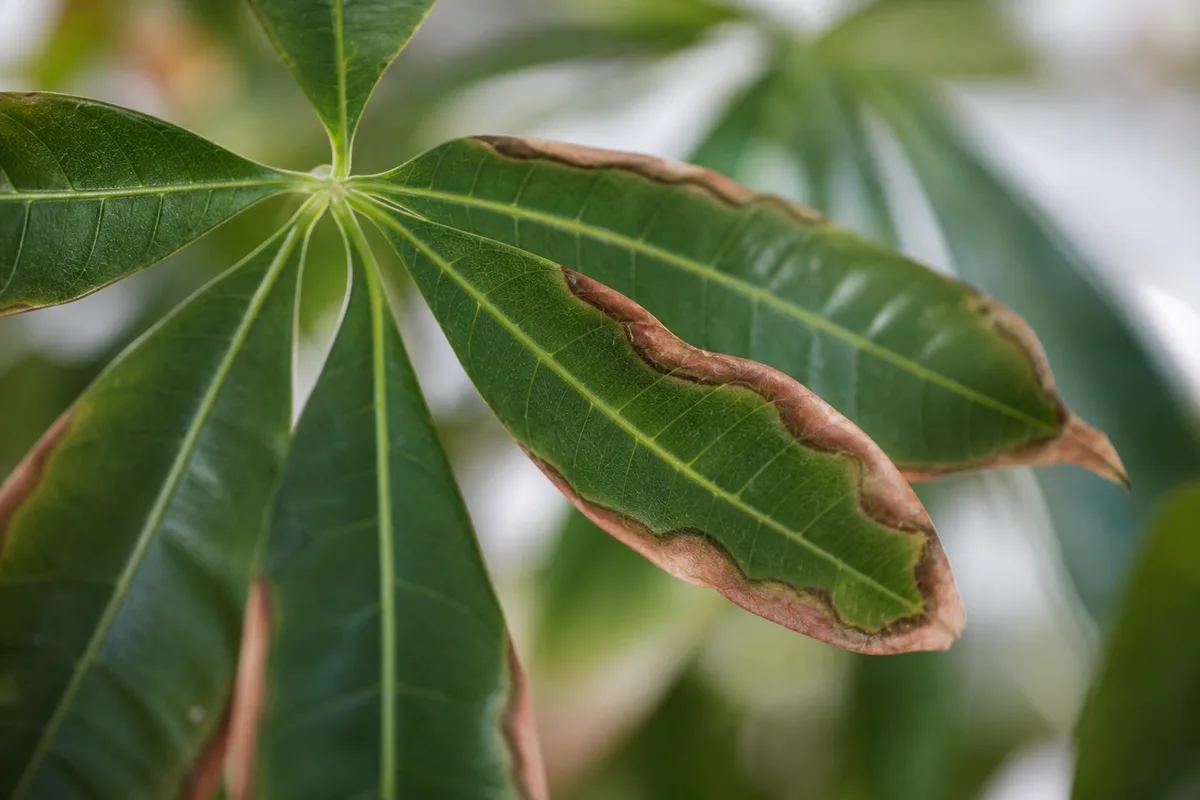
Low Humidity symptoms on Money Tree - compare with healthy tissue on the same plant.
- Tan or brown crisp edges on one or two leaflets while the rest stay green
- Leaflets curling inward or looking dull instead of glossy
- Slowed new growth at branch tips during an otherwise warm season
- Older leaflets dropping after edges dry, especially on the side facing a heat source
- Fine stippling (tiny pale dots) or webbing on leaflet undersides when spider mites move in
Money Tree leaflets are thinner than succulent leaves but not as delicate as fern fronds. Damage often appears asymmetrically: the side nearest a radiator, duct, or sunny pane browns first. A tree that looked fine in summer may decline in late fall through winter when indoor air dries out.
Crispy tissue does not spread like a fungus-there are no concentric rings or wet brown patches. If you see sticky residue, uniform yellowing with wet soil, or soft braided stems, look beyond humidity.
Why Money Tree struggles in dry air
Pachira aquatica is native to freshwater swamps and riverbanks in Central and northern South America. In the wild it experiences heavy rain followed by drying cycles, but ambient humidity in those regions stays relatively high. Indoors, forced-air heat and air conditioning strip moisture from the air while the plant’s large leaf surface area keeps losing water through transpiration.
Several home setups make this worse for Money Tree specifically:
- Heat vents and radiators create hot, dry microclimates that hit the lower leaflets and braided trunk zone first
- Winter heating drops whole-room humidity when the plant is still actively lit and may still be growing
- AC in summer dries air while sun through glass raises leaf temperature, accelerating water loss
- Newly purchased trees moved from humid greenhouses into dry living rooms often shed leaflets within weeks
- Top-heavy braided forms expose a wide leaf canopy but a relatively small root ball, so the plant cannot always keep up with rapid desiccation
Low humidity also favors spider mites. The twospotted spider mite prefers hot, dry weather and completes its life cycle in as few as five days around 80°F. Mite feeding adds stippling and bronzing that mimics humidity stress, so the two problems often arrive together.
Dry air alone rarely kills a healthy Money Tree quickly, but chronic low humidity weakens the plant, slows growth, and opens the door to pest flare-ups and mistaken overwatering when owners see wilt-like curling.
How to confirm the cause
Work through these checks before raising humidity everywhere or Money Tree repotting guide:
- Measure at the plant - Place a hygrometer at canopy height. Below 40% supports a humidity diagnosis; 50% or higher makes dry air less likely as the main cause.
- Map heat sources - Stand where the pot sits. Can you feel warm or cold draft from a vent, doorway, or window? Money Tree within 1–2 meters of a blowing register is high risk.
- Inspect leaf pattern - Tip and edge browning on exposed sides fits dry air. Uniform yellowing with soggy soil suggests overwatering. Bleached patches on top leaflets may be sun scorch through glass.
- Feel the soil - Insert a finger 5 cm deep. Bone-dry soil with crispy leaflets can be underwatering; damp soil with yellow leaves is not a humidity-only problem.
- Check for salt crust - White or gray crust on the soil surface or pot rim points to fertilizer or hard-water salts, which cause tip burn similar to low humidity.
- Examine leaflet undersides - Tap a branch over white paper. Moving specks, webbing, or stippling mean spider mites-treat pests even after you raise humidity.
- Review recent moves - A tree that crisped within two weeks of coming home or changing rooms likely hit an environmental shift, not a disease.
If humidity reads above 50%, the pot dries evenly with your normal schedule, and no mites are present, suspect salt buildup or inconsistent watering before buying more humidifying gear.
First fix for Money Tree
Relocate the plant away from vents and hot glass, then start a humidifier at canopy level.
Move the pot so no hot or cold air blows directly on the foliage. Keep the braided trunk and leaflets out of contact with cold window panes in winter. Once placement is stable, run a cool-mist humidifier until the hygrometer near the leaves holds 50–60% for several days.
Do not flood the soil to compensate for dry air-that invites root rot on Money Tree, which Money Tree already struggles with when mix stays wet. Do not mist once and walk away; misting briefly moistens leaves but does not reliably change ambient humidity. Do not repot or fertilize on day one.
After 48 hours at better humidity and airflow, trim only leaflets that are more than half brown if they bother you. Leave partially damaged leaflets in place until new growth appears-they still photosynthesize.
Step-by-step recovery
Once the tree is away from dry drafts and humidity is rising:
- Set the humidifier - Aim for 50–60% at canopy height. Run it consistently through the heating season rather than only at night.
- Group plants if space allows - Neighboring pots raise local humidity slightly through shared transpiration. Leave air space so foliage is not touching.
- Add a pebble tray (optional) - A tray of water and stones beneath the pot boosts humidity near the base. Keep the pot bottom above the water line so roots never sit submerged.
- Hold watering steady - Continue the deep-water-then-dry cycle: water when the top 5 cm of mix is dry. Dry air increases evaporation from soil, so check depth with a finger rather than a calendar.
- Treat spider mites if found - Rinse leaflet undersides in the shower, then apply insecticidal soap or horticultural oil with thorough underside coverage. Repeat weekly until no new stippling appears.
- Flush salts if crust is visible - Water heavily until excess runs from drainage holes, empty the saucer, and skip fertilizer for a month. Salt injury and humidity injury look alike on leaflet tips.
- Rotate quarterly - Even light helps the canopy dry evenly and grow symmetrically once humidity stabilizes.
Skip pruning large sections of green wood. Money Tree stores energy in its trunk and branches; heavy cutting during stress delays recovery.
Recovery timeline
Stabilization: Within one to two weeks of corrected placement and steady 50%+ humidity, leaflet curling should stop spreading and new damage should not appear on previously healthy tissue.
Visible improvement: Expect healthy new leaflets at branch tips in three to six weeks during spring or summer growth. Recovery is slower in low-light winter months even if humidity is fixed.
Old damage: Brown crispy edges on existing leaflets will not revert to green. They can be trimmed once new growth looks normal.
Pest recovery: Spider mite populations often need three to four weekly treatments plus higher humidity before stippling stops. Watch undersides of new leaflets first-they show whether mites are gone.
Worsening signs: Continued leaflet drop with wet soil, soft braided stems, or spreading webbing despite humidifier use means a second problem-usually overwatering or unchecked mites-needs attention.
Lookalike symptoms
- Underwatering - Light pot, dry mix throughout, slight trunk wrinkling; leaflets droop before edges crisp. Deep water once, then resume dry-down checks.
- Salt and fertilizer burn - Brown tips with white crust on soil; flush and reduce feed. Often mistaken for winter dryness.
- Overwatering - Yellow leaflets, soft trunk, fungus gnats, sour-smelling mix; lowering humidity will not help and may worsen stress.
- Too much direct sun - Bleached or scorched patches on top leaflets facing the window, not just margins on the vent side.
- Normal acclimation - Some leaflet drop after purchase or repotting in adequate humidity; hold steady care for two to three weeks before escalating.
- Cold draft damage - Darkened or blackened patches after exposure below about 10°C; distinct from slow crisping from dry heat.
Mistakes to avoid
Do not mist once daily instead of raising room humidity-it helps briefly but does not solve winter dryness. Avoid sitting the pot in standing water to add humidity; Money Tree roots rot in soggy mix. Do not water more because leaflets look dry when soil is already moist.
Resist moving the tree daily between rooms; stability matters as much as humidity level. Do not fertilize stressed plants hoping for faster recovery-salts aggravate tip burn. Avoid placing humidifiers so close that foliage stays wet overnight; that encourages fungal spotting on crowded leaflets.
Do not assume braided trunks need misting-keep moisture in the air around the canopy, not pooled at the stem crotches where rot can start.
Money Tree care cross-check
Low humidity fixes work best when the rest of care supports steady growth:
- Light: Money Tree light guide for most of the day; weak light slows growth and makes humidity stress harder to reverse.
- Watering: Deep water when the top 5 cm is dry; never let the pot sit in a full saucer.
- Soil: Well-draining mix with perlite; wet, compacted soil plus dry air is a common misdiagnosis pair.
- Temperature: Comfortable range roughly 18–30°C; cold windows and hot vents both damage leaflets.
- Pests: Check leaflet undersides monthly in winter when mites peak indoors.
Money Tree is non-toxic to cats and dogs, so you can place humidifiers and grouped plants in pet-accessible rooms without toxicity concerns-still discourage chewing on leaflets or digging in the pot.
How to prevent low humidity problems
- Run a humidifier in the room where the tree lives during heating and AC seasons; target 50–60% at canopy height.
- Keep the pot at least 1–2 meters from heat and AC vents and off radiators.
- Group with other houseplants to share a slightly moister microclimate.
- Use a pebble tray under the pot for a modest local boost where a humidifier is not practical.
- Acclimate new trees gradually-avoid placing a fresh greenhouse purchase directly above a floor vent.
- Monitor with a hygrometer in winter; do not wait for crispy tips to confirm dryness.
- Flush soil periodically if you fertilize monthly, so salt tip burn does not masquerade as humidity damage.
When to worry
Escalate care if more than a third of leaflets drop within two weeks, stems feel soft at the braid, or mite webbing covers multiple branches despite treatment. Those patterns suggest combined stress or advanced pest infestation, not cosmetic tip dryness alone.
A few brown leaflet edges on an otherwise firm tree in winter is low urgency-adjust placement and humidity before pruning heavily or changing pots.
Conclusion
Low humidity on Money Tree is an environmental problem, not a mystery disease. Confirm it with a hygrometer at the canopy, rule out mites and salt burn, then move the plant off the vent path and humidify consistently. Crispy old leaflets will not heal, but new hand-shaped growth tells you the fix worked. Keep bright indirect light, proper dry-down watering, and steady winter humidity, and the braided form should stay glossy through dry heating seasons.
When to use this page vs other Money Tree guides
- Money Tree watering guide - Use for routine moisture checks before assuming low humidity is the main issue.
- Money Tree problems hub - Browse all 4 common issues on this species.
- Brown Tips on Money Tree - Different entry point when symptoms overlap with low humidity.