Spider Mites on Money Tree: Causes, Checks & Fixes
Quick answer
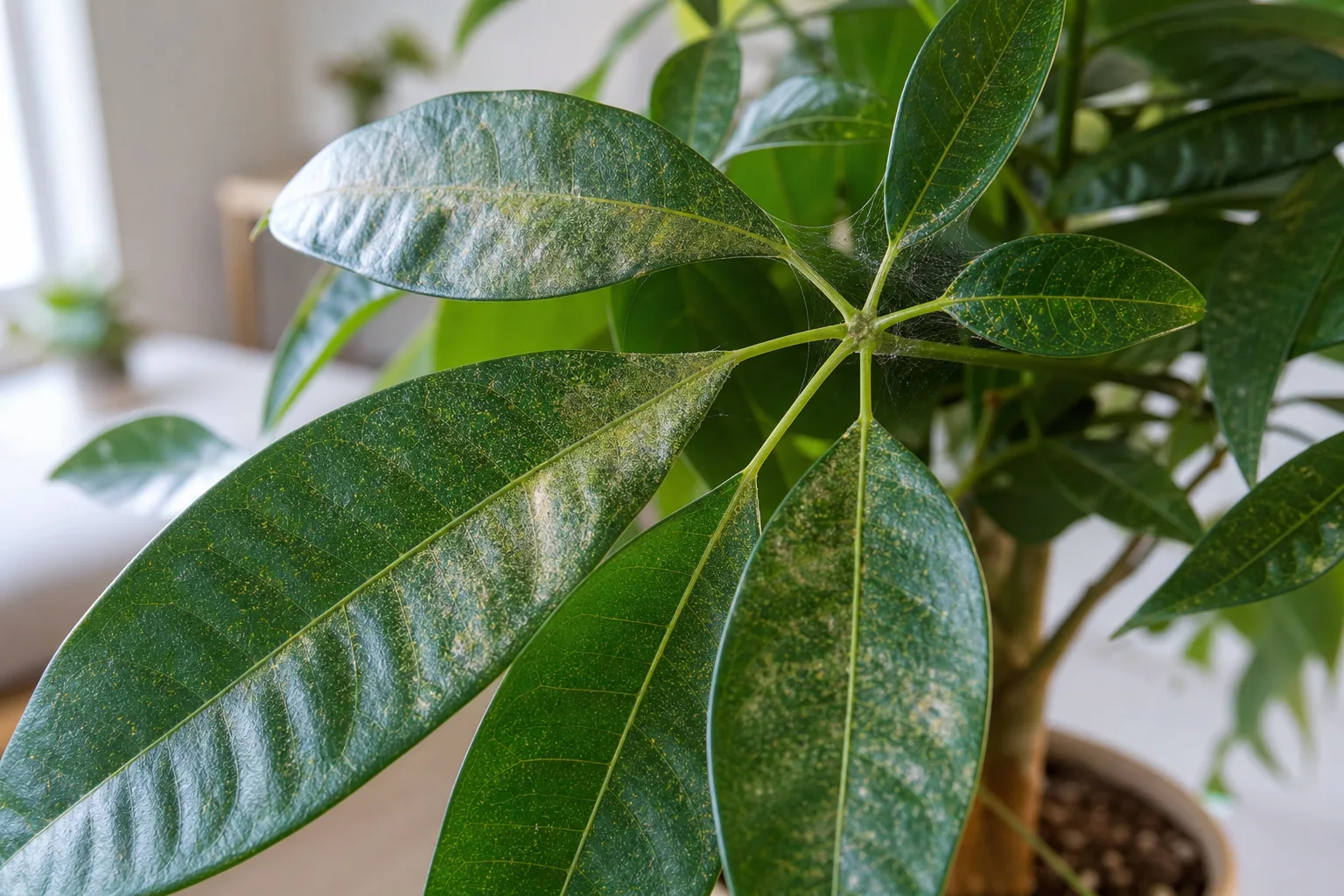
Spider mites on Money Tree (*Pachira aquatica*) show as fine stippling across glossy palmate leaflets and silk webbing at petiole bases-often after dry winter heating near a braided lobby specimen. First step: isolate the plant and rinse every leaflet underside with lukewarm water before applying soap or oil.
Spider Mites on Money Tree: Causes, Checks & Fixes
This guide covers spider mites on Money Tree. See also the general Spider Mites guide, watering, and light pages for this plant.
Spider Mites on Money Tree: Causes, Checks & Fixes
Quick answer
Spider mites on Money Tree (Pachira aquatica) appear as fine yellow or white stippling across individual glossy leaflets in the palmate fan, bronzing as feeding continues, and delicate silk webbing where five to seven leaflets clasp the central petiole. The twospotted spider mite thrives in hot, dry indoor air-exactly what braided lobby specimens face when winter heating runs near sunny glass.
First step: isolate the plant and rinse every leaflet underside with lukewarm water. Mites feed on the undersides of leaves where airflow is poorest inside the palmate cluster; a forceful shower knocks down adults before you confirm severity with a white-paper tap test. Do not apply oil or soap on day one until you have washed and inspected the crown.
Full species context: Money Tree overview. When dry air alone is browning leaflet edges without stippling, start with low humidity on Money Tree.
What spider mites look like on Money Tree
On Pachira aquatica, mite damage concentrates on glossy palmate leaflets-not random spots across the whole canopy. Early signs include:
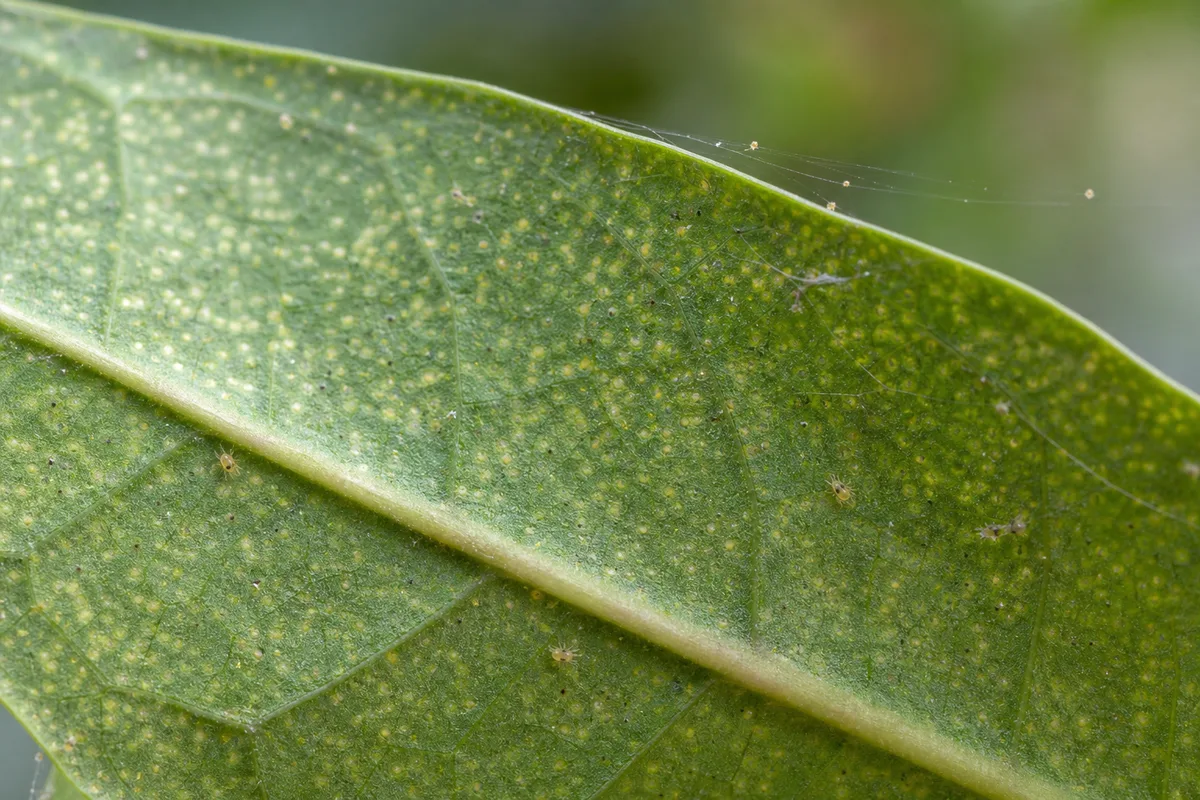
Spider Mites symptoms on Money Tree - compare with healthy tissue on the same plant.
- Thousands of tiny pale dots on individual leaflets while neighboring leaflets in the same fan still look green
- Bronze or dull patches spreading across leaflet surfaces as cells die from piercing-sucking mouthparts
- Fine silk webbing at the petiole base where the leaflet fan attaches, along overlapping petioles, and between adjacent leaflets in dense crowns
- Crisp, curled leaflets on heavily infested branches when feeding and desiccation combine
- Slowed new palmate flush at branch tips while older whorls show the worst stippling
Money Tree leaflets are smooth and glossy, not fuzzy-so stippling reads clearly against the shine once you tilt each palmate cluster toward light. Damage often starts on the underside of the lowest leaflets in a whorl, invisible from a top-down watering angle. A tree near a heat vent may show vent-side bronzing that overlaps with low-humidity crisping, which is why confirmation matters before you treat.
Heavy infestations produce fine webbing over leaves and terminals that can bridge between petioles and neighboring pots when office plants are clustered. Leaves do not develop wet brown rot patches-that pattern points to overwatering or fungal issues instead.
Why Money Tree gets spider mites
Spider mites are tiny arachnids, not insects-so broad insecticides often fail while labeled oils and soaps work by contact. The twospotted spider mite completes its life cycle in as few as five days around 80°F and prefers hot, dry conditions, which makes winter-heated rooms a predictable outbreak zone.
Several Money Tree setups amplify that biology:
- Lobby and desk placement near HVAC vents dries the leaflet canopy faster than roots replace moisture-canopy humidity and soil moisture decouple on large-leaf specimens
- Braided multi-stem crowns-a decorative nursery form on Pachira aquatica-create dense palmate fans with poor airflow at the leaflet axils where mites hide and web
- Winter heating season drops room humidity while the tree may still carry summer-active foliage under bright office lights
- Top-heavy braided forms expose a wide leaf surface on a modest root ball, so chronic sap loss from mites shows as stippling before owners notice soil stress
- Overwatered soft trunks weaken pest resistance differently from drought-soggy roots plus dry air is a common misdiagnosis pair on Pachira (see overwatering)
Money Tree is not uniquely susceptible among houseplants, but its palmately compound leaves with five to nine glossy leaflets and braided nursery form give mites sheltered feeding sites that casual inspection misses. Mites often arrive on new nursery stock or spread from an infested neighbor in a shared office cluster-same entry path as mealybugs and aphids on this slug.
Lookalike symptoms to rule out
| What you see | Likely cause | Key difference on Money Tree |
|---|---|---|
| Tip and margin browning on vent-facing side, no dots | Low humidity | Even crisp edges without stippling or webbing; hygrometer below 40% at canopy |
| Yellow lower leaflets, heavy wet pot, limp leaves | Overwatering | Soggy mix 5 cm down; no moving specks on white paper |
| Uniform yellowing on one older leaflet, firm trunk | Normal senescence | Single aging leaflet in a whorl; no silk at petiole base |
| Silvery streaks and black specks on young leaflets | Thrips | Elongated scars, not uniform dot stippling; insects visible when disturbed |
| Fixed brown bumps on petioles or braided stems | Scale | Bumps stay glued when scraped; no fine stipple pattern on leaflets |
| Bleached patches on window-facing leaflets | Sun scorch | Top-side damage from direct glass exposure, not underside feeding dots |
If humidity reads above 50% at the canopy, soil dries on your normal watering schedule, and white-paper taps show moving specks, spider mites fit even when some leaflet edges also look dry from winter air.
How to confirm the cause
Work through this order before stacking chemical treatments:
- Isolate first - Move the Money Tree away from desk mates and shared shelves the same day you suspect mites; webbing strands and touching leaflets spread colonies quickly in open offices.
- White-paper tap test - Hold white paper under a suspect palmate cluster and tap the petiole sharply. Slow-moving specks confirm spider mites; dust or static does not walk.
- Inspect leaflet undersides in the fan - Part the five-to-seven-leaflet whorl and check the lowest leaflets first-mites concentrate where airflow is poorest inside the glossy palmate architecture.
- Webbing check at petiole bases - Look for fine silk where leaflets clasp the central stalk; webbing distinguishes mites from thrips or mineral spray residue on glossy surfaces.
- Hygrometer at canopy height - Readings below 40% support concurrent dry-air stress; above 50% makes humidity alone unlikely as the sole cause of stippling.
- Soil moisture at 5 cm - Wet, cool mix with yellow leaflets suggests overwatering stress weakening the tree; bone-dry mix with stippling still fits mites in heated dry air.
- Neighbor scout - Inspect plants that shared the windowsill or lobby cluster for early stippling before mites jump back after your treatment cycle.
Confirmed mites show stippling plus moving specks or webbing-not crisp edges alone.
First fix for Money Tree
Isolate, then shower or rinse every leaflet underside with lukewarm water.
- Move the pot to a sink, tub, or shower stall away from other plants.
- Tilt the pot so water runs through the palmate fans and off the glossy leaflets-avoid pouring directly into braided trunk crevices where water can sit against bark.
- Spray undersides with enough pressure to knock mites off, working branch by branch from top to bottom.
- Let foliage dry in bright indirect light before evening so glossy leaflets are not wet overnight in a cool room.
- After the rinse, tap-test one cluster over white paper-if specks still move, schedule a labeled insecticidal soap or horticultural oil treatment within 24 hours.
Do not reach for general garden insecticides labeled for aphids or beetles-systemic imidacloprid treatments do not control spider mites, and mites need contact miticides, soaps, or oils. Do not fertilize a mite-stressed tree on day one. Do not repot mid-infestation unless root rot is the primary problem.
Step-by-step recovery by severity
Light infestation (stippling on a few leaflets, minimal webbing)
- Shower leaflet undersides every three to five days for two cycles-extension sources recommend repeating washing at 3- to 5-day intervals.
- Raise canopy humidity toward 50–60% with a humidifier-mites reproduce slower above that range (see low humidity guide).
- Scout the crown weekly through the rest of winter.
Moderate infestation (multiple whorls stippled, webbing at several petiole bases)
- Continue shower knockdowns, then apply insecticidal soap or horticultural oil labeled for spider mites on houseplants.
- Coat undersides thoroughly-contact products kill only mites they touch and have no residual activity.
- Repeat weekly for three to four cycles-repeat applications may be necessary because eggs hatch between passes, so one spray rarely clears a colony.
- Keep the tree isolated until two consecutive weekly checks show no new stippling on emerging leaflets.
Heavy infestation (webbing across branches, bronzing, leaflet drop)
- Bag and discard severely webbed whorls into the trash-not the compost-before treating the rest of the canopy.
- Combine shower knockdowns with weekly soap or oil at full label coverage on all remaining branches.
- Run a humidifier continuously at canopy height during treatment.
- If the braided trunk softens, soil stays sour, or new growth fails after four weekly treatments, the specimen may be too stressed to salvage-consider replacement rather than endless pesticide cycles on a declining tree.
Recovery timeline
Knockdown: Moving specks should drop sharply within 48 hours of the first thorough rinse if coverage reached the palmate undersides.
Stippling spread stops: Expect one to two weeks of consistent shower-plus-spray cycles before bronzing halts on previously healthy tissue.
New growth test: Clean palmate flush at branch tips emerging without dots is the real success marker-usually three to six weeks during spring or summer active growth, slower in dim winter light.
Old damage: Heavily stippled or bronzed leaflets do not revert to solid green; they can stay until you trim them for appearance once new whorls look clean.
Pest clearance: Plan three to four weekly treatments minimum; mites that survive one pass reproduce quickly in dry heat.
Worsening signs: Webbing spreading despite treatment, more than a third of leaflets dropping in two weeks, or a softening braided trunk on wet soil means combined stress-recheck overwatering and root rot alongside pest control.
Mistakes to avoid
Do not assume insecticides labeled for insects will kill mites-mites are arachnids and need labeled oils, soaps, or miticides. Avoid spraying only the upper glossy leaflet surface; feeding happens underneath inside the palmate fan.
Do not soak the braided trunk during shower treatment-tilt the pot and aim at leaflets only so water does not pool in stem crevices where rot starts. Do not leave glossy foliage dripping wet overnight in a cool room; rinse in morning or early afternoon so leaflets dry before evening.
Resist misting once instead of running a humidifier-brief mist does not hold 50%+ canopy humidity through heating season. Do not water more because leaflets look stressed when soil is already moist. Do not cluster the tree back with neighbors before two clean weekly inspections.
Money Tree care cross-check
Mite recovery sticks better when baseline care supports new growth:
- Light: Bright indirect light most of the day; dim corners slow recovery and keep soil wet too long.
- Watering: Deep soak when the top 5 cm dries-never let the pot sit in a full saucer (watering guide).
- Humidity: Target 50–60% at canopy height in winter; hot, dry conditions favor spider mites even during treatment.
- Temperature: Keep away from hot vent blast and cold window glass that stress leaflets simultaneously.
- Pets: Pachira aquatica is non-toxic to cats, dogs, and horses-labeled soap and oil foliar treatment is not a toxicity emergency, but discourage chewing on wet leaflets and verify you have true Pachira, not toxic jade sold as money plant.
How to prevent spider mites on Money Tree
- Run a humidifier near the canopy during heating season; aim for 50–60% at plant height.
- Keep the pot at least 1–2 meters from heat and AC vents and off radiators.
- Scout leaflet undersides monthly in winter-part the palmate fan where mites hide from top-down views.
- Quarantine new Money Trees two to three weeks before office clustering; tap-test before joining the display.
- Shower leaflets occasionally in warm months as preventive knockdown when humidity dips.
- Match watering to dry-down rather than calendar schedules so the tree stays vigorous without soggy roots.
- Inspect neighbors when one lobby plant shows stippling-mites walk across touching leaflets.
When to worry
Treat as urgent when webbing covers multiple branches, stippling spreads to new flush within a week despite rinsing, or leaflets drop heavily while the braided trunk softens on wet mix-that pattern may combine advanced mites with root decline.
A few stippled leaflets on one whorl with firm trunk and moving mites cleared after two rinses is manageable-escalate to weekly soap or oil and humidity correction without panic.
Replace rather than prolong treatment when most of the crown is webbed, no clean new palmate leaves appear after four weekly cycles, or one stem in the braid is already rotting while pests persist.
Conclusion
Spider mites on Money Tree hide on glossy palmate leaflet undersides and petiole bases that top-down watering never shows you. Isolate first, rinse the entire fan-including the five-to-seven-leaflet clusters where airflow is poorest-then repeat contact treatments weekly until new whorls emerge clean. Dry winter heating often overlaps with mite outbreaks, so pair pest control with 50%+ canopy humidity and correct watering dry-down. Old stippled leaflets stay marked; judge success on the next palmate flush, not on perfect older tissue.
Related Money Tree guides: overview · low humidity · watering · light · mealybugs · aphids · overwatering
When to use this page vs other Money Tree guides
- Money Tree watering guide - Use for routine moisture checks before assuming spider mites is the main issue.
- Money Tree problems hub - Browse all 4 common issues on this species.