Lawn Equipment Maintenance for Healthier Grass
Sharp blades, clean decks, and tuned engines protect grass from tearing, scalping, and disease. Learn the five pro maintenance tasks that keep lawns healthier all season.
You can feed, water, and aerate all season and still fight a tired-looking lawn if the tools doing the cutting are dull, clogged, or out of adjustment. Lawn equipment maintenance for grass health is not a garage chore you squeeze in when something breaks—it is the mechanical side of turf care. Every pass with a mower is thousands of small wounds on grass plants. Sharp blades, a clean deck, steady engine power, even tire height, and disinfected pruners determine whether those wounds heal fast or stress the lawn for weeks.
The five tasks below are the ones turf and landscape pros return to every year because they directly change cut quality, mulching performance, and disease pressure. None require a full shop setup. What they require is timing, safety habits, and the willingness to treat your mower and hand tools like part of the lawn program—not an afterthought parked in the shed.
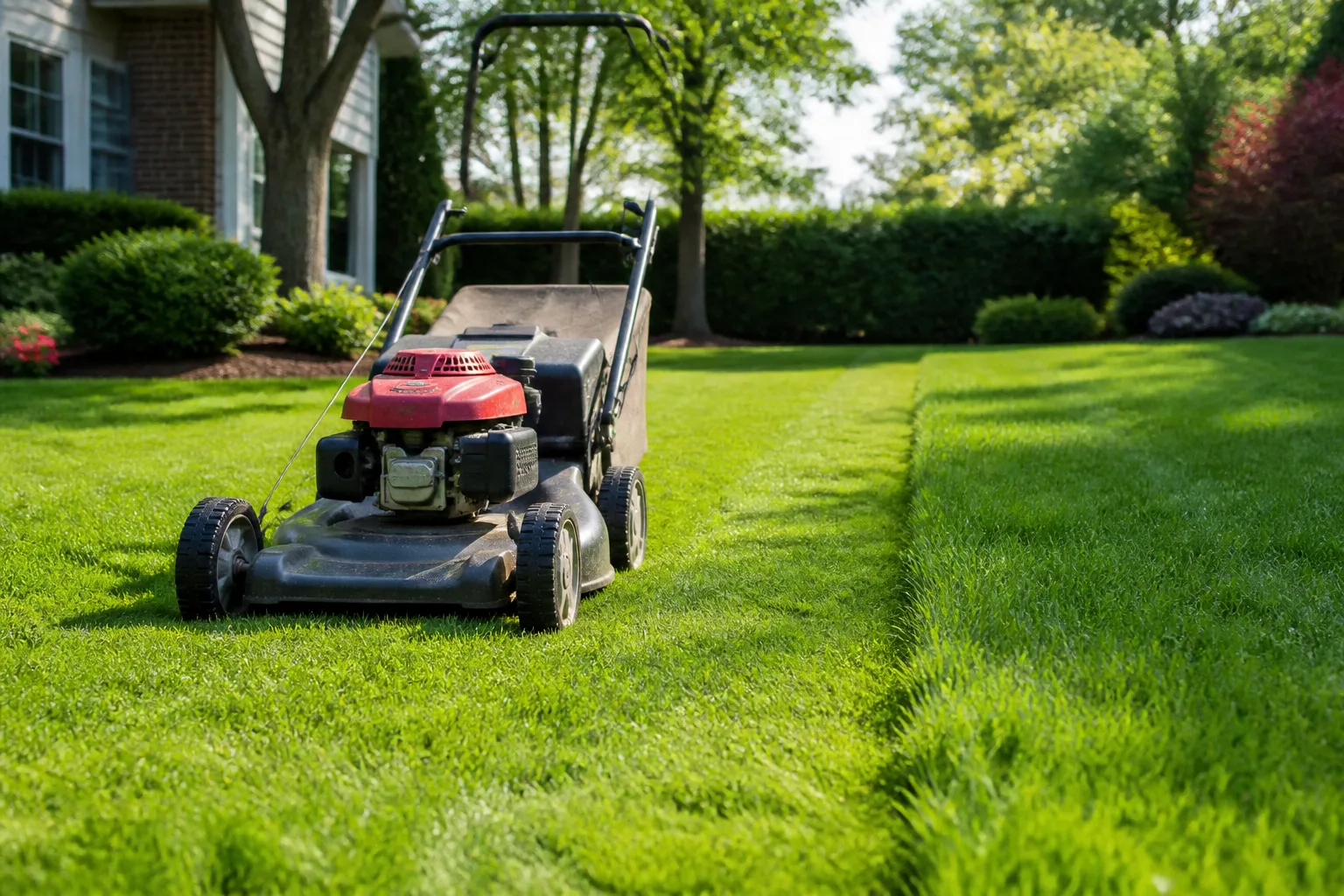
Why Equipment Maintenance Is Part of Turf Care
Most homeowners think about grass health in terms of fertilizer, irrigation, and weed control. Equipment sits in a separate mental bucket labeled “mechanic stuff.” That split is costly. Pennsylvania State University Extension is explicit in its seasonal lawn guidance: all mowing equipment should be kept sharp and in proper adjustment (Penn State Extension). Dull or poorly adjusted machines do not just look sloppy—they change how grass responds to heat, drought, and disease.
The connection is simple physics. A sharp blade slices leaf tissue cleanly. A dull blade tears it. Torn tips lose water faster, look brown within a day or two, and leave ragged openings that fungi exploit during humid stretches. A deck packed with old clippings cannot circulate grass for an even cut or fine mulch. An engine starving for clean air and oil bogs down in tall grass, dropping RPM right where scalping appears. Uneven tire pressure on a riding mower tilts the deck. Dirty pruners carry bacteria and fungal spores from one shrub to the next.
What Healthy Grass Looks Like After a Proper Cut
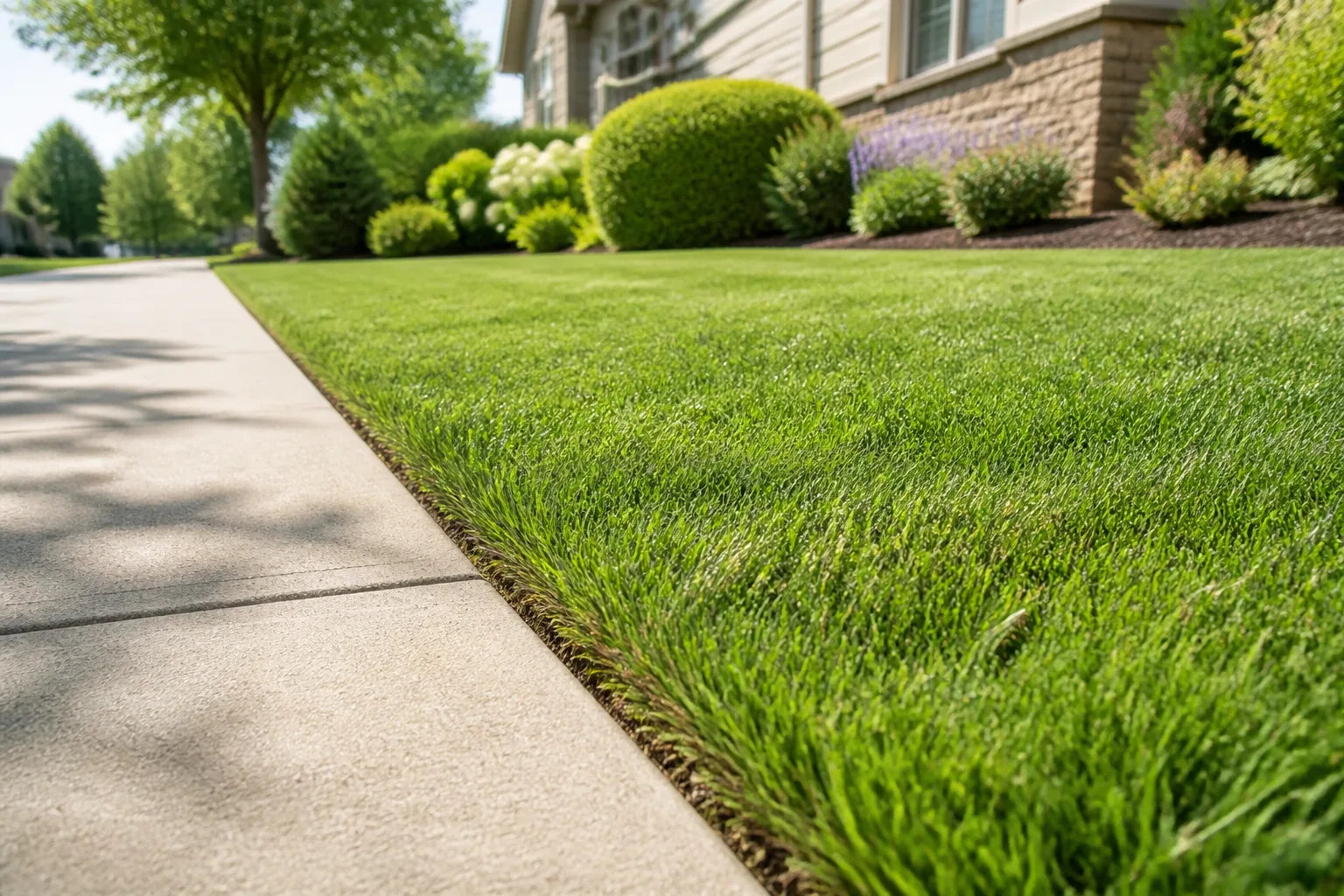
Walk your lawn a day after mowing and look at individual grass blades with your phone flashlight. Healthy cuts show a straight green tip—one clean line across the top. Equipment stress shows white or brown fraying, shredded fibers, or tips that look chewed rather than sliced. If the lawn is striped with alternating light and dark bands, or you see low patches where soil shows through, the problem may be blade condition, deck buildup, tire pressure, or engine power—not necessarily your sprinkler schedule.
That visual check takes two minutes and saves you from chasing the wrong fix. Before you assume you need more water, read our guide on lawns that stay brown after watering and still inspect the blade and deck first.
The Five Maintenance Tasks That Protect Your Lawn
Think of this as the core checklist pros run before peak growth—not a random tune-up list. Do all five over a season, not necessarily in one afternoon.
Sharpen the Mower Blade on a Real Schedule
Blade sharpening is the highest-impact task on this list. Landscape equipment specialists describe the difference plainly: dull blades tear plant tissue instead of slicing it. Clean cuts heal quickly; tears do not. That matters because every cut is a wound, and slow-healing wounds are where brown patch and other fungal problems get a foothold when nights are warm and humidity is high.
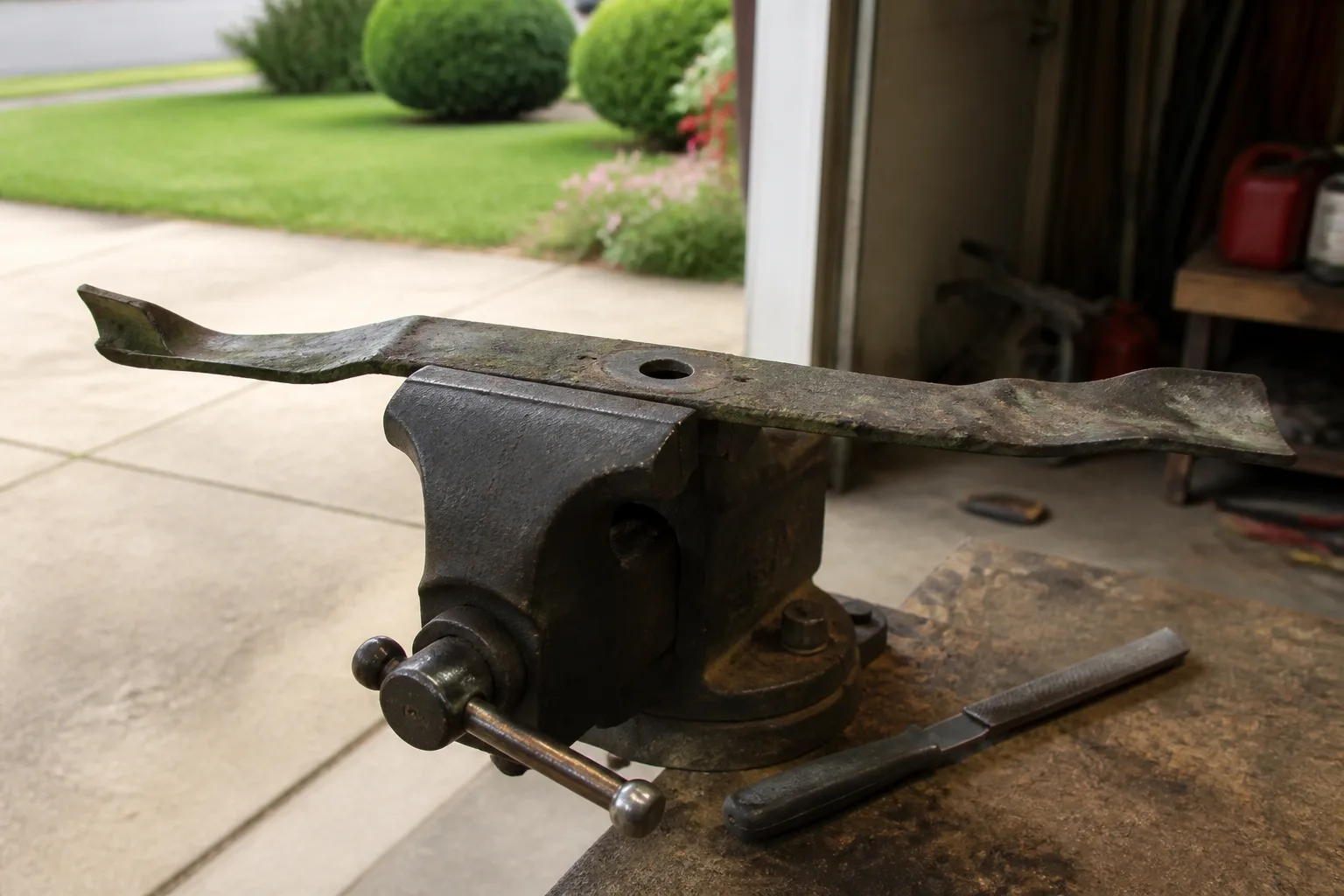
How often: Most manufacturers and lawn-care references suggest sharpening about every 25 to 30 hours of mowing time—often twice per growing season for a typical quarter-acre lawn mowed weekly (GreenView, Gardening Know How). Larger properties or sandy soil that dulls edges faster may hit that threshold by midseason. Inspect sooner if grass tips look torn or the mower needs a second pass to finish the job.
Safe workflow:
- Disconnect the spark plug wire on gas mowers, or remove the battery/safety key on electric models.
- Tip the mower safely with the air filter side up (gas) or follow your manual for battery models.
- Remove the blade bolt with a socket wrench and block the blade so it cannot spin.
- Clamp the blade in a vise. File or grind the cutting edge at the existing bevel angle—do not grind the flat face thin.
- Balance the blade on a nail or cone balancer. An unbalanced blade vibrates, cuts unevenly, and stresses spindle bearings on riding decks.
- Reinstall at the correct torque; confirm the cutting edge faces the right direction.
Minor nicks are normal after hitting hidden stones. Replace the blade when you see cracks, bends, deep gouges, or metal thinned from repeated sharpening. Never straighten a bent blade. For the full sharpen-vs-replace decision tree, see when to replace lawn mower blades.
Scrape and Protect the Mower Deck
The underside of the deck—the cutting chamber—controls airflow, discharge, and mulching quality. Landscape contractors emphasize keeping this area clean so grass circulates for an even cut instead of clumping and tearing. Mulching mowers hold clippings longer under the deck for multiple cuts; that design only works when old layers of dried grass are not choking the chamber.
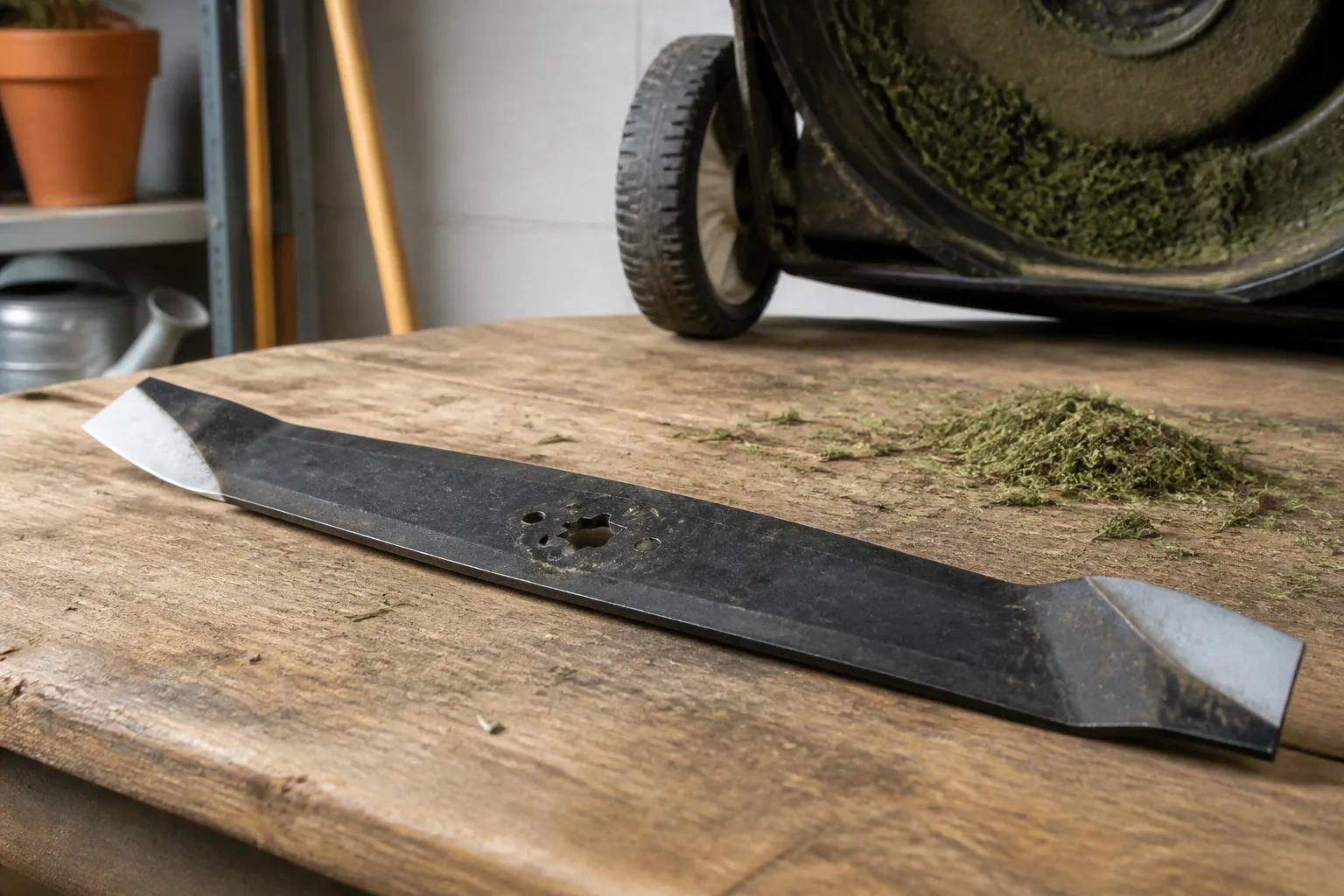
How to clean:
- After mowing, disconnect power and scrape built-up clippings with a plastic putty knife or stiff brush—never a metal scraper that gouges painted steel.
- For stubborn buildup, hose the deck after scraping when the manual allows it; dry thoroughly to prevent rust.
- Some owners apply a light non-stick deck coating or spray the clean, dry deck so wet clippings release more easily. That is optional maintenance, not a substitute for scraping.
How often: Quick scrape every one to two mows during heavy growth; deeper clean at midseason and before winter storage (Gardening Know How). A deck caked with old turf adds weight, traps moisture against metal, and produces clumps that smother grass below.
Do not confuse deck cleaning with blade sharpening. Cleaning fixes airflow and rust; sharpening fixes the cutting edge. You need both.
Keep the Engine or Motor Running Smoothly
When a gas engine runs rough, loses power in thick grass, or stalls on slight inclines, the cut suffers even if the blade is sharp. The mower slows, drops height inconsistently, and scalps low spots while leaving tall patches elsewhere. Regular engine maintenance—clean oil, a fresh air filter, and a sound spark plug—keeps RPM steady so the blade maintains speed through the load.
Gas push and riding mowers — seasonal basics:
- Oil: Change after roughly 25–50 hours or at least once per season. Warm the engine briefly, drain fully, refill to the dipstick mark with the weight your manual specifies (often SAE 30 or 10W-30). Overfilling is as harmful as neglect—foam can aerate the oil and reduce lubrication.
- Air filter: Tap out dust monthly; replace when paper is oil-stained, torn, or still dirty after cleaning. Foam filters can be washed, dried, and lightly re-oiled if your model uses them.
- Spark plug: Inspect annually; replace every 1–2 years or when porcelain is cracked or the electrode is rounded. Gap to factory spec before install.
Battery and corded electric mowers skip oil and spark plugs but still need a clean deck, sharp blade, and dry contacts. Wipe battery terminals; store batteries at partial charge per manufacturer guidance; replace packs that no longer hold runtime through a full lawn.
If the engine needs carburetor rebuilding or transmission work on a riding unit, a dealer is the right call. The tasks above prevent the slow power loss that shows up on turf first.
Match Tire Pressure on Riding Mowers
Uneven tire pressure is an underdiagnosed cause of wavy cuts and scalping on riding mowers and some self-propelled units with pneumatic tires. One low tire drops that corner of the deck; the blade shaves too low on one side while the opposite side leaves grass tall. Solid plastic wheels on many push mowers make this a non-issue—check your model.
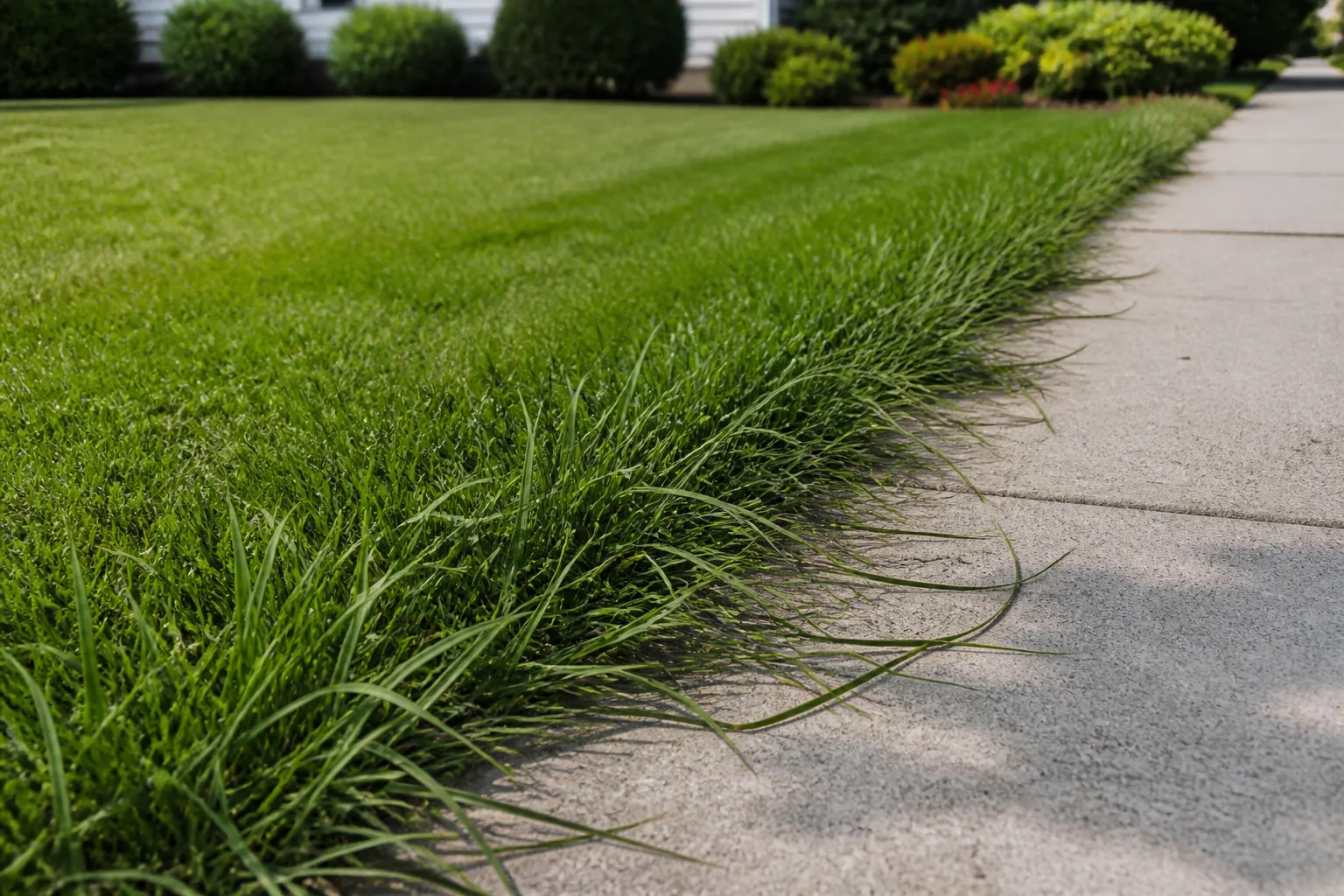
Use a tire gauge monthly during the mowing season. Inflate all tires to the PSI listed in the owner’s manual, not the sidewall maximum. Match left-right pairs on the same axle. After hitting curbs or holes, recheck pressure and look for slow leaks.
The lawn symptom is subtle until it is obvious: repeating low stripes on the same side of every pass, especially on slopes. Before regrading the yard, check PSI.
Disinfect Pruners Between Plants
Lawn health is not only about the mower. Hand pruners, loppers, and hedge shears move disease between landscape plants—and some pathogens affect turf edges and groundcovers you trim around beds. If you cut a blighted rose cane and move to a healthy spirea without cleaning the blades, you can spread bacteria or fungal spores mechanically.
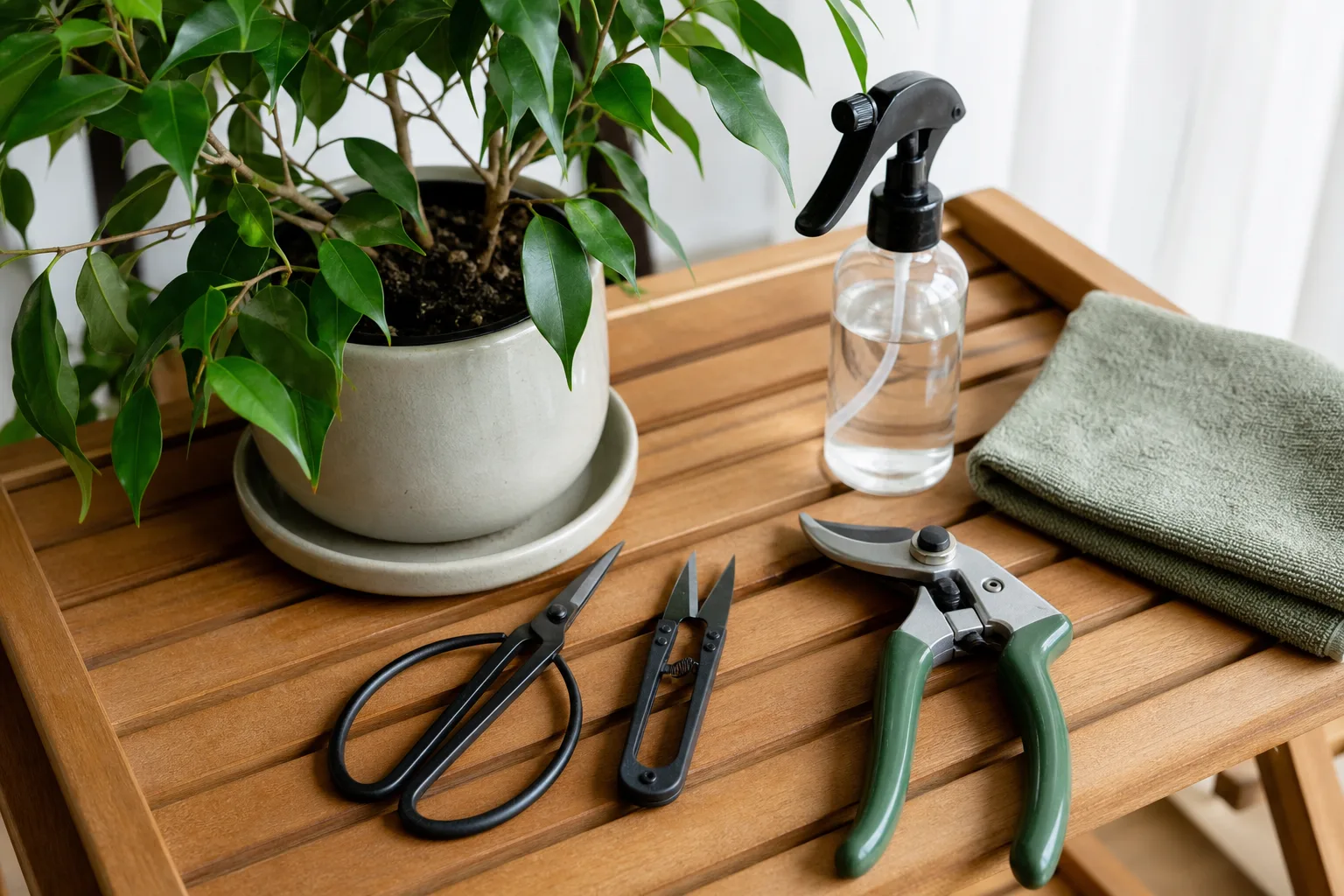
Disinfection options:
- 10% bleach solution: 1 part chlorine bleach to 9 parts water. Dip blades, wipe dry, and continue. Effective but corrosive if tools stay wet—rinse and oil hinges afterward.
- 70% isopropyl alcohol or ethanol: Wipe blades between cuts; dries fast; gentler on metal for frequent use.
- Commercial horticultural disinfectants: Follow label contact time; useful for heavy pruning days.
Dry blades before the next cut. Disinfect when moving between diseased and healthy plants, after rain-soaked pruning sessions, and at the start of spring cleanup. This habit does not replace proper plant spacing or fungicide programs where extension guides recommend them—it stops you from being the delivery system.
How Bad Equipment Shows Up on the Grass First
Equipment problems rarely announce themselves in the garage. They show up as turf symptoms you might blame on drought, grubs, or fertilizer gaps.
Torn Tips, Brown Edges, and Disease Entry Points
The classic dull-blade signature is brown or white fraying at grass tips 24–48 hours after mowing while the rest of the blade stays green. The lawn looks dry even when soil moisture is fine. During humid weather, torn tissue is more vulnerable to leaf spot and brown patch—especially on tall fescue and other cool-season lawns pushed through summer heat.
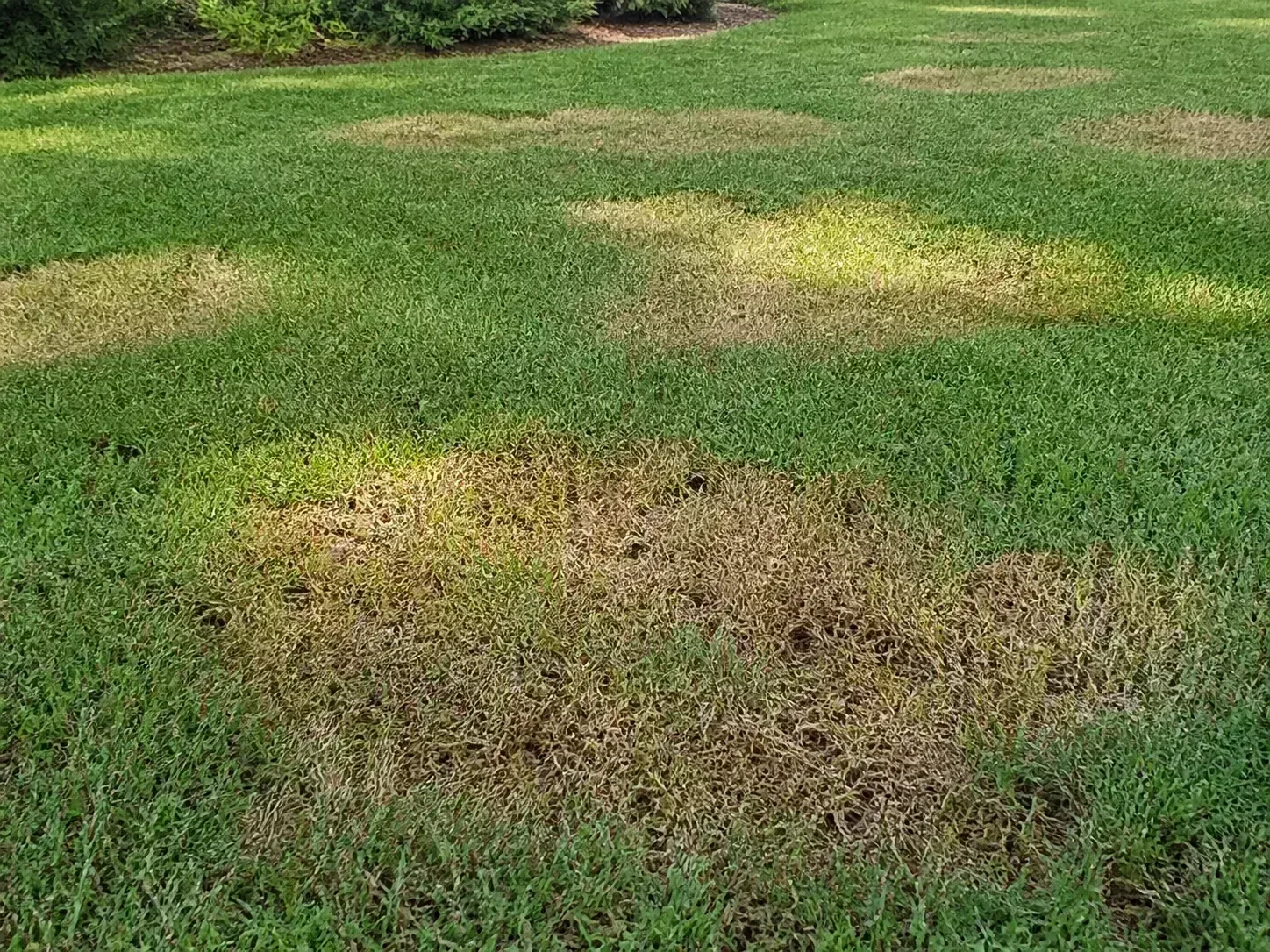
Clean cuts seal faster and lose less water. That is why sharpening is turf care, not vanity. If torn tips persist after a proper sharpen and balance, look next at deck clumping or mowing when grass is wet.
Scalping, Stripes, and Missed Patches
Scalping removes too much leaf area in one pass, exposing soil or crown tissue and shutting down photosynthesis on those plants. Causes tied to maintenance include:
- Dull blade forcing second passes that remove extra leaf tissue
- Engine bog-down in tall grass on the first pass of spring
- Deck packed with clippings, changing effective cutting height
- Uneven tire pressure tilting a riding deck
- Mowing too low for the season—especially risky in August heat when raising height protects roots
Striped light-and-dark banding often tracks tire or deck tilt. Random missed patches may mean clumps dropping from a dirty deck. If you already fight brown patches in the lawn, fix equipment issues alongside cultural controls—dull blades and scalping stress make recovery slower.
Gas, Battery, and Electric Mowers: What Changes
Use one master checklist, then skip what does not apply:
| Task | Gas push/riding | Battery electric | Corded electric |
|---|---|---|---|
| Sharpen blade | Yes | Yes | Yes |
| Clean deck | Yes | Yes | Yes |
| Engine oil change | Yes | No | No |
| Air & fuel filters | Yes | No | No |
| Spark plug | Yes | No | No |
| Battery terminal care | No | Yes | No |
| Tire pressure (if pneumatic) | Yes | If equipped | If equipped |
| Pruner disinfection | Yes | Yes | Yes |
Battery owners still face dull blades and deck buildup—the two tasks most linked to grass tearing. Gas owners who skip oil and filters often discover the problem as scalping in the back yard where the grass is thickest.
A Season-Long Maintenance Calendar
Spread the work so it happens before you need it:
Early spring (before first mow):
- Sharpen and balance blade; replace if damaged
- Scrape deck; apply optional non-stick coating if you use one
- Change oil, air filter, and spark plug on gas units
- Check tire PSI on riders
- Disinfect pruners heading into cleanup pruning
Every 25–30 mowing hours (midseason):
- Re-sharpen blade or swap to a spare sharp blade
- Deep deck scrape
- Blow or tap out air filter
- Quick tire check
Late fall (before storage):
- Final blade inspect; touch-up sharpen if needed
- Clean deck thoroughly; dry to prevent rust
- Stabilize fuel or run carb dry per manual (gas)
- Charge battery to storage spec (electric)
- Oil pruner pivots; store dry
Pair equipment prep with good mowing habits: alternate direction, avoid mowing wet grass, and follow the one-third rule—never remove more than one-third of leaf height in a single pass. Good timing on edging versus mowing order also keeps clippings from beating up freshly cut edges.
Mistakes That Undo Good Turf Work
Even well-intentioned maintenance backfires when these slip through:
- Mowing with a dull blade “one more week” — Every pass multiplies torn tips across the whole lawn.
- Sharpening without balancing — Vibration mimics an uneven deck and can loosen hardware.
- Using a metal chisel on the deck — Scratches invite rust and clingy clippings.
- Overfilling engine oil — Wastes oil and can foam the crankcase.
- Ignoring bent blades — Straightening weakens metal; replace instead.
- Bleach-disinfecting pruners and storing them wet — Corrosion seizes pivots by next season.
- Setting tire PSI by guess — Two PSI difference side-to-side shows on turf before it shows on the gauge.
If you corrected all of the above and cut quality is still poor, verify cutting height against season, confirm you are not cutting wet grass, and only then look at leveling the deck per the manufacturer procedure.
When to Sharpen, When to Replace, When to Call a Shop
Use this quick decision path before every season and after any impact with rocks or curbs:
- Blade edge rounded but metal straight? Sharpen and balance.
- Cracks, bends, thin metal, or poor cut after sharpening? Replace the blade.
- Engine starts but bogs only in thick grass? Filters, plug, and oil first.
- Transmission slip, smoke, or metal in oil? Shop visit.
Pros keep a spare sharpened blade in the garage so midseason swaps take minutes instead of delaying mowing until the file comes out. That single habit protects turf during the spring surge when grass grows faster than your schedule.
Conclusion
Healthier grass does not start with a miracle product. It starts with clean cuts from sharp blades, steady airflow from a scraped deck, reliable power from a maintained engine or battery, level passes from even tires, and disease-safe cuts from disinfected pruners. Those five lawn tool maintenance tasks are what pros repeat every year because the lawn shows the difference within a single mowing cycle.
Before your next pass, pick one task you have been skipping—usually sharpening or deck cleaning—and fix it this weekend. Then fold the seasonal calendar into your routine so equipment keeps pace with growth. Your turf responds faster to a sharp blade than to almost anything you can pour from a bag.