Should You Edge Your Lawn Before or After Mowing?
Should you edge before or after mowing? Compare the default pro order, overgrown-edge exceptions, wet-lawn rules, and a quick decision guide by yard type.
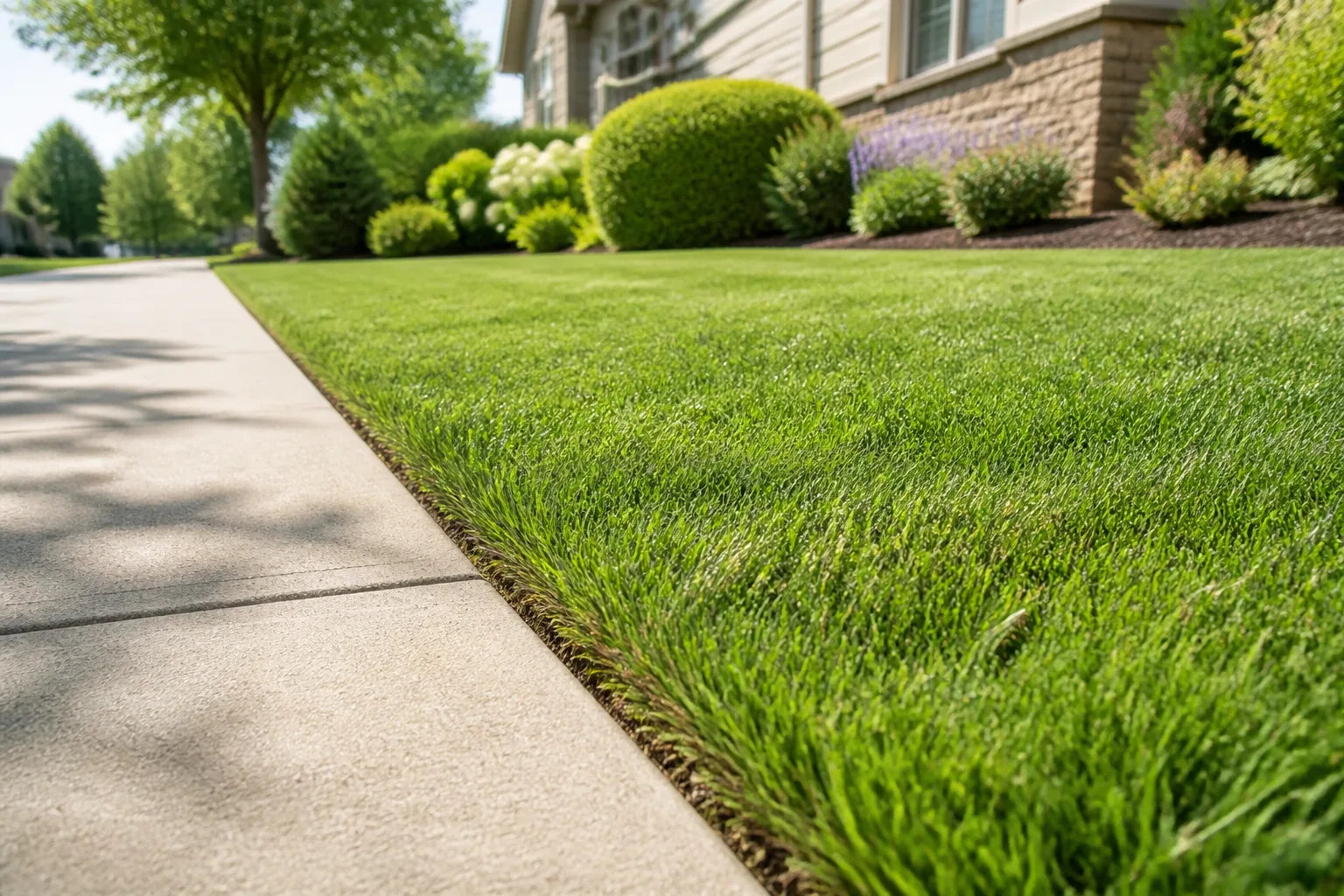
The short answer: mow first, edge last
For most lawns, mow first and edge last. Mowing brings the turf to one even height so you can see the boundary between grass and hardscape. Edging after that pass creates the crisp vertical cut that makes the yard look finished — and nothing rolls over the fresh line to blur it.
That is the order most professional crews use on maintained turf, and it matches guidance from lawn-care educators who recommend mowing before trimming edges back (Crabgrass Lawn citing University of Minnesota Extension). It is not the only valid workflow. Homeowner surveys show a near-even split between edge-first and mow-first preferences (GreenPal), usually because yards, tools, and cleanup habits differ. The useful question is not which camp wins a poll — it is which order solves your visibility, cleanup, and edge-quality problems on this mow day.
If your edges are already sharp and you own a leaf blower, default to mow → edge → blow. If grass has marched onto the sidewalk or you lack a blower and want the mower deck to vacuum edging debris, flip to edge → mow → touch up if needed. Everything below explains why, when to switch, and how to fit fertilizing and trimming into the same visit.
Why most landscapers put edging at the end
Edging is the finishing step, not the opening act. The job is to define where lawn ends and driveway, walk, or bed begins. That definition is easier — and lasts longer — when the grass is already cut to working height and the mower has not yet tracked soil or clippings across a freshly cut trench.
Think of mowing as setting the canvas and edging as signing the painting. You can sign first, but you risk smudging the line when you go back to fill in the middle.
Mowing reveals the true edge line
Uneven grass hides the real boundary. After a mower pass, the turf is one height, curves read clearly, and low spots along beds show up before you commit to a cut. String-trimmer and manual edging are precision work; they go faster and look cleaner when you are not guessing where the line sits under shaggy blades.
This visibility issue matters most with handheld string trimmers and manual half-moon edgers, where a small angle error shows immediately. Heavy gas stick edgers can power through overgrowth, but even then, mowing first reduces scalping along the transition zone — the strip where grass meets concrete and is most vulnerable to bare patches and weed invasion.
University of Minnesota Extension emphasizes healthy mowing habits — sharp blades, appropriate height, and never removing more than one-third of leaf tissue at once (UMN Extension). Keeping that one-third rule in mind while mowing first protects the edge zone from being shaved to dirt before you ever pick up the edger.
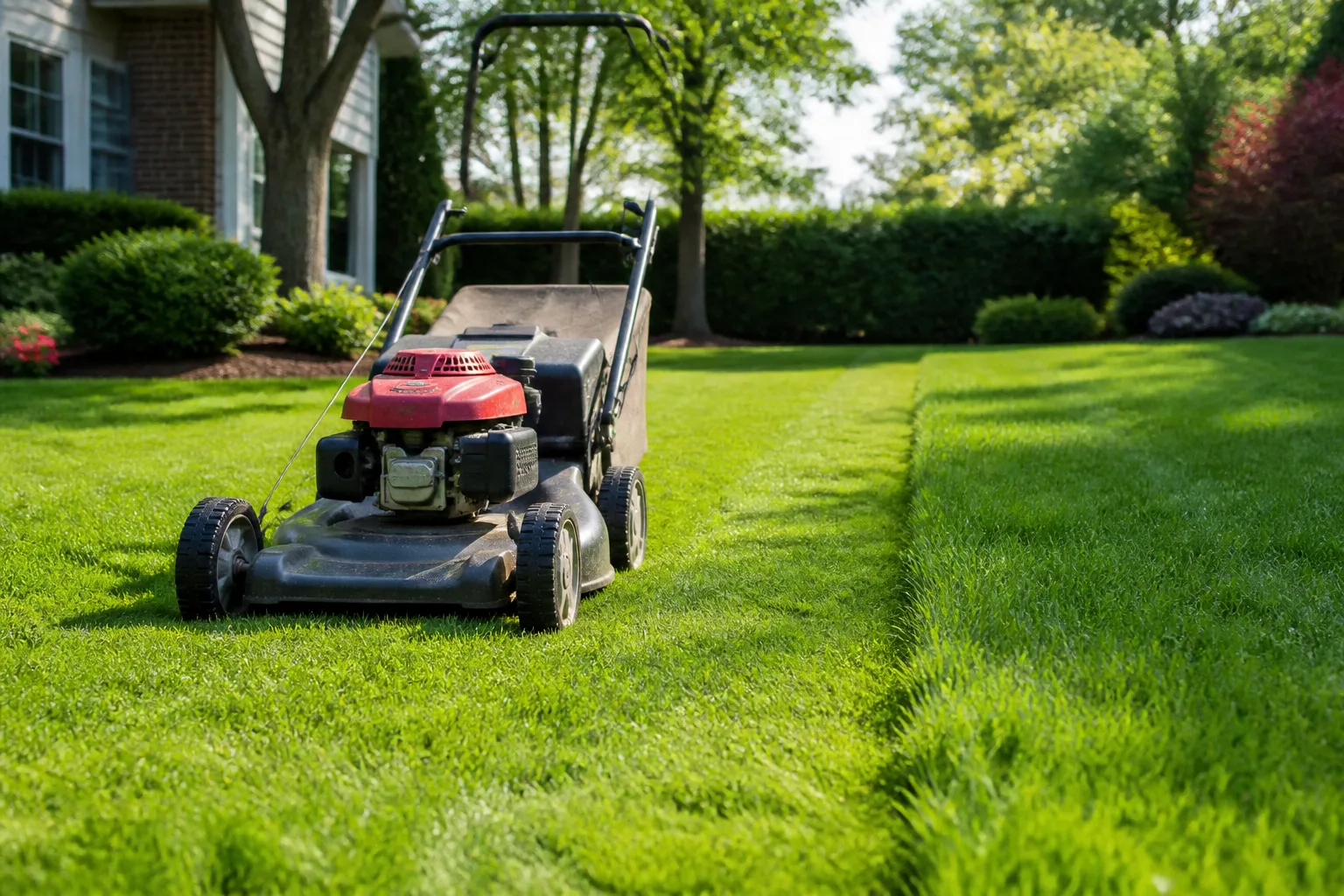
Fresh edges stay sharp when wheels stay off them
A blade edger or stick edger cuts a small trench along the boundary. If you edge first and then run a heavy mower along that line, tire tracks and deck wash can collapse the vertical face, scatter soil onto pavement, and leave a ragged lip. Edge last and the finished line stays intact until you blow or sweep clippings away.
The same logic applies to riding mowers on tight turns: their weight compacts soft soil at the lawn margin. Finishing the edge after the mower has made its passes keeps that margin stable. If you use a walk-behind mower with a tight turning radius, the difference is smaller — but the cleanup advantage of edging last still holds when you blow debris off hardscape immediately after the edge pass.
When edging first makes more sense
Two situations justify flipping the order. Both are about recovery or cleanup, not about everyday maintenance on a lawn that was edged within the last few weeks.
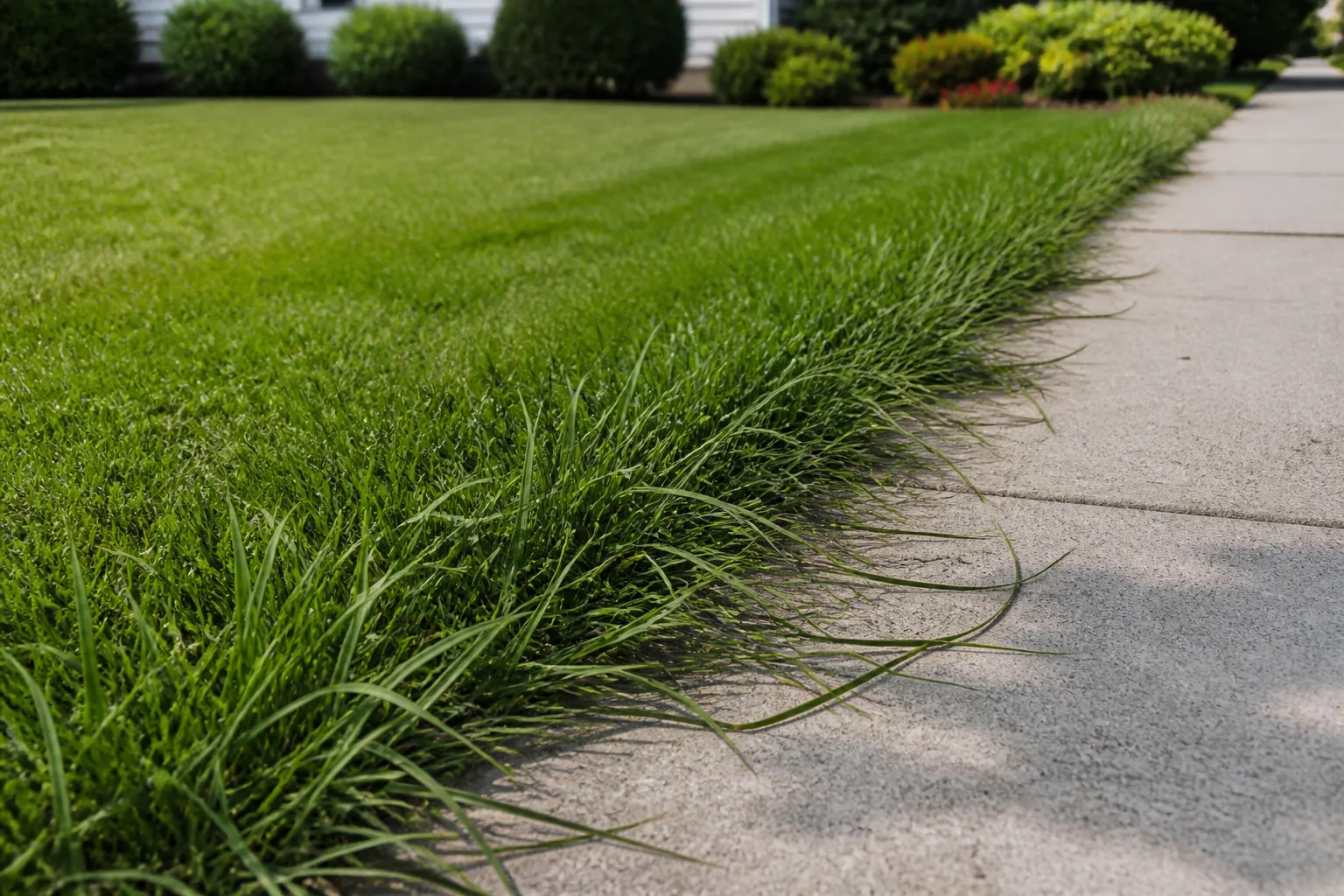
Grass has crept an inch or more onto hardscape
When nobody has edged in a month or more, grass stolons and runners advance over sidewalks, driveways, and brick borders. Mowing first can leave a fuzzy overhang that still looks unkempt. In that case, edge first to reclaim the line, then mow to even the remaining turf.
Landscaping pros describe this as the “flip it” scenario: maintenance order versus restoration order. Maintenance is mow then edge. Restoration on neglected edges is edge then mow. After you reclaim the boundary, return to the standard sequence on the next cut.
Watch depth on the first restoration pass. You are re-establishing a vertical face, not excavating a moat. Cut only enough to restore the original plane between soil and hardscape. Deep gouging dries out roots at the margin and invites weeds into bare soil.
You have no blower and want the mower to collect debris
Edging throws soil, sand, and clippings onto pavement. If you do not own a leaf blower or vacuum, edging before mowing lets the mower deck pick up loose material on the following pass — especially when you bag clippings or use a mulching deck with strong lift on dry turf.
The trade-off is visibility: you may trim slightly high on the first pass because tall grass still obscures the line, then refine the edge after mowing if needed. For many homeowners this two-step still beats leaving debris on the walk. If you later add a blower, switch to mow-first for a sharper single-pass edge.
How your equipment changes the workflow
Your tools determine how much the order matters. A heavy stick edger tolerates more disorder than a string trimmer used vertically along a curb.
String trimmers, stick edgers, and manual tools
String trimmers are the most order-sensitive. Used horizontally, they trim turf height along fences and obstacles; used vertically with the string spinning parallel to hardscape, they slice a clean edge. Vertical edging after mowing is easier because you can rest the trimmer head against the pavement and follow a visible grass line.
Stick edgers (wheel or blade types) cut a defined trench and suit straight runs along drives and walks. They power through moderate overgrowth but still benefit from a mowed surface so you can walk a straight path without tripping on tall clumps.
Manual half-moon edgers and edging shears demand the clearest line of sight. Mow first, then hand-edge beds and tree rings where powered tools feel bulky. Manual tools shine for small beds and detail work after the bulk mowing is done.
If you only own a trimmer and mow with a push reel or electric deck, the mow → trim vertically → sweep sequence is usually the fastest route to a finished look without buying another machine.
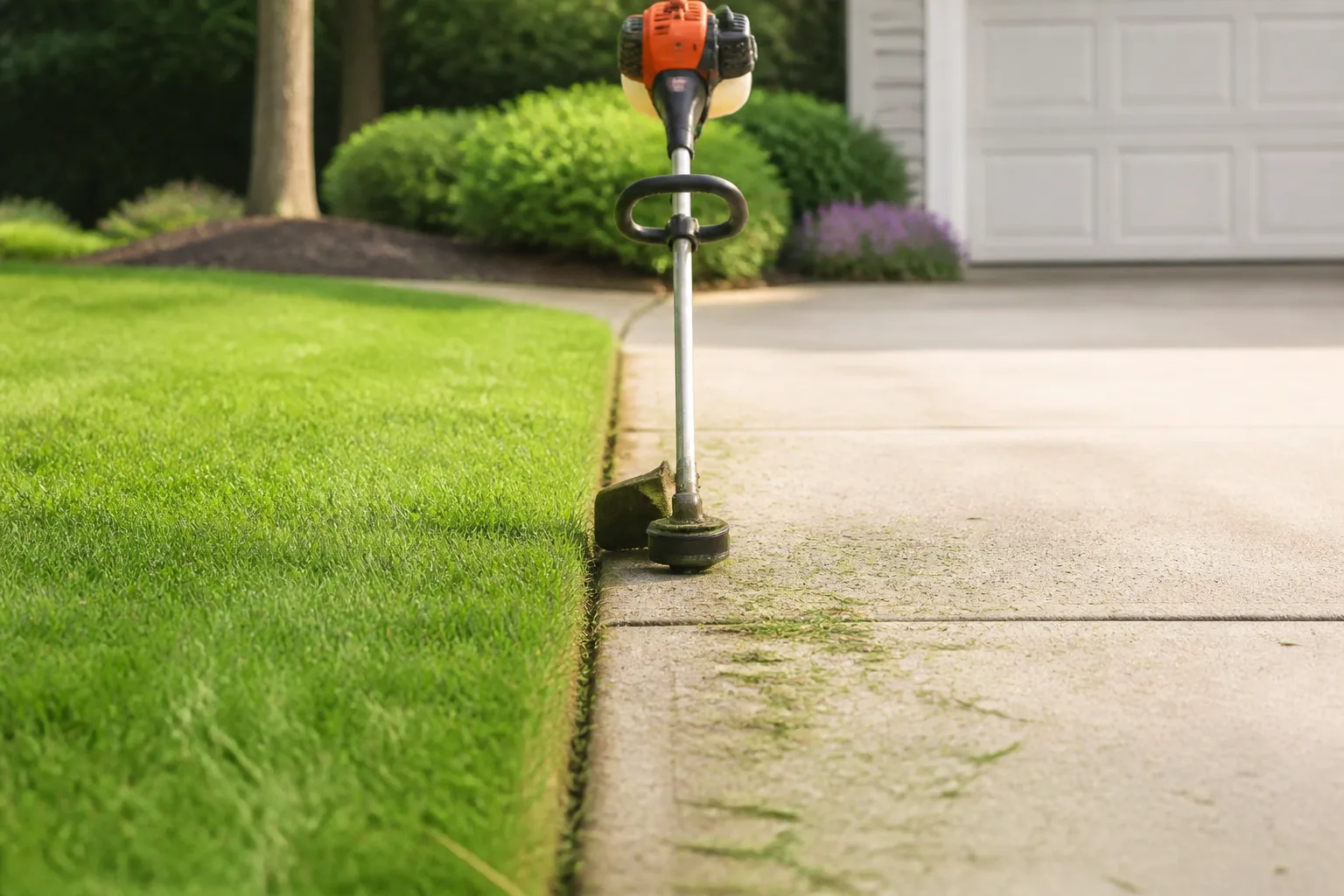
Prep steps that matter more than the order debate
Skipping prep causes ragged edges even when the order is perfect. Two prep habits matter more than whether you edge on minute 10 or minute 25 of the job.
Clear debris before you cut
Rake or blow leaves, twigs, and dead growth off the bed edge and pavement before edging. Debris hides the true line, jams edger blades, and leaves torn chips that make the finished cut look jagged. This is the step most DIYers skip — and the one pros cite first when an edge comes out uneven.
While clearing, locate buried obstacles: irrigation heads, low path lights, and buried edging strips. Mark them mentally so the edger does not chew through plastic lawn edging or nick a sprinkler.
Mark curves and beds before the first pass
On straight runs, a pavement joint guides you. On curves around beds and tree rings, lay a garden hose or mason’s line to preview the shape before cutting. Step back from the house and street viewing angles most people see daily; adjust the hose until the curve looks smooth from those sightlines.
For new beds, cut lightly, review, then deepen. You cannot uncut grass, but you can widen a curve on a second pass. Henrico County’s curb-appeal guidance notes that clean edges along walks and drives are among the highest-impact, lowest-cost improvements visible from the street (Henrico County).
Never mow or edge a wet lawn
Wait until the lawn is dry before mowing or edging. Wet grass clumps under the deck, sticks to wheels, and stains pavement when you edge. The mower works harder, cut quality drops, and clumps left on turf can smother grass underneath. Morning dew counts — let it burn off before you start.
The EPA’s lawn and garden care guidance groups mowing with other maintenance that should happen under appropriate conditions, not on saturated turf (EPA). The same dry-turf rule applies to fertilizing and many pesticide applications: products applied to wet or pooled surfaces run off instead of staying where grass roots can use them.
If you must choose between Saturday morning with dew and mid-afternoon heat, wait until blades are dry to the touch. If afternoon thunderstorms keep the lawn wet for days, postpone the whole manicure — including edging — rather than forcing clumping cuts.
The full lawn manicure sequence pros use
Once you know mow-first is your default, slot the rest of the visit into a repeatable order. Pros optimize for dry turf, clean hardscape, and minimal backtracking.
Mow, treat when dry, edge, then blow
A practical full-yard sequence on a dry day:
- Clear debris from edges and beds.
- Mow at the correct height for your grass type and season. Follow the one-third rule: never remove more than one-third of blade height in a single mow (UMN Extension).
- Treat if scheduled — granular fertilizer, weed control, or fungicide only when the label allows on dry turf and when you will not mow again for the interval the label requires. Mowing before treatment keeps granules from being chopped and scattered unevenly.
- Edge vertically along hardscape and bed lines.
- String-trim horizontal areas the mower missed — fences, posts, steep banks.
- Blow or sweep clippings and soil off pavement, then off the lawn margin if needed.
Water after granular fertilizer if the product label calls for watering-in — not before mowing on the same visit. Saturated soil lets fertilizer run off into storm drains instead of the root zone.
If you are only mowing and edging without treatments, steps 3 simplifies away. If edges were severely overgrown, insert an initial edge pass before step 2, then finish edge after mowing in step 4.
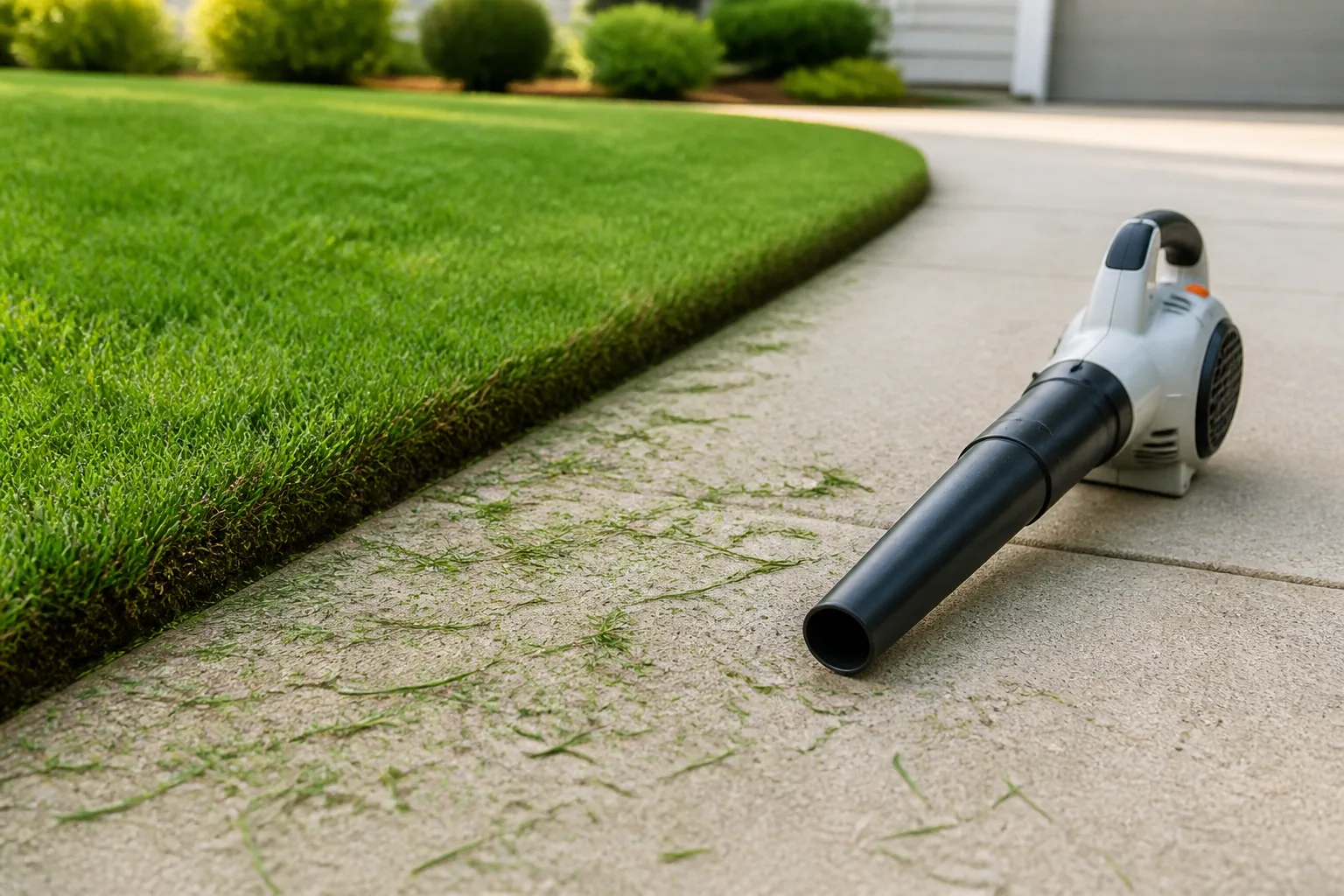
Edging technique for driveways, walks, and beds
Order gets you to the right starting point; technique determines whether the edge looks professional for two weeks or two days.
True edging vs horizontal trimming
Trimming cuts grass height horizontally — along fence lines or around mailbox posts. Edging cuts vertically to redefine the plane between turf and hardscape. Confusing the two is why many walks still look fuzzy after a full afternoon of yard work.
For vertical edging with a string trimmer, spin the head so the string strikes the grass wall parallel to the pavement. Walk forward steadily; let the pavement guide the head rather than swinging outward into the lawn. Over-swings scalp turf and leave curved bites visible from the street.
For stick edgers, align the blade on your marked line, keep a consistent depth, and overlap passes slightly on corners so there is no uncut tuft. On beds, angle slightly toward the bed so soil falls inward, not onto mowed grass.
Open edges (lawn beside drive or walk) differ from closed edges (lawn separated from beds by metal or plastic edging). Open edges need periodic vertical cuts; closed edges often need only light trimming to keep grass from climbing the barrier (Crabgrass Lawn).
How often to edge during the growing season
On actively growing cool-season lawns in spring and fall, or warm-season turf in summer, edge every two to four weeks when you mow regularly. That rhythm keeps stolons from advancing onto pavement and prevents restoration passes that force you to edge first.
During slow-growth periods — hot dry stretches on cool-season grass, or dormancy on warm-season types — monthly edging may suffice. The test is visual: if grass overhangs the walk after mowing, it is time to edge regardless of the calendar.
New sod and freshly seeded margins need gentler edging until roots knit. Wait until the grow-in period finishes before deep vertical cuts that pull sod strips loose.
Common mistakes that ruin a clean edge
Edging too deep, too often. A trench deeper than one inch dries roots at the margin and collects debris. Maintain a face, not a gutter.
Mowing wet, then edging wet. Clumps bind to pavement; wheels slip on slopes. Dry turf cuts cleanly and blows off hardscape in one pass.
Using the mower as a edger. Mower decks are not designed for vertical cuts along concrete. You risk chipped blades, thrown debris, and scalped strips.
Ignoring the one-third mowing rule at the margin. Repeated low mowing at edges thins turf before weeds move in. Raise the deck if the transition zone looks thin even when the lawn center looks fine.
Skipping cleanup. Edging without blowing leaves soil on the walk that tracks indoors and stains shoes. Finish every edge session with hardscape cleanup.
Edging through dry soil in extreme heat. On clay soils during drought, vertical cuts can fracture and crumble. Water the lawn a day before edging if soil is brick-hard; avoid edging during the hottest midday window.
Quick decision guide by yard type
Use this table to pick an order in under a minute. Adjust if your tools differ, but start here on a dry lawn.
| Your situation | Recommended order | Why |
|---|---|---|
| Regular weekly mow, edges maintained, you own a blower | Mow → edge → blow | Best visibility and sharpest final line |
| Edges neglected 4+ weeks, grass on pavement | Edge (reclaim) → mow → edge (finish) | Restore boundary before leveling height |
| No blower, bagging mower, dry turf | Edge → mow (pick up debris) → optional touch-up edge | Uses mower suction instead of blowing |
| Small yard, string trimmer only | Mow → vertical trim → sweep | One tool, two orientations |
| Applying granular fertilizer same visit | Mow → fertilize (dry turf) → edge → blow → water if label requires | Keeps granules in place |
| Wet grass from rain or heavy dew | Wait | Prevents clumping and unsafe footing |
| Steep curb line with riding mower | Mow → hand or stick edge | Keeps rider tires off fresh trench |
When in doubt on a maintained lawn, mow first. Switch to edge-first only for restoration or no-blower cleanup — then return to the default next time.
Conclusion
Should you edge your lawn before or after mowing? On a typical maintained lawn, mow first and edge last for the cleanest line, the best visibility, and the least damage to a fresh edge. Edge first when grass has overrun hardscape and you are reclaiming a lost boundary, or when you lack a blower and want the mower to collect edging debris on dry turf.
Before either step, clear debris, confirm the lawn is dry, and mark curves you cannot see from pavement alone. Fit fertilizing and other treatments into the sequence only when labels allow dry application and your mowing schedule matches label intervals. Nail the order once, add the blow pass, and the finished look lasts until the next growth surge — not until you walk back out with the trimmer because the first pass happened in the wrong sequence.



