Should You Mow Your Lawn in August? A Practical Guide
August mowing depends on your grass and weather. Use this practical guide to set height, follow the one-third rule, water wisely, and protect stressed turf.
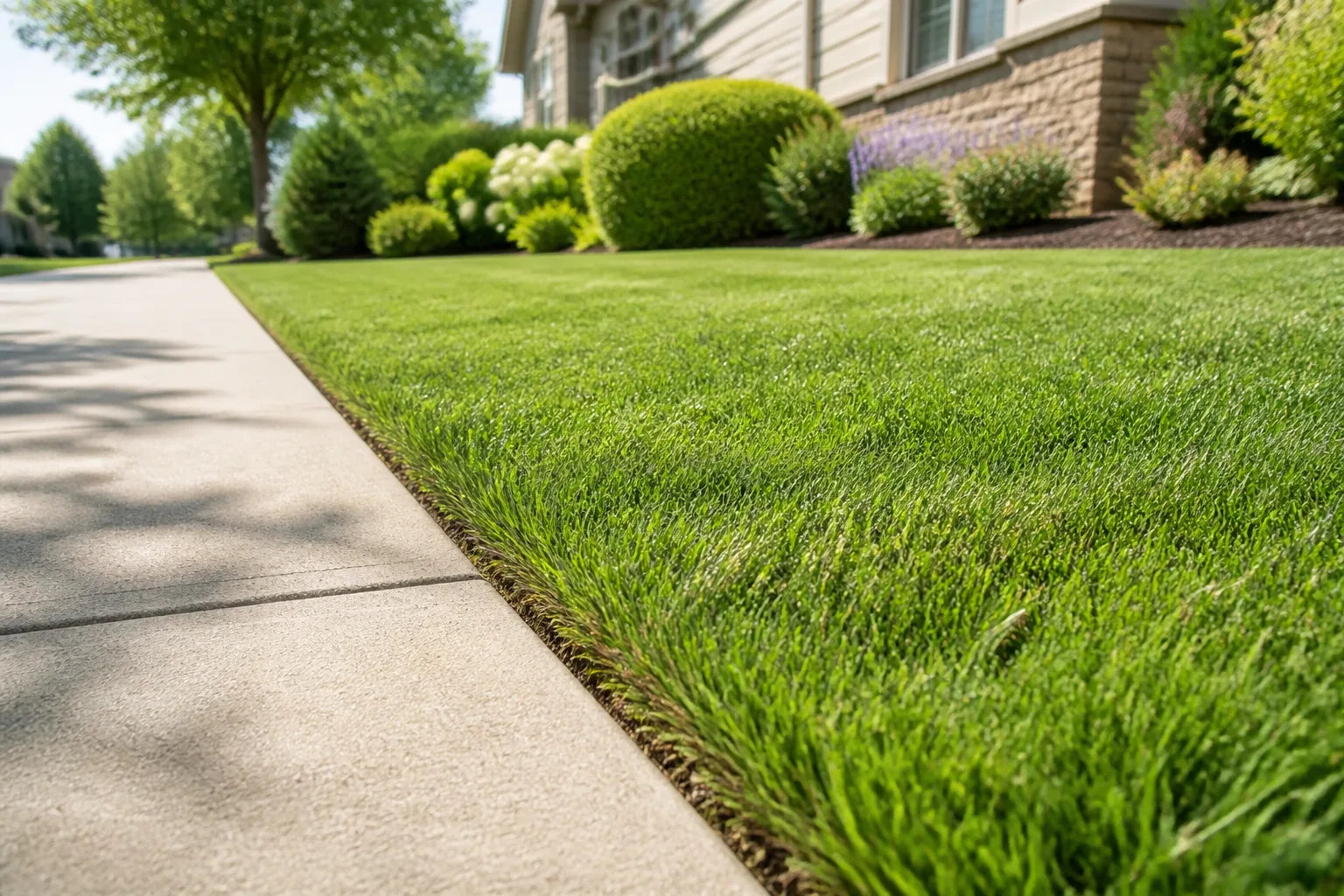
Yes—if the grass is actively growing, you still need to mow it in August. But August is not a month for following a blind weekly schedule or cutting every lawn to the same height. The right decision depends on your grass type, growth rate, heat and drought stress, and whether the lawn is green and growing or brown and dormant.
The most useful rule is simple: mow only when the lawn needs it, keep the blade high enough for the grass type, and remove no more than one-third of the leaf blade at one time. If growth has stopped because the lawn is dormant, pause mowing until new growth resumes. That distinction prevents the two most common late-summer mistakes: scalping stressed turf and driving a mower over grass that is trying to survive rather than grow.
The short answer: mow growing grass, pause on dormant turf
August does not automatically mean “stop mowing.” Pennsylvania State University Extension advises mowing regularly as long as grass is growing, while allowing drought-stressed turf to wait until active growth resumes. The Royal Horticultural Society makes the same practical distinction for drought: mow less often as growth slows, and take a break if growth stops. (Penn State Extension, RHS)
That means a green, irrigated bermudagrass lawn may need mowing every few days, while an unirrigated cool-season lawn in a hot, dry region may need no mowing for a stretch. A lawn that is still pushing up fresh blades needs maintenance; a uniformly tan lawn that has stopped growing needs protection from traffic and additional stress.
Do not use color alone as the test. Some warm-season grass can be green and growing rapidly in August, while cool-season grass can be green but growing slowly after a rainy spell or brown because of dormancy. Touch the grass, look for new growth, and measure the height before you start the mower.
Identify your grass before choosing an August mowing height
Grass type explains why two neighbors can receive opposite mowing advice in the same month. Cool-season and warm-season turf have different periods of strongest growth, different typical mowing heights, and different responses to late-summer heat.
Cool-season lawns slow down under summer stress
Kentucky bluegrass, perennial ryegrass, fine fescue, and tall fescue are common cool-season grasses. They grow most vigorously when temperatures are moderate, often in spring and fall, and may slow dramatically or turn brown during prolonged heat and drought. University of Minnesota Extension describes this summer slowdown as part of the normal growth cycle for cool-season turf, not proof that the lawn has died. (UMN Extension lawn-care calendar)
If a cool-season lawn is still growing, mow it at its normal or slightly raised summer height. If it has gone dormant, leave it alone rather than mowing just to remove brown blades. Mowing a dormant lawn does not make it green again, and the mower wheels add traffic to the crown—the growing point at the base of the plant—when the grass has little capacity to recover.
Tall fescue often handles summer conditions better than shallow-rooted cool-season turf, but it can still suffer when the soil is dry or compacted. A tall fescue lawn that is growing should generally be kept around 3 to 4 inches in summer; your local extension recommendation and the actual cultivar take priority over a universal number. (University of Maryland Extension, University of Missouri Extension)
Warm-season lawns usually grow through August
Bermudagrass, zoysiagrass, St. Augustinegrass, and centipedegrass are warm-season grasses. They are adapted to active growth during warm weather, so August is often still part of their mowing season. A healthy, irrigated warm-season lawn may need more frequent mowing than a stressed cool-season lawn, even though both are in the same neighborhood.
Typical starting ranges from University of Georgia Extension are about 1 to 2 inches for bermudagrass and zoysiagrass, 1 to 2 inches for centipedegrass in that guidance, and 2 to 3 inches for St. Augustinegrass. UGA also recommends raising the height by about half an inch in hot weather and never removing more than one-third of the blade. Treat those numbers as starting points, not permission to lower a mower below the height your grass can support. (UGA Extension lawn-care information)
Warm-season does not mean heat-proof. Drought, disease, poor drainage, shade, root damage, and scalping can all stop growth. If a warm-season lawn is brown and not growing, diagnose the cause instead of mowing more often to make it look tidy.
Check whether the lawn is growing or merely green or brown
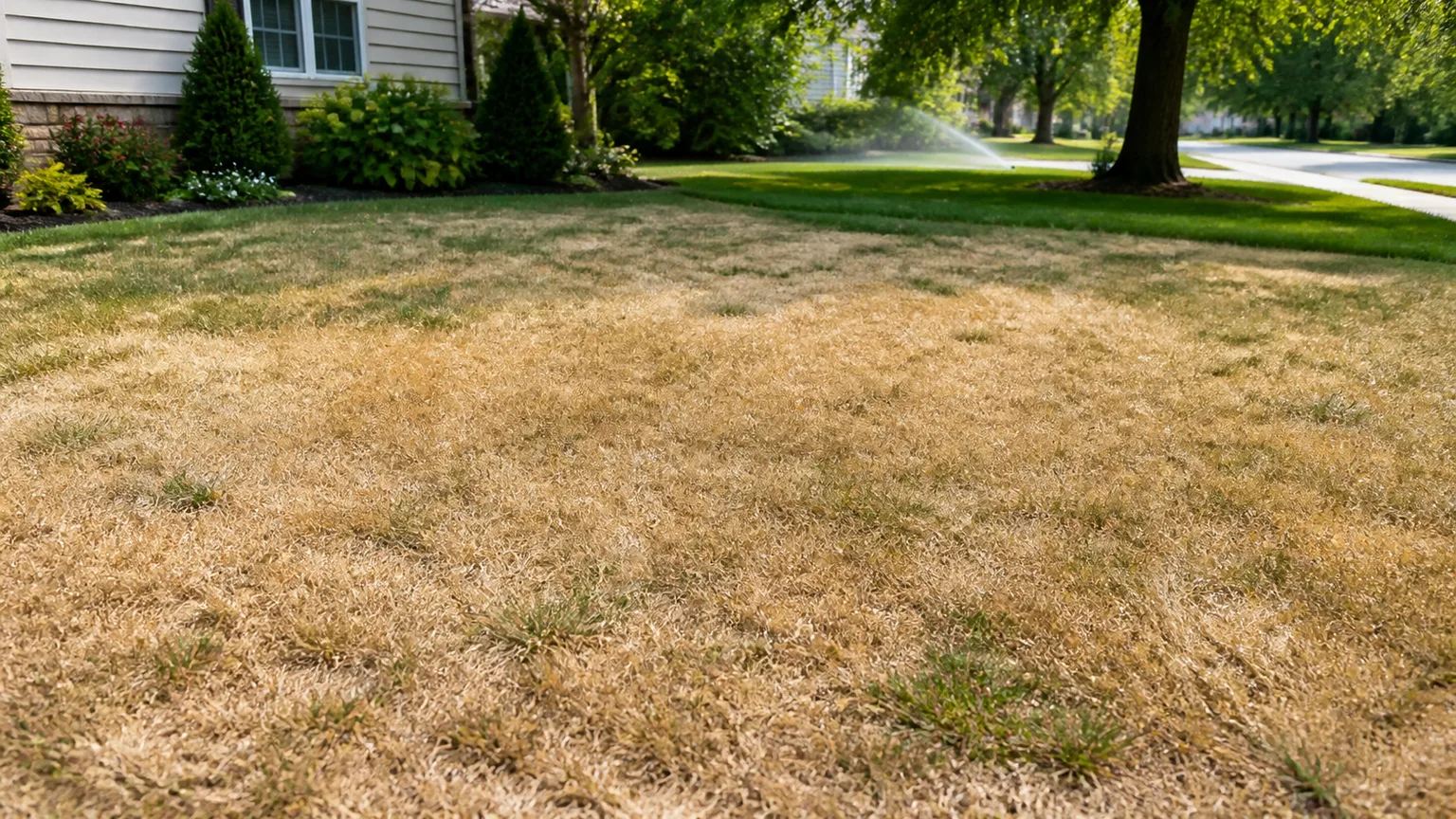
Before mowing, kneel at the edge of a patch and compare the newest blades with older cut blades. Active growth usually shows as fresh leaf tips rising above the canopy, a visible increase in height since the last cut, or grass that springs back after being walked on. If the lawn has barely changed height for a week and the soil is dry or the weather is extreme, it may be slowing into stress or dormancy.
Signs it is still growing
Mow when the grass has reached roughly one and a half times your intended finished height. If your deck is set to 3 inches, that means mowing around 4.5 inches, provided the grass is healthy enough to cut and the blades are dry. This is simply the one-third rule expressed as a measurement, and it is more reliable than “every Saturday.”
Fresh growth after rain is a reason to check the lawn sooner, not a reason to wait for a fixed interval. A warm-season lawn receiving regular irrigation may grow quickly in August; a rain-fed lawn in a heat wave may barely grow at all. Growth rate, not the calendar, determines frequency.
Signs to postpone mowing
Postpone if the grass is fully dormant, the soil is powder-dry and the turf is not growing, or a heat wave has left the lawn visibly wilted and fragile. A brown, dormant lawn is not a mowing target. University of Illinois Extension describes dormancy as a drought defense for cool-season lawns and recommends leaving dormant turf in that condition rather than repeatedly forcing it to green with irrigation. (Illinois Extension drought guidance)
Also wait when the lawn is wet enough to bend under the mower, the ground is muddy, or heavy rain has left ruts likely. Wet mowing creates clumps, distributes clippings unevenly, and can compact or damage soft soil. If safety is a concern on a slope, postpone; traction matters more than a neat edge.
When weather improves, do not immediately cut a dormant lawn down to the usual height. Wait for new growth, then make a light cut that respects the one-third rule.
Set the mower height for grass type and summer stress
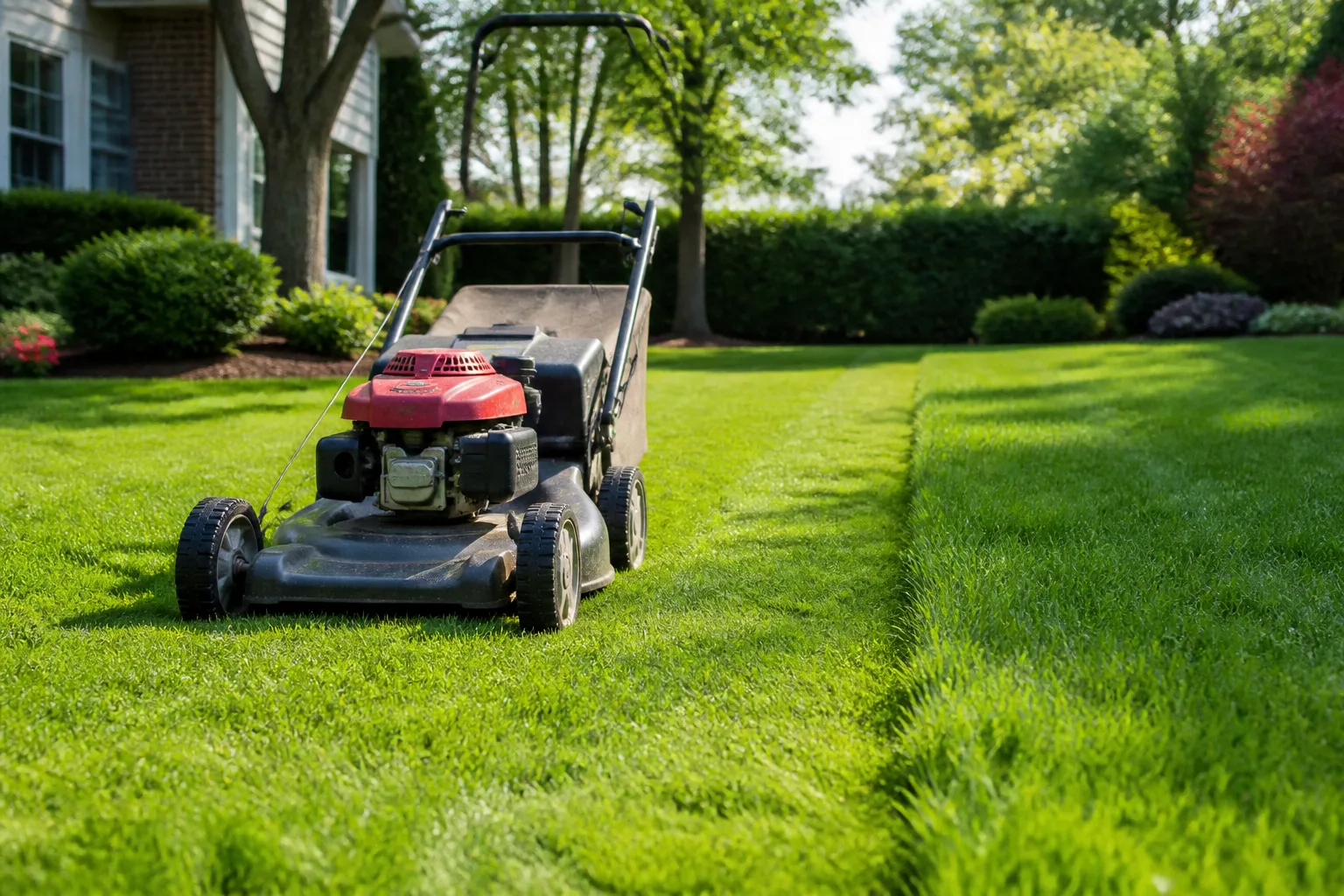
The best August height is the highest practical setting that keeps the grass within its species-appropriate range and does not leave it floppy or shaded by excessive growth. Taller leaf area shades the soil, reduces evaporation, and gives the plant more tissue for photosynthesis. Cutting too short exposes the soil, reduces the plant’s ability to tolerate heat, and can favor weeds.
Use this table as a starting point for an established lawn:
| Turf type | Common finished mowing range | August adjustment |
|---|---|---|
| Kentucky bluegrass | 2–3.5 inches | Use the higher end during heat or drought; do not scalp after a delay |
| Perennial ryegrass | 2–3.5 inches | Stay higher when the lawn is stressed and mow only while growing |
| Fine fescue | 2–3.5 inches | Favor the higher end in exposed, dry sites |
| Tall fescue | 2.5–4 inches | Around 3–4 inches is a useful summer starting point |
| Bermudagrass | 1–2 inches | Keep within the turf’s normal range; raise slightly during heat |
| Zoysiagrass | 1–2 inches | Raise modestly in hot, dry weather if the lawn tolerates it |
| St. Augustinegrass | 2–3 inches | Avoid scalping; use local recommendations for cultivar and shade |
| Centipedegrass | About 1–2 inches in UGA guidance | Raise in hot weather and do not remove more than one-third |
These ranges vary with cultivar, mower type, shade, soil, and local extension recommendations. University of Illinois Extension notes that even within the same grass type, recommended heights vary by region; its broader table lists tall fescue around 2.5 to 3.5 inches and warm-season examples lower. The useful takeaway is not a magic setting—it is to identify the turf, stay above its minimum, and raise the deck when heat and drought are limiting recovery. (Illinois Extension mowing guide, UMN Extension mowing practices)
Follow the one-third rule instead of a calendar
Never remove more than one-third of the grass’s height in one mowing. If the mower finishes at 3 inches, mow before the grass reaches about 4.5 inches. If the lawn has grown to 6 inches, do not force it back to 3 inches in one pass; set the deck higher, remove no more than one-third, and lower it gradually on a later mowing.
The one-third rule is not “cut one-third of an inch.” It refers to one-third of the blade’s current height. Removing too much leaf tissue at once takes away the plant’s photosynthetic surface, exposes the soil, and leaves the crown with less protection when heat and drought are already limiting recovery. (Cornell IPM, Oregon State University Extension)
Frequency follows from that rule. Fast-growing, irrigated turf may need mowing twice a week; slow-growing, heat-stressed turf may go seven to fourteen days or longer. A two-week interval is not automatically correct: it may be too long for actively growing grass and too frequent for a dormant lawn.
Choose a safe, low-stress day to mow
The best August mowing window is a dry day when the grass is upright, the soil can support the mower, and the lawn is not in the hottest part of a severe heat event. Late morning after dew has dried or an early evening before temperatures fall and foliage remains wet can both work, depending on your local humidity and restrictions. The practical priority is dry grass and a manageable temperature, not a universal clock time.
Inspect the forecast for the whole day. If the lawn will face extreme heat immediately after mowing, postpone if the grass can wait. A cut removes leaf area precisely when the plant may need it for water balance and energy production. If you must mow during a hot spell, raise the deck, keep your speed steady, avoid repeated passes, and cut only the amount the one-third rule allows.
Do not mow wet grass merely because the calendar says it is mowing day. Wet blades can mat under the deck and leave clumps that shade living turf. Missouri Extension recommends mowing dry grass with a properly sharpened blade so clippings distribute evenly, while Illinois Extension says a wet lawn is never advisable for mowing. (Missouri Extension, Illinois Extension mowing guide)
Handle an overgrown lawn without scalping it
Skipping one mowing is not a reason to punish the lawn with a low deck. If the grass is too tall, use a two-cut recovery plan:
- Raise the mower high enough to remove no more than one-third of the current height.
- Leave the clippings if they are short and evenly distributed; bag or rake heavy clumps.
- Wait until the lawn has dried and begun recovering, then mow again at the intended height.
- Return to a growth-based schedule so the next cut removes only a small portion of the blade.
If the grass is both overgrown and heat-stressed, make the first cut even more conservative. A taller temporary finish is safer than exposing the soil and crown in one pass. Colorado State University Extension specifically recommends temporarily raising the mower when mowing has been delayed, then returning to normal height after the lawn has had time to recover. (Colorado State University Extension)
Do not use a string trimmer to scalp a whole lawn. Trimmers are useful for places a mower cannot reach, but they make it easy to cut unevenly and remove far too much tissue from already stressed turf.
Keep the blade sharp and decide what to do with clippings
A sharp blade makes a clean cut; a dull blade tears and shreds the leaf tips. Ragged, pale tips can give a healthy lawn a brown cast, and damaged tissue has a harder time conserving water. Check the cut ends rather than relying only on a calendar: if the tips look shredded after mowing, service the blade before the next cut. (UMN Extension mowing practices)
Leave fine clippings on the lawn when you have followed the one-third rule and the pieces fall through the canopy. Grass clippings decompose quickly and return nutrients; they do not create thatch simply by being left in place. Bag or rake when the grass is excessively tall, wet, diseased, or deposited in thick piles that block light and air. (Missouri Extension grasscycling guidance)
If the lawn is dry enough for mowing but the clippings are still landing in rows, use a second light pass or redistribute them. Do not leave mats beside sidewalks, in low spots, or against the crown of thin turf. The goal is an even layer of small clippings, not a blanket.
Do not water automatically after mowing
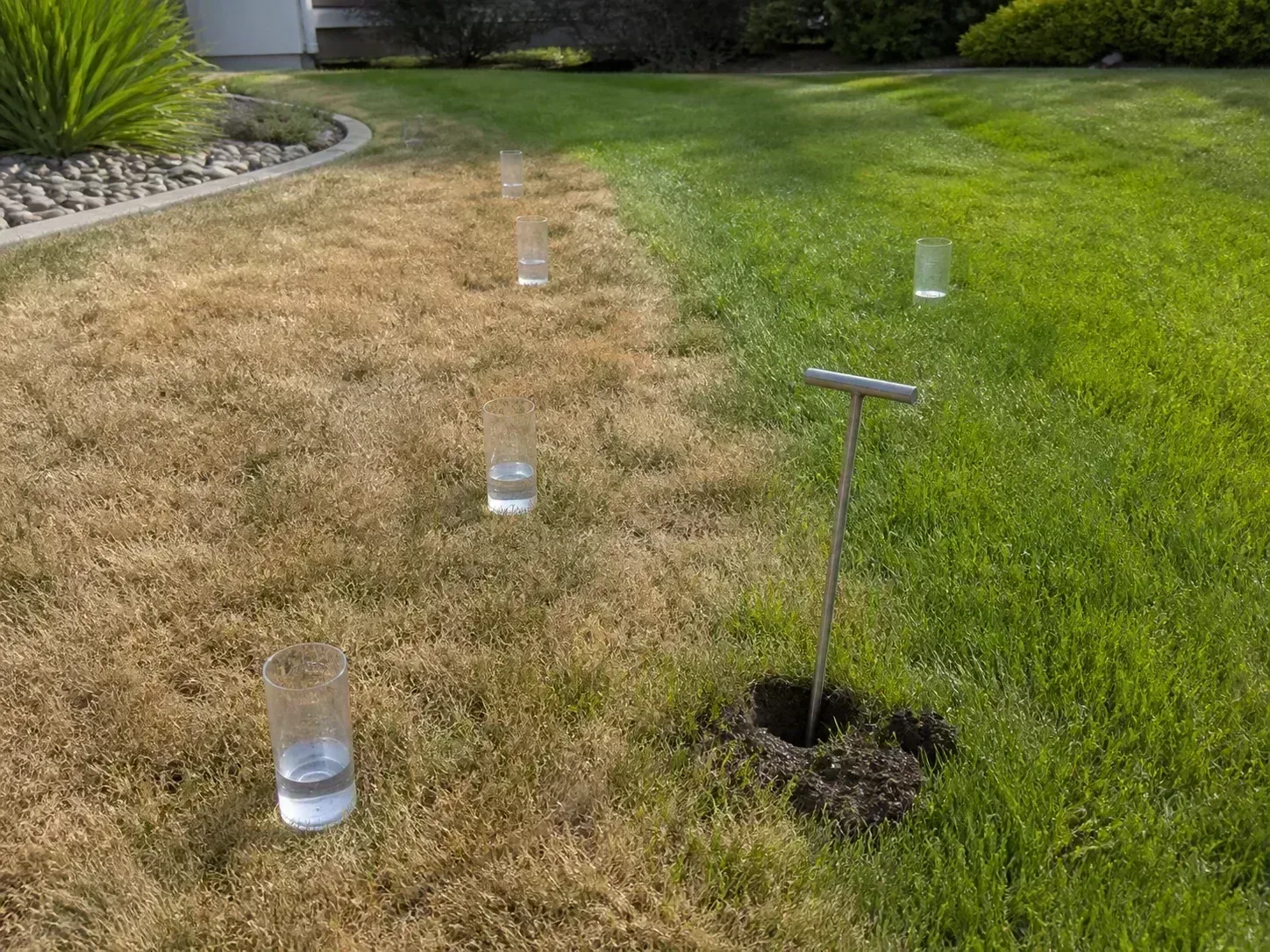
Mowing does not create an automatic need to water. Check the soil several inches down and look at the grass. If the root zone is moist and the lawn is growing normally, watering after mowing wastes water and can keep foliage wet longer than necessary. If the soil is genuinely dry, water based on root-zone need, rainfall, soil texture, and local restrictions—not because the mower just passed.
For established cool-season turf, it can be perfectly reasonable to allow summer dormancy. Illinois Extension warns that repeatedly watering a dormant lawn to green it up and then allowing it to brown again drains plant reserves and increases stress. If you choose to irrigate, commit to a measured routine rather than alternating between drought and shallow rescue watering. (Illinois Extension watering guidance)
When watering is needed, apply it slowly enough to soak the root zone without runoff. Use straight-sided cans to measure sprinkler output and a screwdriver or soil probe to check how deep moisture moved. University of Maryland Extension recommends early-day watering for established lawns and warns that frequent, shallow irrigation encourages shallow roots and disease; local rainfall and watering restrictions may change the exact schedule. (University of Maryland Extension)
Do not deliberately mow a completely dry, brittle lawn just before a major heat spike. If the lawn is still growing but showing drought stress, raise the deck and correct the underlying watering or soil problem when conditions allow.
Treat fertilizer and weed control as separate August decisions
The fact that a lawn needs mowing does not mean it needs fertilizer. Excess nitrogen can push tender top growth when roots are short on water, increase mowing demand, and worsen some summer disease problems. For cool-season lawns under heat or drought stress, many extension programs place the main nitrogen feeding in fall rather than the hottest part of summer. (UMN Extension lawn-care calendar, Illinois Extension drought guidance)
Warm-season lawns are different: they may still be actively growing and may have an August fertilization window in some regions. University of Georgia Extension lists August as a possible or recommended fertility period for several warm-season grasses, but the rate depends on species, soil test, previous applications, and local rules. Do not copy a warm-season program onto a cool-season lawn simply because the month is the same. (UGA Extension lawn-care information)
Weed control also deserves caution during severe heat. A stressed lawn can be injured by poorly timed herbicide applications, and a brown patch may be disease, insects, dormancy, or chemical injury rather than weeds. Correct mowing height, moisture, and fertility first; use any pesticide only for an identified target and according to its label and local regulations.
Late-August overseeding changes the mowing plan
Late summer into early fall can be an effective window to establish cool-season grass from seed because temperatures begin moderating and new seedlings have fall and spring growth before the next major summer stress. Pennsylvania State University Extension identifies late summer to early fall as a common establishment window, but the exact timing depends on local temperatures, soil moisture, seed type, and the expected first freeze. (Penn State Extension)
Overseeding does not mean scalping an existing lawn in August by default. Mowing a little shorter immediately before seed contact can be part of a planned renovation, but cutting healthy turf too low during heat can weaken it. Follow the seed supplier’s and local extension service’s preparation instructions, make sure seed will receive consistent moisture, and avoid starting when the weather will force new seedlings through extreme heat.
Once seed is down, the mowing goal changes. Wait until seedlings are established enough to tolerate mowing, use a sharp blade, and remove no more than one-third of their height. Do not let a newly seeded area dry out while continuing to mow nearby mature turf on the old schedule.
Use this August checklist for common lawn situations
Green and growing after regular rain: Mow when the height reaches the one-third threshold. Keep the deck at the species-appropriate high end, use a sharp blade, and leave evenly distributed clippings.
Green but growing slowly in heat: Mow less often, raise the deck slightly, and choose a dry, cooler window. Check the root zone before irrigating.
Uniformly brown cool-season lawn with no new growth: Pause mowing and reduce traffic. Check whether the crowns are alive, follow local drought guidance, and wait for cooler conditions or natural recovery rather than mowing for appearance.
Warm-season lawn that is brown or patchy: Do not assume dormancy. Check irrigation coverage, soil moisture, mowing height, disease symptoms, insects, compaction, and recent fertilizer or chemical exposure.
Too tall after rain or a missed cut: Wait until blades and soil are dry. Raise the deck, make a partial cut, remove heavy clumps, and return for a second cut later.
Preparing to overseed: Confirm that your local window is open, correct irrigation and compaction first, and follow a seed-specific preparation plan rather than scalping automatically.
Avoid the August mowing mistakes that set lawns back
- Mowing by the calendar: A Saturday schedule ignores growth rate. Use height and the one-third rule instead.
- Cutting every lawn to 3 or 4 inches: Species and climate matter; warm-season grasses may require a lower range, while tall fescue often benefits from a higher one.
- Scalping to skip a mowing: A low cut does not save the lawn from stress. It removes the leaf area that helps the plant recover.
- Mowing dormant grass: Brown, non-growing turf does not need a cosmetic cut and may be damaged by mower traffic.
- Mowing wet grass: Clumps and ruts create a second problem and make it harder to judge the real condition of the lawn.
- Watering after every cut: Irrigate only when the root zone is dry and the lawn needs water.
- Fertilizing for color during a heat wave: A greener response is not worth adding stress, disease pressure, or unnecessary growth.
- Leaving heavy clumps: Grasscycling works when clippings are small and dispersed, not when wet or tall grass forms mats.
- Assuming one August rule fits every region: Local extension guidance, rainfall, turf type, water restrictions, and the coming weather should settle the details.
Conclusion
You should mow your lawn in August when it is actively growing—not simply because the calendar says it is mowing day. Identify the grass, check for fresh growth, set the deck for the species and summer stress, and remove no more than one-third of the blade. Keep the blade sharp, mow dry turf, and leave clippings only when they are fine and evenly distributed.
If heat or drought has stopped growth, pause. A dormant lawn needs protection from scalping, traffic, excess fertilizer, and repeated rescue watering. When growth resumes, return gradually to mowing. That small shift—from maintaining a schedule to reading the turf—keeps August care safer for the grass and more sensible for your time and water.



