How to Get Rid of Brown Patches on Your Lawn
Brown patches in your lawn? Learn to tell brown patch fungus from watering, pests, and pet damage—then fix the right cause.
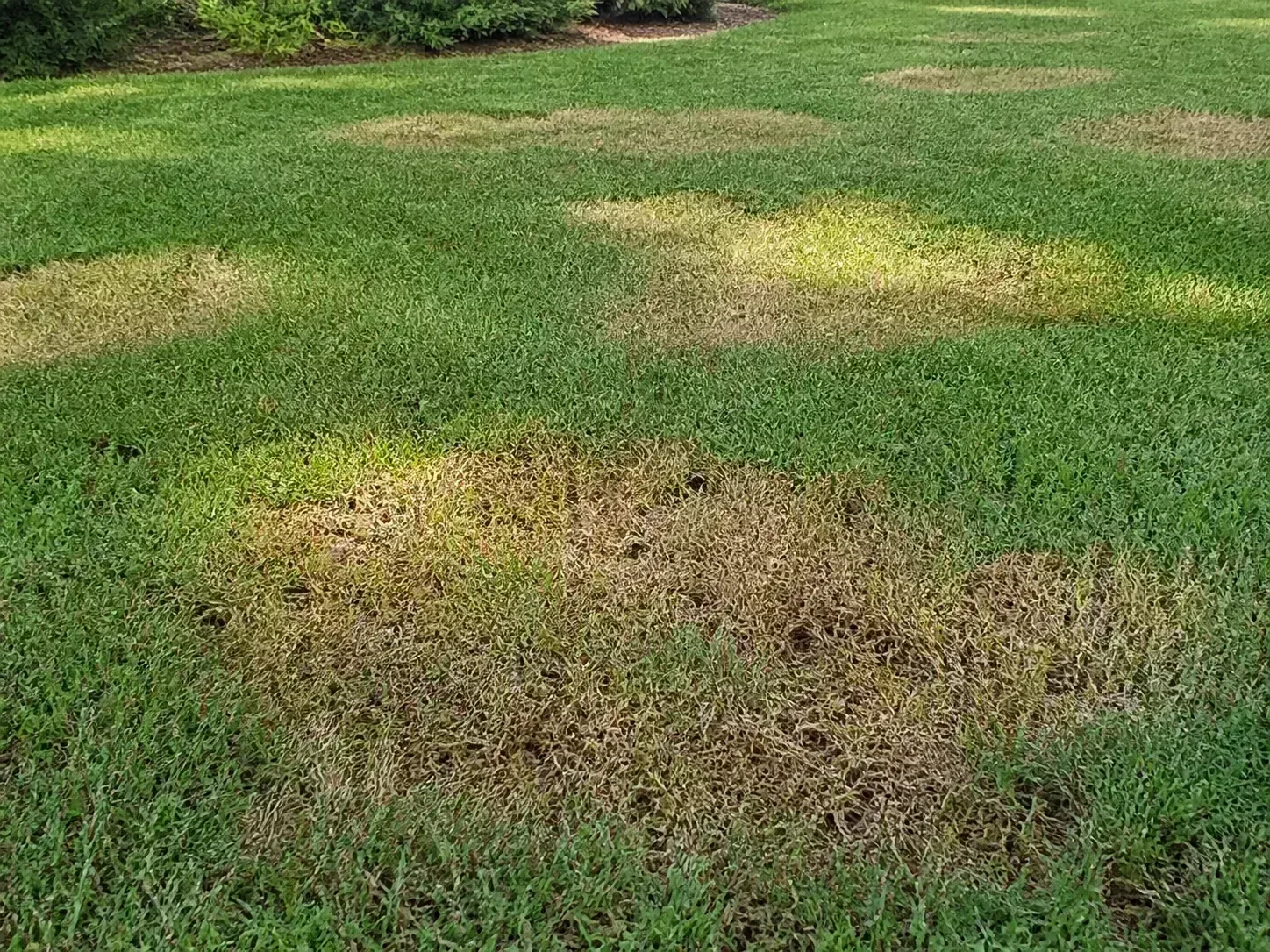
Brown patches are a symptom, not a single diagnosis. A circular tan spot after a week of humid nights may be brown patch—the fungal disease caused by Rhizoctonia solani—while a dry stripe under your sprinkler, a fist-sized spot where the dog runs, or a burned corner beside the driveway needs a completely different fix.
The fastest way to waste time and money is to grab fungicide, extra fertilizer, or a bag of seed before you know which problem you have. Start with the shape, timing, and feel of the patch, confirm whether the grass crowns are still alive, then match the fix to the cause you can actually verify.
Read the patch pattern before you treat the color
Expanding circles after hot, humid nights
Stand back and note whether patches are circular or ring-shaped, whether they appeared after warm rain or heavy irrigation, and whether they spread outward over several days. University of Georgia Extension describes brown patch and large patch as grass dieback in large tan or brown circles, sometimes with regrowth starting from the center. On dewy mornings, Penn State Extension notes that white fungal mycelium may be visible on affected turf when brown patch is active.
Also check individual blades in the patch margin. On tall fescue and other susceptible grasses, brown patch can show irregular tan lesions with darker borders—not just uniformly dead straw color. A smoke ring—a darker band around the outside of a patch—is another classic clue on some turf, though it is easier to see on closely mowed grass than on a typical home lawn.
If the pattern fits heat, humidity, recent nitrogen, and circular spread, treat it as a fungal patch disease until proven otherwise. If the pattern does not fit, keep looking.
Stripes, edges, and single spots
Other brown patches tell a different story:
- Dry stripes or arcs usually trace irrigation coverage, compaction, or slope runoff—not fungus.
- Spots along sidewalks, driveways, or roads often involve reflected heat, de-icing salt, or missed spray at the edge.
- Small, repeated spots in pet traffic areas point to urine injury.
- Random dead patches that lift like carpet suggest root loss from grubs, failed sod, or severe drought injury.
If your whole lawn turned tan evenly during a heat wave, you may be dealing with dormancy or broad drought stress rather than patch disease. Our guide on why your lawn is still brown after watering walks through that broader diagnostic sequence when irrigation is the main question.
Confirm the turf is alive enough to recover
Before you reseed or spray, check the crown—the small growing point where blades meet the soil. Part the turf at the edge of a patch. A firm, pale crown with attached roots can produce new blades when stress lifts. Black, mushy, or easily lifted tissue is dead and will need repair, not just “more care.”
Give a small plug a gentle tug. Living turf resists lightly; dead or root-severed turf comes up in pieces. This matters because fungicide cannot resurrect crowns that are already gone, and watering will not fix tissue killed by salt, urine, or chemical burn.
Brown patch disease and close look-alikes
Cool-season brown patch (Rhizoctonia)
On home lawns, brown patch most often hits lush cool-season turf during midsummer. Penn State Extension lists perennial ryegrass, tall fescue, and bentgrasses as highly susceptible, with Kentucky bluegrass affected less often during extended heat and humidity. Disease development accelerates when night temperatures stay above about 68°F, days average 80°F or above, and leaf surfaces stay wet from dew, irrigation, or rain.
High nitrogen on already succulent turf is a common trigger. Young lawns under a year old can suffer more severe thinning than older stands. Mild cases may recover when weather turns cooler and drier; severe patches can leave thin or bare soil that weeds colonize quickly.
Do not confuse brown patch with dollar spot, another ring-forming fungus that UGA Extension describes as smaller sunken straw-colored circles, often with reddish-brown lesions on individual blades during wet, 60–75°F weather. Dollar spot and brown patch need similar moisture management but different timing and sometimes different control choices—another reason to inspect blades, not just patch size.
Large patch on warm-season grass
On bermudagrass, zoysiagrass, St. Augustinegrass, and centipedegrass, a related Rhizoctonia problem is usually called large patch. UGA Extension notes it favors slightly cooler night temperatures—around 55°F and above—with the same humidity and leaf-wetness issues. Large tan circles may appear at spring green-up or during fall transitions, and grass can begin refilling from the center after dieback.
Calling every warm-season brown circle “brown patch” is a common mistake. Spring dead spot in bermudagrass, take-all root rot in some southern lawns, and drought injury can mimic rings from a distance. If the same circles return at the same season every year, note the calendar—seasonal recurrence is valuable diagnostic data.
Watering and drainage problems that brown out patches
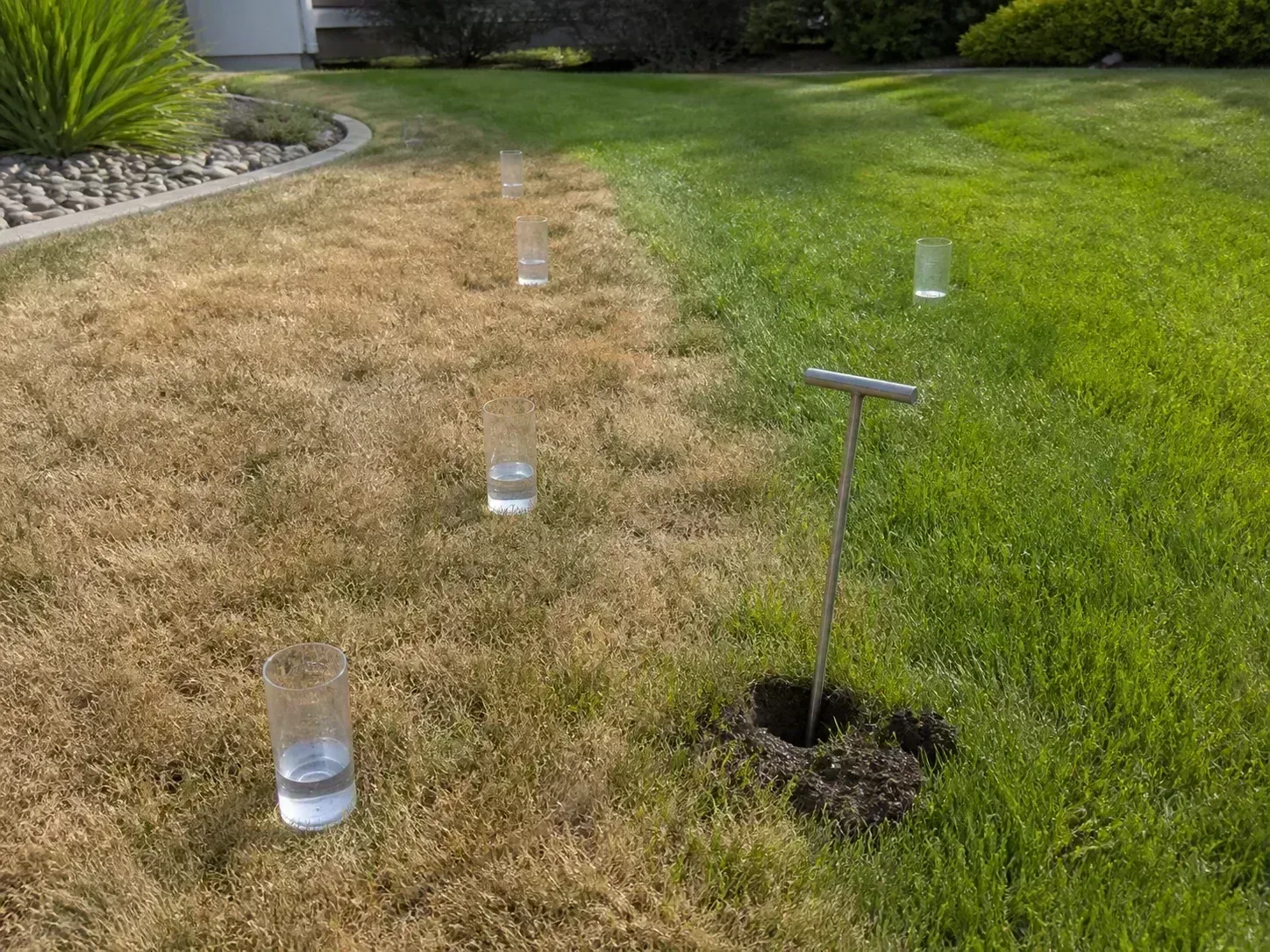
Both too little and too much water can create brown patches. Underwatered patches often follow sun-baked slopes, tree-root competition, or dry arcs beneath sprinklers. Overwatered or poorly drained patches stay wet near the surface, shallow roots weaken, and fungal diseases get the long leaf-wetness periods they need.
Push a probe or screwdriver into brown and green areas to compare moisture several inches down. Gardening Know How’s lawn-watering guidance emphasizes confirming that soil actually needs water before irrigating, because heat-stressed grass can look bad while the root zone is still moist. If runoff starts before the soil wets deeply, split the cycle into two shorter soak periods.
Fix the irrigation habit before you fix the color:
- Water in the early morning so blades dry through the day. Evening or night irrigation during humid heat extends leaf wetness and can worsen brown patch.
- Measure output with catch cans instead of guessing minutes.
- Correct low spots and compaction where water pools; fungus and root rot love those microclimates.
After heavy rain, avoid compounding damage by mowing wet turf or applying quick-release nitrogen on saturated soil. See what not to do to grass after heavy rain for the full post-storm checklist.
Grubs, chinch bugs, and hidden root feeders
Insects can kill grass in patches even when the soil surface looks merely dry. White grubs chew roots below ground; affected turf may wilt suddenly, turn brown, and peel up like a mat. Chinch bugs and other sap-feeders injure blades and crowns, often starting in hot, sunny areas.
Do not apply a blanket insecticide because you see brown grass. Cut a square of turf at the edge of a suspicious patch and inspect roots and the top inch of soil. Grub thresholds and control timing vary by region and species, so follow your local extension guidance and product labels rather than a generic national calendar.
If insects are confirmed, treat the pest, then reseed or sod only after the population is under control. Otherwise new seed becomes another food source or fails to root.
Dog urine, salt, and chemical burn
Dog urine concentrates nitrogen and salts in a small area, killing crowns and leaving brown spots, often surrounded by a temporarily darker green ring where diluted urine acted like a quick fertilizer. The fix is immediate dilution: saturate the spot with water as soon as you can, flushing salts through the root zone. Dead crowns still need overseeding once conditions improve.
De-icing salt and fertilizer or herbicide spills produce sharp edge burns along walks and beds. Rinse what you can, keep traffic off the area, and replace dead turf after the source is gone. For chronic pet spots, train bathroom breaks to a mulched area or accept that repeated use will outpace dilution on the same square foot.
When using any lawn chemical, measure carefully and never “double up” because grass looks stressed. Half-strength is not a universal rule, but overapplication burns patches fast—and burned tissue will not respond to fungicide.
Fix confirmed brown patch without feeding the fungus
Cultural changes that work first
If brown patch or large patch is the best match, start with habits that remove the conditions the fungus prefers:
- Stop high-nitrogen feeding while disease is active. UGA Extension explicitly warns against nitrogen applications during active brown patch or large patch. Plan recovery feeding after weather shifts and symptoms stop spreading—not in the middle of a humid heat wave.
- Switch to morning irrigation and reduce frequency if the soil stays wet near the surface. Deep, less frequent watering that still allows daytime drying beats daily light spritzing in summer.
- Raise mowing height within the recommended range for your grass type and sharpen the blade. Scalping stresses turf and improves airflow only when you remove excess thatch—not when you cut into the crown zone. Our edge or mow first guide pairs with sensible summer mowing habits.
- Reduce shade and improve airflow where shrubs trap humidity against turf.
- Manage thatch if the layer is thick enough to hold moisture at the surface; do not power-rake aggressively into active disease without local guidance.
Mild outbreaks often stall when nights cool and leaf wetness drops. Watch for two weeks before assuming cultural change failed.
When a labeled fungicide is justified
Home lawns with moderate to severe spreading patches during prolonged humid heat may need a labeled turf fungicide in addition to cultural changes. Penn State Extension notes that curative applications work best immediately after symptoms appear when more hot, humid weather is forecast, and that preventative programs are usually reserved for high-value or historically problem turf.
Read the label for your grass species, rate, re-entry interval, and whether the product is curative or preventative. Rotate modes of action using FRAC codes on the label to reduce resistance risk—do not repeat the same class all season because one bottle worked once.
Fungicide stops spread; it does not instantly green dead crowns. Expect several weeks of recovery, and plan overseeding for areas that stay bare.
Reseed and repair bare patches at the right time
Once the underlying cause is under control, repair dead patches during the active growth window for your turf type—early fall for many cool-season lawns, late spring through summer for warm-season grasses depending on region. Match seed or sod to the existing lawn so color and texture blend.
Prepare patches by removing dead mat, loosening the top inch of soil, and keeping seed moist through germination without flooding it. A thin layer of compost or labeled starter fertilizer can help, but avoid heavy nitrogen on newly seeded areas during heat. Large dead zones may be faster to sod than to seed if you need immediate cover before weeds move in.
If patches return in the same shape every year, you are treating symptoms, not the driver. Map recurrence by season and revisit irrigation, fertility timing, shade, or species choice.
Mowing, thatch, and airflow habits that prevent return
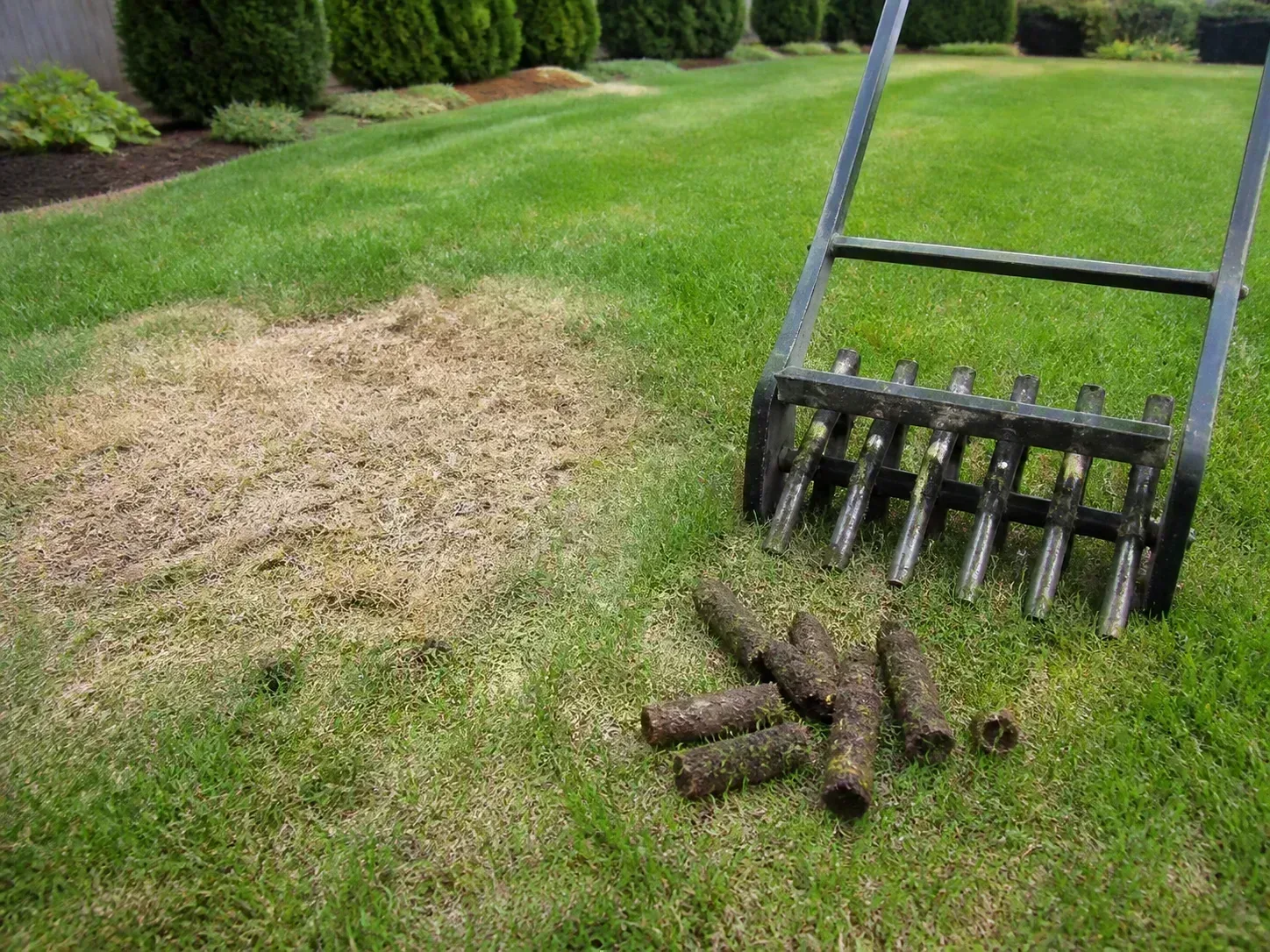
Prevention is mostly boring lawn hygiene done consistently:
- Mow often enough to follow the one-third rule—never remove more than about one-third of the blade at once. In peak summer, that may mean adjusting mow frequency rather than scalping to “catch up.”
- Aerate compacted areas in the correct season for your grass so water infiltrates instead of running off.
- Soil-test before fertilizing so summer nitrogen does not push succulent growth during disease weather.
- Scout during humid periods for early circles, smoke rings, or dew mycelium when patches are still small.
A lawn that dries before nightfall, breathes at the soil surface, and is not pushed with mid-summer nitrogen is a harder target for brown patch—and for many of the other patch makers on this list.
Conclusion
Getting rid of brown patches starts with naming the patch correctly. Circular, humid-weather rings on lush cool-season turf point toward brown patch and demand moisture and fertility changes first, with fungicide only when spread is serious and weather stays hostile. Stripes, pet spots, salt edges, and liftable mats point elsewhere—irrigation, dilution, pest control, or repair.
Confirm living crowns, fix the verified cause, then reseed bare areas in the right season. That sequence beats spraying first and diagnosing never—and it is how you remove brown patches without turning one problem into two.