How Long Do Radishes Take to Grow From Seed?
Most salad radishes mature in 25–45 days. Use this practical timeline, variety guide, and harvest checklist to know exactly when to pull them.
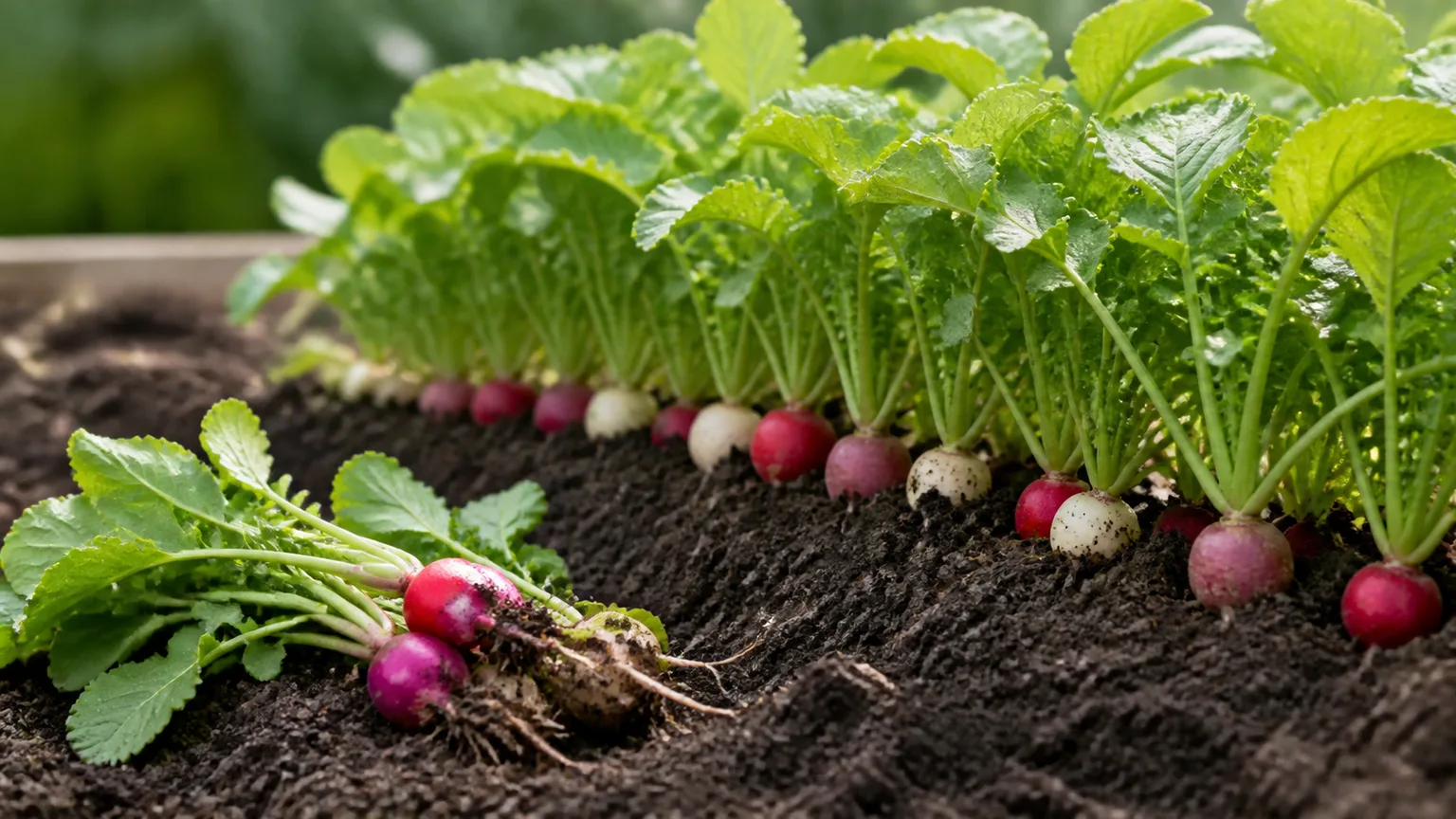
For most small salad radishes, plan on 25 to 45 days from sowing to harvest. Very fast cultivars may be ready in about four weeks, while early spring weather, cool soil, or a slower variety can push the harvest toward six weeks. Larger winter radishes and daikons commonly need 45 to 70 days or more.
The number on a seed packet is a starting estimate, not a promise. Temperature, moisture, spacing, soil texture, and the size the variety is meant to reach all change the finish line. The most reliable approach is to count from the planting date, start checking when the packet says to, and confirm readiness by looking at the root’s shoulder and pulling one test radish.
The Virginia Cooperative Extension root-crop guide gives a useful baseline: spring radishes mature in about 25 to 35 days, while winter radishes take about 45 to 70 days. Utah State University Extension gives a broader 25-to-45-day range because conditions and varieties vary. Together, those ranges explain why one garden can harvest red radishes in a month while another is still waiting at week six.
The quick answer: most salad radishes take 25 to 45 days
If you planted a typical red globe, French Breakfast, Easter Egg, or similar salad radish directly in the garden, begin checking the row around day 25. Many will be ready between days 28 and 35, but an early spring sowing in cold soil may take longer. Harvest is not a single event: a row can reach eating size over several days, so check it frequently once the roots begin to swell.
Use the seed packet’s days to maturity as your first estimate, especially when growing an unfamiliar cultivar. Then adjust your expectations for the season. Cool weather usually improves flavor but can slow growth; hot weather can speed flowering while leaving the root small, hollow, or overly spicy. A radish that is technically old enough but has not reached its intended size is telling you to investigate conditions, not simply wait indefinitely.
What “days to maturity” means on a seed packet
“Days to maturity” usually refers to the time from direct sowing until the variety reaches a harvestable size under reasonably favorable conditions. It does not mean every radish will be perfect on that exact day, and it may not mean the largest size the root could eventually reach.
Check the packet for three details before planting:
- The starting point: some companies count from sowing, while others use transplanting or an assumed emergence date. Radishes are normally direct-sown, so a days-from-sowing number is the most useful comparison.
- The intended size: a small salad radish may be mature at about 1 inch across, while a daikon may be expected to form a long root several inches deep.
- The season: a variety may be listed for spring, fall, or both. The same seed can behave differently when soil is cool in April and when days are still hot in late summer.
That is why “30 days” should be treated as a checking date. If the weather stayed cool and the plants are still small, give them time while keeping conditions steady. If the roots are already at the packet’s stated size, pull them even if the calendar says you have a few days left.
The radish timeline from sowing to harvest
Radishes move through the early stages quickly, but the root develops below the soil where it is easy to miss the ideal harvest window.
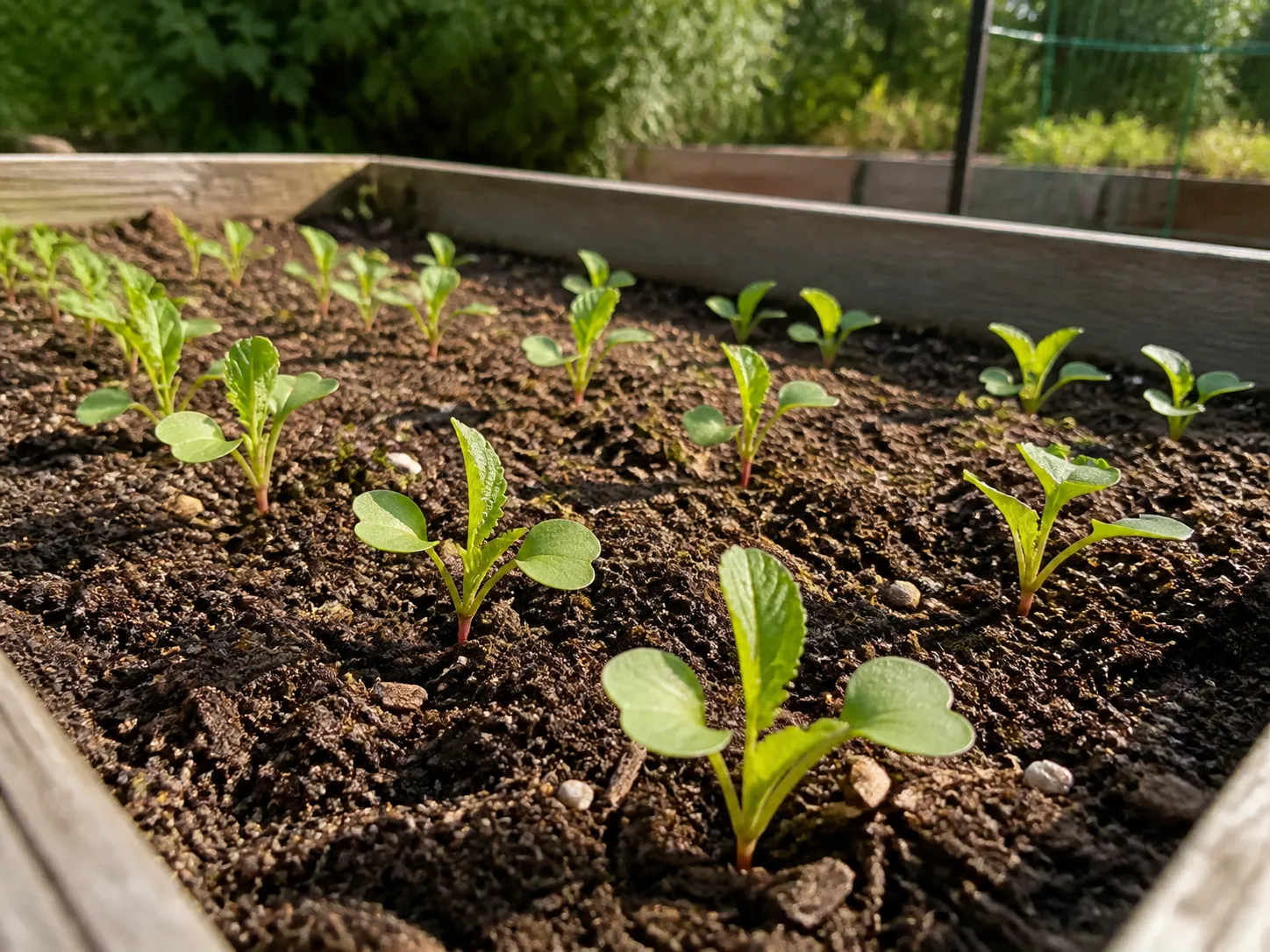
Days 0–10: germination and emergence
Sow radish seed directly into prepared soil rather than transplanting it. Utah State University Extension notes that radish seed can be sown once the soil reaches about 40°F, germinates best around 55–75°F, and commonly emerges in 5–10 days. The Royal Horticultural Society’s radish guide likewise describes germination in roughly 7–10 days.
During this first stage, the top inch of soil should stay evenly moist. A dry crust can delay emergence or leave a thin, uneven stand. Water gently enough that the seed does not wash into a clump, especially in a raised bed or container.
Days 10–25: leaves and root swelling
The seedling develops its first true leaves while the root begins to thicken. This is the stage when crowding becomes expensive: plants may produce plenty of foliage but compete too strongly to build a usable root.
Thin seedlings as soon as they are easy to handle. For many small salad radishes, leave roughly 1 to 2 inches between plants; follow the packet if it calls for a different spacing. Larger winter and oriental types need more room. RHS guidance recommends about 2.5–5 cm between salad radishes and wider spacing for winter and oriental varieties.
Keep weeds from shading the leaves or taking moisture from the shallow roots. Pull weeds close to the plants instead of cultivating deeply, which can nick or prune a developing radish. Consistent growth is the goal: a plant that repeatedly dries out and recovers may still make a root, but it is more likely to be small, split, or harsh-tasting.
The harvest window: pull for size and texture
Once the root begins to show a colored shoulder above the soil, check it every few days. A small round salad radish is often ready at around 1 inch in diameter, while an elongated variety may be ready when its shoulder is about thumb-width or when it reaches the size listed on the packet.
The RHS explains that salad radishes are best harvested young, often after about four to six weeks, and that roots left too long can become pithy and hot. The best harvest date is therefore a window: pull the largest roots first and allow undersized ones to finish.
Choose the variety before you count the days
Radish is not one uniform crop. Root shape, skin thickness, intended season, and harvest size all affect how long the plant needs.
Salad radishes are the fast crop
Small spring or salad radishes include round red types such as Cherry Belle and Champion, striped French Breakfast types, and colorful Easter Egg mixes. They are bred to mature quickly and are the best choice when you want a harvest in about a month.
The Virginia Cooperative Extension guide places spring radishes at roughly 25–35 days. For planning, use 25 days as the first inspection date and 35–45 days as a reasonable outer window if the planting was made in cool conditions. Pull young roots as soon as they reach a good eating size rather than waiting for every root in the row to become large.
Winter and daikon radishes need a longer, cooler run
Winter, storage, oriental, Japanese, mooli, and daikon radishes generally form larger roots and take longer. They are often sown in late summer for fall or early-winter harvest, when the declining heat helps the roots stay mild and firm.
Many winter types fall in the 45–70-day range. Daikons can take at least eight weeks, and seasonal timing matters: UF/IFAS notes that some daikons take about seven weeks in spring and about ten weeks in fall. Read the packet for the target length and loosen the soil deeply enough for the root to develop straight. A daikon that has reached its expected length may be ready even if the top is not as dramatically exposed as a round red radish.
Winter radishes have a wider quality window than tender salad types, but “can stay in the ground” does not mean “leave them unattended.” Check them as they approach maturity, protect them from hard freezes where needed, and harvest before the ground becomes difficult to work.
Plant by temperature, not just by the calendar
Radishes are cool-season vegetables. The best planting date is the one that gives the crop cool growing weather through root formation, not simply the first Saturday of spring.
In spring, sow as soon as the soil is workable and the forecast gives the seedlings a stretch of mild weather. In late summer, count backward from your expected fall harvest and sow when the worst heat is easing. USU Extension recommends spring planting before the last frost and a fall planting timed to avoid summer heat; the RHS also recommends spring and late-summer sowings while warning against hot, dry conditions.
If daytime temperatures are pushing toward 80°F or higher, a small salad radish crop may bolt before the root fills out. Use light afternoon shade and pay close attention to water, or pause sowing until the weather cools. In a hot climate, spring and fall may be much more reliable than trying to force a midsummer crop.
The growing conditions that keep radishes on schedule
Fast maturity depends less on a special fertilizer than on removing the conditions that interrupt growth.
Loose soil and correct spacing
Radishes need soil that is loose, reasonably fertile, well drained, and free of stones. Compact soil can restrict a round root; a hard layer can deform or stop a long variety. Work finished compost into poor soil, break up clods, and avoid creating a dense, waterlogged bed.
Sow salad radishes about 1/2 inch deep and thin them to the packet’s spacing, often 1–2 inches apart. Space daikon and winter radishes farther apart according to the variety. Virginia Tech lists a 2–3-inch in-row spacing for radishes in its home-garden root-crop guidance, while RHS recommendations are tighter for small salad types. The difference reflects variety and growing style, so the seed packet should win when it conflicts with a generic rule.
Do not overfertilize in an attempt to make the crop faster. Excess nitrogen can encourage leafy tops at the expense of the storage root. A soil test and a modest amount of finished compost are safer starting points than repeated high-nitrogen feeding.
Even moisture, light, and heat management
Keep the soil consistently moist but not waterlogged. The USU radish guide connects moisture fluctuations with slow growth, cracking, and hot or bitter roots. If the bed dries out, water thoroughly; then prevent the repeated dry-soak cycle with mulch or more frequent, lighter irrigation suited to the soil.
Give radishes an open, sunny position in spring. In hot weather, some afternoon shade can protect salad radishes from heat stress, but deep shade can also leave you with large leaves and a disappointing root. Keep the row weed-free so the radish receives the available light and moisture.
How to tell when radishes are ready to harvest
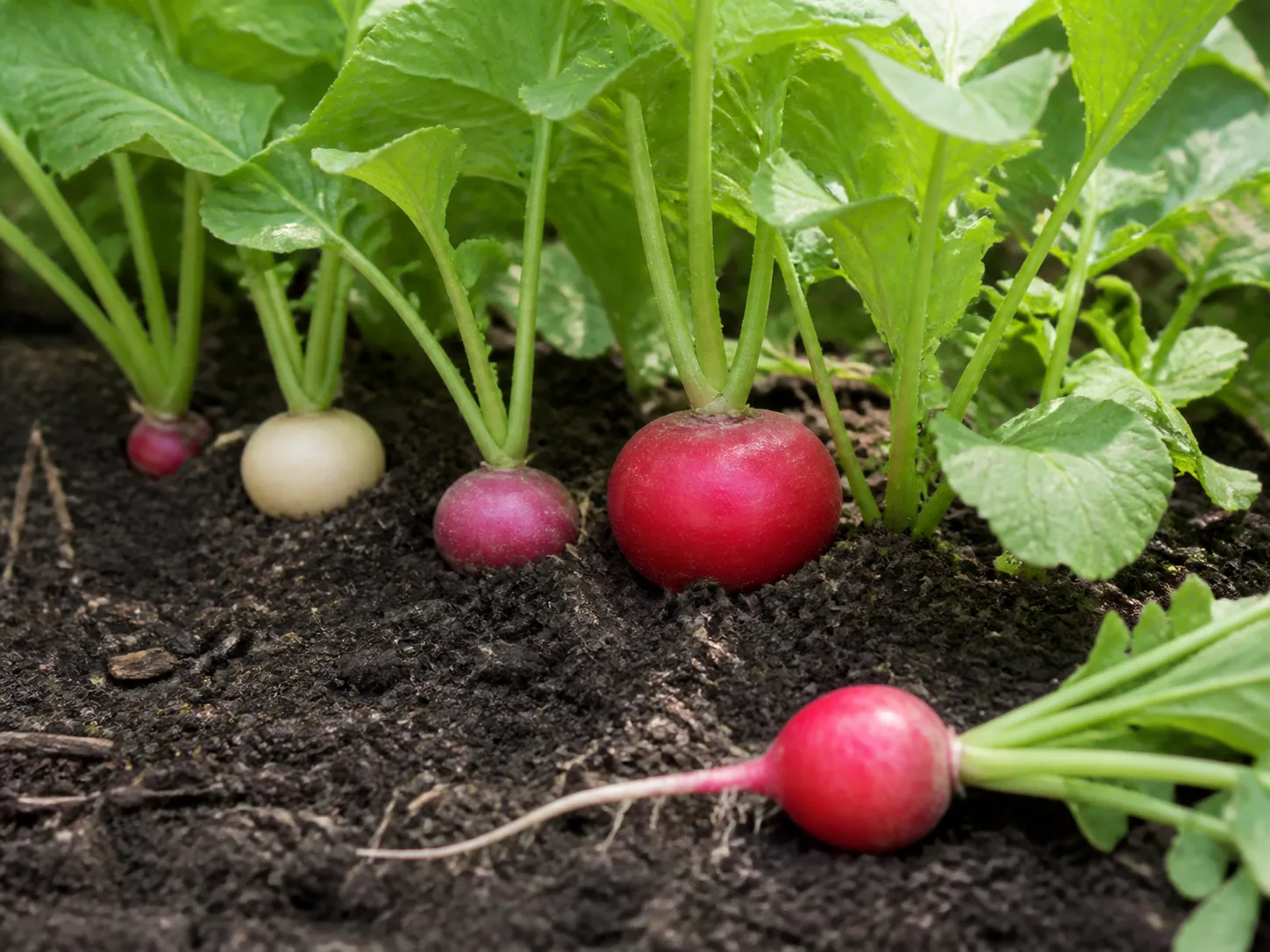
Use three signals together rather than relying on leaves alone:
- The calendar: the packet’s days to maturity have arrived, or you are within its checking window.
- The shoulder: the top of the root is visible or can be found by gently brushing away soil.
- The test pull: one radish reaches the expected diameter, length, or firmness and tastes crisp rather than spongy.
For small round radishes, about 1 inch across is a useful first target. Some varieties are intended to be smaller or larger, so use the packet’s description as the final size reference. Long radishes need a length and shoulder check rather than a diameter rule copied from globe types.
Leaves alone are not a reliable harvest gauge. A lush top can mean the plant has good energy, but it can also mean the spacing is too tight, the weather is too hot, or nitrogen is pushing leaf growth. If the shoulder is still narrow, give the roots better spacing and steady moisture instead of simply waiting for tall leaves to become a mature radish.
How to harvest and store radishes without losing quality
Water the row lightly a few hours before harvesting if the soil is dry. This makes pulling easier and reduces the chance that a brittle root or dry soil will separate the leaves from the root. For shallow round radishes, grasp the leaves close to the crown and pull straight up. For daikon or other deep types, loosen the soil with a trowel or garden fork before lifting so the root does not snap.
Harvest only what you can use soon, or pull the largest roots first and leave smaller ones to size up. Twist or pull carefully if radishes are growing in a close cluster. Remove the greens after harvest if you are storing the roots, because the leaves continue to draw moisture from them.
Trim the tops, wash the roots, and refrigerate them in a bag or container that prevents excessive drying while allowing you to use them within a few weeks. The USU guidance gives two to four weeks as a practical refrigerator-storage range. The crispest texture comes from harvesting at the right size, not from trying to rescue an overgrown root in the refrigerator.
Fix common timing problems before you pull the crop
Leaves but no swollen root
Check the four most likely causes: crowded seedlings, excessive shade, hot weather, and irregular moisture. Thin the row first if plants are touching, then keep water consistent and protect a spring or summer sowing from the hottest afternoon exposure. If roots still fail to swell, the planting may have missed the cool-season window; re-sow when conditions improve rather than waiting for a stressed crop to transform.
Small roots and a flower stalk
That is bolting. Heat, drought, and sometimes day-length changes can push a radish into flowering before its root reaches a useful size. Once the flower stalk is prominent, the root is unlikely to return to tender salad quality. Pull it for the edible greens or seed pods if you want them, and make the next sowing earlier in spring or later in summer.
Hot, woody, hollow, or pithy radishes
These symptoms usually point to a root that is too old, grew too slowly, or experienced heat or water stress. Harvest salad varieties as soon as they reach size, keep young plants growing without long dry spells, and avoid sowing into a heat wave. The RHS specifically warns that slow-growing or overlarge salad radishes can become pithy and hot; larger winter varieties are a better choice when you want a crop that can mature into cooler fall weather.
Split roots
Splitting often follows uneven moisture, especially when a dry bed receives a heavy soaking after the root has already matured. Keep moisture more consistent and harvest mature roots promptly. A split radish may still be usable after trimming, but it will not store as well.
Seedlings disappear or leaves have tiny holes
Slugs, flea beetles, and other pests can reduce a stand before the roots ever begin to form. Check seedlings while watering, use a physical row cover where appropriate, and keep weeds down. Rotate brassica-family crops if disease or root problems recur in the same bed.
Use succession sowing for a steady radish harvest
Because a radish plant produces one main root and can pass its peak quickly, planting the whole packet on one day often creates too many radishes at once. Sow a short row every 10–14 days in cool weather, or every two to three weeks when your conditions are slower or you want a smaller supply. GrowVeg’s radish guidance recommends repeated short sowings and regular checking, while Savvy Gardening uses weekly sowings during the cool spring window to spread the harvest.
For a simple plan, sow one small row today, another in about two weeks, and a third two weeks after that. Mark each row with its planting date. When the first row reaches its checking window, inspect the next row rather than assuming it is at the same stage. This gives you a living timeline for your own garden, which is more accurate than borrowing a maturity date from a different climate.
Conclusion: count the days, then trust the root
Most salad radishes take about 25–45 days from seed to harvest, with many fast varieties ready near the one-month mark. Winter and daikon types commonly need 45–70 days or longer. Start with the packet, but make the final decision with the weather, the variety’s intended size, the visible shoulder, and a test pull.
The fastest route to crisp radishes is steady growth: sow in cool weather, use loose soil, thin early, keep moisture even, and harvest before salad types become oversized. A few small succession sowings will keep the crop coming long after one large sowing has passed its peak.



