What Not to Do to Your Lawn After Heavy Rain
Heavy rain leaves lawns fragile. Learn what turf pros say not to do—mowing, watering, fertilizing—and how to know when the soil is safe again.
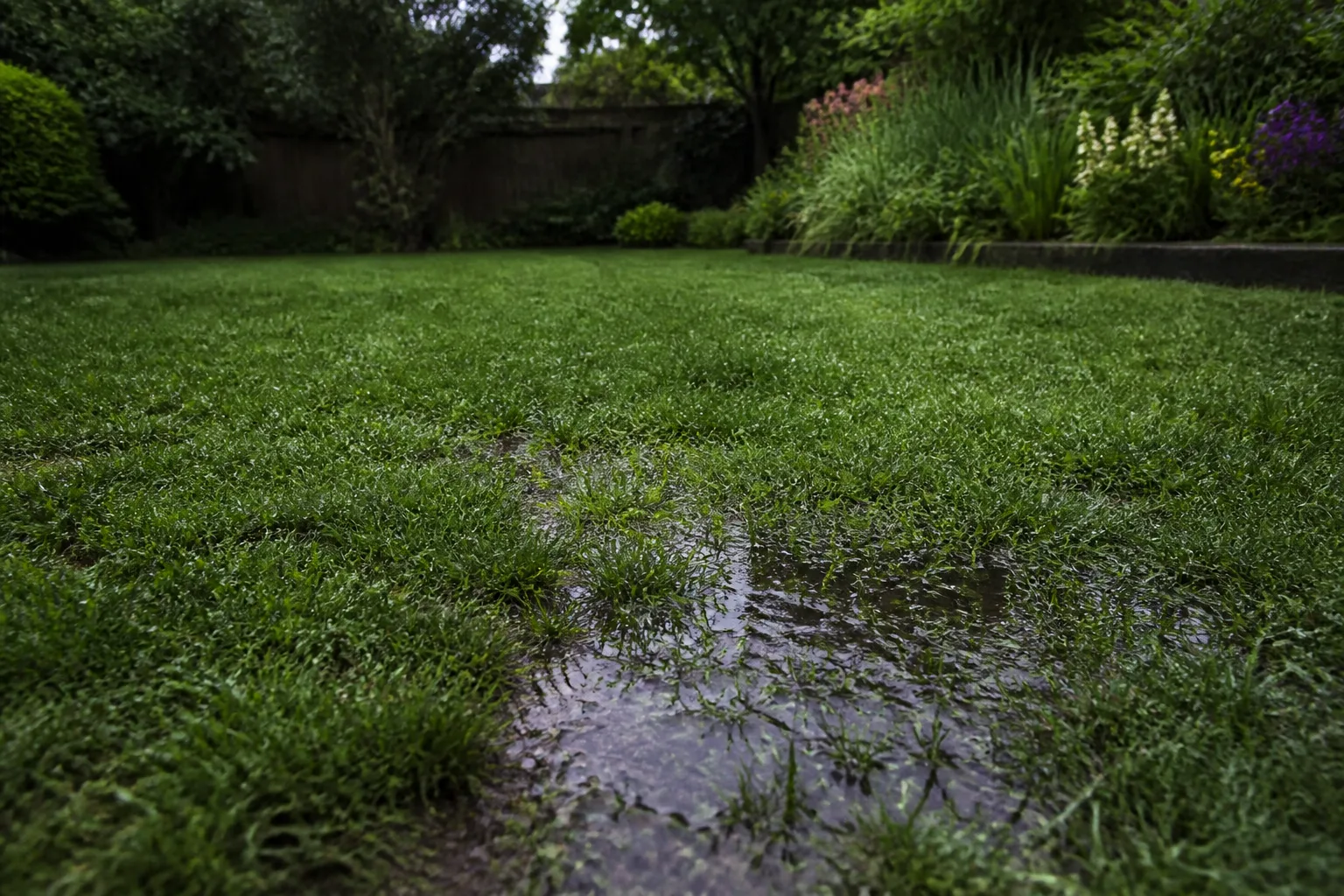
A soaking rain can feel like a gift after a dry spell. Your grass greens up, the soil finally loosens, and the irrigation bill drops for a day. The mistake is treating that soft, saturated lawn like a normal maintenance day. The worst thing you can do after heavy rain is run a mower—or any heavy equipment—across soil that still holds water. Wet blades tear instead of cut, clippings mat down and smother turf, and every tire or footstep squeezes air out of the root zone.
That does not mean you do nothing for a week. It means pausing the high-impact jobs—mowing, sprinklers, fertilizer, herbicide sprays, and unnecessary foot traffic—until the lawn passes a simple firmness test. The sections below explain why saturated turf fails so fast, what to skip, how to know when conditions are safe again, and what you can do in the meantime to protect the yard you already have.
Why a soaked lawn is more fragile than it looks
Heavy rain does more than wet the grass blades. It fills pore spaces in the soil, pushes oxygen away from roots, and turns firm turf into something closer to potting mix squeezed in your hand. Grass can look perky on top while the soil beneath is still plastic enough to rut under a mower wheel.
What heavy rain does to soil, roots, and oxygen
Healthy turf depends on air pockets in the soil as much as on water. When those pores stay filled with water for days, roots breathe less efficiently and growth slows. Colorado State University Extension’s lawn-care basics emphasize that compaction and poor drainage restrict root development long before you notice yellowing from the street.
Repeated storms make the problem worse on clay-heavy yards, shaded sections, and low spots where water collects. Grass may stay green briefly, then thin out as roots stay shallow. Saturated soil also keeps disease fungi active longer, which is why brown patch–type problems often flare after warm, wet periods. If you are seeing circular tan patches rather than uniform browning, compare your symptoms with our guide on why your lawn is still brown after watering before you assume rain solved everything.
Run the footprint test before you touch the turf
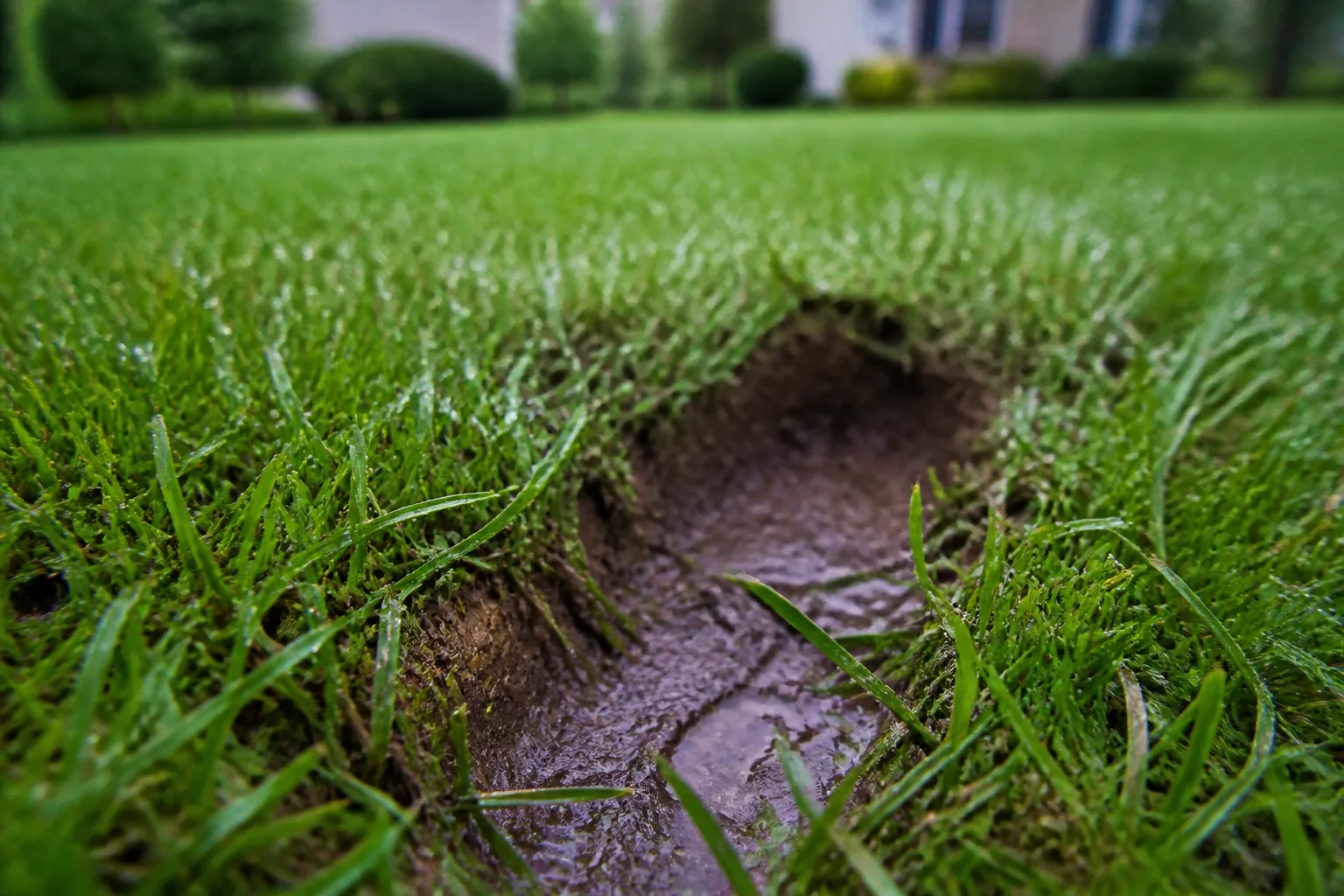
Do not schedule lawn work from the calendar alone. Walk several areas—open sun, shade, slopes, and spots near downspouts—and look at what your shoes leave behind.
If footprints or tire marks sink deeply, mud sticks to soles, or water wells up around your steps, the soil is still too soft for mowing or heavy traffic. If blades feel wet when you run your hand through them but the soil supports your weight without sinking, you may be closer to safe conditions, though a cleaner cut still waits for drier leaf surfaces.
Push a screwdriver or soil probe 4 to 6 inches down in a brown and a green area if you want more precision. Spongy resistance or water at the probe tip means the root zone is not ready, even when the top looks dry. This is the same moisture logic Gardening Know How’s lawn-watering guidance recommends before irrigating: check the soil, not just the grass color.
The worst post-rain mistake: mowing on saturated soil
Mowing is the task most homeowners reach for first, especially when a storm interrupts a weekly schedule. On saturated turf, it causes immediate cosmetic damage and longer-term soil problems that are expensive to reverse.
How wet mowing tears grass and compacts the ground
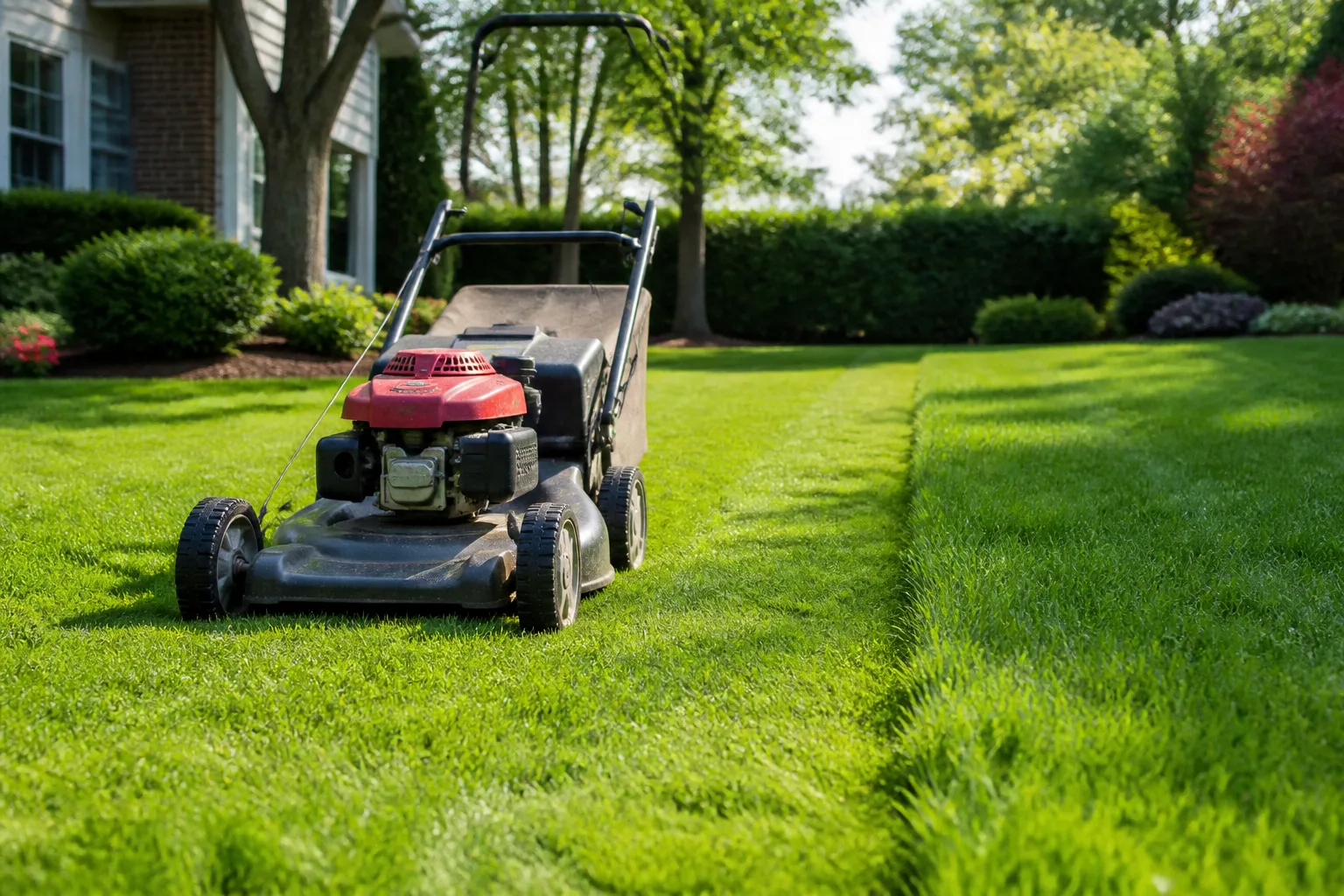
Wet grass blades bend and stick together instead of standing upright for a clean cut. Dull or even sharp blades can rip tissue, leaving ragged tips that dry brown and invite fungal entry. Illinois Extension’s mowing guide notes that mowing wet grass contributes to an uneven appearance and can clump clippings on the lawn.
Those clumps are not just ugly. They block sunlight and air to the crowns below, creating dead patches exactly where the pile sat. Meanwhile, mower weight—especially riding mowers—compresses saturated soil. University of Minnesota Extension mowing guidance ties proper timing and sharp blades to healthier turf; cutting during wet conditions works against both goals.
Compaction closes pore spaces roots need, slows drainage, and makes the next rain puddle in the same places. Wheel ruts on slopes can channel runoff and erode thin turf. If you already fight uneven cuts, read should you edge your lawn before or after mowing for dry-day workflow—but postpone both mowing and edging until the footprint test passes.
When slightly damp grass is finally safe to cut
There is a narrow middle ground between “storm-soaked” and “dry enough.” Slightly damp grass on firm, well-drained soil may be mowable if the mower is not clogging, tires are not tracking, and clippings disperse instead of clumping in piles.
Use a higher mowing height and slow your pace. Avoid sharp turns on slopes. Stop immediately if you see tearing, sliding, or mud on the wheels. Never mow during active rain, in standing water, or when the soil feels like a sponge. Cornell’s integrated pest management mowing guidance reinforces cutting dry turf whenever possible for the cleanest, healthiest result.
If growth got ahead of you during a rainy week, plan a staged recovery mow rather than one aggressive cut. Remove no more than one-third of the blade height per pass, even if that means two dry days in a row. For seasonal height targets during hot months, see should you mow your lawn in August.
Stop automatic irrigation until the root zone drains
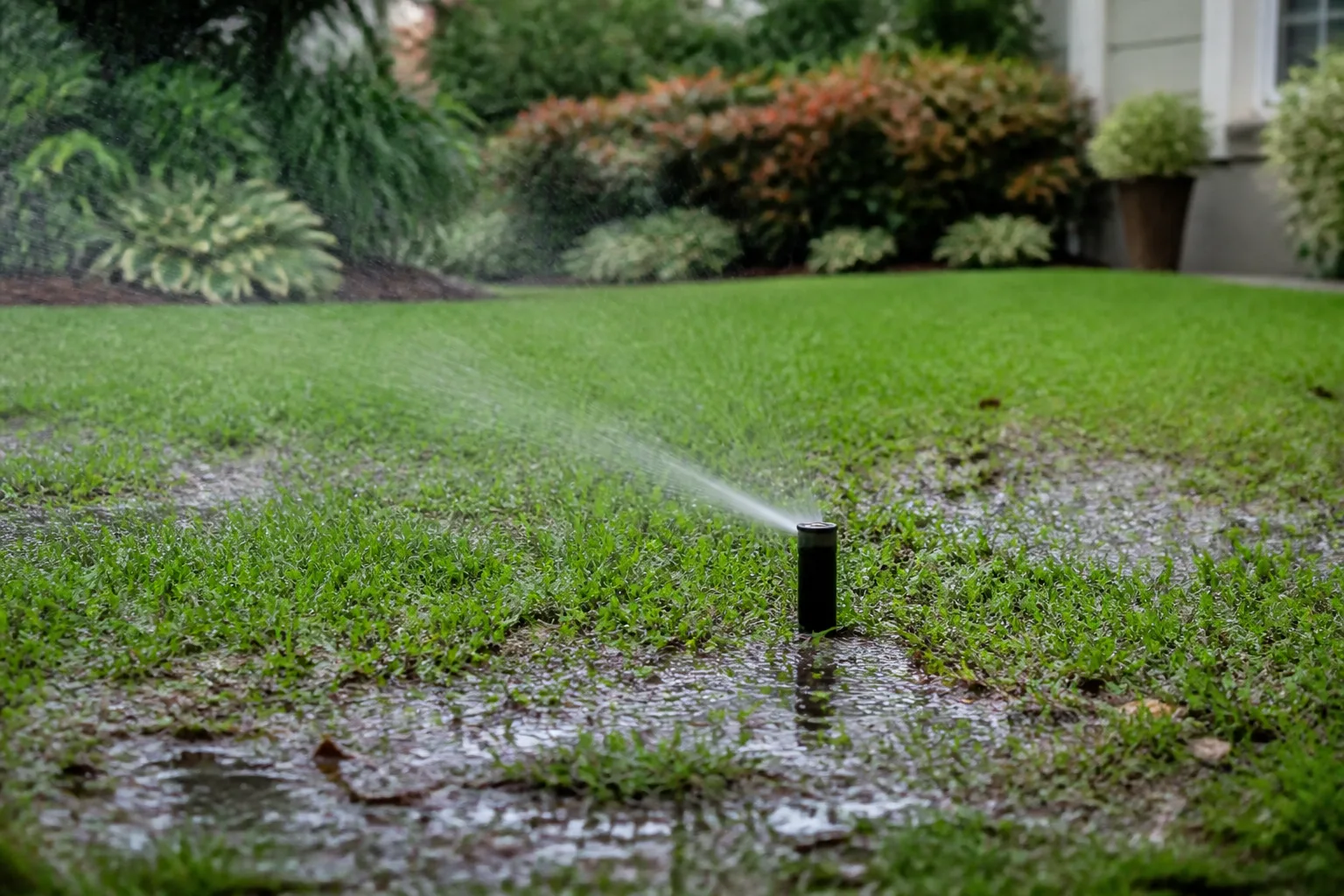
Skipping the sprinkler after a downpour sounds obvious, yet it is one of the most common post-storm errors. Programmed cycles often run on a timer whether or not the soil needs water, and smart controllers only help when rain sensors or weather delays are installed and working.
Pinellas County’s lawn-watering guidance, developed with University of Florida IFAS Extension, specifically cautions against irrigating a wet lawn. Extra water on already saturated soil lengthens oxygen stress, encourages shallow roots, and keeps fungal pathogens active at the surface.
How to tell whether your lawn actually needs water
Use the same probe test described above. If the root zone is moist several inches down, irrigation can wait—even if blades look a little wilted in afternoon heat. University of Maryland Extension’s watering guidance recommends deep, infrequent irrigation that wets the root zone without daily light sprinkles.
After heavy rain, walk the property and note puddles that linger more than 24 hours. Those areas may need grading or drainage work, not more water. If you rely on a controller, enable rain delay or soil-moisture sensing if available, and inspect rain sensors for debris after storms. A dry surface with a saturated root zone is exactly why post-rain watering causes more harm than good.
Hold off on fertilizer, weed control, and other lawn chemicals
Rainy-weekend warriors often try to “catch up” on feeding or weed spraying once the sky clears. On wet turf, those products frequently fail to stay where they belong—or they stress grass that is already struggling to breathe.
Granular fertilizer sitting on saturated soil can dissolve and run off before roots absorb it, wasting product and adding nutrients to storm drains. Liquid feeds and weed killers face the same issue: if the ground is wet enough that water pools, material washes away unevenly and may injure turf unevenly as well.
EPA lawn and garden care guidance stresses reading product labels and applying pesticides and fertilizers under conditions specified on the label. Most labels require dry foliage, firm soil, and no rain in the forecast for a set period. Applying during or immediately after heavy rain increases runoff risk and reduces effectiveness.
Runoff, weak uptake, and added stress on wet turf
Even when a product “needs water-in,” that usually means a controlled amount after application on dry turf—not a storm that already saturated the profile. Nitrogen pushed onto stressed, oxygen-limited grass can produce a flush of weak top growth while roots remain compromised.
Herbicides on wet leaves may not stick evenly, leading to patchy control and retreatments that compound stress. If weeds exploded after rain, mark the calendar for a dry, calm window and mow once before selective post-emergent sprays when the label allows. Pre-emergent timing is similarly unforgiving; a saturated surface is not the moment to guess.
When in doubt, wait until the footprint test passes and the forecast shows at least 24 hours without heavy rain. Your lawn will not miss one delayed application nearly as much as it will miss compacted, torn turf from rushing the schedule.
Avoid heavy traffic, parked gear, and new projects on soft ground
Mowing is the heaviest routine traffic, but it is not the only compaction risk after rain. Every footstep, soccer game, parked trailer, or wheelbarrow path on saturated soil squeezes pore spaces the same way mower tires do.
Keep pets and kids off soggy sections when you can, especially on clay lawns and low swales. If you must cross the yard, use the same routes sparingly rather than wandering randomly. Do not aerate, dethatch, or install sod on mud—the equipment or new rolls will compact the very layer you are trying to improve.
Postpone hardscape, fence-post, or tree-planting projects that require digging in waterlogged soil. Wet soil structure smears instead of fracturing, creating long-term drainage problems in planting holes. Store heavy equipment off the turf until the ground firms.
Safe things you can do while the lawn dries out
Waiting is active work when you use the time to diagnose problems instead of forcing a mow. Start with a slow walk after the rain stops, noting where water sits, where clippings from the last dry cut already mat, and where shade keeps blades wet longest.
Inspect drainage, low spots, and clumping clippings
Clear debris from storm drains, gutters, and downspout outlets so the next shower exits the property. Flag recurring puddles for future grading or a French drain consultation. Spread small dry clippings lightly with a rake if they landed on hardscape; do not drive a mower just to chop wet piles.
Sharpen mower blades, clean the deck, and service the air filter while you wait—sharp blades matter more on the first dry cut after a rainy spell. Photograph disease patches that expanded after the storm so you can compare them in a week instead of spraying blindly.
If standing water covers large areas for days, focus on safety and drainage first. Grass may recover once oxygen returns; repeated ponding usually means a drainage fix, not another fertilizer application.
Build a lawn that survives the next storm better
The best post-rain strategy starts before the clouds roll in. Dense, well-rooted turf on aerated, organic-rich soil absorbs rain faster and rebounds quicker than thin, compacted grass on pure clay.
Raise mowing height toward the upper end of your species’ range during active growth. Taller blades shade soil, support deeper roots, and tolerate wet periods better than scalped turf. Illinois Extension and UMN Extension both tie proper height to root depth and weed suppression.
Height, aeration, and smarter watering habits
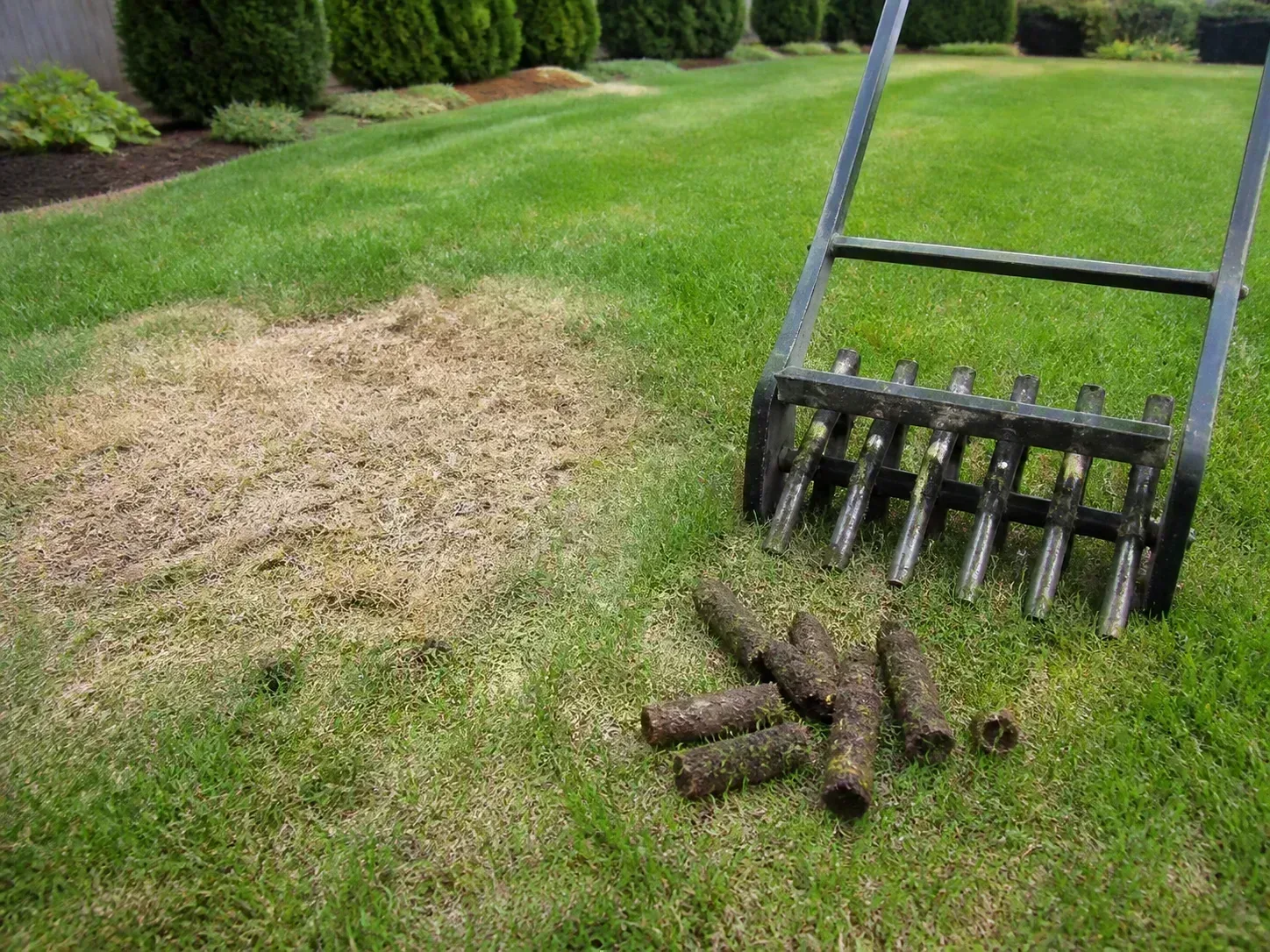
Core aerate during your grass type’s recommended window when soil is moist but not muddy—never on soup-like ground. Aeration relieves existing compaction so the next storm infiltrates instead of puddling. Topdress thin areas with compost after aeration on appropriate soils to improve infiltration over time.
Water deeply and infrequently when irrigation is actually needed, training roots to follow moisture downward. Pair that habit with functioning rain sensors so automatic systems stay off after generous rainfall. Fix chronic shade and tree-canopy issues if certain zones stay wet days longer than the rest of the lawn.
Healthy soil biology and organic matter help too: they create crumb structure that resists collapse under foot traffic. None of this prevents every storm injury, but it shrinks the window where one bad mow day can undo months of care.
Conclusion
After heavy rain, treat your lawn like recovering tissue—not like a chore waiting on the calendar. Pause mowing, sprinklers, and chemical applications until the soil passes a firmness test and clippings will not clump into smothering piles. The worst damage comes from pressing saturated soil with mower weight and tearing wet blades, not from waiting an extra dry day.
Use the delay to inspect drainage, service equipment, and plan aeration or height adjustments that make the next storm less risky. When the footprint test finally passes, return with sharp blades, a conservative cut, and irrigation only if the root zone truly needs water. Your future self—and your turf—will thank you for the patience more than for the rushed mow.



