What to Put in Christmas Tree Water (Plain Water Wins)
Sugar, bleach, aspirin, or plain water? Extension research says clean water plus a fresh trunk cut keep cut Christmas trees fresh through the holidays.
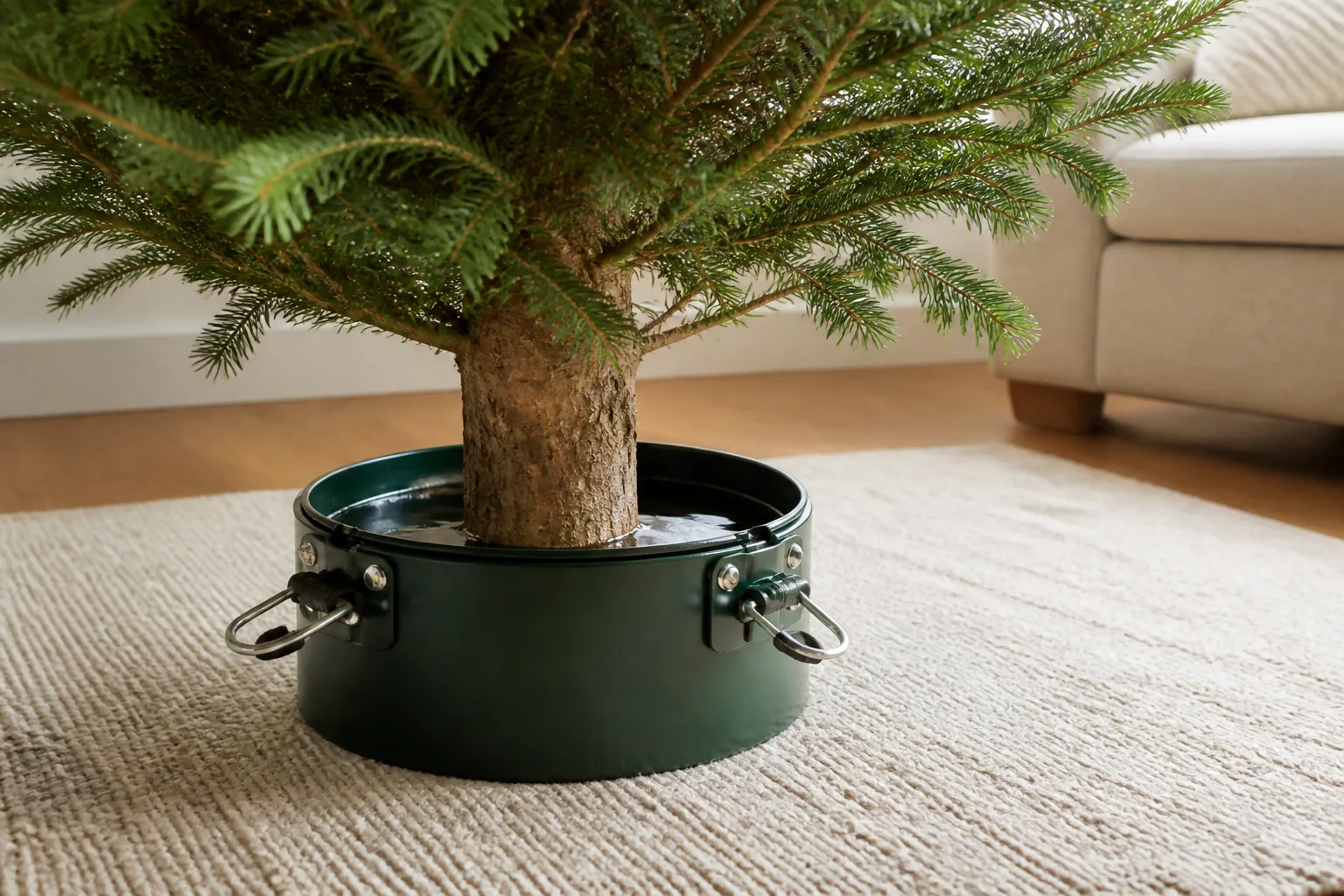
Every December, the same question shows up in group chats, Pinterest boards, and tree-lot conversations: what should I add to the stand water so needles stay green until New Year’s? Sugar, aspirin, bleach, store-bought preservative — someone always swears by a secret recipe.
The honest answer from Christmas tree growers and university extension programs is simpler than any homemade formula. Plain, clean water in a stand that stays full, plus a fresh trunk cut made at the right moment, does more for needle retention than anything you can stir into the reservoir. Additives are not just unnecessary for most households. Some actively shorten display life or create mess you do not want indoors.
This guide walks through what research says about each common additive, how much water your stand should hold, and what to do when uptake slows — so you spend less time chasing internet recipes and more time enjoying the tree.
The Short Answer: Plain Water Is All You Need
Put plain water in your Christmas tree stand. Tap water is fine. Temperature does not change uptake in any meaningful way, according to Penn State Extension.
Extension programs and the National Christmas Tree Association agree: do not add sugar, bleach, aspirin, floral preservatives, molasses, honey, soft drinks, or commercial “tree food” mixes. Research cited by extension services shows these provide no real benefit and can increase needle loss or encourage bacterial growth in the stand.
What does work is a three-part routine: fresh cut → right-size stand → daily refill. Get those right and most species will look good for several weeks indoors. Skip them and no bottle of additive will rescue a dry tree sitting above a heat vent.
Why Cut Trees Stop Drinking — and Why Additives Cannot Fix It
Understanding why a cut tree dries out helps explain why sugar water is a dead end. The problem is almost never “not enough nutrients in the water.” It is blocked uptake, too little water volume, or too much heat pulling moisture out of needles faster than the trunk can replace it.
How Sap Seals the Trunk After Cutting
When a tree is severed from its roots, resin and sap begin sealing the cut surface within hours. The National Christmas Tree Association notes that after roughly three to six hours of air exposure, pores in the trunk tissue take up water less efficiently. That gummy layer is the main reason a pre-cut lot tree can look fine on the roof rack but drink slowly once indoors.
A fresh perpendicular cut removes the sealed disk and exposes open xylem — the plumbing that moves water upward. No additive dissolves that seal as reliably as simply sawing off about a quarter inch of trunk before placing the tree in the stand. Drilling holes in the trunk or tapering it to a point does not help and can make the tree less stable, Penn State Extension warns.
A Cut Tree Is No Longer Feeding Itself
Here is the part many recipes get wrong. A displayed Christmas tree is not actively growing. It cannot metabolize sugar you pour into the stand the way roots and leaves would during the growing season. Carbohydrate additives — sugar, corn syrup, honey — do not “feed” a cut trunk back to life.
What sugar can do is feed bacteria and mold in warm stand water. That biofilm can clog the cut surface and make uptake worse, which is why growers who handle thousands of trees each season stick to water only. Freshness is a plumbing and humidity problem, not a nutrition problem.
Common Christmas Tree Water Additives (and What Research Says)
Social media recycles the same additives every year. Below is what each is supposed to do, what actually happens, and whether extension sources recommend it.
Sugar, Corn Syrup, Honey, and Molasses
Claim: Sugar provides energy so the tree drinks more water and holds needles longer.
Reality: Penn State Extension lists sugar and molasses among additives that should not be used. Iowa State University Extension states plainly that additives provide no real benefit for freshness. Sugary water can attract ants and accelerate microbial growth in the stand — especially in a warm living room.
Verdict: Skip it. If you want the smell of sweetness at the holidays, bake cookies. Do not turn the tree stand into one.
Bleach, Borax, and Antibacterial Mixes
Claim: A capful of bleach kills bacteria in the water so the trunk stays open and water stays “clean.”
Reality: Extension guidance groups bleach with additives to avoid. Highly alkaline or oxidative solutions can damage cambium tissue at the cut face and interfere with water movement — the opposite of the intended effect. Homemade mixes that combine bleach with sugar, borax, or other ingredients add chemical variability you cannot control in a living room with kids and pets.
Verdict: Do not use bleach or borax in tree water. Change cloudy water and keep the stand filled instead of sterilizing it.
Aspirin and Commercial Tree Preservatives
Claim: Aspirin keeps the water acidic and helps the tree absorb moisture. Bottled “tree preservative” packets are formulated by professionals, so they must help.
Reality: Penn State Extension includes aspirin and commercial tree preservatives on its do-not-use list. Iowa State Extension says additives provide no real benefit compared with plain water in a properly maintained stand. Some commercial gels and holding agents can reduce the amount of liquid water available to the trunk, according to Penn State — a serious drawback in the first week when uptake is highest.
Verdict: Save your money. If a product promises weeks of extra life without mentioning stand capacity and daily refills, it is selling convenience, not science.
Vodka, Soda, and Other Kitchen Experiments
Claim: Alcohol disinfects the water; soda feeds the tree; penny in the stand acidifies the bath.
Reality: Alcohol dehydrates plant tissue. Sugary soda repeats the sugar problem. None of these have extension backing for cut Christmas trees. They are folklore passed between well-meaning relatives.
Verdict: Plain water. Always plain water.
| Additive | Intended benefit | Extension-backed? | Main risk |
|---|---|---|---|
| Plain water | Hydration | Yes | Stand runs dry if not checked daily |
| Sugar / syrup | ”Feeds” the tree | No | Mold, ants, clogged cut surface |
| Bleach / borax | Kills bacteria | No | Tissue damage, unsafe mixing indoors |
| Aspirin | Acidifies water | No | No proven uptake benefit |
| Commercial preservative | Prolongs display | No | May reduce free water in stand |
| Vodka / soda | Disinfect / feed | No | Dehydration or sugar/mold issues |
What Actually Keeps a Christmas Tree Fresh Through the Holidays
Additives are a distraction. The habits below move needle retention more than any recipe.
Make a Fresh Trunk Cut at the Right Time
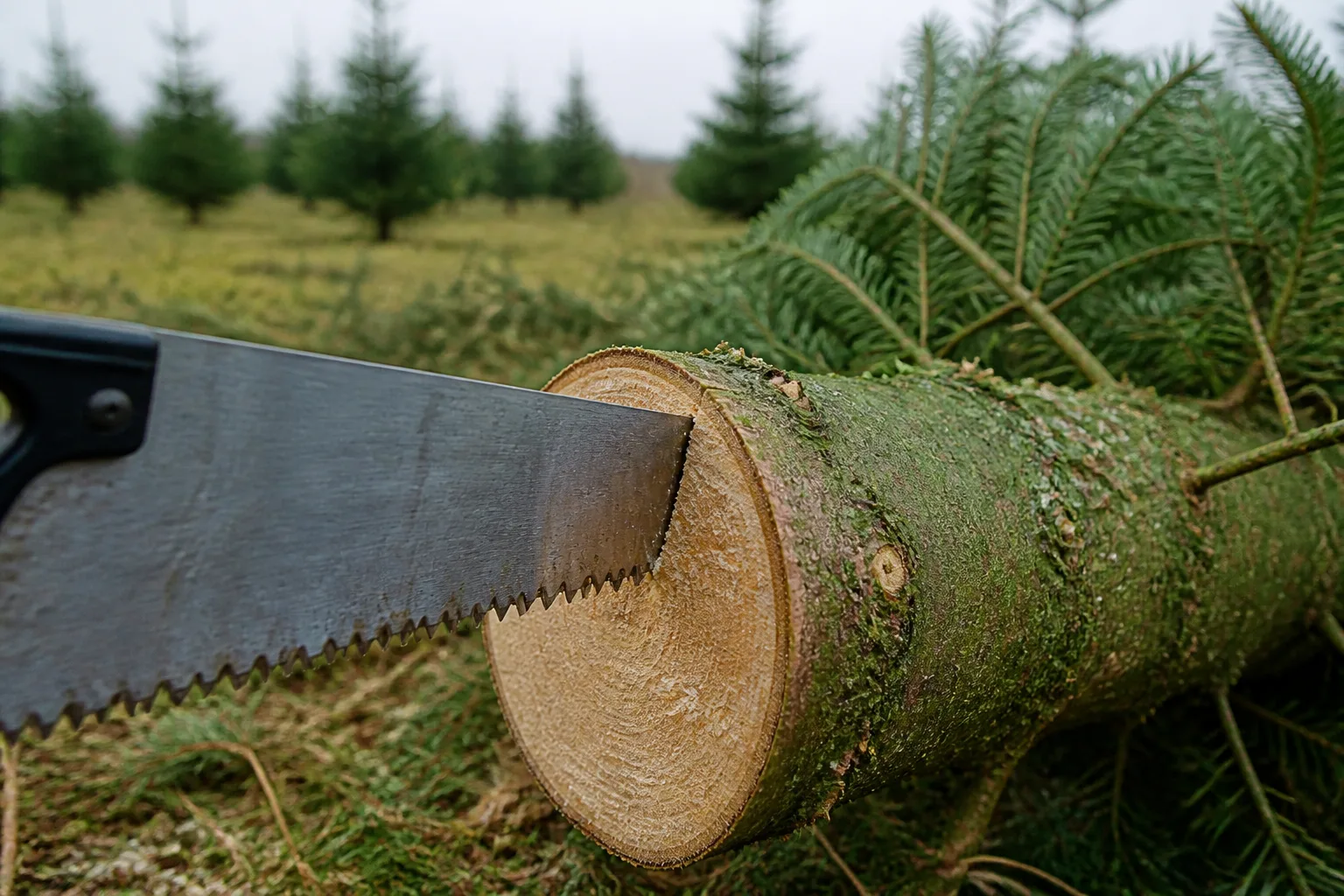
If the tree was cut within the past 12 hours and went straight into water, you may not need another cut, Penn State Extension notes. For most pre-cut lot trees — especially if travel took more than a couple of hours — remove about 1/4 inch from the base immediately before setting the stand.
Cut straight across, perpendicular to the trunk. Angled or V-shaped cuts reduce the surface area submerged in water and make the tree harder to stabilize. Never shave the sides of the trunk to force it into a undersized stand collar; the outer sapwood layers absorb the most water.
Get the tree in water within a few hours of the fresh cut. If life interrupts — errands, dinner, figuring out which end of the lights plug in — keep the trunk in a bucket of water in a cool garage until you are ready.
Choose a Stand That Holds Enough Water
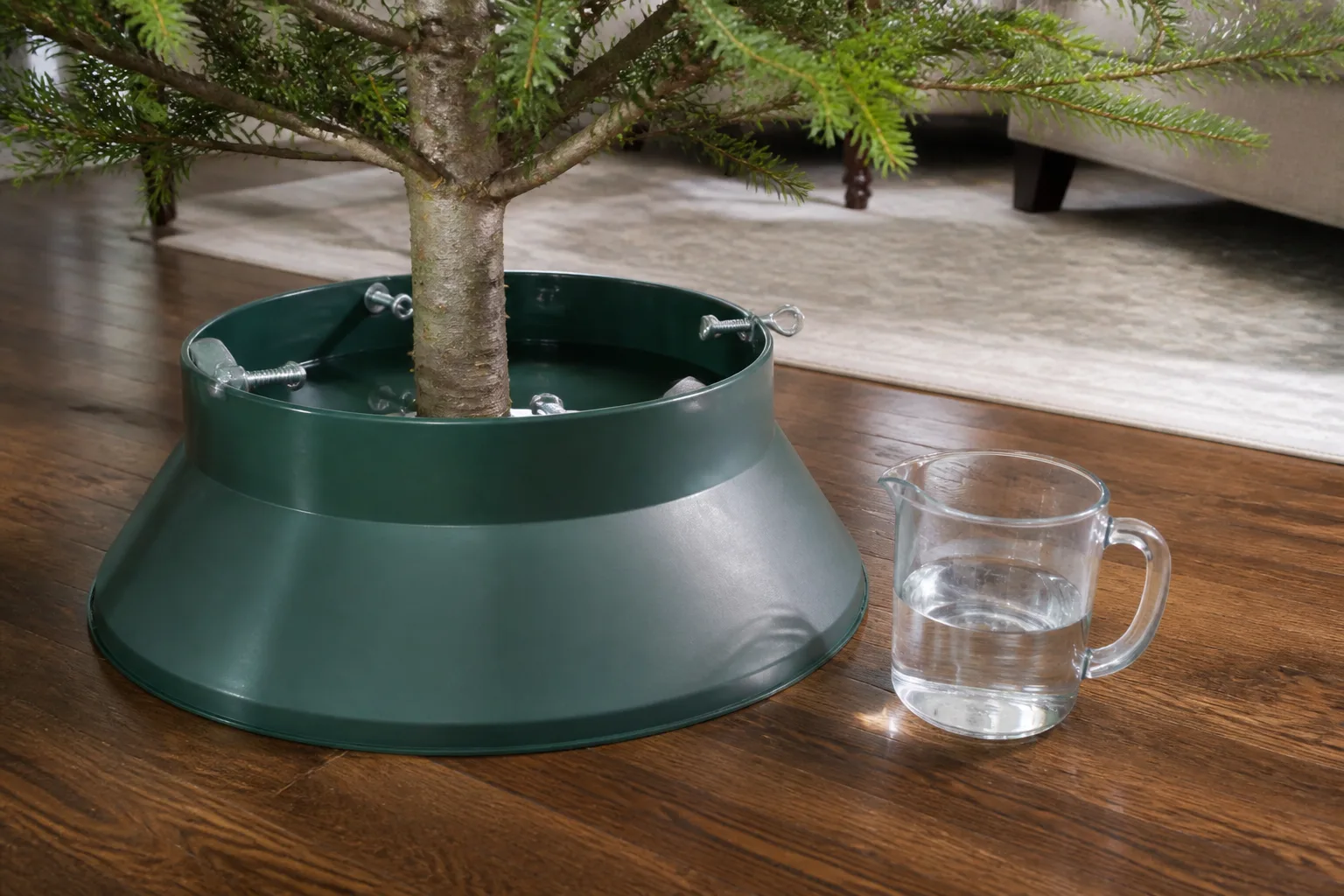
Stand capacity is the most underrated decision on the lot. The rule used by extension and the NCTA: one quart (32 ounces) of water per inch of trunk diameter per day, with the reservoir holding at least one full day — preferably two — of that volume.
A four-inch trunk needs about one gallon of water daily. Your stand should hold that much with the tree mounted, not just on paper. Avoid shallow “coffee cup” stands that look fine until day three, when the water line drops below the cut and sap seals the trunk again.
The stand opening should fit the trunk without forcing. A ring-style collar must be wide enough for the trunk to pass through without whittling.
Check and Refill the Reservoir Every Single Day
Check the stand every day — twice a day during the first week if you can. Trees drink the most immediately after setup. Penn State Extension warns that many stands still show water in the bowl even when the base of the trunk is no longer submerged, which is the level that matters.
Top off with plain water whenever the level drops. Never let the cut end go dry for even a few hours. Once it seals, you need another fresh cut (hard with a decorated tree) or a hot-water reset described below.
How Much Water Your Tree Really Needs
Height is a poor guide. A tall, narrow fir may drink less than a short, heavy Fraser with a thick trunk. Measure trunk diameter an inch above the cut, then multiply by one quart per day.
| Trunk diameter | Approximate daily water use | Minimum stand capacity (1-day) | Better stand capacity (2-day buffer) |
|---|---|---|---|
| 3 inches | ~3 quarts (0.75 gal) | 3 quarts | 1.5 gallons |
| 4 inches | ~1 gallon | 1 gallon | 2 gallons |
| 5 inches | ~1.25 gallons | 1.25 gallons | 2.5 gallons |
| 6 inches | ~1.5 gallons | 1.5 gallons | 3 gallons |
Uptake slows naturally in weeks two and three. That is normal. A tree that drank a gallon on day two may take half as much by day twelve. Keep refilling anyway — the goal is never exposing the cut.
If you are comparing species at the lot, know that Colorado blue spruce holds needles well only when it never runs dry, Penn State Extension emphasizes. Once spruce dries even once, needle drop accelerates. Fir and pine are more forgiving, but all species punish an empty stand.
Storing Your Tree Before You Bring It Indoors
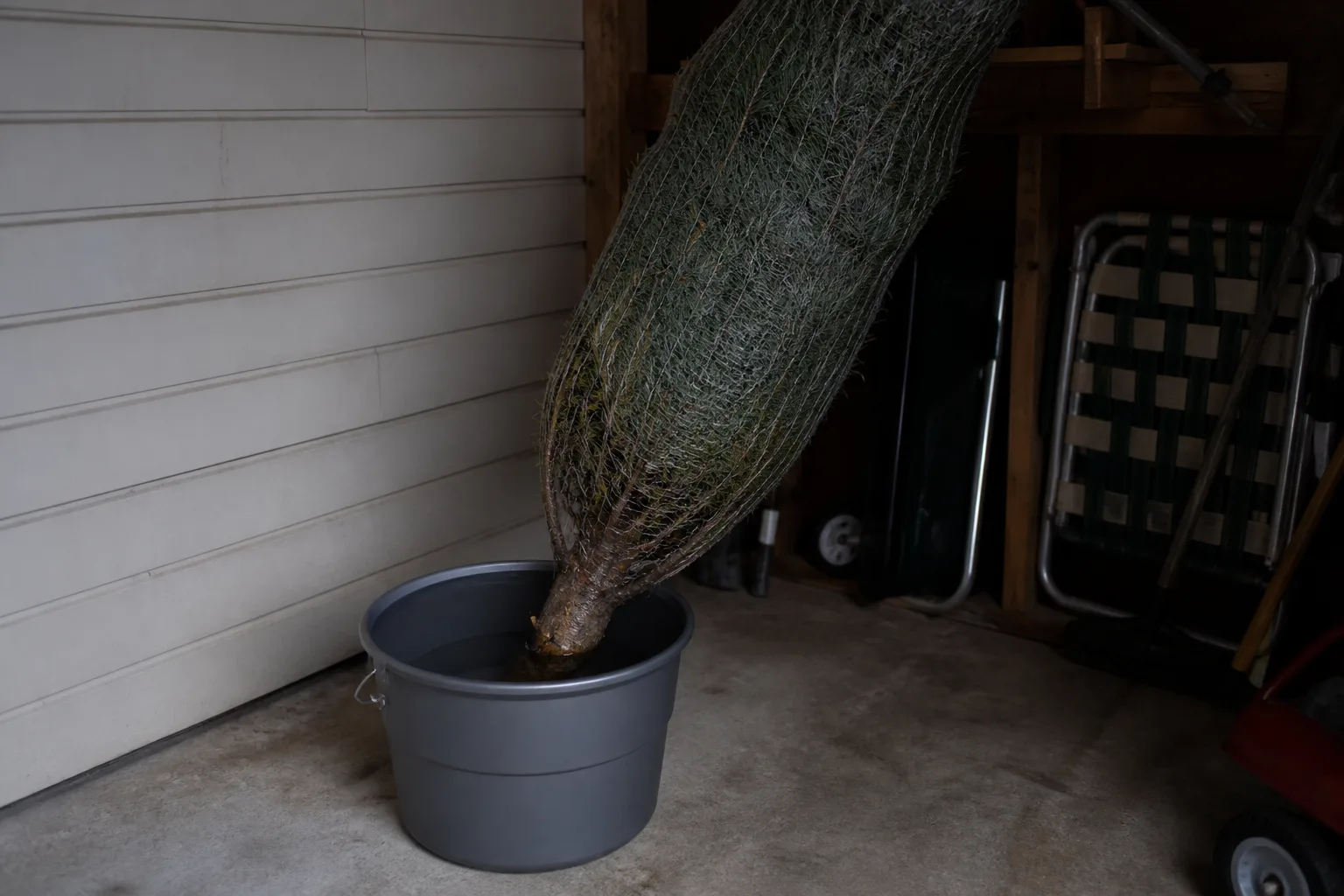
Early birds who buy the weekend after Thanksgiving often wait a week before decorating. Storage matters as much as stand water later.
Keep the tree out of wind and direct sun — an unheated garage, shed, or shaded north side of the house works. If storing indoors temporarily, stand the trunk in a bucket of plain water like a cut flower. For brief outdoor holding, the NCTA notes some growers stand trees on bare soil rather than hot pavement, though bucket water is more reliable.
Do not lean the tree against a sunny wall or the south side of a garage where temperature swings bake the needles. When you are ready to decorate, make the fresh cut, move directly to the stand, and fill immediately. If you are also decluttering and prepping the room before setup, finish moving furniture and heat sources first so the tree’s final spot is already cool and clear.
Indoor Conditions That Dry Out Trees Faster
Water in the stand replaces what the tree loses through its needles. Transpiration speeds up when air is hot and dry — exactly what furnaces, fireplaces, and sunny picture windows create in December.
Lower the thermostat a degree or two if household comfort allows. Keep the tree away from heat vents, radiators, wood stoves, and space heaters. Close heat registers that blow directly into branches if you can do so safely.
Running a humidifier helps a little, but it does not replace stand water. LEDs produce less heat than old incandescent light strings, which reduces localized drying on inner branches. If you are still using vintage bulbs, consider upgrading before the longest display weeks.
A well-watered tree is also a fire-safety priority. Penn State Extension notes that trees displayed in water with proper care stay far less hazardous than dry trees — and that flame-retardant sprays can damage needles and increase moisture loss. Moisture from plain water is the practical approach.
When Your Tree Stops Drinking: Troubleshooting Steps
A stand that barely drops after day one is not always an emergency. Choose-and-cut trees sometimes uptake slowly at first. The NCTA reminds growers that the tree itself — pliable needles, flexible branches, fresh scent — is a better dryness indicator than a single day’s water line.
Work through these steps in order:
Confirm the cut end is submerged. If the water level is “above empty” but below the trunk base, add water until the entire cut is covered.
Check for sap seal. If the tree went six or more hours without water after setup, the trunk may have resealed. A fresh cut is the proper fix. If the tree is already decorated, the NCTA suggests hot tap water in the stand as a temporary measure to soften sap — not as a daily routine, but as a one-time reset when uptake stalls early.
Inspect for sugar or additive residue. If someone already added a homemade mix, dump the stand, rinse gently, refill with plain water, and monitor for 24 hours.
Evaluate heat exposure. Trees under a heating vent can lose moisture faster than the trunk pulls water, mimicking poor uptake. Move the tree or redirect airflow if possible.
Accept late-season slowdown. Minimal water use in week three often means the display is nearing its natural end. Needle drop on interior branches is normal; brittle exterior needles that shower when you brush past are not.
If needles are already brown and brittle, no additive will revive them. Focus on safe removal and — if you are a pet household — keeping thirsty animals away from the stand while you take the tree down.
Pet Safety Around Christmas Tree Water
Dogs and cats drink from tree stands. Because the best additive is none, plain water is the safest baseline — but stagnant water can still harbor bacteria that upset stomachs. Cover the stand with a weighted tree skirt or barrier if pets investigate, especially if you are also managing cats and Christmas trees at the same time.
Never add fertilizers, aspirin, essential oils, or sweeteners such as xylitol to stand water. Those create real poisoning risk for pets even when they do little for the tree. If you use a preservative packet against advice, treat the stand like any other household chemical and block access entirely.
Vacuum fallen needles daily in pet homes. While you are tuning holiday decor, outdated trimmings that shed or tempt chewing are worth swapping for safer materials before they become a vet visit.
Conclusion
The recipe for a fresh Christmas tree through December is not hidden in your pantry. Fill a large stand with plain water, make a fresh perpendicular cut before setup, and check the reservoir every day so the trunk never dries out. Skip sugar, bleach, aspirin, and bottled preservatives — extension research consistently shows they do not outperform clean water and can make things worse.
Buy or borrow a stand sized for your trunk diameter, store the tree cool and shaded if setup waits a few days, and keep it away from heat sources once indoors. When uptake slows, look at submersion and sap seal before reaching for another internet formula. Get the basics right and your tree has its best shot at staying green into the new year — no stirring required.