Outdated Christmas Tree Trimmings to Skip
Designers are retiring tinsel, matchy ornament sets, and cheap faux greenery. Learn what to skip, what to keep, and how to trim a tree that feels collected—not catalog-perfect.
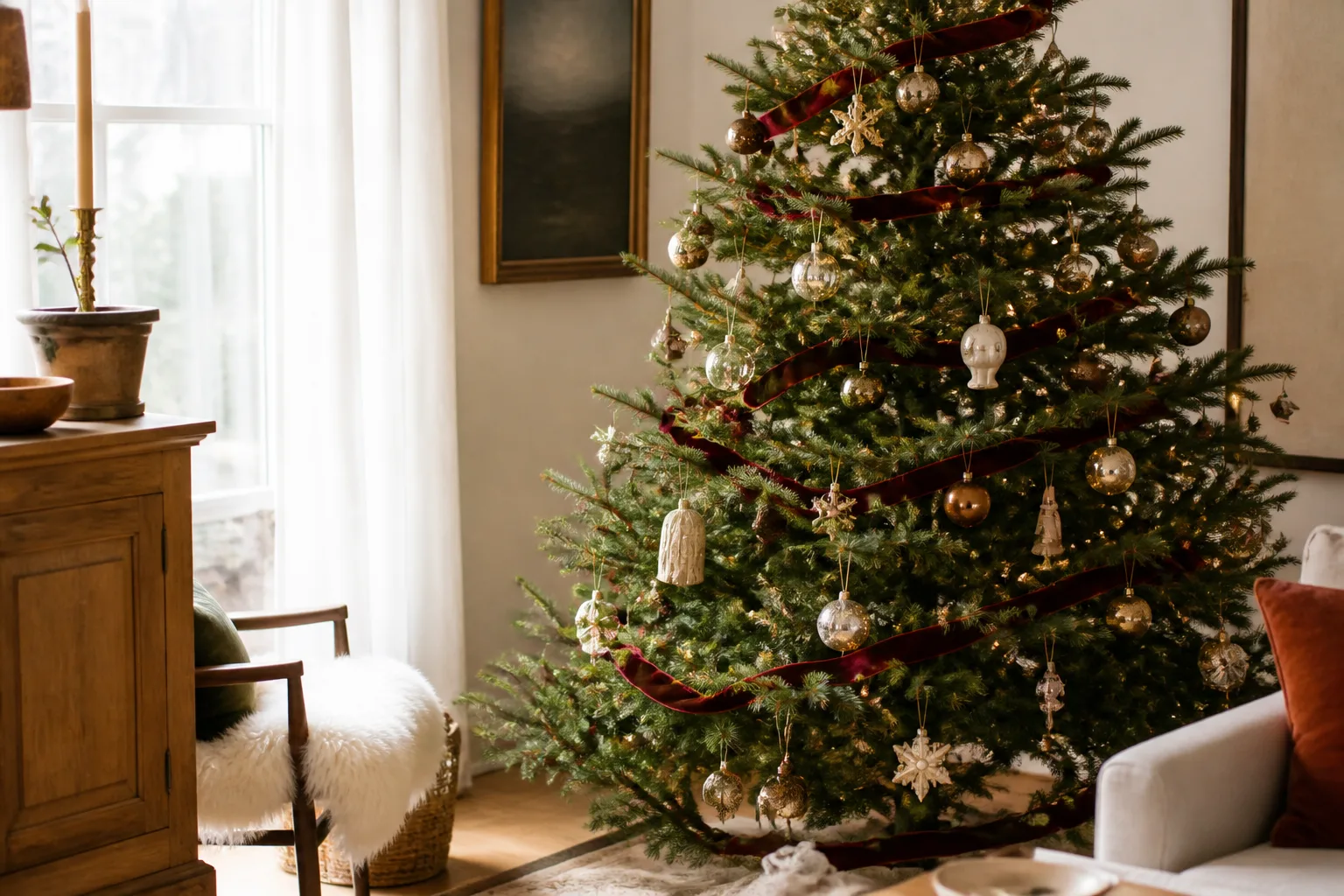
Trimming the tree is one of the few decorating jobs where taste, safety, and cleanup all collide on the same branch. Interior designers interviewed across the U.S. and Europe keep naming the same tree trimmings as visually dated—and in a few cases, genuinely risky around pets and young children. That does not mean your tree has to look beige or boring. It means the trims that read “store display from 2012” are worth retiring, while the ornaments with stories behind them deserve front-row placement.
Why Designers Call Certain Trimmings “Outdated”
Designers are not banning fun. They are reacting to trims that signal zero curation: identical baubles from a single shrink-wrapped set, plastic that sheds for weeks, neon trees that fight the room’s palette, and lights that flash like a casino sign. London-based designer Katharine Pooley puts it bluntly: tinsel “has most certainly lost its shine” and “feels rather nostalgic, reminiscent of the 1980s.” Preston Konrad of Preston Lane adds that sparkles and tinsel sit on his “avoid” list when a space should feel like a lived-in country estate rather than a trend reel.
The shift is toward material honesty—glass, carved wood, felt, linen ribbon, dried botanicals—and toward trees that answer “who lives here?” instead of “which big-box endcap was on sale.” That collected look takes more intention than a matching ornament kit, which is exactly why it outlasts a single season on social media.
The Five-Question Trim Test Before You Buy Another Box
Run every potential purchase through these five questions before it touches a branch:
- Does it shed, fray, or leave glitter on the floor? If yes, weigh the cleanup cost—especially with pets or toddlers.
- Could I mix this with three unrelated ornaments and still believe the tree? Matchy sets fail here.
- Does the material look like plastic under daylight? Cheap shine reads dated faster than matte texture.
- Will I still like this if the trend hashtag disappears? Sentimental pieces pass; novelty often does not.
- Is it safe if it falls within reach? Tinsel, small breakables, and exposed wires fail this test in many homes.
If a trim fails three or more questions, skip it or demote it to a high branch out of paw reach.
Tinsel and Plastic Strand Garland
Tinsel tops nearly every designer “out” list for 2025–2026, and for good reason beyond aesthetics. Plastic icicle strands catch light beautifully for about forty-eight hours, then spend the rest of January embedded in carpet fibers, HVAC vents, and pet hair.
Why Tinsel Looks Dated—and Creates Real Mess
Valerie Darden of Brexton Cole Interiors notes that an overload of tinsel is “pretty, but very bad not only for clean up after the holidays—it’s also bad for the environment.” Emilie Fournet of Emilie Fournet Interiors favors organic materials over plastic that lands in a landfill once a trend passes. Environmentally, single-use PVC strands are difficult to recycle and often shed microplastic as they age.
The safety case is stronger than the style case. The ASPCA warns that ingested tinsel can cause severe vomiting, intestinal obstruction, dehydration, and surgery in cats especially. Washington State University’s Veterinary Teaching Hospital explains that string-like decor can saw through intestine as it moves—an emergency, not a messy inconvenience. Young children who mouth shiny objects face similar choking risk with loose strands.
Sparkle Without the Shed
You do not have to choose between dull and tacky. Designers reach for:
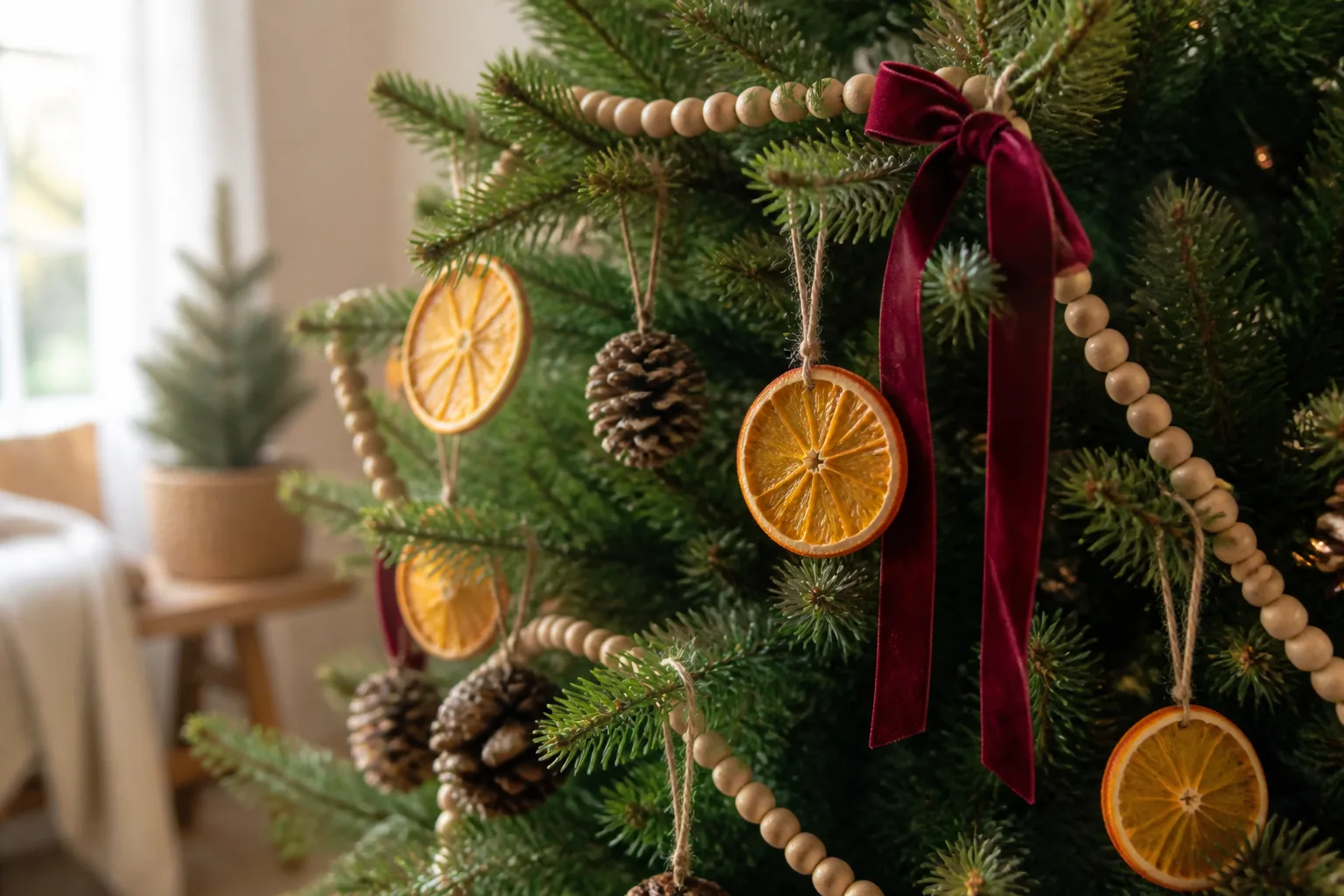
- Velvet or linen ribbon looped loosely on outer branches—matte texture catches light without glitter bombs.
- Mercury-glass or clear glass teardrops that reflect warm bulbs from inside the tree.
- Wooden beaded garland or carved picks for texture that reads artisanal, not synthetic.
- Dried citrus slices, pinecones, or foraged greenery (sprayed lightly if you want metallic accent—designer Grey Joyner has used real magnolia leaves with gold spray for fireplace garland and tree accents at a fraction of tinsel’s visual cost).
If you love maximum shimmer, concentrate it high on the tree where pets and kids cannot reach, and cap the amount at one material type so the sparkle feels deliberate.
Matchy-Matchy Ornament Sets
A tree dressed entirely from one boxed set—same finish, same size gradation, same hook style—reads like a retail prop. Darden advises avoiding “matchy-matchy ornaments that look like you took one trip to the store, bought a box of ornaments, and called it a day.” The fix is not buying more matching sets in different colors. It is breaking the set on purpose.
How to Build a Collected Tree
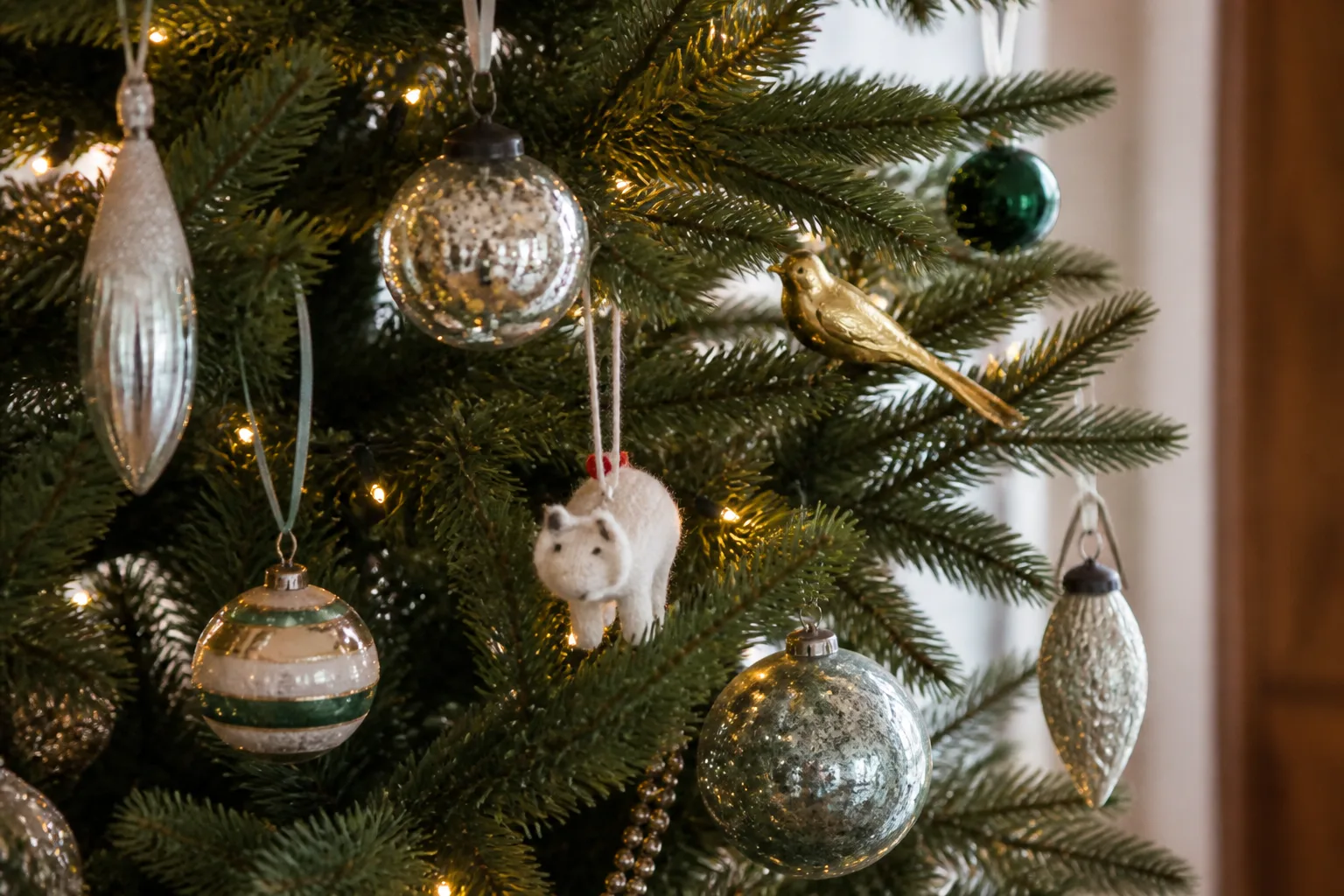
A collected tree mixes era, material, and memory. Start with a backbone of two or three unifying elements—say, warm white lights, a brass-toned metal accent, and one ribbon color—then break symmetry with unrelated pieces:
- Heirloom glass from family attics alongside new blown-glass spheres.
- Kid-made ornaments clustered on lower branches where they tell a story up close.
- Vintage finds from estate sales or thrift stores (inspect for lead paint on very old painted metal).
- One “odd” ornament per quadrant—a bird, a miniature book, a tiny teapot—that makes guests look twice.
Shelley McIlroy of Shelley McIlroy Design recommends arranging ornaments in a slightly asymmetrical layout and blending soft textures with gentle ambient light. The goal is warmth, not catalog perfection. Fournet keeps “anything goes” on her own tree as long as pieces carry sentimental value—from children’s crafts to gifts from loved ones who are gone. That emotional permission matters: designers criticize anonymous matching sets, not your grandmother’s baubles.
Cheap-Looking Fake Trees and Garlands
Not all artificial greenery is the problem—obviously plastic greenery is. Darden tells clients to avoid trees and garlands that look “very plastic and fake.” Cheap signs include:
- Uniform plastic sheen on needles that reflects overhead light like a shower curtain.
- Sparse tip count that exposes the trunk pole even after fluffing.
- Garlands with wired leaves that kink permanently after one season in a bin.
- Wrong scale—oversized ornaments on a slim tree or vice versa, which amplifies the “fake” read.
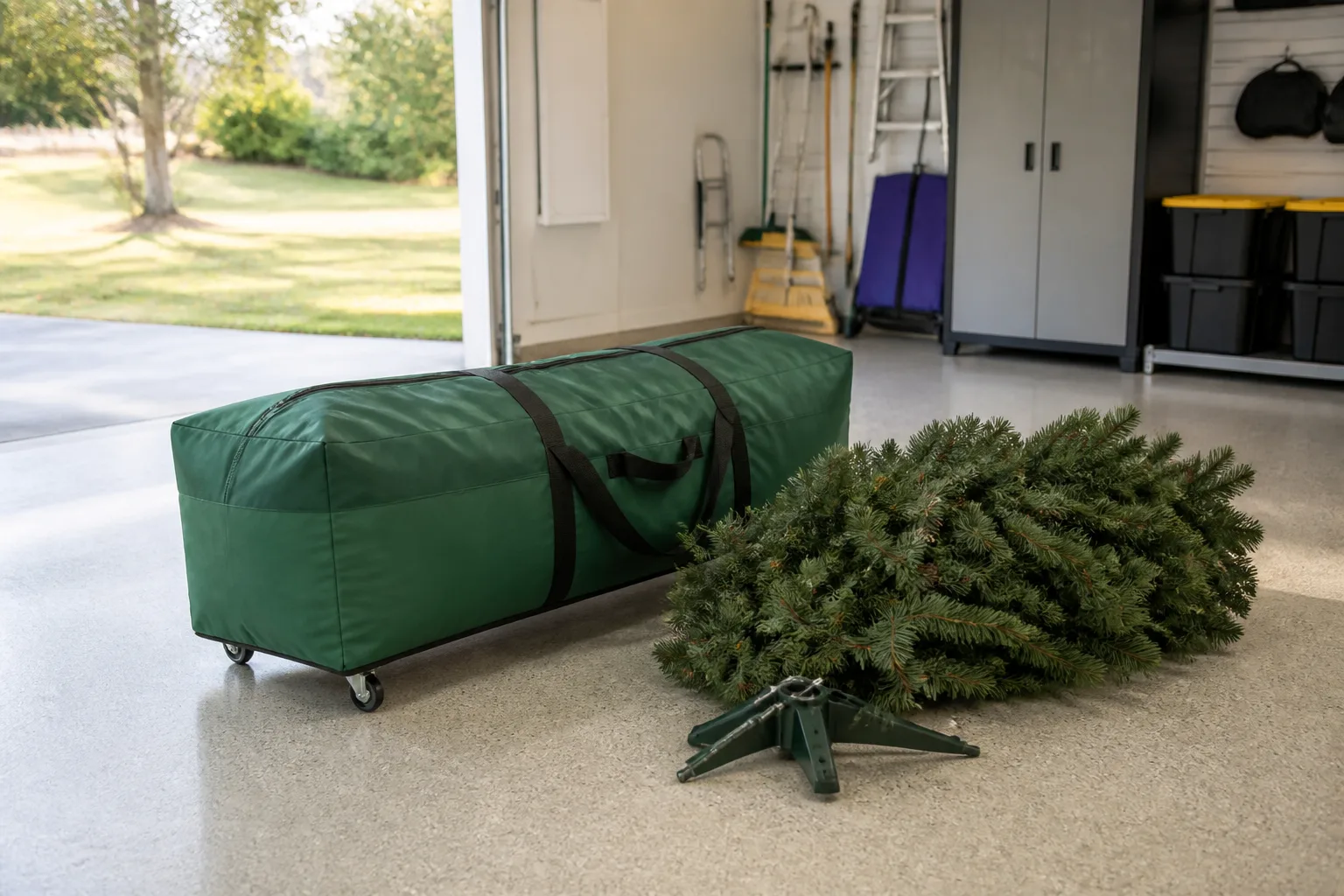
Higher-quality faux trees use molded PE tips mixed with PVC filler, varied branch angles, and color variation from olive to deep green. If you store an artificial tree between seasons, proper bagging and tip care matter as much as the purchase—crushed branches never look high-end under ornaments. Invest in realism at the tree level before spending on trim; a great ornament cannot rescue a $39 skeleton tree.
Pastel and Off-Season Color Schemes
Pastel Christmas trees—pink nutcrackers, lavender balls, mint garland—had a strong social-media run, but many designers now find them seasonally confused. Darden is direct: “I am not a fan of the pastel color Christmas trend… Pastel colors remind me of spring.” When every ornament reads Easter, the tree loses winter warmth even if the palette is cohesive.
When Pastel Can Still Work
Pastel is not banned if it already lives in your room. Grey Joyner notes that decorating with colors already in the space—lush pinks, eggplants, teals—is practical and budget-friendly because you are not buying a parallel holiday palette for one month. A blush velvet bow on a green tree in a bedroom with blush walls feels intentional. A pink tree in a traditional red-and-green dining room fights the architecture.
Designers who dislike pastel trees still embrace jewel tones, metallics, and neutrals—emerald, sapphire, brass, champagne, cream—for depth without spring cues. If you love color, put it on a classic green foundation with ornaments and ribbon rather than a fully flocked pink artificial tree that anchors the whole room to one trend year.
Mass-Produced Plastic Ornaments
Fournet recommends handmade ornaments from local artists or independent shops over mass-produced plastic that creates what she calls a “soulless and impersonal atmosphere.” That is an aesthetic argument, but it doubles as a durability argument: thin plastic balls crack in storage, seams split, and hooks pull through after one season.
You do not need a boutique budget to beat mass-produced plastic:
- Thrift mercury glass and vintage Shiny Brite–style balls (inspect for chips).
- Salt-dough or clay ornaments made at home—keep them high if pets might chew them; ASPCA notes salt-dough can cause dangerous electrolyte imbalances if ingested.
- Small-batch ceramic or wood ornaments from holiday markets—one or two per year builds a collection over time.
Mass-produced sets still work as filler on inner branches behind statement pieces, especially clear or matte balls that disappear into greenery. Just do not let them be the only story the tree tells.
Bright Multicolor and Blinking Lights
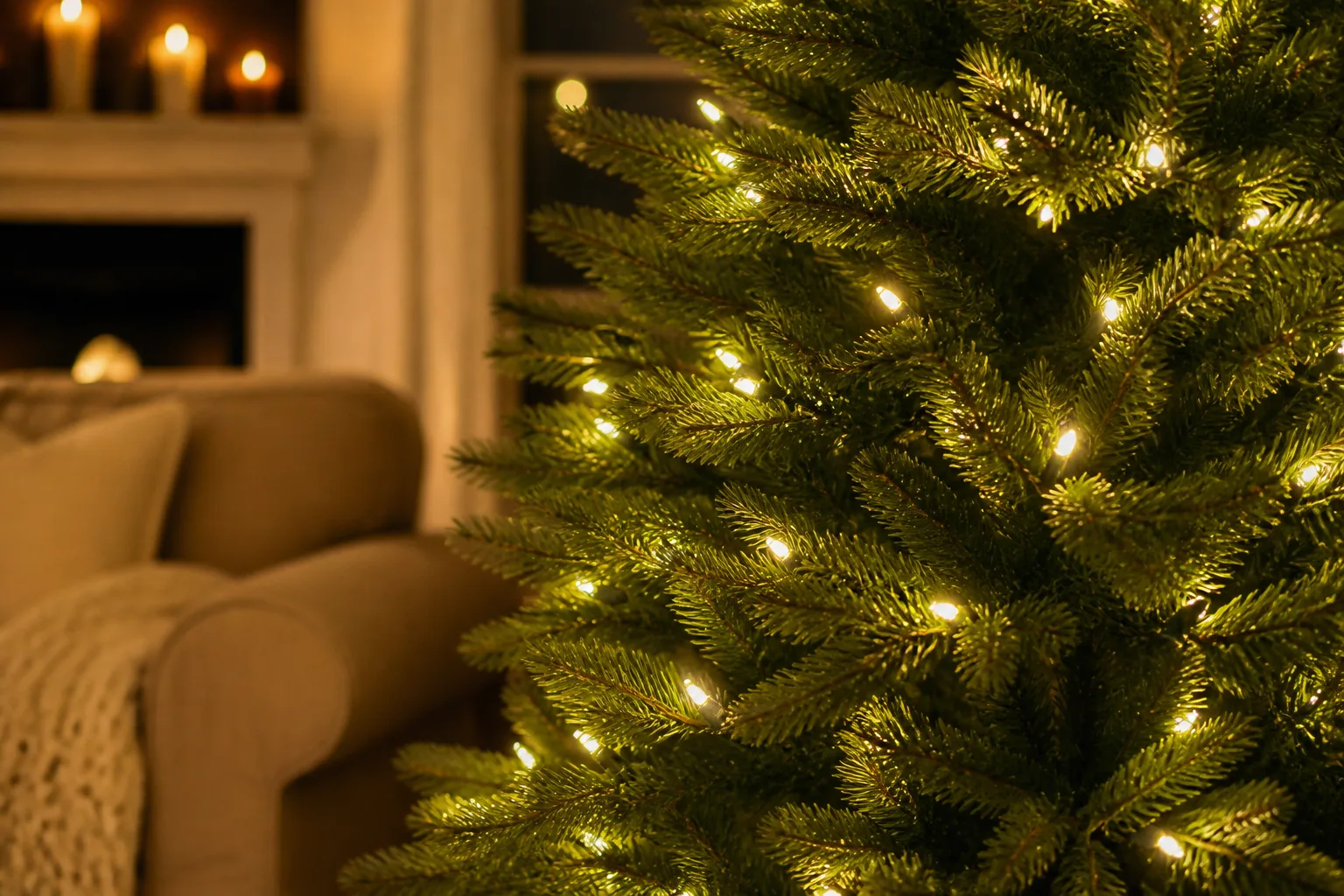
Helena Clunies-Ross of Helena Clunies-Ross Design puts “overly artificial” elements at the top of her avoid list—especially bright multicolor and color-changing lights that “overwhelm rather than enhance” and create “visual noise.” Designers increasingly default to warm white LEDs tucked deep into branches so the tree glows from within without visible wire spaghetti.
If you love color on lights, treat it like ornament color: one or two tones maximum, not a full RGB cycle. Blinking modes age a room faster than static warm light. For traditional homes, clip-on LED “candle” ornaments can add flicker without the fire risk of real flames—a compromise between nostalgia and safety.
Fully Colored Artificial Trees
Interior designer Bilal Rehman told Martha Stewart that neon pink and electric blue trees hitting shelves in mid-September get an “absolutely not.” His standard: “A Christmas tree should feel warm and intentional.” A colored tree locks every other trim decision before you hang the first hook; a green tree lets ornaments and lights carry the palette so you can change direction next year without storing a seven-foot pink statement.
If you want a monochromatic look, Rehman and other designers suggest a classic green tree with ornaments, ribbon, and lights in one hue—gold, burgundy, icy blue—rather than a colored tree itself. You get the Pinterest board effect with an exit ramp.
What to Use Instead: A Timeless Trim Palette
Timeless does not mean monochrome. It means materials and light that cooperate with your room:
- Base: Real or high-quality faux green tree, fluffed until gaps close.
- Light: Warm white LEDs, deep-set; one plug path, grounded cords checked for chew marks per WSU vet guidance.
- Texture layer: Ribbon, beaded garland, or dried botanicals—one primary texture, not all three competing.
- Ornament mix: 60% supporting simple balls, 30% character pieces, 10% true statement (topper, oversized bow, heirloom).
- Metal accent: One finish—antique gold, brass, or silver—repeated three to five times for cohesion.
- Topper: Bow, star, or angel scaled to room height; avoid toppers that lean like a sail.
Stick with metallics, neutrals, and jewel tones when you want a tree that still photographs well in January without feeling tied to one TikTok trend.
Layer Order Designers Actually Follow
Execute in this order so you are not crushing finished branches:
- Lights first, winding inside-out with the plug near the floor outlet you will use.
- Garland or ribbon second, vertically or around the tree in two or three loose spirals.
- Large ornaments third, spaced at compass points (north, south, east, west) at varied depths.
- Medium and small balls fourth, filling gaps while stepping back every few minutes to check balance.
- Specialty pieces fifth—clip-ons, picks, photo ornaments—on outer tips.
- Topper last, with a stabilizing wire if your tree runs tall.
Step back ten feet. If one quadrant looks heavier, move one ornament—not ten—before you declare it done.
Pet and Child Safety on a Decorated Tree
Aesthetic “tacky” and physical “dangerous” overlap on several trims. Use this quick matrix:
| Trim type | Main risk | Safer swap |
|---|---|---|
| Tinsel | Intestinal obstruction (cats especially) | Ribbon, wood beads, glass teardrops high on tree |
| Breakable glass low on tree | Cuts to mouth/paws if shattered | Plastic or wood on lower third; glass higher |
| Exposed light cords | Electrical shock if chewed | Cord covers, grounded outlets, unplug when unsupervised |
| Small hook ornaments | Choking | Larger shatterproof decor below waist height |
| Tree water additives | GI upset if pets drink | Covered stand; plain water if pets access it |
| Salt-dough ornaments | Electrolyte toxicity if eaten | High placement or skip in pet households |
Secure the tree to a wall or ceiling hook if you have climbing cats or toddlers who pull. ASPCA also recommends keeping wrapped food gifts off the floor where noses find them. When in doubt, call your veterinarian or ASPCA Poison Control at (888) 426-4435.
Conclusion
Designers are retiring tinsel, matchy ornament sets, cheap faux greenery, forced pastel palettes, and aggressive blinky lights because those trims date fast and, in several cases, create cleanup or safety headaches pets and kids cannot opt out of. The replacement is not minimalism for its own sake—it is a collected tree: mixed materials, warm light, one coherent metal accent, and ornaments that mean something when guests ask about them.
Keep the macaroni star. Keep your aunt’s mercury glass. Skip the strand of plastic icicles that will still turn up in July. Run the five-question trim test, layer in the order above, and you get a tree that reads intentional in photos and in person—without buying a new trend every December.



