Dianthus Care Guide: Sun, Water, Soil and Species
Dianthus spp.
Dianthus care varies by species. Learn how to grow pinks, carnations and Sweet William with bright light, free-draining soil and careful watering.
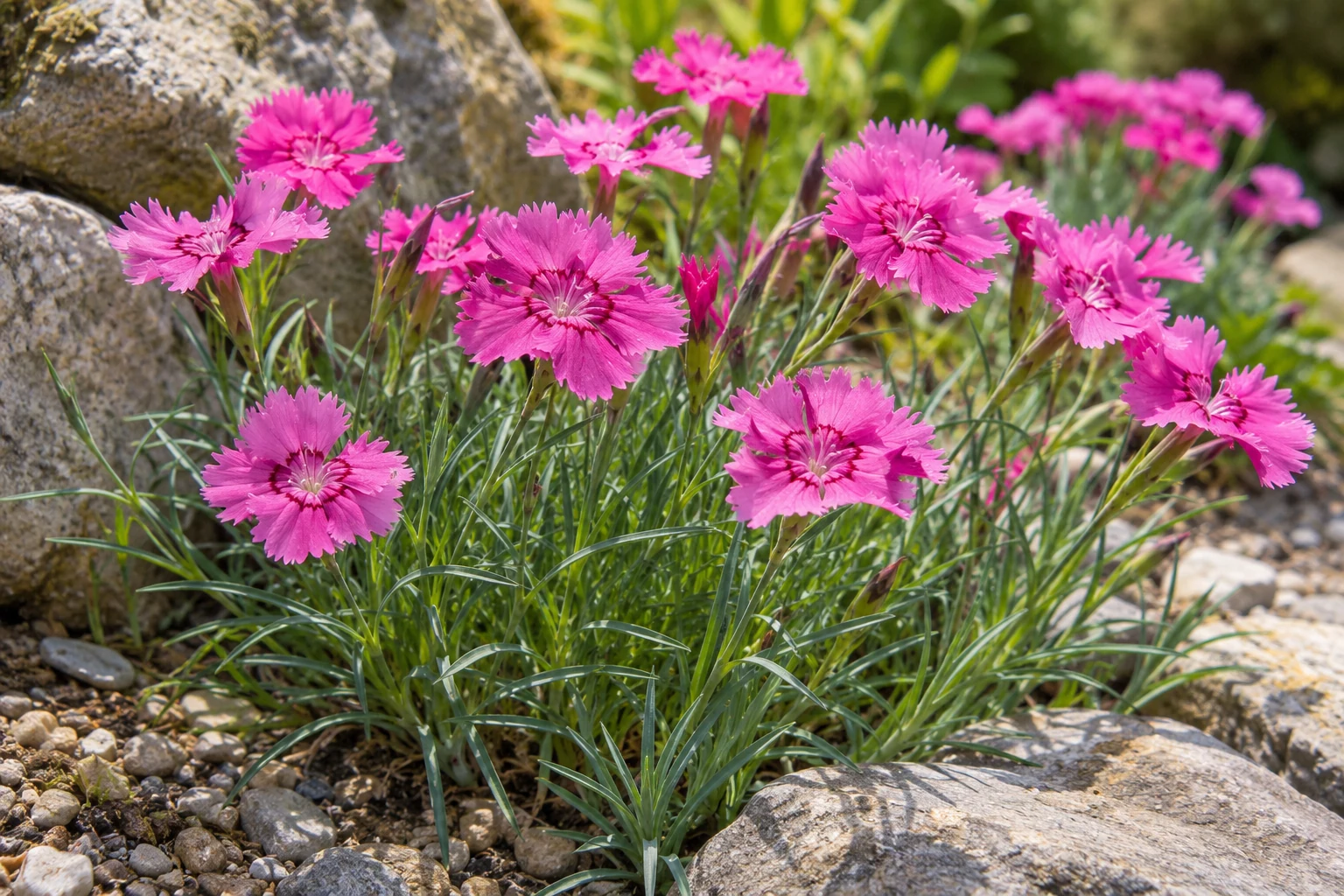
Dianthus Care Guide: How to Grow Pinks, Carnations and Sweet William
Start with wateringThe most common care mistake for DianthusWatering guide →Dianthus care essentials
Light
Full sun, ideally six or more hours of direct light for flowering
Water
Water new plants after planting and keep their root balls lightly moist while they establish. Once established, check the soil before watering: most garden forms cope with short dry periods better than a persistently wet crown. Water container plants when the mix begins to dry, and let excess drain freely.
Soil
Most Dianthus grow best in loose, freely draining soil that is neutral to slightly alkaline. They tolerate several soil textures, but do poorly where the crown stays waterlogged. Use a raised bed or a draining container if the garden soil remains wet.
Humidity
Temperature
Fertilizer
About Dianthus
Dianthus is native to Eurasia and southern Africa; varies by species, typically reaches About 4 in–3 ft (10–91 cm) tall and 1–2 ft (30–61 cm) wide across the genus; individual species and cultivars vary indoors, with varies by species; nc state extension describes its genus profile as slow-growing growth. Dianthus has a a diverse genus of annual, biennial, and herbaceous perennial flowering plants, from low mats and clumps to upright stems growth habit and part of the Caryophyllaceae family. It is also known as Pinks and Garden pinks.
| Detail | Information |
|---|---|
| Also known as | Pinks, Garden pinks |
| Native region | Eurasia and southern Africa; varies by species |
| Mature size | About 4 in–3 ft (10–91 cm) tall and 1–2 ft (30–61 cm) wide across the genus; individual species and cultivars vary |
| Growth rate | Varies by species; NC State Extension describes its genus profile as slow-growing |
| Growth habit | A Diverse Genus Of Annual, Biennial, And Herbaceous Perennial Flowering Plants, From Low Mats And Clumps To Upright Stems |
| Scientific name | Dianthus spp. |
| Family | Caryophyllaceae |
How to care for Dianthus?
How much light does Dianthus need?
Full sun, ideally six or more hours of direct light for flowering. Partial shade. Light afternoon shade in hot climates. direct sun
- Full sun, ideally six or more hours of direct light for flowering - Full sun, ideally six or more hours of direct light for flowering.
- Partial shade - Partial shade.
- Light afternoon shade in hot climates - Light afternoon shade in hot climates.
- direct sun - direct sun.
When should you water Dianthus?
Water new plants after planting and keep their root balls lightly moist while they establish. Once established, check the soil before watering: most garden forms cope with short dry periods better than a persistently wet crown. Water container plants when the mix begins to dry, and let excess drain freely.
- Check the upper soil before watering. If it is still damp - Once established, check the soil before watering: most garden forms cope with short dry periods better than a persistently wet crown.
- wait
- when it has begun to dry - Water container plants when the mix begins to dry, and let excess drain freely.
- water the root zone thoroughly and allow the pot or bed to drain - Water container plants when the mix begins to dry, and let excess drain freely.
- Drain excess water - Water container plants when the mix begins to dry, and let excess drain freely.
What soil works best for Dianthus?
Most Dianthus grow best in loose, freely draining soil that is neutral to slightly alkaline. They tolerate several soil textures, but do poorly where the crown stays waterlogged. Use a raised bed or a draining container if the garden soil remains wet.
- For containers - Use a raised bed or a draining container if the garden soil remains wet.
- use a porous potting mix and a pot with open drainage holes - Use a raised bed or a draining container if the garden soil remains wet.
- In heavy garden soil - Use a raised bed or a draining container if the garden soil remains wet.
- improve drainage across a broad bed or use a raised bed rather than creating a small - Use a raised bed or a draining container if the garden soil remains wet.
- soggy planting pocket
Grower notes for Dianthus
Check the botanical name on the plant label
Dianthus is a genus with more than 300 species, not a single uniform garden plant. Carnations, Sweet William, and pinks differ in life cycle, size, and hardiness: some are annuals, some biennials, and some perennials. Use the species or cultivar name on the tag before planning for winter survival or choosing a permanent spot.
Give it bright light and breathing room
Full sun supports flowering for most garden forms, while some tolerate partial shade. In very hot areas, light afternoon shade can help reduce heat stress, but deep shade usually means fewer flowers. Space plants for their mature width so leaves can dry after rain.
Make drainage the first soil check
Dianthus is more likely to fail in a cold, wet crown than in a briefly dry bed. Choose free-draining soil, keep mulch away from the stem base, and use a raised bed or container where water lingers. Do not bury the lower leaves when planting.
Water by soil and growing situation
New transplants need water while their roots settle in. Afterward, check the soil before watering: established plants in garden beds often need extra water only during extended dry spells, while containers may dry much faster in warm weather.
Deadhead faded flowers, then wait for the plant's response
Removing spent blooms tidies the plant and may prolong flowering. A light trim after the main flush can encourage fresh growth on some varieties, but repeat blooms depend on species, cultivar, temperature, and remaining growing season; do not cut hard into bare, woody stems.
Treat edible-petal and pet-safety claims narrowly
Some Dianthus petals are used as edible flowers, but the leaves should not be eaten and ornamental nursery plants may have been treated with chemicals. The ASPCA's carnation listing applies to Dianthus caryophyllus, not automatically to every member of the genus. Keep unknown varieties away from pets until their exact identity is checked.
Is Dianthus safe for pets?
Do not assume an unidentified Dianthus is pet-safe. NC State Extension flags its Dianthus genus profile as a problem for cats, dogs, and horses; the ASPCA specifically lists carnation (Dianthus caryophyllus) as toxic to those animals, with mild gastrointestinal signs and dermatitis. That carnation listing does not establish the same classification for every species. Check the plant's botanical name and contact a veterinarian or animal poison control service if a pet chews it.
This profile covers the genus Dianthus, whose species and common names vary. NC State Extension flags Dianthus as a problem for cats, dogs, and horses and notes that the leaves are mildly toxic to people. The ASPCA's toxic listing is specifically for Dianthus caryophyllus (carnation), so it should not be treated as a confirmed species-by-species assessment for all Dianthus. Keep unidentified plants away from pets and do not eat leaves or flowers from nursery stock unless its identity and treatment history are known.
Watering Dianthus
For Dianthus, check the upper soil before watering. If it is still damp, wait; when it has begun to dry, water the root zone thoroughly and allow the pot or bed to drain. and water there is no fixed schedule for the genus. Established plants in beds usually need extra water only during prolonged dry spells, while pots and new transplants need more frequent checks, especially in hot weather. Dianthus is often grown as a cool-season bedding plant in warm climates, where flowering can slow as temperatures rise. Reduce supplemental watering when rain keeps the soil moist, and do not keep dormant or heat-stressed crowns wet.
| Detail | Information |
|---|---|
| How often | There is no fixed schedule for the genus. Established plants in beds usually need extra water only during prolonged dry spells, while pots and new transplants need more frequent checks, especially in hot weather. |
| How to check | Check the upper soil before watering. If it is still damp, wait; when it has begun to dry, water the root zone thoroughly and allow the pot or bed to drain. |
| Seasonal changes | Dianthus is often grown as a cool-season bedding plant in warm climates, where flowering can slow as temperatures rise. Reduce supplemental watering when rain keeps the soil moist, and do not keep dormant or heat-stressed crowns wet. |
Signs of overwatering
- The root zone remains wet between waterings.
- Leaves yellow or the plant wilts while the soil is still damp.
- The crown or lower stems soften after prolonged wet weather.
Signs of underwatering
- The potting mix or bed is dry below the surface.
- Leaves or flower stems droop during a prolonged dry spell.
Soil & potting for Dianthus
Use a mix of For containers, use a porous potting mix and a pot with open drainage holes., In heavy garden soil, improve drainage across a broad bed or use a raised bed rather than creating a small, soggy planting pocket. for Dianthus. Free-draining; avoid waterlogged soil and mulch piled over the crown. Target soil pH around Most species prefer neutral to alkaline soil, roughly pH 6.0–8.0; some species differ. Repot repot a container-grown perennial form when roots fill the pot or the mix no longer drains well. Short-lived annual bedding types can finish their season without being moved into a larger pot., ideally in spring, before the main flowering period, when a perennial container plant needs a larger pot.
| Detail | Information |
|---|---|
| Recommended mix | For containers, use a porous potting mix and a pot with open drainage holes., In heavy garden soil, improve drainage across a broad bed or use a raised bed rather than creating a small, soggy planting pocket. |
| Drainage | Free-draining; avoid waterlogged soil and mulch piled over the crown |
| Soil pH | Most species prefer neutral to alkaline soil, roughly pH 6.0–8.0; some species differ |
| Repotting frequency | Repot a container-grown perennial form when roots fill the pot or the mix no longer drains well. Short-lived annual bedding types can finish their season without being moved into a larger pot. |
| Best season to repot | Spring, before the main flowering period, when a perennial container plant needs a larger pot |
Signs it needs repotting
- Roots circle the root ball or emerge from the drainage holes.
- The pot dries unusually quickly despite thorough watering.
- The growing mix has compacted or no longer drains freely.