26 Late-Summer Flowers to Plant for Fall Color
Choose late-summer flowers by first-frost timing, sun, and soil. Learn which annuals, perennials, shrubs, and vines can add color now or next year.
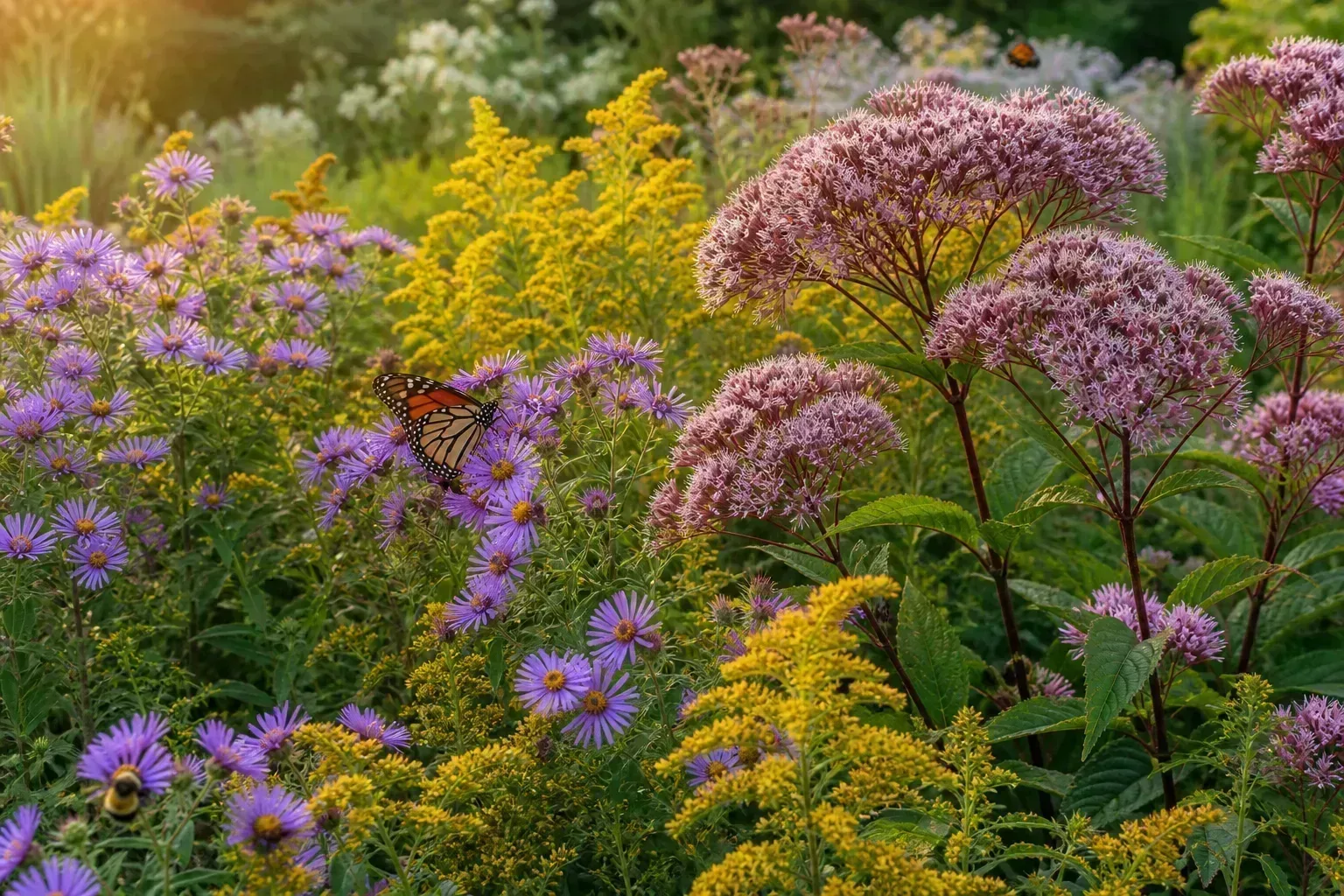
Late summer is a good time to fill a gap in a border, refresh a patio pot, or start a perennial that will settle in before next year. The catch is that “plant it now” does not always mean “it will bloom now.” A tray of seedlings, a pot full of buds, and a dormant tuber are at different points in their growing cycles, even if they sit side by side at the garden center.
Before choosing a flower, look at your local first-frost estimate and count the weeks remaining. Then check whether you want immediate color, a plant that will flower next year, or both. The 26 options below explain which are most dependable as nursery-grown plants, which may still be worth sowing, and what to know about their light, moisture, and winter survival.
First, define late summer for your garden
Late summer is a season, not a universal planting date. A gardener with a long, mild autumn may still have time for annuals to grow and bloom from seed; a gardener in a short-season climate may be choosing plants with open flowers because the first frost is close. Your first-frost estimate is a planning aid, not a promise: an early cold snap can arrive before the average date, and a sheltered urban bed can stay warm longer than an exposed hilltop.
The type and maturity of the plant matter just as much. A well-rooted perennial in a nursery pot can be planted after its spring bloom and still spend the remaining weeks growing roots. A small seedling needs more time, and a dormant dahlia tuber planted at the end of summer may produce foliage without enough time for a useful flower display. If fall color is your goal, inspect plants for healthy foliage and buds that are forming or opening.
Late-summer planting also brings heat and drying wind. A plant labeled drought-tolerant may cope well after it establishes, but its new roots still need attentive moisture. The RHS advises that container-grown perennials can be planted outside their ideal spring or autumn windows when the ground is neither frozen nor waterlogged, provided they are kept moist, especially in summer (RHS perennial planting guide). In a hot spell, postponing a nonurgent planting for a cooler, cloudy day can improve the odds of a smooth start.
Choose plants by the time you have left
For color this fall
For the most reliable same-season color, buy a plant that is already developed. Look for multiple buds or a mix of flowers and unopened buds, not a specimen whose display is nearly spent. Choose a pot with evenly colored, firm leaves and a root ball that holds together without smelling sour or feeling waterlogged. If the only plants available are small starts, treat them as an investment in next season unless your climate gives them a long runway.
Seeds can still be useful when enough frost-free growing time remains, but germination, establishment, and flowering all take time. Read the seed packet for days to maturity, add a margin for slower growth in shortening days, and compare that with your local forecast. Direct-sow only where the soil can be kept evenly moist; a seed bed that dries once in hot weather can lose seedlings before they are visible.
For next year’s display
Late summer can be a practical time to plant hardy, container-grown perennials, particularly if the soil is workable and you can water them through dry spells. The objective may be roots and acclimation rather than an impressive first autumn. Perennials often flower more strongly after they are established, so do not judge the choice by whether a small transplant makes a full show immediately.
Shrubs, roses, and clematis also need time to settle. In warm regions or during a heat wave, wait for milder weather if the plant is not urgent, or keep it in a nursery pot in a bright, protected spot and water carefully until planting conditions improve. Avoid late, heavy pruning or a high-nitrogen feeding that pushes soft growth just as temperatures are falling.
26 late-summer flowers to plant
The list includes annuals, tender plants, perennials, shrubs, and a vine. For any entry, confirm the cultivar’s hardiness and mature size on the nursery label; a species name alone cannot account for every climate, breeding line, or local microclimate.
Annuals and tender flowers for fast color
These are strong choices for an immediate display when you buy them as substantial transplants. Starting them from seed late in the season is a separate decision: use the packet’s maturity time and frost forecast rather than assuming a late sowing will catch up.
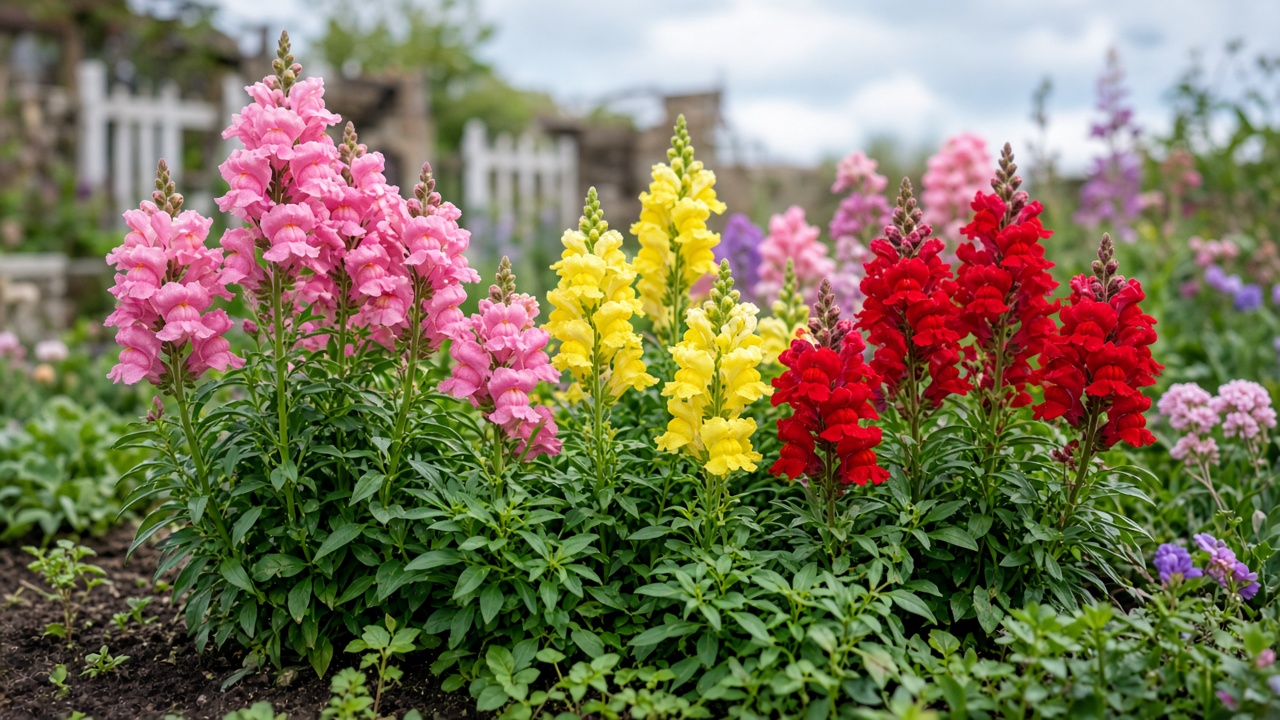
1. Snapdragons bring vertical flower spikes in white, yellow, pink, red, and other colors, with many types preferring the cooler stretch of fall to peak summer heat. Plant a healthy nursery-grown snapdragon in a sunny spot with soil that drains well and stays evenly moist, and remove faded spikes if you want to encourage side shoots. In a region with a mild autumn, young plants may continue flowering after a light chill; a hard freeze can end the show, and survival into another year depends on cultivar and climate.
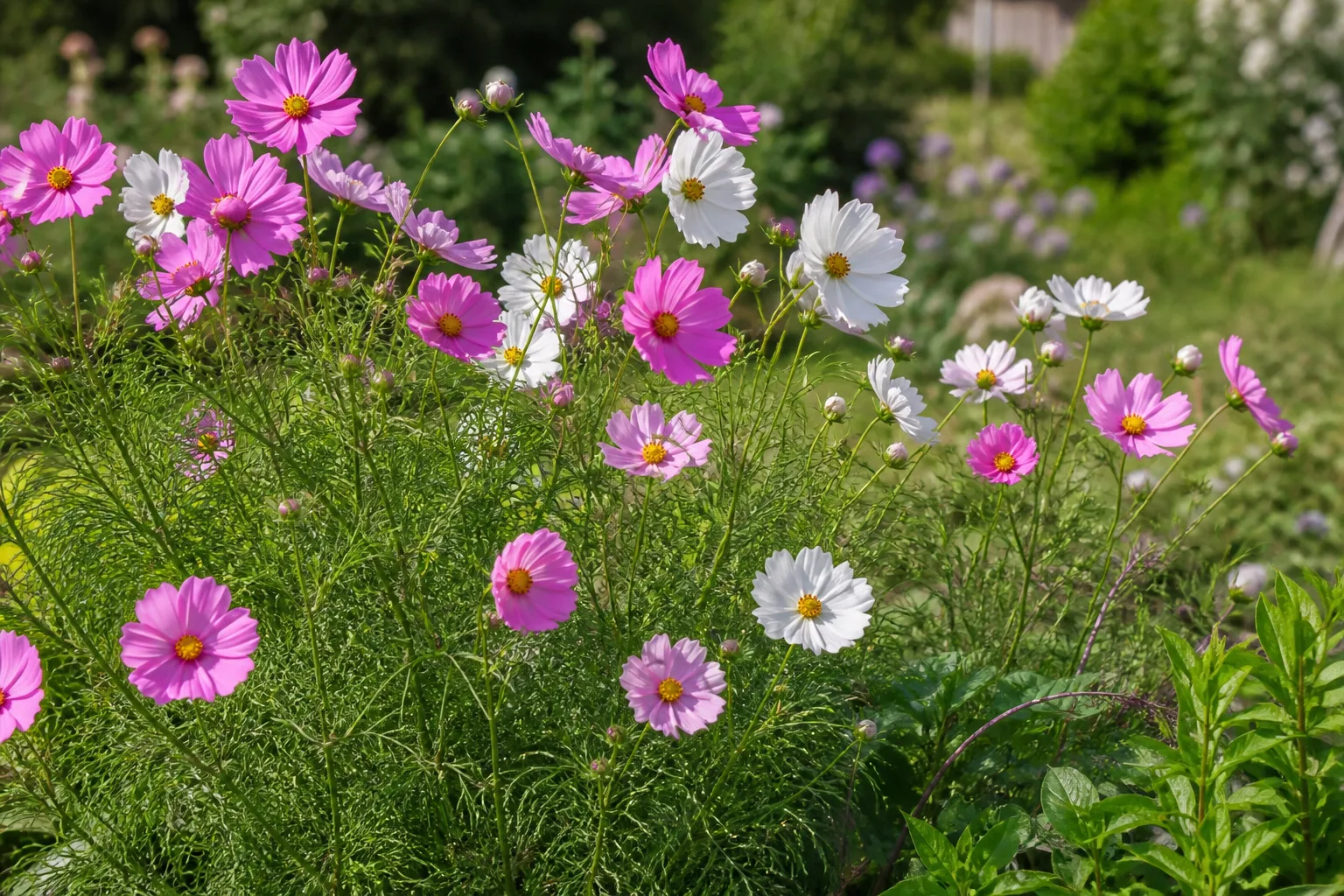
2. Cosmos produce airy foliage and simple, pollinator-friendly flowers that soften a sunny border. A flowering pot gives immediate color; seed is a reasonable late-summer choice only if the frost-free window exceeds the packet’s days to maturity and the soil is warm enough for prompt germination. Cosmos prefer a sunny, well-drained site and do not need rich soil, which can produce more leaves than flowers. Allowing some seed heads to mature may give you volunteer plants next year, though seedlings can vary from the parent.
3. Ageratum, often sold as floss flower, provides compact clusters of blue, lavender, pink, or white blooms for edging and containers. Treat it as a tender annual in climates where frost kills it; a nursery-grown plant is the best bet when autumn is close. Give it sun to partial shade and moist but draining soil, checking pots more often than garden beds because containers dry faster. Ageratum is a useful cool-color counterpoint beside orange calendula or yellow rudbeckia, but it should not be mistaken for a hardy perennial merely because a related species is perennial.
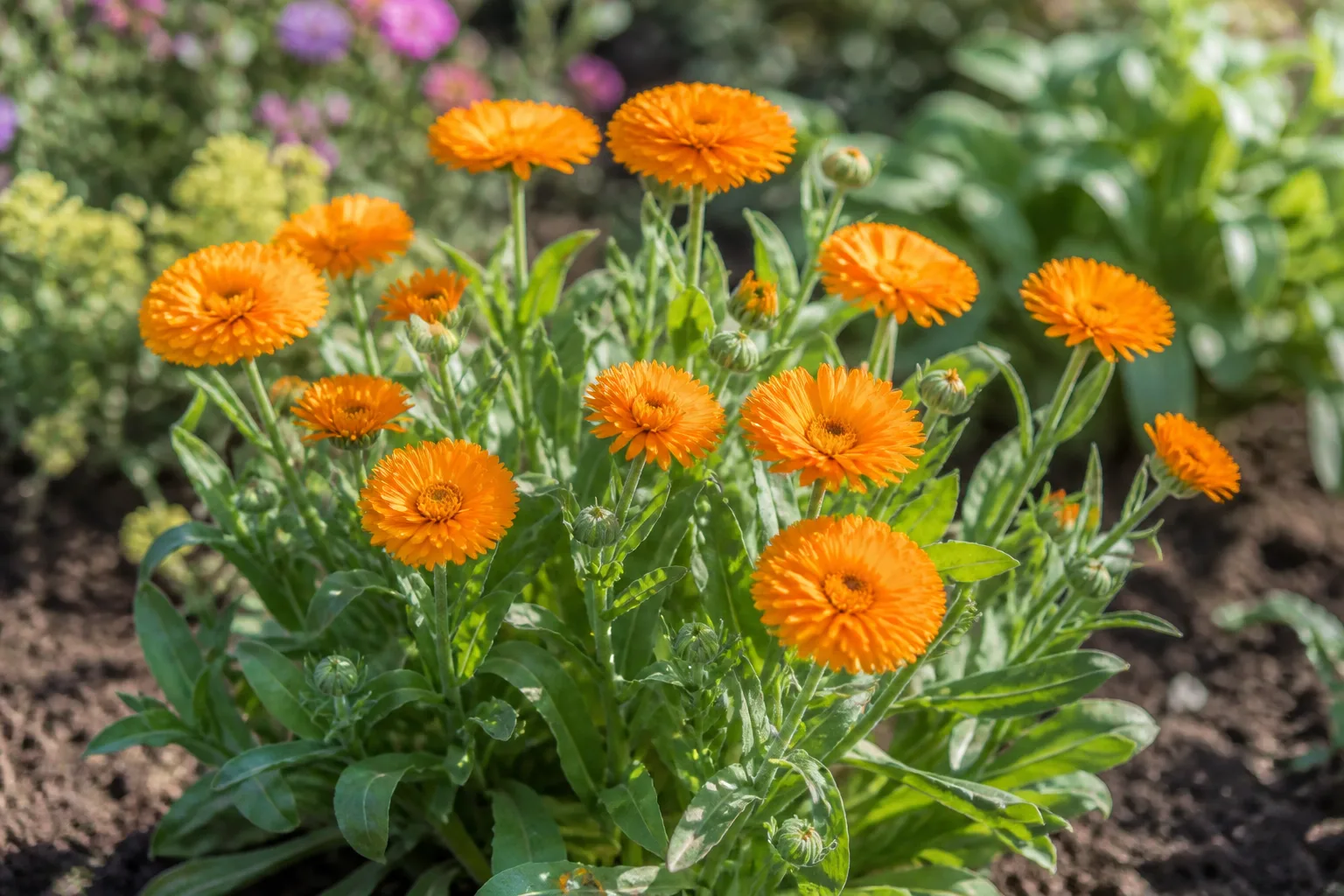
4. Calendula offers cheerful daisy-shaped flowers in yellow, orange, and cream, and often performs better as temperatures ease than during sustained heat. You can transplant a blooming calendula for quick color or sow it where there is enough time for it to mature; keep the surface moist until seedlings are established. In hot climates, give it afternoon shade if leaves wilt despite damp soil. Remove spent flowers to prolong the display, or leave a few late heads to mature if you want to collect seed for a future cool-season sowing.
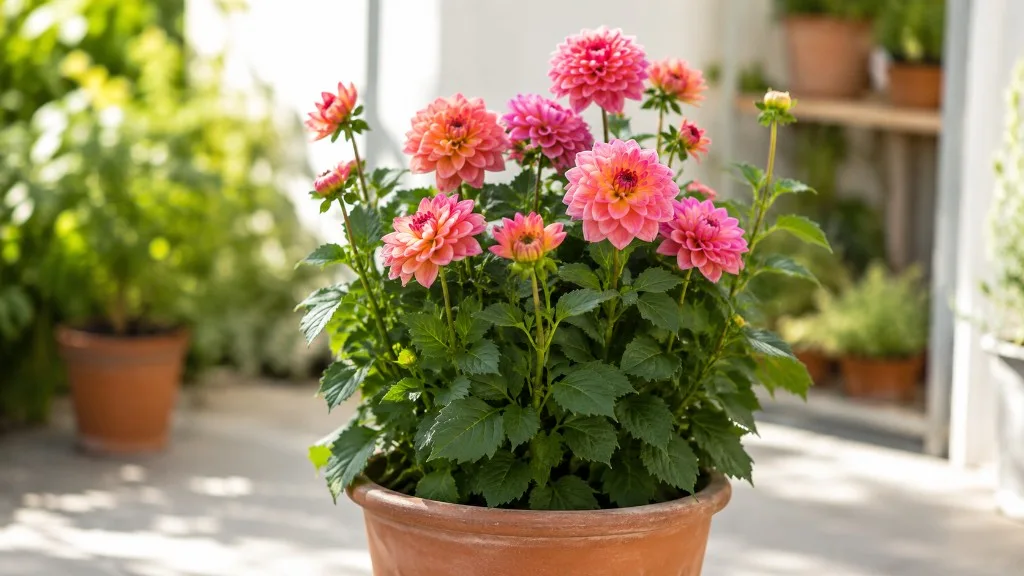
5. Dahlias are valued for bold flowers and a long cutting season, but late summer is not the usual time to start their dormant tubers. If you want dahlia color this fall, buy an actively growing potted plant already budding or blooming and protect it from cold; in areas with freezing winters, its tubers may need lifting and storage after frost blackens the foliage. Plant in full sun and draining soil, then water the root zone consistently. Avoid saturating the bed, since dahlia tubers and roots can rot in persistently wet ground.
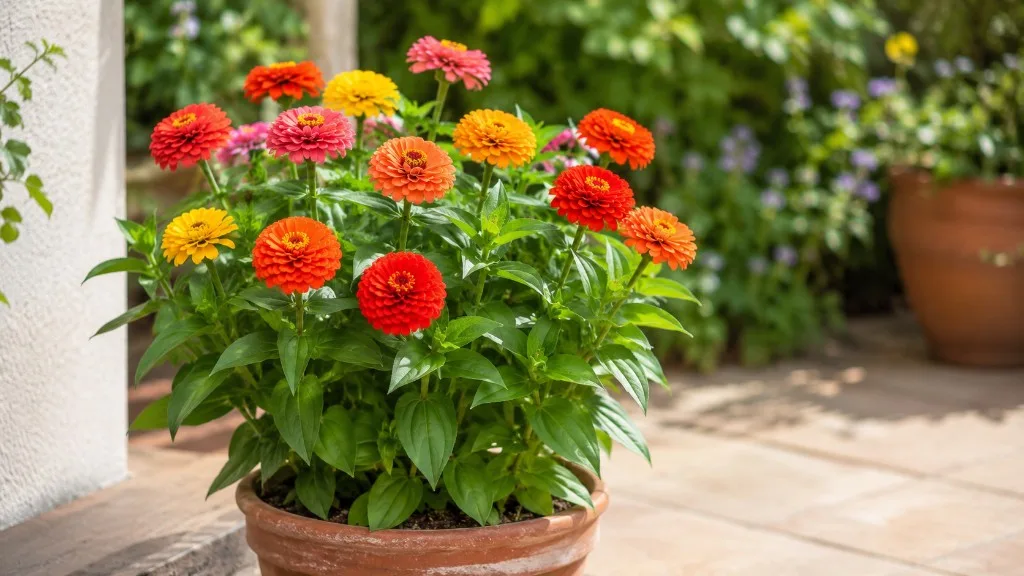
6. Zinnias are fast-growing warm-season annuals with single or double flowers in bright colors, and they make excellent cut flowers. For immediate display, transplant sturdy starts; direct sow only when the remaining warm season is long enough for your chosen variety to reach bloom. Give zinnias full sun, avoid crowding, and water the soil rather than repeatedly wetting dense foliage. In humid areas, good airflow helps reduce leaf disease. They will not survive a killing frost, but healthy plants can keep producing until cold weather arrives.
Perennials for late summer and fall
A container perennial with buds can add flowers now and continue growing roots for next year. If you buy one without buds, consider its first season a settling-in period. The species below cover different heights and moisture preferences, so avoid planting them all as though they shared one ideal spot.
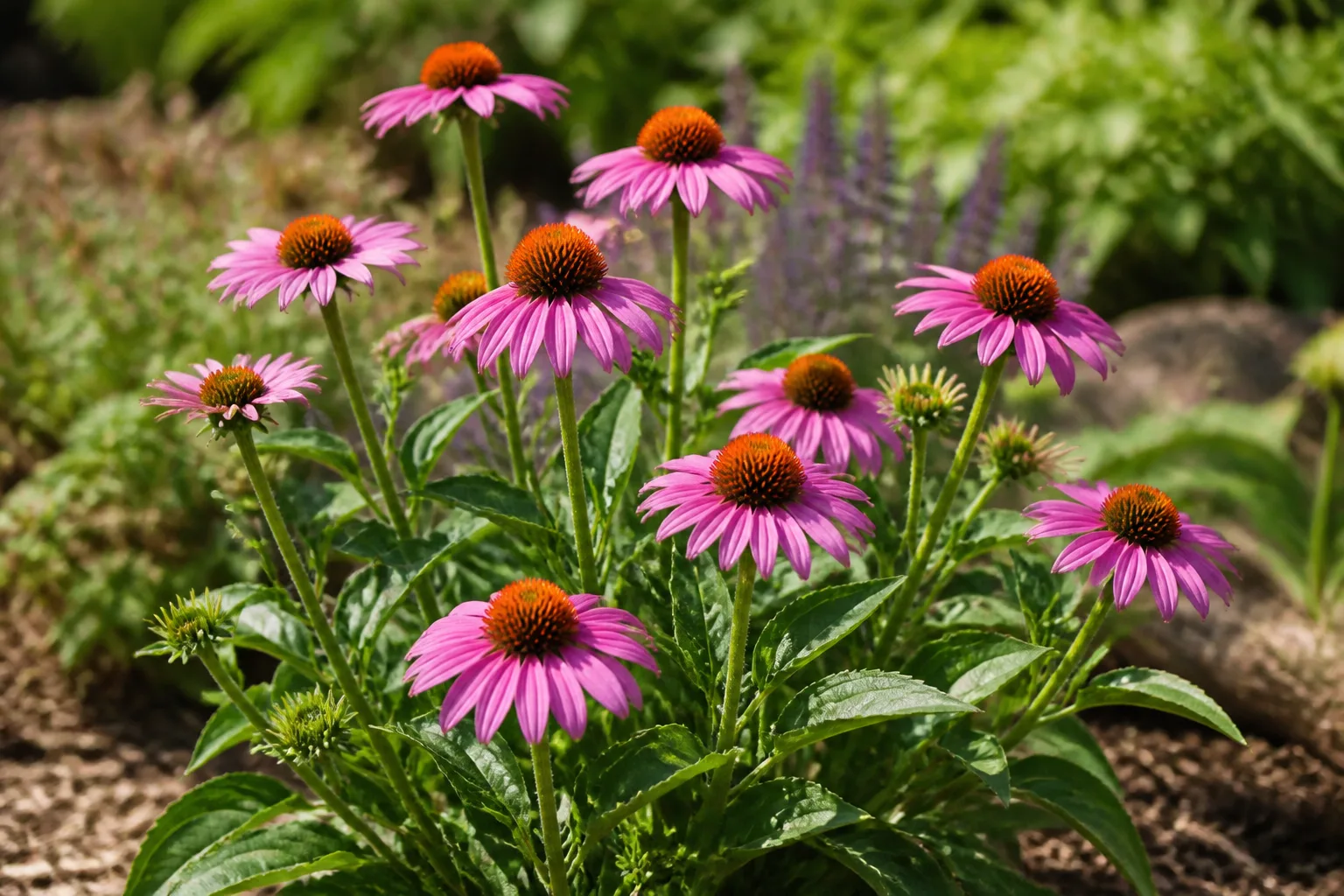
7. Coneflower (Echinacea) brings daisy-like blooms and sturdy central cones to a sunny, well-drained border. Established plants often flower through summer and into fall, while a newly installed pot may have fewer flowers this year. Choose a locally hardy cultivar and avoid a low spot that stays soggy. Deadheading can tidy the display, but leaving some seed heads provides winter structure and food for birds. This is a good choice when you want a perennial that can share a bed with ornamental grasses and other prairie-style plants.
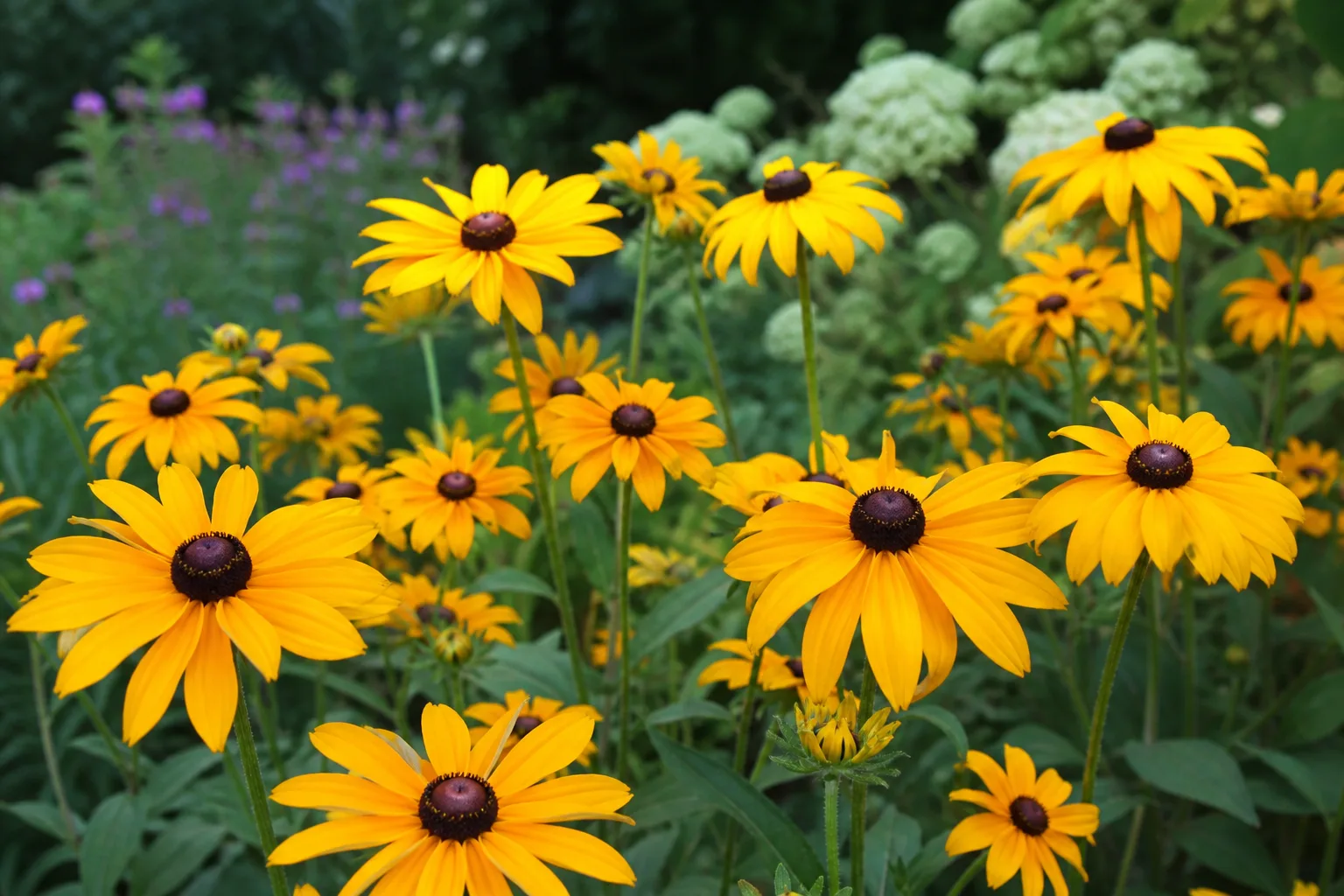
8. Rudbeckia, including black-eyed Susan cultivars, contributes yellow, gold, bronze, or reddish daisy flowers that bridge summer and fall. A blooming potted plant can fill a sunny gap immediately; allow enough room for its mature spread and keep the root zone moist while it establishes. Cultivars differ in height, lifespan, and hardiness, so check the label instead of assuming all rudbeckias behave alike. If you leave some flower heads standing, they can provide visual interest after the petals fade and may attract seed-eating birds.
9. Garden phlox (Phlox paniculata) is a fragrant, upright perennial with rounded clusters of pink, purple, red, or white flowers. Plant it in sun or light shade with moisture-retentive, well-drained soil; hot afternoon sun can make a newly planted specimen harder to establish. Space plants according to their mature width rather than the size of the nursery pot, because airflow helps keep foliage healthy. Look for cultivars selected for resistance to powdery mildew, and water at the base rather than over the leaves.
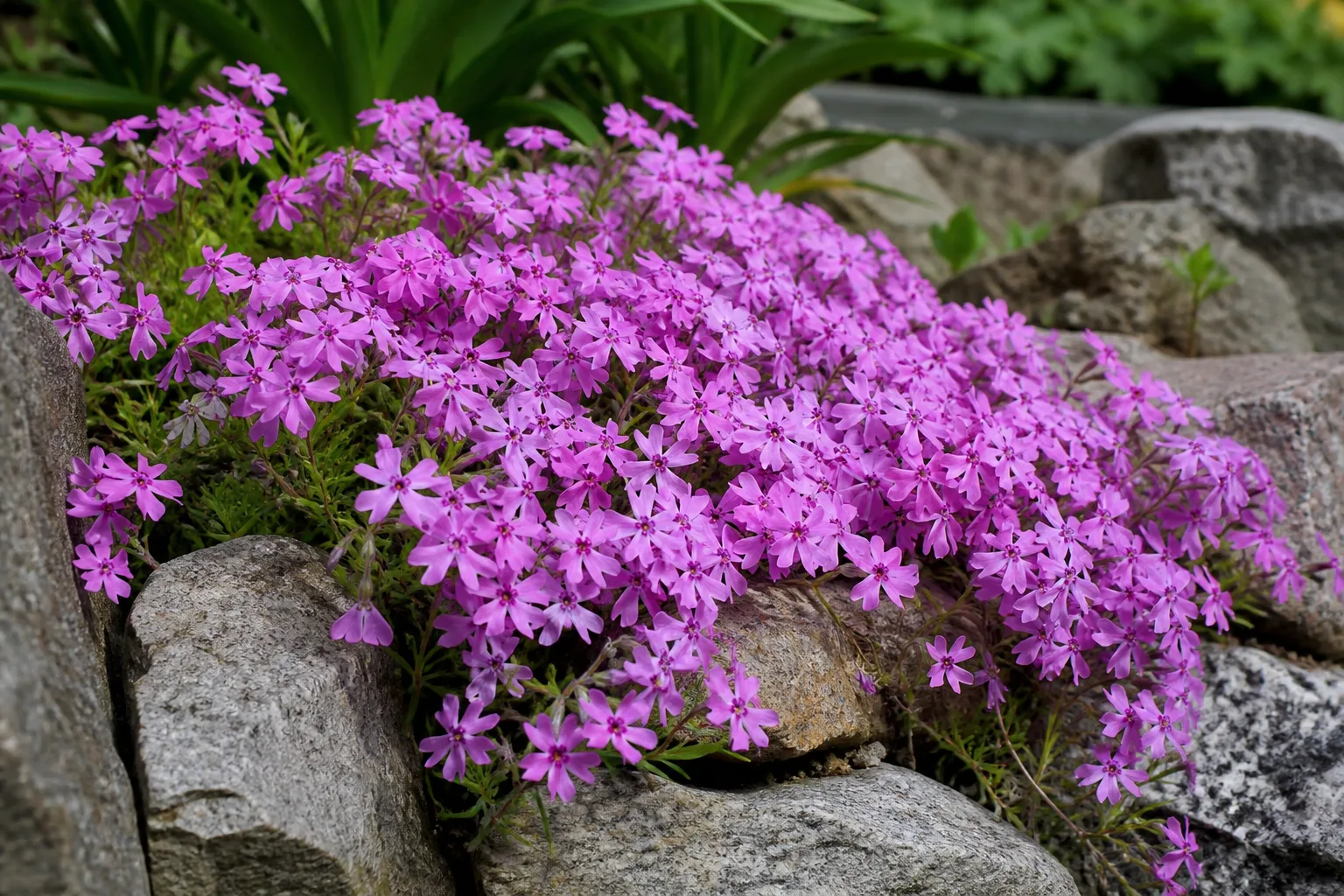
10. Asters supply a late flush of daisy-like blooms in lavender, violet, pink, and white, especially valuable as other summer flowers fade. Purchase a plant in bud if you want a fall show this year, and choose a site that receives sun and has soil that does not remain waterlogged. Asters can get dense; spacing them for airflow and dividing crowded clumps every few years improves their performance. Cultivar height and bloom date vary widely, so ask for a locally adapted selection rather than relying on a generic “aster” label.
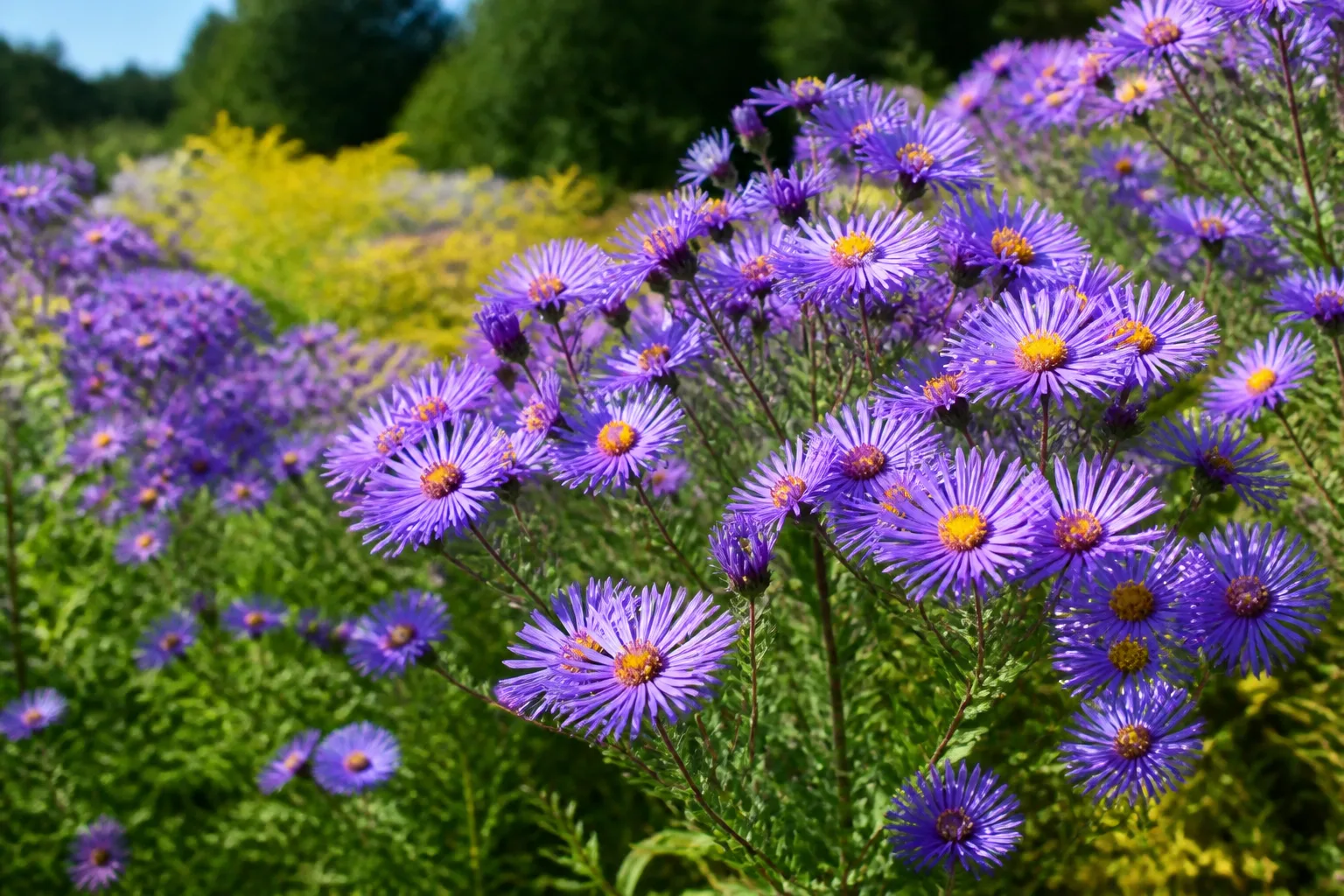
11. Leadwort (Ceratostigma plumbaginoides) is a low-spreading perennial ground cover with small blue flowers and foliage that may turn red as the season cools. It can work along the front of a sunny or partly shaded border, but it is not an instant filler if you buy a small pot late in the year. Give it well-drained soil and room to spread; check whether its growth habit suits a tight bed edge. The blue flowers contrast well with gold rudbeckia, while the autumn foliage adds interest after the flower color softens.
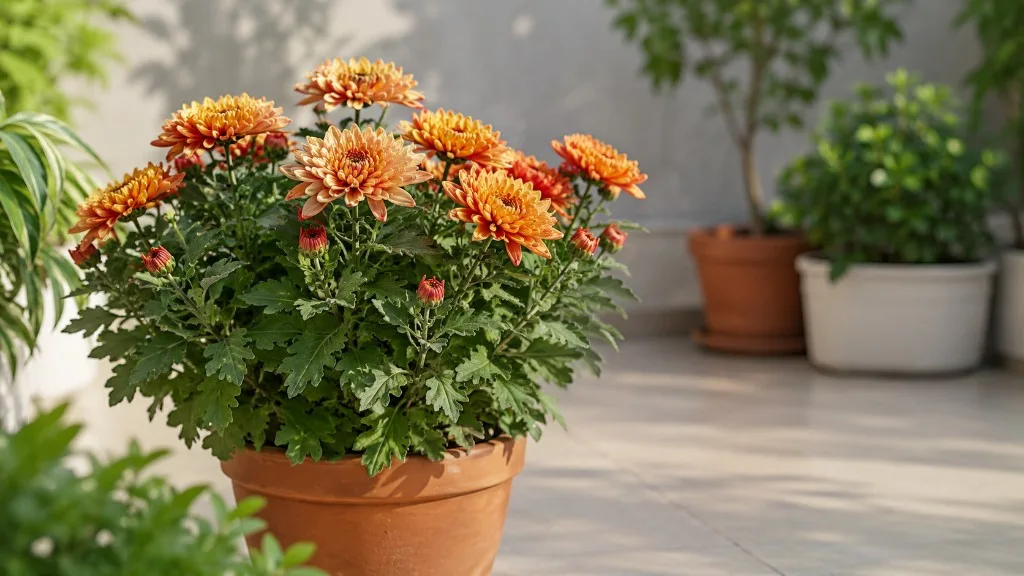
12. Chrysanthemums (garden mums) are among the quickest ways to add classic fall color because nurseries often sell them already in bud or bloom. Check that the label identifies a hardy garden mum if you hope to overwinter it; some florist or seasonal mums are grown mainly for a temporary display and may not establish outdoors reliably. Plant hardy selections early enough for roots to settle, water through dry spells, and mulch lightly after the ground cools. A potted mum kept outdoors can also brighten a porch without being treated as a permanent border perennial.
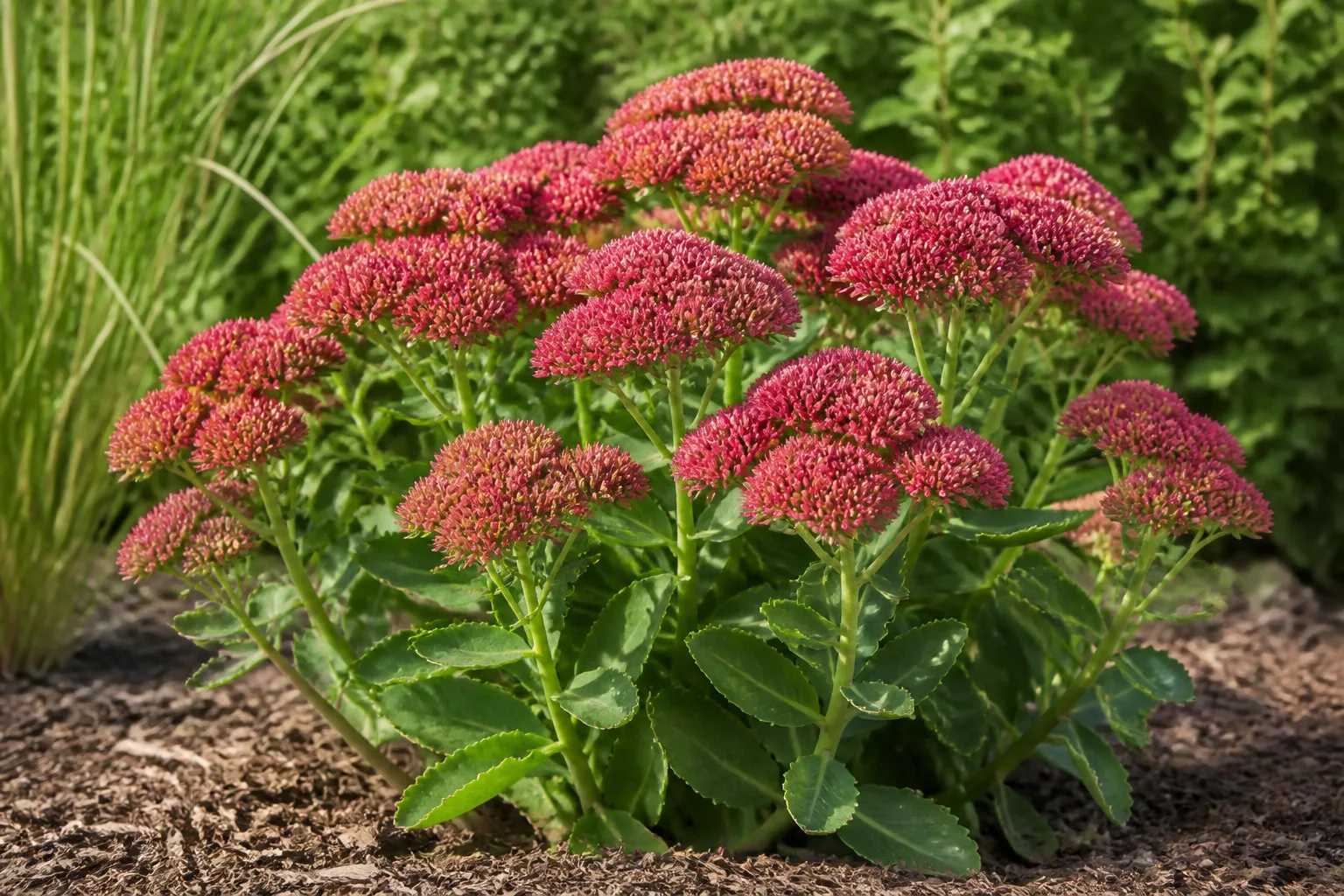
13. Upright stonecrop (often sold as tall sedum) develops fleshy foliage and broad flower clusters that deepen in color as autumn approaches. It is a good match for a sunny, well-drained bed and usually asks for less water after establishment than many leafy perennials. In a late planting, water the root ball thoroughly but do not leave the plant in saturated soil. Choose an upright, clump-forming cultivar for border height; creeping sedums have a different growth habit and are better suited to edging, rock gardens, or ground cover.
14. Dianthus, or garden pinks, produces fringed flowers in compact cushions and may rebloom when faded stems are removed. It suits a sunny position with sharp drainage and can struggle in humid, waterlogged soil or during persistent heat. Buy a vigorous potted plant rather than expecting a late sowing to flower quickly, and avoid burying its crown under soil or mulch. Dianthus is useful along a path or in a container where you can enjoy its fragrance, but its bloom timing varies by species and cultivar.
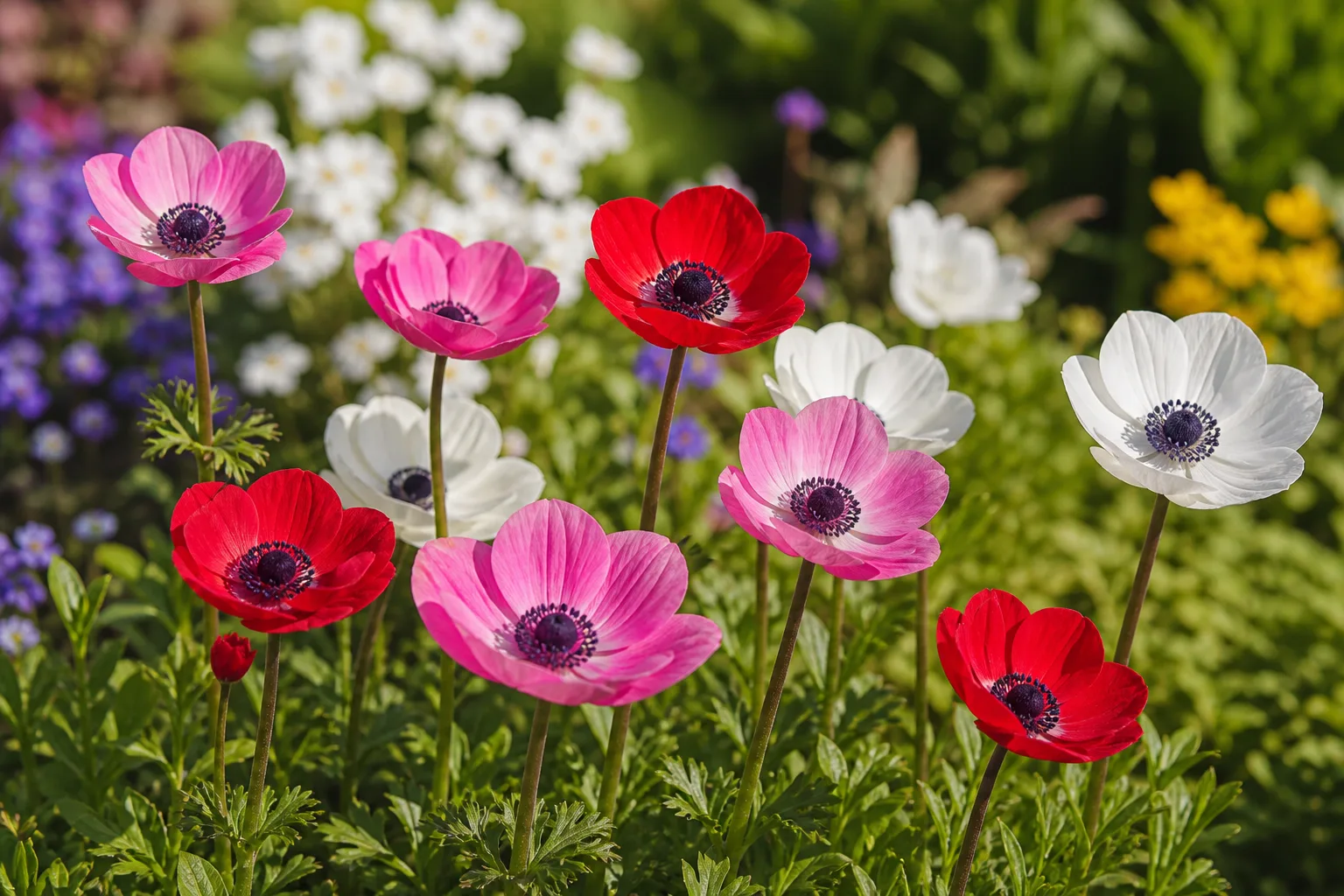
15. Japanese anemone sends up graceful stems of white or pink flowers in late summer and fall, often in part shade. Plant it where the soil remains evenly moist but drains well, and give it room: some selections spread by underground stems and can travel beyond the original clump. A nursery plant with buds is the best choice for an immediate display. Avoid moving an established clump repeatedly, as it can resent disturbance, and mark its location if it dies back in winter so you do not accidentally dig through the crown in spring.
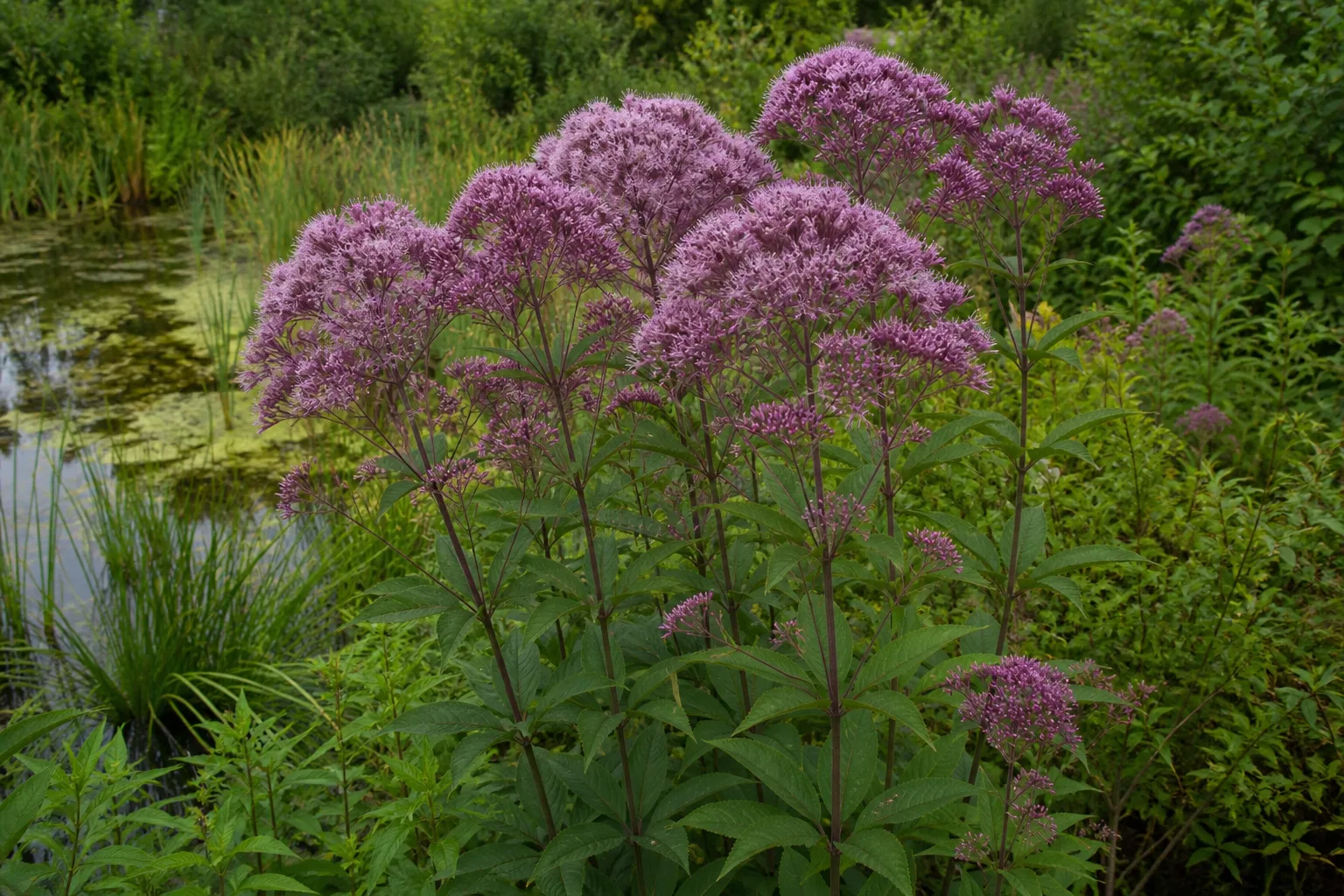
16. Joe Pye weed (Eutrochium) provides tall stems topped by mauve-pink flower clusters that attract pollinators. It is especially useful at the back of a border or in a rain-garden-style planting where soil stays moist; it may be too large or thirsty for a narrow, hot bed. Compact cultivars can fit smaller gardens, but check mature height on the label and support tall stems if wind or heavy rain is common. A late transplant needs regular root-zone moisture, even if the established plant is considered low maintenance.
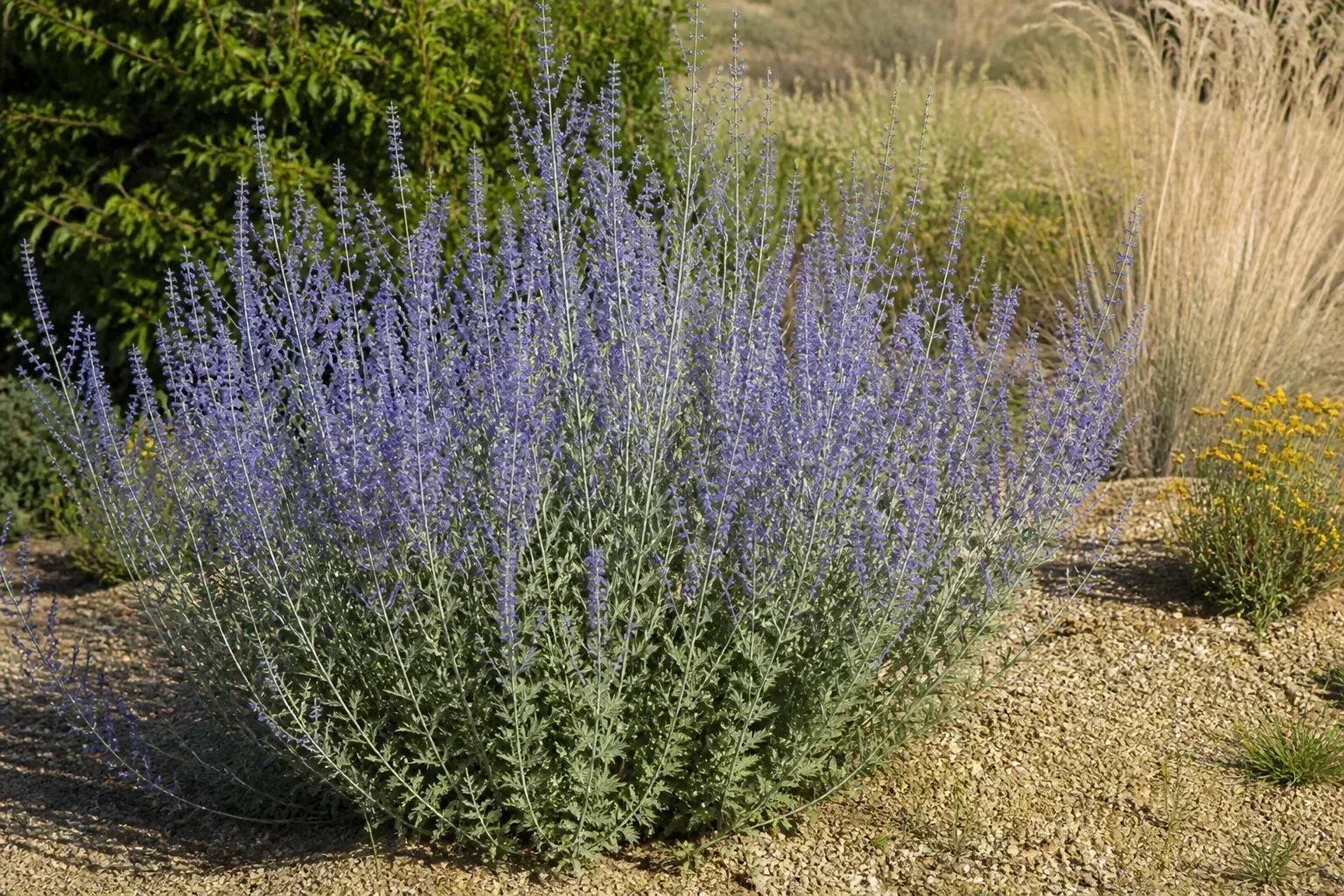
17. Russian sage (Salvia yangii, formerly Perovskia atriplicifolia) has silvery stems and airy blue-purple flower spikes that suit a sunny, dry-looking border. Do not interpret its drought tolerance after establishment as permission to neglect a new transplant; water it deeply while roots expand, then let the soil drain between waterings. It dislikes heavy, persistently wet ground, so improve drainage or choose another plant for a soggy site. Because it becomes a sizeable shrub-like perennial, give it room and place it where its aromatic foliage will not crowd a path.
18. Balloon flower (Platycodon grandiflorus) has inflated buds that open into star-shaped blue, pink, or white flowers. It generally prefers sun to partial shade and soil that drains well while retaining some moisture. A flowering pot can give color this season, but handle it carefully when planting: its fleshy roots do not appreciate repeated disturbance. Choose the permanent spot thoughtfully and avoid digging close to the crown later. Cultivars vary in height, and dwarf selections work well at the front of a border or in a deep container.
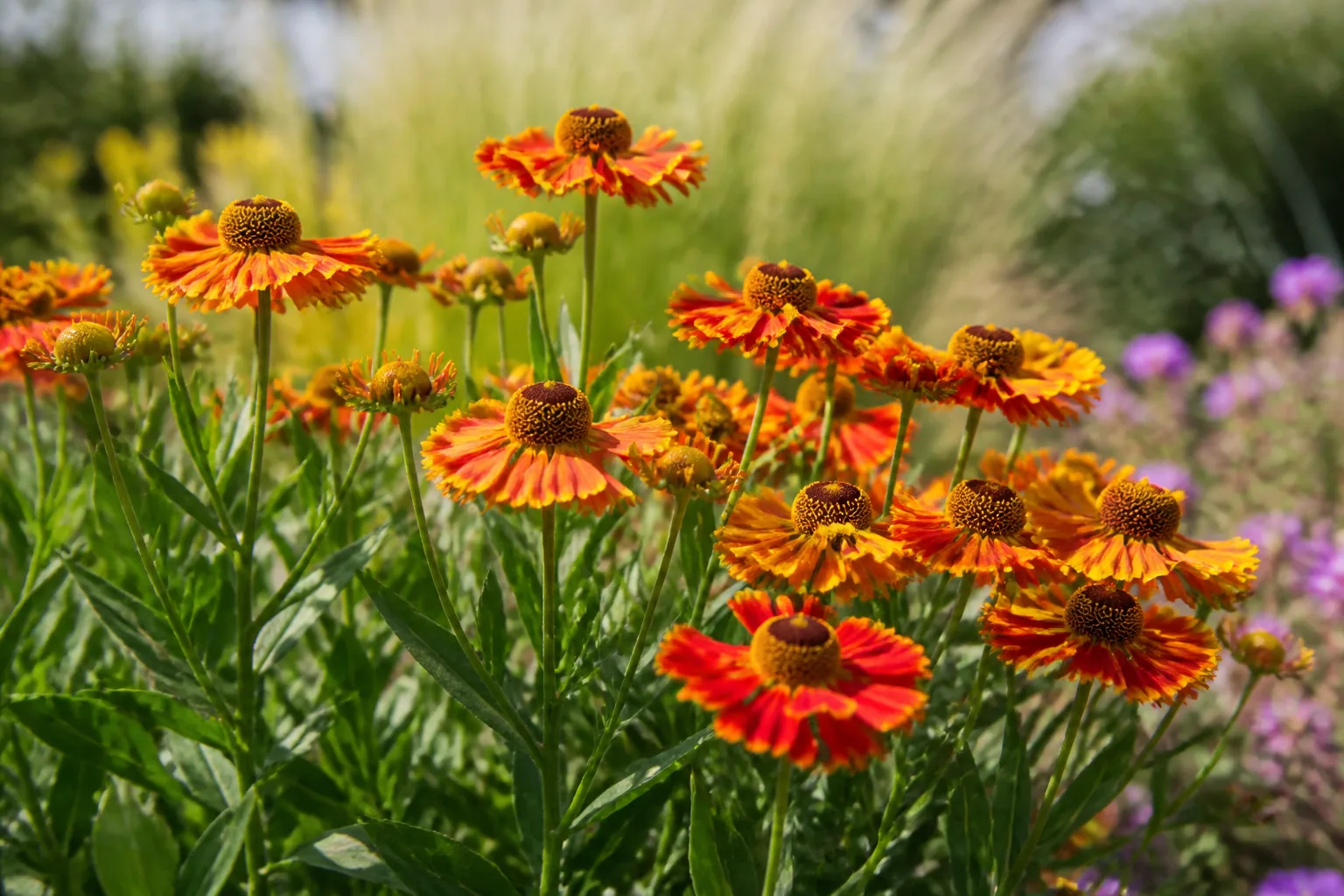
19. Helenium creates a strong late-season display with warm red, orange, or yellow daisy-like flowers. It often prefers sun and more consistent moisture than drought-adapted perennials, particularly during establishment; a hot, dry border may need supplemental watering. Remove spent flower stems for a cleaner look, but keep the plant’s mature height in mind when placing it behind shorter neighbors. A budded container plant can flower this fall, while a small new clump may focus more on roots than bloom. Good drainage still matters, so moist soil should not mean standing water.
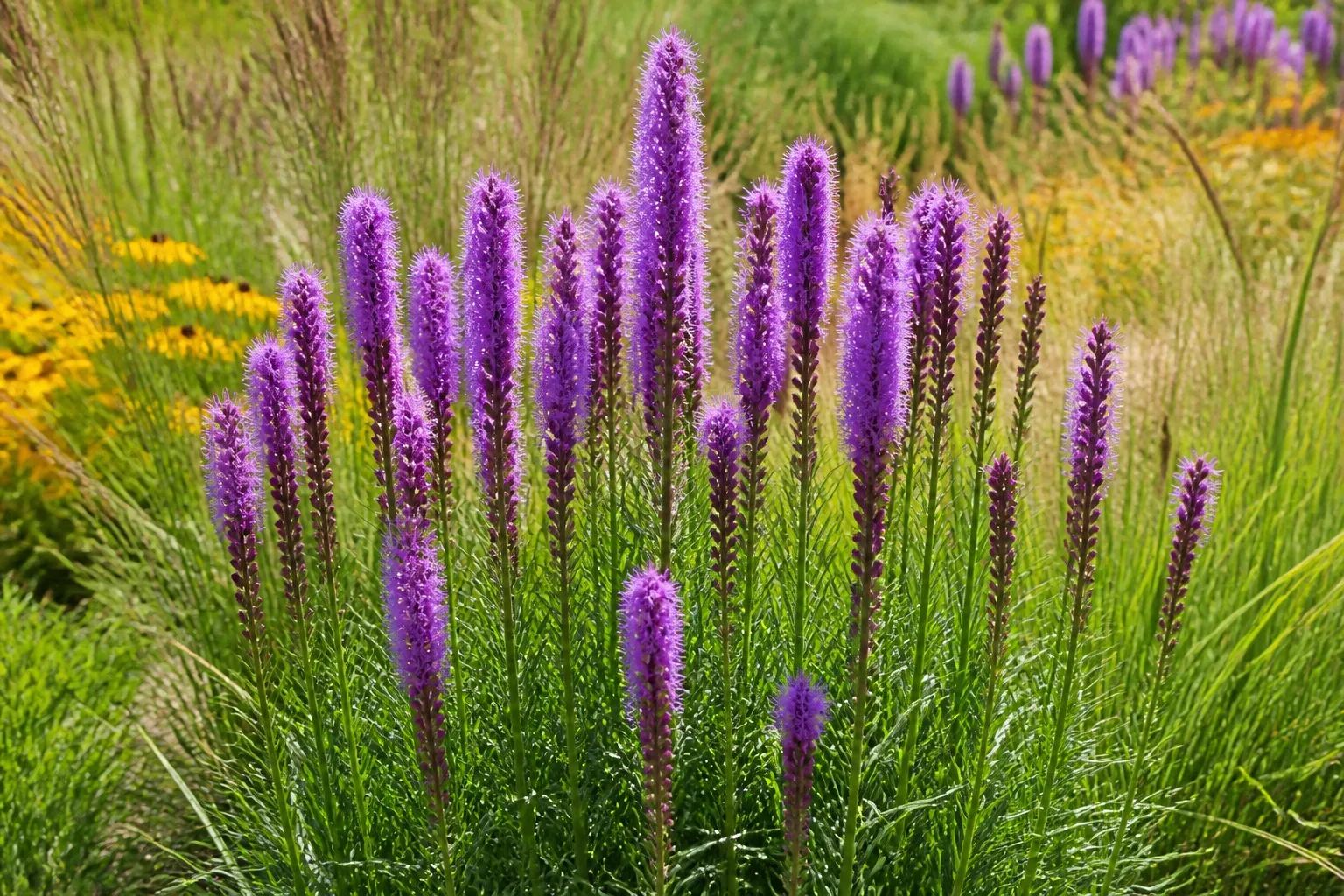
20. Liatris, or blazing star, produces upright spikes of purple or white flowers that attract pollinators. Its corms are normally planted in spring; in late summer, choose an actively growing pot with visible buds if you want flowers before frost. Liatris prefers full sun and well-drained soil, and it can be short-lived in a wet bed. Set the root ball at the same depth it grew in its container, water it in, and avoid crowding the flower spikes. After bloom, let healthy foliage mature naturally rather than cutting it back immediately.
Shrubs and vines for lasting structure
These plants can contribute fall flowers, but a late-summer shrub purchase is not automatically a fast, low-effort way to fill space. Consider mature size, local hardiness, and whether you can keep the root ball hydrated while it establishes.
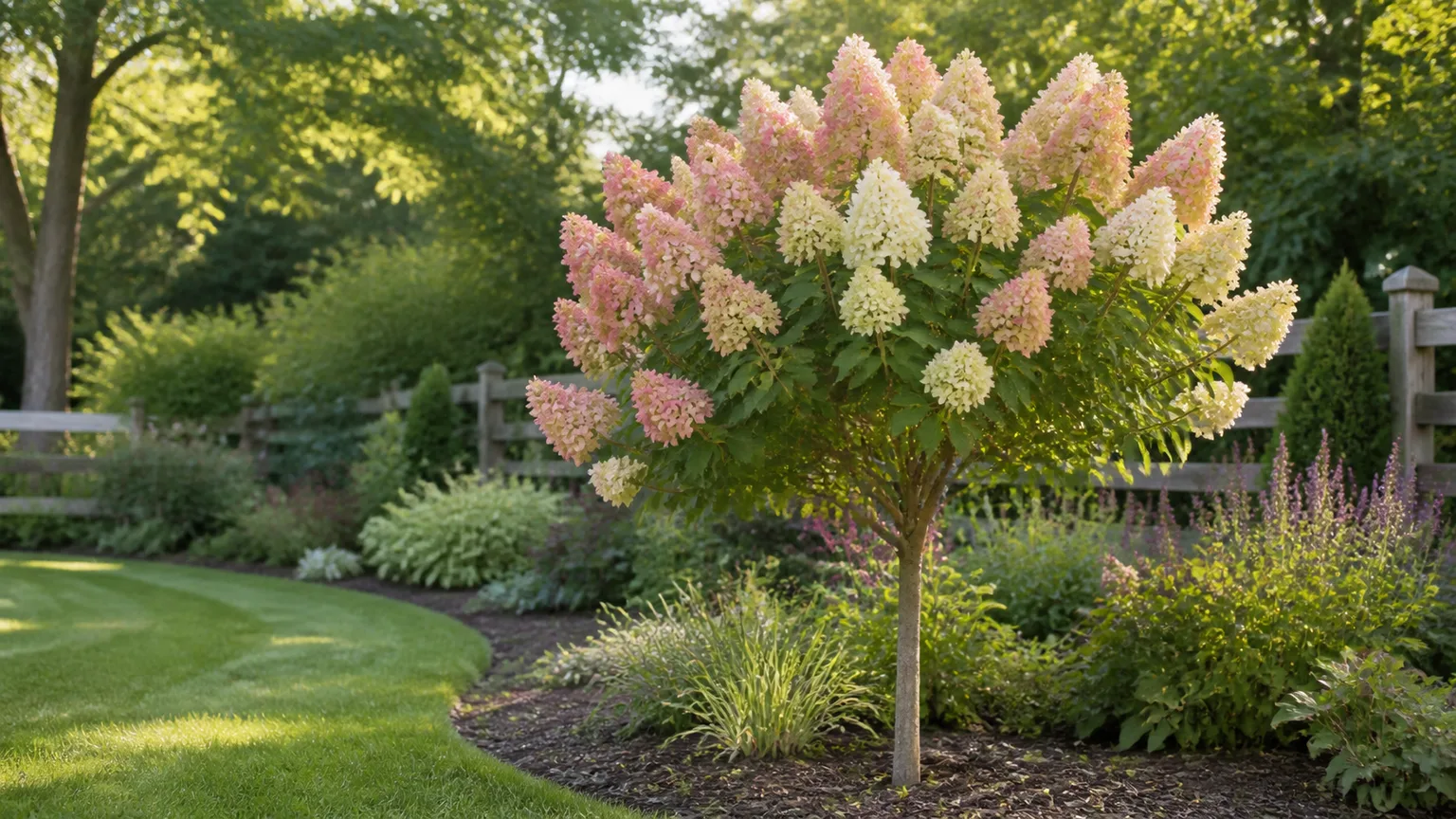
21. Panicle hydrangea (Hydrangea paniculata) produces large cone-shaped flower clusters that often begin white or greenish and change toward pink as they age. The shrub flowers on new wood, but late summer is not a reason to prune it hard; let its current display develop and schedule pruning according to the cultivar and local guidance. Plant a container-grown shrub with room for its mature width, reliable moisture, and morning sun or light afternoon shade in hot climates. It can provide both late-summer flowers and a lasting woody framework.
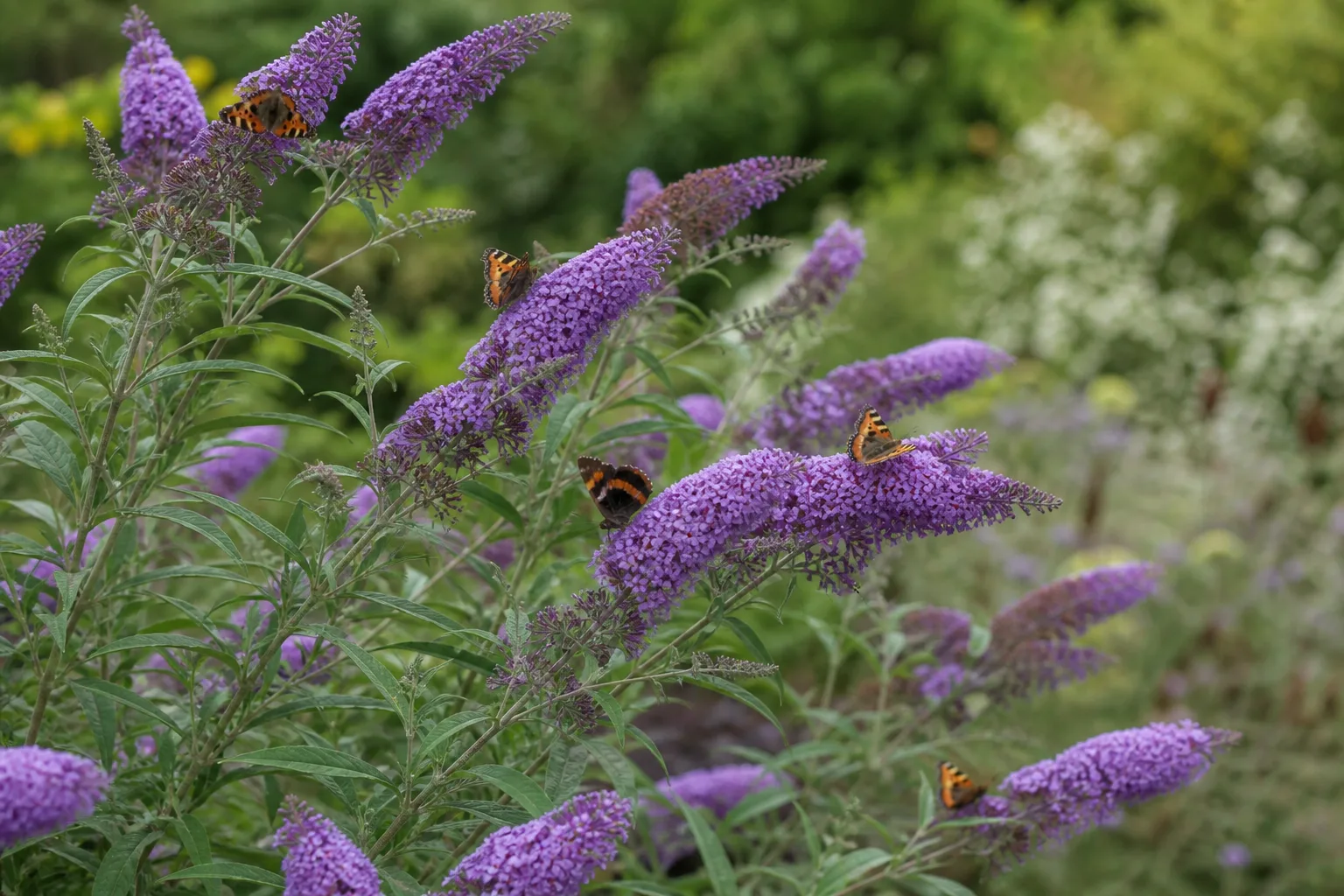
22. Butterfly bush (Buddleja) offers elongated flower clusters and can keep blooming when spent flowers are removed, depending on cultivar and climate. It needs sun and well-drained soil, and larger varieties may overwhelm a small border; compact selections are easier to place. Before buying, check local invasive-plant guidance because some butterfly bush species or cultivars can spread by seed in certain regions. A potted shrub planted before cold weather can establish, but if frost is near, protect the root zone and do not count on a new plant to flower for long.
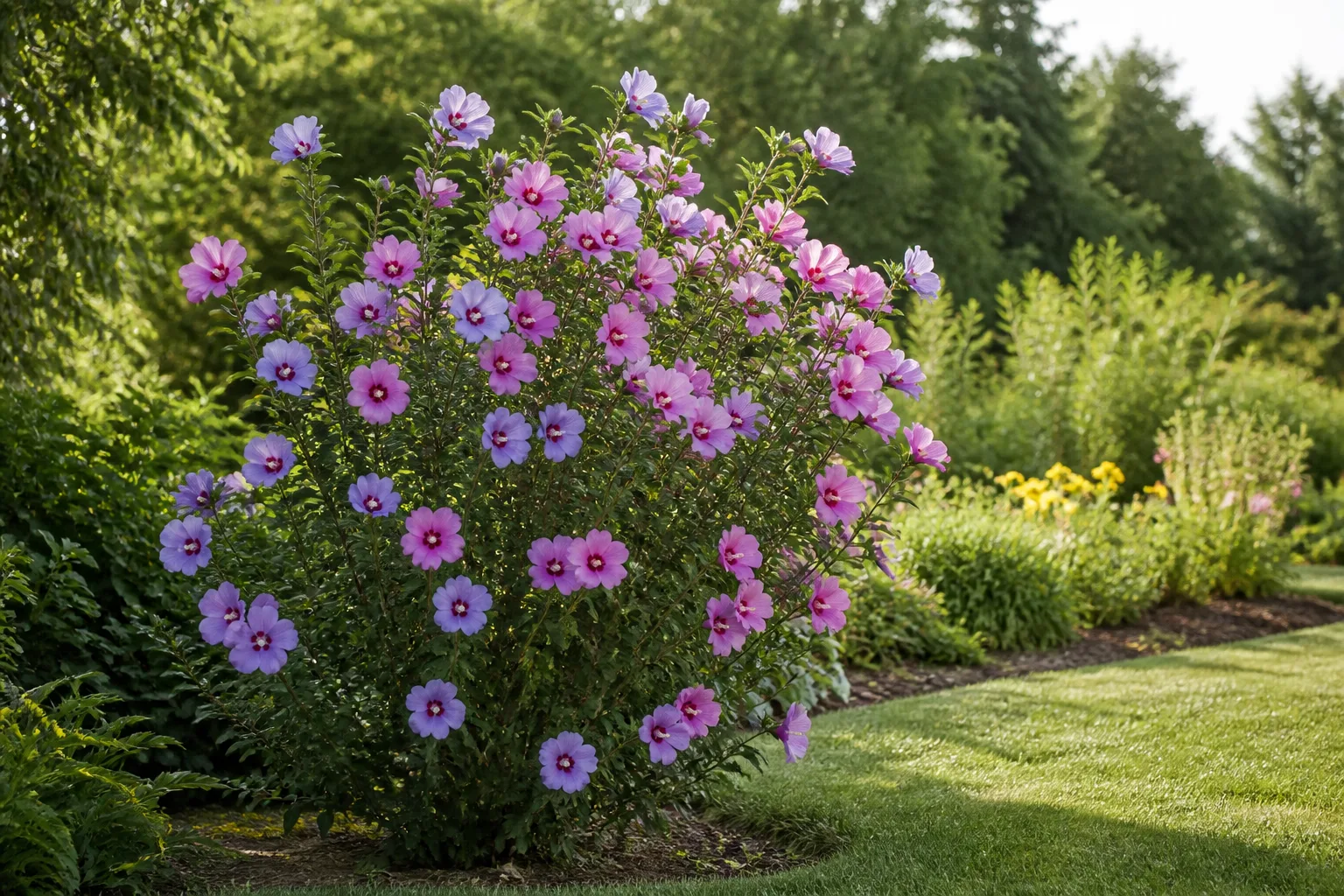
23. Rose of Sharon (Hibiscus syriacus) is a late-blooming shrub with large single or double flowers in shades that include white, pink, purple, and blue. It needs space, sun for best flowering, and a long enough growing season to settle after planting. Choose a cultivar that fits the available height and width rather than relying on pruning to contain an oversized shrub. In colder areas, plant earlier in the late-summer window and keep the root ball evenly moist; in warmer areas, avoid planting into extreme heat if you can wait for a cooler spell.
24. Blue mist shrub (Caryopteris, often called bluebeard) is a compact woody shrub with blue flowers that arrive late in summer and are attractive to pollinators. It is best in sun and well-drained soil, and many cultivars are more tolerant of dry conditions once established than during their first weeks. Check the plant tag for cold hardiness and expected size because selection and local winter conditions matter. A young nursery shrub planted too late in a cold region may need winter protection or may be better kept in a container until spring.
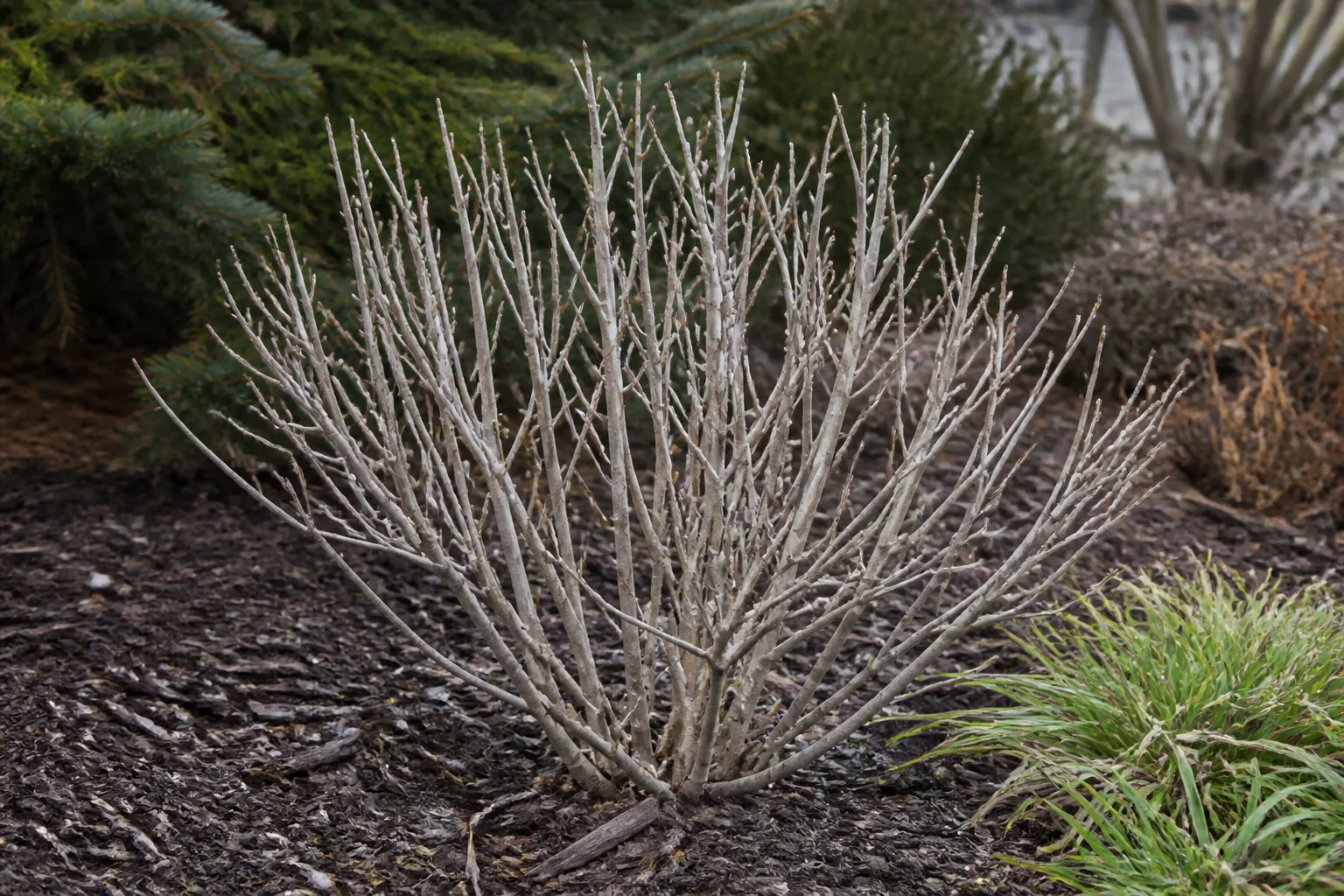
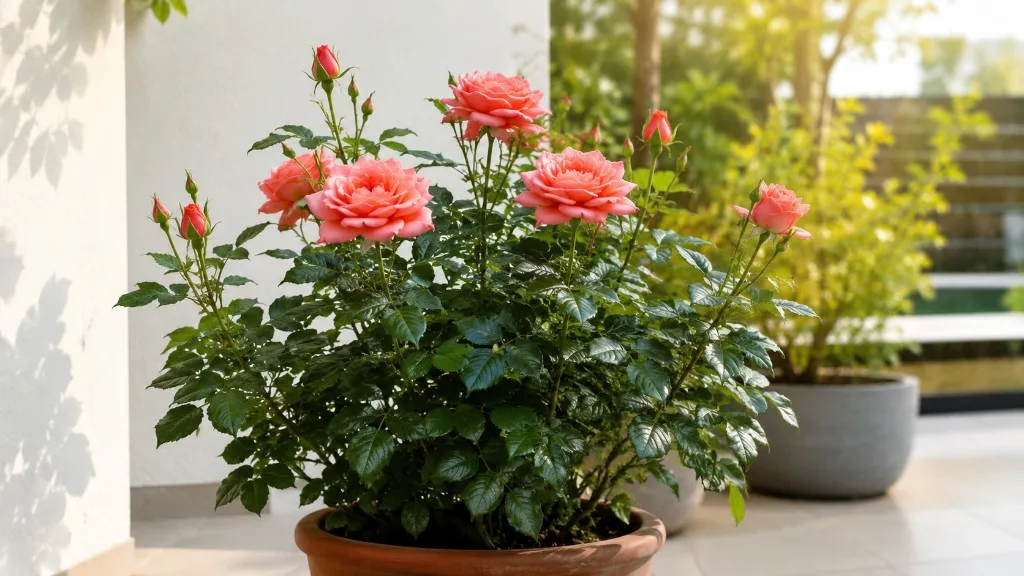
25. Roses can continue to add color into fall when you choose a repeat-blooming variety and buy a healthy, actively growing plant. Plant in a sunny position with good airflow, water at the base, and avoid heavy fertilizing late in the season; you do not want to push tender new growth just before frost. In hot climates, a mild period is easier on a newly installed rose than a heat wave. If there is little time left before winter, wait until the best local planting season instead of rushing a stressed specimen into dry ground.
26. Clematis includes many vines with different flowering seasons, pruning groups, and cold tolerance. For late-summer color, confirm that the cultivar you are buying is a late bloomer and has buds or flowers; not every clematis will bloom in autumn. Give the vine a support, place the roots in cool, evenly moist soil, and let the foliage reach the light. Follow the tag’s pruning-group directions rather than cutting it back at random, since pruning at the wrong time can remove next season’s flower buds.
How to plant flowers in late-summer heat
Prepare the plant and planting hole
Water the nursery pot before planting so the root ball is evenly damp, not bone dry or dripping. Choose a cloudy day or work in the early morning or evening, when the soil and foliage are cooler. Set pots out on the bed before digging so you can check spacing against the plants’ mature width; a border that looks full today can become crowded next year if every small transplant is tucked too closely together.
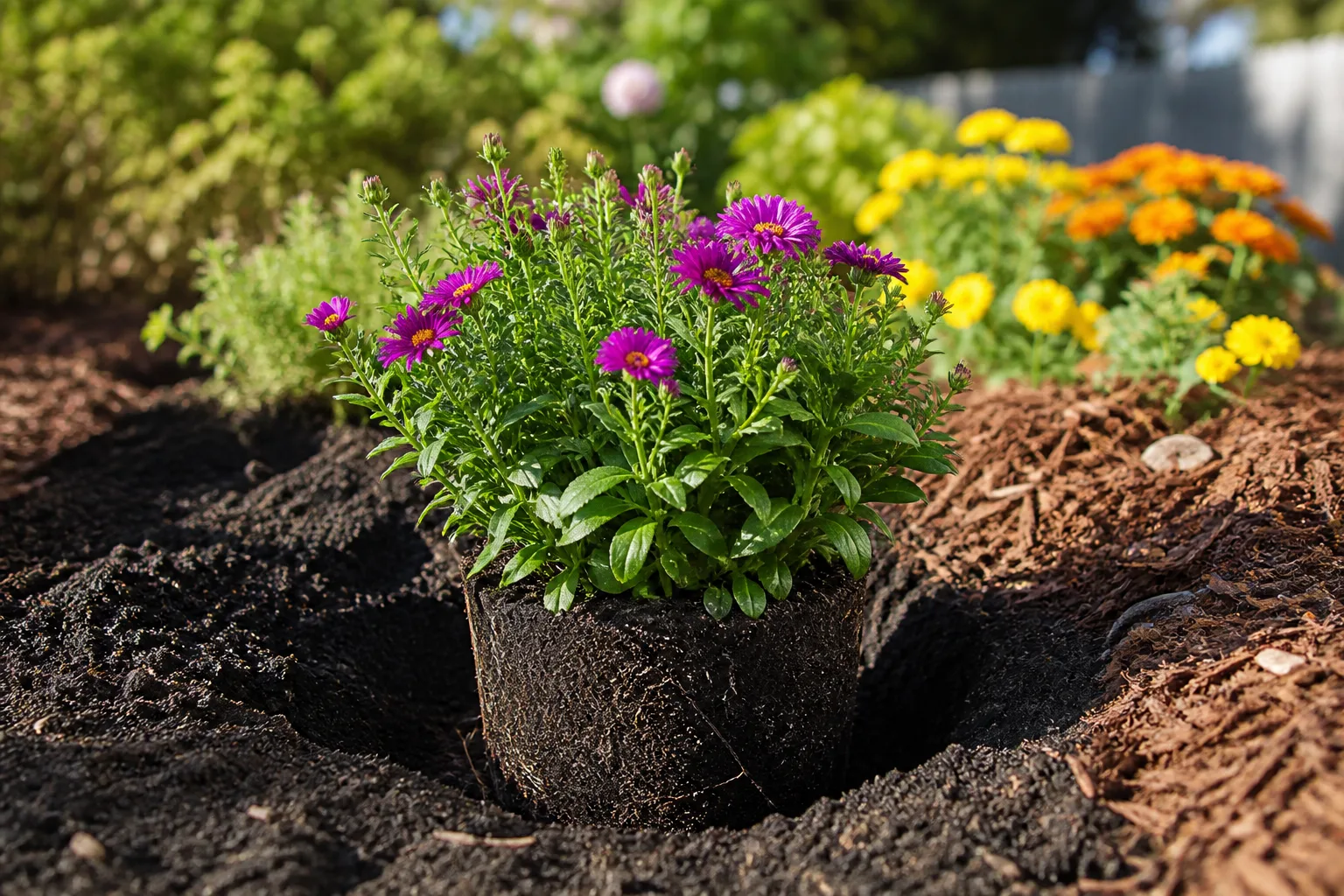
Dig a hole about as deep as the root ball and wider than it. Slide the plant from its pot and inspect the roots: if they circle densely around the bottom or sides, gently tease the outer roots loose so they can grow into the surrounding soil. Avoid rough handling of fragile or fleshy roots, especially for plants such as balloon flower. Set the plant at the same depth it grew in its pot, backfill with the native soil, and press gently to remove large air pockets.
The RHS planting guide also recommends watering container-grown perennials in well and using the plant’s predicted spread to guide spacing, rather than planting densely for a quick filled-in look. Leave enough open air around tall phlox and other mildew-prone plants. A layer of organic mulch can reduce evaporation, but leave a small clear ring around stems and crowns so they are not buried against damp material.
Water deeply and protect the root zone
Water slowly after planting so moisture reaches the full root ball and the soil around it. A quick splash over leaves may make the surface look wet while the roots remain dry. For newly planted perennials, the RHS suggests keeping soil evenly moist down to the root depth—about 6 inches for many herbaceous perennials—and advises against a rigid “once a week” schedule because soil, weather, plant size, and establishment stage all change water needs (RHS watering guide).
Check the soil directly near the root ball, especially during the first couple of weeks. Sandy soil, wind, afternoon sun, and containers dry quickly; clay soil and a cool spell may need less frequent watering. If a plant wilts in the late afternoon but looks firm in the morning, it may be reacting to heat rather than lacking water. Feel the soil before watering again so you do not turn a temporary midday droop into waterlogged roots.
Match flowers to sun, soil, and space
A sunny, well-drained border can suit zinnias, cosmos, coneflowers, rudbeckia, sedum, Russian sage, helenium, and liatris, but their water needs are not identical. Russian sage and sedum dislike being kept soggy, while helenium and Joe Pye weed appreciate more consistent moisture. A plant label’s light recommendation is a starting point; afternoon heat against a south- or west-facing wall can make “full sun” more intense than a bed with morning sun and open shade later.
For partial shade, consider phlox, Japanese anemone, and some balloon flowers, checking each cultivar’s tag and giving new transplants enough moisture. A shrub or vine needs a different kind of planning: confirm mature height, width, and support before placing panicle hydrangea, butterfly bush, Rose of Sharon, rose, or clematis. The BBC Gardeners’ World August plant guide likewise emphasizes late-season choices such as echinacea and phlox, while the Epic Gardening late-summer flower guide covers several of the perennials in this list. Their growing conditions still need to be matched to your own climate and soil.
If a bed has heavy clay, improve drainage across the planting area rather than filling one hole with a sharply different potting mix that can collect water. For a dry, sandy bed, incorporate organic matter before planting and water with a slow soak. Containers are an option when the garden soil is unsuitable or frost is near: choose a pot with drainage holes, use a suitable potting mix, and remember that it will dry faster than the ground.
Care for new plantings until frost
New flowers need more attention than established ones because they are still connecting their original nursery roots to the surrounding soil. Check them in the morning during hot or windy weather. Water when the root zone is drying, soaking it thoroughly, then let excess water drain. Do not assume rainfall reached the root ball if the plant sits under a tree canopy, next to a wall, or beneath an overhang.
Deadhead annuals and repeat-blooming plants when you want to keep flowers coming, but leave some seed heads where you value winter texture or wildlife food. Do not cut back healthy perennial foliage just because bloom has ended; many plants use those leaves to replenish roots. Keep weeds from competing for water, and replace mulch if bare soil is exposed, taking care not to pile it against crowns.
Newly planted shrubs can need regular watering through dry periods during their first growing season. Perennials and shrubs that are called drought-tolerant still need a consistent establishment period. If a plant repeatedly wilts despite moist soil, check drainage, root damage, or heat exposure instead of automatically adding more water.
Common late-summer planting mistakes
The first mistake is choosing seeds when the season is too short. A seed packet’s days-to-maturity number is a guide under favorable growing conditions; a late sowing also has to germinate, establish leaves and roots, and produce buds as days shorten. If frost is near, spend the budget on a developed plant with visible buds, or sow now for a later season only when the variety and local climate support that choice.
The second mistake is buying a dormant storage organ and expecting instant flowers. Dahlia tubers and liatris corms are normally planted in spring; at the end of summer, choose an actively growing pot for fall color or wait for the correct season. Another common misstep is setting a plant into dry soil and assuming one watering is enough. A new root ball can dry faster than the surrounding bed, so check it separately until roots spread.
Finally, avoid crowding plants for instant impact, burying crowns beneath soil or mulch, or watering every plant on the same calendar. Match each flower to drainage and light, keep the root zone damp but not saturated, and allow the plant to reach its mature width. If the forecast suggests frost will arrive before a newly planted shrub or perennial can settle, holding it in a protected pot or waiting for spring is often the more reliable decision.
Conclusion
The best late-summer flower is the one that fits the weeks you have left and the conditions in your garden. For color before frost, select a healthy nursery plant already in bud or bloom; for seeds and dormant tubers, check the maturity window and plant in the season they need. Then give every transplant a workable site, mature-size spacing, a thorough first watering, and ongoing moisture checks while roots establish. That approach can brighten the garden now and set up a stronger display in seasons to come.