How to Get Rid of Poison Ivy Safely
Learn how to get rid of poison ivy with a method matched to patch size, from digging small roots to cutting vines, while protecting skin and nearby plants.
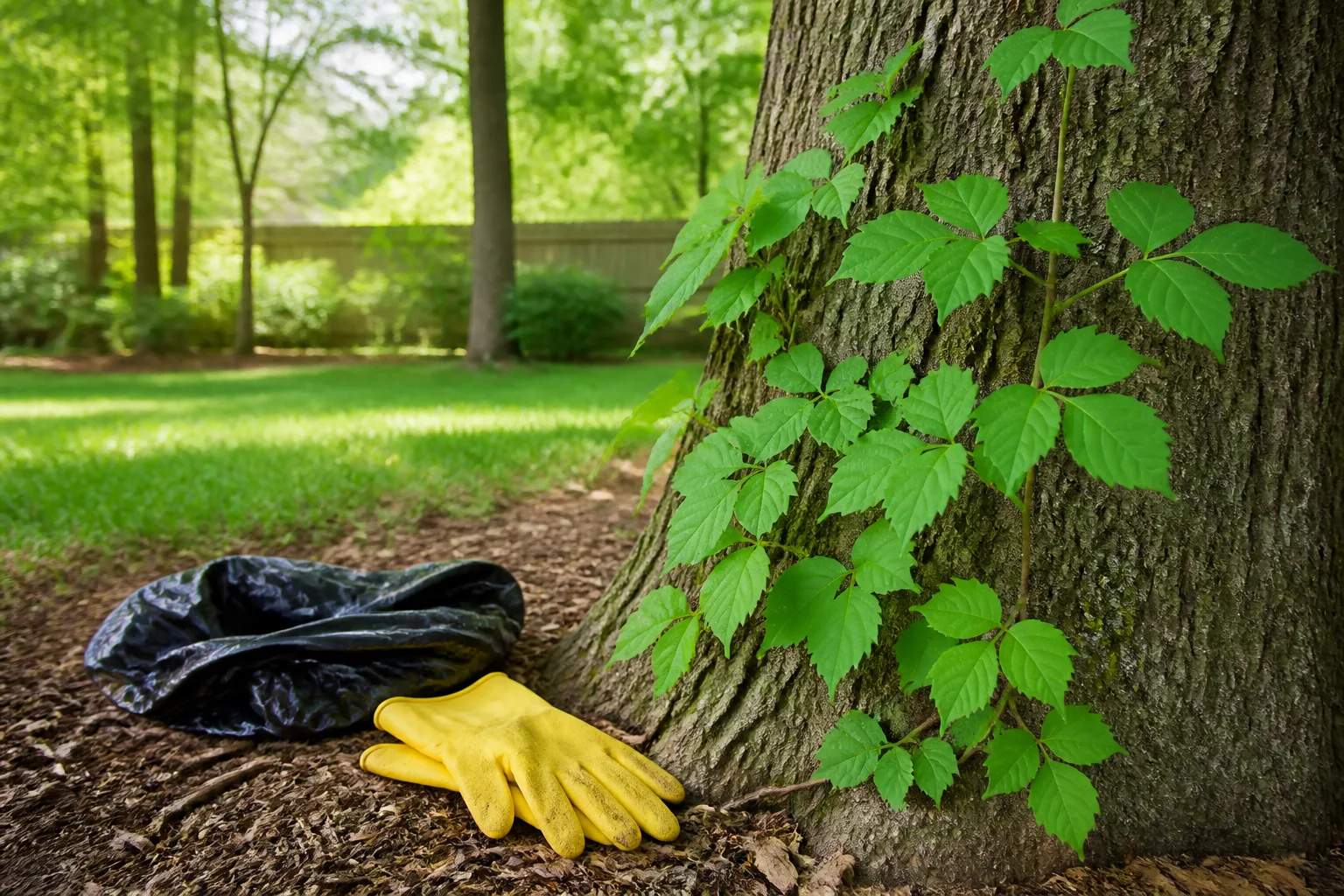
The safest way to get rid of poison ivy depends on how much is growing, where it is, and whether you can remove it without brushing against it. For a small, isolated plant, careful digging can remove the crown and roots; for a larger patch, repeated cutting, a secure cover, targeted labeled herbicide, or a professional may be more realistic. No method makes the plant harmless: leaves, stems, roots, and dead vines can all carry urushiol, the oil that causes a rash.
Start by identifying the plant from a distance, then choose a method that keeps it contained. Do not burn it, run it through a mower, or toss it into a compost pile. After the work, clean anything that may have touched the plant and return to the site to look for new shoots.
Decide Whether the Patch Needs to Go
If poison ivy is tucked into a low-traffic wooded edge where people and pets do not go, removal may create more exposure than leaving it alone. Poison ivy is native across much of North America and can provide food and cover for wildlife; the NC State Extension Plant Toolbox notes that it can be left in native areas with little human activity. A patch beside a path, play area, vegetable bed, or frequently used fence line is a different decision because routine contact is more likely.
Think about how the plant got there before choosing a method. A few seedlings in a bed may be a quick digging job, while a ground-covering patch with runners, a woody vine in a shrub, or a vine climbing high into a tree needs a slower plan. If you have had severe reactions, cannot avoid contact, or cannot confidently identify the plant, let a trained professional handle the removal.
Confirm Poison Ivy From a Safe Distance
Poison ivy usually has three leaflets on one leaf stalk, with the middle leaflet often held on a longer stem. The leaf edges may be smooth, wavy, toothed, or lobed; color changes with the season, so a red fall leaf is not a safe reason to rule it out. Eastern poison ivy can trail or climb as a woody vine with hairy aerial rootlets, while western poison ivy often grows as a low shrub. The CDC’s identification guide warns that the familiar three-leaf saying is only a reminder, not a complete identification test, because lookalikes and seasonal forms vary. Penn State Extension also documents how leaf edges and color shift by season.
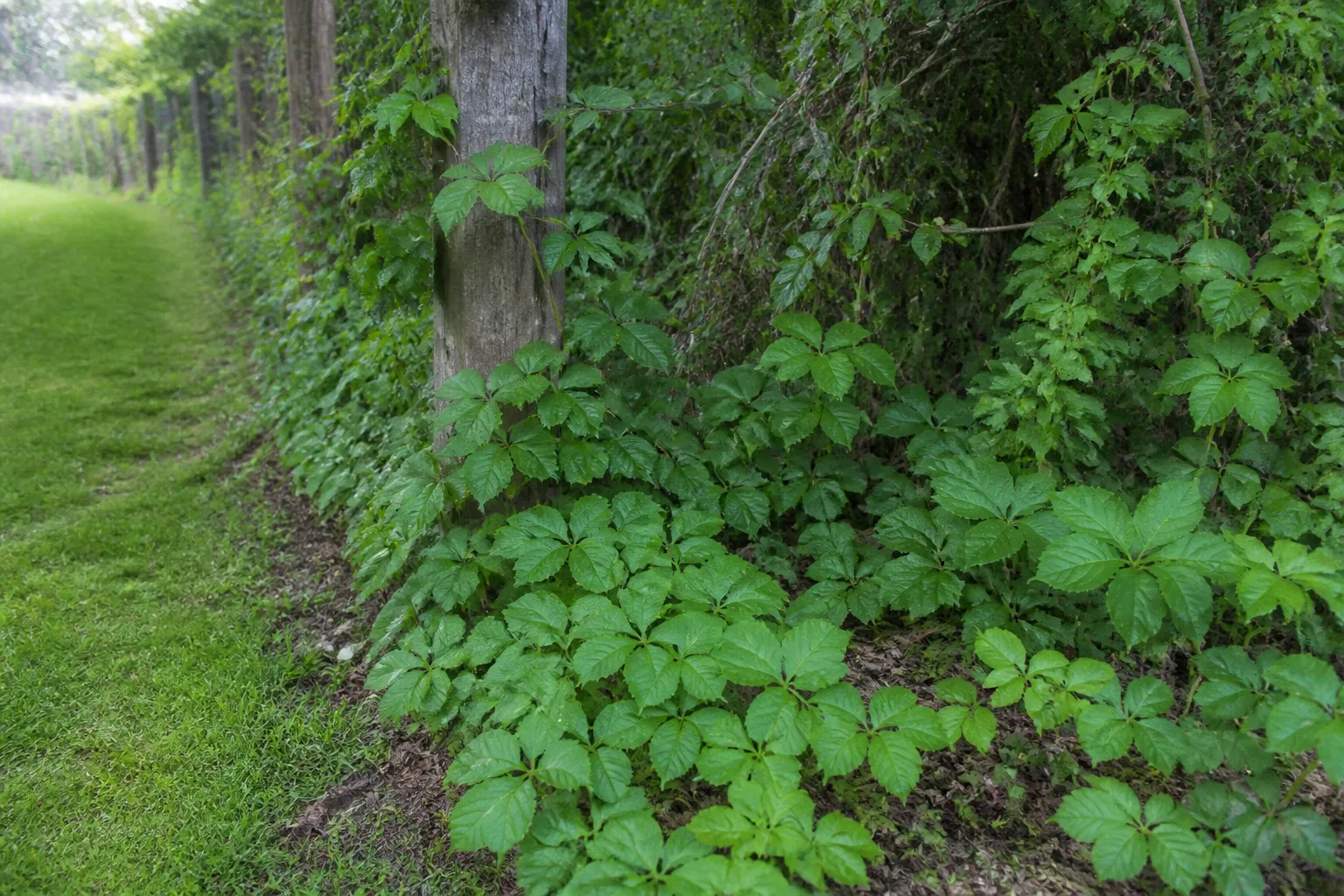
Virginia creeper is a common lookalike, but it typically has five leaflets rather than three. Poison oak can overlap in appearance, and poison sumac has a different leaf arrangement, so do not handle an uncertain plant to count leaflets. Use binoculars or a phone camera zoom, compare several leaves and the stem, and ask a local cooperative extension office if the identification still is not clear. Clemson Cooperative Extension describes the variation in leaflet edges and the hairy rootlets that help climbing vines grip trees and fences.
Treat every confirmed part as contaminated, even if it is leafless, brown, or dormant. Urushiol is present in all parts of the plant, and oil can transfer from vines to gloves, clothing, tools, footwear, and animal fur; the CDC says it can remain active on object surfaces for years. That is why identification and a cleanup plan matter as much as the act of removing the visible foliage.
Match the Removal Method to the Patch
Pick a method by weighing exposure against the time and damage the method may cause. A small patch away from valuable roots is often easiest to dig. A contained patch that cannot be dug safely may be covered and monitored; a sprawling area may need repeated cutbacks or targeted control. The right approach is the one you can follow through on without spreading plant pieces or oil around the yard.
| Situation | Practical first choice | Main trade-off |
|---|---|---|
| One or a few small plants in loose soil | Dig out the crown and roots | Requires careful handling and follow-up |
| A low patch among desirable plants | Repeatedly cut new shoots or use an opaque cover if it can be isolated | Takes persistence; shoots can emerge around edges |
| A vine intertwined with a shrub or climbing a tree | Cut the vine at ground level; leave the upper portion in place | The dead vine remains a contact hazard |
| A large, established, or hard-to-reach infestation | Hire a qualified professional; discuss targeted, label-compliant control | May cost more, and repeat visits may be needed |
Goats sometimes browse poison ivy, but grazing removes foliage rather than the root system, so it is not a one-time eradication method. Livestock can also carry urushiol on their coats and bring it into contact with people, a transfer route identified by the CDC. Do not handle a grazing animal or its tack as though the oil has disappeared just because the leaves were eaten.
Set Up a Clean Work Zone
Choose a calm, dry day when the foliage is not wet and the soil is soft enough to loosen; Gardening Know How recommends working after rain for easier root removal, but let leaves dry first so wet plant material does not brush onto you. Keep children and pets away, put a heavy-duty bag where you can reach it without crossing clean areas, and set aside a place to remove outer clothing. Do not plan another garden chore immediately afterward.
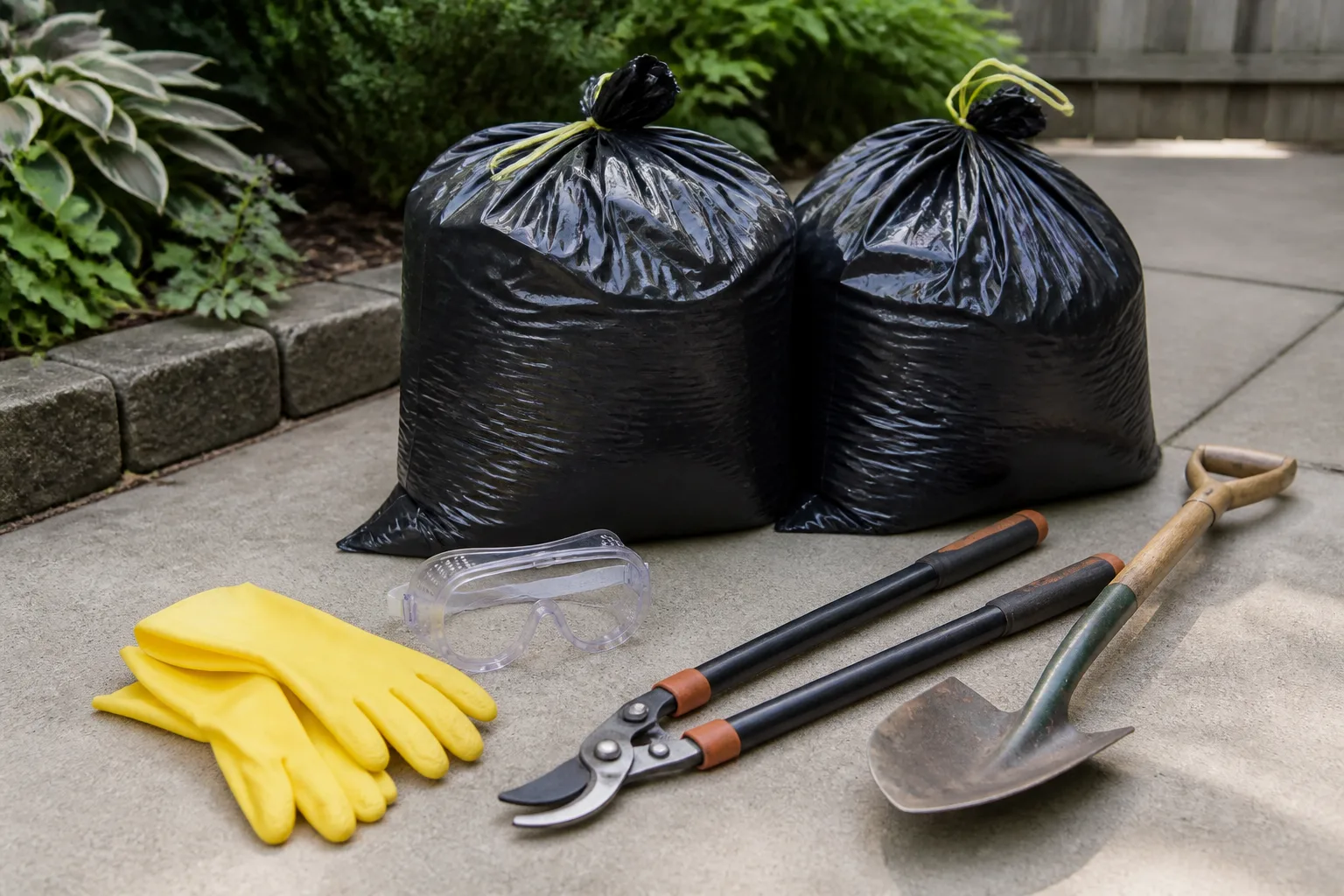
Wear long sleeves, long pants, closed boots, and waterproof gloves; eye protection is useful when stems may snap or branches are overhead. Penn State Extension recommends disposable nitrile gloves under heavier work gloves for an extra barrier. Tuck pants into socks and sleeves over glove cuffs so a plant cannot brush bare skin at the wrist or ankle. Avoid loose fabric that can catch vines, and do not touch your face, phone, water bottle, or door handle with contaminated gloves. The CDC’s prevention guidance advises protective clothing and separate laundering of exposed garments.
Use tools with long handles when that lets you keep your body away from the patch. Bring a shovel or sturdy hand trowel for a small plant, loppers for a woody stem, and disposable bags; do not use a string trimmer or lawn mower to shred a patch, since fragments can be flung onto skin or equipment. Work only as long as you can maintain control and concentration. If the plant is overhead, deeply tangled, or too extensive for a careful one-person cleanup, stop and arrange help.
Dig Out Small, Isolated Plants
Digging is useful when the patch is small enough to manage and you can lift roots without disturbing valued plants. Moist soil after rain makes the job easier, but wait for foliage to dry and avoid digging in gusty conditions. Gardening Know How recommends working after rain because loosened soil lets roots come out more easily. Clemson Cooperative Extension recommends digging small plants for light infestations; its guidance also stresses that poison ivy can spread through underground rhizomes and seeds, so removing one visible stem does not guarantee the whole patch is gone.
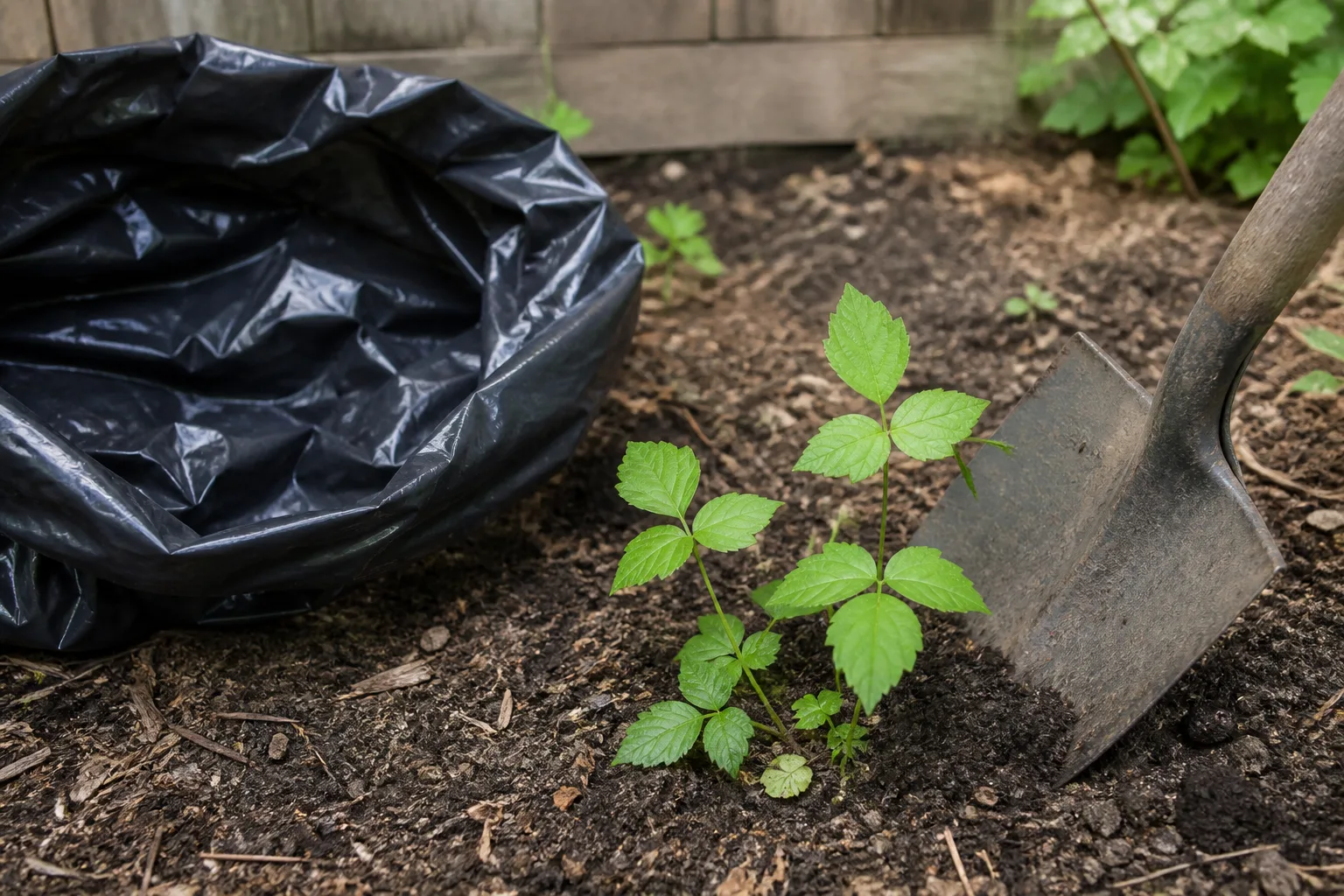
Begin by opening the disposal bag so you are not searching for one with contaminated gloves. Loosen the soil around the plant with a trowel or shovel, working from the outside toward the crown; lift the roots and surrounding soil carefully rather than yanking the stem and snapping it. Keep each piece low and contained, put it straight into the bag, and avoid brushing loose leaves against your trousers or nearby plants.
There is no dependable universal digging depth because roots spread differently in different soils and from plant to plant. Penn State Extension advises digging several inches down with a fork or shovel to capture more of the underground rhizomes. Remove the crown and as much connected root material as practical, but do not tear through the root zone of a shrub or perennial to chase every strand. If the poison ivy is woven through plants you want to keep, switch to repeated cutting or ask a professional about targeted control. After digging, level the soil gently and mark the site so you know where to check for regrowth.
Work From the Outside In
Do not grab the outer foliage and pull it toward yourself. Instead, clear a route for your tools, loosen the soil around one plant, and lift small sections into the bag while keeping your sleeves and gloves away from leaves. If a long runner disappears under a hedge or fence, follow only as far as you can work without dragging it across desirable foliage; cut it into manageable lengths if needed and bag each length immediately.
If the root breaks, do not dig frantically with your hands. Put the visible pieces in the bag, clean the tool before using it elsewhere, and schedule a return visit to catch new shoots. This is safer and usually more productive than broad excavation that tears up the entire bed, spreads fragments, or leaves you with contaminated soil and clothing to manage.
Cut Back Regrowth When Digging Is Impractical
Repeated cutting can weaken poison ivy when roots are entangled with plants you want to preserve or when excavation would damage a tree’s root zone. Clemson Extension recommends cutting shoots to ground level as they appear, beginning when spring growth unfolds and checking every week or two. Each pass removes the leaves the plant uses to replenish its roots; it is a persistence method, not an instant kill, and a large established patch may require careful trimming for several growing seasons.
Use hand pruners or loppers only if you can cut without wrapping vines around your hands or body. Snip the stem close to ground level, let cut foliage fall onto a tarp or into an open bag, then bag it without shaking or dragging it. Penn State Extension warns that mowing can scatter urushiol-bearing leaf pieces and string trimmers can send sap particles into the air, so do not use powered equipment as a home-yard shortcut.
Make a calendar reminder to inspect the exact patch at a consistent interval. Cut new shoots while they are small and keep the same protection and disposal routine each time. If repeated cutting is not reducing the patch, check whether shoots are emerging from a wider network, whether berries are reseeding the area, or whether the method simply demands more visits than you can sustain; then switch approaches or call a professional.
Smother a Contained Patch
A dark, opaque cover can block light from a low, contained patch where you can cover the entire infested area without trapping desirable plants underneath. Extend the cover beyond the visible leaves, overlap seams, and weigh the edges down so wind cannot create gaps. Use a durable tarp or another opaque sheet suitable for outdoor use; cardboard can work on a small, level spot if it stays dry and the edges remain sealed.
Expect to leave the cover for months, then inspect before declaring success. Gardening expert Melinda Myers, writing for Martha Stewart, describes covering poison ivy with black plastic for several months and checking the site after removal; Penn State Extension likewise says localized covers should stay in place for a full growing season or longer and that edges need monitoring. A six-week calendar is not proof that an established root network is dead. Lift a corner carefully with gloves, check for green shoots around the margins, and re-cover or cut new growth if needed.
Smothering is a poor fit when runners weave through plants you want to keep, when water runoff could move the cover, or when people may lift it without knowing what is underneath. The plants beneath it may be brown and still carry urushiol. Keep the boundary marked, wear protective clothing when you uncover the area, and bag any debris rather than composting it.
Stop a Climbing Vine at the Base
Do not peel a mature poison ivy vine off a tree, fence, or wall. A woody vine may be attached by many aerial rootlets; pulling can damage bark or release contaminated debris onto you. Use loppers to cut the vine near ground level only if you can reach the stem safely. If the stem is accessible, a second cut several inches above the first can create a short “window” section to bag; leave the upper vine attached to the support to dry and decay in place.
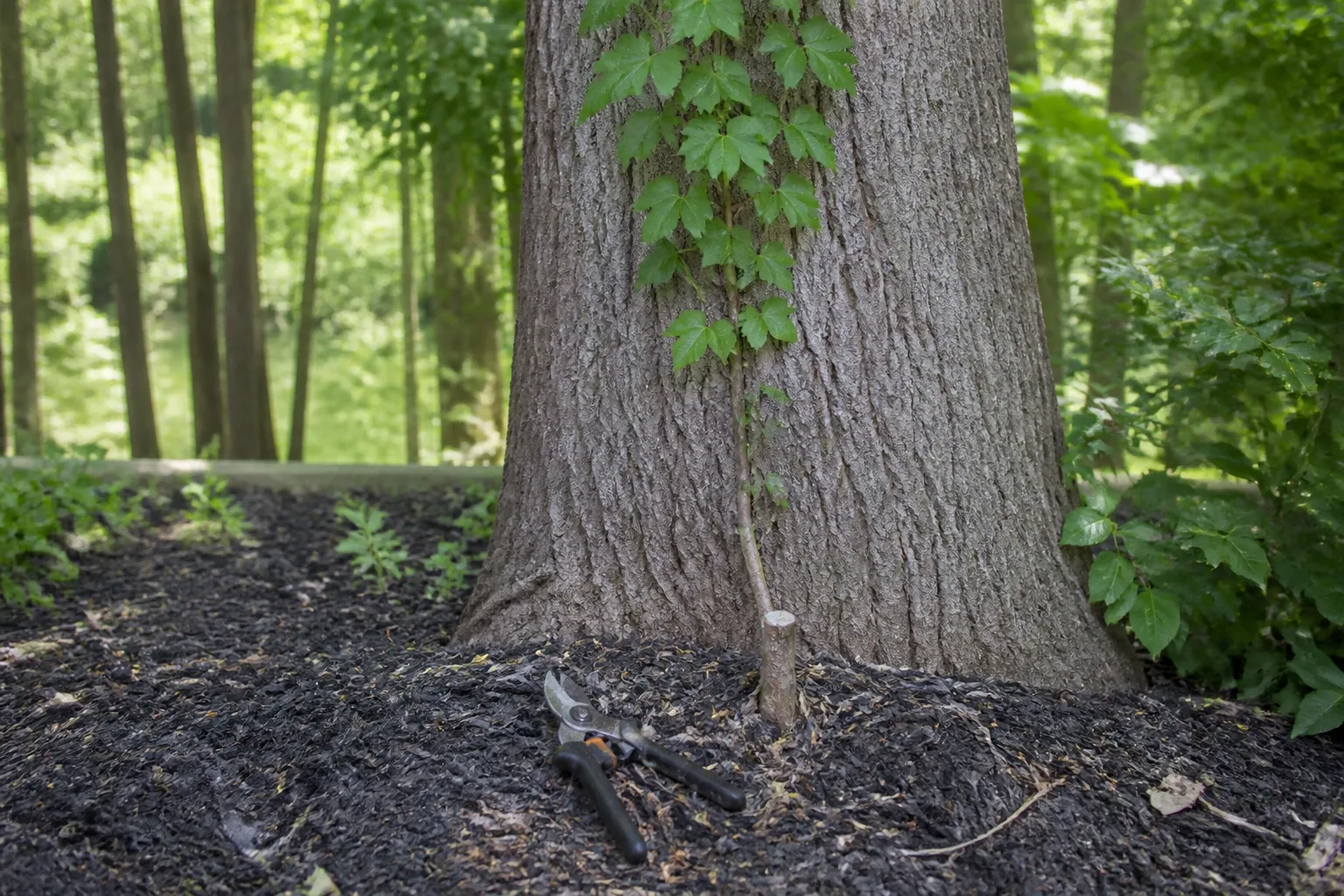
The roots may send up new growth, so inspect around the cut stump and continue cutting shoots as they emerge. If a labeled product is appropriate for the site, a cut-stump treatment can reduce contact with nearby foliage, but only use a product and method whose label allows it. Penn State Extension’s control guide describes cut-stump treatment for woody vines, while Clemson Extension likewise emphasizes protecting desirable plants and following label directions.
Leave the upper vine alone even after it looks dead. Urushiol can remain on dead plant material, and a dry vine may be harder to recognize later; tell household members not to pull it down. If the vine reaches high branches, is near power lines, or requires ladder work, do not climb or cut overhead—hire an arborist or qualified removal service.
Use Herbicide Only When the Trade-Off Makes Sense
A labeled herbicide can be practical for a large patch that is unsafe or unrealistic to dig or cut repeatedly, but it does not remove the exposure risk during application. Products differ in where they may be used, which plants they affect, and whether they are intended for foliar or cut-stump treatment. Systemic products may give more reliable control of established plants because they move from foliage toward roots, but the label and the site decide whether they are appropriate. Read the entire label and use only a product labeled for poison ivy and the exact site; follow its protective equipment, weather, reentry, and disposal directions. Do not increase concentration or improvise a mixture.
A broadcast spray can injure shrubs, flowers, vegetables, lawn species, or plants beyond the target. Where desirable plants are close, ask a local extension office or licensed applicator whether a cut-stump approach is suitable; spot application still requires accurate identification and careful handling. Clemson Cooperative Extension notes that herbicides can damage wanted plants and that repeated applications may be needed. The site conditions and product label—not a generic recipe—determine the safe option.
If you do not have the protective gear, confidence, or physical ability to manage the job, do not treat that as a reason to choose a harsher home remedy. A professional can assess the location, minimize drift or contact, and return to treat regrowth. Ask what method will be used, how nearby plants will be protected, and how removed material will be contained.
Why Salt, Vinegar, Bleach, and Boiling Water Fall Short
Household sprays can make the leaves look damaged without reliably removing an established root system. Vinegar and salt are nonselective: anything the spray reaches may be injured, and concentrated solutions can make the safety problem worse rather than better. Salt can also move into nearby soil with water; it is a poor choice in a flower bed, lawn, or planting area where you want other plants to survive. The risk is that leaf scorch looks like complete control when only the top growth has died; an established root network may remain.
Boiling water can scald you and damage roots or groundcover around the target, while its heat is difficult to deliver through a large root network. Bleach is a caustic cleaner, not a careful poison-ivy control strategy; Penn State Extension warns that it can damage soil and that mixing it with vinegar or some other cleaners can create hazardous gases. Do not mix bleach with vinegar, ammonia, or other cleaners. The goal is not simply to brown leaves but to manage the whole patch without creating a second hazard.
If a low-risk nonchemical method fits, use it and plan to revisit the site. If it does not fit, compare a labeled, targeted treatment or professional removal instead of escalating a kitchen mixture. If the plant greens up again after a spray, treat that as a reason to switch methods rather than keep applying a solution that also injures surrounding plants.
Bag and Dispose of Plant Material
Put roots, leaves, berries, stems, and cut vines directly into a sturdy bag and seal it before carrying it across the yard. Practical garden writers at This Is My Garden likewise recommend containing roots and foliage instead of composting them. Do not shake soil from roots, leave cuttings in a pile, put them in a home compost bin, or send them through a chipper. University of Wisconsin Extension advises bagging the material for municipal garbage after removal; check local household-waste rules before using curbside collection.
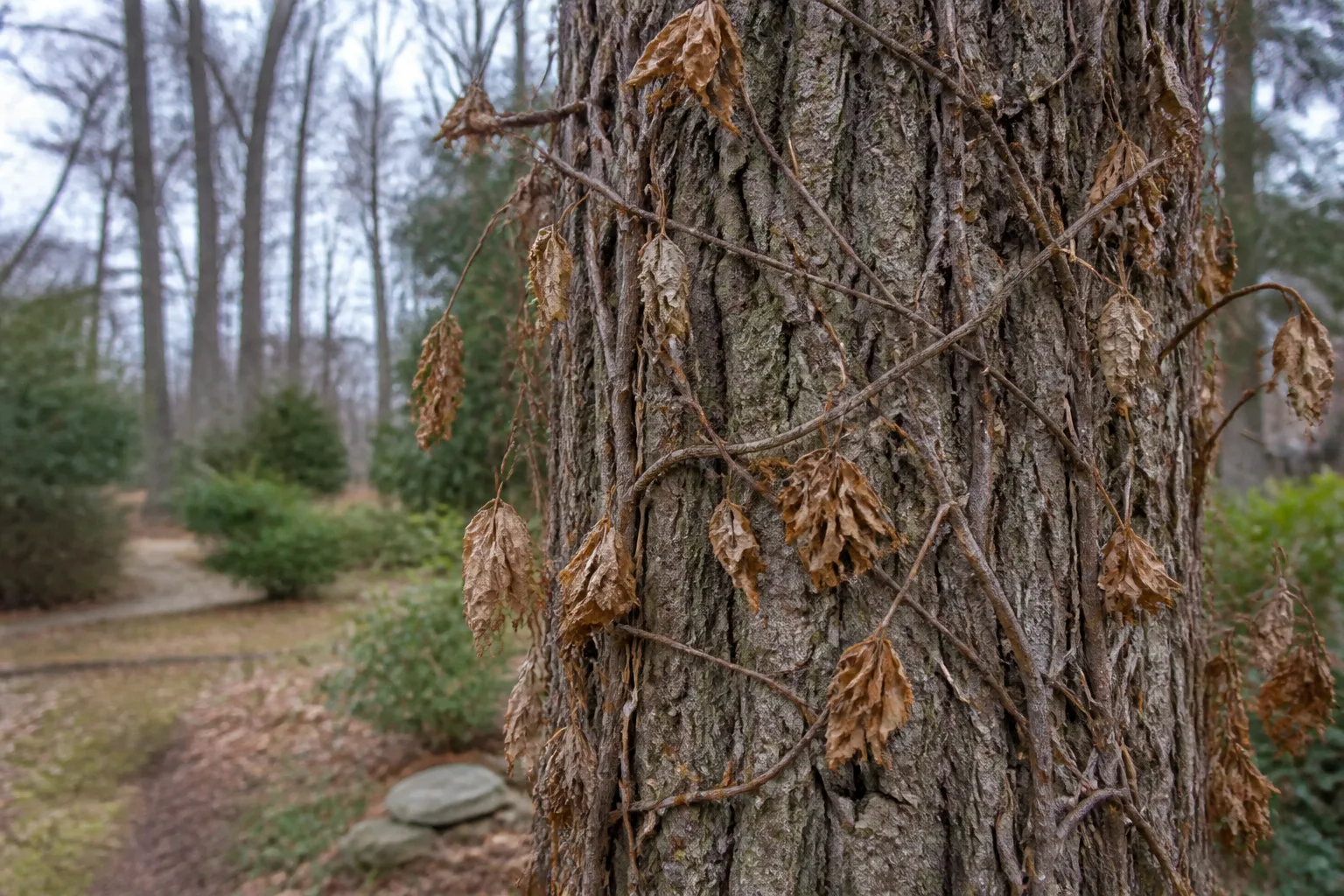
Never burn poison ivy. The CDC warns that burning can release particles containing urushiol and cause severe respiratory irritation for anyone who inhales the smoke. Do not use a brush pile, fire pit, or outdoor burn barrel to get rid of vines, even if they have dried out.
Grazed leaves and contaminated trimmings should not be offered to livestock or pets. Do not transport loose vines in an open truck bed where they can blow out or brush against the vehicle. If you are unsure how your municipality handles sealed invasive or toxic plant waste, keep the material contained while you ask rather than leaving it beside a bin.
Decontaminate Skin, Clothing, Tools, and Shoes
After the final bag is sealed, keep your gloves on while you clean tools and remove contaminated outer layers. The CDC recommends cleaning tools with rubbing alcohol or soap and plenty of water, and wearing disposable gloves during tool cleanup; Clemson Extension notes that oil can persist on clothing, equipment, and pet fur. Wipe loppers and shovel handles, wash the blades, rinse, and let tools dry before returning them to storage. Do not rely on a quick wipe with a dry rag.
Remove clothing carefully without pulling a contaminated sleeve across your face or bare skin. Put exposed clothing in the washer separately with detergent and hot water, following the garment label; wash reusable gloves and footwear according to their material and the manufacturer’s instructions. If an item cannot be cleaned confidently, keep it isolated until you can determine whether it is safe to reuse. Urushiol may stay active on objects for years, so cleaning handles, boot treads, and reusable gloves is not optional.
If you think oil touched your skin, rinse and wash immediately with dishwashing soap or a poison-plant wash and plenty of water, rinsing often so the oil is not spread around. Scrub under fingernails, where oil can remain after a quick rinse. The CDC advises urgent medical care for severe reactions, facial or genital involvement, or breathing difficulty; seek emergency help for trouble breathing rather than treating it as routine yardwork exposure.
Check for Regrowth and Prevent New Seedlings
Mark the former patch and inspect it every week or two while plants are actively growing. Cut or dig small new shoots before they become a larger target, and keep using the same protective clothing and cleanup routine. Clemson Extension recommends repeated cutting as growth appears, while Gardening Know How also stresses returning to remove regrowth after an initial pass.
A new plant may come from a surviving root, a runner that was missed, or a seed dropped by wildlife. Look at the edge of the bed, along the fence, and around the base of trees rather than checking only the original crown. If nearby plants are dense, use a simple map or a photo from a safe distance to find new growth without searching by hand.
Where you can, reduce the conditions that let a recurring patch go unnoticed: keep a narrow inspection strip beside a path, repair a gap in a fence where people brush against vines, or maintain groundcover that does not require frequent hand weeding. These changes will not sterilize the soil or prevent every seed from arriving, but they make early detection easier. After the main patch is gone, a clean layer of wood chips can make new seedlings easier to spot and reduce their germination; University of Wisconsin Extension recommends several inches of clean mulch after debris removal. Mulch is not a cure for established roots, so keep the inspection schedule and cut any shoots that appear. Continue follow-up until there is no new growth through the next active growing period.
Know When to Call a Professional
Hire help when poison ivy covers a broad area, climbs above reach, is tangled through valuable shrubs, borders a play space, or cannot be removed without stepping into it. Professional removal is also sensible if you have had a severe rash, have a health condition that makes exposure especially risky, or cannot set up a safe cleanup area. An expert should be willing to explain how they will identify the plant, contain debris, protect neighboring plants, and handle follow-up.
For a tree-climbing vine, contact an arborist if removal would require a ladder, chainsaw, or work near utility wires. For pesticide use, choose a licensed applicator familiar with the product label and the site; ask whether a targeted cut-stump or repeated mechanical approach will limit damage to nearby plants. A quote that promises instant, permanent control without inspecting the roots and location deserves caution because surviving roots can send up new shoots.
Conclusion
To get rid of poison ivy, first confirm the plant from a safe distance, then match the method to the patch. Dig a small isolated plant carefully, repeatedly cut shoots where excavation would damage nearby plants, cover a contained low patch for months, or get professional help for a large or elevated vine. Seal the debris, never burn it, clean clothing and tools promptly, and check for regrowth. Those follow-up visits are what turn a removal attempt into sustained control.